
How Battery Powered Digital Signage Helps?
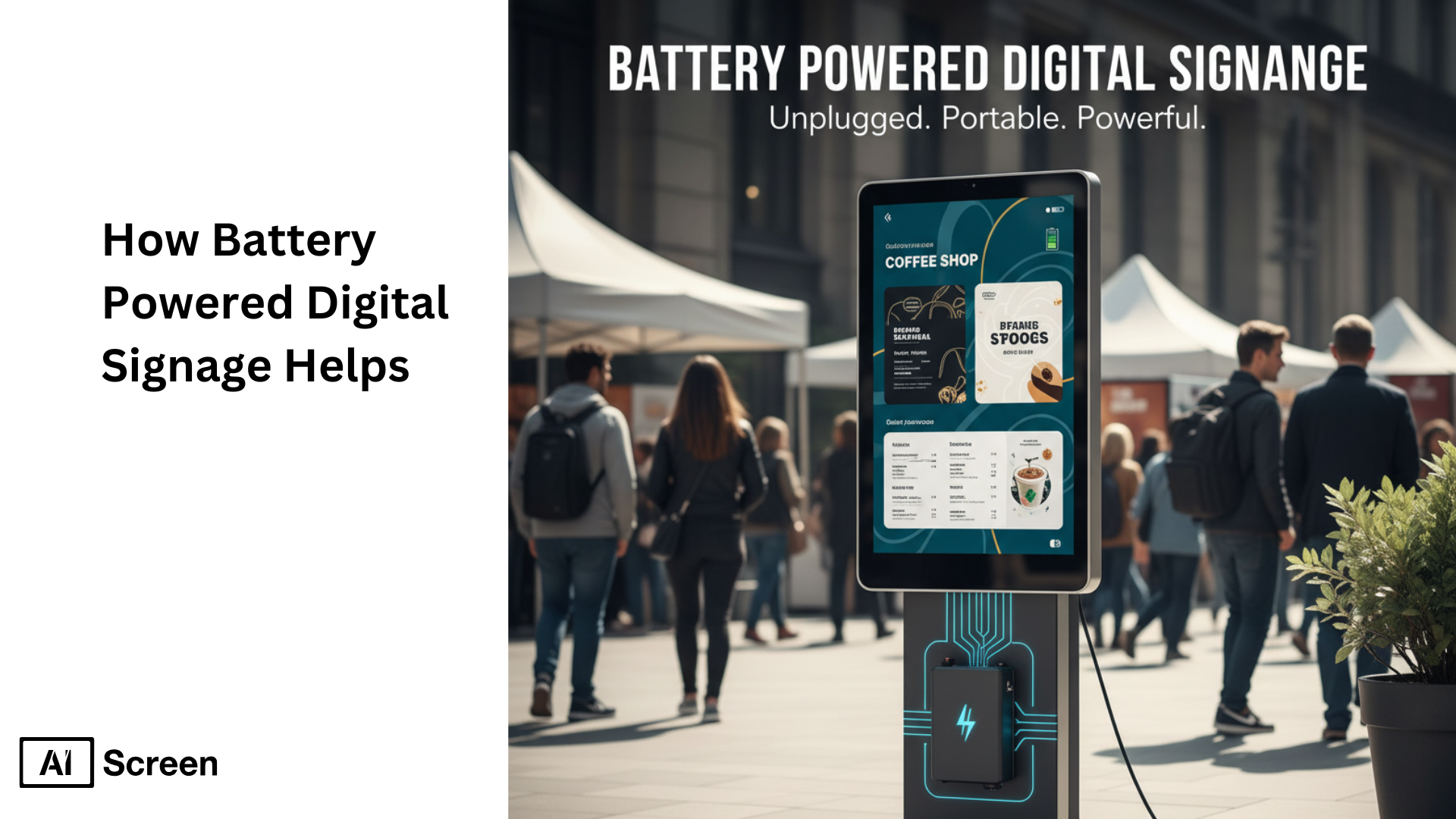
Battery-powered digital signage is changing the game by offering unmatched mobility and flexibility for businesses. Recent studies show that lithium-ion battery technology allows these portable digital signs to run 8–12 hours on a single charge, perfectly suited for places without easy access to power outlets, as reported by Digital Signage Today, 2025. You face no more hassle with extension cords or tripping hazards, as these sleek displays operate wirelessly, making them perfect for retail, hospitality, trade shows, and outdoor spaces.
In this article, we will explore how battery-powered digital signage helps businesses engage customers dynamically in any location. Want to learn how ambient light sensors extend battery life or how solar panels can support sustainable operations? Curious about remote content management or scheduling software that makes it simple to update multiple languages and playlists? We’ll cover these key factors and more, showing why battery-powered digital signs are a smart investment for modern, energy-efficient digital signage solutions.
What is Battery Powered Digital Signage?
Battery-powered digital signage refers to digital sign displays that operate on rechargeable batteries instead of relying on traditional power outlets. This makes them highly portable and easy to install in locations where power access is limited or unavailable.
Unlike traditional digital signs, battery-powered solutions offer flexible placement options, making them ideal for retail stores, transportation hubs, events, and educational facilities.
These systems combine display technology, battery modules (often lithium-ion), and digital signage software to enable easy content uploads, playlist creation, and scheduling.
The result is a wireless, energy-efficient digital sign that can engage customers dynamically while extending battery life through smart features such as ambient light sensors.
Battery-powered digital signage is quickly becoming a must-have solution for businesses that need mobility and hassle-free installation without sacrificing visual impact or content flexibility.
Advancements in Battery Technology for Battery-Powered Digital Signage
When talking about advancements in battery technology, recent innovations in lithium-ion and solid-state battery technologies have dramatically extended the runtime of battery-powered digital signage.
Modern devices now operate up to 12–24 hours on a single charge, thanks to smarter power management systems and faster charging capabilities. This means your portable digital signs can engage customers all day without interruptions or frequent recharging breaks.
Energy-efficient processors and lightweight display panels also play a big role in this evolution, helping reduce overall energy consumption and keeping these displays sleek yet powerful.
Examples include commercial-grade lithium polymer batteries offering runtimes surpassing 14 hours, even in demanding outdoor environments.
These tech improvements make battery-powered digital signage a practical, long-lasting, and eco-friendly choice for businesses wanting flexible, cable-free display solutions.
What are the Key Features and Advantages of Battery-Powered Digital Signage?
Battery-powered digital signage is reshaping how businesses communicate with customers by delivering unmatched portability, convenience, and energy efficiency. With a projected global market value of $1.4 billion in 2024, expected to grow to $4.6 billion by 2033 at a CAGR of 14.1%, battery-powered digital signage is a smart choice for retailers, event organizers, and public spaces aiming for flexible, cable-free installations. These displays leverage advances in lithium-ion battery technology and cloud-based content management systems to offer continuous and dynamic messaging without the constraints of power outlets. Some of these advantages are listed below:
1. Long-Lasting Battery Performance for All-Day Use
Battery-powered digital signs now run 12 to 14 hours on a single charge, ideal for extended events, outdoor campaigns, and retail promotions. This endurance is achieved through energy-efficient LED panels and optimized software algorithms that manage power use.
For example, portable displays at trade shows can operate from morning setup through evening tear-down without needing a recharge, allowing seamless communication in high-traffic areas.
2. Smart Brightness Control with Ambient Light Sensors
Auto-brightness sensors adjust digital sign brightness based on surrounding light levels to maximize battery life and ensure visibility. Whether in direct sunlight or dim indoor environments, these sensors help battery-powered displays maintain sharp image quality while reducing energy drain.
This feature is especially vital for outdoor signage at bus stops or event venues, where lighting conditions can vary drastically throughout the day.
3. Seamless Content Management for Dynamic Displays
Cloud-based CMS platforms like AIScreen enable users to upload content, create playlists, along with content across multiple screens. Automation capabilities allow real-time updates without manual intervention, keeping content fresh and relevant using a remote control facility.
This ease of control makes battery-powered digital signage a powerful tool for brands managing campaigns in multiple store layouts or pop-up events.
4. The Rise of Ultra-Low Power Display Technology
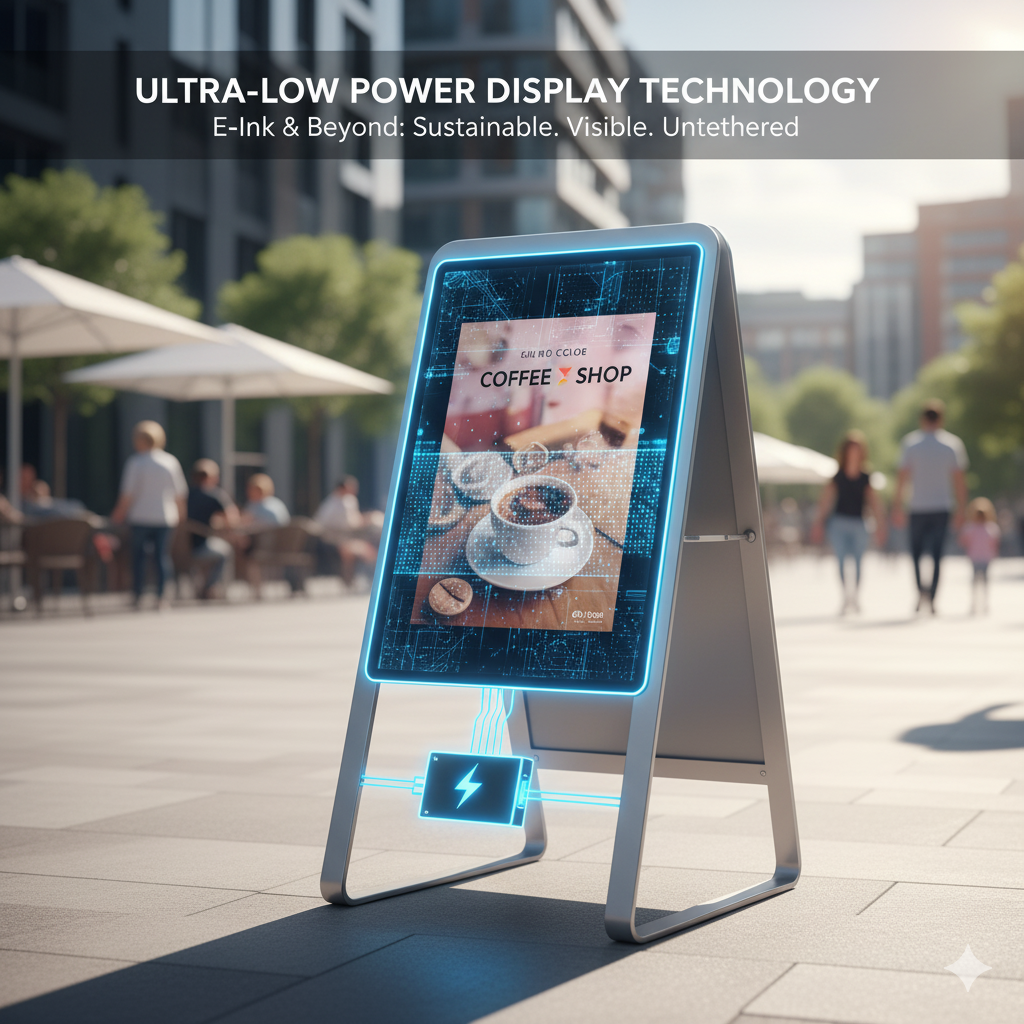
Innovations in e-ink and low-power LCD panels contribute to lowering energy consumption while delivering vibrant displays.
Combined with power-efficient processors designed for digital advertising, these technologies extend battery life beyond the norm for traditional digital signs.
This makes portable digital signage more eco-friendly and cost-effective, supporting sustainability goals.
5. Driving Customer Engagement, Efficiency, and Cost Savings
By eliminating the need for power cables and complex installations, battery-powered digital signs reduce setup costs and hazards like tripping over cords. Their portability supports quick repositioning for maximum visibility in retail environments or outdoor pop-ups.
For instance, businesses increase customer engagement through timely promotional messages at new locations, all while benefiting from lower electricity bills and streamlined operations.


Commercial Applications and Practical Use Cases
Battery-powered digital signage is incredibly versatile, making it a perfect solution for diverse commercial environments.
Whether in shopping centers aiming to attract busy foot traffic, airports delivering timely information, exhibitions showcasing products, or construction sites communicating essential updates, the mobility of these displays is a huge advantage.
Events that require temporary setups especially benefit from the flexible installation of battery powered digital signs, allowing organizers to move and reposition displays without power outlet limitations.
This portability also makes battery-powered digital signage ideal for remote or outdoor locations where running cables is impractical or too costly.
For example, outdoor festivals, pop-up retail showcases, and transit hubs use these wireless digital signs to engage customers with vibrant, real-time display content.
This adaptability ensures that big to small businesses – all can respond quickly to shifting customer flows or unexpected changes in venue layout, boosting visibility and engagement wherever deployed.
Ultimately, these battery-powered displays provide practical, dynamic communication solutions, clearly defining what is the future of digital signage for businesses seeking flexibility, efficiency, and sustainability.
How to Choose the Best Battery-Powered Digital Signage Solution?
Choosing the right battery-powered digital signage solution is key to staying ahead with optimal visibility and performance, convenience, and longevity for your investment. Let’s break down the crucial factors, from battery life to vendor reliability, that help you pick a display that suits your needs, whether for trade shows, retail spaces, or outdoor events.
1. Battery Life Reigns Supreme
Battery capacity is the cornerstone of any battery-powered signage. Aim for solutions that offer at least 10 to 20 hours of continuous operation to cover full-day events or multiple shifts without interruption. Advanced battery gauges now use predictive modeling to extend run time by up to 30%, delivering more accurate battery life metrics and preventing unexpected downtimes.
2. Designed for Maximum Efficiency
Energy optimization technologies such as sleep modes, sleek designs, low-voltage displays, and smart charging systems enhance overall battery efficiency. For instance, smart power management chips dynamically adjust power consumption based on usage patterns, which can significantly extend runtime and reduce heat generation, improving device durability.
3. Quick and Easy Battery Replacement or Recharging
Modular battery designs or hot-swap capabilities let you replace batteries on the fly without powering down the display. This feature is a lifesaver during prolonged campaigns or events, reducing downtime and maintaining seamless communication with your customers.
4. Zero Maintenance, Ultimate Convenience
Battery-powered signage typically requires minimal upkeep compared to wired installations. Features like dust-resistant enclosures protect against environmental damage, and built-in self-diagnostic software can identify issues before they become major problems, saving time and cost on repairs.
5. Experience True Cable-Free Operation
Wireless installations free you from the constraints of power outlets and extension cords, making these displays ideal for mobile kiosks, pop-ups, and temporary promotions. This flexibility ensures you can place your signage exactly where it will get the most attention without worrying about power access.
6. Lightweight Design and Effortless Installation
The ergonomic and slim form factors, combined with integrated handles or wheels, enable easy transport and setup. This is especially advantageous at busy trade shows or outdoor campaigns where quick repositioning is necessary to maximize visibility and audience engagement.
7. Commitment to Sustainability
Using battery power reduces electricity consumption, aligning your operations with environmental goals. Many manufacturers now incorporate recyclable materials and eco-friendly components, further minimizing the ecological footprint of your signage.
8. Delivering Superior Visual Quality
High-resolution or larger screens featuring anti-glare coatings and vibrant color reproduction ensure your messaging cuts through ambient light and draws customer attention. Technologies like AIScreen’s display panels maintain clarity even in sunlight, vital for outdoor or brightly lit indoor environments.
9. Partnering with the Right Vendor for Your Needs
Selecting a vendor who offers responsive support, customization, and scalable cloud-based CMS integration is crucial. AIScreen, a cloud-based platform, for instance, delivers robust, user-friendly solutions that adapt to business growth and evolving content needs, ensuring a strong return on your digital signage investment.
Go wireless with AIScreen’s Battery-Powered Digital Signage
Imagine digital signage that’s not just eye-catching but also smart and flexible enough to transform your marketing strategy.
With platforms like AIScreen, you get a reliable partner that offers long battery life; some models work up to 27 hours on a single charge, plus remote areas management, smart scheduling, and real-time monitoring.
This means you can create impactful campaigns and adjust them on the fly, from anywhere, without the hassle of wires or ongoing maintenance.
AIScreen’s battery-powered signage simplifies deployment, whether for retail displays, outdoor events, or mobile kiosks, by freeing you from power cords and complex wiring.
It’s designed for effortless setup, re-positioning, and management, giving your business the agility it needs to engage customers creatively and efficiently.
Ready to explore how AIScreen can elevate your digital signage game? Request a demo today and see how easy and effective wireless signage can be!
Frequently Asked Questions
How does battery powered digital signage improve installation flexibility?
Battery powered digital signage improves installation flexibility by cutting the cord completely, so you can place displays anywhere without worrying about power outlets or cables. This means instant setup in remote locations where running wires is tough or impossible, like fitting rooms, pop-up shops, or outdoor events, making your installation super flexible and hassle-free.
Why choose battery powered digital signage instead of plug-in displays?
Choosing battery-powered digital signage, besides freeing you from cords and plugs, the signage offers unmatched mobility and can be repositioned anytime. You avoid costly electrical work, reduce tripping hazards, and gain the ability to run promotions or information displays exactly where your customers are, even in remote or temporary spaces.
How long does a battery powered digital signage display typically run on one charge?
Most battery powered digital signage models last between 10 to 20 hours on a single charge, enough to cover a full business day or event. Advances in lithium-ion batteries and power-saving tech now allow for extended runtime without bulkier batteries, so you get long-lasting, lightweight, and reliable performance.
How does battery powered digital signage reduce installation and maintenance costs?
The battery powered digital signage reduces installation and maintenance costs with no use of cables, and no expensive wiring or outlet installations. Plus, fewer moving parts and dust-resistant designs mean less wear-and-tear and fewer repairs over time, saving you both money and headaches.
Can battery powered digital signage be easily relocated and reused?
Yes! The batter powered digital signage can be easily relocated and reused. You can move these lightweight displays quickly and easily as your needs change, then reuse them across events, stores, or any location. They are built for portability and durability, making them a practical long-term investment.
