
How to Track Digital Signage ROI After Implementation
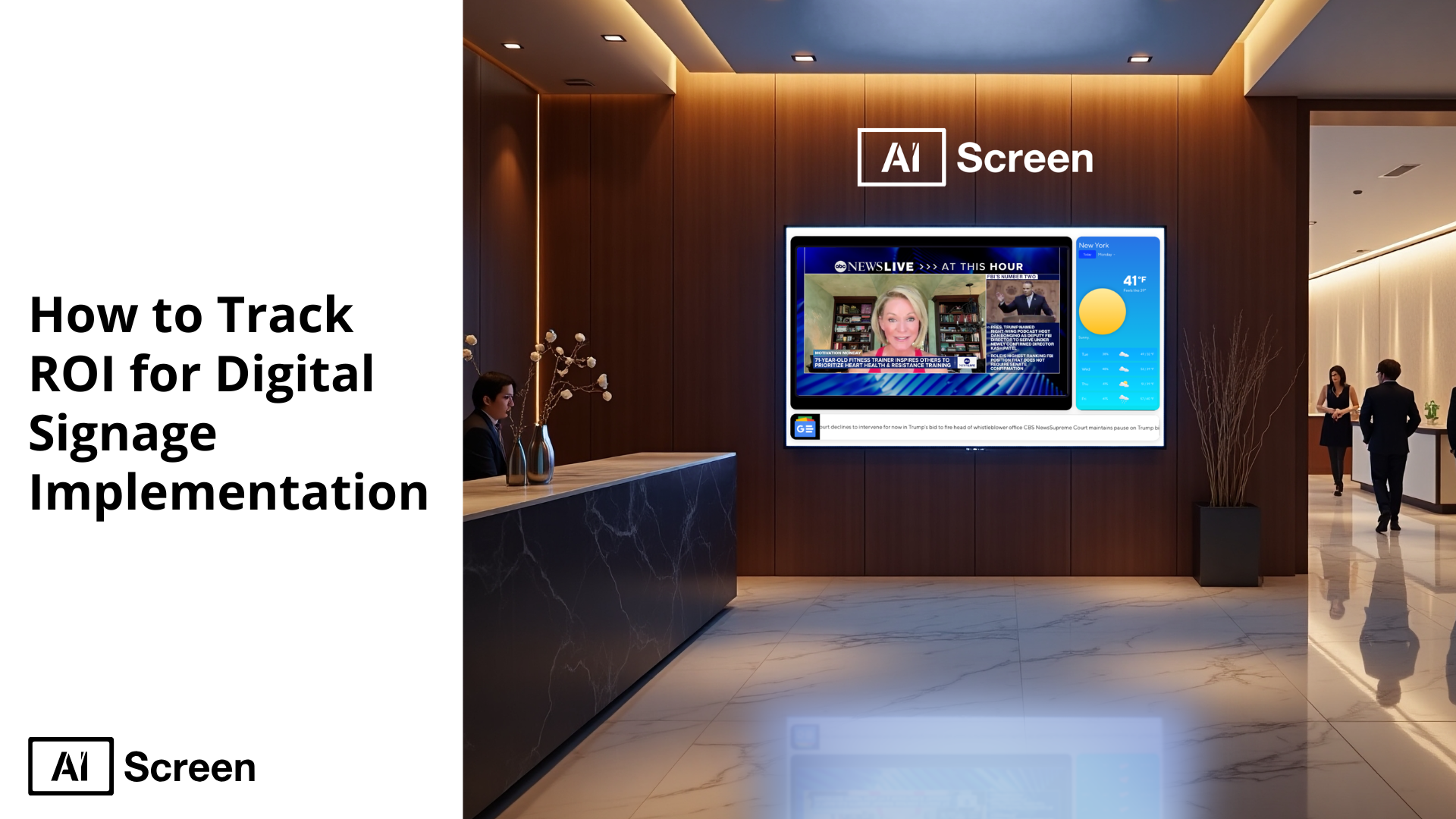
To track ROI for digital signage implementation, a business must consider the full spectrum of what return on investment (ROI) means in a digital world. Since organizations spend thousands to millions on digital signage systems, determining whether such a business investment turns into tangible value is crucial.
According to Digital Signage Today, over 70% of businesses that adopt digital signage improved customer engagement, and 50% see a positive return within 18 months. Yet, the ROI goes beyond sales; it may include cost-effectiveness, operational efficiency, and brand awareness. This guide is going to cover KPIs to track with examples from several types of industries.
Why Is It Important to Track Digital Signage ROI?
It is important because it helps determine the real impact of digital signage investment on business goals like revenue, efficiency, and customer satisfaction.
According to Digital Signage Today, 60% of businesses fail to measure digital signage ROI correctly, missing opportunities to optimize their digital signage content. When you track digital signage ROI, you know what is working and what is not, and get on with strategies of content creation, optimize spending, and target audiences more effectively.
Based on the relevant data points considered, where engagement rates, cost savings, and operational benefits prove justification for returns on investments, companies can then optimize for performance and operational cost structures in terms of content delivery across locations.
What are the Common Metrics to Track Digital Signage ROI
The common metrics to track digital signage ROI are engagement, sales, operational efficiencies, brand awareness, and customer experience. Each metric is distinct in examining an overall impact and assessing the value that the system of digital signage provides.
When used together with audience measurement tools and advanced analytics platforms, these KPIs give you valuable insight into how your viewers interact with the digital signage content and whether the signage strategy in place is satisfying its objectives.
Engagement Metrics
Engagement metrics are key performance indicators of how effectively your content resonates with your target audience. Time spent interacting with digital displays, click-through rates, and QR code scans are all strong signs of audience interest.
According to Nielsen Research (2023), 80% of businesses that adopted digital signage reported a boost in sales. Using tools like heatmaps, touch analytics, and custom URLs lets you track how users behave around your screens. If viewers are scanning your QR codes or clicking through your CTAs, you’re on the right track.
Sales Metrics
Sales metrics help you measure the direct financial impact of digital signage on your bottom line. Metrics like foot traffic, basket size, and conversion rates are commonly tracked. In QSRs and retail, dynamic signage boosts upsells by showcasing promotions and popular items.
Oracle conducted a survey and found that 68% of diners would spend more if digital menu boards featured personalized discounts, loyalty rewards, and offers. Track sales before and after content changes or A/B test promotions to calculate ROI accurately. Look at POS or sales data alongside content analytics to see which digital displays influence buyer behavior most.
Operational Efficiency Metrics
Operational efficiency metrics evaluate how digital signage streamlines business operations and reduces ongoing costs. Digital signage reduces printing expenses, improves staff communication, and allows real-time content updates, cost savings, and time. Many industries, including logistics and industrial environments, benefit from these efficiencies, especially when using solutions designed for large-scale operations such as warehouse digital signage that highlight how digital screens optimize workflows and communication.
Companies using cloud-based signage systems cut update time and reduce printing costs by thousands annually. Remote content management and automation tools also free up team resources. These operational benefits are especially useful for multi-location enterprises that want consistent messaging with minimal manual effort.
Brand Awareness Metrics
Brand awareness metrics reflect how well digital signage improves visibility and recognition among your audience. High-traffic locations benefit from repeated exposure, driving brand recall. According to Digital Signage Today, 55% of people recall a brand after seeing digital signage within the past 48 hours.
Track metrics like brand recall surveys, social media mentions, and campaign reach. If your signage is consistently being photographed, tagged, or mentioned online, it’s making an impact.
Customer Experience Metrics
Customer experience metrics reveal how signage contributes to a more enjoyable, engaging interaction for your audience. Increased dwell time, positive customer direct feedback, and reduced wait-time complaints indicate better experiences.
Touch-enabled kiosks, interactive maps, and multilingual content options all enhance usability. Measure customer feedback through surveys and reviews tied to signage exposure to evaluate its influence on loyalty and perception.
How to Calculate Digital Signage ROI Effectively
To calculate digital signage ROI effectively, businesses need to use a clear formula that balances the cost of investment with the measurable gains achieved. The standard ROI equation looks like this:

This formula helps you determine the percentage return on every dollar spent, offering a straightforward way to measure the financial impact of your digital signage deployment.
Breaking Down Costs
When calculating ROI, start by identifying all relevant costs:
- Hardware: Displays, media players, mounts, kiosks, and cabling.
- Software: Digital signage CMS licenses, subscription fees, and integrations.
- Installation & Maintenance: Setup, professional services, and ongoing technical support.
- Content Creation: Designing templates, videos, or interactive elements.
Measuring Gains
Next, assess the tangible and intangible benefits:
- Increased Sales: Boosted revenue from promotions, upsells, and product visibility.
- Customer Engagement: Higher dwell times, improved interaction, and brand recall.
- Cost Savings: Reduced printing costs, faster content updates, and lower communication overhead.
- Operational Efficiency: Streamlined internal communications and real-time data sharing.
Why This Matters
By comparing total gains against the overall investment, organizations can determine whether their digital signage system is generating positive returns. For example, if a retail store invests $10,000 and earns $15,000 in increased sales and cost savings, the ROI would be:

This means the business gained a 50% return on its investment, making digital signage a financially viable and scalable solution.
Real-World Examples of Digital Signage ROI Across Different Industries
Real-world examples of digital signage ROI across different industries show how businesses measure success and make data-driven decisions to enhance their digital signage strategy.
Retail Stores
Retail stores use digital signage solutions to attract and keep foot traffic, promote brands, and work towards their final sales. It influences customer decisions through advertising seasonal discounts, limited-time offers, or specially prepared product highlights, which also act as adjacent visual cues to guide the buying process and enhance brand visibility across the store layout.
Example: A well-known athletic apparel chain introduced in-store digital signage displays across 200+ locations to promote real-time inventory management updates and featured collections. Within six months, they recorded a 25% increase in product engagement and a 12% rise in same-store sales, according to Digital Signage Today.
Strategically, these LED panels were set near entrances and in main areas so shoppers would be able to find their way around easily and enjoy content tailored to the region at hand.
Thus, the results prove how retail store digital signage systems convert customer visits into actual sales, making these visual technology investments with very high ROI and a very much contributor to improving store performance and customer experience.
Quick-Service Restaurants (QSR)
Quick-service restaurants (QSRs) utilize digital signage players and dynamic menu boards to ensure that orders are processed correctly, reduce wait times, and satisfy customers. These systems also show changing promotions, combo deals, and updates in real time with minimum manual interference.
During the breakfast, lunch, and dinner rush, the digital signage allows QSRs to update menus instantly, thereby giving greater customer engagement and operational efficiency.
Example: A national QSR chain implemented digital menu boards in drive-thru lanes across 300+ outlets. According to Digital Signage Today, the restaurant saw a 15% boost in average order value and a 20% improvement in drive-thru speed.
This use of digital signage technology not only generates revenue for quick-service restaurants but also creates a much better ambiance in which to dine. This makes it a powerful marketing and modernizing tool for quick-service establishments to expand on.
Corporate Offices
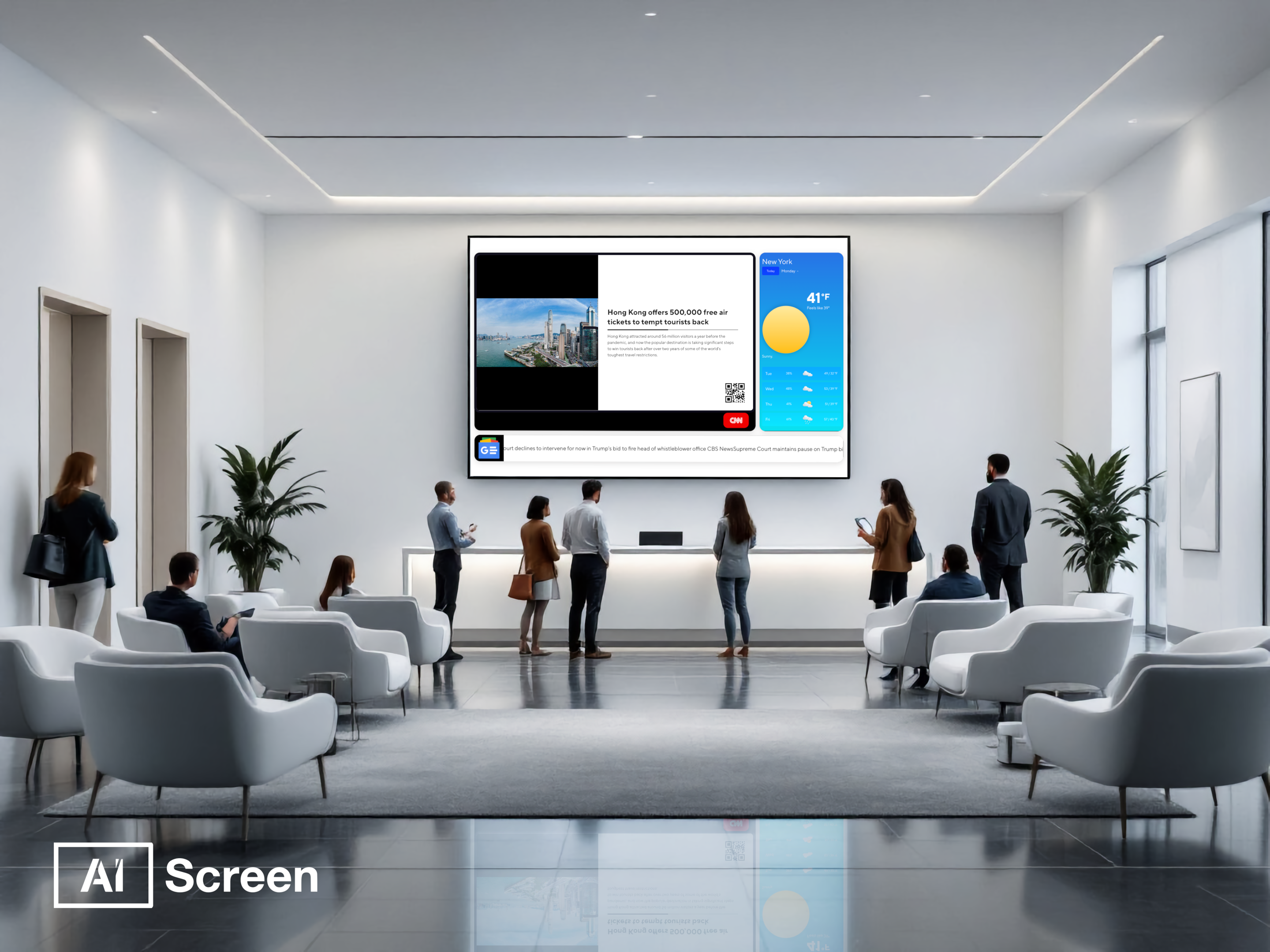
Corporate offices benefit from digital signage by enhancing internal communication, bringing transparency, contributing to a culture of recognition, and encouraging cooperation. Whether it is onboarding messages or real-time updates, digital signage keeps employees informed and connected across departments.
Digital signage displays transform break rooms, lobbies, and meeting spaces into vivid, dynamic communication zones as opposed to static bulletin boards. Example: A global logistics company used internal corporate offices digital signage software to broadcast safety reminders, company milestones, and birthday shoutouts.
This proves that in such environments, digital signs are not only a productivity tool but also strengthen team spirit and organizational alignment, thus offering a firm and long-term business communication channel.
How to Measure ROO in Digital Signage like ROI
To measure ROO in digital signage like ROI, one has to look at qualitative factors, including customer loyalty, employee morale, or brand perception, rather than just monetary returns.
ROO (Return on Objectives) is essential when the goals are not based on sales. Just to give an example, imagine a museum that uses signs to direct visitors around and encourage them to see new exhibits. Instead of sales, they may look at customer feedback or exhibit engagement.
It is to let you know if your signage is accomplishing strategic objectives, even if those objectives don’t tie to revenue. If you want more information, check out our other article, how to measure return on objectives in digital signage.
Start Maximizing Your Digital Signage ROI Today with AIScreen!
Start maximizing your digital signage ROI today by using advanced tools that make tracking seamless and insightful.
AIScreen’s cloud-based platform offers real-time analytics, remote content management, and dynamic content scheduling, all designed to improve engagement, reduce costs, and streamline operations. Whether you’re managing 5 screens or 500, AIScreen helps businesses optimize signage strategies with data-driven decisions that drive results.


FAQs
How long does it take to see ROI from digital signage?
It takes 6-18 months to see ROI from digital signage, depending on the business model, content effectiveness, and strategy. Quick-service restaurants and retail often see faster results due to high customer volume.
Can I track ROI for digital signage across multiple locations?
Yes, you can track ROI for digital signage across multiple locations using centralized analytics tools that measure engagement, sales, and operational performance from a single dashboard. Cloud-based solutions make it easier to compare performance by location.
How can I improve the ROI of my digital signage?
You can improve the ROI of your digital signage by optimizing content placement, using real-time updates, tracking key metrics, and refining messages based on audience feedback and performance data.
Is digital signage ROI measurable beyond sales?
Digital signage ROI is measurable beyond sales by evaluating customer engagement, dwell time, brand recall, and operational efficiency. These intangible benefits contribute significantly to overall business success.
What is the role of analytics in measuring digital signage ROI?
The role of analytics in measuring digital signage ROI is crucial. Analytics tools provide insights into viewer behavior, campaign performance, and content effectiveness, helping businesses make smarter, data-driven decisions.
