
How Do 3D Digital Signage Billboards Work?
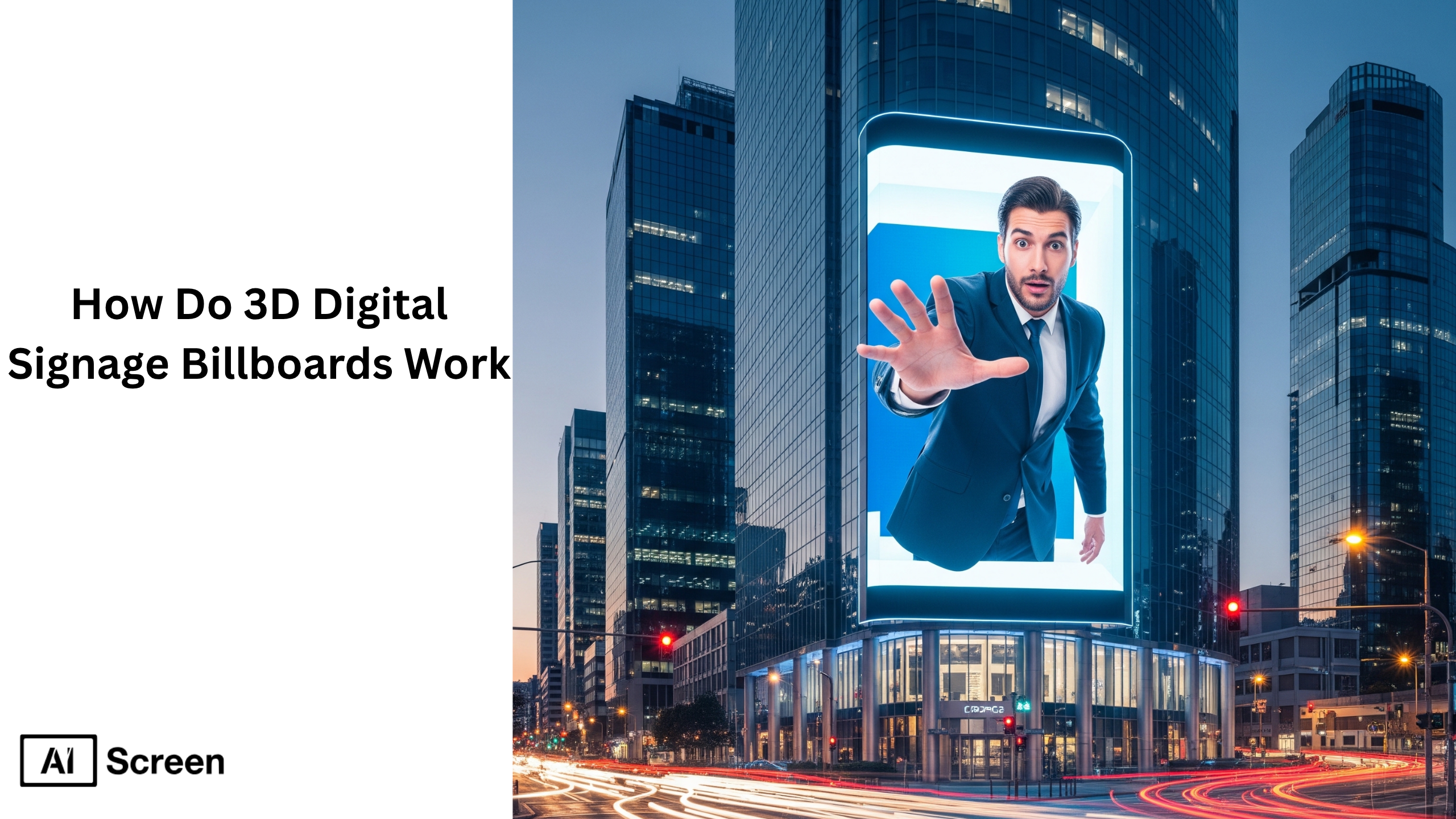
3D digital signage billboards work by using anamorphic illusion, high-resolution LED displays, and CGI-based content to create visually appealing that appear three-dimensional from specific viewing angles. They rely on perspective-based design, ultra-bright LED panels, and digital signage software to deliver immersive, depth-based content without requiring special glasses. With the global digital signage software market projected to exceed $30 billion, we also cover real-world examples and explain why 3D digital signage is shaping the future of outdoor advertising, retail displays, and smart city communication systems.
In this article, we explore how 3D billboards work, including the role of LED technology, 3D animation, and optimized viewing angles, along with their advantages such as higher recall rates, immersive experiences, and increased conversion potential.
What is 3D Digital Signage?
3D digital signage is an advanced display technology that enables the creation, management, and playback of 3D visuals on digital billboards and LED screens using anamorphic design, CGI (computer-generated imagery), and high-resolution LED panels. A notable early example is Nike Japan’s 2014 3D billboard in Tokyo, where Air Max shoes appeared to fall out of a giant shoebox, demonstrating the real-world impact of immersive 3D advertising.
This technology creates eye-catching, depth-based visuals that appear to extend beyond the screen without requiring special glasses, capturing attention and increasing audience engagement and brand recall. By combining AI-driven content, motion graphics, and perspective optimization, 3D digital signage delivers interactive and immersive experiences, making it a powerful tool for modern outdoor digital signage advertising, experiential marketing, and high-impact digital communication.
How Do 3D Digital Signage Billboards Work?
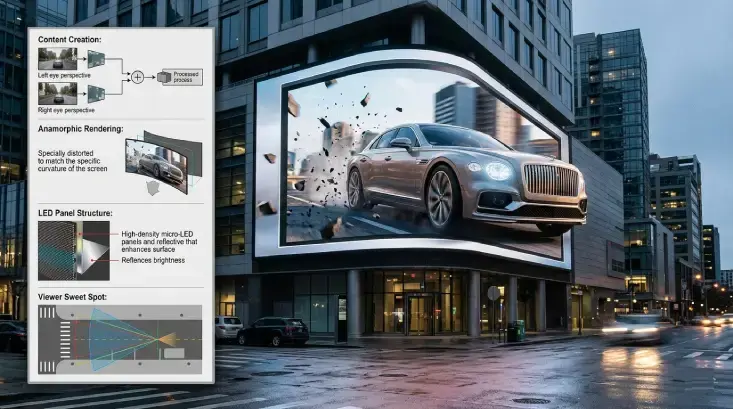
3D digital signage billboards work by combining anamorphic optical illusion, high-resolution LED displays, and 3D content rendering to create visuals that appear three-dimensional from specific viewing angles. Using corner LED screens, perspective-based design, and CGI (computer-generated imagery), content is engineered to simulate depth and motion without requiring glasses. These systems rely on ultra-bright LED panels (5000+ nits), 4K/8K resolution, and synchronized playback via digital signage software and cloud-based CMS, ensuring seamless and impactful DOOH (Digital Out-of-Home) advertising.
The process involves 3D modeling, animation, and real-time content optimization, where designers create visuals tailored to screen dimensions and audience perspective. Integrated with AI-driven analytics, IoT data, and remote digital signage CMS platforms like AIScreen, businesses can update and schedule content dynamically across multiple locations. This combination of advanced display technology, data-driven automation, and immersive storytelling makes 3D billboards highly effective for capturing attention, increasing engagement, and enhancing brand recall.
What are the Technical Requirements Behind 3D Digital Signage Billboards?
The technical requirements of 3D digital signage billboards include high-resolution LED displays, precise screen geometry, and anamorphic (forced-perspective) content design to create realistic depth on flat surfaces. These systems are not just about hardware; the 3D effect works only when screen placement, viewing angle (apex point), brightness, and pixel pitch are perfectly aligned with real-world traffic and audience positioning. If the viewpoint calibration or LED quality is off, the illusion collapses and appears flat or distorted instead of immersive.
To achieve a convincing 3D experience, cloud digital signage software and rendering systems process CGI animation, perspective mapping, and real-time playback optimization based on the screen’s exact dimensions and environment.
Core Technical Requirements:
- Display Hardware and Smart Screens: IoT digital signage uses commercial-grade LED and LCD displays with 4K resolution, high brightness (2,500–5,000+ nits), anti-glare coatings, and 24/7 operational capability. Smart displays often include embedded System-on-Chip (SoC) processors, HDMI connectivity, and sensor compatibility for real-time interaction.
- IoT Connectivity Infrastructure: Reliable internet connectivity is essential for IoT digital signage systems. Technologies such as Wi-Fi 6, Ethernet, Bluetooth, NFC, RFID, and 5G networks enable instant communication between screens, sensors, and cloud servers for synchronized content delivery and remote management.
- Cloud-Based CMS and Remote Management: Advanced platforms like AIScreen provide centralized content scheduling, multi-screen control, remote diagnostics, and automated publishing. Cloud-based CMS solutions allow businesses to manage digital signage networks across multiple locations in real time.
- Sensors and Real-Time Data Integration: IoT digital signage integrates motion sensors, temperature sensors, cameras, occupancy tracking, and audience analytics tools to trigger personalized content based on environmental conditions and user behavior. API integrations connect signage with POS systems, social media feeds, weather data, and live dashboards.
- AI Processing and Automation: AI-powered analytics and machine learning algorithms help optimize content delivery by analyzing audience engagement, dwell time, demographics, and behavioral patterns. Automation improves targeting accuracy and operational efficiency in smart retail and enterprise environments.
- Media Players and Edge Computing: Dedicated media players and edge computing devices process high-resolution visual content locally to reduce latency and ensure smooth playback. Devices such as Raspberry Pi 4 Model B are commonly used for lightweight IoT signage deployments.
- Security and Network Protection: IoT digital signage systems require secure cloud architecture, encrypted communication protocols, firewall protection, and role-based access control to prevent unauthorized access and cyber threats across connected display networks.
- Installation and Scalability: Professional installation includes structured cabling, VESA-compatible mounting systems, power management, and scalable network architecture that supports future display expansion, multi-location deployment, and centralized enterprise management.
What are the Key Advantages of 3D Digital Signage?
The key advantages of 3D digital signage include enhanced visual engagement, higher brand recall, and increased conversion rates through anamorphic visuals, high-resolution LED displays, and immersive content.
Eye-Catching 3D Effect
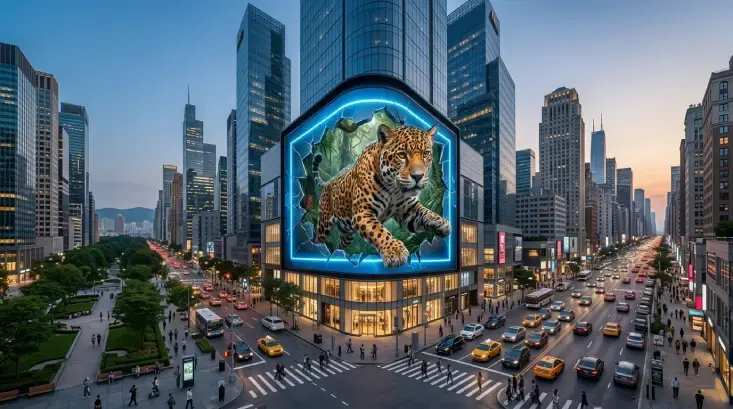
The eye-catching 3D effect in 3D digital signage billboards uses anamorphic illusion, forced perspective, CGI animation, and high-resolution LED screens to create realistic depth that disrupts banner blindness. With users exposed to nearly 5,000 ads daily, these immersive visuals attract attention, improve brand recall, and increase engagement by aligning with human visual perception and AI-driven content recognition systems.
Great Customer Experience
Since 3D digital signage billboards are still relatively new and visually distinctive, they not only attract attention but also hold it for longer durations. It is common for people to pause and engage with anamorphic visuals, CGI animation, and high-resolution LED displays, which rarely happens with traditional 2D signage. This extended attention span increases dwell time, enhances potential customer interaction, and provides brands with a stronger opportunity to deliver memorable experiences, improve engagement, and drive higher conversion potential.
Higher Conversion Rates
While measuring exact conversion rates for 3D digital signage billboards is challenging due to limited offline tracking and attribution data, their impact on user behavior is evident. The use of anamorphic visuals, CGI animation, and high-resolution LED displays captures deeper attention and increases dwell time and engagement signals. As more people notice and interact with these immersive visuals compared to traditional 2D signage, brands gain a higher probability of influencing purchase decisions, ultimately leading to improved conversion potential and stronger customer response.
Boosting Brand Image
3D digital signage billboards enhance brand image by positioning businesses as innovative and technology-driven through the use of anamorphic visuals, CGI animation, and high-resolution LED displays. As this advanced advertising format is still emerging, brands that adopt it signal credibility, modernity, and market leadership, which strengthens brand perception, trust, and authority in the minds of highly engaged audiences.


What Makes 3D Digital Signage a Cost-Effective Billboard Solution?
3D digital signage is cost-effective because it delivers higher ROI through increased engagement, brand recall, and conversion rates, despite upfront costs of $1M–$10M for LED displays, CGI content, and installation. By using anamorphic visuals, high-resolution screens, and AI-driven digital signage software, it captures more attention and improves campaign monitor performance and dwell time compared to traditional billboards.
Additionally, it enables dynamic content updates, multi-campaign usage, and real-time content management through cloud-based CMS digital signage platforms like AIScreen, reducing long-term operational costs. This makes 3D signage a scalable and high-impact advertising solution focused on visibility, engagement, and long-term value rather than one-time exposure.
What Are the Top 7 Examples of 3D Digital Signage Billboards?
The top 7 examples of 3D digital signage billboards showcase how global brands use anamorphic visuals, high-resolution LED displays, and CGI animation to create immersive, attention-grabbing campaigns in high-traffic locations. These examples demonstrate the power of advanced display technology, AI-driven content optimization, and digital signage software to boost brand recall, audience engagement, and campaign ROI through visually impactful and shareable experiences.
1. Nike’s Air Max Day Ad in Japan
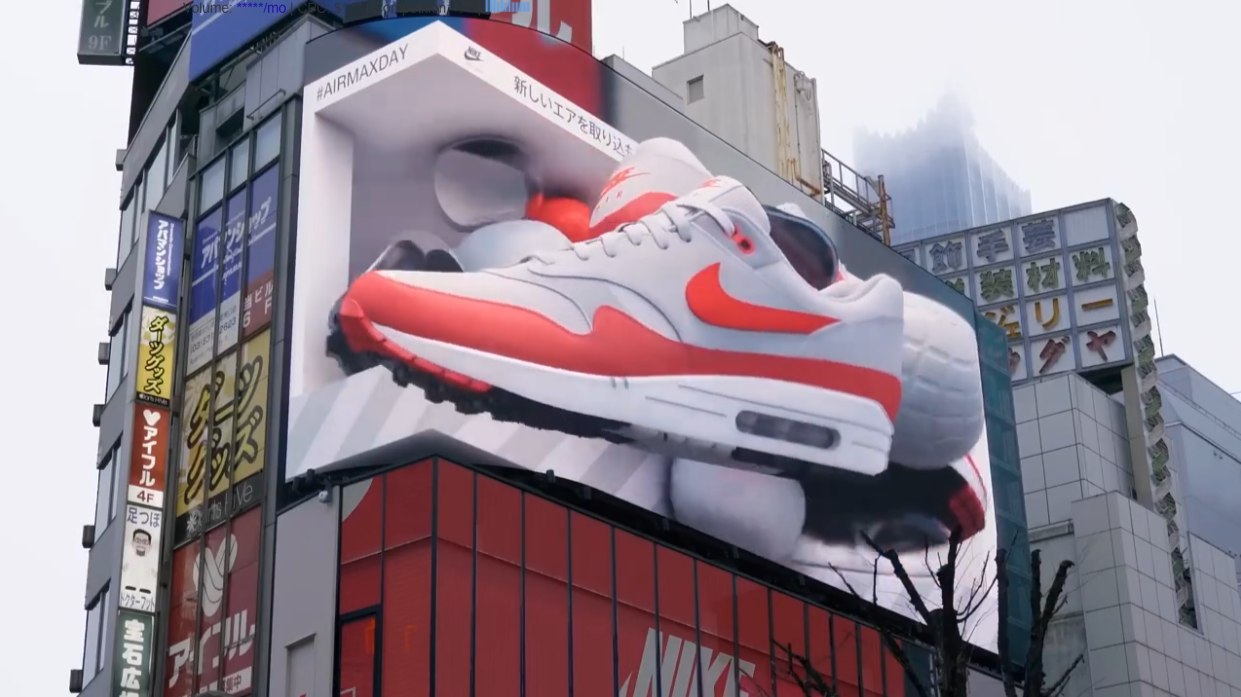
Nike’s Air Max Day ad in Japan showcased an innovative 3D digital signage billboard in Tokyo, where a shoebox appeared to open and multiple Air Max sneakers seemed to fall out using anamorphic visuals, CGI animation, and high-resolution LED displays. This immersive execution captured public attention, increased dwell time and memory recall of the brand, and demonstrated how creative 3D visuals can elevate product storytelling and audience engagement.
2. Shinjuku’s Giant Cat
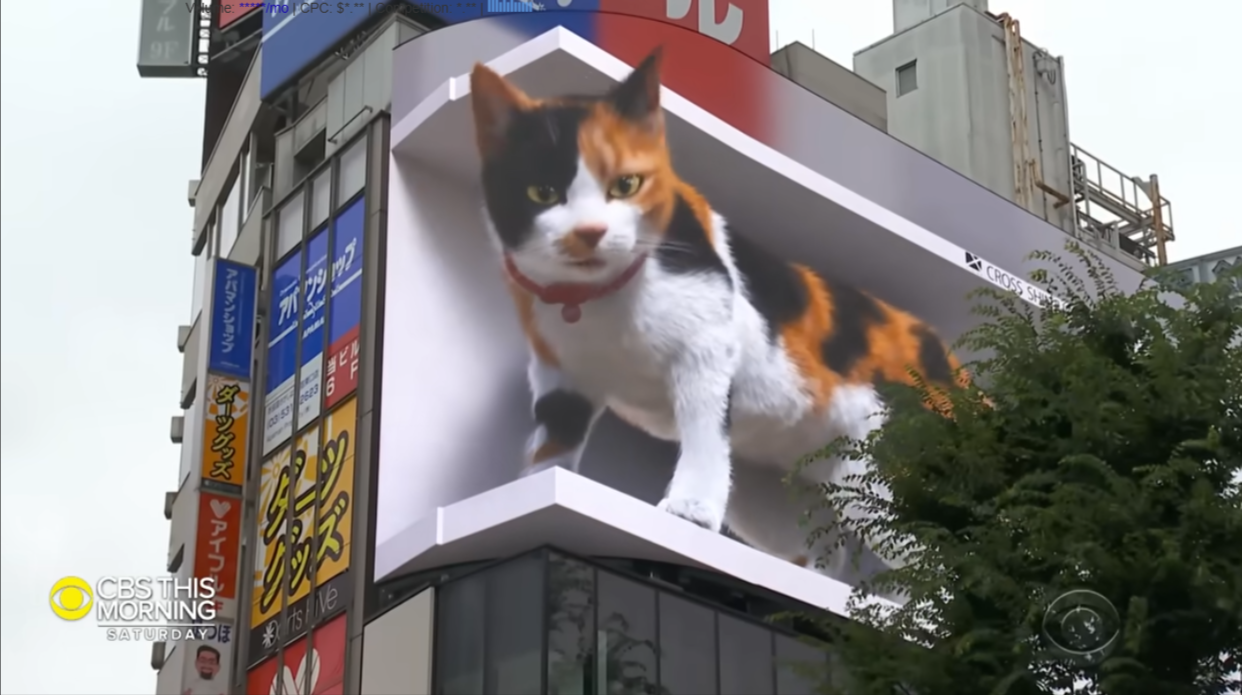
In 2021, the Shinjuku giant calico cat billboard in Tokyo became one of the most iconic 3D digital signage unlike traditional flat displays, featuring a lifelike cat created with anamorphic visuals, CGI animation, and high-resolution LED screens. Its popularity led to additional traditional displays like an Akita dog and panda, along with live data digital signage streaming and social media integration. Although not tied to a specific brand connect, this immersive installation demonstrated the full potential of 3D signage in capturing attention, increasing engagement rates, and showcasing advanced digital display capabilities.
3. Meta Quest’s 3D Billboard at Piccadilly Circus
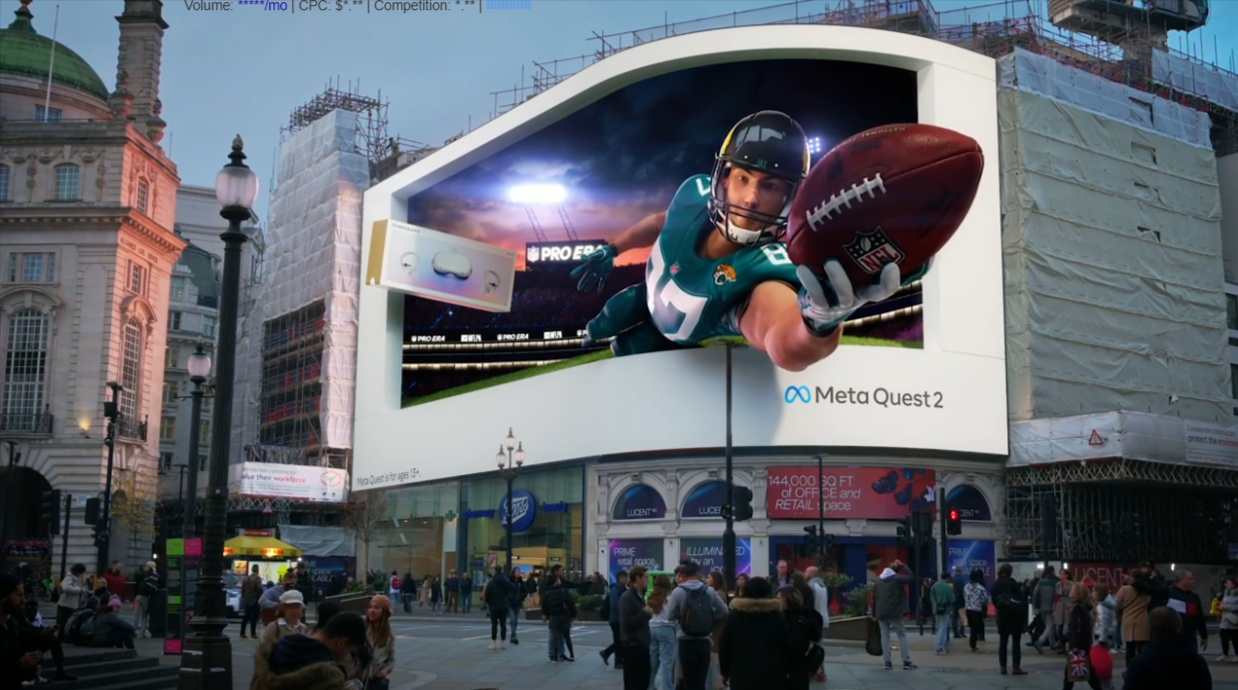
To promote the Meta Quest 2 VR headset, Meta introduced a visually immersive 3D digital signage billboard at Piccadilly Circus in 2022 as part of its “Wish for the Extraordinary” campaign. The display used anamorphic visuals, CGI animation, and high-resolution LED screens to create scenes where characters, hands, and objects appeared to emerge beyond the screen. By blending gaming, sports, and festive elements, the billboard captured strong public attention, increased engagement and dwell time, and effectively communicated the immersive capabilities of virtual reality experiences.
4. Final Fantasy VII Remake
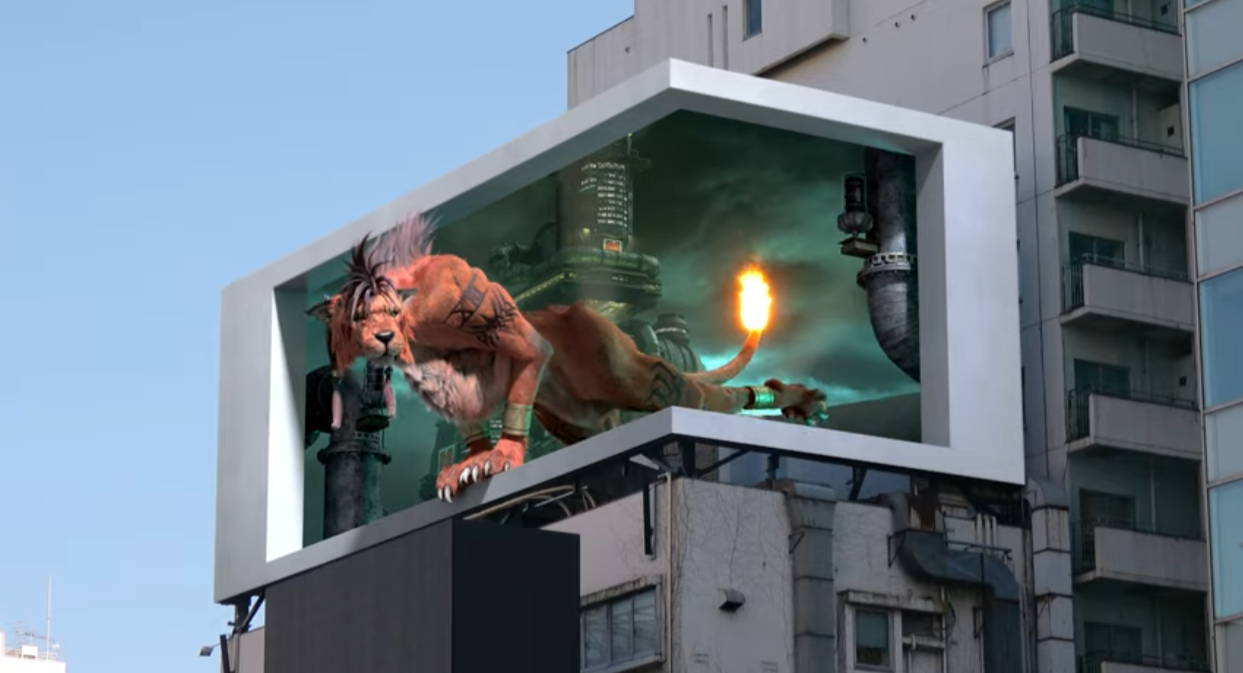
The Final Fantasy VII Remake 3D billboard featured an engaging mix of action, drama, and character-driven storytelling, showcasing Red XIII, a lion-like character, interacting with the environment through anamorphic visuals and CGI animation. From stretching and observing passersby to escaping a helicopter, the lifelike sequences created strong visual impact. Combined with cinematic effects and high-resolution LED displays, this immersive execution captured attention, increased engagement and dwell time, and reinforced the game’s visual appeal among audiences in Tokyo.
5. Louis Vuitton x Yayoi Kusama
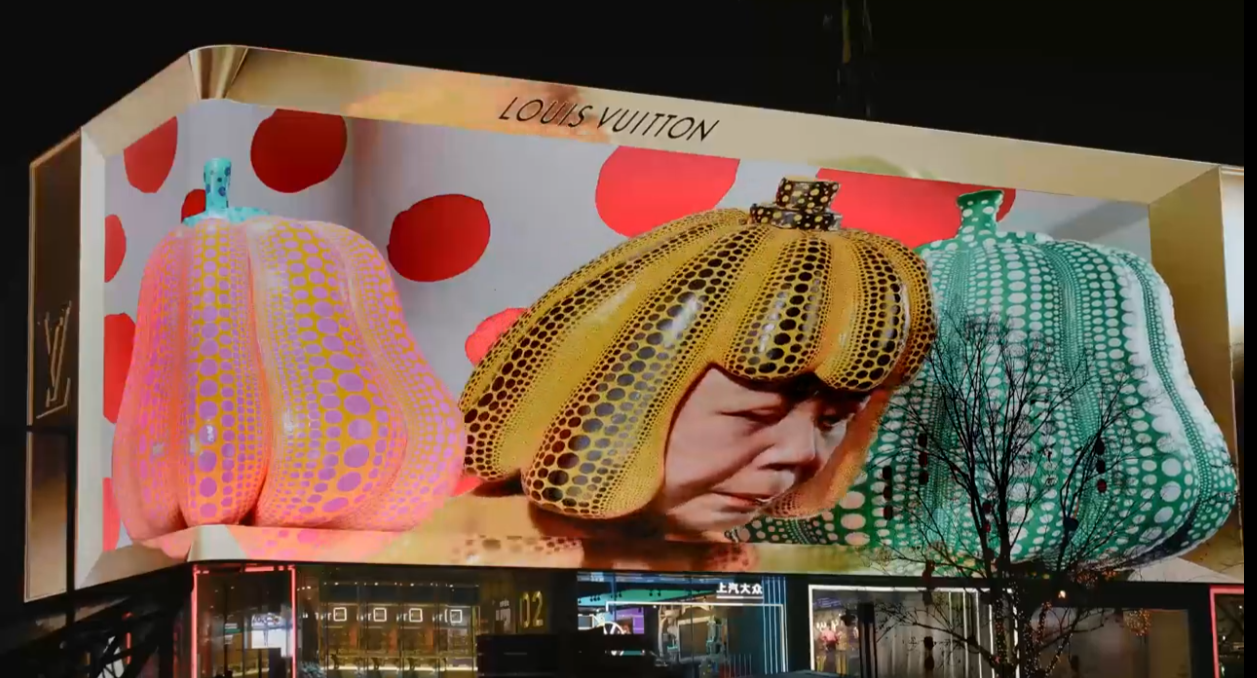
The Louis Vuitton x Yayoi Kusama 3D billboard in Shinjuku, Tokyo, stood out by blending real-life footage with anamorphic visuals and high-resolution LED displays, unlike typical fully animated campaigns. Featuring bold patterns, vibrant colors, and dynamic movements inspired by Kusama’s signature style, the display created a visually immersive experience. This creative execution captured strong public attention, increased engagement and dwell time, and demonstrated how artistic storytelling can elevate luxury brand visibility through 3D digital signage.
6. Super Nintendo World
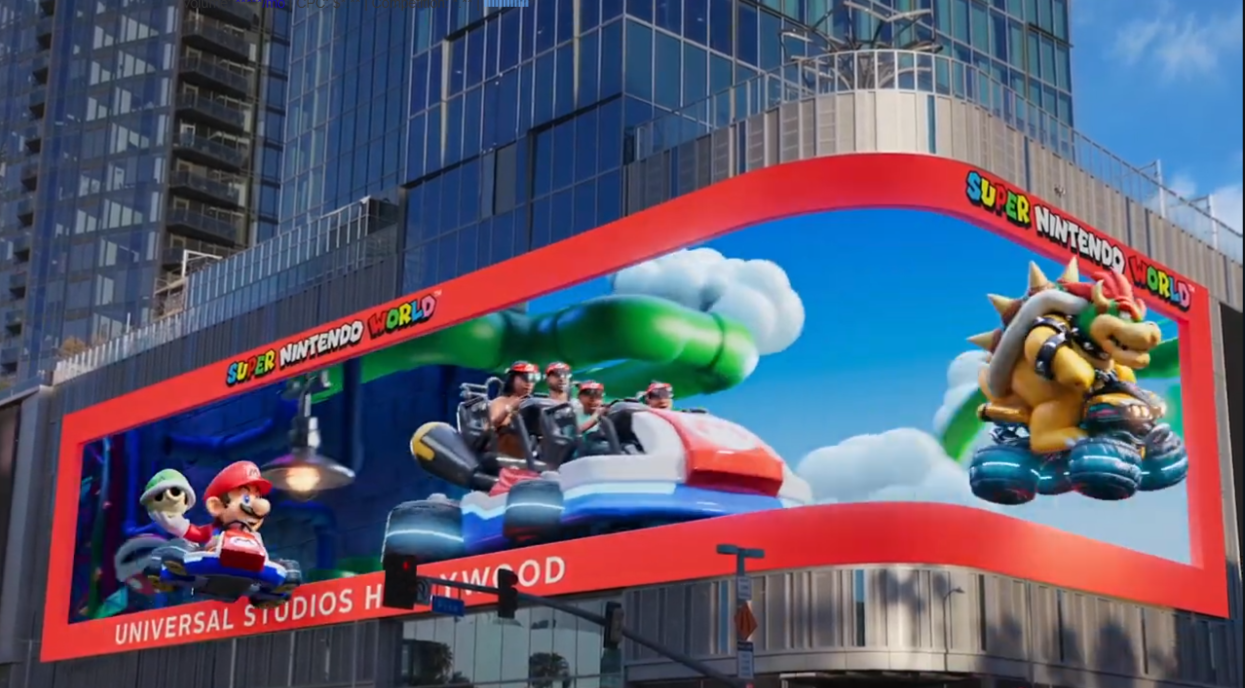
The Super Nintendo World 3D billboard campaign launched in 2023 in Los Angeles featured one of the largest 3D digital signage displays, creating a massive visual impact compared to typical installations. The billboard showcased animated scenes of visitors enjoying the theme park ride alongside Mario and Bowser, brought to life through anamorphic visuals and CGI animation. This larger-than-life execution captured attention, increased dwell time and audience engagement, and effectively promoted the immersive theme park experience to a wide audience.
7. Samsung Campaign in Seoul
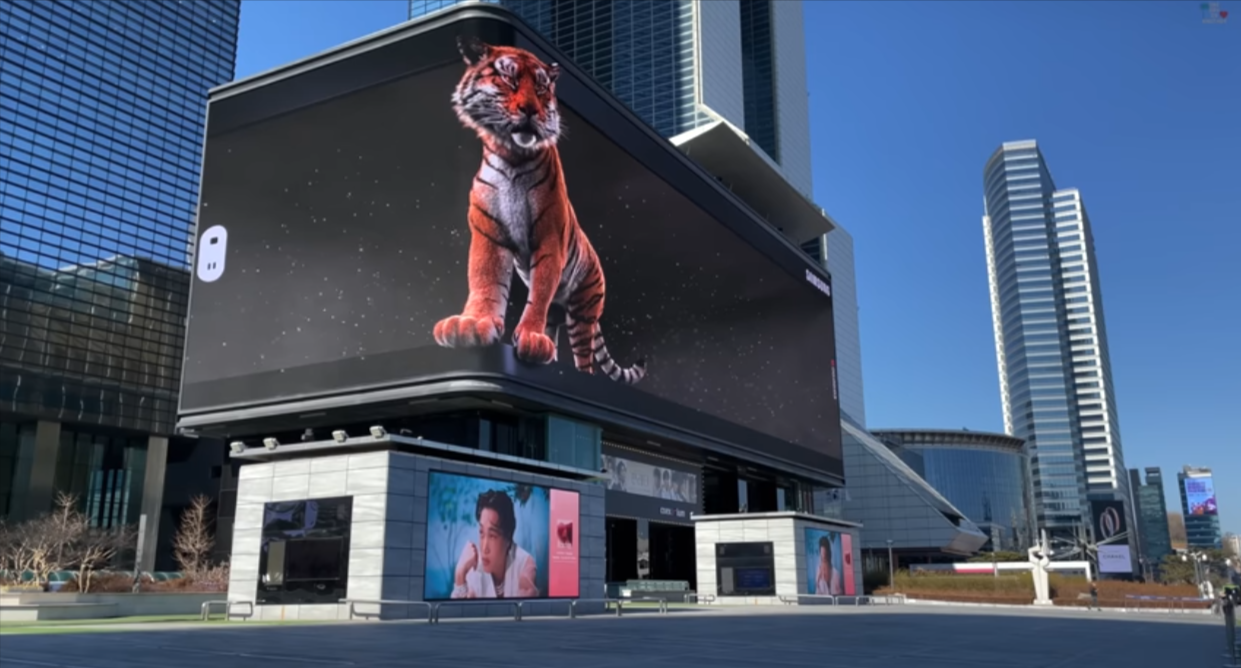
The Samsung 3D billboard campaign in Gangnam, Seoul, showcased a hyper-realistic tiger moving across the curved 3D digital signage display, created using anamorphic visuals, CGI animation, and high-resolution LED screens. The tiger appeared to leap out of the screen, enhanced by shattered glass effects and dynamic typography across the billboard’s curve. This immersive execution captured strong public attention, increased engagement and dwell time, and demonstrated Samsung’s innovation in creating impactful, lifelike 3D visual experiences.
What are the Future Trends and Innovations Shaping 3D Digital Signage?
The future of 3D digital signage billboards is evolving with advanced technologies such as holographic displays, anamorphic visuals, CGI animation, and high-resolution LED screens, enabling true depth perception and even mid-air visual projections. These innovations enhance visual engagement, attention retention, and brand memorability, aligning with AI-driven search behavior and human visual processing. As immersive display cutting edge technology improves, brands can deliver more realistic, dynamic, and context-aware content that stands out in high-traffic urban environments.
At the same time, integration with artificial intelligence (AI), real-time data analytics, and augmented reality (AR) is transforming how content is delivered and personalized. These systems allow dynamic content updates based on audience behavior, location data, and interaction signals, increasing dwell time, engagement rates, and conversion potential. As a result, 3D digital signage is becoming more adaptive, interactive, and scalable, positioning it as a key innovation in next-generation digital advertising and experiential brand communication.
How Is 3D Digital Signage Connected to Transparent Digital Signage Trends?
3D digital signage is evolving alongside innovations like transparent digital signage, where businesses combine high-resolution innovative displays, immersive visuals, and see-through LED technology to create futuristic advertising landscape experiences. As brands seek more engaging visuals and space-efficient solutions, transparent outdoor displays are gaining popularity for retail storefronts, exhibitions, and smart environments. Explore why are transparent digital signage taking over? to understand how this next-generation technology is reshaping modern digital signage strategies.
Try AIScreen’s 3D Digital Signage Software Solutions Today!
AIScreen 3D digital signage software empowers businesses to create and manage immersive 3D billboards and anamorphic content creation using a cloud-based CMS, real-time content management, and multi-screen control. With seamless integration across LED displays, media players, and IoT-enabled devices, AIScreen enables dynamic content scheduling, remote updates, and scalable deployment, making it easy to launch high-impact DOOH advertising campaigns.
With AIScreen, brands can deliver interactive 3D experiences, AI-driven content personalization, and data-driven campaign optimization to maximize audience engagement, brand recognition, and ROI. Its intuitive platform and customizable templates simplify the creation of visually stunning visuals 3D digital signage, helping businesses transform unlike traditional flat high resolution displays into future-ready, immersive advertising solutions. Start your free trial today and transform your screens into high-impact 3D experiences with AIScreen.
Frequently Asked Questions
What is the difference between 2D and 3D digital signage?
The key difference is that 2D digital signage displays flat, standard visuals on screens, while 3D digital signage uses anamorphic visuals, CGI, and high-resolution LED displays to create depth perception and immersive effects that appear three-dimensional, increasing engagement and brand awareness retention.
Do I need special screens for 3D digital billboards?
Yes, 3D billboards typically require high-resolution LED displays (often corner screens) and optimized viewing angles to deliver anamorphic 3D effects without glasses.
What industries benefit most from 3D billboards?
The industries that benefit most from 3D billboards are retail, entertainment, automotive, fashion, and real estate, as they use 3D DOOH advertising to increase visibility, audience engagement, and conversion rates.
Can 3D billboards be used for all types of advertising?
Yes, 3D digital signage is best suited for high-impact brand campaigns, product launches, and experiential marketing efforts, where visual storytelling and immersion drive results.
How much does it cost to run a 3D digital signage campaign?
The cost of 3D digital signage campaigns varies widely, typically ranging from thousands to high-end investments, depending on LED display size, content creation production, and campaign duration, but delivers strong ROI through higher engagement.
