
What Are the Best Building Signage Ideas for the Workplace?

Modern workplace signage is no longer just about labels on walls. It’s now a strategic tool for navigation, safety, branding, accessibility, and communication. Signs serve more than identification, they help guide foot traffic, reinforce company culture, support workplace safety, and even boost brand identity through visual storytelling. Intelligent signage systems such as digital displays, light box signs, wall signs, and directional tools simplify navigation, improve engagement, and help attract potential customers in commercial spaces. According to a 2023 Deloitte Workplace Trends Report, companies that implement smart visual communication tools such as digital signage and interactive displays see up to a 47% increase in employee engagement and a 24% improvement in wayfinding efficiency across office environments.
In this blog, you’ll find the 18 best building signage ideas for the workplace, covering indoor and outdoor business sign ideas, high-traffic displays, sustainability signage, ADA accessibility standards, and safety indicators such as exit signs and emergency alerts. You’ll explore both traditional signage and digital screens. You’ll also learn how modern technologies, especially using a robust digital signage platform like AIScreen, can help you build a connected, modern workplace with strong brand identity, efficient wayfinding, and safety compliance.
How Do You Manage Building Signage?
The most flexible building signage ideas run on a single control layer rather than dozens of scattered printed boards. With cloud based digital signage software you can push wayfinding updates, safety notices, and branded visuals to every screen in a workplace at once.
Instead of reprinting panels each time a policy or room assignment changes, teams schedule content remotely and keep messaging accurate across floors and multiple locations. This turns everyday office signage into a living system that adapts to daily operations while holding a consistent, professional look.
1. Wayfinding Signs
Clear wayfinding signs are among the most effective building signage ideas for any workplace, especially large or multi-floor offices. These directional and identification signs help visitors and employees find their way reliably. Well-designed wayfinding signage reduces confusion, improves navigation efficiency, and enhances the overall visitor experience.
Signs with large fonts, universally recognizable symbols (like arrows or exit icons), and proper placement, for example, near elevators, junctions, or high-traffic hallways, make it easy for people to orient themselves quickly.
In bigger layouts, color-coding departments or restrooms, and combining wall-, ceiling-, or floor-mounts increases clarity. Strategically placing signs at decision points, near essential facilities, and along major foot-traffic routes ensures maximum visibility and accessibility.
A recent empirical study showed that efficient wayfinding signage significantly improves navigation effectiveness in complex indoor spaces, reducing travel time, decision pauses, and navigation errors compared to poorly organized signage systems. Imagine walking into a large office complex or unfamiliar building and immediately spotting clear arrows, no confusion, no wasted time looking for directions. That’s the power of good wayfinding signage.
2. Interactive Digital Displays
Modern offices can benefit greatly from interactive digital displays as part of their building signage ideas. Digital screens bring static signage to life, offering touch-enabled, real-time content like company announcements, meeting schedules, emergency alerts, maps, or event notices. In high-traffic areas, such as lobbies, hallways, or break rooms, these digital displays keep everyone informed and engaged.
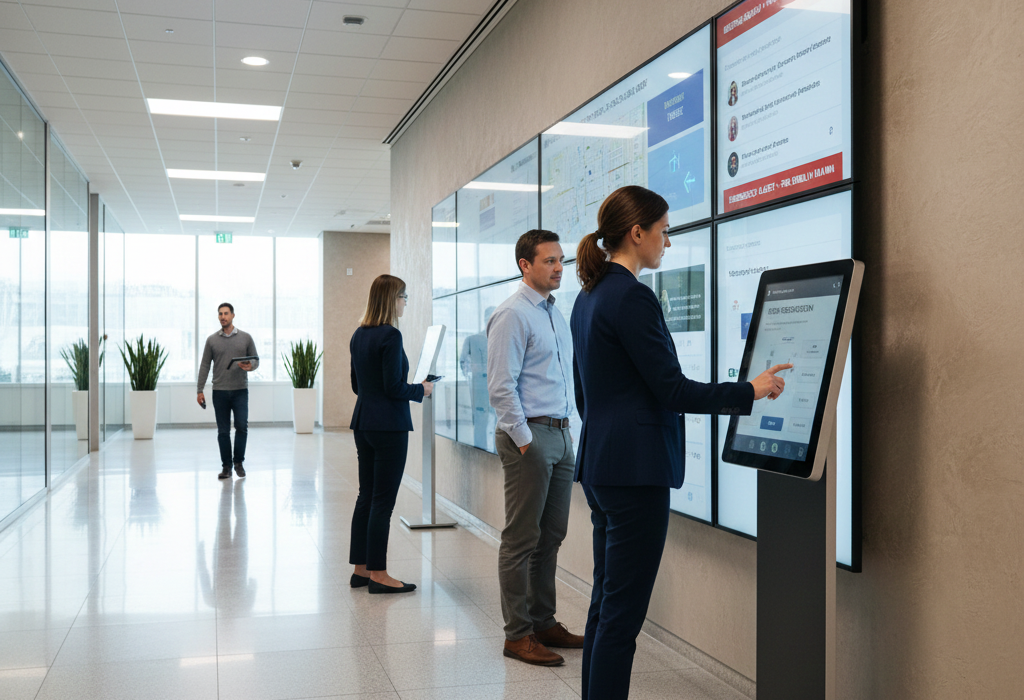
Because digital signage supports multimedia, videos, social-media feeds, dynamic maps, it’s a versatile tool for both communication and branding. If we’ll take an example, a reception-area interactive kiosk can display the office layout, guide visitors to meeting rooms or amenities, or show real-time updates about events or schedules. Employees and visitors get instant access to relevant information without needing to ask reception or hunt for printed notices.
If you use a robust digital signage solution (like AIScreen), you can manage these displays via a central cloud-based dashboard, update content on the fly, schedule playlists, and control multiple screens, making the system scalable across a single office or many locations.
3. ADA-Compliant Signage
Accessibility matters. ADA-compliant signage (or equivalent accessibility-focused signage, depending on your region) is essential to make the workplace inclusive for all. Such signage ensures that individuals with visual impairments or mobility challenges can navigate easily and safely.
Inclusive signage uses tactile lettering, raised text, or Braille, especially near restrooms, elevators, stairwells, and safety exits. High-contrast colors and clear, legible fonts improve visibility for users with low vision. In some cases, audible cues can complement visual signage to further assist those with visual impairments.
Restroom signs, exit signs, accessible route markers, all must follow accessibility regulations (such as ADA or local accessibility standards), be placed at appropriate heights, and remain clearly visible from a distance. Incorporating accessibility signage is not just a compliance exercise, it’s a commitment to creating a workplace that respects everyone’s needs and supports equal access.
4. Fire Safety Signs
Proper fire safety signs are vital for workplace safety and emergency preparedness. These signs identify evacuation routes, emergency exits, fire extinguisher locations, and safety equipment. In an emergency, clear and visible signage can save crucial seconds by guiding occupants quickly toward safe exits.
A study published in the Fire Safety Journal found that conventional static exit signs are often overlooked: only 38% of people “see” them in a building evacuation when they are unfamiliar with the environment, even if the sign is directly in front of them. In contrast, dynamic or enhanced signage (for example, signs with flashing LEDs or higher visibility) achieved a detection rate of 77%.
This shows that the design, visibility, and effectiveness of safety signage greatly matters. Illuminated or well-designed signs that follow safety standards (e.g., using standardized color schemes and symbols as per ISO 7010) help ensure that people can find exits or fire-safety equipment even under stress, low visibility, or during emergencies.
For an office or workplace, placing fire safety signage near exits, stairwells, elevators, corridors, kitchens, and common areas ensures compliance with safety protocols and enhances employee and visitor safety.
5. Photoluminescent Path Markings
Photoluminescent path markings, glow-in-the-dark floor or stairway markings, are a smart addition to safety-oriented building signage ideas. These markings absorb ambient light and continue to glow during power outages or in smoke-filled, low-visibility conditions, thereby guiding people toward exits or safe zones when conventional lighting fails.
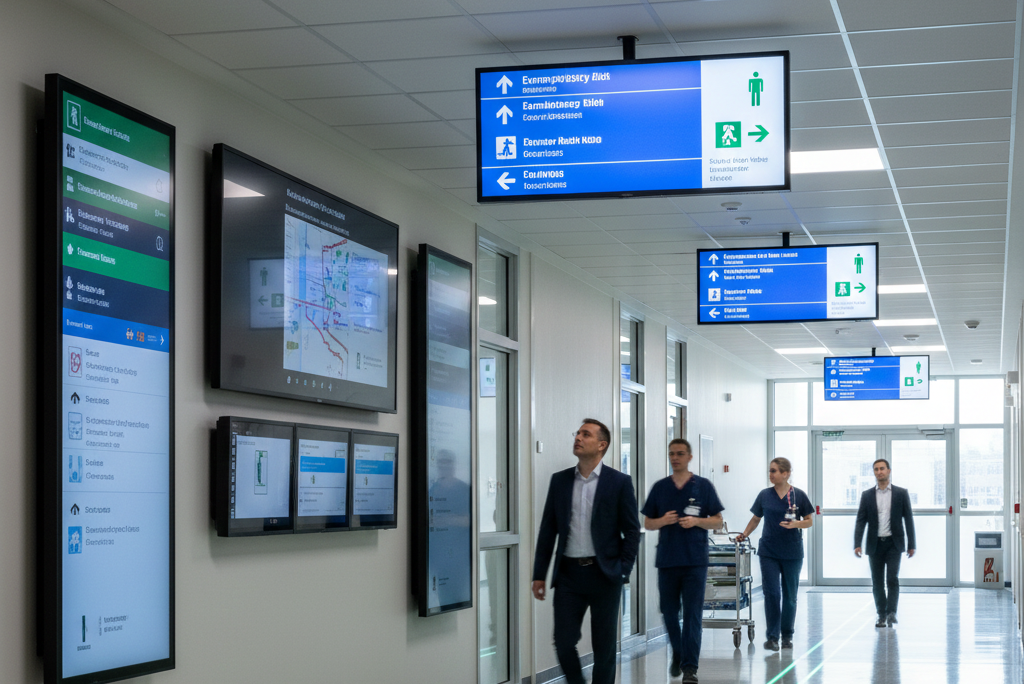
Such signage is ideal for evacuation routes, stairwells, corridors, or fire exits, especially in buildings prone to power disruptions or where emergency lighting may not reach every corner. Because photoluminescent materials don’t rely on electricity, they serve as a reliable backup during emergencies.
Implementing these glow-in-the-dark demarcation lines can improve evacuation readiness, support workplace safety protocols, and complement illuminated exit signs for maximum visibility.
6. Branding Wall Graphics
Beyond navigation and safety, signage serves a powerful role in building a company’s identity and culture. Branding wall graphics, large murals, wall signs, logo displays, mission-statement posters, or value-statements, are among the most effective office signage ideas to reinforce brand identity.
When placed in lobbies, hallways, meeting rooms, or communal spaces, these wall signs help reflect the company’s culture, values, and personality. Using the company logo, tagline, core values, or even bold visual art can give the workplace a unified look. This helps create a cohesive environment and reminds employees and visitors of the company’s mission and brand.
For small businesses or large enterprises alike, wall graphics can make a bold statement, enhance visual appeal, and contribute to a polished, professional workplace appearance. Signage design that reflects a brand’s personality becomes part of the company’s promotional strategy, improving recognition, reinforcing internal culture, and aligning with broader branding efforts.
7. Interactive Information Kiosks
Interactive informational kiosks are a modern and highly engaging option among building signage ideas. These self-service systems let visitors and employees access building information, directories, announcements, maps, and facility data on their own. A kiosk placed in the reception area or common zones allows people to check in, find meeting rooms, view office amenities, or get directions, all without asking staff or rummaging through paper maps.
Many interactive kiosks offer touchscreen interfaces and a user-friendly interface that enables easy navigation, even for first-time visitors. They deliver personalized information with just a few taps: room directories, floor plans, emergency contacts, or upcoming events.
Using a cloud-based platform with content management, these kiosks stay updated automatically. That means when your organization changes room assignments, updates conference schedules, or modifies building layout, the kiosk shows updated info without manual re-printing of maps or notices. This saves printing costs, reduces waste, and ensures accuracy, making kiosks a smart, affordable solution for small businesses and large enterprises alike.
Interactive kiosks make your building signage both practical and modern. They serve not just as static signs, but as dynamic, digital displays that improve visitor experience and reflect a professional environment.
8. Conference Room Availability Screens
In busy offices with many meeting rooms, conference room availability screens simplify scheduling and resource utilization. Digital signage placed outside or near meeting rooms displays in real time whether a room is available, booked, or in use. This helps employees quickly find open spaces for meetings without scheduling confusion or wasted time.
These displays integrate with calendar systems (like Google Calendar, Microsoft Outlook, or internal booking tools) to automatically update room status. When a meeting ends or begins, the screen reflects the change immediately. This reduces booking conflicts and helps teams plan better.
Beyond booking status, these screens can show additional data, meeting start/end times, next booking slot, room amenities (projector, video-conferencing support), or even brief instructions (e.g. room etiquette or capacity). Such signage transforms room doors into smart displays that guide employees efficiently and enhance office workflow.


9. Reception Area Displays
Reception area displays play a key role in shaping the first impression of your workplace. A well-designed lobby screen, whether a static sign or dynamic digital screen, can welcome guests, show your company name and logo, and convey your brand identity. This sets a professional tone as soon as someone enters.
Beyond greetings, reception signage can direct visitors to check-in desks, restrooms, waiting areas, or relevant departments. It can display office hours, visitor policies, or company announcements (like upcoming events, safety protocols, or facility reminders).
Using a digital display here offers added advantages: content can be updated instantly with just a few clicks, let’s take an example, to show “meeting in progress,” “event today,” or “visitor badge required.” This flexibility improves visitor experience, supports your branding efforts, and ensures that reception signage stays current and useful.
10. Restroom Signs
Clear and accessible restroom signs are a basic but essential part of office signage. Proper signage helps everyone, employees, visitors, clients, find facilities without confusion. For inclusivity, signs should follow accessibility standards: using large, high-contrast fonts, universally recognized icons, and, where possible, tactile text or Braille for visually impaired individuals.
Restroom signage should be simple, clear, and ideally gender-neutral (or clearly labeled for gender where required). It respects privacy, improves usability, and ensures a polished, professional environment.
Additionally, restroom and facility signs reflect attention to detail and care for the comfort and dignity of all occupants. For a business owner or facility manager, using clear restroom signage shows commitment to accessibility, functionality, and thoughtful sign design, elements that contribute to a positive office environment and good brand image.
11. Department Identification Signs
In multi-department or multi-floor offices, department identification signs help organize space and reduce confusion. These signs clearly indicate which team or department occupies a given area, for example, “Finance,” “HR,” “Marketing,” or “Customer Support.” Using icons or subtle color-coding (for example, green for Finance, blue for HR) can make navigation even easier and faster.
It’s best to use large, readable fonts and place these signs at eye-level, near entrances or intersections. Consistent branding across all department signs, matching company colors, fonts, and style, helps reinforce a cohesive workplace identity.
Department signs are not just functional; they reinforce your brand identity internally, help new employees or visitors orient themselves, and make the workspace look more organized and professional. For open-plan offices or large corporate buildings, good department signage enhances clarity and workflow.
12. Emergency Exit Signage
Emergency exit signage is critical for workplace safety and must adhere to OSHA guidelines. These office signage elements help employees and visitors immediately identify and move toward the nearest safe exit during emergencies like fires. Exit route signs serve as a cost effective yet high-impact visual solution comparable to outdoor business sign ideas, as clear signage is essential in both indoor and commercial building signage ideas for high visibility.
OSHA mandates illuminated emergency exit signage near every exit door, stairwell, corridor, and evacuation pathway. Similar to using light box signs, neon signs, or marquee signs in high traffic areas for attract customers, safety signage must be strategically placed to guide potential customers and employees effectively. Glow-in-the-dark materials and premium materials such as acrylic letters or metal signs ensure durability, improved polished appearance, and uninterrupted visibility during power outages.
In addition to directional cues, OSHA also recommends including clear instructions for evacuation procedures. Such signs serve an essential role in safety communications and should be kept minimal yet direct, much like simple sign concepts used in outdoor advertising. When integrated into broader branding efforts, using consistent company logo styling helps maintain familiarity while prioritizing safety.
13. Visitor Information Displays
Visitor information displays assist guests during entry, check-in, and orientation. Whether through digital screens or static door signs, they present important information such as office hours, navigation details, visitor guidelines, or company policies.
Placing these signs at reception, much like business sign ideas positioned in high traffic areas, supports high visibility and creates a polished appearance upon arrival.
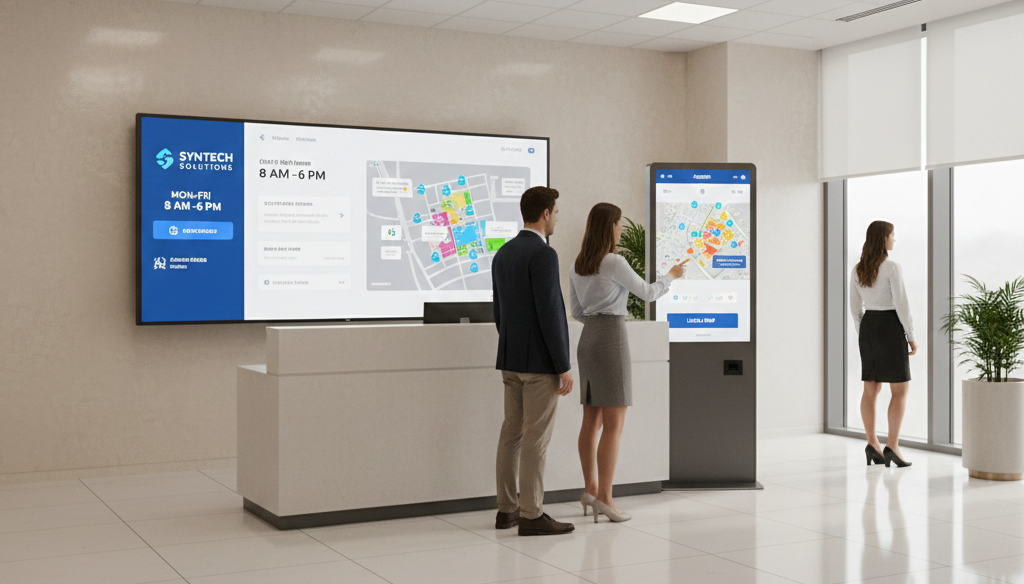
These displays can be digital or physical, similar in approach to light box signs, window decals, or even sandwich signs used for outdoor business signs that capture attention and enhance accessibility. For multi-floor facilities or multiple locations, displays may include maps, safety information, and directions to key areas such as restrooms, conference rooms, break zones, or meeting areas.
Visitor signage supports brand’s promotional strategy subtly by reinforcing the company logo and values within the content. Much like wood signs, neon lights, or blade signs used externally to attract customers, internally these signs help orient guests while maintaining professional identity and credibility.
14. Sustainability Messaging Signage
Sustainability messaging signage promotes eco-conscious habits and ensures employees follow internal conservation policies. These signs encourage recycling, turning off lights, and minimizing waste. Analogous to sign ideas used in outdoor business sign ideas, sustainability signage uses direct, simple messaging to promote long-term branding efforts while contributing to environmental responsibility.
Signage is best placed near recycling areas, energy switch points, and communal areas. Using premium materials such as metal signs, wood signs, or even digital displays aligns with free form styling options to suit your office environment. Clear, durable designs, similar to light box signs or awning sign formats, help ensure continuity and readability.
Highlighting company achievements in sustainability provides motivation and internal PR value. Just like unique outdoor signs promote a business strategy, these indoor indicators strengthen your corporate responsibility narrative. They serve as a cost effective, brilliant platform for reinforcing company values while maintaining a polished appearance.
15. Interactive Feedback Stations
Interactive feedback stations allow employees to voice opinions and share suggestions privately and conveniently. This fosters engagement and inclusion. These setups can be simple static displays or fully digital interfaces, including digital kiosks that mirror the functionality of modern outdoor signs when adapted indoors.
To enhance participation, stations should be user-friendly and welcoming. According to a Harvard Business Review study, organizations that regularly collect employee feedback are 21% more profitable, highlighting the strategic importance of engagement initiatives. This supports using digital solutions to capture attention and promote ongoing communication.
Similar to how commercial building signage ideas help attract customers, feedback stations influence productivity. Durable installations using metal signs, acrylic letters, or digital interfaces integrated with touchscreens provide a professional, easily accessible design. They function similarly to business sign ideas, where high visibility and ease of use translate into better outcomes. A well-designed interactive panel ensures employees feel heard, reinforcing morale and workplace satisfaction.
16. Directional Floor Markings
Directional floor markings guide movement throughout your facility and are particularly useful in large, complex, or construction-adjusted areas. These decals are a practical alternative to wall-mounted business sign formats and serve effectively in high traffic areas. Like floor-level wayfinding signage seen in outdoor business signs, they provide instant guidance without obstructing interior walls or pathways.
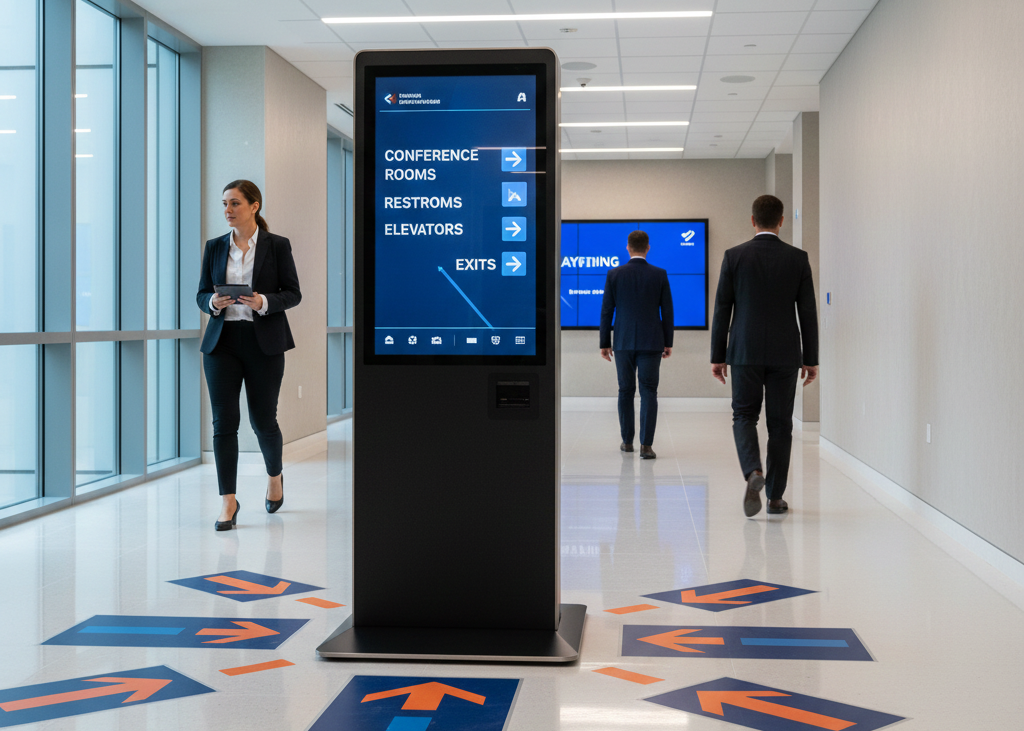
These simple yet impactful markers are durable and ideal for high-use surfaces. Similar to light box signs, blade signs, or neon lights, they must be strategically positioned to lead visitors to key destinations such as restrooms, conference rooms, elevators, or exits. When applied effectively, floor markings enhance workflow efficiency and safety.
Directional decals should align with your wider branding efforts, using company fonts, subtle company logo elements, or complementary tones. High contrast improves visibility, and using robust premium materials ensures longevity, making it a cost effective and functional option for any workplace.
17. Accessibility Pathway Indicators
Accessibility pathway signage ensures inclusivity and compliance with ADA guidelines. These paths must remain clear, unobstructed, and uniquely marked using tactile signage, floor indicators, or raised surface cues. Much like business sign ideas that consider layout efficiency, accessibility markers guide safe and convenient route planning within an office environment.
ADA standards recommend placement at eye level using high-contrast design, much like high visibility strategies used in blade signs, light box signs, or marquee signs that seek to capture attention. Pathways must accommodate wheelchairs and mobility aids and include direction-based symbols on walls, floors, or door signs.
Using premium materials such as acrylic letters, metal signs, or custom tactile decals ensures durability. Incorporating the company logo within signage adds a more connected, branded touch while ensuring compliance. These signs serve a crucial role in supporting safe navigation and comfort across multiple locations, improving operational flow.
18. Seasonal or Event-Based Signage
Seasonal and event-based signage increases workplace engagement and highlights special milestones, celebrations, or corporate events. Similar to outdoor business sign ideas used to attract customers, festive indoor signage boosts morale and builds internal excitement. These can be temporary banner-style signs, digital displays, or even sandwich signs in common areas.
Holiday signage or project launch graphics may use colors and themes aligned with the brand’s promotional strategy. When developed with care, using premium materials, neon lights, vinyl wraps, or stylized decals, they help capture attention and reinforce participation. A simple sign can announce weekend events, while more elaborate marquee signs or light box signs can inform staff of major initiatives.
Effective seasonal signage supports team culture and maintains a polished appearance throughout the workplace, much like professional business sign installations externally. Whether for employee birthdays, community initiatives, or upcoming events, these signs serve to delight, inform, and energize staff, underscoring your ability to adapt environments creatively and purposefully.
How Do You Choose Building Signage Types?
Strong building signage ideas start with matching the right format to each space, from tactile plates near restrooms to glowing panels in busy lobbies. Reflective window graphics, illuminated wall signs, and transparent digital signage each solve a different visibility problem inside an office.
Reviewing the full range of formats helps facility managers pair durability, readability, and brand tone with the exact location where each sign lives. A clear grasp of sign types also prevents overspending on premium materials where a simpler option would perform just as well.
How Do Screens Modernize Workplace Signage?
Digital screens help create a more modern, connected workplace by supporting real-time communication and enabling instant content updates across multiple locations.
Unlike traditional office signage or simple sign formats, digital screens allow centralized management where teams can update meeting schedules, company events, and health and safety protocols without manual intervention. This level of automation encourages employees to stay informed and boosts engagement in both conference rooms and break rooms.
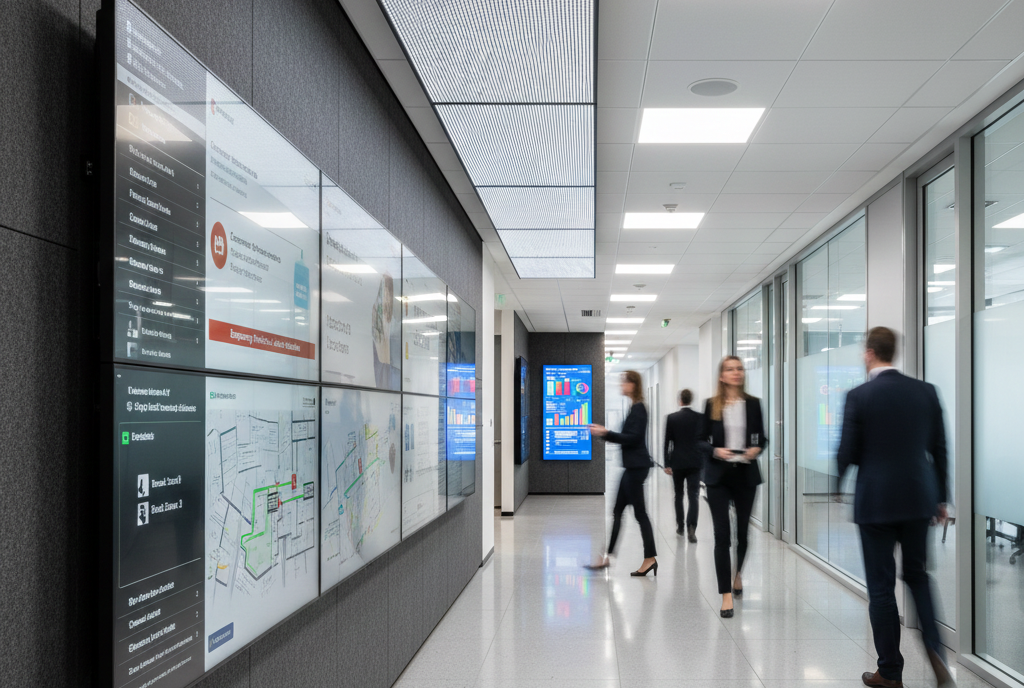
By using digital signage, organizations can display emergency protocols, outdoor advertising campaigns, window decals integrations, company events, and even floor decals guidance to create a seamless flow across the entire workspace.
Digital signage serves as a business sign alternative inside the workplace, transforming static business sign ideas or outdoor business signs into dynamic content-driven solutions. This helps maintain consistency across office signage, improve visibility similar to neon signs or marquee signs, and offer flexible scheduling options that static signs and outdoor signs simply can’t match.
Smart displays help encourage employees through visual reminders, welfare updates, and performance dashboards, creating an environment that actively supports potential customers during visits.
With multiple applications ranging from digital wayfinding screens to internal announcements, digital signage elevates workplace communication just as effectively, ensuring high engagement across the entire workspace, an approach aligned with the 18 best office signage ideas for workplace used to improve clarity, morale, and overall experience.
Digital Signage vs Traditional Building Signs
Digital signage compares to traditional building signs by offering far greater flexibility, visibility, and cost efficiency over time. While static business sign or awning sign options require physical updates and replacements, digital displays allow dynamic adjustments without additional printing costs. Traditional outdoor business sign ideas such as marquee signs, neon signs, or street lighting systems capture attention outside, but inside the workplace, digital signage provides real-time updates and improved communication speed for employees.
Unlike conventional outdoor business signs or sign ideas that can’t adapt to changing policies or events, digital signage enables automated scheduling, instant content modification, and organization-wide communication via AIScreen’s features like remote content management, real-time update, TV dashboard integrations, and centralized administration tools.
As we read in this article that “18 Best Building Signage Ideas for Workplace”, traditional signage like floor decals, window decals, emergency protocols displays, break rooms labeling, and encouraging employees signage remains valuable but lacks the adaptability and data-driven intelligence offered by digital displays. Digital systems allow companies to maintain consistent office signage, support indoor branding similar to best business sign approaches, and ensure messaging reaches relevant teams instantly, creating faster response times and more connected workplaces.
What Building Signage Fits Workplace Events?
Beyond daily navigation, building signage ideas shine when a workplace hosts launches, town halls, or seasonal celebrations. Temporary banners, digital welcome screens, and directional panels guide attendees to the right rooms and set the tone before a session begins.
Looking at practical event signage examples shows how quickly the same screens used for wayfinding can shift into promotional and celebratory roles. This flexibility lets teams reuse existing displays for special moments without printing throwaway boards for every occasion.
Frequently Asked Questions
What types of building signage work well for commercial properties?
The types of building signage that work well for commercial properties include a mix of digital and static solutions such as outdoor business signs, indoor office signage, window decals, floor decals, and neon signs. These signs help support brand visibility, improve navigation, and maintain alignment with business sign ideas designed to capture attention of potential customers and enhance the entire workspace.
What materials are most durable for outdoor building signage?
The materials that are most durable for outdoor building signage include metal signs, acrylic-based boards, and weather-resistant premium materials often used in outdoor business sign ideas. These materials are designed to withstand outdoor advertising conditions, street lighting exposure, and high traffic areas, helping business sign concepts stay visible and long-lasting.
Why is building signage important for brand recognition and customer attraction?
Building signage is important for brand recognition and customer attraction because it reinforces company identity through visual consistency, making business sign concepts instantly recognizable. Whether it’s outdoor signs or interior walls signage, high visibility signage can attract customers, communicate company events, and establish trust through polished appearance similar to best business sign strategies.
Is digital building signage better than traditional static signage?
Yes, digital building signage is better than traditional static signage for businesses seeking real-time communication, automated scheduling, and dynamic updates that encourage employees. While static signage such as marquee signs or outdoor business signs are cost effective for long-term visuals, digital signage provides instant adaptability, making it ideal for displaying emergency protocols and fast workplace communication.
Why should building signage stay consistent with brand identity and colors?
Building signage should stay consistent with brand identity and colors to create a unified message across all touchpoints including outdoor advertising, company events, and office signage. Consistency ensures polished appearance, helps potential customers recognize the business sign instantly, and supports long-term branding strategies that extend across indoor and outdoor signs.
Why Choose AIScreen for Building Signage?
Great building signage sets the tone the moment people arrive. AIScreen turns static workplace signs into dynamic digital displays you can update in seconds, from lobbies to meeting rooms. Start for free and give your building signage a modern, connected upgrade.
As a leading provider of digital signage solutions, AIScreen helps businesses manage building signage from one centralized platform. Teams can schedule content, update multiple screens remotely, and keep messaging consistent across entrances, offices, shared spaces, and other workplace locations.
