
7 Best Digital Signage Software Companies for Manufacturing KPI Dashboards
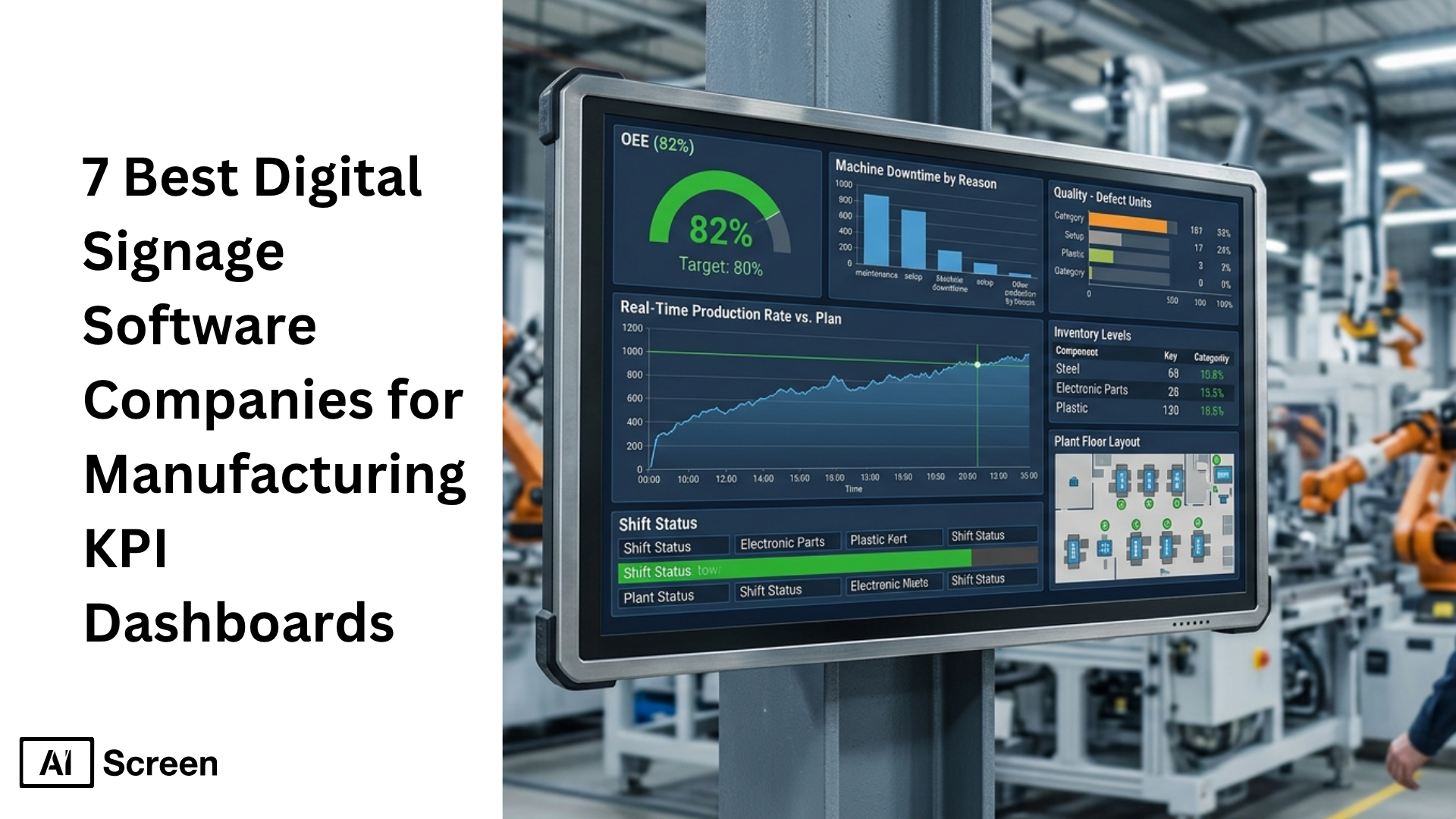
Best digital signage software companies for manufacturing KPI dashboards are getting more attention as manufacturers look for better ways to track production metrics, improve internal communications, and manage digital signage across multiple screens and multiple locations. This shift makes sense because digital signage software for manufacturing can replace paper notices and outdated boards with real-time information. According to Market.us, digital signage software for manufacturing typically starts from around $10–$30 per screen per month, while cloud-based platforms often range from $10 to $50 per screen per month.
In this article, you will learn which digital signage software companies stand out for manufacturing KPI dashboards, what features matter most when comparing each digital signage platform, and how to choose the best digital signage software for your production floor, corporate offices, and broader digital signage networks. You will also see how these software solutions support real time data integration, remote device management, content management, and reliable communication in modern manufacturing environments. See AIScreen’s manufacturing KPI dashboard solution.
Why Should You Be Worried About Your Manufacturing KPI Tracking?
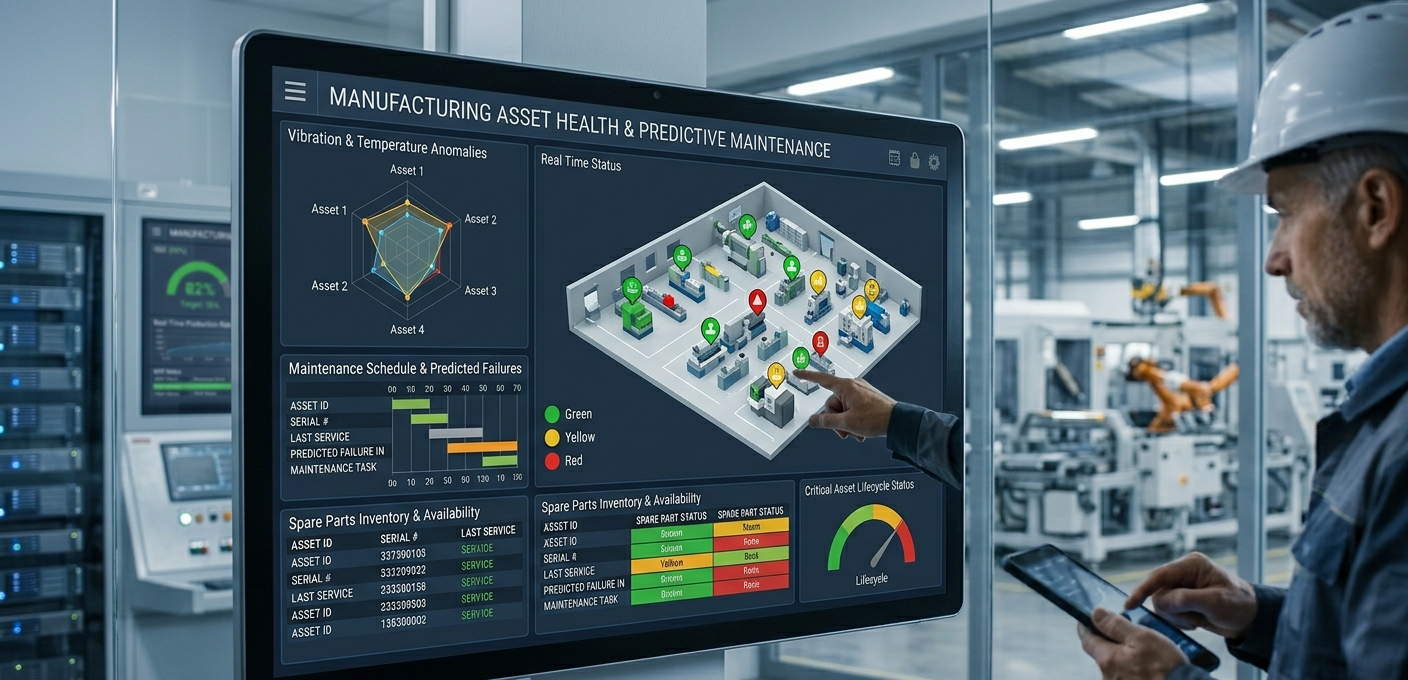
You should be worried about your manufacturing KPI tracking because running a production floor without live visibility is like leading a ship without a compass.
In manufacturing facilities, production metrics show how machines are performing, why downtime happens, where quality issues begin, and whether output matches demand. Without that visibility, digital signage content becomes reactive, internal communications slow down, and decisions across production lines turn into guesswork instead of action.
Digital signage software and manufacturing digital signage help teams turn digital screens into a clear view of what is happening right now on the production floor. That matters in industrial environments where reliable communication, safety alerts, emergency alerts, and analytics dashboards need to be visible at the right moment.
Digital signage software enables businesses to act on real-time data instead of waiting for delayed reports, helping avoid costly downtime and inefficiencies on the factory floor.
A strong digital signage platform makes this easier by showing relevant content across multiple screens, multiple displays, and even multiple locations. Digital signage can automate emergency alerts and display hazard warnings across multiple displays in real time, improving safety compliance.
Digital signage allows for customized content delivery based on departmental requirements, enhancing operational efficiency. Digital signage helps organizations communicate clearly without constant meetings, bridging the gap between office teams and deskless workers. Digital signage improves safety awareness across shifts by displaying current safety metrics and injury counts.
What Challenges Come with Manual KPI Tracking?
Challenges come with manual KPI tracking, including manual reporting, spreadsheets, and outdated systems, which create delays, errors, and too much manual effort.
By the time teams update reports, the issue on the production floor may already be affecting output, safety protocols, or shift performance. That weakens corporate communication, slows content management, and makes it harder to manage screens or control multiple screens with confidence.
Manual KPI tracking also creates gaps between corporate offices and shopfloor teams. Information gets stuck in silos, display content becomes outdated, and digital signs fail to reflect live conditions from manufacturing execution systems, enterprise resource planning tools, or other external data sources.
This lack of visibility does not only affect operations. It can also hurt broader corporate marketing efforts when internal teams are not aligned on performance, messaging, and priorities.
Digital signage reduces information silos and helps employees receive the same real-time data across departments, which is exactly what manual methods struggle to do. Real-time data integration is essential for digital signage software to display up-to-date information and analytics.
How Does Manufacturing KPI Dashboard Software Solve These Challenges?
Manufacturing KPI dashboard software solves these challenges by replacing slow manual tracking with digital signage solutions built for real time data integration, remote content management, and centralized control.
A flexible platform designed for manufacturing environments can pull data feeds from existing systems, including manufacturing execution systems and enterprise resource planning platforms, then show production metrics, safety alerts, and analytics dashboards on digital displays across multiple plants.
This is where the best digital signage software companies for manufacturing KPI dashboards stand out. The best digital signage software is usually a cloud based platform with remote device management, role based access, hardware flexibility, support for different operating systems, and media players that work without proprietary hardware.
Effective digital signage for manufacturing KPI dashboards requires high-frequency data refreshes, secure authentication for BI tools like Microsoft Power BI, and industrial-grade reliability. Digital signage for manufacturing should display only the 3–4 most crucial metrics per screen to maintain readability.
Digital signage software should support offline functionality to ensure displays continue to function during internet outages.
A useful benchmark from your reference notes is that digital signage improves internal communication by 78% in manufacturing by delivering real-time updates and important information directly to employees.
That is why manufacturing digital signage is becoming one of the best digital signage choices for enabling businesses and enabling brands to keep digital content accurate, visible, and actionable across digital screens in enterprise environments, retail stores, and corporate offices alike.
It also supports best practices for digital signage IT quality management by helping teams maintain accurate data flow, controlled access, consistent screen performance, and reliable communication across locations.
Which Are the Best Digital Signage Software Companies for Manufacturing KPI Dashboards?
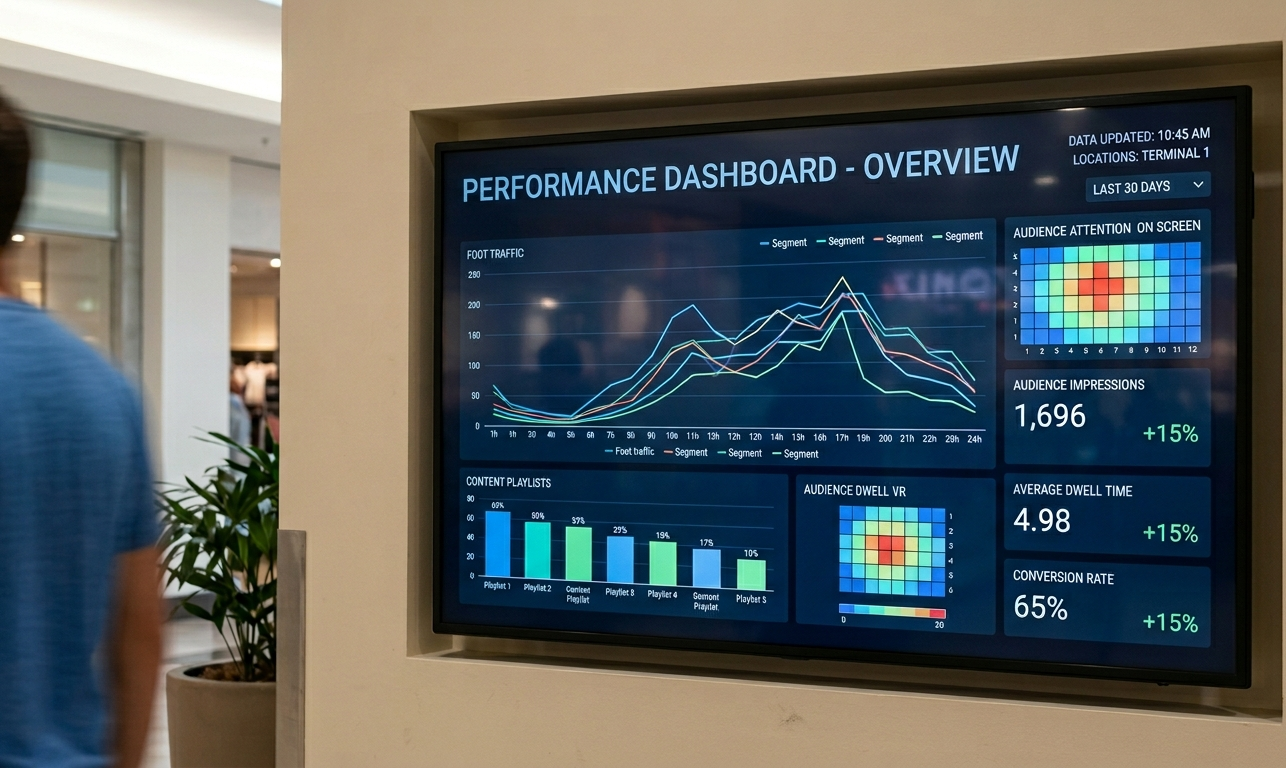
The best digital signage software companies for manufacturing KPI dashboards usually combine digital signage software, real time data integration, remote device management, centralized control, and strong content management across multiple screens and multiple locations.
For manufacturing facilities, the right digital signage platform should support production metrics, safety alerts, internal communications, digital signage networks, and remote content management without adding manual effort.
The top platforms compare when evaluating the best digital signage software for manufacturing based on ease of use, emergency alerts, multi-platform support, and how well they help businesses manage digital signage networks across multiple locations.
Digital signage software for manufacturing also needs to connect with existing systems such as enterprise resource planning, manufacturing execution systems, and other external data sources through APIs or third-party apps.
Over 60% of manufacturers are investing in smart factory technologies, including digital signage solutions, to improve efficiency and reduce downtime, which shows why scalable digital signage is becoming a more practical tool for reliable communication on the production floor.
AIScreen
AIScreen is a flexible and best cloud based platform built for teams that need digital signage software designed for multiple facilities, multiple displays, and multiple locations without being locked into proprietary hardware.
It works well for manufacturing digital signage because it combines remote management, remote device management, remote content management, screen sharing, centralized control, and content creation in one digital signage platform.
For manufacturing environments, it can be used to display production metrics, analytics dashboards, safety alerts, emergency alerts, internal communications, and relevant content across digital displays on the production floor, in corporate offices, and even in retail stores or visitor-facing spaces.
It is also user-friendly, which matters because digital signage software should allow users to create and manage digital content without heavy technical expertise. Digital signage reduces information silos by 67% and helps employees receive the same real-time data across departments, which makes a strong case for using a platform like this in manufacturing facilities.
Features:
- Cloud based platform for managing digital signage networks across multiple locations
- Remote device management and remote management for digital signs and media players
- Centralized control to manage screens and control multiple screens from one dashboard
- Supports digital signage content for production floor KPIs, corporate communication, and safety protocols
- Real time data integration through apps, dashboards, and external data sources
- Hardware flexibility across different operating systems and multiple displays
- Role based access for enterprise environments
- Supports effective communication across production lines and multiple plants
- Works for interactive kiosks, analytics dashboards, and display content scheduling
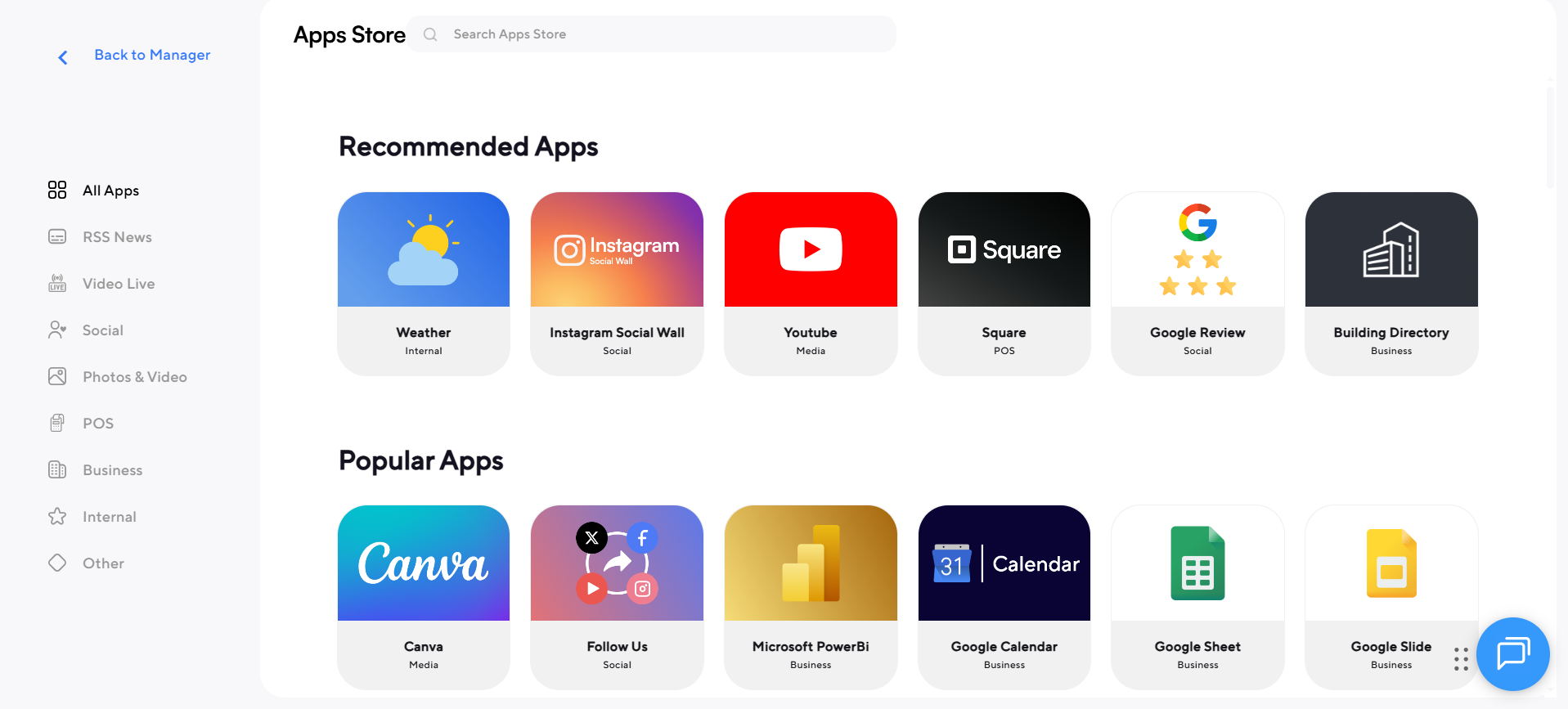
Apps:
- Google Slides for easy deploy menu content, notices, and shift updates
- Power BI for production metrics, analytics dashboards, and live KPI views
- Social media feeds for external brand or recruitment messaging where needed
- Dashboard-style apps for real time data integration from external data sources
- Content apps that support digital content, internal communications, and screen sharing
Pricing:
- Software pricing is generally positioned in the common market range where digital signage software for manufacturing often starts around $10–$30 per screen per month
- Works with existing hardware in many cases, which can lower rollout costs
- Avoids forcing proprietary hardware, which can reduce total deployment cost
- The average cost of digital signage in the United States ranges from $1,000 to $5,000 per screen when hardware, setup, and display infrastructure are included
LTS Data Point
LTS Data Point is a cloud based modular platform focused on KPI alignment, Lean Daily Management, and frontline execution.
It is stronger as a structured manufacturing KPI system than as a broad digital signage software product, but it suits manufacturing facilities that want live visual boards tied to accountability, action plans, and strategic goals.
Features:
- Real-time KPI visualizations for daily tier meetings
- Integration with MES, ERP, Excel, and BI tools
- Supports SQCDP, OEE, Gemba boards, and action plans
- Includes trend graphs, pareto analysis, scorecards, and bowling charts
- Highly scalable with add-on modules for planning and downtime control
Limitations:
- More focused on KPI execution and Lean governance than general digital signage
- Less suited for broad digital signage content needs like social media feeds or interactive features
- May feel heavier for teams that only need simple signage software
Praxie
Praxie is an AI-powered operations platform built around templates, scorecards, and process improvement workflows.
It is useful for organizations that want structured digital tools for strategy, quality, and lean process support, especially when they are still building their KPI frameworks. It fits better as a transformation and dashboard tool than a full digital signage platform.
Features:
- AI-powered SQDC huddle board app
- Supports strategy templates, scorecards, and process diagnostics
- Integrates with MES, ERP, and QMS systems
- Offers board-level reporting and high-level performance views
- Helps teams automate and monitor workflows
Limitations:
- Better at strategy and templates than shopfloor display execution
- Not as strong for managing digital signage networks across multiple screens
- Lean and continuous improvement routines depend on broader process maturity
iObeya
iObeya is known for digital Obeya rooms and visual collaboration for leadership and cross-functional teams.
In manufacturing, it works well for structured review meetings, governance, and strategic alignment, especially when teams want to connect KPIs with planning and decision-making. It is more of a visual management environment than a complete digital signage software solution.
Features:
- Digital visual rooms for strategic and operational collaboration
- Real-time visualization of quality metrics
- Supports safety checklists and planning workflows
- Useful for hybrid planning and interconnected team reviews
- Strong fit for leadership cadence and agile governance
Limitations:
- KPIs are displayed but not deeply architected
- Requires another system for richer performance intelligence
- Not designed primarily for large-scale digital screens across production lines
Tervene
Tervene is a daily management and leadership routine platform for industrial environments. It helps standardize audits, inspections, Gemba walks, issue tracking, and shift communication.
It is valuable for manufacturing environments that need discipline, accountability, and follow-up, though it is not a full digital signage software product on its own.
Features:
- Leader Standard Work tracking
- Mobile-enabled Gemba walks, audits, and 5S inspections
- Action tracking with follow-ups and workflows
- Tiered communication and shift handover support
- Dashboards for issue resolution and operational visibility
Limitations:
- Core performance KPIs usually live in other systems
- Limited as a full digital signage platform for manage screens use cases
- Better for routines and accountability than multimedia display content
DigiLean
DigiLean is a lean digitization platform that replaces physical boards with digital boards and collaboration workflows.
It is a practical option for organizations starting digital Lean deployment and wanting live updates across locations. It helps bring structure to daily management boards, but it depends on external systems for deeper KPI intelligence.
Features:
- Ready-to-use Lean templates
- Interactive boards for Kanban, SQCDP, and schedules
- Tiered reporting and live updates
- Action lists, improvement suggestions, and problem-solving modules
- Collaboration support across different locations
Limitations:
- No balanced scorecard support
- Relies on external systems for KPI depth
- Less complete for enterprise-wide digital signage solutions
Tulip
Tulip is a connected frontline operations platform with a no-code app builder for manufacturing workflows.
It is especially strong when the goal is to digitize operator workflows, machine monitoring, OEE dashboards, and shopfloor data capture without traditional development work. It is excellent for frontline process digitization, though it is not built as a classic best digital signage software company.
Features:
- No-code app builder for frontline workflows
- Supports machine data capture and real-time monitoring
- OEE and equipment status dashboards
- Strong connector ecosystem and extensibility
- Good path from rapid prototype to enterprise rollout
Limitations:
- Built more for frontline automation than full signage software
- Not a complete strategic scorecard system
- Broader digital signage content management may require extra tools


Which Criteria Matter Most When Choosing Manufacturing KPI Dashboard Software?
The criteria that matter most when choosing manufacturing KPI dashboard software are the ones that show whether the software can support real production metrics, internal communications, centralized control, and reliable communication across manufacturing facilities.
The best digital signage software companies for manufacturing KPI dashboards should do more than show data on digital screens. They should support real time data integration, content management, remote device management, and scalable digital signage across multiple screens, multiple plants, and multiple locations.
A strong digital signage platform should also fit manufacturing environments, work with existing systems, and help teams manage screens with less manual effort.
Here is a clear table you can use in the blog:
| Criteria | Meaning |
|---|---|
| Customisation | Can you adapt dashboards, boards, production metrics, and display content to match your manufacturing processes and production lines? |
| Data visualisation | Does the platform show clear dashboards, charts, reports, and analytics dashboards for real-time insights on digital displays? |
| Lean enablement | Does the software support PDCA, Gemba, continuous improvement routines, Kaizen, and problem solving on the production floor? |
| Strategic alignment | Can objectives flow from leadership teams and corporate offices down to operators across multiple facilities? |
| KPI depth | Can the system manage scorecards, layered KPIs, historical tracking, and performance views across departments? |
| Analytics & alerts | Does it provide trend analysis, automated alerts, safety alerts, emergency alerts, and useful insights for faster action? |
| Collaboration | Does it support message boards, action plans, internal communications, and workflows that improve corporate communication? |
| Integration ecosystem | Can it connect with enterprise resource planning, manufacturing execution systems, IoT devices, HR tools, BI tools, and external data sources? |
| Scalability | Can the software grow across multiple plants, multiple displays, digital signage networks, and enterprise environments without adding complexity? |
| Ease of use | Is the interface simple enough for operators, managers, and leaders without requiring deep technical expertise? |
| Integration | Does it link easily with MES, ERP, SCADA, Power BI, Google Slides, and other shop-floor or reporting systems? |
| Security | Does it offer role based access, encryption, user controls, and compliance support for industrial environments? |
| Pricing | Is the pricing transparent, practical, and able to support ROI as the business expands across multiple locations? |
Why AIScreen Is a Smart Choice for Manufacturing KPI Dashboards
AIScreen is a smart choice for manufacturing KPI dashboards because it gives teams one simple digital signage platform to show production metrics, safety alerts, internal communications, and live updates across multiple screens and multiple locations. It helps manufacturing facilities reduce manual effort, improve reliable communication, and manage digital signage content with centralized control, remote device management, and strong hardware flexibility.
AIScreen stands out as a leading provider because it combines ease of use with scalable digital signage, real time data integration, and remote content management for modern manufacturing environments. For businesses that want better visibility across the production floor, better control of digital displays, and a flexible platform designed to grow across multiple plants, AIScreen offers one of the best digital signage software solutions available. Contact us.
FAQs
Can small manufacturers use KPI dashboard software effectively?
Yes, small manufacturers can use KPI dashboard software effectively when the platform is easy to manage, flexible, and built for growth. A good digital signage platform helps smaller manufacturing facilities track production metrics, safety alerts, and internal communications on multiple screens without needing a large IT team or deep technical expertise.
What data sources can feed a manufacturing KPI dashboard?
Manufacturing KPI dashboard data sources can include enterprise resource planning systems, manufacturing execution systems, SCADA tools, IoT devices, SQL databases, spreadsheets, Power BI, and other external data sources. The stronger the integration ecosystem, the easier it becomes to turn raw shop-floor data into relevant content on digital displays.
How quickly can manufacturing teams deploy dashboard software across a plant?
Manufacturing teams can deploy dashboard software across a plant quite quickly if the signage software supports remote device management, cloud setup, and simple content management workflows. Many teams start with one production floor, test digital signage content on a few digital screens, and then expand across multiple plants or multiple locations once the process is proven.
Why does security matter in manufacturing dashboard software?
Security matters in manufacturing dashboard software because production data, user permissions, and screen control should not be left exposed. Strong software solutions usually include role based access, encryption, centralized control, and secure integrations so teams can manage screens safely across enterprise environments and industrial environments.
Can KPI dashboards improve shift communication and accountability?
Yes, KPI dashboards can improve shift communication and accountability by showing live production metrics, safety protocols, open issues, and performance targets in one visible place. That kind of reliable communication helps operators, supervisors, and plant leaders stay aligned while reducing manual effort and missed updates.
