
Workplace Safety Signs and Symbols: A Detail Guide
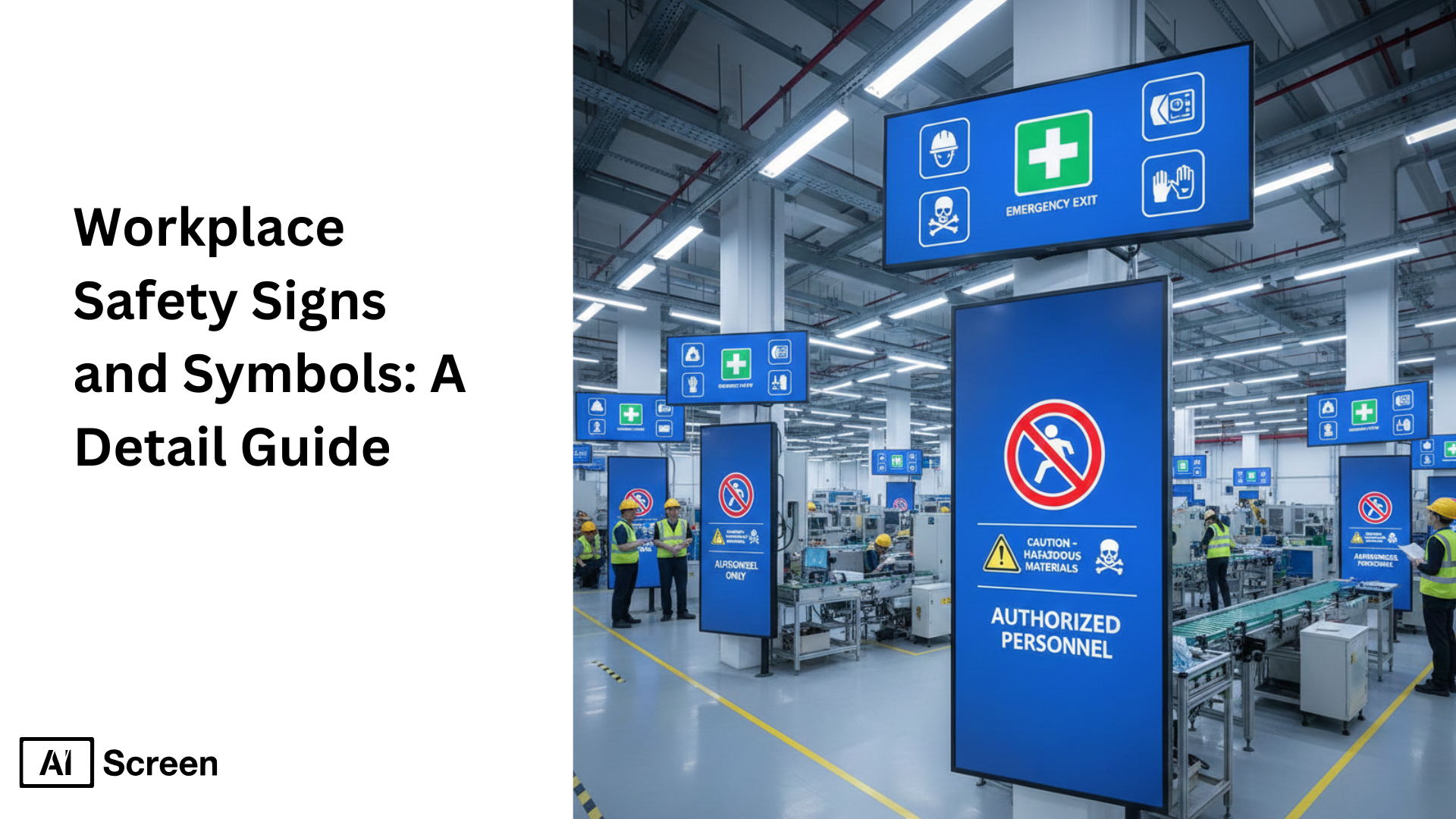
Ever wonder why a simple picture can stop you faster than a full sentence? That’s the power behind workplace safety signs and symbols, because safety symbols act as standardized visual indicators that help prevent accidents by conveying crucial safety information at a glance. These digital safety signs are designed to transcend language barriers, making them instantly recognizable in various settings, including factories, hospitals, schools, offices, and public spaces. According to the International Labour Organization (ILO), nearly 2.3 million workers die every year from work-related accidents and diseases, and clear visual communication is one of the most effective tools to reduce avoidable incidents (ILO Global Safety Report). This makes workplace caution digital signs, safety symbols and meanings, and universally recognized safety signs and symbols essential for maintaining safe environments.
In this blog post, you’ll learn what different safety symbols mean, why they’re standardized globally, how to choose the right digital signs for your workplace, how digital signage can improve hazard communication, and how training strengthens long-term safety culture. By the end, you’ll understand exactly how visual cues protect people and how to apply them effectively in any workplace.
What are Safety Signs and Symbols?
Ever notice how a single picture can warn you faster than a whole paragraph? That’s exactly why safety signs and symbols exist: they deliver life-saving messages instantly, even when no one is there to explain them.
Digital safety signs and symbols are standardized visual cues used to communicate hazards, instructions, and emergency information in workplaces and public spaces. Guided by ISO 7010 and ISO 3864, they follow strict rules for shapes, colors, and pictograms so anyone can recognize them at a glance.
Most signs share the same anatomy:
- Pictogram: the symbol or illustration that represents the hazard or instruction
- Color: each hue carries meaning (red for danger, yellow for caution, green for safe conditions)
- Shape: triangles warn, circles prohibit or mandate, rectangles provide information
- Message: sometimes paired with text for clarity
They’re designed to transcend language barriers, making workplace caution symbols universally understood. According to the National Safety Council, standardized signage can reduce workplace accidents by up to 50%, underscoring the critical role of these visuals.
From danger signs to emergency exit icons, every piece of health and safety signage carries meaning and helps keep people safe.
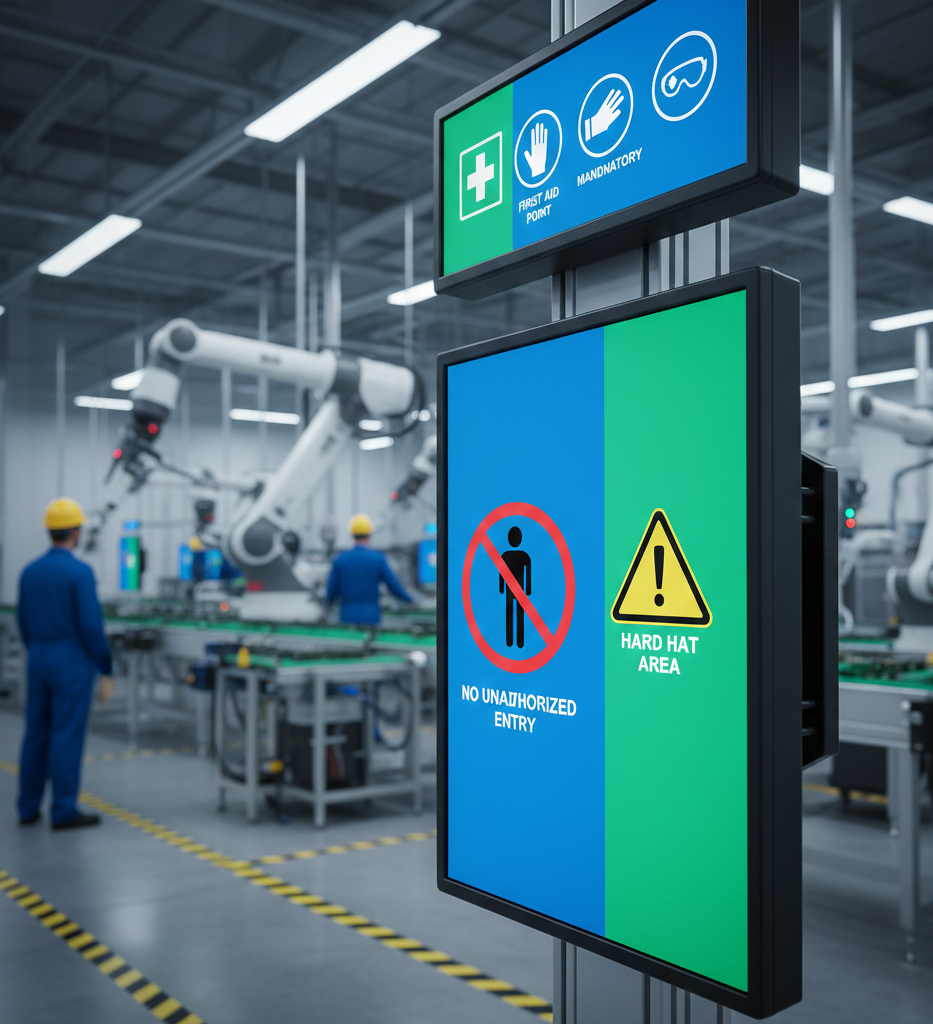
Why Use Safety Symbols?
Think about the last time a symbol warned you before you even had time to read a word. That instant clarity explains exactly why we use safety symbols in workplaces and public environments.
According to ISO 3864-1:2011, safety communication must rely “as little as possible on words,” which is why safety and hazard signs use visual elements that anyone can understand quickly. This standardization makes every safety symbol definition consistent, with the same shapes, colors, and meanings.
The biggest advantage? Speed. Humans process visuals 60,000 times faster than text (University of Minnesota), meaning symbols that represent safety trigger immediate recognition. That’s crucial during emergencies when every second matters.
These safety warning symbols also work across languages, making them essential in global workplaces. Whether it’s digital warning signs for hazards, emergency exit symbols, or work caution signs, each one reduces reaction time and helps prevent injuries by delivering instant clarity.
In essence, safety symbols and their meanings protect people by turning complex safety messages into fast, universal visual cues, keeping everyone alert, aware, and safe.
4 Types of Safety Symbols (with Examples)
It’s easier to stay safe when every symbol speaks the same visual language. That’s why safety communication follows a global system of colors, shapes, and pictograms, making workplace caution signs and symbols universally recognizable.
Before we dive into the 4 Types of Safety Symbols, here’s a quick look at how these elements work together.
Digital safety signs follow standardized rules; red means prohibition, yellow signals caution, blue mandates action, and green shows safety routes or equipment. These visual rules help people instantly understand caution signs, symbols, and labels, no matter where they are.
Standard Color & Shape System for Safety Symbols
| Color | Shape | Meaning | Examples (Safety Symbols with Names) |
|---|---|---|---|
| Red | Circle with diagonal line | Prohibition – Stop / Do Not | No Smoking, Do Not Enter |
| Yellow / Amber | Triangle | Warning – Hazard / Caution | High Voltage, Slippery Surface |
| Blue | Circle | Mandatory – Required Action | Wear Helmet, Use Safety Harness |
| Green | Square or Rectangle | Emergency / Safe Condition | Fire Exit, First Aid Station |
These categories form the backbone of caution sign and meaning systems, helping people understand danger, follow rules, and locate emergency help instantly.
1. Prohibition Signs
Ever seen a red circle with a slash and immediately knew what not to do? That’s the power of prohibition signs, one of the most recognized safety symbols and meanings worldwide.
Prohibition digital signs restrict unsafe behaviors and prevent actions that could harm workers or damage property. They feature a red circle with a diagonal 45° slash, universally signaling “Do Not.”
Common examples include:
- No Smoking
- Do Not Enter
- No Access for Unauthorized Persons
These safety signs are widely used in manufacturing plants, construction zones, laboratories, and any environment where risky behaviors must be stopped before they start.
2. Warning Signs
Your eyes always catch yellow before anything else, and that’s intentional. This is why warning signs and symbols use a bold yellow triangle with a black pictogram to alert people about potential hazards.
These digital signs help workers recognize dangers that may not be immediately visible. They are essential for OSHA compliance and accident prevention. Also factory owners are now moving towards digital signage for manufacturing plant to make it more effective.
Examples include:
- High Voltage
- Slippery Surface
- Deep Excavation
Whether labeled as danger, caution, or hazard signs and symbols, their purpose is the same: to grab attention and encourage heightened awareness.
3. Mandatory Signs
Some safety rules aren’t optional, and the signs make that clear. Mandatory signs give direct instructions that must be followed to maintain safety. They appear as blue circles with white pictograms representing required actions.
Examples of work safety digital signs include:
- Wear a Safety Helmet
- Use a Safety Harness
- Wash Hands
These workplace caution signs play a critical role in ensuring compliance by helping workers follow procedures that reduce risks and protect health.
4. Emergency Signs
When emergencies hit, people look for the quickest escape. These signs lead the way. Emergency signs guide individuals toward safety equipment, escape routes, and first-aid resources. They feature a green background with a white pictogram, making them easy to spot even in crises.
Common examples include:
- Fire Exit
- First Aid Station
- Eyewash Area
These emergency digital signs and symbols must be clearly and consistently placed so workers can react quickly under pressure.
Additionally, workplaces that handle chemicals often use GHS pictograms, specialized labels designed to identify chemical hazards and comply with global safety standards.
What are GHS Pictograms?
Ever seen a red-bordered diamond on a chemical label and instantly knew to be careful? That’s the whole purpose of GHS pictograms: clear, universal warnings that remove guesswork from chemical safety.
GHS pictograms are standardized symbols used to identify chemical hazards under the Globally Harmonized System of Classification and Labelling of Chemicals (GHS).
As defined by OSHA’s Hazard Communication Standard (HCS), each pictogram features a black symbol, a white background, and a red diamond-shaped border, a design explicitly chosen for high visibility and global consistency.
These symbols play a crucial role in industrial, laboratory, and manufacturing environments where workers handle substances that may be toxic, flammable, corrosive, or reactive.
By visually presenting the hazard class, GHS pictograms help people recognize risks instantly, reinforcing the purpose of safety symbols and meanings, danger digital signs and symbols, and hazard signs and symbols across industries.
OSHA requires every chemical label to include:
- A signal word (e.g., “Danger” or “Warning”)
- A precautionary statement
- The correct GHS pictogram for its hazard category
This ensures complete and consistent communication so workers can handle materials safely, reduce exposure risks, and follow the right protective measures.
GHS Pictograms: Hazards and Classification
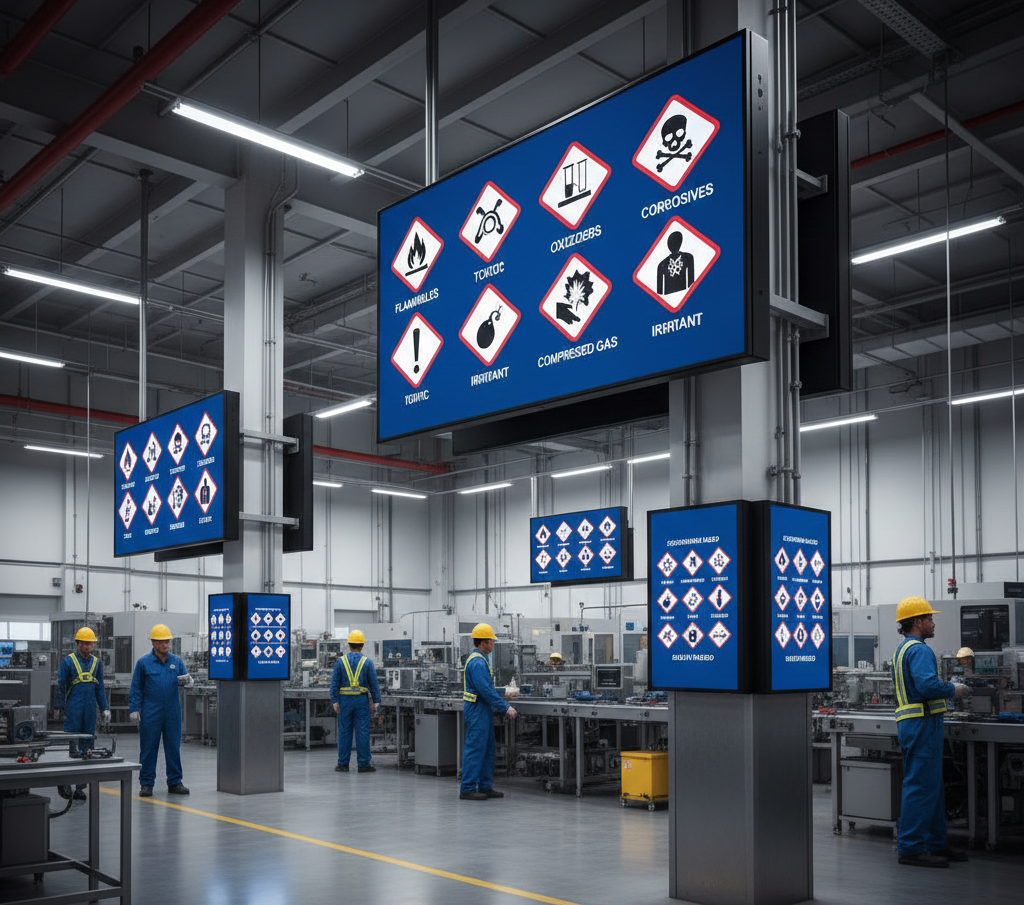
Chemical labels become much easier to understand when each symbol tells you exactly what danger to expect.
That’s why GHS pictograms are grouped into clear categories, each one representing a specific type of chemical hazard. Below is a complete breakdown of all nine pictograms, their meanings, real-world examples, and prevention tips.
GHS pictograms classify chemicals according to health, physical, and environmental hazards. Each symbol features a black pictogram, a white background, and a red diamond border, forming a universal system used in labs, factories, and industrial settings.
This classification system strengthens consistency in the meanings of safety symbols, safety sign symbols and labels, and caution signs and symbols worldwide.
Health Hazard
The health hazard symbol indicates chemicals that cause severe and long-term health effects such as cancer, reproductive issues, organ damage, or respiratory complications.
Example:
A solvent used in manufacturing that can cause chronic lung damage after repeated exposure.
Risk Level & Prevention:
High risk, requires PPE (respirators, gloves), proper ventilation, sealed storage, and strict handling protocols.
Hazards include:
- Carcinogen
- Respiratory Sensitizer
- Reproductive Toxicity
- Target Organ Toxicity
- Aspiration Toxicity
Flame
Flame represents chemicals that can ignite easily, flammable liquids, gases, aerosols, or self-reactive materials.
Example:
A can of solvent-based paint is stored near heat sources.
Risk Level & Prevention:
Very high. Store away from sparks/heat, use flameproof containers, and ensure proper grounding.
Hazards include:
- Flammables
- Pyrophorics
- Self-Heating
- Emits Flammable Gas
- Self-Reactives
- Organic Peroxides
Exclamation Mark
The exclamation mark symbol signals chemicals that cause mild to moderate health effects, such as skin irritation, eye irritation, respiratory discomfort, or narcotic effects.
Example:
Cleaning products that cause coughing or eye redness when used without ventilation.
Risk Level & Prevention:
Moderate, wear gloves, goggles, and use in ventilated areas.
Hazards include:
- Irritant (Skin and Eye)
- Skin Sensitizer
- Acute Toxicity (Harmful)
- Narcotic Effects
- Respiratory Tract Irritant
- Hazardous to the Ozone Layer
Gas Cylinder
A gas cylinder symbol indicates gases stored under pressure, whether compressed, liquefied, or dissolved.
Example:
Oxygen tanks are used in welding operations.
Risk Level & Prevention:
High, tanks may explode if heated. Keep upright, secured, and away from high temperatures.
Hazards include:
- Gases Under Pressure
Corrosion
A corrosion symbol warns against chemicals that can burn skin, damage eyes, or corrode metals.
Example:
Strong acids are used in industrial cleaning.
Risk Level & Prevention:
High, use face shields, chemical-resistant gloves, and proper spill containment.
Hazards include:
- Skin Corrosion/Burns
- Eye Damage
- Corrosive to Metals
Exploding Bomb
The exploding bomb symbol represents unstable or explosive materials that may detonate when exposed to heat, shock, or friction.
Example:
Laboratory chemicals are stored improperly, leading to unstable reactions.
Risk Level & Prevention:
Extremely high, store away from impact, follow strict temperature controls, and handle with expertise.
Hazards include:
- Explosives
- Self-Reactives
- Organic Peroxides
Flame Over Circle
The flame over a circle symbol indicates oxidizing materials that can intensify fires or cause other materials to combust.
Example Scenario:
Industrial bleaching agents react violently with organic materials.
Risk Level & Prevention:
High, store separately, avoid contact with combustible materials, and use proper PPE.
Hazards include:
- Oxidizers
Environment
Environment symbol shows chemicals that pose immediate or long-term toxicity to aquatic life.
Example Scenario:
Pesticides are leaking into water bodies.
Risk Level & Prevention:
High, dispose of waste properly, prevent spills, and avoid drainage contamination.
Hazards include:
- Aquatic Toxicity
Skull and Crossbones
Skull and crossbones symbol represents acute toxicity; even small amounts can be fatal or severely harmful.
Example Scenario:
Highly toxic pesticides or industrial chemicals with severe poisoning risks.
Risk Level & Prevention:
Extreme requires airtight PPE, secure labeling, strict training, and emergency procedures.
Hazards include:
- Acute Toxicity (Fatal or Toxic)
Common Types of Safety Signs and Symbols of Note
We see safety symbols everywhere, in factories, hospitals, labs, and construction sites, but many people still misunderstand what they actually mean.
That’s why knowing the common types of safety signs and symbols used outside the GHS system is essential for workplace awareness and accident prevention. These workplace caution digital signs and symbols help identify hazards, guide safe behavior, and protect both workers and visitors.
Below are additional categories of work safety signs, each with clear meanings, visual traits, and everyday examples. Understanding these safety symbols with names helps reduce confusion and strengthen hazard response.
Chemical Safety Signs and Symbols
These chemical safety signs and symbols warn workers about chemical exposure, contamination, or emergency decontamination. They appear in laboratories, manufacturing plants, hospitals, and chemical storage facilities.
Ionizing Radiation
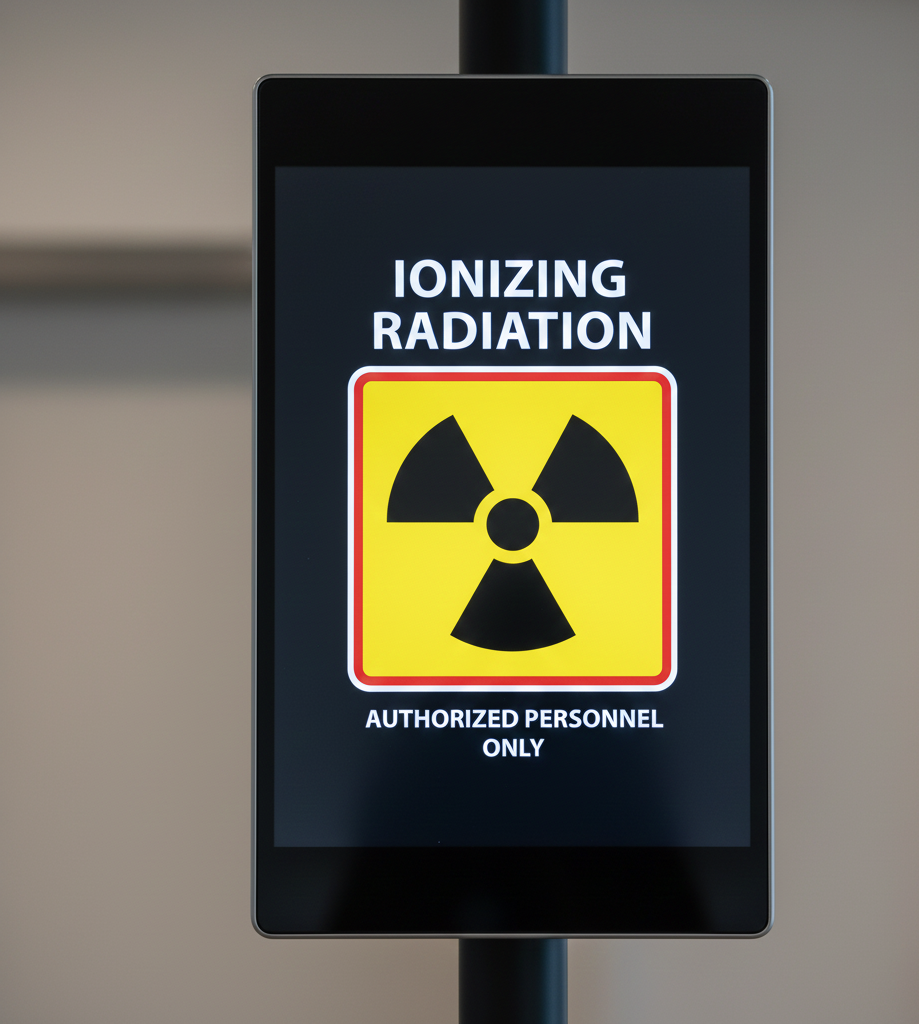
Meaning & Appearance:
A trefoil symbol in yellow and black warns of radiation sources that can penetrate the body and damage cells.
Context:
Used around X-ray rooms, nuclear facilities, and industrial radiography equipment.
Emergency Shower
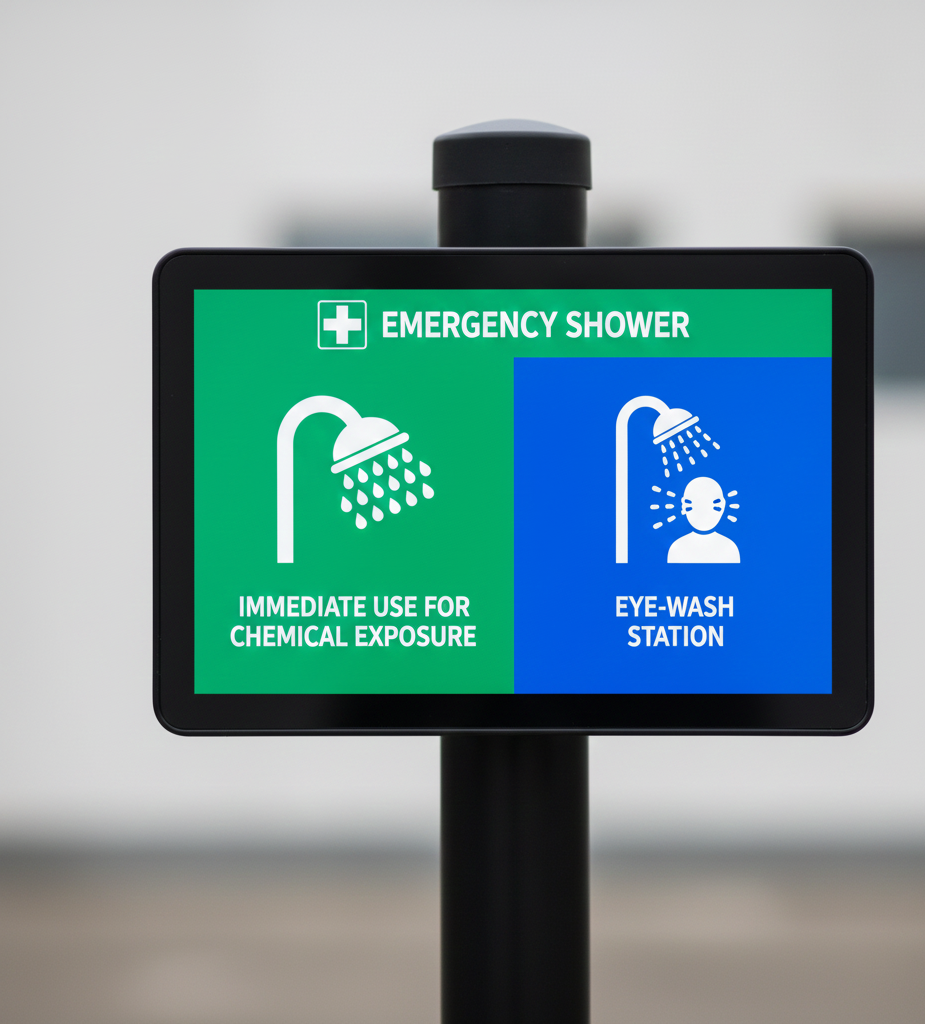
Meaning & Appearance:
Depicts a shower icon, usually green or white, indicating decontamination stations.
Context:
Placed where chemical splashes, spills, or exposure may require quick rinsing.
Biohazard
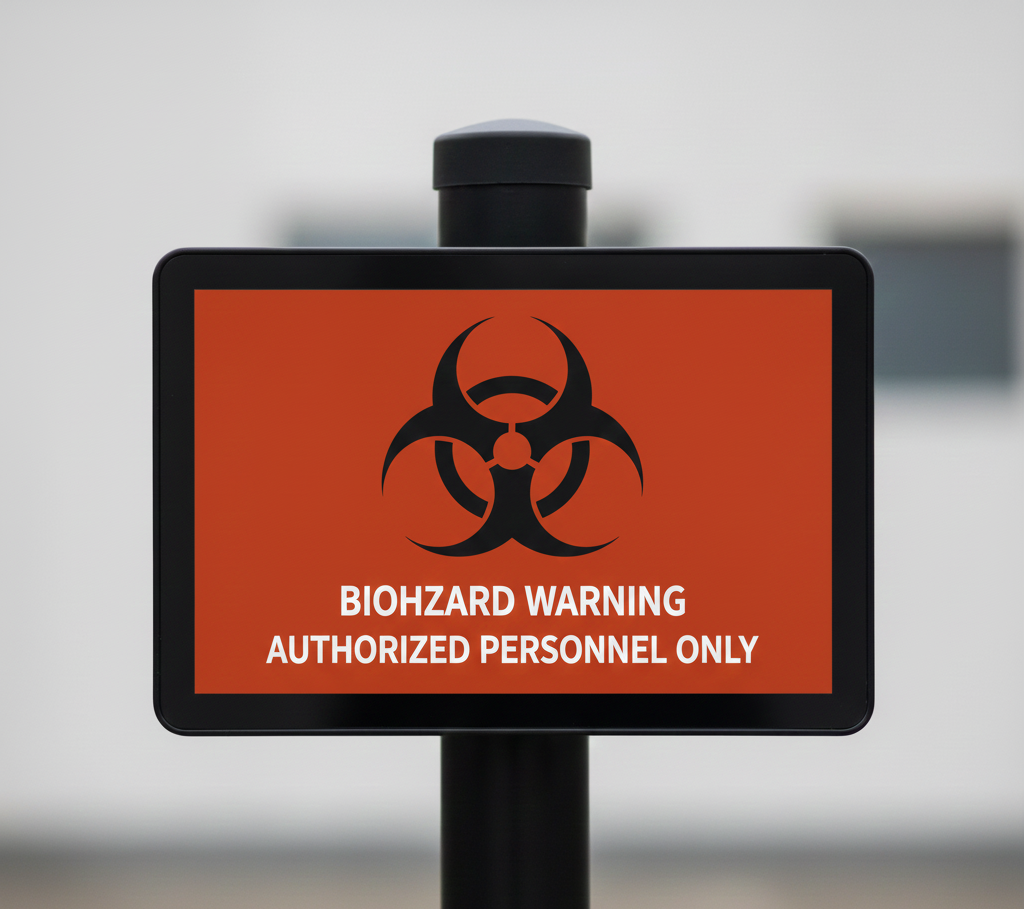
Meaning & Appearance:
A sharp-edged orange/black symbol indicating biological risks.
Context:
Found in medical labs, hospitals, and waste disposal areas handling infectious materials.
Electrical Safety Symbols
Electrical safety symbols highlight electrical dangers and necessary precautions in factories, workshops, and engineering environments.
Live Electrical Equipment
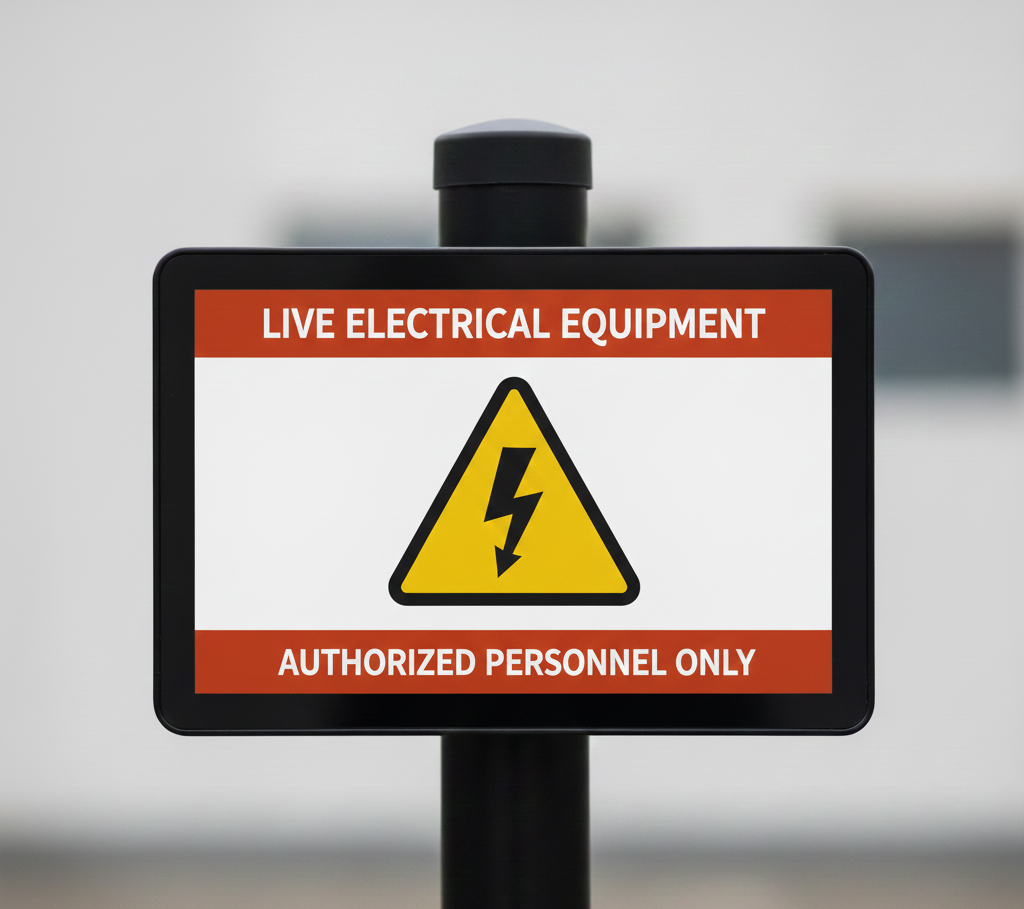
Meaning & Appearance:
A lightning bolt symbol warns that equipment is energized and dangerous to touch.
Context:
Used on panels, switchboards, and electrical cabinets.
High Voltage or Shock Hazard
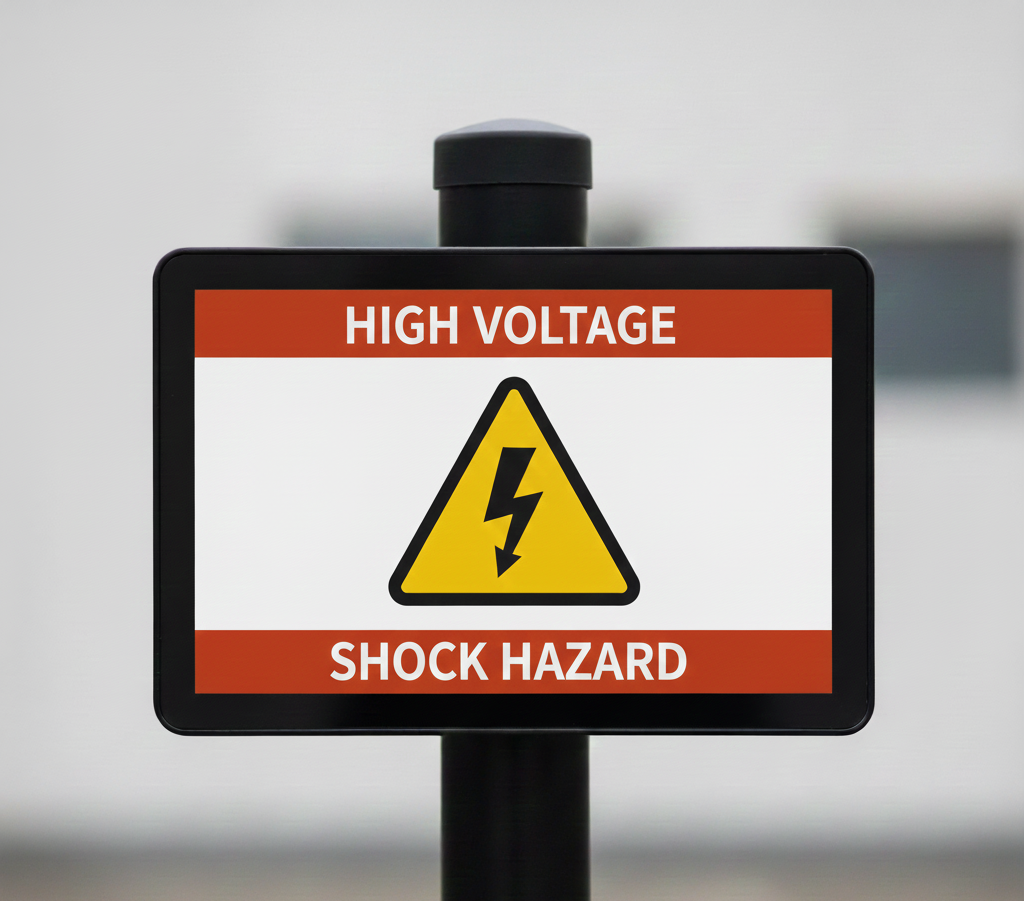
Meaning & Appearance:
A yellow triangle with a bold lightning bolt.
Context:
Alerts workers to life-threatening voltage levels.
Connect Earth Terminal to Ground

Meaning & Appearance:
Shows a grounding symbol used to indicate equipment that must be earthed.
Context:
Important for preventing electrical shock or equipment damage.
Sensitive Electronic Device
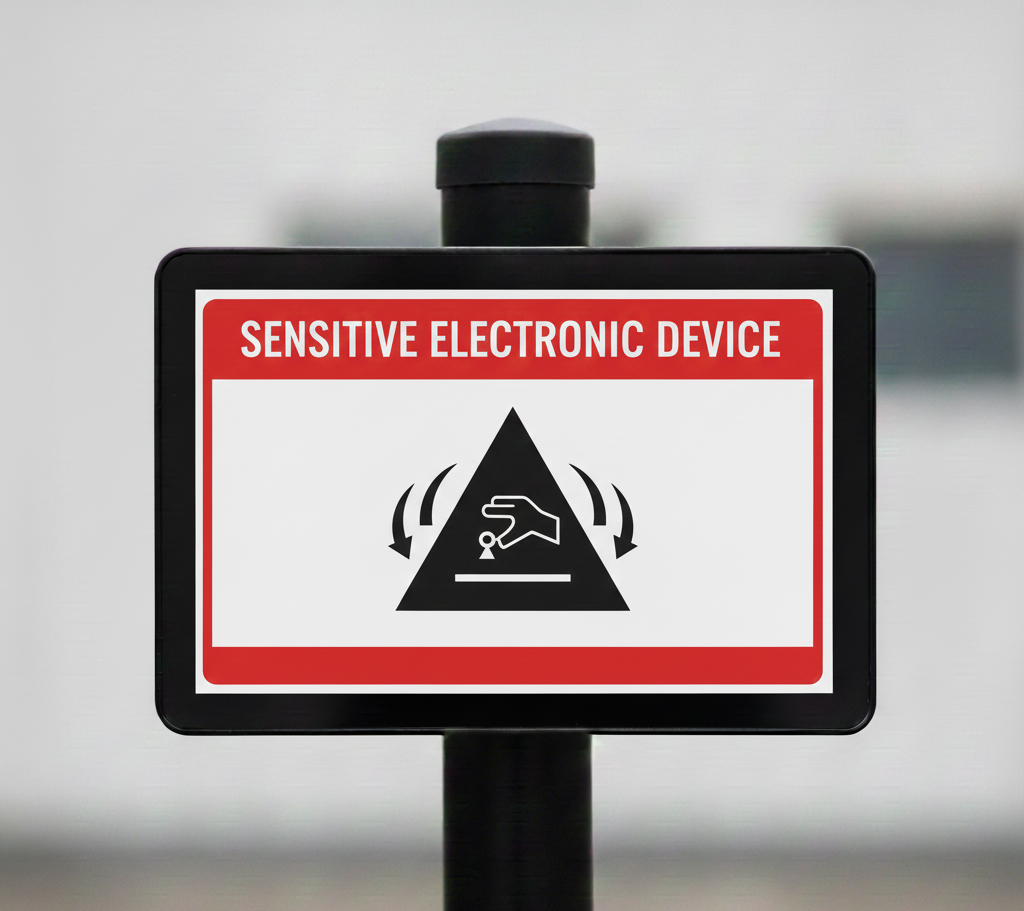
Meaning & Appearance:
Often, a hand and spark symbol indicates that components are electrostatic-sensitive.
Context:
Used in electronics manufacturing and repair labs.
Fire Safety Symbols
These fire safety symbols warn about flammable conditions and assist in evacuation planning. They commonly appear in factories, commercial buildings, kitchens, and warehouses.
No Smoking
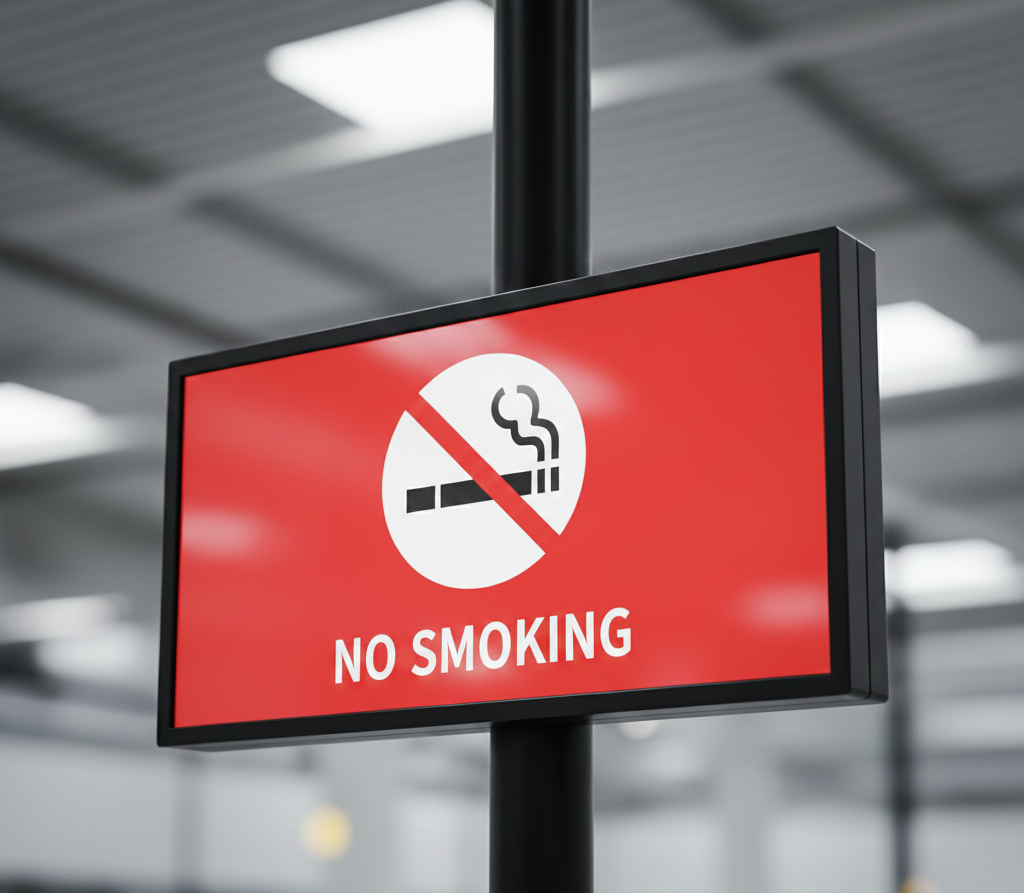
Meaning & Appearance:
A cigarette symbol with a red prohibition circle.
Context:
Prevents ignition sources around flammable materials.
Fire Exit / Evacuation Route
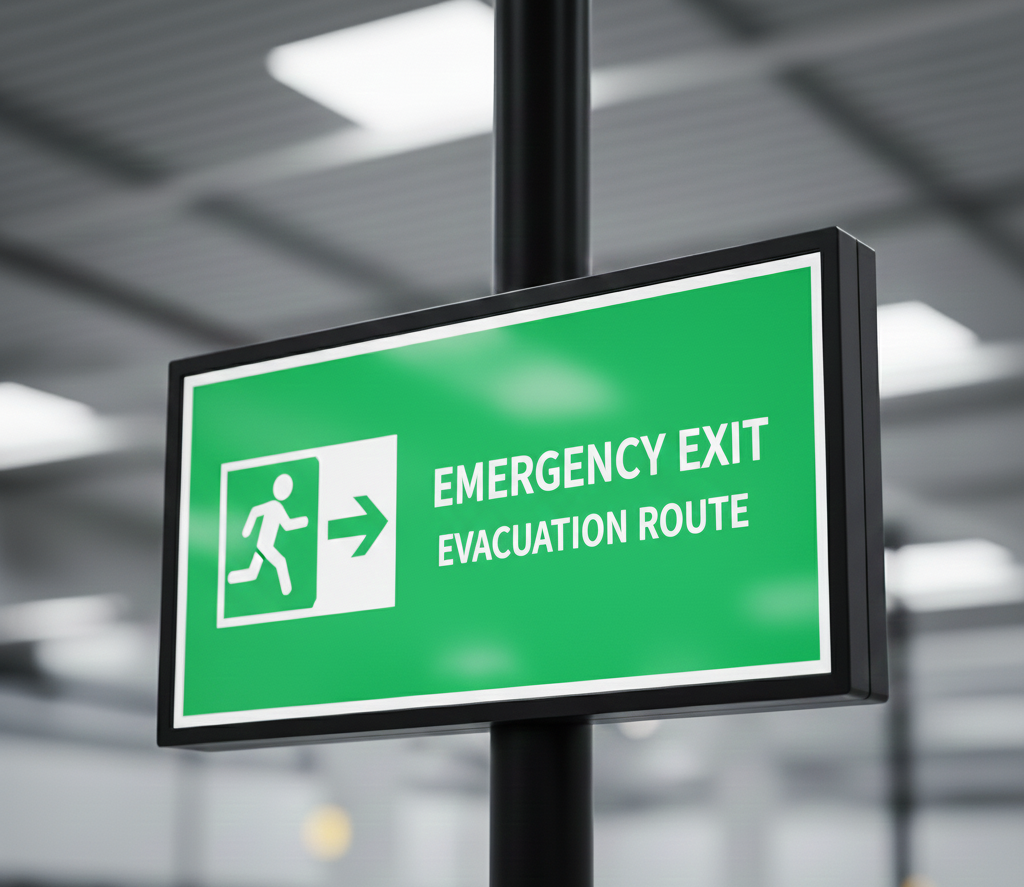
Meaning & Appearance:
Green signs displaying running figures or arrows.
Context:
Shows the safest evacuation route during fires.
Hot Surface
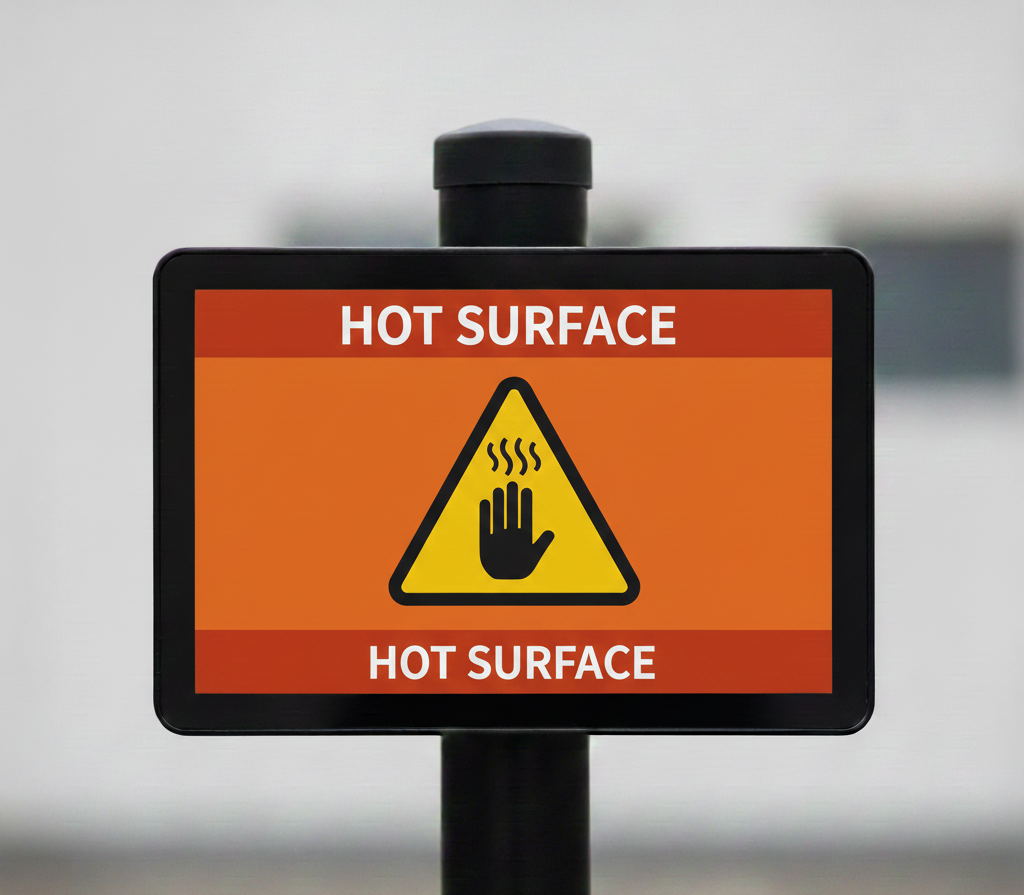
Meaning & Appearance:
A hand hovering over heat waves, usually picturing burn risk.
Context:
Found near machinery, ovens, heaters, and industrial equipment.
Gas Safety Signs and Symbols
These gas safety signs and symbols support awareness around gas storage, use, and required PPE. They are critical in welding, manufacturing, chemical plants, and confined spaces.
No Ignition Sources
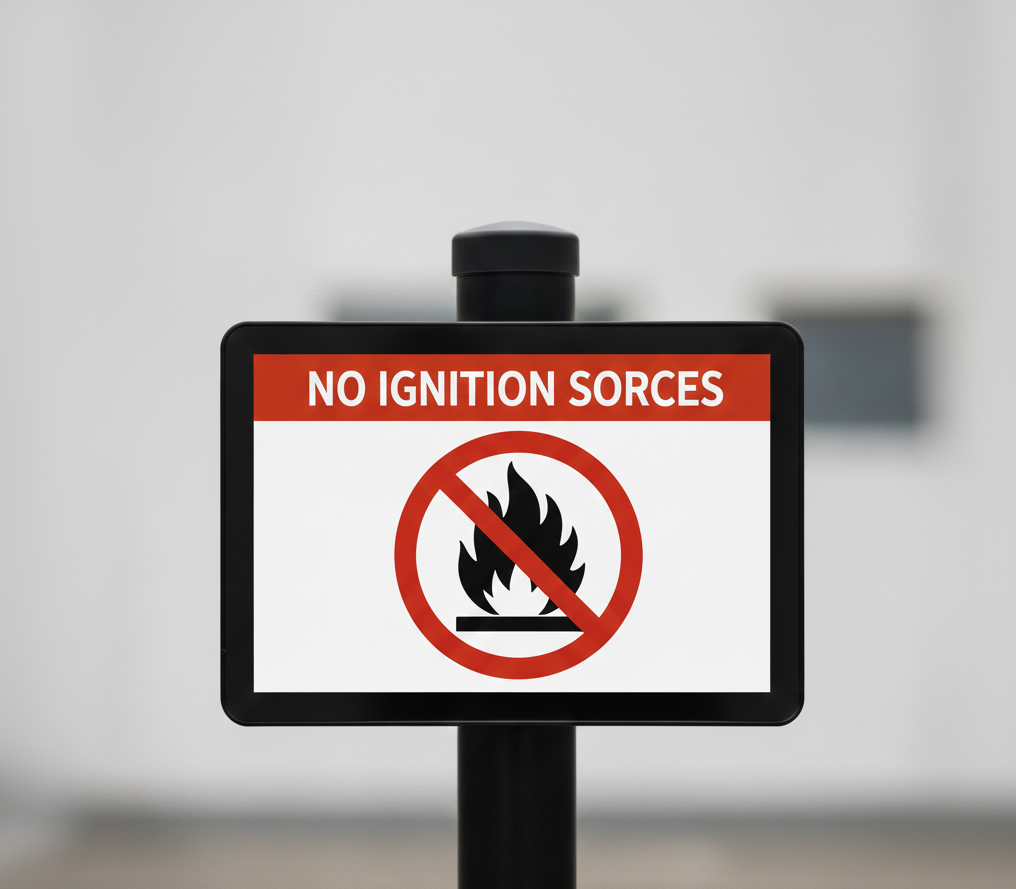
Meaning & Appearance:
A lit match with a red prohibition circle.
Context:
Posted near gas stations, fuel storage, and flammable areas to prevent fire ignition.
Gas Cylinder Storage Area

Meaning & Appearance:
A cylinder icon (style varies by location).
Context:
Indicates areas where compressed gas bottles (oxygen, acetylene) are stored; requires caution, spotters, and safe handling.
Respirator Required
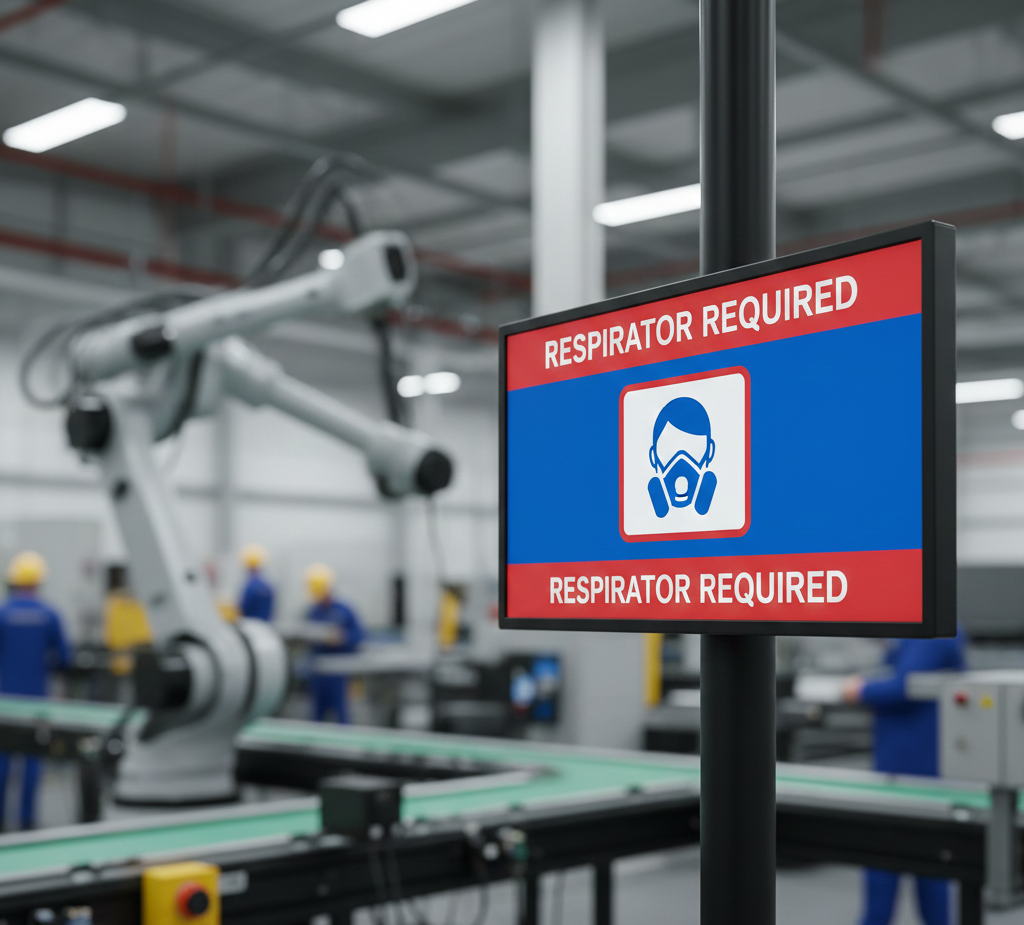
Meaning & Appearance:
A respirator mask icon, typically blue or white.
Context:
Used in confined spaces, chemical plants, or areas with toxic fumes, oxygen deficiency, or airborne particulates.
Poison Safety Symbols
These poison safety symbols alert workers to lethal or harmful substances that require extreme caution.
Chemical Weapon
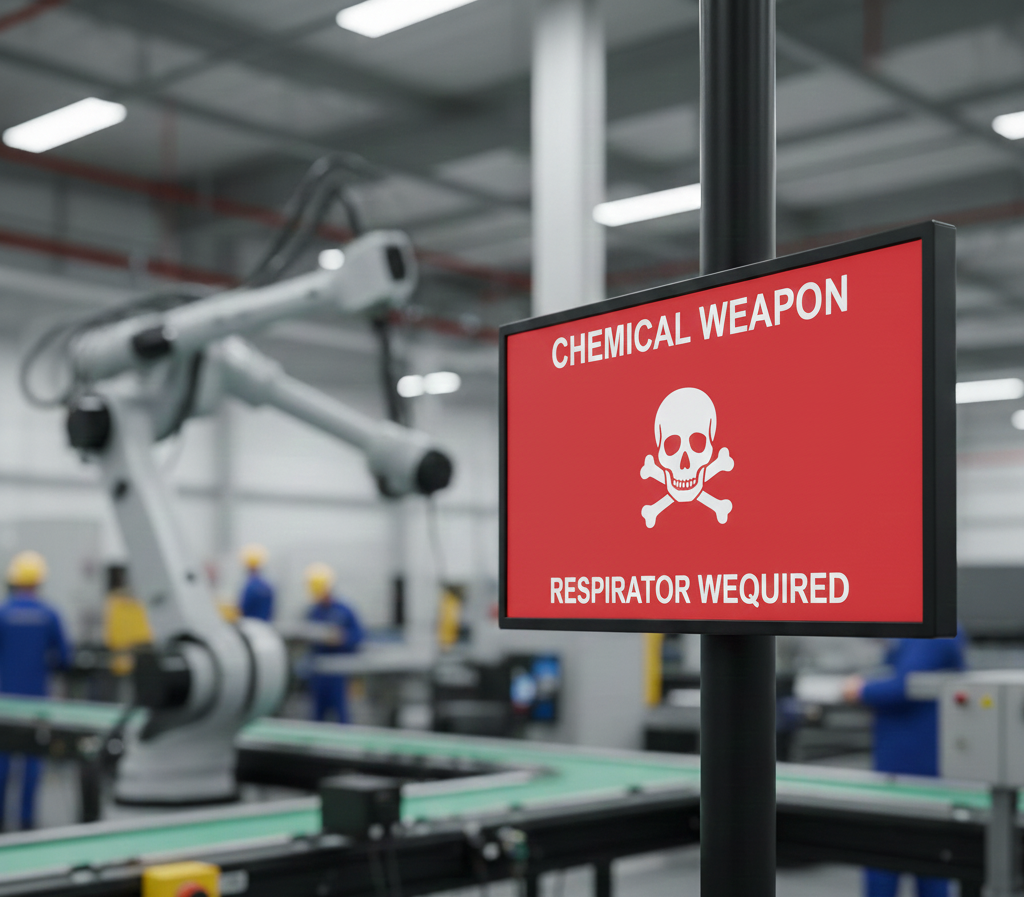
Meaning & Appearance:
A stylized symbol indicating chemical weapons or precursors.
Context:
Almost never seen in civilian workplaces, primarily military or restricted defense labs.
Poison
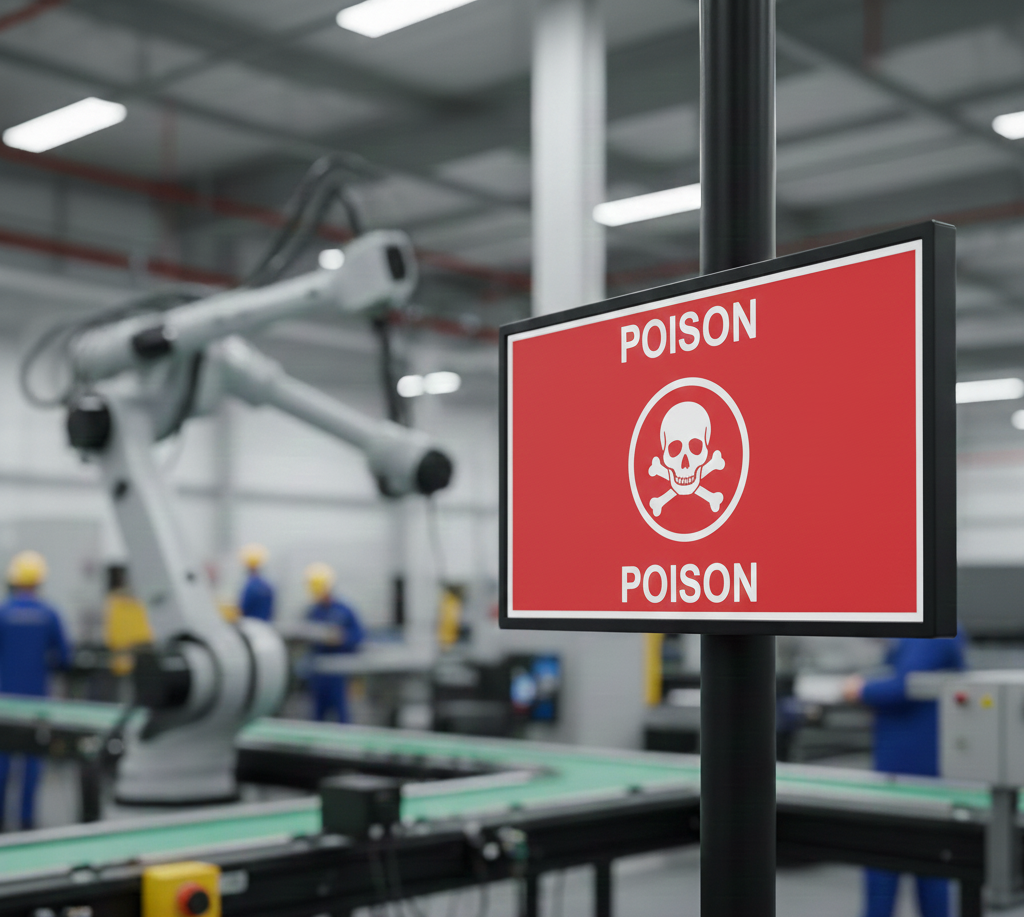
Meaning & Appearance:
A classic skull and crossbones symbol.
Context:
Used on toxic consumer products and chemicals not regulated under workplace GHS.
Noxious / Irritant
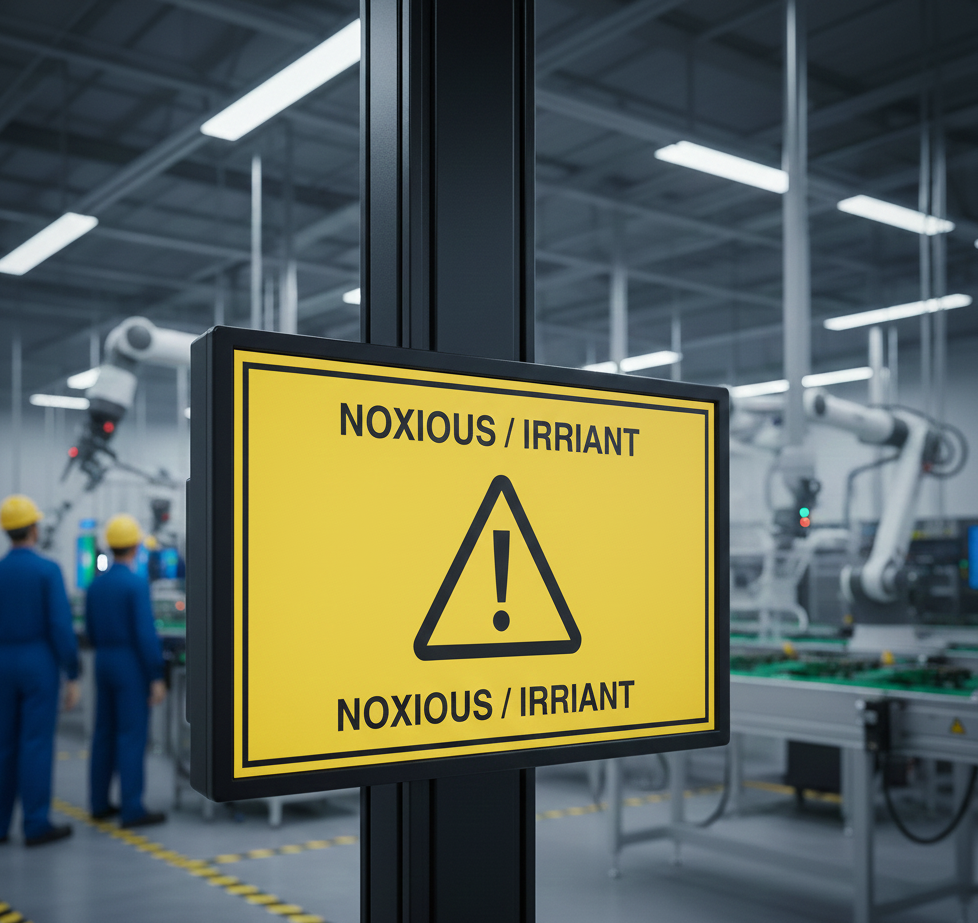
Meaning & Appearance:
The “X” symbol is used primarily in Europe.
Context:
Marks irritating or harmful substances such as paints, solvents, and cleaning materials.
Other Safety Symbols
Other safety signs, symbols, and labels warn workers about restricted access, radiation, or equipment-specific dangers.
Stop / No Admittance / Authorized Personnel Only

Meaning & Appearance:
A red circle or barred figure blocking entry.
Context:
Used in restricted areas where only trained or authorized individuals may enter.
Non-Ionizing Radiation
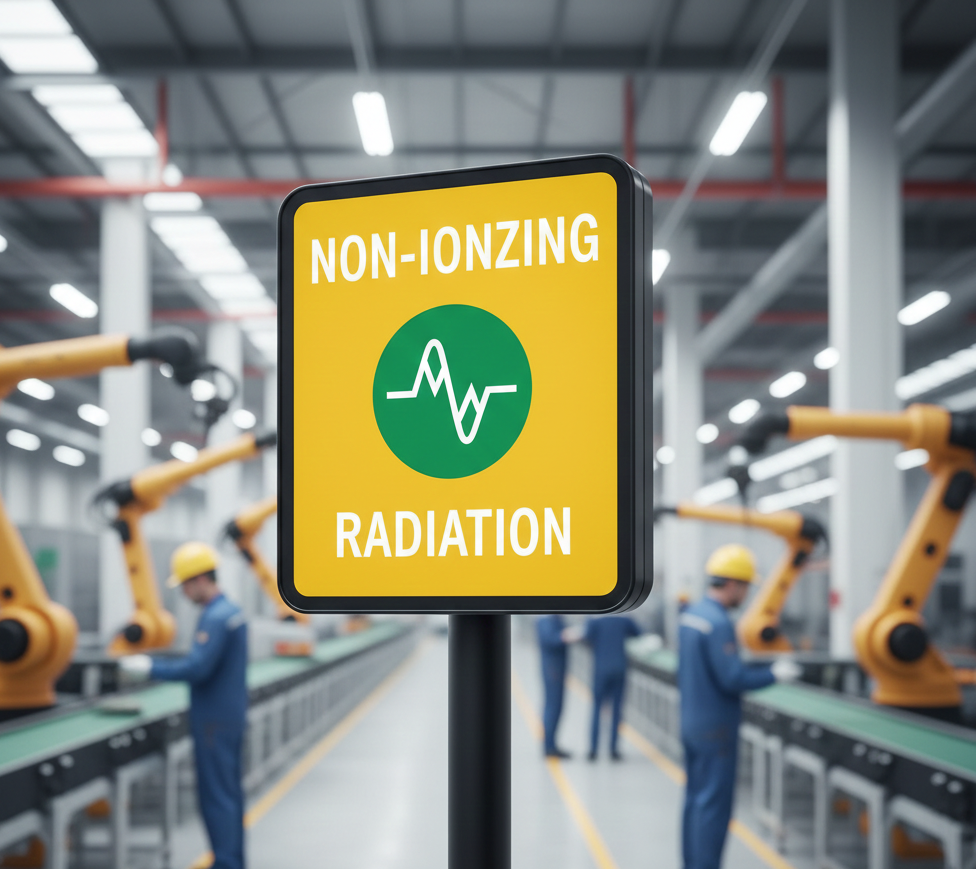
Meaning & Appearance:
A symbol indicating low-energy radiation from antennas or transmitters.
Context:
Found around routers, radio towers, and communication equipment; warns about potential interference rather than health danger.
Laser

Meaning & Appearance:
A starburst or ray pattern symbolizing harmful laser beams.
Context:
Used where lasers are used for cutting, measurement, sensing, or industrial fabrication; protects workers from burns or eye damage.
Which Signs and Symbols Are Appropriate for Your Workplace?
It’s impossible to protect people from what they don’t know, yet most safety digital signs only work when they match the real risks in your environment.
That’s why choosing the appropriate signs and symbols for your workplace starts with understanding how your operations work, where hazards occur, and how people move through the space.
The first step is a comprehensive risk assessment. Every department, task, and process should be reviewed to identify potential hazards, including chemical risks, electrical exposure, and machinery dangers, as well as evacuation routes and emergency equipment locations.
The Occupational Safety and Health Administration (OSHA) notes that over 70% of workplace accidents are preventable through proper hazard communication (OSHA, Hazard Communication Guidance), underscoring the importance of communicating safety information effectively.
Once hazards are mapped, select work safety digital signs that match each risk type. For example:
- Areas with hazardous chemicals need GHS and decontamination symbols.
- Zones where machinery causes severe skin burns or injuries require warning signs.
- Locations with fire gear or first-aid kits need clear essential safety information markers.
To ensure accuracy, follow the guidelines of the American National Standards Institute (ANSI), which standardizes color codes, visibility requirements, and placement for most safety signs used in modern facilities.
A key tip: avoid “sign blindness.” Over time, workers stop noticing digital signs that remain in the same spot. Safety experts recommend rotating or relocating workplace caution digital signs, even shifting them slightly, to keep safety symbols and meanings fresh and noticeable.
By aligning digital signs with real hazards and regularly refreshing their placement, you ensure that safety information remains visible, relevant, and effective in preventing incidents across your workplace.
How Can Digital Signage Improve Workplace Safety Communication?
Screens don’t just share information, they grab attention in ways printed signs can’t. That’s why digital signage software can improve workplace safety communication, helping organizations deliver real-time alerts, instructions, and visual cues that reinforce safe behaviors across any work environment.
Unlike static safety digital signs with a red or blue background or a diagonal line, digital signs can update instantly to reflect potential dangers, changing conditions, or emergency instructions. This level of clear communication plays a vital role in preventing injuries and helping workers avoid accidents in factories, hospitals, construction sites, and other public spaces.
Here’s how workplaces are using digital signage to enhance health and safety signage:
- Factories use LED screens to display live hazard alerts, such as nearby ignition sources, machinery malfunctions, or refrigerated gases that require PPE. Dynamic warnings are far more effective than static “exploding bomb” or “dead tree” symbols alone because they include immediate context.
- Hospitals rely on digital signs to display first aid locations, isolation room updates, and rapid changes to evacuation routes. When time matters, scrolling arrows and animated maps deliver clear signage far faster than printed instructions.
- Construction sites use rotating digital reminders for helmets, gloves, and harnesses, ensuring workers follow safe practices and comply with compliance standards. These displays can shift automatically based on shift changes, weather conditions, or nearby work zones.
Because digital displays provide vital information in real time, they protect individuals from potential dangers while enhancing traditional printed signs. They transform workplace communication from passive to active, making your safety program more responsive, more effective, and better equipped to support a safer, smarter work environment.
Create a Safe Workplace Culture with Training on the Proper Usage of Safety Signs
It only takes a moment of awareness to prevent a serious accident. That’s why creating a safe workplace culture, with training on the proper use of safety signs, is essential for every organization. When employees understand workplace digital safety signs, work safety signs, and safety and hazard signs, they’re better equipped to recognize risks, respond faster, and stay compliant. Regular visual-literacy programs, toolbox talks, and refresher courses help reinforce the meanings of safety signs, ensuring critical information is never overlooked.
In the end, a safer workplace isn’t just about posting signs; it’s about making sure people know how to interpret them. With proper training, clear communication, and modern tools like AIScreen, the leading digital signage provider, companies can reduce accidents, improve response time, and build a strong, long-term culture of safety. Contact us.


FAQs
How do safety symbols differ across countries and regions?
Safety symbols differ across countries and regions mainly in design standards, color tones, and regulatory requirements. While ISO 7010 aims to standardize global safety communication, some areas, such as the U.S. (OSHA/ANSI) and Europe (EU-OSHA), use slightly different pictograms or wording. Despite these variations, most symbols follow the same core shapes and meanings to ensure universal understanding.
How can I create effective safety signs for my workplace?
To create effective safety signs for your workplace, start with a hazard assessment, then match each risk to the correct symbol type (prohibition, warning, mandatory, or emergency). Use consistent colors, high-contrast designs, ISO or ANSI standards, and simple language. Place digital signs at eye level, near the hazard source, and ensure they remain clean, visible, and regularly updated.
Why are mandatory signs often circular and blue in color?
Mandatory signs are often circular and blue in color because ISO and ANSI standards assign blue to actions that must be followed. The circular shape reinforces instruction rather than warning. This combination tells workers instantly that the sign represents required behavior, such as wearing PPE, washing hands, or following a specific safety procedure.
What are the main visual features of prohibition safety symbols?
The main visual features of prohibition safety symbols include a bold red circle, a diagonal red line, and a black pictogram underneath. This universal “Do Not” format clearly communicates restricted or forbidden actions, such as No Smoking, No Entry, or No Open Flames, helping prevent hazardous behaviors.
How do warning symbols vary to indicate specific hazards?
Warning symbols vary to indicate specific hazards by using different pictograms inside a yellow triangle. The shape and color remain consistent, but the symbol changes, for example, a lightning bolt for electrical shock, flames for fire risks, or an exclamation mark for general caution. These variations help workers quickly identify the exact nature of the danger.
