
Monetization Solutions for Digital Signage: How to Do It?
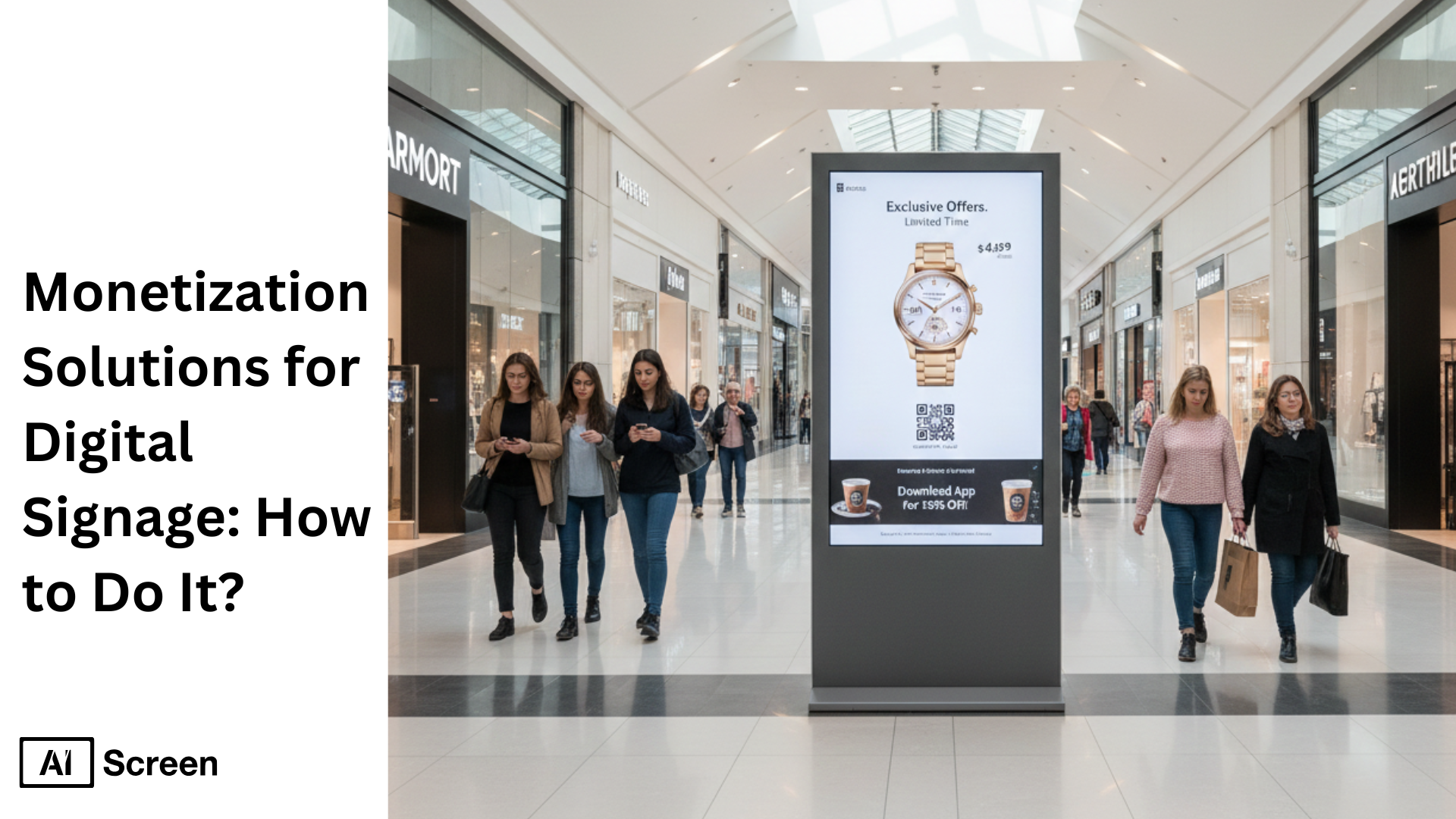
Have you ever looked at the screens in your store or office and wondered if they could actually make you money? With digital signage monetization, they absolutely can. Think of it as turning your existing screens into mini advertising billboards that generate income while promoting your brand, showcasing their revenue potential. Whether you run a café, a retail chain, or manage properties across multiple locations, monetization solutions for digital signage help you transform simple displays into powerful revenue streams, without needing a marketing degree or a big team to manage it all. According to Statista, global digital out-of-home (DOOH) ad spending is expected to surpass $33 billion by 2026.
This article will show you, step by step, how to turn those silent digital screens hanging in your store, lobby, or café into active money-makers. You’ll learn how to create sponsored content and the exact monetization solutions for digital signage that real businesses use to earn from ads, sponsors, and local partnerships, without complicated tech setups or massive budgets.
1. The Business Case for Monetizing Digital Signage Displays
Have you noticed how every screen around you now seems to have an ad running, from coffee shops to airports? That’s because digital signage monetization has become a major business opportunity. According to industry reports, Digital Out-of-Home (DOOH) advertising is growing by more than 10% every year as brands move their marketing budgets from static billboards to engaging digital displays that truly grab attention. Businesses are no longer using screens just for updates or promotions; they’re using them to generate revenue and real income by analyzing audience behavior. According to a Nielsen study, 70% of consumers recall seeing a digital billboard or signage ad in the past month, proving how visible and memorable this medium truly is.
Look at retail chains, transit hubs, and even universities. They’re renting ad space on their screens to local and national brands, creating a steady revenue stream without extra effort. It’s a smart shift that turns communication tools into profit centers, significantly boosting advertising revenue. In today’s fast-paced world, digital signage has evolved into more than a display. It’s a blend of storytelling, advertising, and commerce that benefits both viewers and businesses.
2. Understanding the Value of Your Screen Real Estate
Think of your digital screens as property. Just like a shop in a prime location costs more, a screen placed in a high-traffic area is worth more to advertisers. When it comes to monetization solutions for in-store digital signage, value depends on strategically placing screens, how visible they are, how long people look at them, and who your audience is. A display at a mall entrance or near a checkout counter can earn much more than one tucked away in a quiet corner.
Here’s a simple way to see it: Foot Traffic × Dwell Time × Audience Relevance = Screen Worth. This helps you understand exactly how much your display is truly worth. For example, a busy café screen can attract premium rates because it reaches hundreds of people daily. Once you know the value of your screen real estate, you can price ad slots confidently and attract the right sponsors. It’s about turning your displays into meaningful assets that work for revenue generation and help maximize roi for your business.
3. Digital Signage Monetization Options That Work
When it comes to monetization solutions for digital signage, there isn’t a single formula for success. The right model depends on your network type, target audience, and how much control you want over your advertising space. According to Grand View Research, the digital signage market is growing at a compound annual growth rate (CAGR) of 8%, expected to reach $45 billion by 2030.
Let’s explore four proven strategies that can help you turn your digital signage screens into steady, measurable revenue streams. Each approach works differently, but when done right, they can significantly boost your business’s advertising revenue.
Option 1: Selling Ad Space to Third-Party Advertisers
If you’re looking for the most direct way to earn money from your digital signage screens, this is it. Selling ad space to local or national advertisers, including local events, gives you immediate revenue and long-term business partnerships. It’s simple, effective, and best suited for places with consistent foot traffic, like shopping centers, cafes, and transit hubs.
How it works
You reach out to potential advertisers, present your media kit, and set up campaign schedules that align with their marketing goals. By offering clear performance metrics like impressions and dwell time, along with audience insights, you make your digital signage space and advertising network more appealing to brands looking for measurable impact.
Pricing strategies
Most businesses use flat rates, CPM (cost per thousand impressions), or CPC (cost per click) models. For instance, a high-traffic retail screen might charge a flat $500 per month, while CPM-based models could vary based on location and audience size. The key is to keep pricing for advertising space transparent and scalable.
What you’ll need
You’ll need a solid content management system (CMS) with scheduling, content approval, and analytics dashboards. These tools not only ensure ad quality by following content guidelines ut also help track performance data, building trust with your advertisers while maximizing your ad space utilization.
Option 2: Joining a Programmatic DOOH Network
Ever wish your digital signage network could earn money automatically? That’s exactly what joining a programmatic DOOH (Digital Out-of-Home) network allows. It connects your screens to an automated marketplace where advertisers bid in real time to display their content.
Benefits
You earn passive income without manual sales outreach. Your screens can display dynamic, location-based ads from global brands, automatically filling available slots. It’s an ideal way to scale without adding workload, especially for operators managing multiple locations.
Considerations
While programmatic DOOH offers automation and reach, it comes with some trade-offs, mainly with third-party ads, platform fees, and limited creative control. You’ll also need consistent network uptime and data accuracy to ensure smooth ad delivery and reporting.
Leading programmatic DOOH platforms
Top names like Google Display & Video 360 (DV360), Vistar Media, and Broadsign Reach dominate the space. These platforms connect you with advertisers seeking high-quality screen inventory, ensuring your displays stay active with relevant and targeted ads.
Option 3: Promoting Your Own Products and Services Strategically
Sometimes, the smartest way to monetize digital signage isn’t by selling space, it’s by using it to drive your own business growth. Internal monetization lets you create sponsored promotional content to promote your products, offers, and loyalty programs directly to customers, increasing conversions and creating additional revenue.
Examples include
A coffee shop upselling pastries with a morning-only promo, or a gym promoting new membership deals near the check-in area. Retail stores can highlight exclusive discounts or loyalty sign-ups and event promotions on in-store screens to boost immediate sales.
Tactics to consider
Add dynamic, seasonal promotions that change throughout the day or integrate QR codes for instant interaction. These small touches turn your displays into interactive selling tools, giving your digital signage content a purpose beyond just visuals.
Option 4: Selling Sponsored Content and Local Partnerships
If your business serves a specific community, partnerships are your best monetization strategy. You can turn your digital signage network displays into co-branded storytelling tools that support local visibility and create recurring revenue.
How it works
Collaborate with nearby businesses, like a local gym, café, or real estate firm, to display their content alongside your branding. For example, a screen might feature tiered packages such as “Sponsored by Local Gym” during fitness promotions, driving mutual exposure and trust.
Best practices
Always align visuals with your brand identity and disclose sponsorships clearly to maintain credibility. Keep the messaging authentic and relevant to your audience. These local partnerships not only generate additional revenue streams but also strengthen your brand’s presence within the community.
4. Operational Considerations and Compliance in Digital Signage Monetization
Running a digital signage monetization network isn’t just about selling screen space. It’s about doing it responsibly. From keeping your content fresh to protecting your brand image and following regulations, every step plays a key role in building advertiser trust and audience confidence. According to Intel, digital signage captures 400% more views than static displays, which explains why advertisers are willing to pay higher rates for screen exposure. Let’s break down what you need to manage effectively before scaling your network.
Content management
To keep your displays engaging, rotate ad campaigns regularly and blend paid promotions with your own brand content. This prevents “screen fatigue” and keeps your audience interested. Use scheduling tools to automate updates and ensure every ad feels timely and relevant.
Brand alignment
Your screens represent your business, so all ad creatives must align with your tone, color palette, and customer expectations. You need to avoid running unrelated or low-quality ads that may confuse viewers, and consistency strengthens brand credibility.
Legal and regulatory factors
Transparency is key when monetizing digital screens. Always include sponsorship disclaimers, comply with GDPR or local data privacy laws, and secure usage rights for all visuals and user-generated content. Compliance not only protects your business but also builds long-term trust with advertisers.
5. Measuring ROI and Optimizing Over Time
Once your monetization model is live, tracking performance becomes your roadmap to growth. Metrics tell you which ads perform best, when viewers engage most, and how to incorporate dynamic content to improve. In short, measurement is what turns your signage network into a predictable, scalable revenue channel. According to PQ Media, programmatic digital signage will represent over 20% of total DOOH spending by 2026, a huge jump from just 8% a few years ago.
Key metrics to track
Keep an eye on core KPIs like impressions, dwell time, engagement rate, and conversions. Real-time dashboards help you measure proof-of-play, while A/B testing different creatives or screen placements for specific audiences can reveal what truly drives results. By refining your content and pricing strategies through analytics, you can continuously increase ROI and maintain advertiser satisfaction.
6. Choosing the Right Software for Digital Signage Monetization
Selecting the right digital signage software can make or break your monetization strategy. The best systems in a digital signage ad network go beyond just displaying ads. They help you manage campaigns, automate schedules, and track performance from analytics tools anywhere. Think of your CMS as the foundation that supports every revenue stream you build. According to Nielsen’s DOOH report, 75% of consumers who notice digital screens in retail environments say the ads influence their purchasing decisions.
Look for tools that offer ad automation, proof-of-play tracking, data integration, and scalability. Whether you use an open-source or a closed CMS, make sure it’s compatible with programmatic DOOH networks and easy to manage across multiple locations. In short, your CMS should simplify everything, from uploading content to analyzing returns, so you can focus on growing your ad revenue confidently. The right CMS doesn’t just support monetization; it’s a foundational requirement if you’re learning how to make a digital signage agency and manage campaigns across clients and locations.


How to Sell Digital Signage Screen Time Without Losing Focus
Selling digital signage screen time doesn’t have to feel overwhelming. With the right structure, you can create a repeatable sales system that helps you attract advertisers, set clear pricing, and keep your focus on running your business. Below is a simple six-step framework designed to help SMBs and venue owners turn their screens into consistent income, without getting lost in the details.
Step 1 – Categorize Screens by Audience and Location Value
Every screen has a different earning potential depending on where it’s placed and who sees it. Start by grouping your screens into tiers, for instance, Tier 1 for high-traffic areas like entrances, Tier 2 for moderate dwell zones, and Tier 3 for quieter corners. This helps you match ad pricing to visibility and impact.
Example pricing might look like:
- Tier 1 (Main Lobby / Checkout) – $350–$500 per month
- Tier 2 (Waiting Area / Break Room) – $200–$300 per month
- Tier 3 (Back Corridor / Staff Zone) – $100–$150 per month
By clearly categorizing screens, you give advertisers transparent options and make it easier to scale pricing confidently.
Step 2 – Choose a Pricing Model Aligned with Campaign Goals
There’s no one-size-fits-all approach when it comes to pricing digital signage ads. The key is to align your model with the advertiser’s goals and your network’s reach.
You can choose from:
- Flat Rate – Simple monthly fee per screen (ideal for local sponsors).
- CPM (Cost Per Thousand Impressions) – Price based on viewer volume, great for large networks.
- Loop-Based Pricing – Charges based on ad slot duration and frequency.
Pro Tip: Combine models, for instance, use flat rates for long-term partners and CPM for rotating ad campaigns. This hybrid approach maximizes both revenue and flexibility.
Step 3 – Build a Standard Rate Card for Advertisers
Think of your rate card as your pricing playbook. It should include screen specs, audience data, ad slot durations, and available packages. Keep it visually simple but data-backed, showing potential advertisers exactly what they’re paying for and why.
For example, list:
- Average foot traffic per location
- Loop duration (e.g., 10 ads per 2-minute loop)
- Optional discounts for multi-screen or long-term bookings
A consistent rate card builds professionalism and eliminates negotiation confusion, making your sales process smoother.
Step 4 – Pre-Package Ad and Sponsorship Options
Advertisers love clarity. That’s why offering pre-built packages saves time and increases conversions. Create 3–4 easy-to-understand plans that fit different budgets and exposure levels.
Example:
- Starter Plan: 15-second ad, 2 screens, 30-day run – $250
- Premium Plan: 30-second ad, 5 screens, 60-day run – $600
- Exclusive Plan: Category exclusivity, all screens, 90 days – $1,200
These bundles help you communicate value instantly and make decision-making effortless for buyers.
Step 5 – Use Ad Management Tools to Streamline Workflow
Managing ads manually can get messy. Use digital signage software and interactive kiosks that automate scheduling, approval, and analytics. Platforms like AIScreen let you manage multiple screens, verify proof-of-play, and generate advertiser reports in one dashboard.
Automation reduces errors, saves time, and improves customer experience, keeping clients confident that their campaigns are running exactly as planned, across all locations.
Step 6 – Create a Sales Enablement Kit for Your Team
Empower your sales team with the right materials. A strong sales enablement kit should include your rate card, FAQ sheet, case studies, and email templates for outreach.
This toolkit ensures your messaging stays consistent and helps even new team members close deals faster. By standardizing the process, you reduce training time and maintain a polished brand image during every client interaction.
Real Businesses Turning Screens into Scalable Revenue
It’s one thing to hear that digital signage makes money, but it’s another to see it in action. From quick-service giants to public transit networks, businesses across the world are proving that a single screen can do more than just display information, it can drive real revenue. Let’s take a peek at how these big names are turning digital displays into serious business growth stories.
McDonald’s – Turning Partnerships into Screen Profits
When McDonald’s realized their in-store screens were prime real estate, it teamed up with Coca-Cola and McCafé to make them more than just menu boards. By using centrally managed digital displays, they showed ads that fit perfectly with their brand while promoting their partners at the same time.
What made it work was simple: consistency and connection.
- Partnered with Coca-Cola and McCafé for joint storytelling.
- Used centralized control for perfect visual alignment.
- Rotated content to match regional trends and time of day.
- Created a win-win for both brand partners and franchisees.
Walgreens – Turning Every Aisle into a Mini Billboard
Picture this: you’re walking through Walgreens, and the screens near the shelves show offers on the very products in front of you. That’s not luck, it’s Walgreens Advertising Group (WAG) in action. Vendors can now buy ad placements inside stores, tailored to the exact locations and customer behaviors that matter most.
Walgreens didn’t just display ads, they built an ecosystem.
- Empowered vendors with data-driven targeting tools.
- Personalized promotions based on real-time sales insights.
- Let brands manage campaigns independently.
- Turned shelf space into measurable ad space.
Shell – Helping Local Businesses Shine on the Big Screen
At Shell stations, drivers aren’t just filling up their tanks, they’re discovering local offers right from the forecourt screens. Whether it’s the car wash next door or a nearby café, Shell’s digital signage sells ad slots to small businesses looking for local reach.
It’s a feel-good model that builds community while driving sales.
- Offered affordable ad packages for local businesses.
- Used geo-targeting for location-specific ads.
- Scheduled time-based content to match customer flow.
- Boosted local economies through shared visibility.
JD Sports – Making Shopping an Experience, Not a Chore
JD Sports didn’t want their stores to just sell, they wanted them to inspire. So, they turned to digital signage to create high-impact, partner-funded visual campaigns with giants like Nike and Adidas. Their massive LED walls showcase sports, culture, and energy, all wrapped into brand storytelling.
The result? A store that feels alive.
- Ran co-branded content in key retail zones.
- Used real-time data to swap regional campaigns.
- Showcased high-energy videos and product highlights.
- Turned brand partnerships into immersive shopping moments.
Los Angeles Metro – Turning Commutes into Ad Opportunities
Think about the millions of eyes moving through the LA Metro every day. Instead of seeing blank walls, riders now see dynamic programmatic ads from major brands, all managed through an automated DOOH network. It’s how a city turned transportation time into prime advertising time.
Behind the scenes, it’s all about smart automation.
- Programmatic ad buying for instant campaign control.
- Balanced commuter info with ad content.
- Targeted ads by time, location, and demographics.
- Created a reliable, recurring revenue source for the city.
Start Monetizing Your Digital Signage with AIScreen Today!
What if your digital screens could start generating revenue tomorrow? With AIScreen, that’s not just a dream, it’s your next business move. Imagine turning every display across your stores, offices, or venues into a profit-making advertising TV managed effortlessly from one cloud dashboard to help increase revenue. According to BusinessWire, using analytics-backed digital signage can improve ad campaign ROI by 18–22%, thanks to smarter scheduling and audience targeting.
AIScreen gives you everything you need to simplify, automate, and scale your digital signage monetization strategy, all while keeping your brand experience consistent and professional. From ad scheduling and real-time analytics to programmatic ad integrations, every feature is built to help you grow without complexity or wasted time.
- Cloud-Based Control: Manage screens across multiple locations in seconds.
- Smart Ad Scheduling: Run campaigns at peak hours to maximize visibility.
- Detailed Analytics: Track impressions, engagement, and ad performance.
- Programmatic Integration: Connect to top DOOH networks for automated ad revenue.
- 1500+ Ready-to-Use Templates: Create content fast with zero design skills.
So, why wait? Start your free 14-day trial or book a demo today to discover how AIScreen helps you monetize digital signage effortlessly, turning every screen into a new revenue stream and every viewer into an opportunity.
FAQs
What is digital signage monetization?
A digital signage network monetization strategy is all about turning your display screens into income-generating assets. Instead of using them only for internal updates or branding, you can sell ad space, run sponsored content, or join programmatic ad networks. This helps you create steady revenue while keeping your displays dynamic and engaging for viewers.
How can small businesses monetize their digital signage?
Small businesses can monetize their digital signage by partnering with nearby brands, selling screen space to local advertisers, or promoting their own products more strategically. Imagine a café showing ads for a nearby bakery or salon, both businesses win. With easy tools like AIScreen, even one Smart TV can become a steady revenue stream.
What’s the best pricing model for digital signage advertising?
The best pricing model for digital signage advertising depends on your audience and traffic. Many businesses use flat-rate pricing for simplicity, while others prefer CPM (cost per thousand impressions) or loop-based pricing for more flexibility. Mixing these models can help maximize returns and appeal to both small and big advertisers.
Do I need special software to manage ad sales on digital signage?
Yes, you need special software to manage ad sales on digital signage efficiently. A reliable content management system (CMS) for digital signs like AIScreen lets you automate scheduling, track proof-of-play, and monitor performance analytics. This not only saves time but also ensures advertisers get transparency and measurable results.
How can I ensure compliance when monetizing my screens?
You can ensure compliance when monetizing your screens by following advertising regulations, securing content rights, and disclosing sponsorships clearly. Keep your content family-friendly, respect privacy laws, and always use licensed visuals. Maintaining these standards protects your brand’s reputation and builds advertiser trust long-term.
