
How to Improve Your Point of Sale Advertising Strategy?
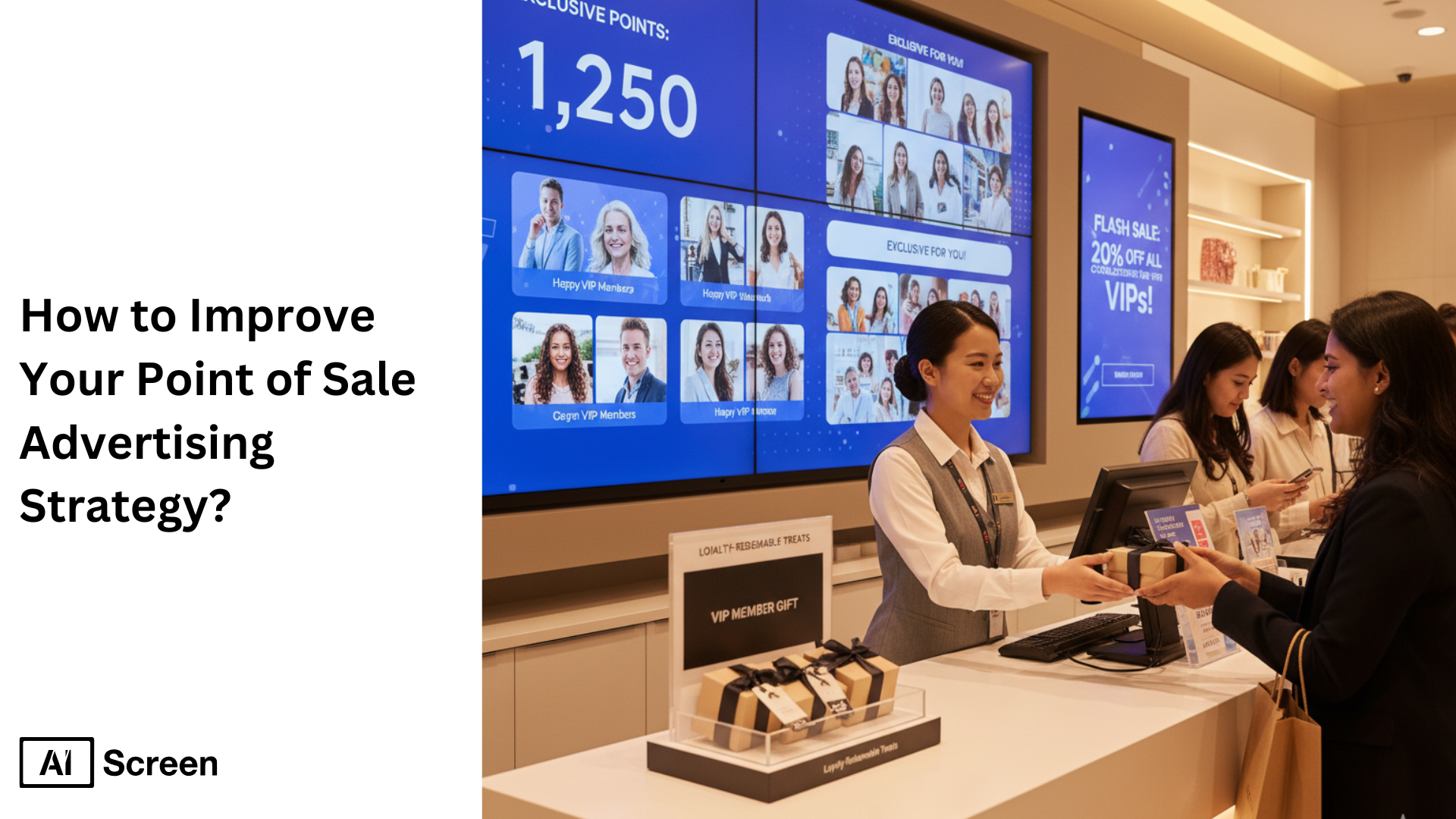
To improve your point of sale advertising strategy, you can boost sales and deepen customer satisfaction by creating sharper campaigns that combine eye-catching POS displays, strategic placement, and emotionally magnetic offers. Use digital signage to spotlight limited-time deals, integrate loyalty programs, and run personalized promotions to push impulse purchases and elevate the in-store experience. After all, 80% of consumers shop impulsively in brick-and-mortar stores, according to Capital One Shopping.
In this blog, you’ll discover actionable POS strategies designed to capture attention, improve customer engagement, drive sales, and make your sale advertising truly effective at the point of purchase. We’ll explore practical tips on display placement, digital signage integration, and promotional techniques that help turn everyday shoppers into loyal customers while maximizing in-store revenue.
What Is POS Marketing?
Point-of-sale (POS) marketing is the practice of using advertising materials, such as signage, displays, digital screens, or branded display units, at the point of sale to engage customers and influence their purchase decisions. The idea is that you reach them where their purchase decisions are being made in a brick-and-mortar store.
In fact, research shows that 70% of consumers have made impulse purchases because of a good deal presented at checkout, that’s according to Capital One Shopping. POS marketing lets businesses target customers at the final touchpoint of the shopping journey, where even one small nudge can convert a browse into a purchase.
Think of it this way: you might be marketing your product all month, but it’s at the cash register, at the checkout line, at the cash register, next to the checkout counter, or even on digital signage or shelf talkers, where you get the last chance to entice customers into adding something extra.
Smart POS marketing helps you raise average spend from existing customers and turn potential customers into loyal ones.
What Are the Benefits of POS Marketing?
The benefits of POS marketing go far beyond just enhancing marketing efforts or boosting sales. We know that well-designed POS displays can drive visibility and conversions, but what truly sets them apart are the additional advantages they bring to both retailers and brands alike. Here are the most powerful benefits of point of sale marketing, viewed through both lenses.
Advantages for Retail Businesses
POS marketing encourages impulse purchases and supports upselling or cross-selling within your store. When shoppers wait in line, the presence of attractive in store displays, pop displays, or retail digital signage can nudge them to add one more item.
It improves customer experience by helping them discover relevant items, promotes special promotions that highlight new or underperforming SKUs (thus driving the top line), and lets you run targeted promotions on specific categories or products when you have customer data and purchase history at hand. For promoted SKUs at checkout, fast checkout barcode reads keep lines moving and reduce mis-scans .
Imagine a shopper at the checkout counter, a well-placed pos display featuring a bundled snack or a limited-time deal is more effective than showing it elsewhere in the store. This kind of effective POS advertising turns several touchpoints into revenue opportunities and elevates customer satisfaction by helping them feel they got value at the moment of purchase.
Advantages for Brands
For brands, point of sale marketing provides unmatched visibility right where transactions happen. A branded display at checkout or near the cash register gives your product prominence, steering attention away from competitors.
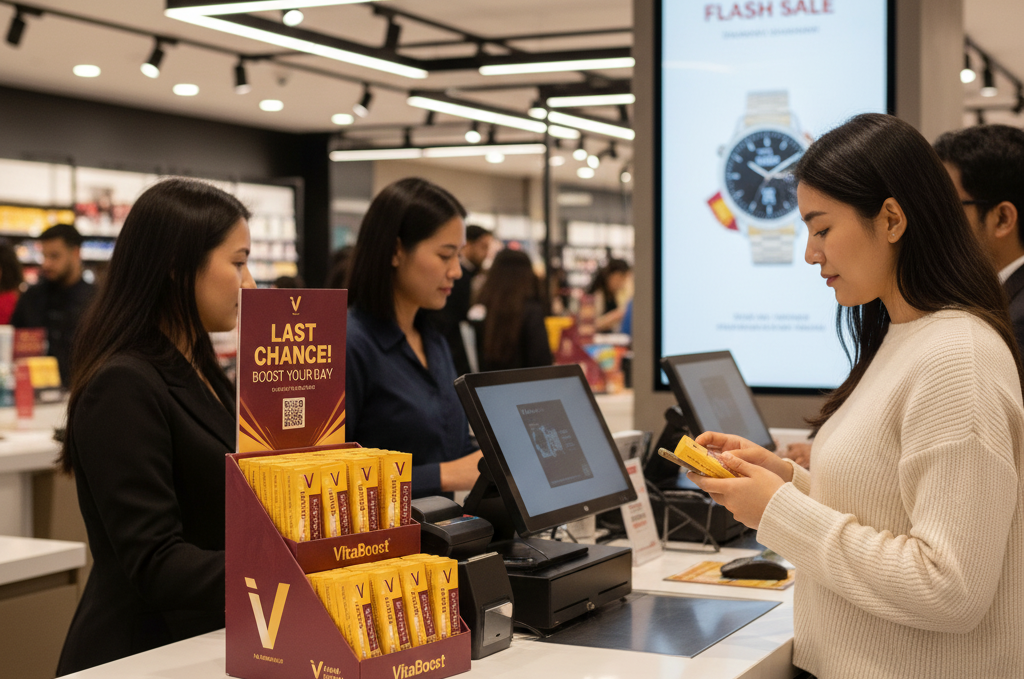
It strengthens brand identity and recognition, giving you strategic control over product placement. Over time, these frequent exposures build customer loyalty and help differentiate your brand in a crowded shelf environment.
Since shoppers in a brick and mortar store are already primed to buy something, your POS materials can guide them to pick your item as an unplanned addition. In many cases, POS marketing helps turn browsers into buyers and targets those ready-to-act customers with gentle persuasion.
6 POS Marketing Strategies for Success
POS marketing isn’t just about dropping in store displays at random spots. To increase sales, boost customer engagement, and make your sale advertising truly effective, you must be strategic. These six pos marketing strategies will help you turn displays at your checkout counter, checkout line, or cash register into powerful conversion tools.
Research shows that around 80% of consumers shop impulsively in brick-and-mortar stores, reinforcing how much power your in store promotions and pos advertising carry at the point of purchase.
1. Understand Your Target Market
Before placing pos materials or pop displays, you need to know who you’re talking to. Define your target market using customer data, purchase history, and customer feedback. Once you understand your audience’s customer needs, you can tailor personalized promotions and effective pos advertising that resonate.
That way, your point of sale marketing doesn’t feel like noise, it feels timely. Imagine: every time a customer walks to the register, your customer data already helps tailor the display they see.
2. Select the Right Products
Only promote items that make sense in the moment. Choose small, visually appealing products that trigger last minute impulse purchases, things customers are comfortable adding to their basket.
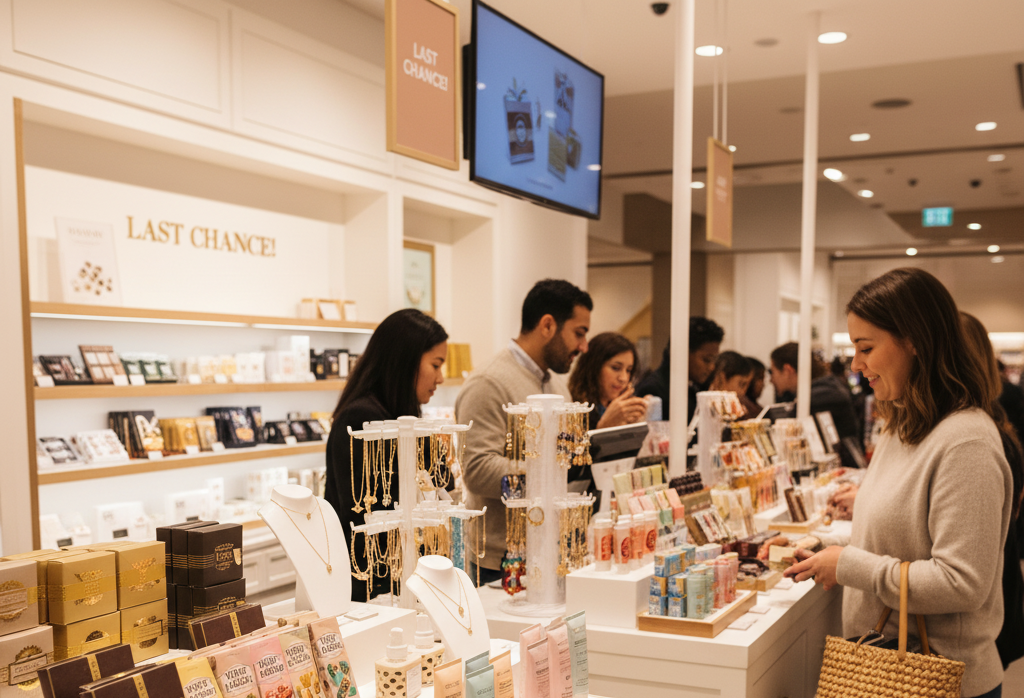
You might pick gift items, small accessories, or snack-size products. Use this insight to sharpen your pos strategy: products that stand out visually and align with your value proposition push more sales than random items.
3. Choose the Right Point-of-Sale Materials
Your choice of pos displays, pop displays, or digital signage affects how well your message lands. Consider design, position, and branding as the three pillars.
Here are examples of point of sale marketing materials and where they perform well:
- Shelf talkers: good for promoting individual SKUs or features.
- Posters: ideal for store-wide special promotions.
- Pallet displays: effective for bulk or seasonal items.
- Free-standing display units (FSDUs)
- Dump bins: for clearance or impulse items.
- Countertop displays: especially for small items near the checkout counter.
- Digital signage: for showing real-time offers, inventory, or dynamic content.
Don’t shy away from square or unconventional shapes, breaking the visual monotony can attract customers’ attention more effectively.
4. Be Strategic About POS Placement
Placement is everything. You could have the most attractive displays, but if they’re hidden, they won’t help drive sales.
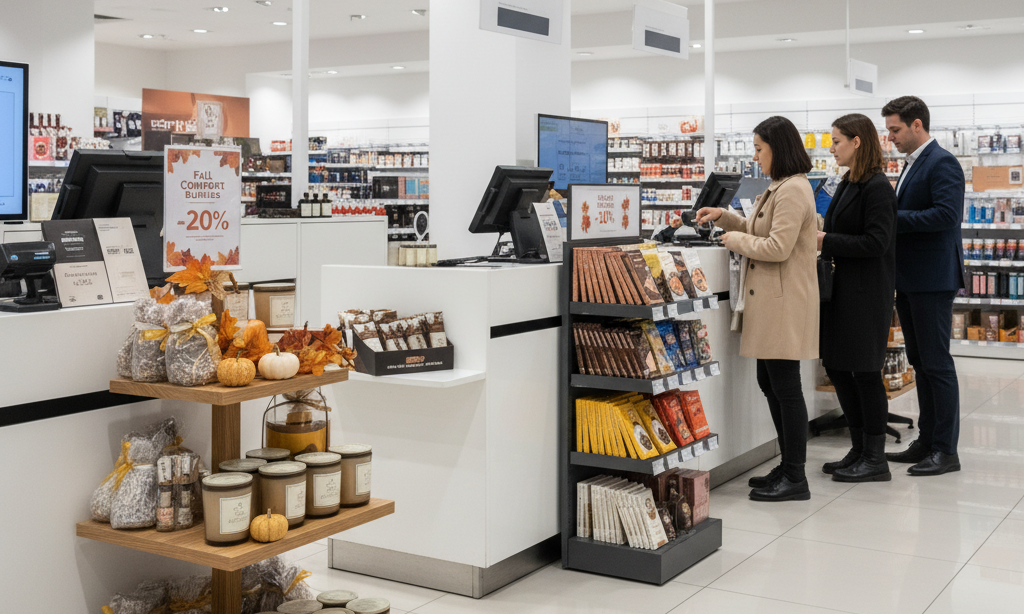
Here are five golden rules:
- Make pos stands accessible and don’t crowd the checkout line.
- Bundle related items or promote underperforming ones.
- Match displays to your store’s design so they don’t clash.
- Remember: “Eye level is buy level”.
- Align with seasonal events or themes to harness context.
Even within the same store, test multiple placements, what works near the cash register may differ from what works at an aisle end.
5. Get the Design Right
Design isn’t just aesthetic. It’s persuasion. Keep copy minimal, emphasize the offer, use readable fonts, and strong colors.
Your product displays need to pop. Use contrast. Avoid clutter. Make the call to action clear (“Grab now,” “Limited time”) so customers know exactly what you want them to do.
A compelling visual display at the point of sale gives customers a reason to pause, and that pause is your moment to convert.
6. Build Customer Loyalty (Low and Slow)
POS marketing isn’t only about one-time transactions, it’s also about creating lasting impressions and nurturing loyal customers over time. To back this, Bain & Company research found that in the apparel sector, a repeat customer spends 67% more in months 31–36 of their relationship than in the first six months.
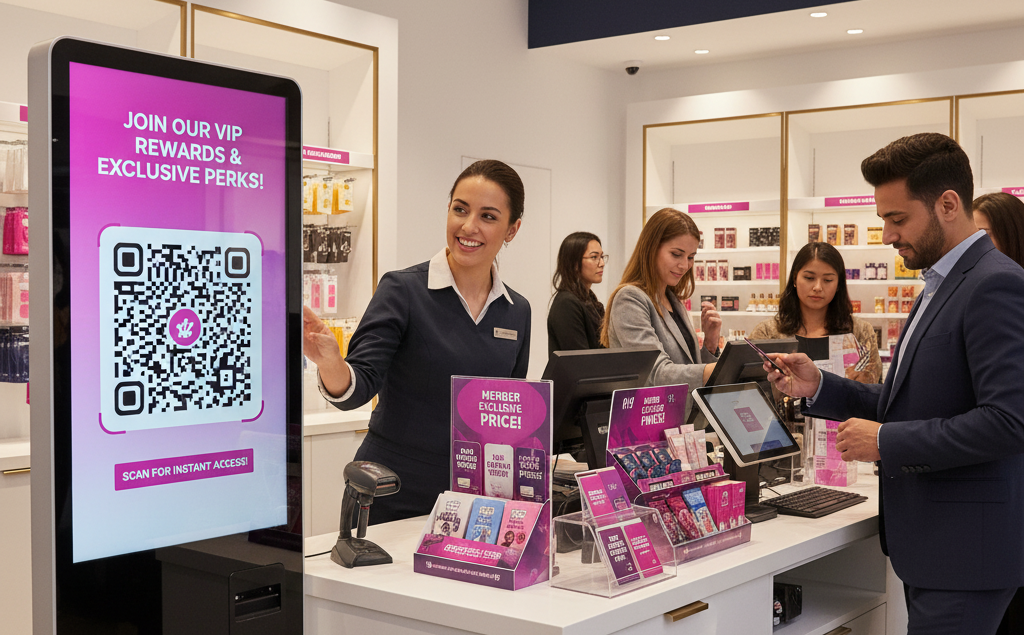
Use pos displays to promote your loyalty program, display personalized promotions, or encourage gift card purchases. This gives employees at the checkout counter a chance to ask customers to join your program, nudging existing customers to stay, and new customers to engage more deeply.
You can also showcase social proof through digital screens by incorporating real-time testimonials, reviews, and customer photos. Learn how to use user-generated content to boost retail experience with digital signage to make your loyalty efforts feel more authentic and personal.
Speed Up POS Marketing Reviews with AIScreen
When it comes to point of sale marketing, timing and visibility matter. AIScreen empowers businesses to boost sales, entice customers, and keep their marketing strategies fresh with dynamic digital signage. With an intuitive dashboard, you can update menu boards, special promotions, or purchase advertising content instantly, no technical expertise needed.
Whether you’re managing in store campaigns across physical stores or running targeted sale advertising to increase sales, AIScreen ensures your brand messaging stays relevant and consistent. Use data analytics and customer engagement insights to optimize each display and generate buzz where it matters most. By offering maximum visibility and flexibility, AIScreen helps drive sales and build a loyal customer base of happy customers who return for more.


FAQs
What does POS stand for?
POS stands for Point of Sale, the exact time and place where a transaction occurs between a customer and a vendor. It’s where purchase advertising, cross selling, and customer engagement happen through a blend of software and hardware like checkout counters, online payment portals, and touch-screen terminals in physical stores designed to increase sales and boost customer satisfaction.
What is POS strategy?
A POS strategy refers to the plan businesses use to drive sales and enhance the customer journey at the point of sale. It combines pos advertising, layout design, and marketing strategies that encourage customers to buy more. Tactics include offering loyalty programs, advertising gift cards, promoting discounted items, and using visually appealing displays to capture attention and create urgency among new customers.
What are the best practices for a successful POS marketing strategy?
The best practices for a successful POS marketing strategy focuses on layout, design, and relevance. Position in store displays where they can capture attention and entice customers at just the right time. Test different visually appealing display types and messages, use data analytics to fine-tune campaigns, and invest in high-quality pos advertising materials. This ensures your brand looks professional, builds customer engagement, and helps increase average spend per visit.
What’s the difference between POP and POS displays?
The difference between POP and POS displays include POP materials are set throughout the store to generate buzz and guide customers during their shopping journey. POS materials, however, are positioned at the checkout counter or cash register, where purchase decisions are finalized. Together, they enhance in store visibility and strengthen sale marketing efforts.
How can digital signage enhance POS marketing strategies?
Digital signage enhance POS marketing strategies by offering dynamic content that entices customers and keeps your brand top-of-mind. You can showcase special promotions, run cross selling campaigns, or share email marketing sign-ups with free WiFi offers, all updated in real-time. The result? Greater customer engagement, increased sales, and a lasting impression that turns walk-ins into happy customers.
