
What Are Digital Billboards?
In an era where marketing strategies constantly vie for consumer focus, three-dimensional digital billboards emerge as transformative agents in the advertising landscape.

Utilizing avant-garde technology, these billboards craft hyper-realistic visuals that appear to break free from their two-dimensional confines, thereby engaging viewers in an unprecedented manner. Behind the spectacle, capable digital signage software schedules and renders every frame that reaches the street.
A report from Statista says that the businesses that shifted towards 3D Digital Signage boards experienced a 55% jump in their revenues, highlighting the accelerated transition towards digital mediums in the field of public advertising.
Prepare yourself to delve into five astonishing instances that epitomize the boundless capabilities and artistic ingenuity of 3D digital billboards. For a wider view of the platforms driving them, our roundup of the best digital signage software companies outdoor compares the leading vendors.
Short Summary
- 3D digital billboards employ advanced technology to create lifelike visuals, revolutionizing the advertising landscape.
- The article explores five striking examples, showcasing the limitless possibilities and artistic ingenuity of 3D billboards.
- Ethical and regulatory challenges, such as data privacy and visual pollution, accompany the rise of 3D billboard technology.
- These innovative billboards offer unprecedented viewer engagement, making them a potent tool for modern advertising strategies.
What Is A 3D Digital Billboard?
What is a 3D digital billboard? A 3D outdoor digital billboard represents an evolution in outdoor advertising, a leap from static or even standard digital displays. If the technology comes with unfamiliar wording, our digital signage glossary defines the terms you will encounter.
Employing state-of-the-art technology, these outdoor billboards generate three-dimensional visuals that appear to extend beyond the confines of the screen, creating an illusion of depth and movement.

Unlike their 2D counterparts, which merely show flat images, 3D digital billboards and digital signage offer a multi-dimensional experience. They captivate the viewer’s attention by making it seem as though objects or characters are interacting with the real world, floating in mid-air, or even coming toward the viewer.
3D billboard advertising is redefining the landscape of digital-out-of-home advertising, seamlessly integrating eye-catching three-dimensional visuals into urban environments. This fusion of innovative technology and outdoor advertising maximizes engagement and brand exposure in the digital world.
This heightened level of engagement makes these billboards exceptionally effective for advertisers seeking to make a lasting impression. In essence, 3D digital billboards serve as interactive canvases that offer a more dynamic, engaging, and memorable form of public advertising.
How Does 3D Digital Billboard Technology Work?
By redefining the boundaries of what outdoor marketing can achieve, these billboards have become the talk of the advertising world, making traditional billboards look positively archaic in comparison.
Software and Hardware: The Fundamental Pillars Of Digital Signage
At the heart of this marvel lies a combination of specialized software and hardware. The software, often custom-designed, crafts intricate 3D models. These models undergo a complex rendering process where textures, lighting, and shading are meticulously applied.
The outcome is a lifelike image that’s displayed on cutting-edge LED or OLED panels. These panels are known for their vibrant colors, sharp contrasts, and energy efficiency, making them the ideal medium for these advanced visuals.
Lenticular Technology: Crafting Depth Through Varied Angles
Some 3D billboards employ lenticular technology, a fascinating optical technique. A lenticular lens is placed over the display, allowing for different images to be seen based on the viewer’s angle.

As you move past the billboard, the images shift, creating an illusion of depth and movement that’s captivating. This technology is particularly effective in high-traffic areas where viewers are in motion, such as highways and busy city streets, maximizing the number of people who experience its magic.
Holographic Techniques: The Illusion of Floating Images For Target Audience
Other outdoor billboards utilize holographic techniques, which involve projecting the image into three-dimensional space. Special projectors and reflective surfaces work in tandem to make it appear as if the image is floating in mid-air.

This method adds an extra layer of engagement and wonder for those who encounter it, often stopping pedestrians in their tracks.
The sheer novelty of a floating image in public spaces makes these billboards a popular choice for advertisers seeking to make a big splash.
Augmented Reality: A Seamless Fusion of Digital and Physical Realities
Another intriguing approach incorporates augmented reality (AR). In this setup, cameras and sensors capture real-world backgrounds, and digital images are overlaid onto these scenes.
The result is a seamless blend of digital and physical elements, offering an even more immersive and interactive experience for viewers.
AR billboards can even interact with smartphones for a more personalized advertising experience, such as offering special deals or additional information when a viewer scans a QR code.
Stereoscopy: Dual Images for Enhanced Depth
Some billboards also use stereoscopic techniques, displaying two slightly different images simultaneously. When viewed through special glasses or from specific angles, these images merge into a single 3D visual, enhancing the perception of depth and realism. This technique is closely related to how some advanced imaging tools can convert a flat image to 3D, making it easier to simulate depth and spatial realism in billboard visuals.

This technique is often used in movie theaters but is now making its way into the public advertising space, offering yet another avenue for creative marketing.
Interactivity: Engaging the Audience As Digital Signage Industry Advances
Advanced 3D billboards sometimes incorporate interactive elements, such as touchscreens or gesture recognition. These features allow viewers to engage directly with the advertisement, whether it’s playing a short game or navigating through product options.
This level of interactivity not only captures attention but also encourages longer viewing times, increasing the impact of the advertising message and making the viewer a more active participant in the experience.
5 Best Examples Of 3D Advertising Billboards
There have been some instances where brands used 3D Billboard advertising campaigns and totally stole the show. Let’s talk about 5 such examples:
1. Naver’s Spectacular Display at COEX Square, South Korea
In early 2022, Naver, South Korea’s leading search portal, unveiled an awe-inspiring 3D billboard at COEX Square in Seoul. The billboard featured the global sensation K-pop band BTS, as part of Naver’s webtoon called ‘Super Casting.’

The visual spectacle began with band members RM, Jhope, and Jungkook waving to the crowd and then magically disappearing into a fantastical world, followed by the other members.
The interactive element was so compelling that it felt as if the audience could reach out and touch the band members, resulting in massive crowd engagement at the Square.
2. Nike’s 3D Air Max Extravaganza in Japan
Celebrating its 35th anniversary in 2014, Nike Japan took advertising to the next level with a 3D LED billboard outside Shinjuku Station in Tokyo.

The 3D billboard featured a Nike box that seemed to project out of the board, opening up to reveal various customizable Air Max designs. The campaign was not just an advertisement but a testament to Nike’s commitment to creativity, imagination, and technological innovation.
3. Amazon Prime’s ‘The Wheel of Time at Piccadilly Square, London
In November 2021, Amazon Prime introduced its fantasy series, ‘The Wheel of Time,’ with a jaw-dropping 3D billboard at London’s Piccadilly Square. Featuring Rosamund Pike, the billboard depicted an epic battle between the forces of Light and Dark.

What made this even more remarkable was that similar 3D billboards were displayed in New York’s Times Square and Tokyo’s Cross Shinjuku Vision, each requiring separate performances from Pike to create diverse visual impacts.
4. The Wave Phenomenon in South Korea
Seoul – South Korea is home to the world’s largest 3D digital out of home advertising billboard, and it doesn’t disappoint. A colossal wave appears on the LED facade at Gangnam’s K-pop Square in South Korea, creating an anamorphic illusion designed to increase foot traffic.
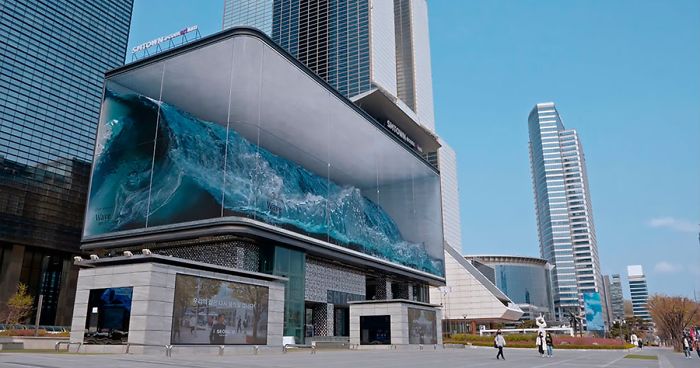
The wave appears for one minute every hour and is so realistic that it looks as if water is about to pour over the heads of passersby, offering a dynamic yet calming visual experience.
5. The Golden Bull at Pavilion KL, Malaysia
To mark Chinese New Year and symbolize the nation’s fight against COVID-19, Pavilion KL in Kuala Lumpur showcased a 3D billboard featuring a golden bull.

Initially displayed as a silver bull encased in a glass box, it was spray-painted gold before charging towards the screen with the message “Together fight against COVID-19,” capturing the nation’s attention and trending on social media.
The Future Of 3D Billboard Advertising
This section delves into the prospective trajectory of 3D billboard advertising, examining its potential impact on consumer engagement, environmental sustainability, and the advertising industry at large.
The Evolution of Consumer Engagement
One of the most compelling aspects of 3D billboard is their ability to engage consumers in a way that traditional 2D billboards simply cannot. By offering a multi-dimensional experience, these billboards captivate viewers and make a lasting impression.

Imagine driving down a freeway and seeing a 3D billboard that not only advertises a new smartphone but allows you to interact with a life-sized 3D model of the device. As the digital signage industry advances, the 3D billboard industry is moving at the same pace.
The level of engagement here is unparalleled, and as technology advances, we can expect even more interactive features, such as touch-sensitive displays and augmented reality integrations.
Environmental Sustainability: A Step Forward
Old school billboards, especially those that are printed, have a significant environmental impact. They require physical materials and often use toxic inks. 3D digital billboards, on the other hand, are far more sustainable.
They are usually made of LED panels that are energy-efficient and can be updated digitally, reducing waste. As sustainability becomes a more pressing concern, the eco-friendly nature of 3D billboards could make them the go-to choice for responsible advertising.
The Intersection of Art and Advertising
3D billboards offer a unique platform for artistic expression. They transform advertisements into art installations, adding depth and dynamism to the visual experience.

This opens up new avenues for creative collaboration between artists and brands, elevating the aesthetic and emotional impact of advertising.
In a world where consumers are increasingly desensitized to advertising, the artistic potential of 3D billboards offers a fresh approach to capturing attention and evoking emotion.
The Role of Data Analytics
One of the less-discussed but highly significant aspects of 3D billboard advertisements is the potential for data collection and analytics.
Advanced 3D billboards could be equipped with sensors and cameras to collect data on viewer engagement, traffic patterns, and even emotional responses. This data can be invaluable for advertisers looking to fine-tune their campaigns and achieve better ROI.
As big data and analytics continue to revolutionize various industries, their integration into 3D billboard advertisements are almost a given.
Global Trends and Market Adoption
The adoption of 3D billboard technology is not limited to any particular region; it’s a global phenomenon.
From the bustling streets of Tokyo to the iconic Times Square in New York, 3D billboard is making their presence felt.

As more countries recognize the benefits of this innovative form of advertising, we can expect a more widespread adoption, further propelled by decreasing technology costs and increasing awareness of the medium’s effectiveness.
The Future of Storytelling in3D Digital Signage Advertising
Storytelling is a crucial element in effective outdoor digital signage advertising, and 3D billboards offer a new dimension—literally—to this age-old technique.
With the ability to create more immersive and interactive narratives, these billboards can convey complex messages and themes more effectively.
Whether it’s a social cause, a product launch, or a brand story, 3D billboards offer a richer, more nuanced medium for storytelling that resonates with audiences on a deeper level.
Regulatory and Ethical Considerations
As with any disruptive technology, 3D billboard comes with its own set of regulatory and ethical challenges.
Issues such as data privacy, visual pollution, and energy consumption will need to be addressed as the technology becomes more prevalent.
Regulatory bodies will need to establish guidelines to ensure that 3D billboards are deployed in a manner that is both ethical and in line with community standards.
What Are The Challenges Of 3D Billboard Advertising?
This section aims to provide a comprehensive overview of these challenges, offering insights into the complexities that accompany the rise of 3D billboard advertising.
Regulatory Hurdles
Regulatory challenges are among the most immediate obstacles facing 3D billboard advertising. Different jurisdictions have their own sets of rules governing public advertising, including size limitations, zoning restrictions, and content guidelines.

For instance, some cities have stringent zoning laws that could limit where 3D billboard can be placed. Moreover, the dynamic and interactive nature of 3D billboards may raise new legal questions that existing regulations are ill-equipped to address.
These could include concerns about public safety, especially if the billboards are too distracting for drivers.
Ethical Concerns
Modern 3D billboards often come equipped with cameras and sensors that can collect data on the people who pass by. While this data can be a goldmine for advertisers, it raises serious privacy concerns.

Questions about data storage, access, and usage are critical. For instance, is the data being anonymized to protect individual identities?
Is it being sold to third parties? Clear guidelines and transparent practices are essential to address these ethical concerns and to ensure that privacy rights are not violated.
Visual Pollution
3D billboards are designed to be eye-catching, but there’s a risk of contributing to visual pollution. In cities already cluttered with advertising, the addition of bright, dynamic 3D billboards could exacerbate the problem.
This has implications not just for the aesthetic quality of urban environments but also for public safety. For example, overly distracting billboards could pose risks to drivers and pedestrians alike, leading to accidents or other safety incidents.
Technological Limitations
The technology that powers 3D billboards is still in its nascent stages, and this comes with limitations. High-quality 3D displays require advanced, often expensive, hardware components. Moreover, the software needed to create compelling 3D visuals is complex and requires specialized skills.

These technical challenges can make 3D billboards a costly investment, potentially limiting their adoption among smaller businesses or in markets where the technology is not yet widespread.
Energy Consumption
3D digital billboards require a constant supply of electricity to maintain their dynamic displays. This raises questions about their sustainability, especially in a world increasingly focused on reducing energy consumption and carbon footprints.
Innovations in energy-efficient LED technology and solar-powered options are potential solutions, but these are still under development and may not be widely available or cost-effective in the short term.
Public Reception
While 3D billboards are likely to capture attention initially due to their novelty, there’s the risk of public fatigue over time.
If these billboards become too common or if the content displayed is not regularly updated, they could quickly become just another form of visual noise.
Advertisers will need to carefully curate content and consider the frequency of their 3D campaigns to maintain public interest and engagement.
Accessibility
3D technology, while visually stunning, may not be accessible to everyone. Individuals with certain visual impairments may find 3D displays disorienting or even inaccessible.
As 3D billboards become more prevalent, it’s essential to consider how they can be made more accessible to a broader range of people.
This could involve providing alternative forms of engagement, such as audio descriptions or tactile interfaces, to ensure that advertising messages are inclusive.
Economic Feasibility
The costs associated with 3D billboards can be prohibitive. These include not just the hardware but also the creative and technical expertise required to produce high-quality 3D content.

For many businesses, especially smaller ones with limited budgets, the return on investment (ROI) may not justify the initial outlay.
This economic challenge could slow down the adoption of 3D billboards, making them a less attractive option compared to more traditional flat billboards.
Benefits Of 3D Billboard Advertising For Businesses
Increased Brand Recall Rates: According to studies, 3D advertising can increase brand recall by up to 40% compared to 2D traditional advertising. The immersive nature of 3D billboards ensures that your brand remains top-of-mind for consumers, thereby increasing the likelihood of future interactions and purchases.
Cost-Effective Long-Term Investment: While the initial setup cost for a 3D billboard may be higher, the long-term benefits often outweigh these initial expenses. Digital 3D billboards allow for easy content updates without the need for physical replacements, reducing the overall cost per campaign. Over time, this can result in significant cost savings.
Hyper-Localized Targeting: Advanced 3D billboards equipped with sensors can collect real-time data on the demographics of passersby. This enables businesses to display targeted messages based on factors such as age, gender, or even mood, thereby increasing the relevance and effectiveness of advertising campaigns.
Enhanced Social Media Engagement: 3D billboards are highly shareable, often encouraging viewers to take photos or videos to share on social media. This creates a viral effect that extends the reach of the campaign far beyond the physical location of the billboard. For example, a particularly innovative 3D billboard might garner millions of views if it goes viral on platforms like Instagram or Twitter.
Competitive Differentiation: In a saturated advertising market, standing out is crucial. 3D billboards offer a unique and innovative way to capture attention, setting your brand apart from competitors. This can be particularly beneficial in crowded markets where businesses are vying for consumer attention.
Increased Dwell Time: The captivating nature of 3D visuals encourages viewers to spend more time engaging with the advertisement. Increased dwell time not only improves brand recall but also provides a longer window of opportunity to convey complex messages or narratives.
Cross-Platform Synergy: 3D billboards can be integrated into broader digital marketing strategies. For instance, QR codes displayed on the billboard can direct viewers to a mobile app or website, creating a seamless cross-platform experience that maximizes consumer engagement, a defining strength of dynamic digital signage.
Conclusion
In the ever-evolving landscape of advertising, 3D digital billboards stand as a revolutionary force, redefining how businesses connect with consumers. With their ability to captivate audiences through lifelike visuals and interactive experiences, these billboards offer a new paradigm in outdoor advertising.

The compelling statistics, such as the 55% revenue increase reported by Statista, underscore the transformative impact of this medium.
As we’ve explored the intricate workings, stunning examples, and undeniable benefits of 3D billboards, it’s clear that they are not just a fleeting trend but a significant leap forward in the advertising industry.
For any queries or updates, visit our contact us page.
FAQs
How Do 3D Digital Billboards Differ from Traditional Billboards?
Unlike traditional billboards that display static or 2D images, 3D digital billboards offer a multi-dimensional visual experience, creating an illusion of depth and movement.
What Technologies Power 3D Digital Billboards?
These billboards utilize advanced software and hardware, often incorporating lenticular technology, holographic techniques, or augmented reality to produce eye-catching, dynamic visuals.
Are 3D Digital Billboards More Effective for Advertising?
Yes, 3D billboards have been shown to significantly increase viewer engagement and brand recall, making them a highly effective medium for capturing consumer attention.


