
What is Narrowcasting? Definition, Examples & Software Guide
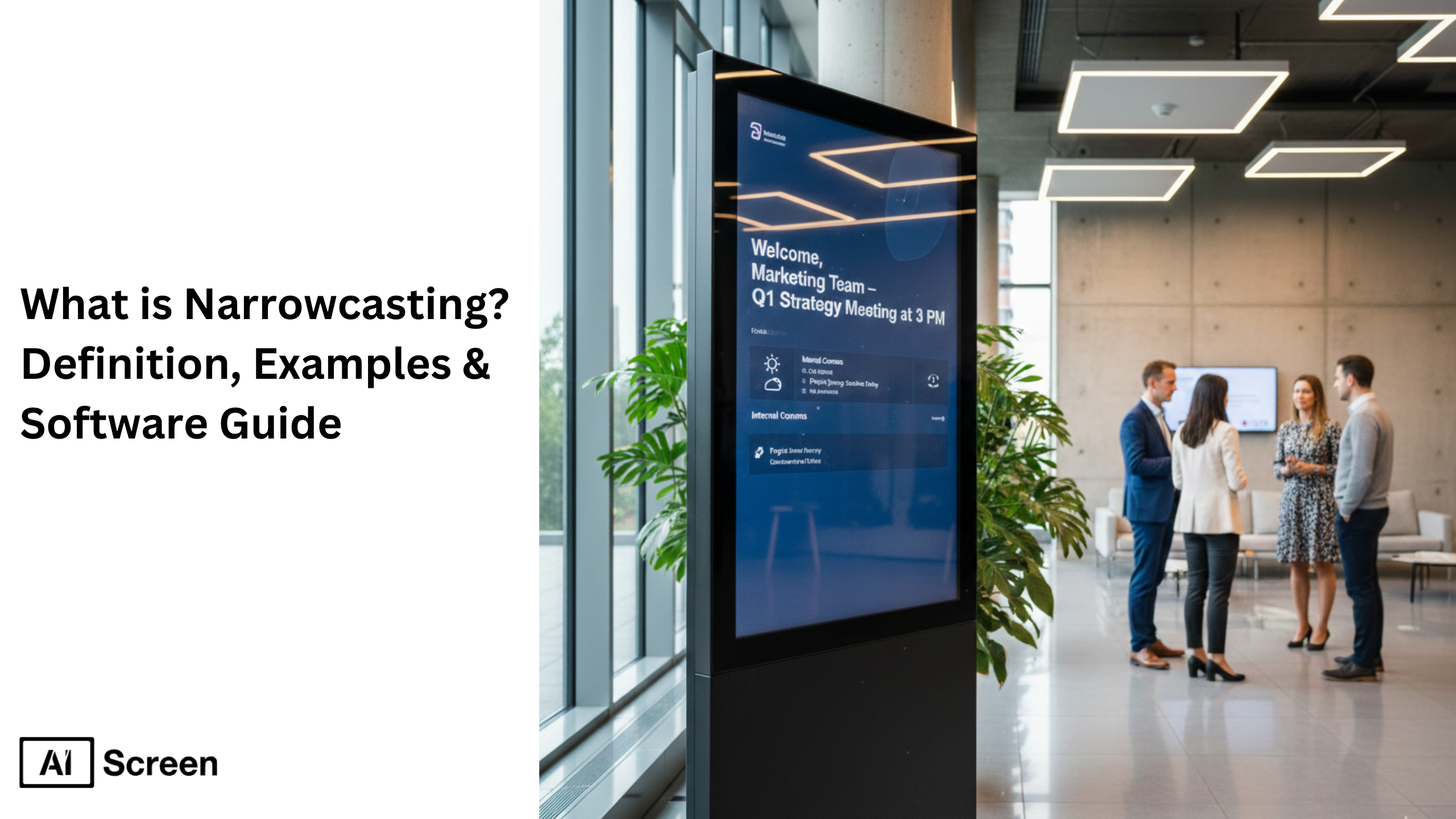
Narrowcasting is the delivery of targeted content to a specific audience instead of broadcasting one message to everyone. In modern environments shaped by creative office space design, communication must match context, not just reach scale. Mass broadcasting no longer fits fragmented digital behavior. According to Statista, global digital advertising spending reached approximately $626 billion in 2023, reflecting a decisive shift toward targeted digital communication. Narrowcasting solves this gap by delivering precise messaging to specific groups through software-driven systems instead of one message for all broadcasting.
In this blog, you will get a complete guide covering the narrowcasting definition in one line, clear comparisons with broadcasting, real-world example scenarios, key benefits, and different types of software, from system software and utility software to open source software and free software. We also explain how programs, code, developers, and device-level driver software work inside a computer environment, and how digital signage uses these systems for practical use cases.
What Is Narrowcasting?
Narrowcasting is the delivery of personalized content to a narrow audience based on context, behavior, or geographic area. This definition highlights the main difference between broadcasting to a wide audience and targeting specific groups with highly targeted messaging.
Unlike broadcasting, which distributes one message across a computer system, radio, or television network, narrowcasting uses software, apps, and internet platforms to reach the right audience with relevant data. Today, people spend more time online through a computer, mobile device, or screen-based system.
According to Statista, global internet users surpassed 5 billion in 2023, showing how digital access supports interactive narrowcasting.
But why send one generic message to everyone when you can create content for a specific audience? Businesses use digital signage, communication software, webinars, and application software to track performance, adjust messaging, and serve end users with precision.
Real-World Broadcasting vs Narrowcasting Examples
Real-world broadcasting distributes one message to a wide audience, while narrowcasting delivers content to a specific audience based on relevance. This difference becomes clear when comparing legacy broadcasting systems with modern online platforms and software-driven targeting.
The main difference lies in intent, data usage, and performance tracking across various forms of media. Between legacy communication and modern digital media, there are few examples that show how broadcasting and narrowcasting serve different purposes.
Broadcasting relies on scale within a geographic area, while narrowcasting depends on personalized messaging, data insights, and computer programs that refine targeting.
But which approach actually helps businesses save money and reach the right audience more effectively? The answer depends on whether companies prioritize volume or relevance. Modern apps, tools, and digital signage systems allow companies to create content for specific groups instead of hoping a broad message resonates.
TV Commercials vs YouTube Ads
TV commercials represent classic broadcasting: one 30 second video aired to millions across a wide audience regardless of interest. Primetime placements can cost hundreds of thousands, yet advertisers cannot track performance precisely or identify which end user responded. This model depends on reach, not accuracy.
YouTube ads reflect interactive narrowcasting powered by application software, algorithms, and data analysis. Advertisers can define target audience attributes such as age, interests, job role, or geographic area. Would a car commercial during a national event convert better than the same video placed inside a car review watched by enthusiasts?
Highly targeted placement often improves performance because the right audience already shows intent. Online platforms allow companies to track performance, measure engagement, and optimize campaigns using communication software and analytics tools rather than relying on assumptions.
National Sports News vs Team-Specific Channels
National sports news channels use broadcasting to appeal to the largest possible audience. Networks such as ESPN must prioritize major headlines to satisfy advertisers and maintain wide audience engagement. This system focuses on scale and generalized content.
Team-specific channels represent narrowcasting. A Chicago Cubs fan can launch a podcast or online video channel covering practice recaps, player statistics, and farm team updates. The audience size may be smaller, but engagement and loyalty increase because content serves a narrow audience with shared interests. Which viewers are more likely to subscribe and interact consistently?
Highly engaged subscribers who access personalized content often generate stronger performance metrics. Narrowcasting platforms allow creators to create content using programming software, audio tools, and video apps designed for a specific audience rather than competing for national attention.
Billboards vs Location-Specific Digital Signage
The difference between billboards and location-specific digital signage is broadcasting versus narrowcasting. Traditional billboards use static displays placed in high-traffic geographic areas to deliver one fixed message to a broad audience.
Since the 1800s, advertisers have relied on bold imagery and scale to capture attention, but the content remains identical for every driver who passes.
Location-specific digital signage reflects narrowcasting because businesses adapt content based on place, time, and audience context. Companies use digital signage software connected to a computer system, media player, and operating system to manage dynamic screens across multiple locations.
According to Statista, global digital out-of-home advertising spending exceeded $15 billion in 2023, showing strong adoption of screen-based messaging.
But why show the same message to hospital visitors, mall shoppers, and hotel guests? Digital signage enables personalized content, real-time video or audio adjustments, and measurable performance.
Radio vs Podcasts and Webinars
Radio operates as one-to-many broadcasting, delivering audio content to a wide audience within a geographic area. Listeners tune in, but advertisers cannot always measure detailed engagement or track performance beyond estimated ratings.
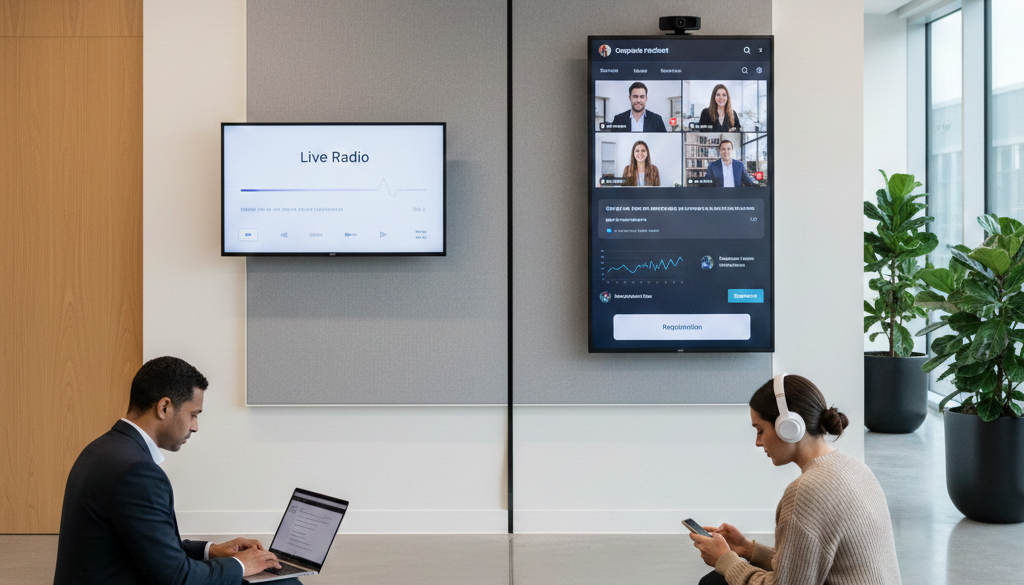
Podcasts and webinars represent narrowcasting because they attract subscribers interested in specific tasks, topics, or industries. Streaming platforms and communication software allow creators to distribute highly targeted content online and collect performance data.
Would someone searching for industry insights prefer a random radio segment or a webinar designed for a specific audience? Podcasts, webinars, and interactive narrowcasting tools allow businesses to create personalized messaging, gather contact data, and refine strategy based on measurable engagement rather than broad assumptions.
Business Narrowcasting Examples
Businesses use narrowcasting to deliver personalized messaging across internal and external environments. Internal screens, intranet systems, and digital signage enable companies to reach specific groups such as warehouse teams, sales departments, or office staff across time zones.
For example, displaying safety updates on a warehouse screen ensures workers see critical information immediately. Would employees notice an important change faster on a visible digital signage screen or buried inside an email?
Narrowcasting through application software and communication tools reduces missed messages. Companies can create content for a specific audience, track performance metrics, and adjust programs based on feedback. This strategy supports problem solving, improves operational performance, and ensures the right audience receives updates tailored to their role and location.


What Are the Benefits of Narrowcasting?
The benefits of narrowcasting include improved relevance, better performance tracking, and stronger alignment with a specific audience. Narrowcasting prioritizes personalized content over mass broadcasting, allowing companies to use software and online platforms efficiently.
Anyone can start using free tools such as YouTube, Canva, or CapCut to create content for a narrow audience without large budgets. Audience size still matters in some industries, but audience alignment often produces better results. Why compete for attention across a wide audience when highly targeted messaging delivers clearer outcomes?
Narrowcasting allows businesses to track performance using data from apps, communication software, and analytics tools. This approach helps companies save money, refine strategy, and serve end users with content designed for a unique purpose instead of generic messaging aimed at everyone.
Lower Costs and Higher ROI
Narrowcasting lowers costs and yields a higher return on investment by focusing on the right audience. Broadcasting campaigns often require large budgets because pricing depends on reach. Primetime TV placements can cost thousands for limited airings without guaranteed conversion.
In contrast, narrowcasting through online platforms, digital signage, webinars, or podcasts often costs less while offering measurable performance data. Why spend heavily to reach people outside your target audience? Companies can save money by investing in highly targeted campaigns tailored to specific groups.
Application software and marketing tools allow businesses to track performance, analyze data, and adjust programs quickly. Lower distribution costs combined with better audience alignment increase the likelihood of higher ROI, especially when conversion rates are monitored using structured analytics systems.
Better Audience Targeting
Better audience targeting defines narrowcasting’s core advantage. Businesses segment users by geographic area, job role, behavior, or context using communication software and digital platforms. This segmentation ensures personalized messaging reaches a specific audience instead of a wide audience.
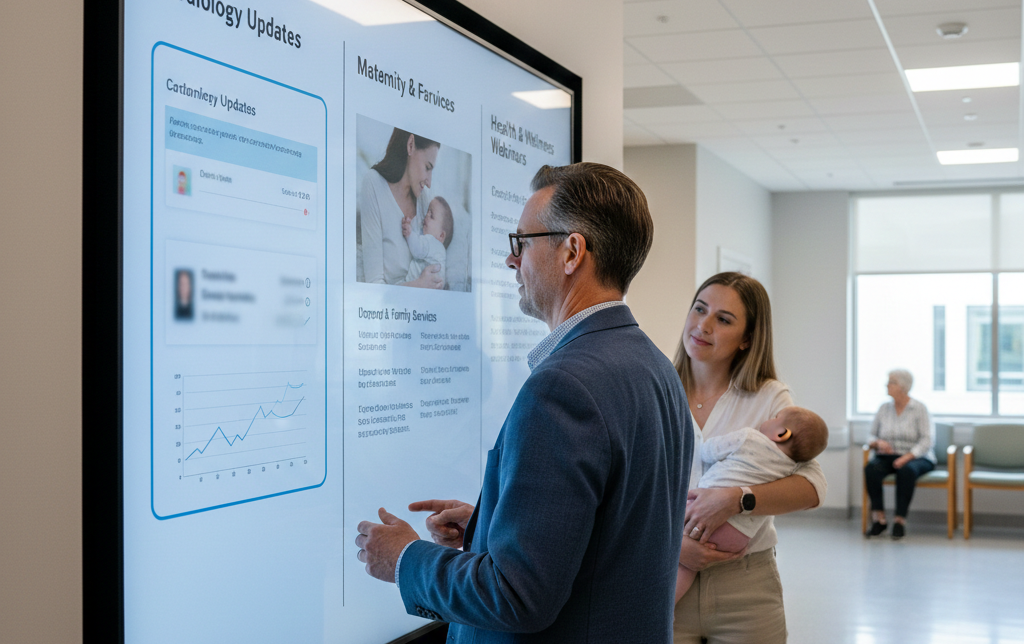
Online advertising, newsletters, podcasts, and webinars attract subscribers who actively seek relevant information. Digital signage can also narrowcast content within a hospital waiting room, shopping mall, or sales office. But how do companies ensure the right audience sees the right message at the right time?
By using data-driven tools, companies create personalized content aligned with user behavior and environment. This strategy enhances performance, strengthens engagement, and ensures that specific groups receive messaging designed for their needs rather than generic broadcasting.
Less Content Competition
Narrowcasting reduces content competition because messaging reaches an audience genuinely interested in the topic. Instead of competing against countless unrelated messages, businesses communicate with a narrow audience or captive group.
This environment creates more opportunities for meaningful engagement. Would a subscriber who chooses a niche webinar face the same noise as someone watching national television? Highly targeted platforms reduce distractions and increase focus. However, quality still matters.
Companies must create content that resonates with the right audience using programming software, design tools such as Adobe Photoshop, and video editing apps. While free software makes content creation easier, delivering personalized content that aligns with user expectations improves long-term performance and trust.
More Actionable Performance Data
Narrowcasting platforms provide granular performance data unavailable in traditional broadcasting. Platforms such as YouTube offer analytics on demographics, watch time, shares, and drop-off points. Webinar platforms provide subscriber information and engagement metrics, while newsletter software tracks open rates.
Compare this with cable TV or static billboards, which cannot track individual user interaction. How can businesses optimize campaigns without measurable data? Narrowcasting enables companies to track performance through application software, communication software, and analytics tools integrated within a computer system.
This data-driven approach supports problem solving, improves campaign performance, and allows developers or marketers to refine content strategy based on actual behavior rather than assumptions.
What Are the Types of Narrowcasting Software and Platforms?
The types of narrowcasting software and platforms include categorized tools that enable targeted communication across digital and physical environments. Since narrowcasting is more of a communication strategy than a specific feature-set, it applies to different types of software, programs, and platforms depending on the system, device, and audience context.
How you target users in one application software environment looks very different from how you target them in another. Social platforms rely on algorithmic ad delivery, marketing automation depends on CRM-based journeys, and digital signage operates through location-based triggers.
Because the difference between platforms is structural, it is often best to start with a narrow focus on which software you experiment with first. Below are a few examples of the main types that support narrowcasting across computer systems and devices.
Social Media Platforms
Social media platforms enable narrowcasting through algorithm-driven targeting, audience segmentation, and controlled ad delivery. Ads and promoted posts on TikTok, Facebook, Instagram, and LinkedIn let businesses pick audience age, location, interests, job title, and behavior.
These platforms operate using application software built on complex source code and proprietary software systems. Algorithms analyze user behavior, optimize ad placement, and reduce errors in targeting. Developers write code that evaluates engagement signals.
According to Statista, Facebook had approximately 3.05 billion monthly active users worldwide in 2023. This scale, combined with segmentation features, demonstrates how narrowcasting can exist inside large ecosystems when software features refine delivery.
Social platforms represent one of the most accessible forms of narrowcasting because businesses can start with free tools before investing in advanced campaigns. However, success depends on understanding how algorithms, system software, and programming software interact to control ad visibility and optimize performance.
Just as social media platforms use algorithms to target specific audiences online, businesses can use the AIScreen software to deliver tailored messages on digital screens across stores, offices, or events, ensuring the right content reaches the right audience at the right time.
Marketing Automation Software
Marketing automation software enables triggered messaging based on user behavior, CRM data, and customer journeys. Apps like Mailchimp, HubSpot, and Salesforce help businesses segment leads and customers to add personalization and better manage relationships.
These platforms operate as application software layered on top of broader computer systems. They integrate with databases stored on a hard drive or cloud infrastructure and use embedded software logic to trigger programs automatically.
Businesses can fine-tune narrowcasting efforts based on contact details gathered from previous interactions or third-party data.
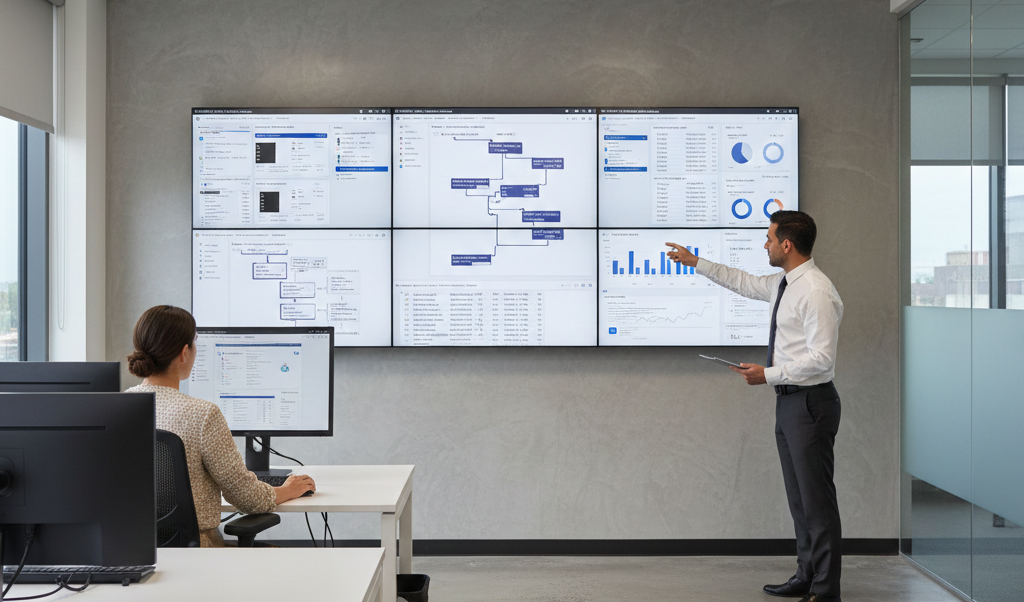
Instead of manually sending messages, automation tools execute specific tasks when conditions are met. For example, a system can send a follow-up email after a webinar registration or adjust messaging when a user downloads a guide. This reduces human errors and improves targeting accuracy.
The main difference between manual outreach and automation lies in data usage. Automation platforms analyze behavioral signals within the system, segment audiences, and deliver messaging at scale while maintaining personalization. Developers configure workflows using code-based logic, ensuring that the right content reaches the right users at the right stage of their journey.
eCommerce and Website Personalization Tools
eCommerce and website personalization tools enable dynamic content, recommendations, and customized shopping experiences based on user profiles. Platforms such as Shopify and Optimizely help online vendors personalize product recommendations, shopping experiences, and page content based on past interactions.
In some cases, businesses do not need to create narrowcasting messaging manually. The software automatically customizes what appears on the page for every website visitor and shopper in the database. Embedded software within the platform analyzes browsing behavior, previous purchases, and engagement patterns.
These tools rely on programming software and application software working together. Developers write code that connects user data to display logic. The operating system and utility software ensure that the computer processes run efficiently without performance errors.
For example, a returning user might see different homepage banners, product suggestions, or video demonstrations compared to a first-time visitor. This form of narrowcasting occurs in real time and adapts to each user’s profile. The result is a personalized experience powered by structured system software and controlled by software features designed for specific tasks.
Digital Signage Software
Digital signage software enables location-based narrowcasting by connecting smart TVs and screens to software like AIScreen. By linking each device to a centralized system, businesses can tailor visuals to specific situations and environments.
For instance, a screen behind an office’s front desk might automatically greet visitors or interrupt preprogrammed content with an incoming storm alert. Businesses can embed QR codes on slides to measure engagement and create location-based channels with dynamic content based on internal databases.
Unlike large online audiences, digital signage viewers are often smaller, context-driven groups. HR managers create internal communication messaging, retail teams advertise promotions, and operations leaders display KPIs. Content creators are physically closer to content consumers, which changes strategy.
Digital signage software operates across application software, embedded software, and sometimes proprietary software environments. It interacts with the operating system of the screen’s computer or media player. Device drivers, driver software, and other software components ensure smooth performance across hardware systems.
What Are the Best Narrowcasting Practices for Digital Signage?
The best narrowcasting practices for digital signage focus on strategy before tools. Digital signage is a great tool for narrowcasting because it allows businesses to share different types of content across screens.
Whether displaying updates from Slack or Microsoft Teams, or streaming a webinar or podcast to a local audience, signage adds an engaging visual layer to communication.
If you are using digital signage to share communications, maximizing engagement requires thoughtful planning. The system, software configuration, and screen placement must align with audience context. Below is a practical guide on how to do it right.
Integrate External Data Sources
Integrating external data sources keeps digital signage relevant, timely, and context-aware. Outdated information reduces engagement, while real-time updates increase attention and credibility. Connecting screens to live data such as time, weather, inventory levels, calendars, key performance indicators (KPIs), and event schedules allows messages to update automatically without manual edits.
For example, a retail store can promote umbrellas during rain, a warehouse can display live production metrics during active shifts, and a corporate office can show meeting reminders before start times. Why rely on static slides when your system can react instantly to changing conditions?
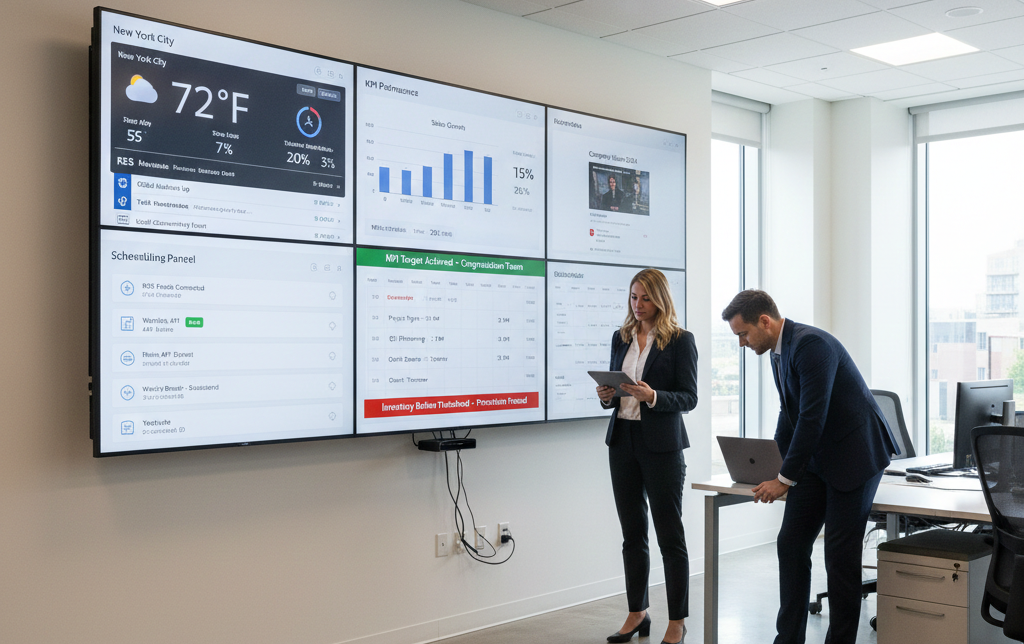
When inventory drops below a set threshold, promotions can pause. When a KPI reaches a target, celebratory content can appear. When severe weather develops, safety alerts can override scheduled messaging.
Platforms such as AIScreen allow businesses to connect RSS feeds, YouTube videos, dashboards, and external databases into one digital signage software environment.
By integrating live feeds and automated triggers, organizations reduce manual errors and ensure every screen reflects current conditions. Real-time data strengthens narrowcasting because each message aligns with audience context instead of relying on outdated assumptions.
Schedule and Automate Content Delivery
The benefit of using a digital signage CMS is that you can easily schedule and automate your content. Whether updating messaging based on the time of day or triggering automatic updates based on local events or weather, digital signage apps provide structured control over display content.
Scheduling eliminates the need for constant manual updates. Breakfast promotions can run from 7-11 a.m., shift reminders can appear during handovers, and location-specific messaging can differ across branches. Automation ensures that the right content reaches the right audience at the right time without requiring repeated human intervention.
This operational efficiency is not just convenient, it is measurable. According to Gartner, organizations that implement automation in business processes can reduce operational costs by up to 30% (2022 research findings). Automation within a digital signage system reduces repetitive tasks, limits human error, and improves consistency across devices.
By leveraging scheduling features inside digital signage software, businesses align messaging with time, location, and audience behavior. This structured automation transforms signage from a passive display into a controlled communication system that operates reliably across multiple screens.
Mix and Match Content Formats
Multiple screens can be used to display different types of content for different audiences. Strategic variety increases engagement without overwhelming viewers. For example, in an airport, one screen may display departures and arrivals while another shows promotional or safety information.
In a workplace, one screen might present live production data and work announcements, while another streams a company-wide presentation. Each screen serves a specific purpose within the broader communication system.
Combining video, text, dashboards, and visuals allows businesses to balance clarity with engagement. Short-form video can capture attention, dashboards can communicate performance metrics, and concise text can deliver quick updates. The key is structured layout and intentional sequencing.
If you need a practical framework, refer to our guide on how to create a TV slideshow the easy way to design organized and effective screen flows. The goal is not to overload viewers with content but to assign specific tasks to each screen. When formats are mixed thoughtfully, digital signage supports narrowcasting by matching message type to audience context.
Add Interactive Elements
If you really want to engage your audience, add a way to interact with your content. Interaction should serve a clear purpose, not novelty. A simple and effective method is using QR codes. QR codes allow users to access additional information instantly, whether linking to forms, documents, or videos.
For example, a screen can display a QR code that directs users to a policy document created in Microsoft Office or to a registration page. One scan creates measurable engagement. Beyond QR codes, businesses can integrate social media feeds or interactive messaging groups through digital signage.
Touch-enabled screens can allow users to navigate menus, access directories, or explore content relevant to their needs. Behind the scenes, interactive signage depends on coordinated software layers. The operating system manages the computer’s operations, while system software and utility software maintain stability.
Application software delivers visible features, and driver software ensures that the device hardware functions correctly. In some cases, developers may write code or modify source code within open source software environments. Other deployments rely on proprietary software configurations.
Launch Smarter Narrowcasting with Digital Signage Software!
Mass broadcasting spreads one message to everyone, while narrowcasting delivers tailored content to a defined audience, location, or moment. That shift defines modern communication. Instead of generic messaging, businesses now adapt content to context, turning physical spaces into targeted communication channels powered by intelligent systems.
Digital signage software enables organizations to control screens centrally, update content remotely, integrate live data, and measure engagement across devices. Platforms such as AIScreen support flexible content control, data integrations, and performance tracking, and offer a 14-day free trial so teams can test smarter communication before scaling.
FAQs
What is narrowcasting in simple terms?
Narrowcasting in simple terms is delivering targeted content to a specific audience instead of broadcasting to everyone. It uses software, programs, and device-level systems to send the right message to the right group at the right time. Unlike mass media, narrowcasting relies on computer-controlled distribution and contextual relevance.
How is narrowcasting different from broadcasting?
Narrowcasting is different from broadcasting because broadcasting distributes one message to a broad audience, while narrowcasting sends tailored content to defined segments. Broadcasting focuses on reach, whereas narrowcasting focuses on relevance, measurable engagement, and audience intent. The strategy relies on software systems, hardware screens, and structured code to personalize delivery.
What industries benefit the most from narrowcasting?
The industries that benefit most from narrowcasting include retail, healthcare, education, hospitality, transportation, and corporate workplaces. These sectors use targeted messaging on each device or screen to improve customer experience and operational efficiency. For example, retail stores display promotions based on inventory, while corporate offices share KPI dashboards for employees.
Can digital signage be used for narrowcasting?
Yes, digital signage can be used for narrowcasting because it allows targeted messaging based on time, location, and audience. The system software, open source software components, and other software layers work together within a computer environment to manage content across hardware displays. Developers configure programs and code so each screen shows context-specific content.
What software is best for managing narrowcasting content?
The software best for managing narrowcasting content is digital signage CMS (Content Management System) platforms that control devices, automate scheduling, and integrate data sources. The ideal solution supports system software compatibility, custom programs, hardware integration, and flexible code management without requiring complex own driver development.
