
What Are the Best Storefront Sign Ideas for Your Business?
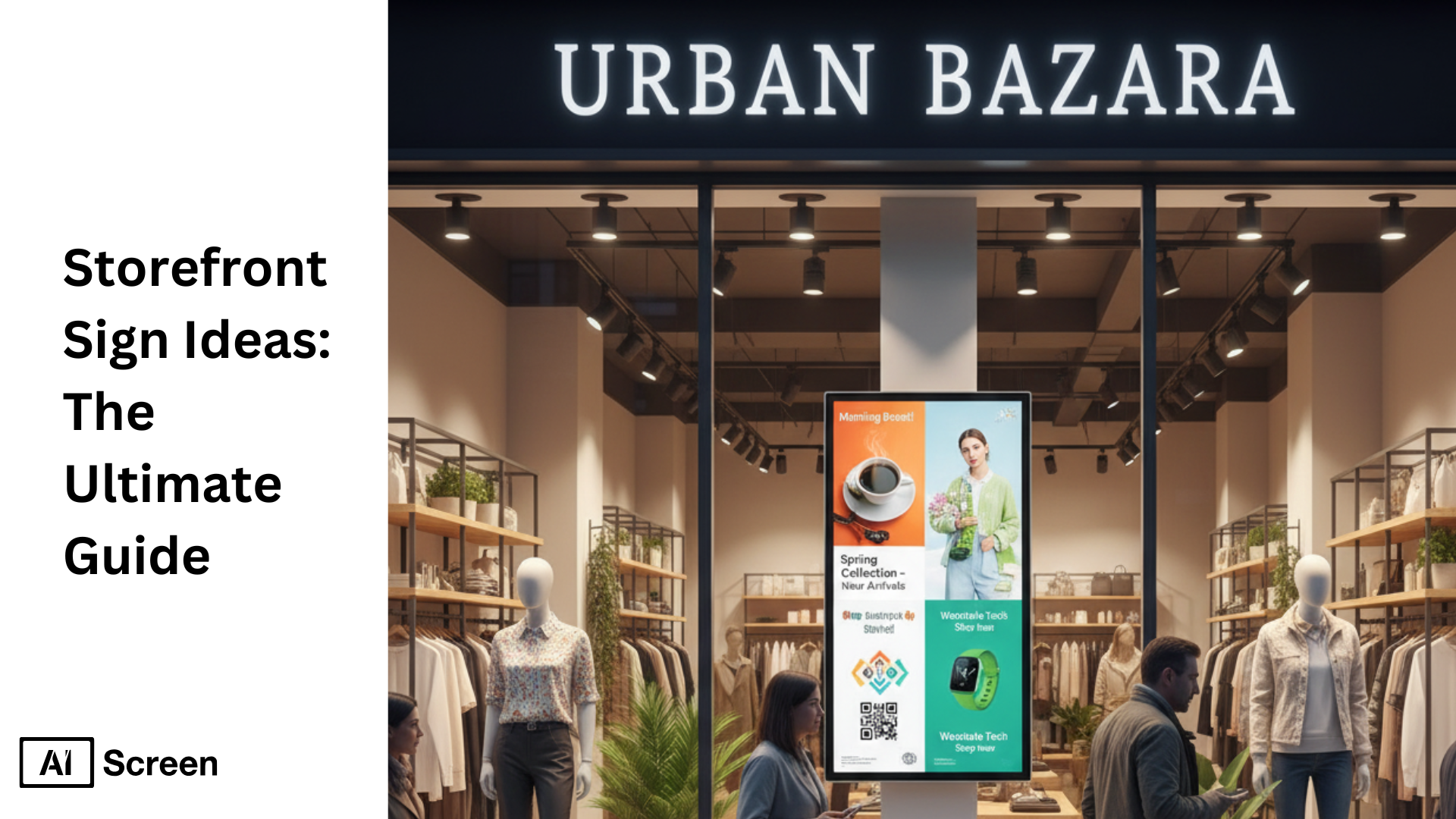
Did you know that a well-designed storefront sign can completely shape how people see your business before they even step inside? Your sign isn’t just a nameplate; it’s the very first impression your retail store makes, designed to attract attention. The right storefront business signs help showcase your brand’s personality, build trust, and invite shoppers in. According to the Digital Signage Federation, stores with engaging digital signage can see up to 30% more foot traffic.
This blog explores everything you need to know about creating effective retail signs that elevate your retail store’s visibility and strengthen your brand presence. You’ll learn where to use them, what types fit different budgets, and how to design signs that grab attention instantly. Whether you own a boutique, café, or large retail space, these storefront sign ideas, along with innovative store signage ideas, will help you turn passersby into loyal customers.
Where Should You Use Storefront Signs?
When you’re thinking about where to place your storefront signs, it’s not just about sticking a sign somewhere visible; it’s about guiding your customers effectively with directional signs to guide customers with wayfinding signs, boosting engagement, and showcasing your storefront logos and brand identity in every spot that matters. The right placement can turn casual passersby into loyal visitors because they immediately notice your store signage ideas and feel drawn to your retail store. Retailers often manage these window and door displays through digital signage software so promotions stay current across every location.
According to Sign Research Foundation data, effective sign placement in the retail industry can boost visibility by 34%, directly improving sales performance. Understanding your retail strategy and where to install your signs ensures maximum exposure and customer flow.
- Storefront façades and entryways: This is your first chance to make an impression. Use this space to showcase your brand logo, store name, and core message. A strong sign here immediately tells potential customers who you are and what you offer.
- Sidewalks and outdoor display zones: Place A-frame signs or temporary banners in high-traffic areas to attract people walking by. These retail displays are perfect for seasonal promotions, limited-time offers, or to guide foot traffic toward your entrance.
- Windows, doors, and awnings: Turn your window space into a canvas for secondary promotions, branded graphics, or interactive content. Clever window storefront signage ideas can highlight sales or new arrivals while maintaining a clean, inviting aesthetic.
- Interior front sections: Use interior signage near entry points to direct customers to key areas or highlight in-store promotions. Well-placed directional signage inside ensures a seamless shopping experience while reinforcing your brand recognition.
By thoughtfully placing your storefront signs, you’re not just decorating your store; you’re guiding customers through a holistic shopping experience that increases visibility, encourages engagement, and drives outdoor signs that highlight promotions effective storefront signage, all while attracting customers. while keeping your brand’s presence consistent, branding across every touchpoint.
What Are the Main Types of Storefront Signs?
When you think about how your store looks from the street, you realize that the right storefront signage ideas, including window displays, can completely change the way people notice and interact with your business. According to a Nielsen study, 70% of shoppers say that in-store displays, including lit letters, influence their purchase decisions. Keeping those displays fresh across every location is easier with signage that updates every screen from one place.
Your sign isn’t just a nameplate; it’s the first impression, the first hint of your brand identity, and the magnet that draws in foot traffic. If you get it right, the right sign can make someone pause, smile, and decide to step inside, which is exactly what you want. Let’s explore the key elements and types of signs that can give your store that powerful pull.
Traditional Painted and Neon Signs

Imagine walking past a diner late at night and spotting a glowing red neon sign that makes you stop in your tracks. That’s the magic of classic storefront sign ideas; they have character, personality, and a nostalgic charm that feels personal. When you choose vintage hanging signs and storefront signage ideas, you’re not just showing your business name; you’re telling a story that sticks in people’s minds.
These signs are durable and eye-catching, especially after dark, which means your store stays memorable even when it’s quiet outside. Of course, they use more energy and need regular upkeep, but if your goal is to create a lasting impression and a sense of authenticity with led signs and vinyl banners, lit letters, and this style does it beautifully and ensures that the signs stand out.
Digital and LED Displays
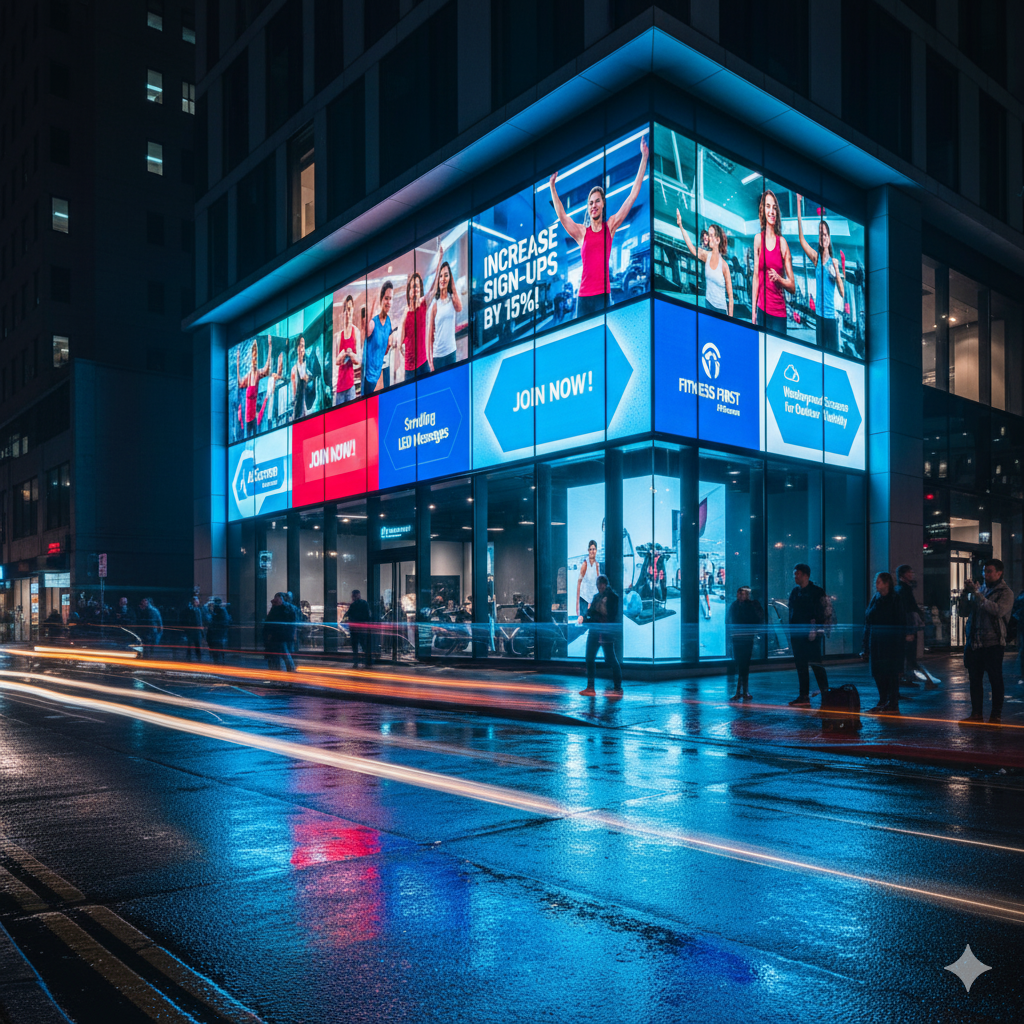
Now, picture a sign that can change whenever you want it to, showing your latest promotions, highlighting a special event, or scrolling an urgent message that pulls people in instantly. That’s what digital storefront sign design and LED storefront signage ideas bring to the table. If you run a fitness studio, for example, you could use a scrolling LED sign to boost class sign-ups by 15%, which shows how powerful real-time updates can be in attracting more customers.
With digital signage, you can control every screen remotely, keep your brand identity consistent, and adapt your message to what your target audience wants right now. When you integrate digital menu boards and interactive elements, you make digital interactions feel personal, which transforms casual passersby into a business of engaged, loyal customers. Tools like AIScreen make this seamless, so you can focus on connecting with your audience instead of worrying about tech issues.
Fresh Window Display Ideas for Your Storefront
Your windows are prime storefront real estate. Use seasonal window displays with fresh themes and layouts that pull foot traffic into your store. Update colors, props, featured products, and promotional messages regularly so the display feels relevant and gives returning customers something new to notice.
Effective window display ideas should also be easy to understand at a glance. Use a clear focal point, balanced spacing, and concise signage so passersby can quickly see what your business offers. Adding lighting, branded graphics, or limited-time promotions can make the storefront more eye-catching and encourage more people to step inside.
A-Frame and Window Graphics
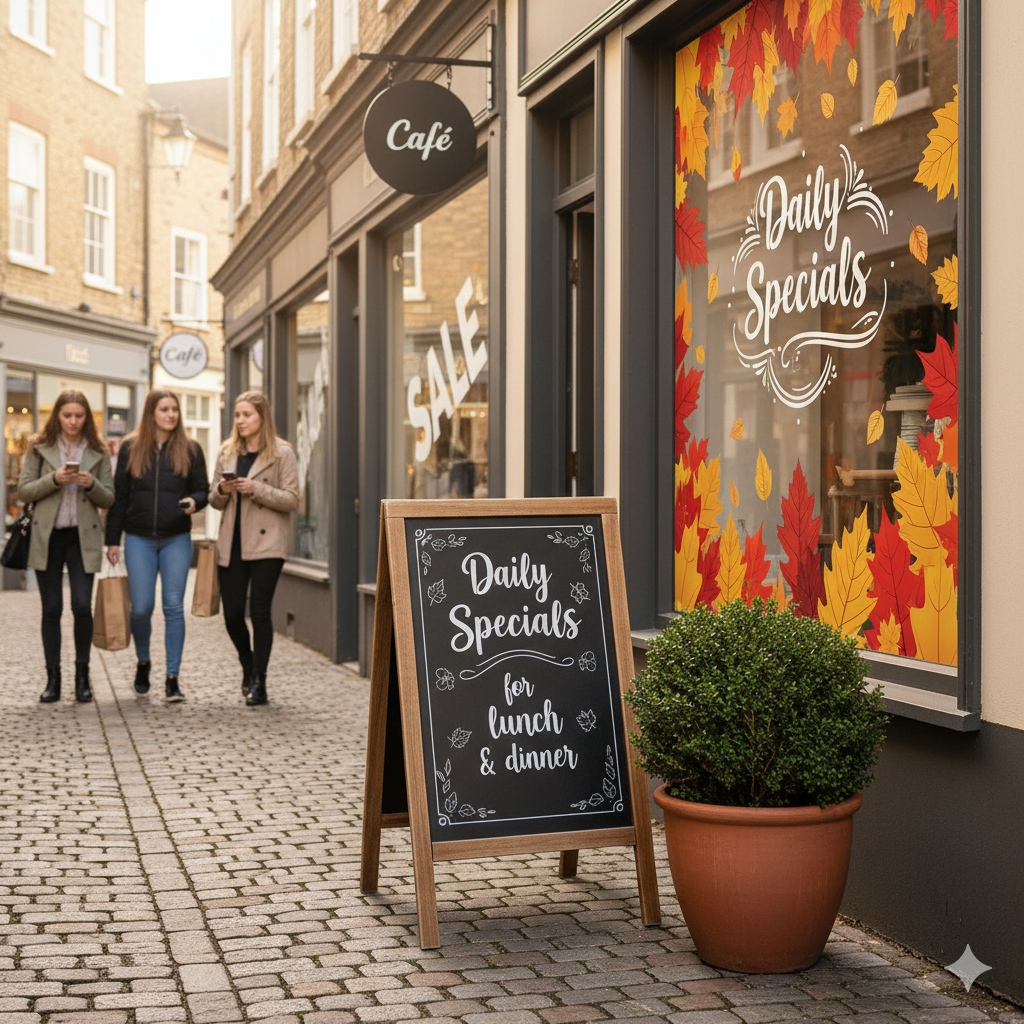
Sometimes, the simplest solution is the one that works best. If you’re looking for something cost-effective, flexible, and budget-friendly, portable storefront sign ideas and window storefront signage ideas allow you to make a strong statement without a large investment. Before placing any signage, be sure to check local regulations. You can place an A-frame sign outside your café with today’s special or add seasonal vinyl graphics to your boutique windows to elevate your window display design and draw attention to a sale. These options are quick to set up and easy to refresh, making it simple to respond to temporary promotions, trends, or events as they happen.
While these signs may not offer the glow of neon or the high-tech impact of digital displays, they create a lively, welcoming presence that encourages passersby to step inside and explore what you offer. By combining practicality with creativity, your storefront signage can clearly communicate your brand’s personality in a way that feels approachable, engaging, and memorable.
What Design Tips Make Storefront Signs Eye-Catching?
You know that moment when you’re walking down a busy street, and one sign just makes you stop and smile? That’s the power of effective storefront signs; it speaks before you do. It tells people who you are, what you offer, and why they should care, all in a few seconds. According to Shopify, businesses that optimize their storefront visuals can increase customer engagement by 25%.
You must know that creating storefront signage ideas as a branding tool that really works isn’t about being flashy; it’s about making people feel something. Whether you’re opening your first boutique or upgrading your café’s look, every design choice, from color to lighting, shapes how customers see your brand.
- Color and Font Choices: Let’s talk about colors because, honestly, they do a lot of the talking for you. Think about it, when you see a bold yellow background with clean black text, your eyes can’t help but notice it. So, when you’re creating your storefront sign ideas, choose shades that match your brand’s vibe but also stand out from the noise of the street. Use fonts that feel like your brand’s personality: fun, elegant, or bold, but limit yourself to two. You want your sign to be inviting, not confusing. It’s like dressing your brand for a first impression, clean, confident, and clear.
- Size, Placement, and Lighting: You’ve probably seen it happen, a great shop hidden behind a sign that’s too small or too dimly lit. Placement and lighting can make or break even the most creative storefront signs. A good rule of thumb? If your sign can’t be read from 20 feet away, it’s not working hard enough for you. Let’s take an example: a local bookstore installed soft backlit signs so readers could spot it even after sunset, and evening traffic grew noticeably. The same goes for you; think about how light can bring your storefront signage to life.
- Keeping It Simple and Relevant: In design, simplicity wins every single time. Most people don’t realize that cluttered signs make customers tune out faster. A bakery once simplified its sign to just three bold words and saw orders jump by 18%. That’s how powerful clarity can be. When you’re planning your storefront signage ideas, focus on what matters most: one message, one emotion, one clear call to action. You don’t need fancy slogans or too many graphics; you just need to be understood at a glance.
How Can Real Estate Sign Rules and Guidelines Shape Better Storefront Sign Ideas?
At the end of the day, your store sign and storefront signs aren’t just decorations; they’re your brand’s first handshake. The right mix of design, emotion, and strategy can do more than attract attention—it can build trust, communicate professionalism, and help customers understand what your business represents before they ever walk through the door.
When exploring storefront sign ideas, think beyond colors and fonts. Consider visibility from the street, viewing distance, lighting, materials, placement, and how well the design matches your overall brand identity. A strong storefront sign should be easy to read, visually distinctive, and consistent with the experience customers can expect inside your business.
Compliance should also be part of the planning process from the beginning. Reviewing real estate sign rules and guidelines can help you understand important considerations involving sign size, placement, illumination, permits, and local restrictions. Addressing these requirements early can reduce the risk of costly redesigns or installation problems later.
As you choose fonts, lighting, dimensions, and materials for your next storefront signage project, think about what you want people to feel when they see it: curious, excited, welcomed, or confident in your business. Combining thoughtful storefront sign ideas with the right Real Estate Sign Rules and Guidelines helps you create signage that is attractive, practical, compliant, and capable of leaving a lasting impression.
Why Choose AIScreen for Storefront Signs?
If you’re looking to bring your digital storefront sign ideas to life, AIScreen makes it easier than ever. Think of it as your all-in-one tool to create vibrant, attention-grabbing displays that don’t just stop people; they invite them in. With AIScreen, you can showcase your latest promotions, seasonal offers, or even live social media updates that make your storefront feel alive and constantly evolving. And the best part? You don’t need any tech expertise, just your creativity and a few clicks.
So, if you’ve been thinking about taking your storefront signs to the next level, this is your moment to elevate your business signs. With AIScreen’s digital signage platform, you can connect emotionally with your audience, inspire walk-ins, and boost engagement every day. Don’t just blend in, stand out where it matters most. Start your free AIScreen trial today and bring your storefront signage ideas to life.


FAQs
What is the most effective type of storefront sign?
The most effective type of storefront sign is one that clearly reflects your brand identity and instantly captures attention, such as custom storefront signs. Digital signage and LED storefront signs often perform best because they combine motion, color, and clarity to attract foot traffic. A well-lit, high-contrast retail signage design with your business name prominently displayed can leave a lasting impression. The key is to choose a storefront stand that stands out while remaining true to your store’s personality.
How much does it cost to design and install a storefront sign?
The cost to design and install a storefront sign depends on size, materials, and technology. Traditional painted signs may start around $300, while digital displays or illuminated signs can range from $1,500 to $10,000 or more. Factors like lighting, mounting, and customization also affect pricing. Investing in durable, high-quality temporary signs prevents poor signage and ensures better visibility and long-term brand impact.
How can I make my storefront sign more noticeable?
You can easily make your storefront sign more noticeable by using bold colors, simple fonts, and proper design signage. Adding LED lighting or motion graphics can help your storefront signage stand out even on busy streets. Positioning it at eye level or near entrances ensures better visibility. Also, updating your store signage design seasonally keeps your storefront fresh and engaging for passersby.
Are digital storefront signs better than traditional ones?
Yes, digital storefront signs are better than traditional ones because they’re dynamic, easy to update, and more engaging. Unlike static signs, digital displays allow you to showcase promotions, videos, and real-time updates. They also save printing costs over time and adapt easily to different campaigns. For modern businesses, digital signage, brand building, and effective interior signage offer flexibility, creativity, and stronger customer engagement.
What are some creative storefront sign ideas for small businesses?
The creative storefront sign ideas for small businesses include using window graphics, A-frame signs, or hanging blade signs that fit your brand’s character. Combining digital displays with artistic lighting or hand-painted logos can make your store look inviting and unique. You can also highlight seasonal promotions or customer testimonials on your signage. The goal is to create signs and a design that feels personal, memorable, and true to your business story.
