
What Are The Top Business Signage Ideas?
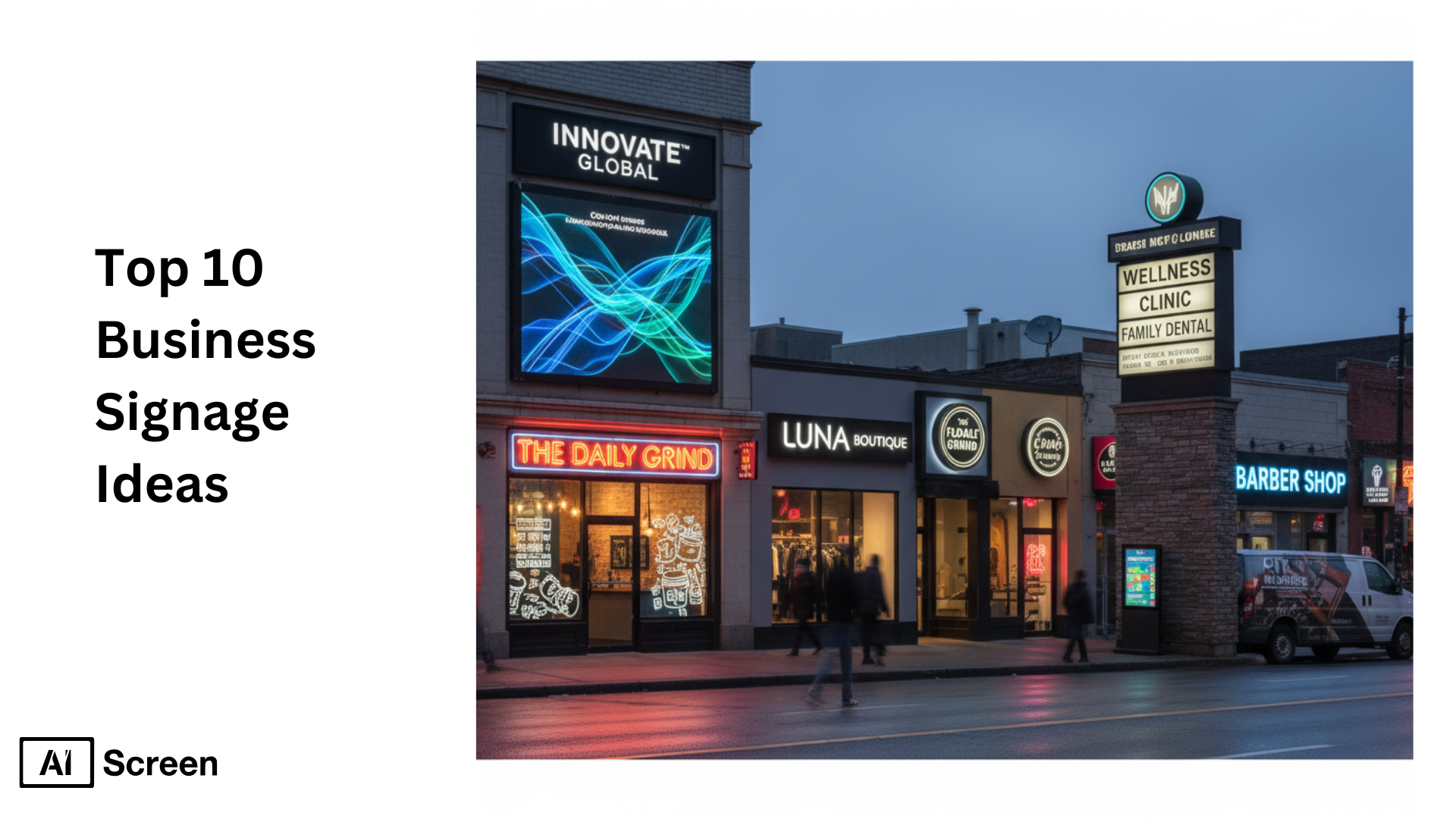
Business signage isn’t just a label; it’s the first impression, a silent ambassador, and a foot traffic magnet for your brand. Wondering why the right business sign matters? Studies show illuminated signs and creative business sign ideas can boost visibility by over 60% and increase customer engagement in high-traffic areas. Whether you are launching a new business or refreshing your storefront, selecting the right type of signage can make all the difference in attracting customers, strengthening your brand identity, and enhancing the curb appeal of your message.
In this article, “What catches customers’ eyes?” Find your answer with the top 10 business signage ideas every business owner should consider: think digital signage, monument signs, blade signs, lightbox signs, window graphics, and more. You’ll discover how smart commercial digital signage design grabs attention, directs foot traffic, and leaves a lasting impression. Let’s find out how the perfect sign types and unique business sign ideas boost your brand visibility and help drive more customers through your doors.
Why Digitize Your Business Signage Ideas?
Many business signage ideas reach their full potential when powered by dedicated digital signage software. A cloud platform lets you schedule content, refresh promotions instantly, and manage every screen from one dashboard, turning static displays into dynamic brand moments that keep customers engaged.
Digital signage also makes it easier to test different messages, highlight seasonal offers, and adapt content for specific locations or audiences. Instead of replacing printed materials whenever information changes, businesses can update screens in real time, reduce recurring costs, and keep signage relevant throughout the day.
Which 10 Business Signage Ideas Work Best?
The best business signage ideas combine clear messaging, strong branding, and strategic placement to attract attention and guide customers. From storefront displays and menu boards to digital screens and promotional signs, the right format can improve visibility and support more effective customer communication.
1. Blade Signs
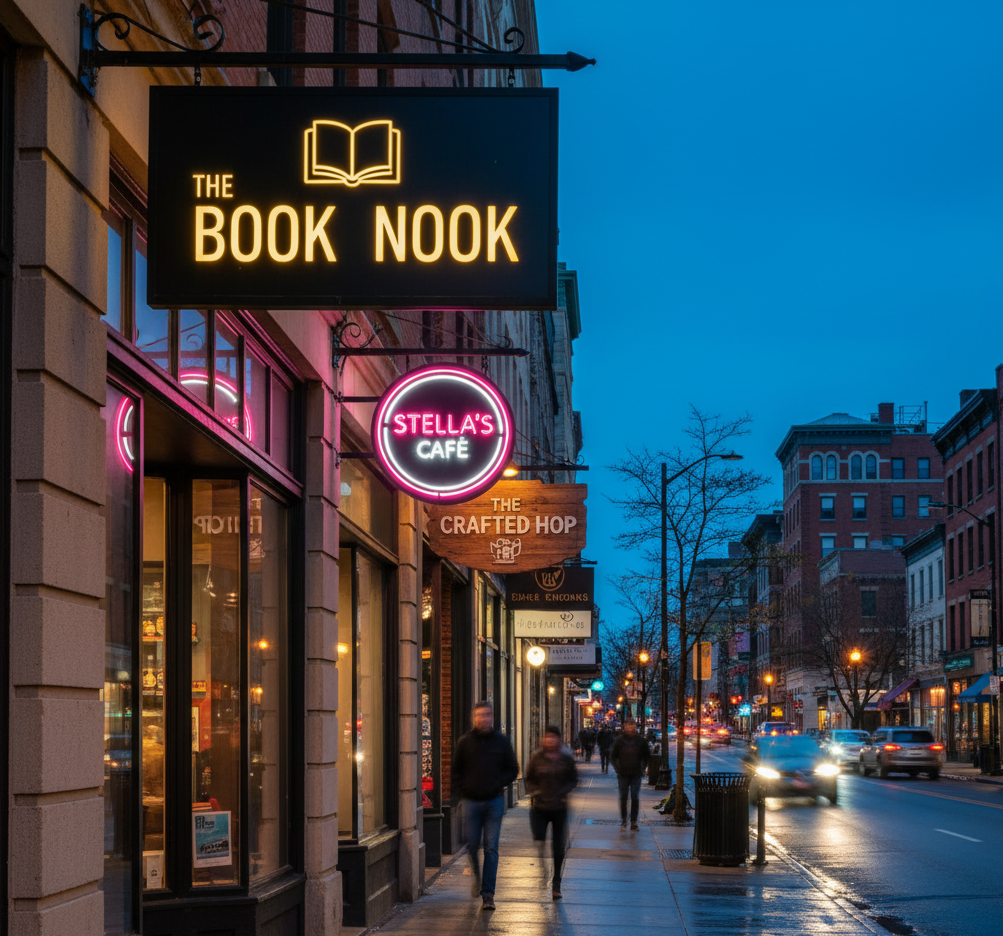
Blade signs are perpendicular outdoor signs that protrude from a building’s facade, making them extremely easy for pedestrians to spot from a distance or around corners. As one of the top 15 street advertising ideas, blade signs are especially effective for businesses looking to attract walk-in traffic on busy streets.
They are a favorite for retail stores, cafés, or anywhere you want to boost foot traffic. These digital signs usually measure around 18”x18” but can vary, made from weather-resistant materials like aluminum or powder-coated steel to handle outdoor conditions without fading or rusting.
Blade Sign Examples
A cozy coffee shop might have a double-sided blade sign or an A-frame sign with bright LED lights for night visibility, while a boutique might choose a sleek, custom-shaped aluminum design with its business logo printed boldly on both sides. They hang at eye level or slightly above, creating maximum visibility without cluttering storefront space.
2. Channel Letters
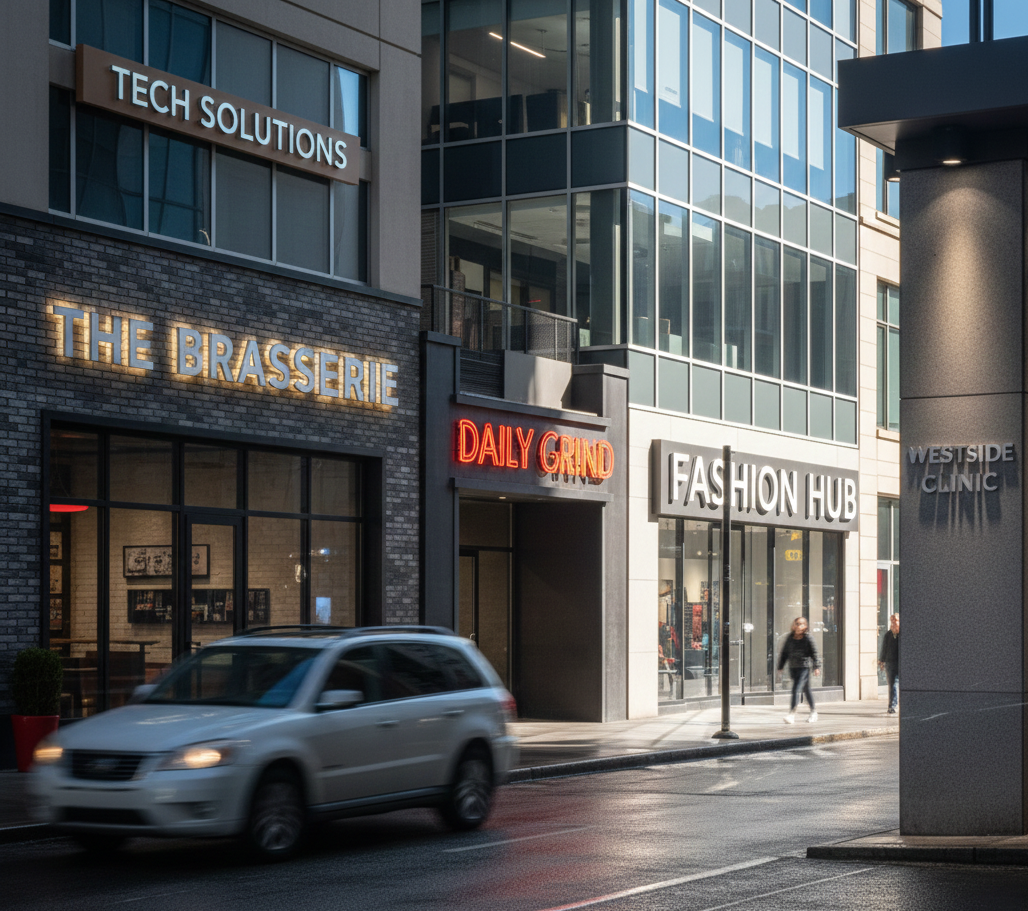
Channel letter signs are individually illuminated 3D letters, usually made from aluminum and acrylic, that stand out on building facades. They are ideal for visibility and brand recognition because they can be customized in size, font, and color, making your business name pop day and night.
You will find front-lit channel letters that shine light through translucent acrylic faces, halo-lit (or back-lit) options that create a glowing “halo effect” around letters, and combo-lit styles offering both effects for maximum impact. These signs are popular with big retailers and corporate offices for their polished, professional appearance and durable materials.
Channel Letter Sign Examples
Check out storefront signage with bold channel letter signs showcasing brand logos, or retail stores using halo-lit channel letters for eye-catching, branded visibility.
3. Monument Signs
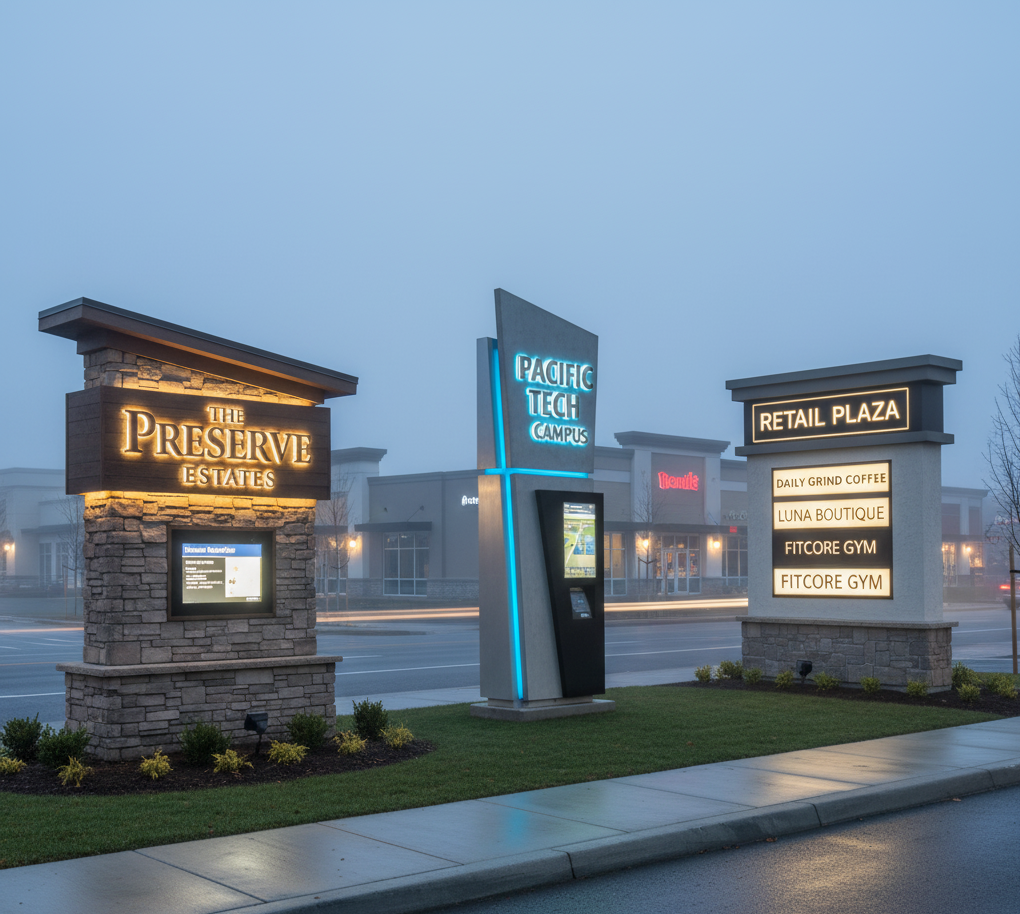
Monument signs are freestanding structures placed near business entrances, designed to boost visibility and add a professional touch to your property. They are often made from durable materials like stone, brick, or metal, projecting a polished, lasting impression that reinforces your brand identity.
A) Ground-Level Monument Signs
These low-profile physical signs are commonly found outside plazas, schools, and hospitals, crafted from sturdy materials like stone or brick to blend with the landscape. Positioned at eye level, they offer clear, readable branding that helps potential customers easily find your location.
Ground-Level Monument Sign Examples
Check out examples featuring elegant brick bases with bold, illuminated lettering that maximize presence without overwhelming the surroundings.
B) Pylon Signs
Pylon signs are tall, freestanding signs perfect for highways, shopping malls, and large commercial spaces, designed to capture attention from a distance. These signs often include multiple business names with bright LED or neon lighting for vibrant, high-impact advertising.
Pylon Sign Examples
Explore striking pylon signs featuring multi-tenant listings and illuminated panels that stand tall and visible in busy commercial areas.
C) Post and Panel Signs
Post and panel signs offer a cost-effective signage solution for industrial parks, property listings, or smaller businesses requiring clear directional or branding signs. They typically feature customizable panels mounted between two sturdy posts, balancing visibility and affordability.
Post and Panel Sign Examples
See examples of sleek post and panel signs with vibrant custom graphics that effectively direct visitors and promote brand aesthetics and visibility.
4. Dimensional Letter Signs (3D Signs)
Dimensional letter signs, or 3D signs, are crafted from materials like metal, acrylic, or high-density foam, giving you a tactile and sophisticated brand image. These raised letters add depth and shadow, enhancing visibility and adding elegance to both indoor and outdoor spaces.
Their thickness typically ranges from 1 to 5 inches, with options for painted finishes, laminates, or metal textures for a custom look.
Dimensional Letter Sign Examples
Think of a sleek aluminum 3D sign at a modern office lobby, acrylic letters with vibrant glow of colors on a retail storefront, or foam letters creating lightweight signage for quick installation inside restaurants. These signs boost brand presence with a polished, professional feel.
5. Illuminated Signs
Illuminated signs use built-in lighting sources, like LED modules or neon tubes, to ensure your business stands out, especially at night or in low-light areas.
Popular options include neon signs with their classic radiant glow, backlit signs where LEDs illuminate from behind vibrant acrylic panels, and edge-lit signs that cast a subtle, even glow from the panel’s edges. These types are perfect for restaurants, bars, retail stores, and anywhere you want to attract attention and maintain visibility 24/7.
Illuminated Sign Examples
Real-world examples include a neon-lit bar sign glowing warmly on a busy street, a backlit restaurant sign showcasing crisp, bold lettering, and an edge-lit lightbox sign providing sleek, modern branding elements to meet your company’s purpose.
6. Property Management Signs
Types of Property Management Signs
Property management signs are essential for real estate, apartment complexes, and commercial properties. They help with navigation, safety, and reinforce your brand’s presence, making the property user-friendly and professional.
- Directional Signs: Guide residents and visitors to entrances, parking, and amenities.
- Informational Signs: Provide critical info like business hours, building numbers, and community rules.
- Safety and Regulatory Signs: Include fire exit, no smoking, and ADA-compliant signs for tenant safety and legal compliance.
- Identification Signs: Mark building names or business units within the property.
- Promotional Signs: Highlight special events, leasing specials, or upgrades to attract new tenants or visitors.
Examples of Property Management Signs
Real-world examples include parking lot directional signage with reflective surfaces, illuminated entrance signs displaying property names, and ADA-compliant interior directional signs.
7. Interior Signs and Office Signs

Interior signs play a crucial role in corporate offices, hotels, and malls by guiding visitors, enhancing brand presence, and labeling rooms with style. These signs combine functionality and aesthetic appeal to create polished, professional spaces that reflect your brand’s personality while directing foot traffic efficiently.
Interior Signs and Office Signs Examples
Examples include sleek lobby signs made from brushed aluminum or acrylic with your company logo, personalized door signs for meeting rooms, and clear wayfinding signage that directs visitors effortlessly throughout the building.
8. Custom Graphic Signs
Custom graphic signs let you bring your brand’s story to life with vibrant colors, unique designs, and creative visuals using vinyl wraps, murals, or printed displays.
These signs are versatile and perfect for both indoor and outdoor use, making them ideal for boosting brand visibility and attracting customers in high-traffic areas.
They offer a dynamic canvas to showcase your business’s personality, promotions, or messaging with eye-catching graphics tailored to your space and audience.
Custom Graphic Sign Examples
Think of a full-window vinyl wrap promoting seasonal offers at a retail store, a bold mural on an office lobby wall sharing your company’s mission, or colorful printed panels guiding visitors inside a mall. These custom signs turn ordinary spaces into memorable brand experiences.
9. Window Graphics
Window graphics are a fantastic way to maximize your storefront visibility, showcase promotions, and enhance your overall aesthetics over other businesses or competitors. By transforming plain glass into a vibrant advertising space, they draw passersby in with bold colors, logos, and impactful messaging. Plus, they serve as a creative branding tool that boosts curb appeal and foot traffic.
Custom Window Graphics Examples
Examples include seasonal sale decals on retail shop windows, see-through perforated vinyl allowing visibility from inside while advertising outside, and frosted privacy films with subtle branding in office buildings. These graphics turn windows into dynamic marketing displays without blocking light.
10. Neon Signs
Neon signs blend artistry and advertising, offering that nostalgic, eye-catching glow that instantly grabs attention. Perfect for bars, restaurants, and entertainment venues, they create a vibrant atmosphere and boost brand visibility, especially at night.
A) Traditional Neon
Traditional neon signs are made from hand-bent glass tubes filled with neon or argon gas that glow warmly when electrified. They have that classic 360-degree radiant glow and artisan-crafted feel, but are fragile, consume more energy, and require specialized maintenance.
B) LED Neon
LED neon signs are the modern alternative, using flexible silicone tubes with embedded LED lights to mimic the classic neon look. They are far more energy-efficient (using up to 90% less power), safer to handle, more durable, and offer customizable colors and brightness control, making them a practical choice without sacrificing style.
Neon Sign Examples
Check out classic neon pub signs glowing warmly or vibrant LED neon logos lighting up nighttime storefronts.
How Do You Measure Business Signage ROI?
Before you invest in new signs, estimate the payback of each concept. Our digital signage roi calculator helps you weigh hardware, content, and placement costs against projected foot traffic gains, so you can prioritize the business signage ideas that deliver the strongest returns.
Tracking sales uplift, customer engagement, campaign performance, and maintenance costs can give you a clearer picture of long-term value. Comparing these results over time helps identify which signage formats perform best and where future budget should be focused.
How Do Window Displays Extend Business Signage?
Your storefront glass is prime advertising space, so pair these signs with creative window display ideas that pull passersby inside. Combining bold window concepts with your core business signage ideas creates a layered visual story that boosts curb appeal and drives more walk in customers.
Window displays can also support seasonal promotions, product launches, and limited time offers without changing your main signage setup. Refreshing the visuals regularly helps keep the storefront interesting, reinforces brand messaging, and gives returning customers something new to notice.
Why Choose AIScreen for Business Signage?
Ready to elevate your brand visibility and customer engagement? Digital signage solutions help transform your business signage ideas into dynamic, high-impact experiences tailored to your specific goals. Modern signage isn’t just about aesthetics; it’s built with commercial-grade hardware and intelligent software designed to perform reliably in all environments, ensuring long-term value for your investment.
From creative concept and content design to installation and ongoing management, a full-service digital signage provider handles every stage of the process. The result is a polished, professional display that captures attention, communicates clearly, and reinforces your brand identity across every customer touchpoint.
Don’t settle for static or generic signage. Choose digital signage that reflects your brand’s personality, adapts in real time, and delivers measurable results. Enhance your curb appeal, increase foot traffic, and create memorable first impressions with signage designed to stand out.
It’s time to make your message impossible to ignore. Get started with custom digital signage solutions for your business today.


Frequently Asked Questions
What are the most popular types of business signs?
The most popular types of business signs are blade signs, channel letters, monument signs, dimensional letters, illuminated signs, window graphics, and neon signs, as they combine visibility, branding power, and versatility. These options suit different locations and business styles, making them go-to choices for attracting and engaging customers.
How do I choose the right signage type for my business?
You can choose the right signage type for your business by considering your business location, target customers, and what you want to achieve, be it branding, promotions, or wayfinding. Also, evaluate weather exposure for durability and set a budget. Matching a signage type to these factors helps create impactful, cost-effective signage.
What’s the difference between indoor and outdoor signage?
The difference between indoor and outdoor signage is that indoor signage mainly supports branding, directions, and ambiance within controlled environments, so design and materials may focus more on aesthetics. Outdoor signage must maximize visibility and withstand weather elements while grabbing attention from a distance, targeting both foot and vehicle traffic.
Are LED signs better than traditional neon?
LED signs are always better than traditional neon as they shine with superior energy efficiency, durability, safety, and customizable colors & brightness, which reduces maintenance and power costs. Traditional neon delivers that iconic, vibrant glow with artisanal appeal, though it’s more fragile, requires higher upkeep, and consumes more energy.
How much does commercial signage cost?
The commercial signage costs vary widely based on size, materials, lighting, complexity, and installation. You can find basic signage for a few hundred dollars, while large custom illuminated signs with digital components can run several thousand dollars, depending on your business needs and location.
