
What are the Elevator Signage Requirements?

Elevator signage requirements plays a critical role in creating safe, inclusive environments while ensuring compliance with safety regulations and accessibility standards. According to the Americans with Disabilities Act (ADA), elevator signage must meet specific requirements accessibility requirements, including tactile signage and clear, legible fonts for individuals with visual impairments. Research from the U.S. Access Board shows that ADA-compliant elevator signs can increase building accessibility by up to 40% for individuals with disabilities, contributing to a more inclusive user experience.
In this article, effective elevator signage combines safety, accessibility, and branding. By following ADA regulations and using high-quality design elements, businesses can enhance user experience and brand visibility. Proper digital signage software not only ensures legal compliance but also contributes to a more inclusive, safe environment for all international building code occupants. From tactile floor indicators to emergency instructions, well-designed elevator signs plays a pivotal role in creating a seamless and professional atmosphere.
In this article, effective elevator signage combines safety, accessibility, and branding. By following ADA regulations and using high-quality design elements, businesses can enhance user experience and brand visibility. Proper digital signage software not only ensures legal compliance but also contributes to a more inclusive, safe environment for all international building code occupants. From tactile floor indicators to emergency instructions, well-designed elevator signs plays a pivotal role in creating a seamless and professional atmosphere.
What are the Legal and Safety Requirements for Elevator Signage?
The legal and safety requirements for elevator signage include adherence to ADA (Americans with Disabilities Act) guidelines to ensure accessibility, particularly for individuals with visual impairments. This involves tactile digital signage software, braille labels, and high-contrast fonts for legibility. ADA-compliant signage is proven to improve building accessibility by up to 40%, making it an essential part of inclusive building design. Additionally, local and national building codes mandate emergency exit signs, floor indicators, and safety instructions to ensure both legal compliance and safety in elevator systems.
Elevator safety signage, such as emergency instructions and clear exit signs, must be highly visible to aid in fast response during emergencies. Tactile signage provides extra support for visually impaired users, enhancing their ability to navigate independently. By meeting these legal and safety standards, building owners ensure compliance, improve safety, and create a more inclusive environment for all building occupants.
What are the Key Elevator Signage Design Guidelines?
The key elevator signage design guidelines focus on visibility and readability by optimizing contrast, font size, and strategic positioning to ensure clear communication. According to research, proper contrast and font sizing can increase legibility by up to 50%, improving user experience in high-traffic areas. Additionally, incorporating color schemes and a minimalistic design not only enhances aesthetic appeal but also aligns with the building’s overall branding and style.
Essential Design Considerations for Effective Elevator Signage
- Contrast: Ensure high contrast between text and background for maximum readability.
- Font Size: Use larger, legible fonts to enhance visibility, especially in low-light conditions.
- Positioning: Place signs at eye-level and in areas with clear line-of-sight for easy identification.
- Color Schemes: Choose colors that complement the building’s overall design while maintaining clarity.
- Minimalistic Design: Use simple, clean designs to avoid clutter and ensure effective communication.
- Brand Alignment: Ensure signage reflects the building’s branding to maintain consistency in aesthetic.
What are the Elevator Signage Requirements for Accessibility and Compliance?
The key elevator signage requirements focus on ensuring that elevators are accessible to all individuals, including those with disabilities. Compliance with ADA and other local regulations ensures that elevators meet safety, functionality, and accessibility standards, providing an inclusive environment for all users.
1. Adhere to the Required ADA Elevator Signage Dimensions
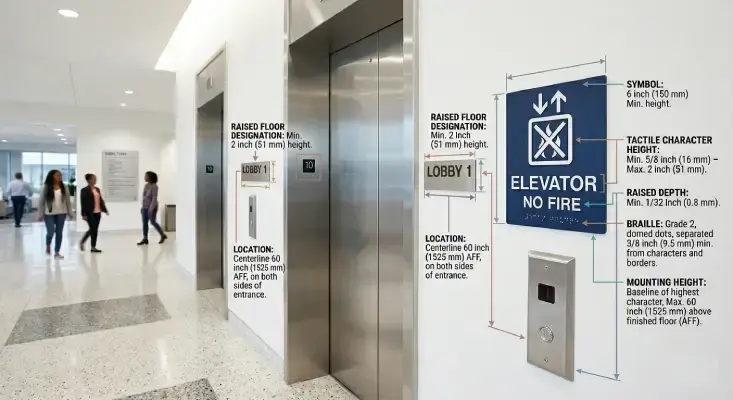
ADA compliance is essential for ensuring that elevator safety signs meets the accessibility needs of all users, including those with mobility impairments. The Americans with Disabilities Act (ADA) specifies minimum dimensions for elevator cabs, door widths, and turning spaces to ensure easy access for wheelchair users and others who require mobility aids. For instance, elevator cabs must have a minimum size of 54 inches by 80 inches, and the door width must be at least 32 inches to accommodate wheelchairs. These requirements are key to providing equal access for all individuals in public and commercial spaces.
In addition to spatial dimensions, the turning space inside the elevator should be at least 60 inches in diameter to allow users to turn comfortably. ADA signage refers to accessibility-compliant signs that include tactile text, Braille, and high-contrast visuals designed to support individuals with disabilities and clearly address what is ADA signage?, you create a setting where every traveler moves confidently from one floor to the next, providing examples of best practices.
2. Install the Appropriate Railings and Handrails for Elevator Signage
Installing the appropriate railings and handrails in elevator cabs is a critical element for ensuring stability, safety, and ADA compliance. The Americans with Disabilities Act (ADA) outlines specific requirements guidelines for handrail placement, height, and design to guarantee that elevator users, particularly those with mobility challenges, can navigate the space safely and comfortably. Properly installed handrails not only enhance user safety but also meet legal standards, reducing the risk of accidents and improving overall accessibility within the elevator.
The handrails must be installed at an appropriate height between 34 to 38 inches from the floor, providing easy grip and support for individuals using wheelchairs or mobility devices. Furthermore, the design should include a smooth, continuous surface to prevent injuries, with no sharp edges or obstructions. The placement should allow users to easily reach and hold the rail without difficulty, ensuring maximum stability during elevator rides. By following these ADA handrail design requirements, building owners can ensure that elevators are not only safe and accessible but also fully compliant with legal regulations and inclusive for all users.
3. Create Accessible Elevator Signage Control Panel Layouts
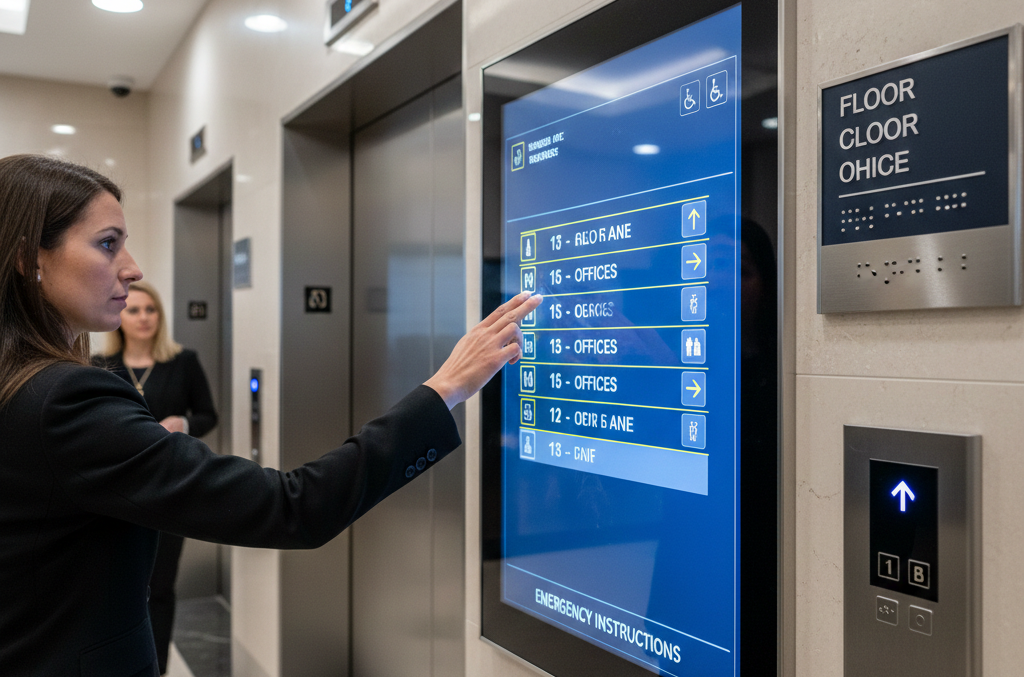
Accessible elevator digital signage control panels are essential for ensuring usability for all passengers, including those with disabilities. According to ADA guidelines, control panels should feature buttons positioned between 35 and 48 inches from the floor, ensuring accessibility for both standing and seated passengers. Tactile lettering and Braille placement next to each button enhance visibility and usability for those with visual impairments.
To improve usability, high contrast between buttons and the background, along with illuminated or backlit controls, ensures easy identification in low-light environments. The control panel layout should be intuitive and well-organized, helping passengers quickly identify the correct functions. By adhering to these design standards, building owners can create elevators that are not only ADA-compliant but also safe and user-friendly for everyone.


4. Set Door Operation and Timing to Support Accessibility
Elevator door operation and timing must be optimized to support users with mobility challenges. ADA regulations require door reopening sensors and motion detection to ensure that doors do not close prematurely on passengers, especially those with disabilities. These sensors detect movement and prevent accidents, allowing slower-moving users, such as those in wheelchairs, to safely enter or exit without obstruction.
In addition to sensors, elevators must have minimum door hold times to accommodate all users. ADA guidelines recommend a door hold time of at least 3 seconds, which can be extended for individuals who need extra time. Incorporating motion detection technology ensures that doors automatically reopen if there’s any obstruction, further supporting accessibility. These features collectively enhance safety, convenience, and accessibility for all building occupants.
5. Enhance Both Audio and Visual Accessibility Features
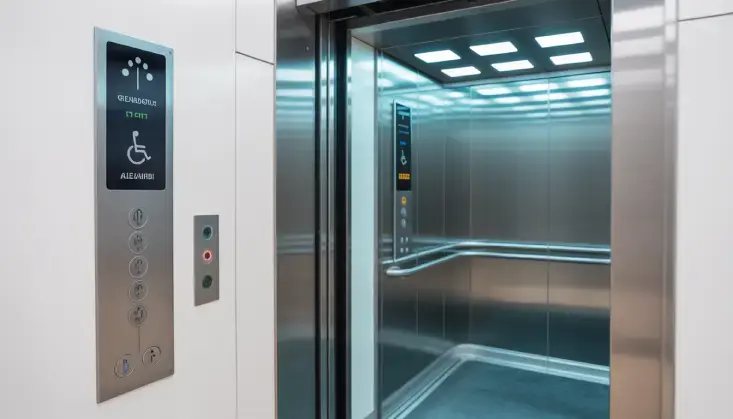
Integrating both audio and visual accessibility features is essential for ensuring that elevators are usable by all passengers, including those with sensory impairments. Audible floor announcements provide important information, such as the current floor and emergency alerts digital signage, for those who cannot see the display. These features are particularly important for hearing-impaired individuals, ensuring they can still receive crucial information while using the elevator.
In addition to audio announcements, visual indicators, such as illuminated arrows and floor level displays, help hearing-impaired passengers navigate elevators safely. These indicators should have high contrast for easy readability. Emergency stop signals, both audible and visual, are vital in emergencies to ensure all passengers receive critical instructions, regardless of their sensory abilities. By implementing these features, elevator systems can support equal access and enhance safety for everyone.
6. Meet Emergency Communication Accessibility Standards
Meeting emergency communication accessibility standards is essential to ensure that all passengers can receive and respond to critical information during an emergency stop. Two-way communication features within the elevator, such as emergency intercoms, allow passengers to directly communicate with emergency personnel in the event of an incident. These systems must be designed to be accessible for all individuals, including those with hearing impairments or speech impairments disabilities.
Elevators should also include hands-free access and visual status indicators to ensure that passengers with mobility or sensory impairments can easily call for help and understand the elevator’s status. Visual indicators display critical information, such as floor location and emergency alerts, in high-contrast text for better readability. For advanced safety communication, explore how to setup digital signage for emergency alerts to improve real-time alerts, accessibility, and response efficiency in critical situations.
7. Comply With All Elevator Signs Requirements
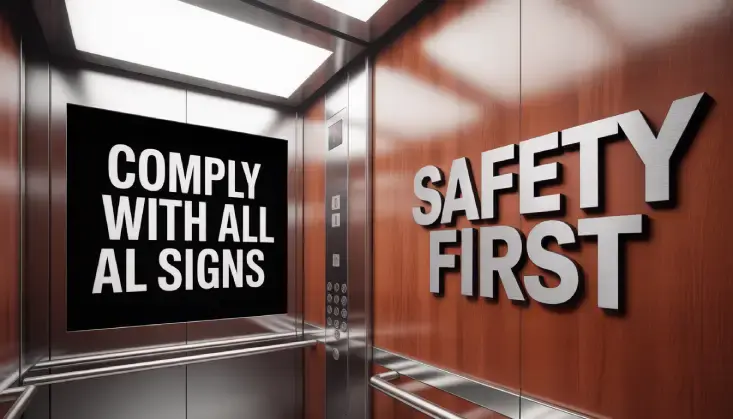
Complying with all elevator signs requirements is critical to ensure safety, functionality, and legal adherence. Various types of signage are required to meet both local building various codes and ADA standards. This includes capacity plates, which clearly state the maximum weight and passenger limit for the elevator. Ensuring these plates are easily visible and placed at appropriate heights is essential for compliance and user safety.
In addition to capacity plates, inspection certificates must be displayed to verify that the elevator has passed all necessary safety inspections. Emergency procedure signs detailing evacuation routes and emergency contact information should be clearly visible inside the elevator landing. Braille labels are required for key buttons, ensuring blind or visually impaired passengers can navigate the existing elevator independently. Finally, directional signs and identification such signs are necessary to help passengers locate elevators and navigate between floors, enhancing both accessibility and efficiency. By following these elevator sign requirements, businesses ensure that elevators are both compliant and accessible for all passengers.
How Could Interactive Elevator Screens Improve the Experience for All Users?
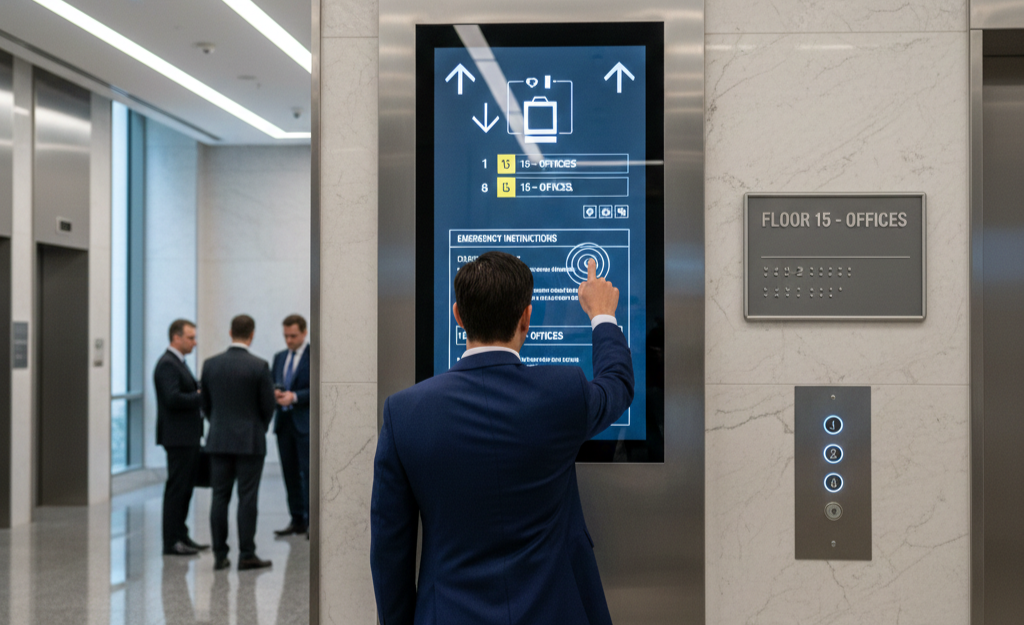
Interactive elevator screens enhance the user experience by offering wayfinding capabilities, helping passengers easily navigate to destinations within a building. These digital screens display real-time floor information and directional signs, improving overall efficiency and reducing confusion in large buildings.
In addition to navigation, interactive screens provide emergency alerts, real-time updates, and multilingual content to accommodate a diverse range of passengers. With accessible means visual communication, such as high-contrast text and multimedia features, these screens improve safety, user experience, and accessibility for all building occupants.
How to Set Up Elevator Signage with AIScreen for Smart Building Communication
Elevator signage powered by AIScreen enables real-time, data-driven communication within modern buildings by combining digital signage software, cloud-based content management systems (CMS), and IoT-enabled display networks. Step-by-Step Setup Guide to Configure AIScreen Elevator Signage for Real-Time Content Delivery.
Step 1: Choose a Compatible Display for Elevator Digital Signage

Selecting the right display is essential for clear visibility, durability, and consistent performance inside elevator environments. Use commercial-grade screens or smart TVs with high brightness, anti-glare coating, and wide viewing angles to ensure readability in compact, reflective spaces. For elevator signage, prioritize Full HD or 4K resolution, slim form factors, and reliable 16/7 or 24/7 operation to support continuous communication.
Ensure the display is compatible with AIScreen digital signage software, allowing direct app installation without requiring an external media player, simplifying deployment and reducing hardware costs.
Step 2: Install and Configure AIScreen Digital Signage Software

AIScreen digital signage software enables centralized control, real-time content updates, and seamless communication across elevator displays. Install the AIScreen app on supported platforms such as Android TV, Fire TV, LG, or Samsung smart displays.
After installation, connect your device to a stable internet network and configure initial settings to enable automated launch, ensuring uninterrupted playback of elevator announcements, alerts, and branded content.
Step 3: Create and Access Your AIScreen Account
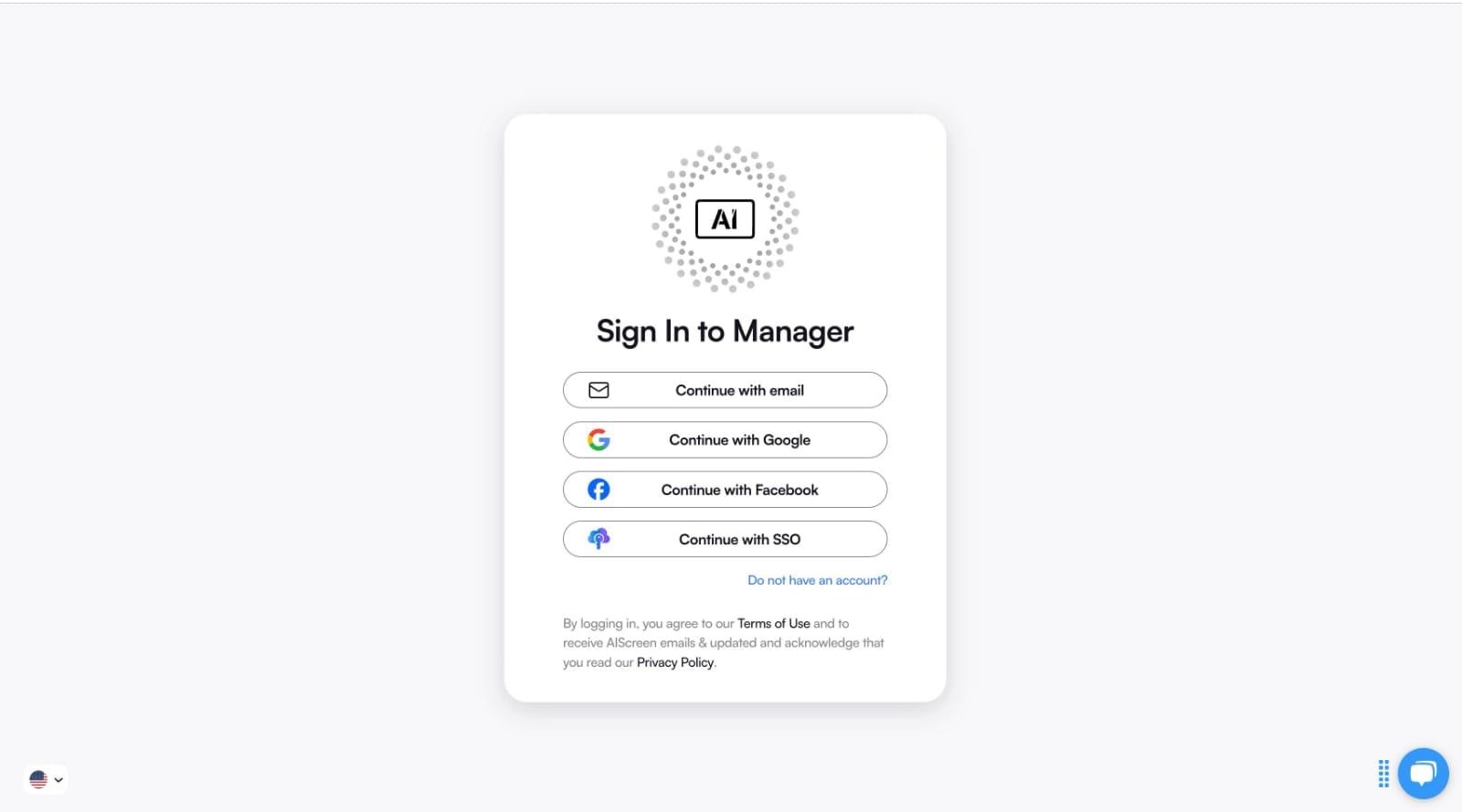
Creating an AIScreen account unlocks access to a cloud-based content management system (CMS) designed for smart building communication. This platform allows facility managers to control multiple elevator screens, manage content, and monitor performance from a single dashboard.
Sign up on AIScreen, log in to the dashboard, and prepare your system to manage real-time elevator messaging, including live data digital signage, emergency notifications, and wayfinding instructions.
Step 4: Pair Your Elevator Screen with AIScreen CMS
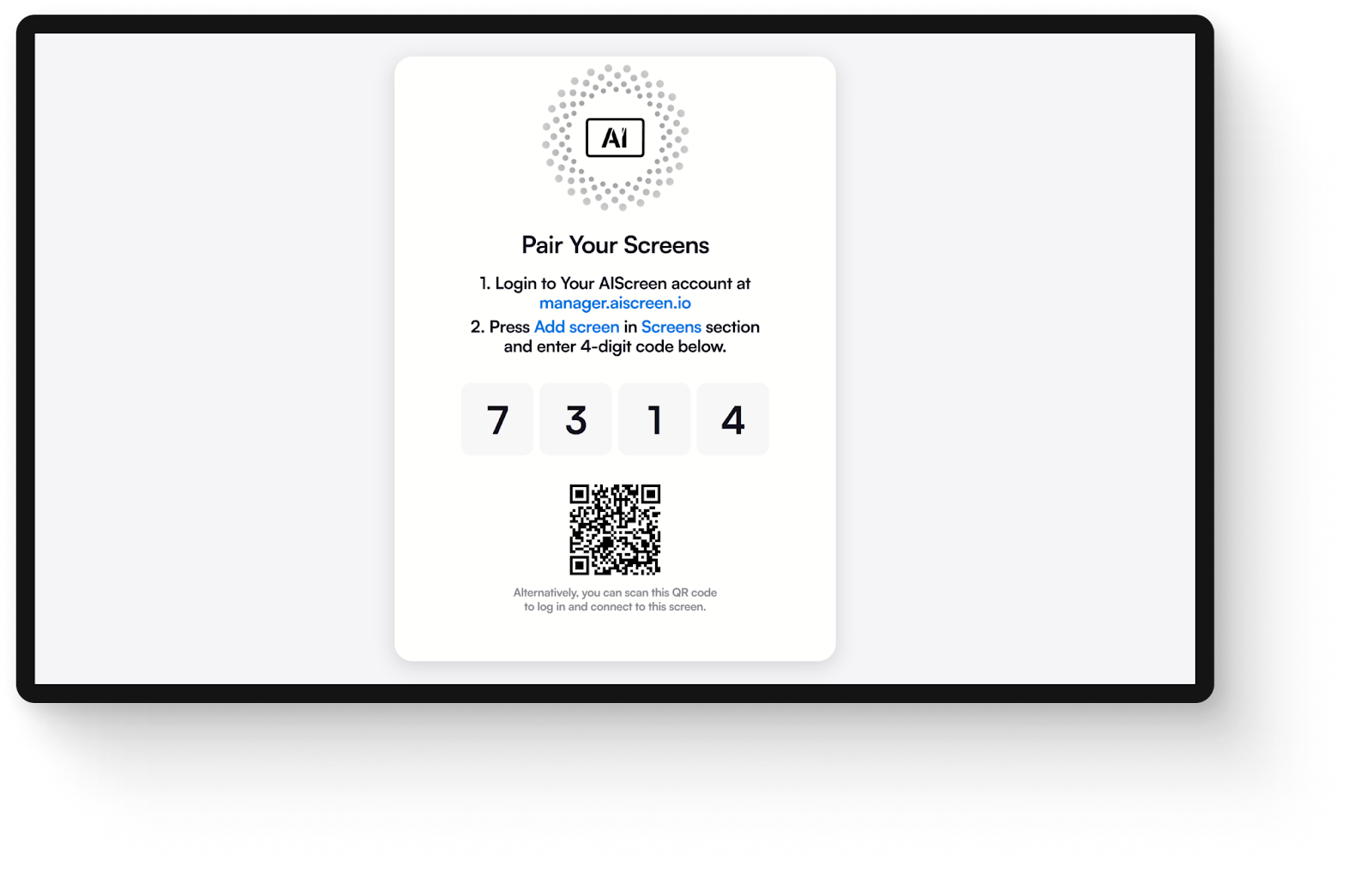
Pairing your screen connects your display to the AIScreen CMS for synchronized content delivery. Open the AIScreen app on your elevator display to generate a unique pairing code.
Navigate to the AIScreen dashboard, go to the “Screens” section, and enter the pairing code to link your device. Once connected, configure screen orientation (portrait for elevators), resolution, and playback settings to optimize visibility and layout structure.
Step 5: Upload and Organize Elevator Signage Content

Uploading content to AIScreen allows you to deliver structured, high-impact messaging inside elevators. Use the media library to upload images, videos, PowerPoint files, and dynamic content assets.
Organize content using playlists and categories to ensure smooth transitions and logical sequencing, improving dwell-time engagement and enhancing passenger experience with relevant, real-time information.
Step 6: Design Content Using Templates and Split-Screen Layouts
AIScreen provides pre-designed templates and split-screen layout features to create visually balanced and informative elevator signage. Use high-contrast visuals, minimal text, and clear typography to ensure accessibility and ADA-compliant readability.
Leverage multi-zone layouts to display announcements, advertisements, weather updates, and building information simultaneously, maximizing screen utilization in limited elevator space.
Step 7: Schedule and Automate Elevator Signage Content
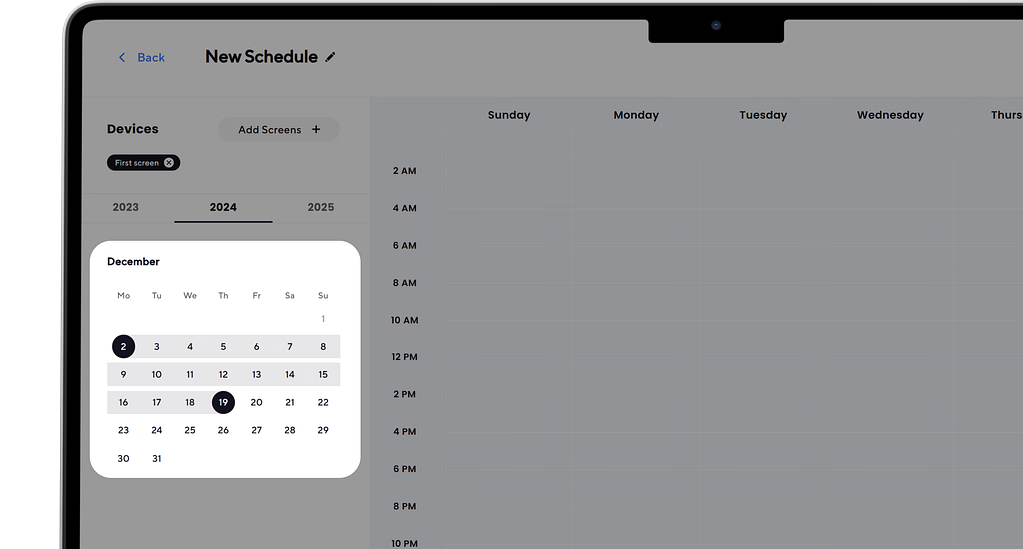
AIScreen scheduling tools enable automated content delivery based on time, building activity, and user behavior patterns. Create playlists for peak hours, maintenance alerts, or emergency messaging to ensure timely and relevant communication.
AI-powered scheduling enhances efficiency by automating updates, reducing manual intervention, and ensuring that elevator displays always show the most contextually relevant content.
Step 8: Publish and Monitor Elevator Digital Signage Performance
Once your content is ready, push it to one or multiple elevator screens using AIScreen’s instant publishing feature. This ensures real-time updates across all connected displays within your building network.
Monitor performance through analytics dashboards, track engagement metrics, and optimize content strategy to improve communication effectiveness, user experience, and overall smart building efficiency.
How Do Elevator Signage Requirements Connect to ADA Signage?
To fully understand elevator signage requirements, it’s essential to explore the broader concept of ADA signage and accessibility compliance standards. ADA signage defines guidelines for Braille signage, tactile characters, high-contrast visuals, mounting height, and wayfinding systems, ensuring equal access in public and commercial buildings under the Americans with Disabilities Act (ADA). Learn how these principles shape compliant elevator signs and inclusive design systems in what is ADA signage?, where accessibility rules, legal standards, and real-world implementation are explained with data-driven insights.
AIScreen for Elevator Digital Signage: Smarter Communication and Accessibility
AIScreen transforms elevator digital signage by enabling real-time messaging, dynamic content updates, and centralized screen management for modern buildings. With AIScreen’s cloud-based digital signage software, businesses can display floor availability, maintenance alerts, emergency notifications, and wayfinding content to improve communication efficiency and passenger experience. AI-driven scheduling and content automation ensure the right information is delivered at the right time in high-traffic environments.
AIScreen also supports ADA-compliant layouts, including high-contrast visuals, readable typography, and accessible content formats to enhance usability for all users. With features like remote control, content scheduling, and multi-location management, AIScreen helps streamline operations while maintaining accessibility and safety standards. Start using AIScreen today to optimize elevator communication, ensure compliance, and create a smarter building experience.
Frequently Asked Questions
What are the required elevator signage standards for commercial buildings?
The required elevator signage standards for commercial buildings focus on visibility, clarity, and full accessibility so every user can move safely. Signs must follow ADA standards, including correct dimensions, raised letters, tactile signs, and Braille for clear floor designations. Placement rules ensure proper height, contrast, and readable spacing based on accessible means parking spaces and building codes.
What types of safety signs are required near elevator entrances?
The types of safety signs that are required near elevator entrances usually include warnings about moving doors, restricted areas, and emergency instructions. You’re also expected to display proper floor designations, directional signs, and clear visual markers so people can find the right existing elevator without confusion. These signs use raised letters, Braille, and strong contrast to support users with low vision or mobility concerns, ensuring accessibility for all disabilities.
How do ADA guidelines apply to elevator signage requirements?
ADA guidelines are applied to elevator signs requirements through rules that ensure every sign is easy to read, touch, and understand. You’ll see standards for tactile characters, Braille placement, line spacing, visibility, mounting height, and contrasting color to support people with disabilities. These rules cover everything from cab labels to floor numbers so users can navigate without stress.
Why must elevator machine rooms have specific warning signs?
Elevator machine rooms require specific warning signs because they contain high-voltage equipment, moving parts, and sensitive technology restricted to trained staff. Building codes and ADA standards require clear labels with readable letters, strong contrast, and visible location markers. These signs help people quickly identify risks and maintain a safe path away from danger.
How much does compliant elevator signage cost?
The cost of compliant elevator signs varies based on materials, tactile signs, Braille, raised letters, and the number of pieces your building needs. Custom ADA-ready signage with proper dimensions and durable construction typically costs more than standard plates. Installation adds to the final price because height, spacing, and clear floor space must meet strict accessibility parking spaces.
6. Meet Emergency Communication Accessibility Standards
Meeting emergency communication accessibility standards is essential to ensure that all passengers can receive and respond to critical information during an emergency stop. Two-way communication features within the elevator, such as emergency intercoms, allow passengers to directly communicate with emergency personnel in the event of an incident. These systems must be designed to be accessible for all individuals, including those with hearing impairments or speech impairments disabilities.
Elevators should also include hands-free access and visual status indicators to ensure that passengers with mobility or sensory impairments can easily call for help and understand the elevator’s status. Visual indicators display critical information, such as floor location and emergency alerts, in high-contrast text for better readability. For advanced safety communication, explore how to setup digital signage for emergency alerts to improve real-time alerts, accessibility, and response efficiency in critical situations.
How Do Elevator Signage Requirements Connect to ADA Signage?
To fully understand elevator signage requirements, it’s essential to explore the broader concept of ADA signage and accessibility compliance standards. ADA signage defines guidelines for Braille signage, tactile characters, high-contrast visuals, mounting height, and wayfinding systems, ensuring equal access in public and commercial buildings under the Americans with Disabilities Act (ADA). Learn how these principles shape compliant elevator signs and inclusive design systems in what is ADA signage?, where accessibility rules, legal standards, and real-world implementation are explained with data-driven insights.
