
What is a Mall Kiosk and How Does it Work?
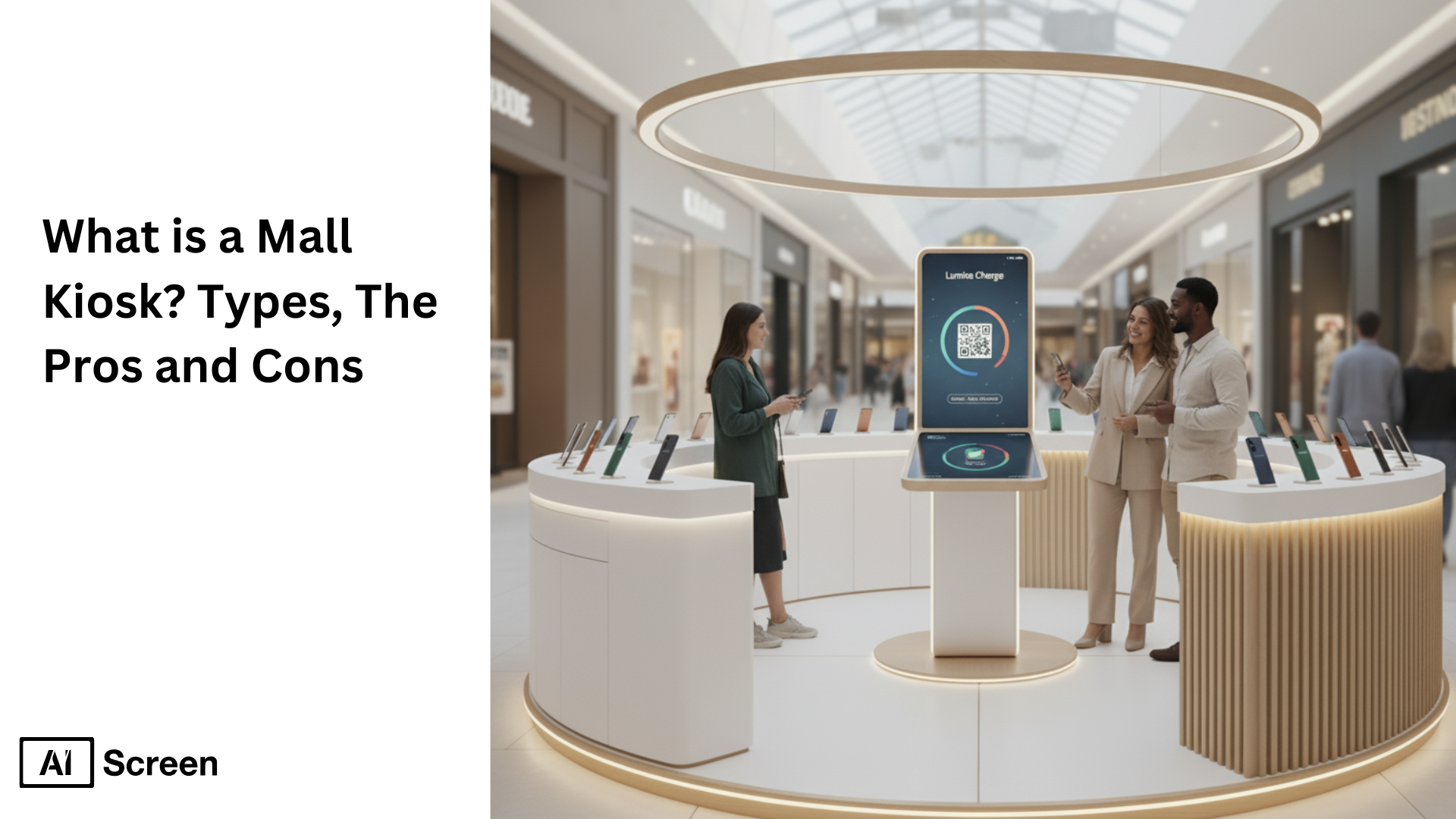
Step into any busy shopping mall and you will spot a mall kiosk: a small, semi-permanent retail structure perfectly positioned to catch foot traffic in high-traffic areas. According to IBISWorld, mall kiosks contribute to an industry worth $13.4 billion as of 2025, catering to a diverse range of sellers, from boutique owners to large retail brands. What makes mall kiosks appealing? They offer an accessible entry point into retail business, keep start-up costs low, and allow brands to promote products with maximum visibility, right where potential customers are already congregating.
In this article, you will discover “what is a mall kiosk, types, the pros and cons,” plus insider insights on how these retail kiosks are keeping pace with today’s digital world. Curious about how self-service kiosks and interactive kiosks boost customer engagement? Want to know how smart displays, digital menus, and cashless transactions are changing kiosk operations in shopping malls? You’re in the right place. Discover practical tips and get inspired to attract customers, drive sales, and build your own successful retail kiosk story!
Modern facilities manage these displays with digital signage software so signage stays accurate and easy to update.
What is a Mall Kiosk?
A mall kiosk is a standalone retail unit usually placed in busy corridors or open spaces within shopping malls, designed to attract high foot traffic with its compact, flexible format. “What makes mall kiosks so popular?”
They offer a cost-effective entry into the retail business for small businesses, startups, and franchise owners who want maximum brand visibility with minimal upfront costs. Whether staffed or self-service, many mall kiosks now incorporate interactive kiosks and interactive digital signage that boost customer engagement and enhance the shopping experience.
Different types of kiosks in malls range from basic retail kiosks and food carts to advanced self-service kiosks and information kiosks, all tailored to serve different customer needs and transaction types. These kiosks offer convenience with services like product display, ticket printing, and cashless transactions, making them ideal for grocery stores, convenience stores, and hospitality businesses alike.
With ongoing maintenance and smart inventory management, mall kiosks are evolving into essential touchpoints for modern retail shops and service kiosks in shopping centers worldwide.
What are the Types of Mall Kiosks?
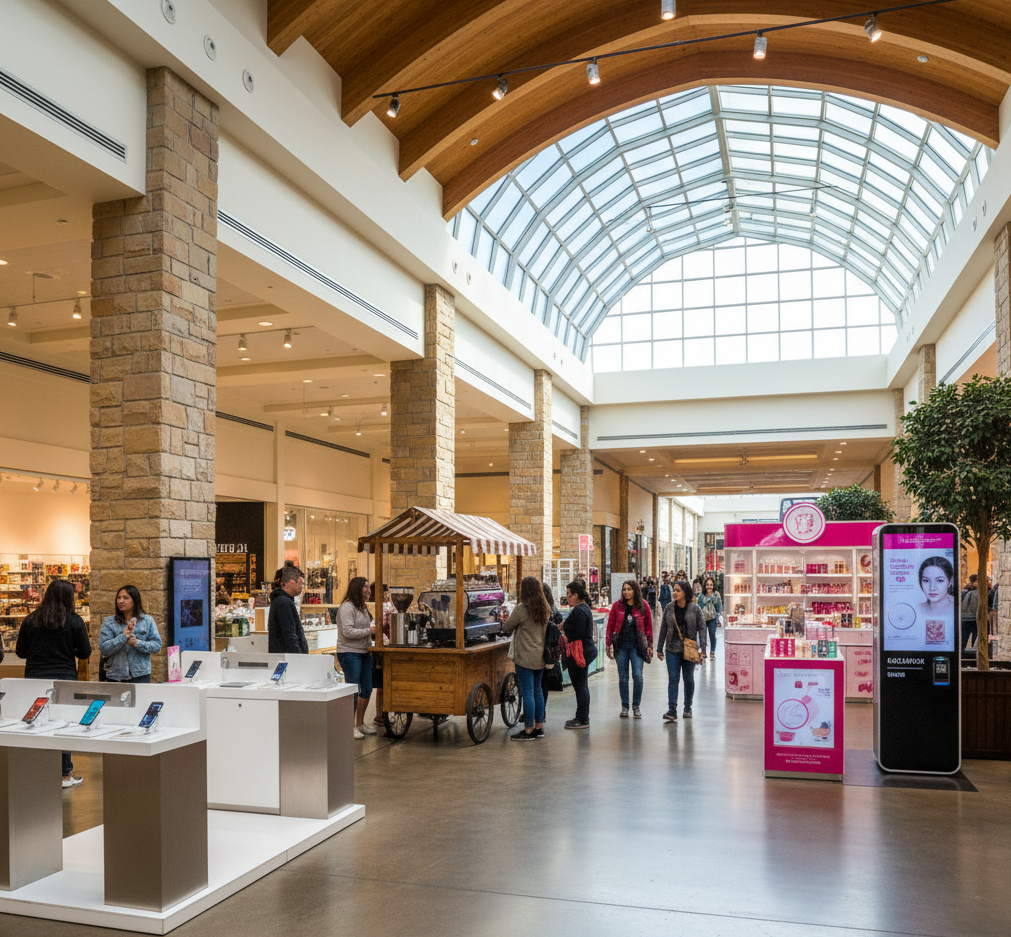
Mall kiosks are designed to fit different retail needs, mall layouts, and customer bases. The main categories include food ordering and beverage kiosks, fashion or accessory booths, tech and gadget kiosks, beauty and cosmetic stalls, and information or digital kiosks with interactive features.
“Want to know which type suits your shopping mall?” Food carts are perfect for quick snack buys in high foot traffic areas, while fashion kiosks excel in busy shopping malls by showcasing engaging displays that highlight on-trend products.
| Kiosk Type | Description | Ideal Use Cases | Benefits |
|---|---|---|---|
| Food & Beverage Kiosks | Small booths or carts for quick food sales | Snacks, coffee, specialty drinks | Low space requirement, high turnover |
| Fashion/Accessory Kiosks | Compact stands showcasing apparel or accessories | Jewelry, phone cases, sunglasses | Easy brand visibility, impulse purchase focus |
| Tech & Gadget Booths | Sell electronics and accessories | Chargers, headphones, smart gadgets | Attracts tech-savvy customers, high foot traffic |
| Beauty & Cosmetic Stalls | Display and sell makeup or skincare products | Samples, testers, direct sales | Personalized engagement, high repeat business |
| Information/Digital Kiosks | Interactive self-service with touchscreens | Wayfinding, product catalogs, ticket sales | Enhances customer experience, reduces staffing |
Choosing the right kiosk type depends on the mall’s audience, space, and the store’s brand identity. For example, convenience stores and grocery stores might benefit from self-service kiosks to speed up transactions, while luxury retailers or boutique owners prefer kiosks with more personalized service and interactive features to boost brand recognition and customer engagement.
As many kiosk owners adapt to evolving customer expectations, leveraging digital menus, cashless payments, and inventory management can significantly enhance kiosk operations and sales.
What Are the Benefits of Mall Kiosks?
Retail kiosks have become a popular choice for entrepreneurs and established brands alike, thanks to their range of compelling benefits. These small booths or semi-permanent setups offer an affordable way to enter retail without the high upfront costs of traditional storefronts.
Positioned in busy shopping malls and high foot traffic areas, mall kiosks offer unmatched brand visibility and direct customer engagement, effectively boosting sales and encouraging repeat business.
Key benefits of retail kiosks include:
- Affordable startup costs compared to conventional retail stores make it easier for new business owners and franchisees to test the market.
- High foot traffic exposure from shopping centers draws new and diverse customers.
- Short-term leasing flexibility allows kiosk owners to adapt quickly to trends or seasonal demands.
- Direct customer interaction offers personalized service that digital-only channels can’t match.
- Easier market testing for new products or limited-time offers in various mall locations, helping to refine inventory management and marketing strategies.
By integrating self-service kiosks and interactive kiosks featuring digital menus and cashless payments, retail kiosks don’t just attract attention; they improve the customer experience and operational efficiency.
For example, convenience stores and food carts leverage quick service kiosks to streamline ordering and payments, while healthcare kiosks offer informational and check-in processes for service. Mall kiosks remain a cost-effective, versatile retail solution that boosts brand recognition, drives sales, and keeps customers coming back.
What Are the Disadvantages of Mall Kiosks?
Mall kiosks present several challenges that kiosk owners and operators need to navigate carefully. While these retail kiosks offer many benefits like low startup costs and access to high foot traffic areas, they also come with limitations that can impact overall success and customer experience.
| Challenge | Description | Mitigation Tips |
|---|---|---|
| Limited Space | Small footprint restricts product variety and inventory capacity, limiting sales. | Optimize layout, rotate inventory, and use vertical space. |
| High Competition | Numerous kiosks in malls create saturated markets and challenge brand differentiation. | Offer unique products, personalized service, and digital menus. |
| Seasonal Performance | Sales can vary greatly with seasonality and mall traffic fluctuations. | Use flexible leases, diversify product range, and run promotions. |
| Rental & Maintenance Costs | Ongoing costs can add pressure to profit margins, especially for small booths. | Negotiate leases, maintain kiosks proactively, and manage expenses tightly. |
| Security & Staffing | Risk of theft, vandalism, and difficulty in staffing small kiosks in busy areas. | Install security systems, train staff, and monitor kiosks remotely. |
Despite these challenges, mall kiosks remain a vital channel for retail stores, convenience stores, grocery stores, and hospitality businesses.
Integrating self-service kiosks, interactive kiosks, and digital signage can enhance kiosk operations by improving customer engagement, boosting brand visibility, and streamlining transactions, ultimately driving sales in today’s competitive shopping malls and centers.


How Do You Set Up a Mall Kiosk?
Launching a mall kiosk business involves a detailed, strategic process that combines market research, operational planning, and leveraging modern retail technologies. Here’s an enhanced step-by-step methodology integrating essential keywords:
- Choose Your Product Niche – Selecting the right product or service is crucial for kiosk owners in busy shopping malls. “What is a mall kiosk best suited for?” Many successful retail kiosks focus on trending categories like tech gadgets, quick-service food, or beauty products to set up kiosk in mall that captures customer interest quickly. Consider profit margins, inventory management, and ease of fulfillment. Self-service kiosks and interactive kiosks in niche sectors like healthcare kiosks or photo kiosks also offer innovative customer engagement and personalized service options that can boost sales.
- Research Mall Locations and Audience – Understanding foot traffic and customer base in shopping centers determines kiosk success. Evaluate high traffic areas within retail stores or convenience stores where kiosks offer maximum brand visibility. Analyze mall audience demographics to tailor offerings; for example, an informational kiosk or wayfinding kiosks can enhance customer experience in large department stores. Kiosk owners must also consider competition density and choose locations with complementary retail kiosks to attract more potential customers.
- Secure Necessary Permits and Lease Agreements – Efficient mall kiosk operations rely on securing appropriate permits, insurance, and negotiating lease terms. Upfront costs must align with budget constraints while providing value, such as flexible lease durations. Some malls provide short-term leases ideal for seasonal kiosks or testing new self-service options. It’s also essential to confirm compliance with mall security measures to protect financial transactions, sensitive data, and kiosk machines, while adhering to local real estate sign rules and guidelines to ensure your signage meets all legal and regulatory requirements.
- Design Your Kiosk Layout – Maximize limited floor space with compact and attractive kiosk designs that integrate digital menus, interactive features, and service kiosk functionalities. Retail kiosks with clear signage and product displays improve brand recognition and encourage impulse purchases. Incorporate wayfinding kiosks and internet kiosks as needed to offer internet access or informational services, enhancing customer experience and operational efficiency.
- Install Payment and POS Systems – Modern POS systems that facilitate cashless payments and seamless financial transactions are pivotal for kiosk business success. Integrate self-service kiosks with reliable inventory management and real-time sales tracking. Use interactive kiosks or vending machines for efficient service delivery, reducing wait times and boosting repeat business. Proper kiosk operations require maintenance from time to time to sustain high performance in busy shopping malls and hospitality businesses.
Adhering to these detailed steps empowers kiosk owners to attract more customers, adapt to changing market needs, and build a thriving retail kiosk that complements traditional storefronts and drives sustainable sales growth in shopping malls and retail centers.
How Do You Run a Mall Kiosk Business?
Running a successful mall kiosk business means consistently engaging customers, boosting sales, and driving repeat business in busy shopping malls and retail stores. But “how exactly do kiosks offer ongoing value to both kiosk owners and customers?” Here are enhanced strategies packed with examples and key insights:
- Visual Merchandising Techniques: Well-designed retail kiosks attract and hold the attention of shoppers. Using eye-catching signage, digital menus, and interactive kiosks helps kiosks stand out in high-traffic areas. For instance, bright lighting combined with clear product displays can boost brand recognition and increase customer engagement by guiding shoppers through product choices at a glance. Retail kiosks offering personalized service also improve customer experience, especially in convenience stores and grocery stores.
- Customer Interaction and Demos: Self-service kiosks and interactive kiosks allow customers to explore product features hands-on, ask questions through digital menus, or conduct transactions quickly. Offering live demos or samples at the kiosk boosts foot traffic and encourages impulse buying. Healthcare kiosks and informational kiosks that provide personalized assistance further enhance customer satisfaction and brand loyalty in hospitality businesses.
- Seasonal Promotions: Adjusting product offerings and promotions based on seasons helps kiosks align with changing customer expectations. Using real-time signage to advertise limited-time deals or festive offers drives urgency and increases sales. Retail kiosks that incorporate digital menus and interactive features can seamlessly update promotions, thus targeting potential customers more dynamically and effectively.
- Digital Marketing Integration: Amplify reach by integrating mall kiosk promotions with online campaigns on social media platforms. Effective use of interactive kiosks and internet kiosks in shopping centers simultaneously engages in-person and digital audiences. This connected marketing drives foot traffic to kiosks, reinforces brand visibility, and helps collect customer data for ongoing maintenance and refinement of kiosk operations.
Examples of successful mall kiosks using digital signage for real-time offers show measurable boosts in sales and customer base expansion.
Combining these strategies with efficient inventory management and security measures ensures kiosk machines operate smoothly, secure sensitive data, and create happy customers who come back for more.
What Are Successful Mall Kiosk Examples?
Successful mall kiosks illustrate how effective use of location, product uniqueness, and cohesive branding drives customer engagement and sales in busy shopping malls and retail centers:
- Cell Phone Accessory Booths: “Why are tech repair and gadget kiosks booming in shopping malls?” Positioned near electronics stores in high foot traffic areas, retail kiosks offer quick repairs and a variety of popular accessories like phone covers and chargers. Using self-service kiosks speeds up transactions, improving customer experience and boosting sales.
- Perfume or Cosmetic Kiosks: These compact retail kiosks utilize interactive kiosks and digital menus to provide personalized service, real-time promotions, and product samples. This enhances customer engagement, reinforces brand recognition, and encourages repeat business in upscale retail stores and busy shopping malls alike.
- Snack and Coffee Stands: Food carts leverage self-service options and digital menus to serve customers quickly. By reducing wait times and optimizing kiosk operations, these kiosks attract more customers seeking convenience in crowded shopping centers. Seasonal promotions displayed via real-time signage further boost sales.
- Tech Repair and Gadget Kiosks: These kiosks thrive by combining interactive kiosks with traditional retail expertise, offering specialized services quickly. Positioned strategically in busy shopping malls near complementary retail stores, they enhance brand visibility, handle financial transactions securely, and provide personalized service through knowledgeable staff.
Each mall kiosk maximizes brand visibility and customer base growth by integrating self-service kiosks, interactive features, personalized service, and digital signage.
Effective kiosk operations, including inventory management and security measures, ensure smooth kiosk machine functionality and an improved customer experience, making them vital assets in modern retail stores, convenience stores, and hospitality businesses.
Mall Cart or Mall Kiosk: What to Choose?
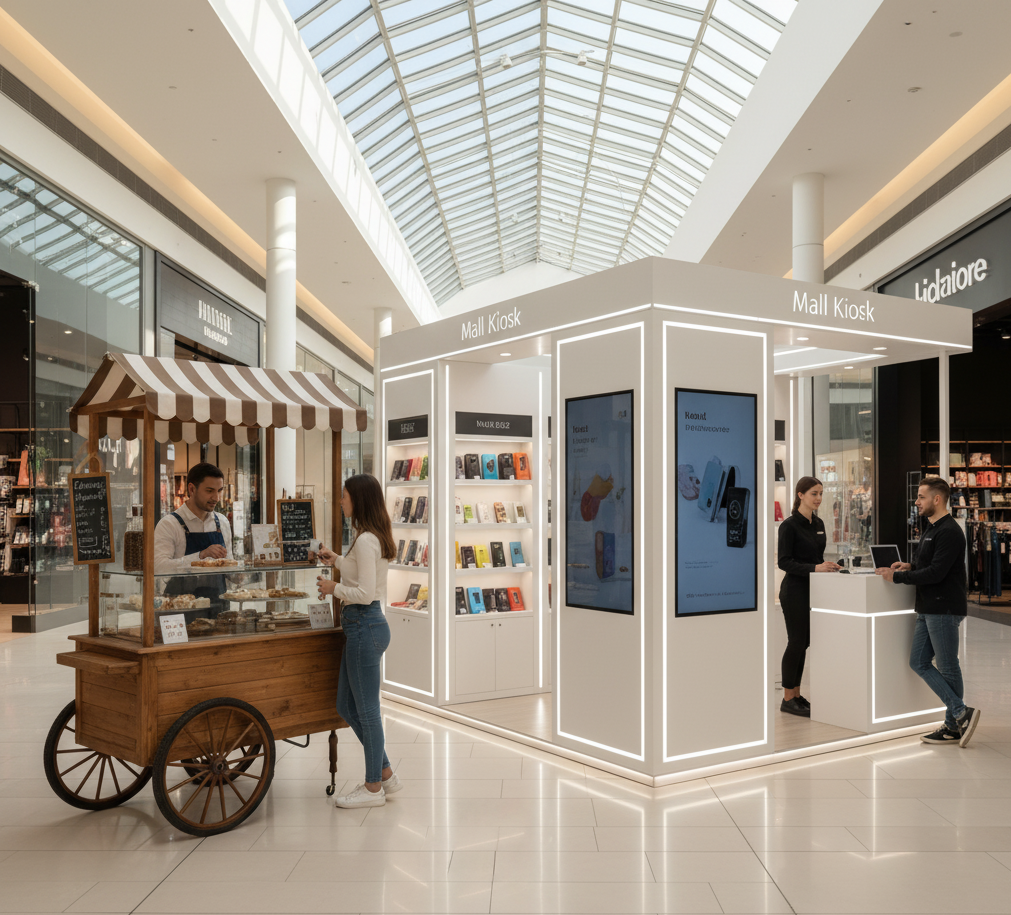
Choosing between a mall cart and a mall kiosk is a key decision for kiosk owners that impacts cost, customer engagement, and kiosk operations in busy shopping malls and retail stores. Here are enhanced comparisons using keywords for clarity:
- Cost: Mall carts generally have lower upfront costs and rental fees compared to semi-permanent mall kiosks. For startups or businesses with limited budgets, carts offer a cost-effective way to enter retail markets in shopping centers without heavy investment.
- Size and Customization: Mall kiosks provide a larger display area and greater customization options, allowing branding elements, digital menus, and interactive kiosks to be integrated for enhanced customer experience. Carts are more compact with limited space, suited for focused product lines or self-service options.
- Mobility: Unlike fixed mall kiosks, mall carts are portable with wheels or modular construction, letting kiosk owners move locations based on foot traffic and mall regulations. This mobility offers flexibility for seasonal promotions or market testing in different mall zones.
- Licensing: Lease agreements for mall kiosks tend to be more formal and long-term with greater security measures, while mall carts may have shorter lease terms or operate under different licensing rules suited to their mobility and size.
Choosing the right format depends on product type, customer base, and budget. If the business requires personalized service, interactive kiosks, or extensive displays for product demos, a mall kiosk in high-traffic areas maximizes brand visibility.
For impulse products, self-service kiosks, or quick sales, mobile mall carts offer agility and savings, making them ideal for grocery stores, convenience stores, and other hospitality businesses aiming to boost sales quickly.
Well-managed kiosk operations with modern kiosk machines and digital signage in either format ensure strong customer engagement, improved brand recognition, and repeat business in today’s retail landscape.
Here’s a clean version using both keywords in the heading and content:
What Is a Mall Kiosk and How Can It Inspire Food Truck Signage Ideas?
Understanding What is a Mall Kiosk can help businesses see how compact spaces use signage to attract attention, explain offers, and guide customers quickly. Mall kiosks often rely on bold branding, digital screens, menu boards, and promotional graphics because they need to communicate clearly within a limited footprint.
The same approach works well for food truck signage ideas, where space is also limited and visibility matters. Clear menus, bright graphics, branded panels, digital displays, and easy-to-read pricing can help food trucks stand out in busy locations and make it easier for customers to decide what to order.
Why Choose AIScreen for Mall Kiosks?
The future of mall kiosks is bright and bustling with innovation, especially through smart digital signage technology. The digital signage software like AIScreen is revolutionizing how mall kiosk operations engage customers and drive sales by integrating cutting-edge features like touchscreen displays, QR code payments, and real-time advertisements.
“How do these innovations really change the game?” Touchscreen displays and self-service kiosks allow customers to interact effortlessly, while QR code payments speed up financial transactions and reduce queues in busy shopping malls.
Real-time ads tailored through analytics keep content fresh, relevant, and highly engaging, ensuring retail kiosks capture attention and boost brand visibility in shopping centers.
Digital kiosks powered by AIScreen bring measurable improvements in customer experience and ROI by combining interactive features with data-driven content updates. For example, digital menus and wayfinding kiosks guide customers smoothly through retail stores and convenience stores, enhancing brand recognition and encouraging repeat business.
With over 80% of kiosk owners reporting increased customer engagement and sales, these kiosk machines represent the next big leap for retail stores, healthcare kiosks, hospitality businesses, and other sectors aiming to save money and optimize kiosk operations.
To unlock the full potential of your mall kiosk, AIScreen offers a seamless digital signage platform tailored for modern retail environments. Explore their solutions here.
Frequently Asked Questions
How does a mall kiosk work?
A mall kiosk is a small, semi-permanent retail unit strategically placed in high-traffic areas of shopping malls and centers. It typically operates either as a self-service kiosk or a staffed service kiosk, attracting customers through eye-catching signage, interactive features, and personalized service. These retail kiosks conduct financial transactions, offer internet access or digital menus, and complete tasks like selling products or printing tickets, all within a compact footprint designed for busy malls and retail stores.
How much does it cost to rent a mall kiosk?
Rental costs for a mall kiosk vary based on location, size, and mall foot traffic. Prime spots near entrances, food courts, or major anchor stores naturally command higher rates due to increased customer base and visibility. For example, a small booth in a busy shopping mall might range from a few hundred to several thousand dollars per month. Kiosk owners must weigh upfront costs against potential sales to ensure ROI, considering ongoing maintenance and security measures essential to kiosk operations.
How do you choose the best location for a mall kiosk inside a shopping mall?
To choose the best location for a mall kiosk inside a shopping mall, you should find a high foot traffic area, which can be near escalators, entrances, food courts, or complementary retail stores like convenience stores or electronics shops. Consider shopper demographics and avoid clusters where competing kiosks sell similar products. Visibility and unobstructed views enhance brand recognition and customer engagement, important criteria for kiosk owners aiming for repeat business.
What kinds of products or services are best sold via mall kiosks?
Mall kiosks excel in selling impulse-buy items and convenient services such as phone accessories, snacks, coffee, beauty products, photo printing, and tech repair. Self-service kiosks streamline ordering food or purchasing tickets, while interactive kiosks provide personalized service in healthcare or informational settings. Limited space means product selection should focus on high turnover and small footprint items that appeal to the mall’s customer base.
What role does foot traffic play in the success of a mall kiosk?
Foot traffic plays a significant role in a mall kiosk’s success: more visitors mean more potential transactions. High traffic areas naturally expose kiosks to a larger audience, increasing brand visibility and boosting sales. Kiosks in strategic spots like shopping centers’ main corridors or near popular stores benefit from steady streams of potential customers. Effective kiosk operations leverage digital signage and interactive features to convert foot traffic into engaged shoppers and loyal customers, driving long-term business growth.
Here are the most common mall kiosk types:
Smart digital signage is transforming mall kiosks into interactive, data-driven retail systems that boost engagement and sales. From real-time content updates to touchscreen experiences and personalized offers, kiosks are becoming more dynamic and efficient. Learn how to build one step-by-step in how to make a digital signage kiosk?
