
What is Wayfinding Signage?
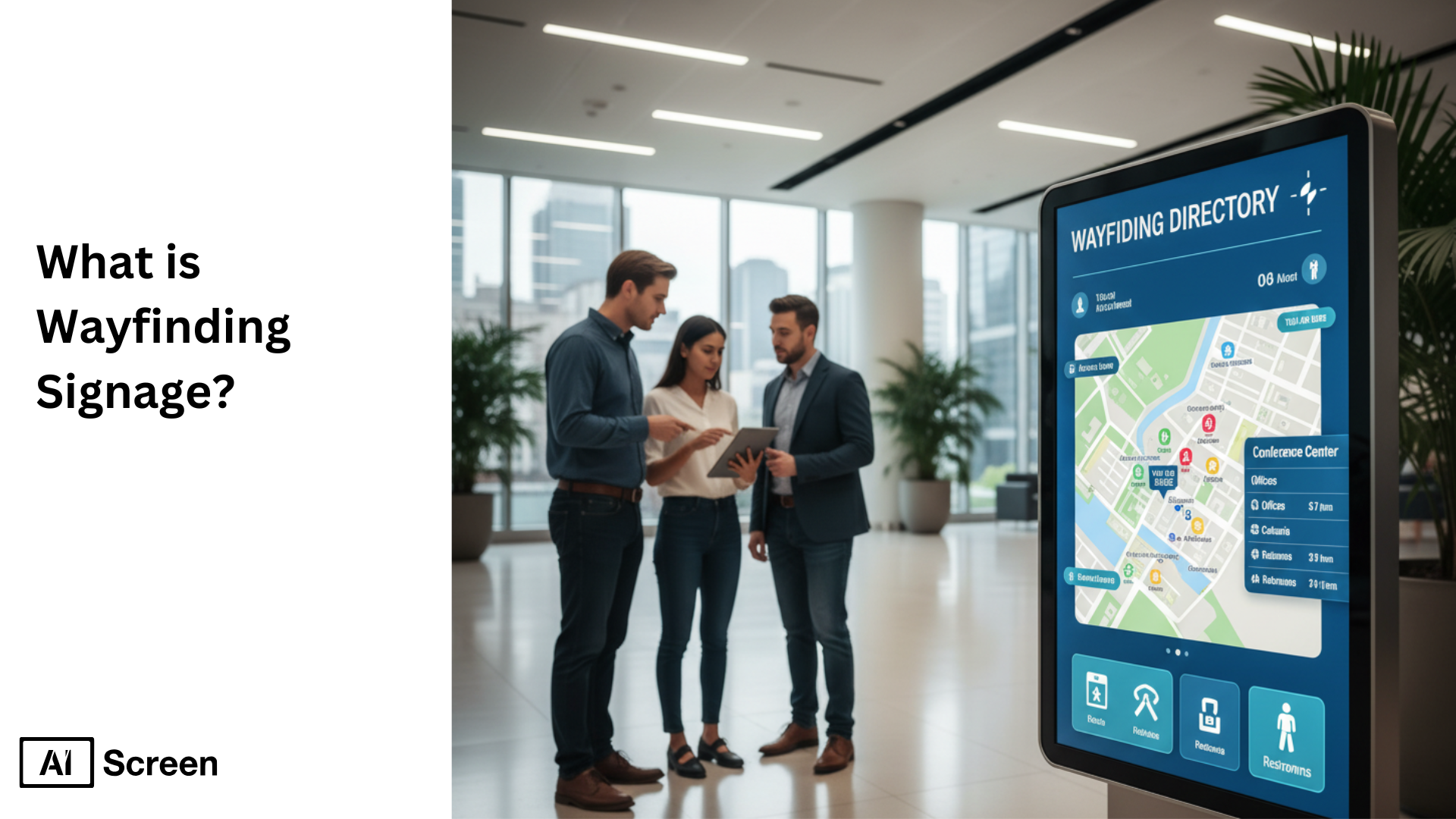
Ever found yourself wandering around a huge mall or a busy airport, wondering, “Where am I supposed to go next?” That’s exactly where wayfinding signage steps in! It’s like your personal guide, using signs, maps, and symbols to help you navigate complex places with ease. Research shows that clear wayfinding signs can improve visitor flow by up to 20%, making everyone’s experience smoother and less stressful.
In this article, we will dive into how wayfinding signage has evolved from plain old arrows and static maps to cool interactive digital systems. You will discover why these visual cues are essential, not just for finding your way, but for making spaces more accessible and welcoming. Whether it’s a hospital, university, or city center, good wayfinding design helps you feel confident and in access control every step of the way.
Modern facilities manage these displays with digital signage software so signage stays accurate and easy to update.
What Is Wayfinding Signage?
In simple terms, wayfinding signage is a smart visual communication system, a specialized form of digital signage, designed to guide you smoothly and safely through any environment, from bustling airports to sprawling hospital complexes.
Think of wayfinding signage as your friendly helper providing clear directions, location identification, and decision-making support at every turn.
Whether it’s directional signs pointing the right way, identification signs marking building entrances, or regulatory signs ensuring safety, this system uses design elements like universal symbols, colors, and lighting to keep foot traffic flowing clearly and effortlessly. In many commercial installations, structural components such as custom sheet metal fabrication are also used to house or mount signage securely and with precision. In many commercial installations, structural components such as custom sheet metal fabrication are also used to house or mount signage securely and with precision.
Why does it matter? Because without clear wayfinding, even the most well-built environments can feel confusing or overwhelming.
Wayfinding signage boosts accessibility for everyone, including folks with disabilities, by providing visual cues and information that help people navigate space efficiently.
It’s also crucial in complex environments like shopping malls or city layouts where multiple routes or locations require clear traffic flow and wayfinding strategies.
Whether it’s maps, door plaques, or colored lines on floors, well-executed wayfinding signage transforms the user experience and promotes safety, comfort, and even well-being.
What are the Types of Wayfinding Signage?
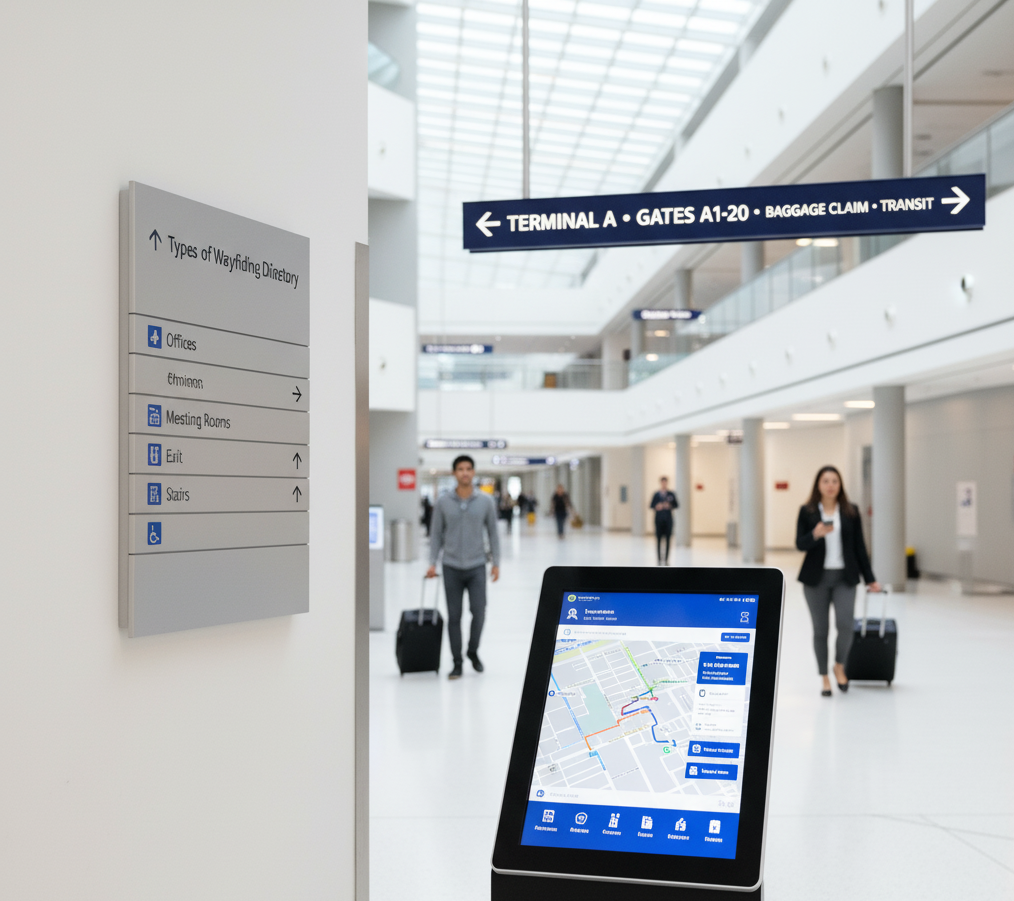
Wayfinding signage plays a crucial role in guiding people through any space, whether it’s a sprawling hospital, a busy airport, or a large corporate campus. It’s more than just signs; it’s a well-thought-out system using various types of signs working together to provide orientation, identification, and decision-making support. Dynamic digital signage can enhance this system by displaying real-time directions, room changes, event updates, and emergency information, while clear visual cues such as symbols, colors, and universal icons help improve foot traffic and create a smoother user experience.
Here are the four primary types of wayfinding signage, each with a unique function:
- Identification Signs: Identification signage announces your arrival at specific locations such as building entrances, office rooms, or landmarks. For example, door plaques in local shops or signs showing departments in public buildings help you confirm you’re in the right place.
- Directional Signs: Think of arrows, right pathways, and colored lines that are directional signage that lead you to your destination. They guide you through complex environments like malls or campuses by pointing towards restrooms, exits, or amenities, ensuring clear traffic flow and cutting down confusion.
- Informational Signs: Informational signage provides useful details like opening hours, maps, or building policies. A common example is “You Are Here” maps in large spaces, helping visitors understand where they are and where they need to go next.
- Regulatory Signs: These communicate rules and safety-specific instructions, like “No Entry,” “Staff Only,” or emergency evacuation routes. They ensure compliance and safety within the space and are essential for accessibility and security.
Together, these types form an integrated wayfinding system that helps visitors, new employees, and users easily navigate spaces confidently and safely while supporting accessibility, branding, and clear communication. Knowing the 7 best types of wayfinding signage helps improve navigation, reduce confusion, and create a smoother experience in offices, hospitals, retail spaces, and public environments.


What Are Common Wayfinding Signage Challenges?
Designing effective wayfinding signage requires careful planning and attention to several key factors that directly impact how easily people can navigate a space.
First, the overall layout of the environment should be analyzed to pinpoint prime locations for signs, places where users make decisions, such as intersections or building entrances. Visibility is crucial; signs must be placed at clear signage lines and mounted at heights accessible to everyone, including those with disabilities.
Consistency in other design elements like typography, colors, symbols, and messaging creates a cohesive experience, helping users quickly recognize and trust the signage system. Placement matters just as much: signs should avoid cluttered areas and be well-lit to ensure business information is always legible, day or night.
Despite best efforts, several common challenges can hinder wayfinding effectiveness. Cluttered environments with too many signs can overwhelm visitors, causing confusion rather than clarity. Poor lighting diminishes readability, especially for informational or regulatory signage.
Inconsistent branding or visual language breaks user trust and makes signs harder to understand, especially for first-time visitors or non-native speakers.
Balancing creativity with usability while ensuring accessibility for all users, including those with vision or mobility impairments, is vital. By addressing these considerations proactively, organizations can create wayfinding systems that truly improve navigation, safety, and user experience within complex environments.
Accessibility and Signage for People with Disabilities
When it comes to accessibility and signage for people with disabilities, universal design principles are key to making spaces inclusive and navigable for everyone. This means incorporating tactile lettering and Grade 2 Braille on signs so those who are blind or have low vision can read by touch.
High-contrast colors and non-glare finishes improve visibility for individuals with visual impairments. Accessibility also involves mounting signs at heights that are within reach of wheelchair users, typically between 48 to 60 inches from the floor, ensuring everyone can access the information comfortably.
The Americans with Disabilities Act (ADA) sets clear standards for compliant signage. These require that signs used for identifying permanent rooms or spaces must include raised tactile characters, Braille, and clear visual contrast.
Regulatory and directional signs should be placed in consistent, accessible locations, like near entrances and at decision points. The ADA also promotes the use of universal symbols, such as the International Symbol of Accessibility, to convey information quickly and clearly across language barriers.
Following these guidelines creates safer, more welcoming environments, enhancing the user experience for all visitors, including those with disabilities.
Signage Lighting

Signage lighting is essential for ensuring readability and safety, especially in low-light or nighttime conditions. Proper illumination enhances the contrast between the text or symbols and the background, making the sign more visible and easier to read from a distance.
This not only helps convey the intended message quickly but also contributes to safer navigation, particularly for directional and regulatory signs used in public spaces, workplaces, and emergency routes.
There are several types of lighting systems used in signage. Backlit signs illuminate from behind, creating a vibrant glow that enhances visibility even in challenging lighting conditions.
Front-lit signage uses lights placed in front of the sign, highlighting the surface directly, which can be effective for detailed graphics or product promotions.
Edge-lit signage lights the edges of acrylic panels, producing an elegant, modern look often used for indoor displays. Energy-efficient LED solutions are increasingly popular for all types of illumination, offering 24/7 visibility with lower operating costs and longer lifespan than traditional lighting. This makes LEDs ideal for continuous, high-impact signage in various environments.
Language and Cultural Factors in Signage
Clear language is fundamental in signage design. By using simple wording and avoiding jargon, wayfinding signs become easier for everyone, including non-native speakers, to understand.
In multicultural or tourist-heavy environments, bilingual or multilingual displays are common. These signs separate languages with color coding, stacked or side-by-side layouts, and clear font choices to maintain readability and prevent visual clutter.
Information desks and high-traffic buildings often feature signage in multiple local languages, prioritizing universal visual cues wherever possible.
Icons play a vital role here. Universally recognized pictograms, like restroom, exit, and accessibility symbols, transcend language barriers, making complex environments easier to navigate.
Cultural sensitivity is equally important: designers must select colors and symbols with attention to local meanings and taboos. For example, while white may signify safety or calm in some cultures, it can evoke mourning elsewhere.
By combining language clarity, bilingual signage, and universally accepted icons with culturally thoughtful design elements, environments become more welcoming and intuitive for all users.
Signage Materials
Choosing the right materials for signage is key to ensuring durability, visibility, and sustainability. Common materials like acrylic, aluminum, vinyl, and digital screens each offer unique benefits depending on the application and environment.
Acrylic provides a sleek, glass-like finish ideal for indoor and illuminated signs, though it can be more brittle and requires UV-resistant coatings for outdoor use.
Aluminum stands out for outdoor durability; it resists rust and corrosion, lasts up to 15 years, and needs minimal maintenance, making it perfect for building signs, pylon signs, and directional markers.
Vinyl, often used for graphic overlays and vehicle wraps, offers flexibility and vibrant colors but typically has a shorter lifespan and is best suited for temporary or promotional displays.
Digital screens bring dynamic content possibilities with energy-efficient LED technology, allowing 24/7 visibility and adaptability in various environments.
Besides durability, many of these materials prioritize environmental sustainability through recyclability and reduced energy consumption.
For instance, recycled acrylic and aluminum contribute to eco-friendly signage solutions. Selecting the right combination of materials based on location, climate, and usage is essential for creating effective, long-lasting signage that meets both functional and environmental goals.
Why Adopt Digital Wayfinding Signage?
Businesses and institutions are increasingly adopting digital wayfinding signage powered by interactive touchscreens, QR codes, and real-time mapping software.
These advanced systems offer dynamic content updates that can be changed instantly to reflect current events, temporary closures, or special promotions without the need for physical replacement.
Accessibility is greatly enhanced through features like multi-language options, audio assistance, and integration with mobile navigation apps, making spaces more inclusive for all users.
Industries leading this adoption include universities, hospitals, shopping malls, and corporate campuses, where complex images and layouts and high foot traffic demand clear and efficient navigation solutions.
Digital wayfinding not only improves visitor experience by reducing frustration and time spent searching for destinations but also boosts operational efficiency by decreasing the workload on staff.
Additionally, these interactive displays can be customized to support branding efforts and generate additional advertising revenue, turning signage into a multifunctional business tool. Choosing the right format starts with understanding the 7 best types of wayfinding signage that match how people move through your space.
How Can Wayfinding Signage Design Improve Wayfinding Signage?
Effective Wayfinding Signage Design makes Wayfinding Signage easier to notice, understand, and follow. Clear typography, consistent colors, recognizable symbols, and logical placement help visitors move through buildings, campuses, hospitals, offices, and public spaces with less confusion. A strong design should present only the information people need at each decision point.
Well-planned Wayfinding Signage Design also improves the overall visitor experience by creating a consistent navigation system across a location. Directional arrows, maps, room labels, digital displays, and destination signs can work together to guide people smoothly from one area to another. When Wayfinding Signage is visually clear and strategically placed, it supports faster navigation and reduces unnecessary questions.
Why Choose AIScreen for Wayfinding Signage?
AIScreen helps you design, schedule, and update digital wayfinding signage across every location from a single dashboard. You can display directions, floor maps, room numbers, event information, and important announcements while keeping navigation content accurate and easy to follow.
As a leading provider of digital signage solutions, AIScreen helps businesses and organizations create smarter wayfinding experiences with cloud-based management, remote updates, and flexible scheduling. Its platform makes it easier to guide visitors across offices, hospitals, schools, retail spaces, and other large facilities while maintaining consistent branding and clear communication.
Start your free trial or book a demo to see how AIScreen can guide your visitors with confidence.
Frequently Asked Questions
What information should be included on wayfinding signage?
Wayfinding signage should include information such as clear identification (e.g., room or building names), directional cues (e.g., arrows pointing the way), informational elements (e.g., maps or hours of operation), and regulatory instructions (e.g., rules or safety notices). Using universal symbols and concise text helps everyone understand quickly.
How can businesses design effective wayfinding systems?
Businesses can design effective wayfinding systems by analyzing traffic flow and key decision points, such as entrances and intersections. Use consistent design elements, colors, fonts, and icons to create an intuitive navigation experience, and test placements to ensure visibility and accessibility for all users.
Why does consistent wayfinding signage improve user experience?
Consistent wayfinding signage improves user experience and builds familiarity, so users quickly recognize signs and trust the guidance. It reduces confusion and frustration by ensuring that visual cues like colors and symbols mean the same thing throughout the space, making navigation smoother and more confident.
Can wayfinding signage be customized for branding and accessibility?
Yes! Wayfinding signage can be customized for branding and accessibility, as companies can incorporate brand colors, logos, and messaging while maintaining universal design standards like tactile lettering and high contrast for accessibility. This balance strengthens brand identity and ensures inclusivity.
What are best practices for placing wayfinding signage effectively?
The best practices for placing wayfinding signage effectively are to place signs at key decision points where visitors naturally pause, like elevator lobbies and junctions. Ensure signs are mounted at accessible heights, avoid cluttered areas, and provide adequate lighting for clear visibility at all times.
