
What Are the Categories of Fire Signage?
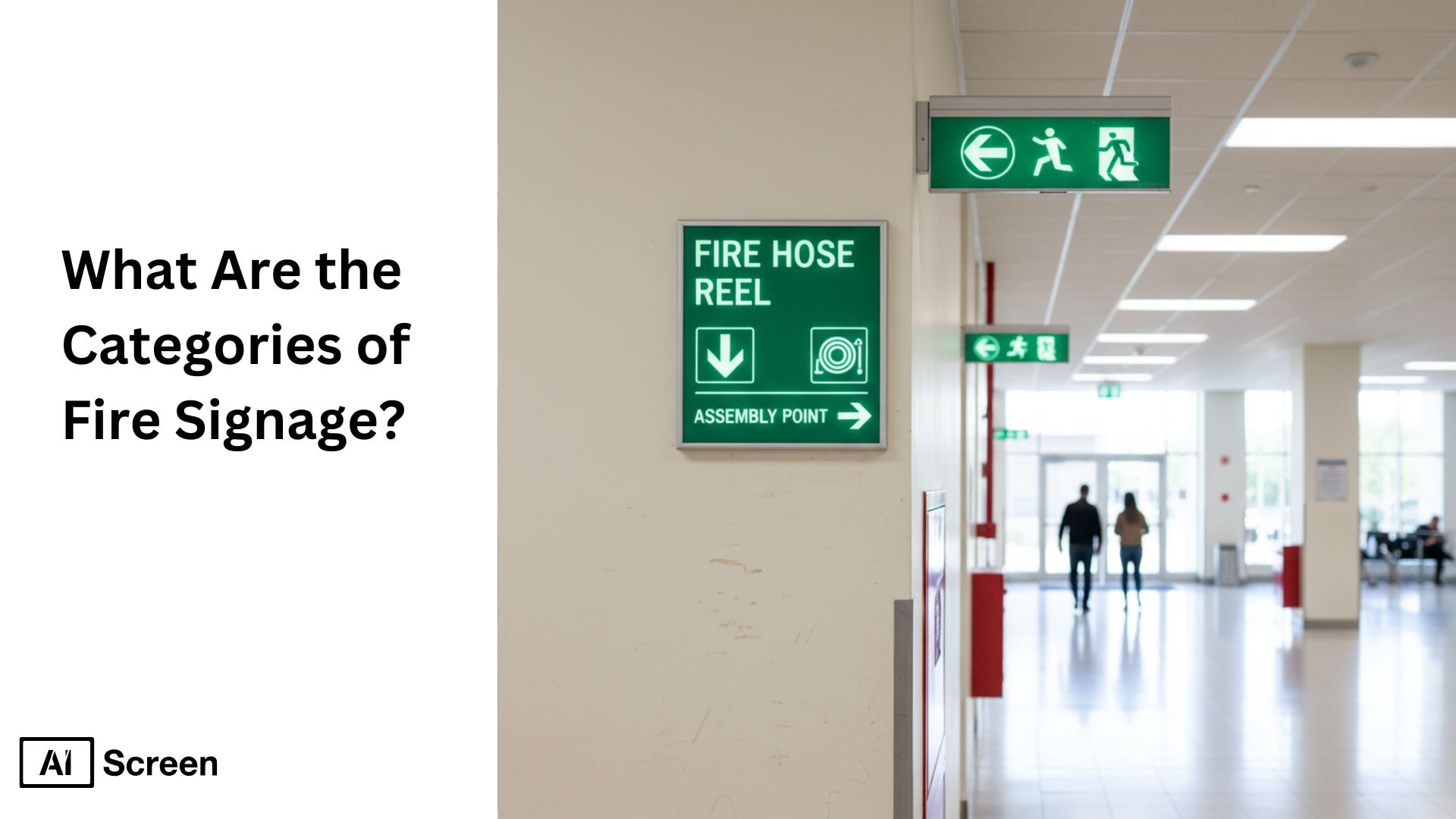
Do you know that fire safety signage quietly protects you long before an emergency even begins? As you move through buildings every day, the categories of fire signage work in the background, using colour-coded symbols to gently guide you toward safety without demanding attention. Imagine walking into a room filled with smoke; suddenly, those once-silent signs become your lifeline, showing you where to go and what to avoid. According to NFPA, over 70% of fire-related injuries occur in buildings with outdated or poorly placed fire safety signs.
In this article, you’ll walk through every category of fire signage in a way that feels simple, human, and easy to follow. You’ll see how each colour, symbol, and message has a purpose in different types of fire safety and safety signs, not just for compliance, but for protecting the people who rely on these signs during moments of fear and uncertainty. As you read, you’ll also discover how modern digital signage is reshaping emergency communication, giving buildings the power to respond faster and guide occupants with real-time clarity when it matters most.
When you manage fire signage categories across a large building, keeping every sign accurate becomes a real challenge. This is where digital signage software gives you a single place to update prohibition, mandatory, warning, and fire exit messages instantly. You can push new fire safety instructions to every screen at once, so your building always reflects the latest fire safety regulations without waiting for printed signs to be replaced.
What Are the Regulations for Fire Safety Signage?
Fire safety signage is governed by strict regulations set by OSHA, NFPA 101 Life Safety Code, and ISO 7010 to make sure every sign in a building speaks the same visual language. These standards define the colours, shapes, and pictograms of common fire safety signs so your mind immediately knows what a sign means, even in a moment of panic.
When signs follow these rules, you get clarity instead of confusion, a crucial difference when you’re trying to find a fire exit or identify fire equipment under pressure. According to FEMA, more than 60% of people rely on green safe-condition signs to navigate unfamiliar buildings during emergencies.
But here’s the part most people don’t realize. Compliance isn’t just about placing signs on walls. It’s about preparing a building for real emergencies and for inspection readiness, including understanding emergency exit signs.
You’ve probably noticed how fire doors, fire extinguishers, hose reels, and emergency exit routes are always marked the same way in different facilities; that consistency exists because local fire departments and building codes demand it.
Imagine walking through a smoky corridor; those standardized visuals and the right fire fighting equipment signage become your safety net, guiding you toward the right path without hesitation, just as clearly defined regulations explain what are the construction site signage requirements to ensure safety, visibility, and compliance in high-risk environments.
What Are Fire Signage Categories?
To understand the categories of fire safety signs, imagine walking through a building and noticing how red, blue, yellow, and green signs blend naturally into the environment. You’ve probably noticed them without giving a second thought, yet during a fire, these same signs become your lifeline.
According to Honeywell, buildings with digital emergency displays see a 45% improvement in fire exit signs and real-time evacuation compliance, and artificial intelligence in digital signage is pushing those gains even further.
Their familiar colours and symbols are designed to cut through fear, helping you understand where to go, what to avoid, and how to respond with confidence even when the atmosphere around you becomes tense. So, let’s explore how these safety signs and the right signs work together to support real fire safety.
Prohibition Signs
Prohibition signs are the clearest way to tell you what not to do in areas where fire risks are high. These red-bordered circles, a crucial aspect of prohibition signs colour, instantly communicate actions that could trigger danger, such as No Smoking, No Open Flames, or restrictions around flammable liquids and electrical equipment.
Imagine this: you walk into a storage room, and even before reading the text, the red circle signals caution. That’s how these fire signage categories work: fast, intuitive, and protective.
Do you know how often these signs prevent fire incidents without anyone noticing? By removing risky behaviours, they help minimise fire risks and maintain compliance with fire safety regulations and health and safety signs.
You’ve probably noticed them near fuel storage, kitchens, workshops, or chemical areas, always placed at eye level for visibility. Their purpose is simple but powerful: stop unsafe actions before a fire ever begins, keeping the entire space safer for everyone.
Mandatory Fire Signs
Mandatory fire signs speak in the language of action, telling you what must be done to maintain fire safety inside a building. These blue circles, which are mandatory signs, guide behaviour with instructions like Keep Fire Door Closed, Wear Fire Safety Gear, or Push Bar to Open.
You’ve probably noticed how the blue background stands out clearly in corridors or near fire doors, acting as a reminder rather than a warning. They create order when every second matters.
Here’s the trick: these signs don’t just inform, they enforce safe habits automatically, even when people aren’t thinking about fire safety. In the event of a fire, these mandatory signs make escape routes clearer and ensure fire doors, fire blankets, and emergency equipment function as intended.
This category of categories of fire signage plays a crucial role in controlling how people move, react, and behave, making your building more compliant and more protected at all times.


Warning Signs
Warning signs carry a different kind of message, one that alerts you before you even approach a potential danger. With their yellow background and triangular shape, fire signs warn of flammable materials, high-temperature areas, or other fire hazards that require extra care.
Imagine walking into a workshop and instantly understanding where the risks are by interpreting the warning signs’ colour without anyone pointing them out. That’s the power of these warning signs in fire safety. According to the Red Cross, evacuation success rates increase when directional arrows are repeated every 15–20 meters along escape routes.
You may overlook how essential these signs are in reducing fire risks, especially in industrial and commercial spaces. They help you identify potential hazards early, giving you time to act safely and avoid triggering fires.
Whether it’s fuel storage, chemical rooms, or machinery zones, these fire safety signs protect workers and visitors by making dangers clear. They ensure your awareness stays one step ahead of any possible ignition source, including the location of firefighting equipment.
Fire Exit and Safe Condition Signs
Fire exit and safe condition signs guide you toward safety when an emergency unfolds. These green fire safety signs appear as rectangular or square panels with directional arrows pointing you to safe routes.
You’ve probably noticed them glowing above doors, along hallways, and near staircases, always leading toward Exit, Fire Exit This Way, or Assembly Point locations. They are calm, reassuring signals in stressful moments.
In the event of a fire, these signs become your lifeline, helping you safely evacuate even if the smoke reduces visibility. Their consistent green background creates trust and recognition across all types of buildings, office buildings, hospitals, schools, and more.
A lot of you don’t realize how carefully these signs are positioned to create a continuous escape route. Without them, emergency exits would be harder to find, and safe evacuation routes wouldn’t feel nearly as clear or confident in your emergency response.
Fire Equipment Signs
Fire equipment signs ensure you can find essential fire safety equipment the second you need it. These red rectangular signs indicate the location of fire extinguishers, hose reels, fire alarms, sprinklers, and other firefighting equipment.
Imagine standing in a corridor during a fire emergency, your eyes will naturally look for red, helping you detect fire equipment instantly. That’s why this colour is intentional and universally recognised. According to Kidde, warning signs for flammable materials lower ignition-related accidents by approximately 30%.
You may not know how much these signs matter until the moment they’re needed. Proper placement above or beside the equipment helps you respond quickly, whether you’re grabbing a fire extinguisher, activating a fire alarm sign, or reaching for a hose reel.
These signs also support compliance with fire safety regulations, ensuring buildings remain inspection-ready. Without this category, locating safety equipment during a panic would feel like a guessing game.
Why Add Digital Displays to Fire Signage?
People integrating digital displays into fire and emergency systems because they share urgent information in ways traditional signs simply can’t. During a fire, these screens switch instantly to real-time evacuation instructions, animated maps, and clear emergency alerts that help people react without confusion.
This shift is happening because businesses want faster communication, stronger visibility, and smarter ways to guide occupants during a crisis related to occupational safety . As organisations upgrade their fire signage, digital screens are now seen as a powerful extension of their safety strategy.
According to Johnson Controls, 55% of fire equipment failures go unnoticed when fire equipment signs are missing or unclear. What makes this technology even more valuable is how effortlessly it connects with fire alarms, building management systems, and existing emergency signage to meet legal requirements .
The moment a sensor detects danger, digital displays update automatically, showing the safest exit routes or highlighting blocked areas, something static signs can never do.
People notice screens immediately, which is why digital signage is being used for multilingual alerts, hazard updates, and step-by-step fire evacuation support. This blend of automation, clarity, and live communication is transforming how buildings protect people. Let’s explore how digital signage strengthens fire safety even further.
How Digital Signage Supports Fire Safety
When a fire emergency begins, everything changes in seconds. Tights flicker, people tense up, and the familiar layout of a building suddenly feels confusing. That’s why digital signage supports fire safety. Instead of relying only on printed arrows or fixed exit signs or fire exit markers, screens step in with movements, colours, and sounds that guide you the moment your surroundings stop feeling predictable. They show evolving escape routes, switch directions when a hallway fills with smoke, and push out clear voice alerts that cut through the panic.
You’ve probably never thought about it, but these emergency exit signs react because they’re tied directly to fire alarms, sensors, and the entire building’s emergency control system. When a fire extinguisher sign stays in one place, digital signage adapts; when a safe route changes, it updates without hesitation.
It feels almost like the building is talking to you, warning you about potential hazards, pointing you to emergency exits, and helping you stay ahead of the danger instead of chasing instructions that no longer apply. This blend of technology and traditional fire safety equipment signage creates a safer, calmer, and faster evacuation experience when you need every ounce of clarity you can get.
How Do Fire Signage Categories Fit Warehouses?
Warehouses face some of the highest fire risks, which is why fire signage categories must work alongside broader warehouse signage requirements. Flammable storage, forklift traffic, and long escape routes all demand clear prohibition, warning, and fire exit signs placed exactly where workers need them. When you align your fire signage categories with these standards, you build a safer, more compliant space that protects both people and inventory.
Digital signage can add another layer of protection by reinforcing fire exit routes, storage restrictions, emergency procedures, and temporary hazard notices across large warehouse spaces. Real-time updates also make it easier for safety teams to communicate route changes, blocked areas, drills, or urgent fire-related instructions without waiting for printed signs to be replaced.
How Can AIScreen Support the Categories of Fire Signage?
The categories of fire signage work together as a connected safety system, guiding people through prohibition signs, warning signs, fire exits, and emergency equipment locations when every second matters. Combining standardized fire signs with digital displays helps keep safety information visible, consistent, and easier to update across an entire building.
As a leading provider, AIScreen helps organizations strengthen fire safety communication with centralized digital signage management, real-time alerts, and flexible content updates. AIScreen can display evacuation instructions, emergency notices, route changes, and fire safety reminders across multiple screens, helping facilities maintain clearer and more responsive safety messaging.
Frequently Asked Questions
What is the difference between fire safety, fire action, and fire equipment signs?
The difference between fire safety, fire action, and fire equipment signs comes down to the guidance they give you in a fire emergency. Fire safety signs show safe routes and exits so you know where to go. Fire action signs explain what you must do when an alarm sounds. Fire equipment signs point you to tools like fire extinguishers, alarms, and hose reels, and indicate fire escape routes to help you respond immediately.
How do fire signage categories help in emergency situations?
Fire signage categories can help in emergency situations by giving you instant visual cues when everything feels chaotic. Each colour and symbol quickly tells you whether to act, avoid, or escape. This clarity removes hesitation and keeps people moving safely. When every second feels overwhelming, this system becomes your silent guide.
Why do fire signage categories use specific shapes and symbols?
Fire signage categories use specific shapes and symbols so your brain can understand them even before you start reading. A red circle instantly signals “don’t,” a blue circle tells you “must do,” and a yellow triangle warns of danger. These shapes are universal, so no matter where you are, you recognise the message. This consistency helps you respond faster without confusion.
Can fire signage vary depending on the type of building or facility?
Yes, fire signage can vary depending on the type of building or facility because every space has different fire risks and layouts. A hospital needs more evacuation and safe-condition signs, while warehouses require stronger hazard and flammable materials warnings. The core colours and symbols stay the same, but placement and quantity change. This ensures safety signs match the environment they protect, regardless of the types of fire that may occur .
How should fire signage be placed for maximum visibility and compliance?
Fire signage should be placed for maximum visibility and compliance by staying at eye level and positioned where people naturally look during movement. Signs must appear along strategic locations such as corridors, near exits, beside fire equipment, and along escape routes. Clear lighting and unobstructed views make them even more effective. When placed correctly and combined with emergency lighting , they guide people without forcing them to search.
