
What Warehouse Signage Requirements Do You Need to Know?
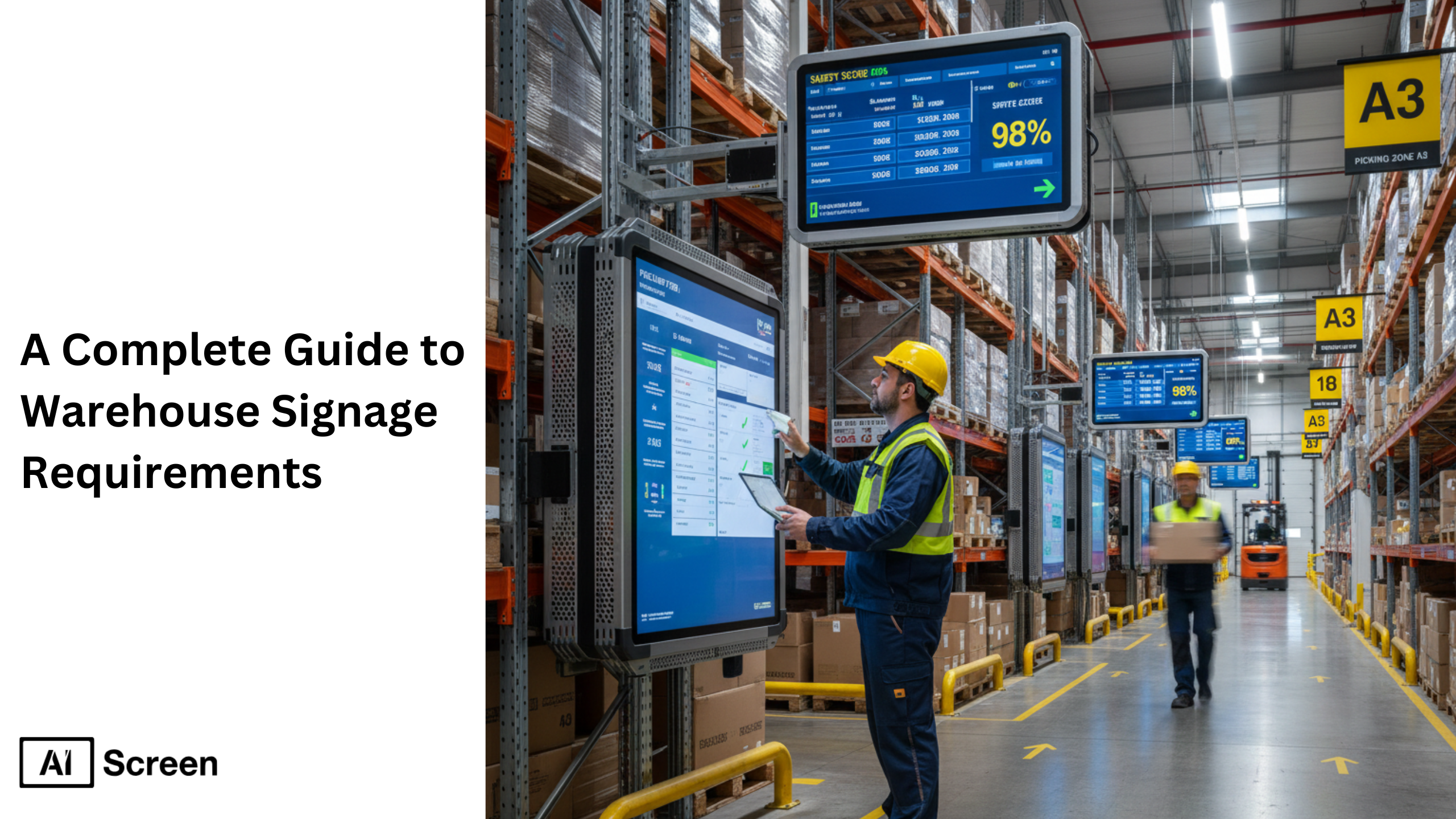
Proper warehouse signage requirements ensure workplace safety, reduce risks, and improve efficiency in industrial environments. Warehouse safety signs, personal protective equipment instructions, custom safety signs, hazard warning signs, and biological hazard signs play a critical role in preventing workplace accidents, addressing safety issues, and managing potentially hazardous conditions across different types of warehouse operations. According to data from the U.S. Bureau of Labor Statistics (BLS), the injury and illness incidence rate in the warehousing and storage sector was 4.8 cases per 100 full‑time workers in 2022, compared with the national private‑industry average of 2.7 per 100, underscoring the elevated risk in warehouses and highlighting the urgency for effective signage and hazard communication.
In this blog, you’ll find a detailed guide to warehouse signage requirements, what formats, materials, fonts, and placements work best, why each matter, and how to use signage to reinforce safety, compliance, and operational clarity in your warehouse environment.
Meeting warehouse signage requirements becomes far simpler when static boards work alongside dynamic screens. A cloud based digital signage software platform lets warehouse teams push updated hazard notices, forklift lane changes, and zone instructions to every display at once, so compliance messaging stays current without reprinting a single board.
What are the 5 Warehouse Requirements?
Warehouse requirements focus on safety, clarity, and compliance to ensure smooth operations and reduce workplace risks. These include using standardized sign formats, applying correct hazard headers, choosing readable fonts, selecting durable materials, and ensuring clear visibility across the facility.
Following these 5 requirements helps prevent accidents, improves communication, and maintains regulatory compliance in warehouse environments.
1. Required Sign Format
Warehouse signs must follow standardized formats to ensure safety compliance and clarity. OSHA (29 CFR 1910.145) requires safety signs to include a signal word and a clear hazard message, helping workers quickly understand hazardous conditions and hazard level.
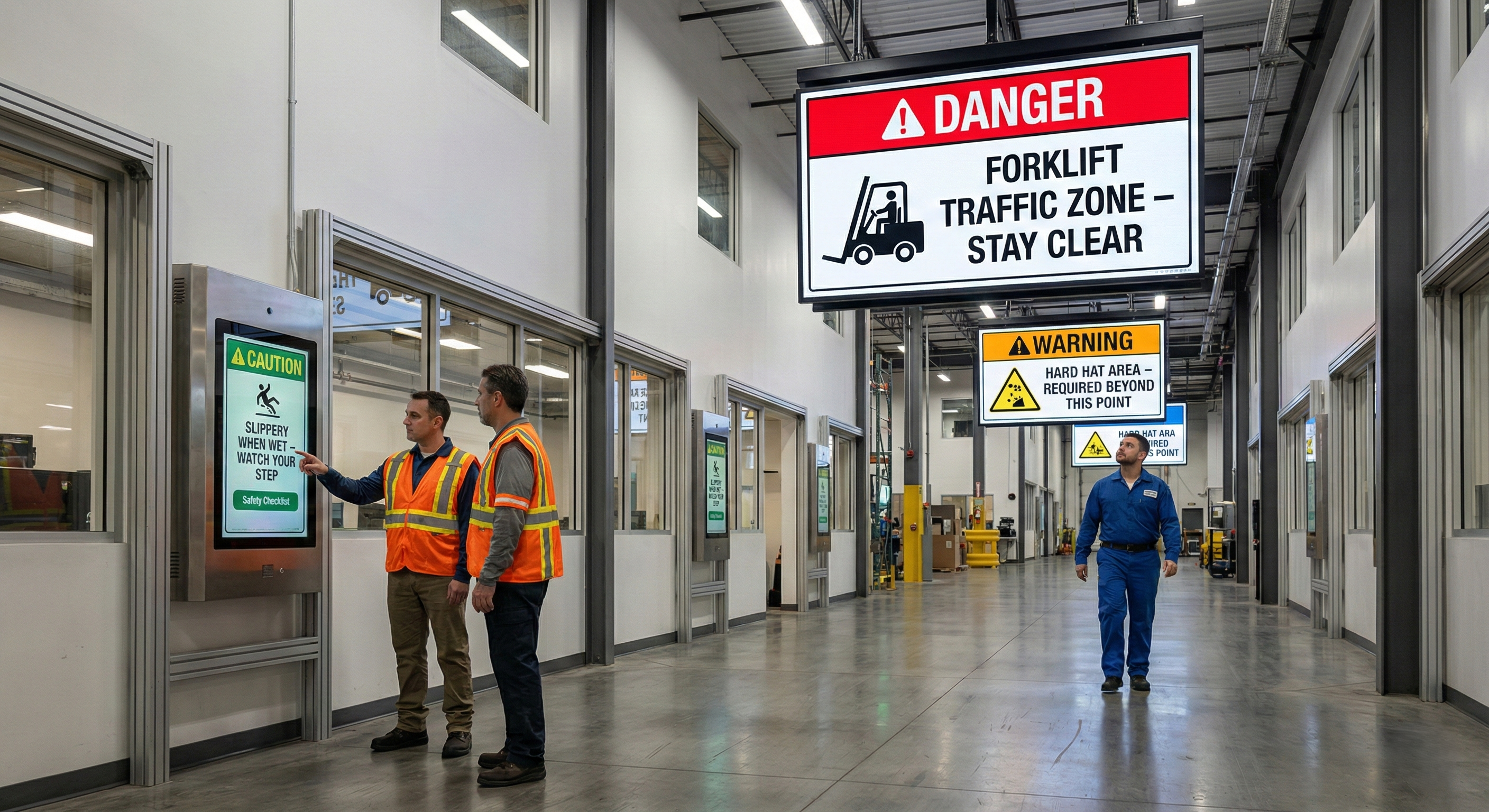
ANSI (American National Standards Institute) Z535 standards define layouts, colors, and ansi approved hazard symbol usage to improve recognition across facilities. This standardization ensures all signs posted communicate safety information clearly, regardless of experience level.
Using proper formats reduces confusion, improves workplace safety, and ensures compliance in high-risk warehouse environments.
2. Proper Use of Sign Headers
Correct sign headers immediately communicate the severity of risk and help prevent serious injury. ANSI classifies headers into DANGER, WARNING, and CAUTION, each representing a different hazard level.
- Danger signs: Immediate danger (red)
- Warning signs: Serious hazards (orange)
- Caution signs: Minor risks (yellow)
Color-coded hazard warning signs improve response time and reduce safety risk. This clarity helps workers avoid unsafe practices and react quickly to existing hazards in fast-moving warehouse operations. For better results, combine physical signage with digital displays and explore sustainable signage: eco-friendly way to connect to improve visibility while reducing waste.
3. Readable Font Choices
Readable fonts ensure safety messages are understood instantly, even from a distance. OSHA requires warehouse safety signs to be legible from at least five feet or more depending on the hazard.
Use simple sans-serif fonts like Arial or Helvetica with strong contrast to improve sign visibility. Clear typography helps overcome language barriers, reduces confusion, and ensures workers understand safety instructions without delay.
Avoid decorative fonts or small text, as they can obscure critical warnings and increase the risk of workplace accidents.
4. Approved Sign Materials
Warehouse signs must use durable material to withstand harsh environmental conditions such as dust, moisture, and heavy equipment movement.
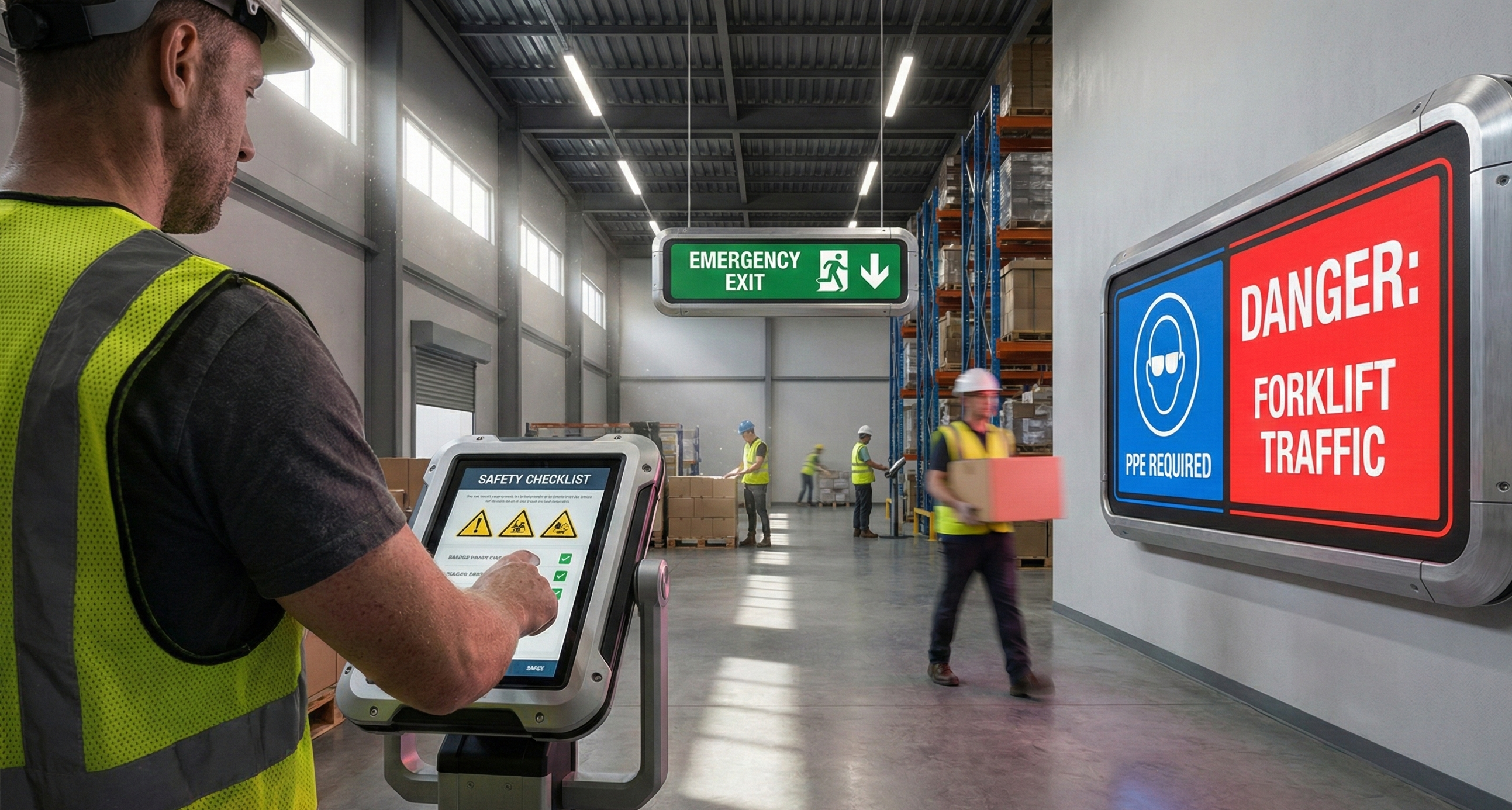
OSHA requires signs to have rounded or blunt corners to prevent accidental injury. Common materials include PVC, aluminum, and coated metals that resist wear and maintain visibility over time.
Durable warehouse signs ensure long-term effectiveness, reduce maintenance costs, and support consistent warehouse safety signage in demanding industrial environments.
5. Clear Sign Visibility
Clear visibility ensures workers see the right signs at the right time, reducing risks and improving response to potential hazards. Signs must be placed where they are not blocked by equipment or shelving. Use lighting, reflective materials, or glow signage for fire exits, emergency routes, and low-visibility conditions.
Proper placement near loading docks, pedestrian walkways, forklift traffic zones, and fire safety areas ensures relevance. Avoid sign clutter and too many signs, as it reduces effectiveness.


Why Is Warehouse Signage Important?
Warehouse signage is essential for safe, efficient, and compliant operations. It communicates safety information, guides movement, and reinforces safety protocols across the warehouse environment.
Reduces Workplace Injuries
Proper warehouse safety signs directly reduce accidents by highlighting hazardous conditions, unsafe practices, and immediate danger zones.
Signs for electrical fires, fire hazards, forklift traffic, and safety equipment like fire extinguishers and first aid kits (aid kits) alert workers before risks escalate.
Combining static signs with digital solutions improves visibility and ensures real-time updates, helping prevent accidental injury and improve overall warehouse safety.
Boosts Overall Warehouse Productivity
Clear warehouse signage improves warehouse efficiency by reducing confusion in inventory storage, picking, and navigation.
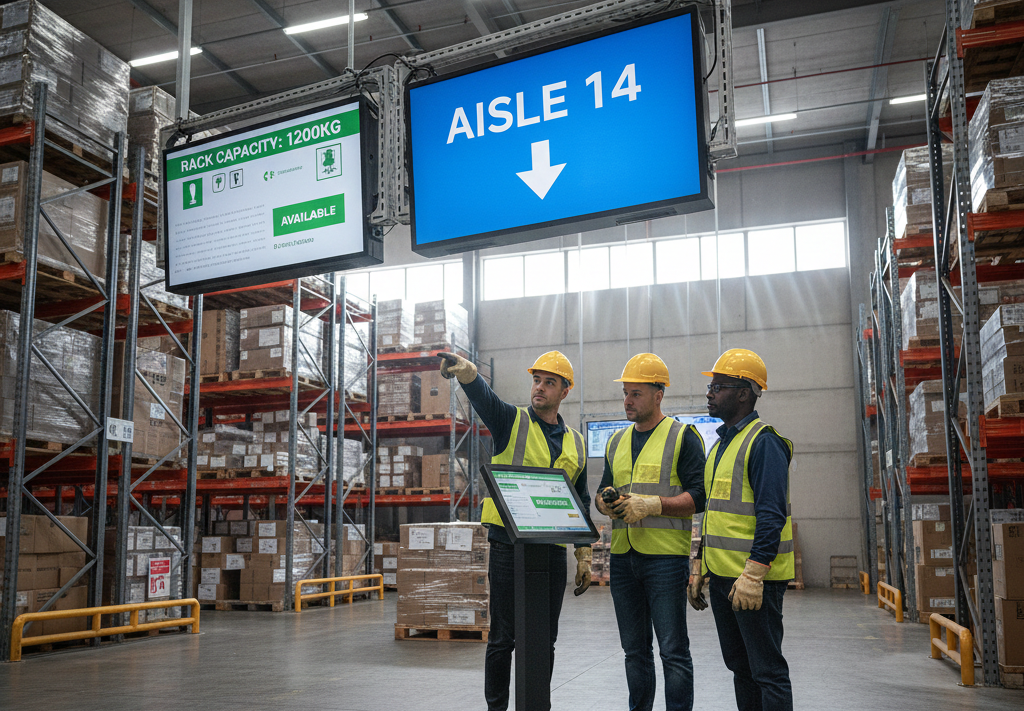
Directional signs, warehouse rack labels, floor tape, and vehicle routes guide workers efficiently, minimizing delays and errors. This structured flow reduces time wasted and improves operational speed.
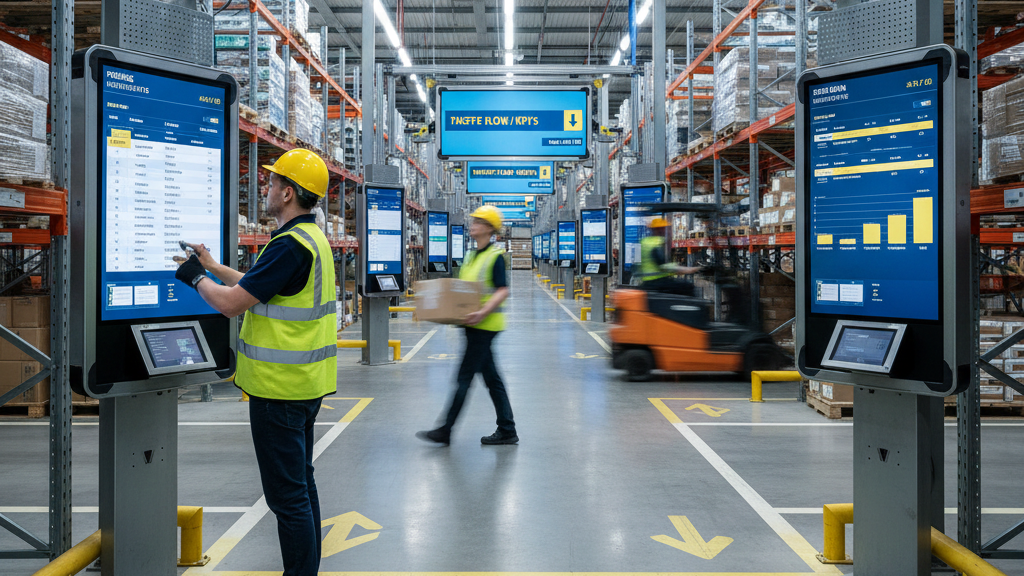
Using digital dashboards alongside signage further enhances productivity by keeping teams aligned with real-time updates and the latest digital signage internal communication trends.
Supports a Strong Safety Culture
Consistent safety signage builds a strong safety culture by reinforcing daily safety practices.
Visible safety instruction signs, warning signs, danger signs, and workplace safety signs remind workers of safety measures and emergency procedures.
Regular exposure to proper signage encourages accountability, reduces unsafe behavior, and strengthens long-term workplace safety habits.
Improves Supply Chain Operations
Warehouse signage improves supply chain accuracy by organizing storage and movement processes.
Aisle signs, dock door labels, inventory rack labels, and directional signs ensure correct product handling and reduce errors in shipping and receiving.
Accurate labeling and signage reduce delays, improve tracking, and deliver significant benefits across the supply chain.
Helps Protect Against Legal Liability
Proper signage helps meet regulatory compliance and reduces legal risks.
Displaying safety signs, hazard warning signs, exit signs, fire alarms, and emergency assembly points proves that the warehouse has taken steps to ensure safety.
Compliance with OSHA and ANSI standards protects businesses from liability and ensures adherence to safety regulations.
Supports Accurate Inventory Management
Clear signage improves inventory accuracy and reduces misplaced items. Warehouse rack labels, aisle markers, and storage signs ensure products are stored correctly and retrieved efficiently.
This reduces errors, improves workflow, and enhances the overall warehouse environment.
Prevents Processing Mistakes
Proper signage minimizes operational errors during picking, packing, and shipping. Using barcode labels, RFID signage, and informational signs reduces manual entry mistakes and improves accuracy.
Clear safety information and signage standardize processes and help workers follow correct procedures. A 2023 report by the U.S. Bureau of Labor Statistics reported over 2.6 million non‑fatal workplace injuries and illnesses in private industry, including warehouses and distribution centers
Meets Regulatory Compliance Standards
Warehouse signage must meet OSHA and ANSI standards for safety compliance. ANSI Z535 defines layouts, colors, and ansi approved hazard symbol usage, ensuring consistency across facilities.
Compliance ensures that all signage remains effective, visible, and aligned with occupational safety standards.
What Warehouse Signage Types Should You Include?
The types of warehouse signage to include cover safety, navigation, and operational efficiency across different types of warehouse environments. Proper signage ensures workers identify safety hazards, follow traffic flow, and comply with safety standards using clear universal symbols and structured layouts.
1. Safety Signage
Safety signage directly communicates hazards, rules, and emergency information to prevent accidents. Warehouse safety signs, warning signs, caution signs, and danger signs alert workers about safety hazards, hazardous materials, and equipment risks while guiding safe behavior.
These signs also identify critical fire safety equipment like fire extinguishers, first aid points, and aid stations, ensuring quick response during emergencies. Using universal symbols improves understanding, especially in fast-paced environments.
To enhance effectiveness, combine static signage with digital updates. For example, real-time PPE alerts and hazard updates can be managed efficiently, see how to set up digital workplace safety signage with templates? for structured implementation. This approach ensures safety messages stay current and aligned with general tag criteria and compliance standards.
2. Exit and Egress Signs
Exit and egress signs ensure safe evacuation during emergencies such as fires or power outages. These signs must remain illuminated and clearly visible to guide workers toward fire exits and safe zones.
Photoluminescent paths, directional signage, and evacuation maps improve visibility in low-light conditions. Including signage for fire safety, electrical hazard zones, and emergency routes ensures workers can respond quickly to dangerous situations.
Digital displays can further enhance evacuation guidance by providing real-time alerts and updated routes, improving workplace safety and reducing risks during emergencies.
3. Dock Door Identification
Dock door signage ensures smooth movement of goods and vehicles, reducing confusion and accidents. Clear labeling of inbound and outbound areas helps manage traffic flow and improves coordination.
Large, reflective, and weather-resistant signs are essential, especially in outdoor conditions. These signs also help highlight safety hazards, vehicle routes, and loading procedures.
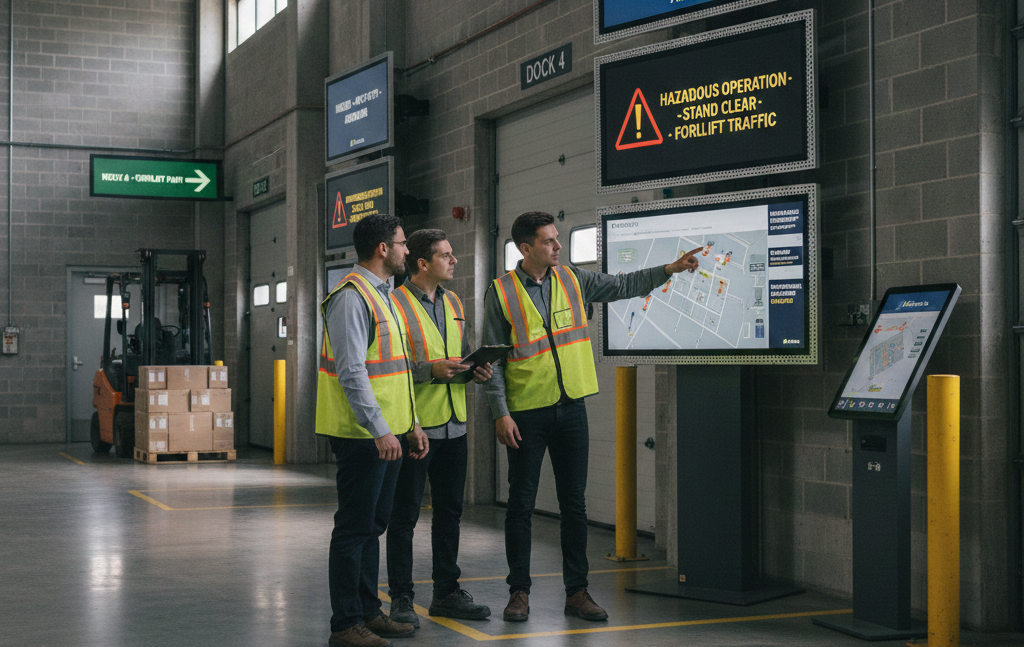
With digital integration, real-time dock assignments and updates help reduce delays and improve efficiency. This ensures warehouse signage supports both operational flow and fire safety awareness, especially in high-traffic areas.
4. Row and Aisle Markers
Row and aisle markers improve navigation and inventory accuracy by clearly labeling storage areas. These signs must be visible from a distance and placed at all entry and exit points.
Using floor tape, aisle markers, and rack labels, warehouses can guide movement and reduce confusion in busy environments. These markers also support safe navigation around forklifts and equipment.
Clear labeling helps workers avoid errors, follow safe paths, and reduce risks related to electrical hazard zones and other safety hazards, improving overall warehouse efficiency.
5. Hanging Overhead Signs
Hanging overhead signs provide high-level visibility across large warehouse spaces. Installed from ceilings, they help workers quickly identify zones, storage areas, and workflows.
These signs can include barcodes or RFID tags for faster scanning and inventory tracking. They also improve communication of safety hazards, operational instructions, and fire safety zones.
Digital overhead displays add flexibility by showing real-time updates, alerts, and performance data. This ensures warehouse signage remains dynamic, visible, and aligned with safety and operational requirements.
Why More Warehouses Are Turning to Digital Displays?
Digital displays provide real-time communication, making them more effective than static signage in dynamic warehouse environments. They allow instant updates for safety hazards, electrical hazard warnings, fire safety alerts, and operational changes, ensuring workers always have accurate information.
By integrating digital signage with centralized control systems, warehouses can manage multiple screens efficiently and maintain consistent messaging across all areas.
This approach improves visibility, reduces errors, and ensures compliance with safety standards while supporting sustainable practices by minimizing printed materials and extending signage lifespan.
How Digital Signage Can Reduce Errors and Speed Up Operations
As we already read in this article, a complete guide to warehouse signage requirements, digital signage software improves communication, automates alerts, supports training, and reduces manual labeling mistakes. Warehouse digital signage allows operators to broadcast updated instructions, safety warnings, forklift signs, and hazard alerts across multiple zones in real time.
By using digital warehouse signs, AIScreen helps prevent workplace accidents, ensures proper signage placement, and alerts workers about immediate danger, unsafe practices, and traffic directions. Integrating safety measures, directional signs, row signs, exit signs, and caution signs into digital workflows reduces errors in inventory management, dock door operations, and equipment use, creating a safer and more productive warehouse environment.
Do Warehouse Signs Need ADA Compliance?
Beyond OSHA and ANSI, many facilities also fall under accessibility rules, and warehouse signage requirements often overlap with those standards. Reviewing ada digital signage requirements helps you confirm that fonts, contrast, mounting height, and tactile elements serve every worker, including those with visual or mobility needs, so your signage program stays both safe and inclusive.
Accessible warehouse signage should also use clear wording, consistent symbols, readable type sizes, and strong visual contrast in high-traffic areas. When digital displays support these principles, facilities can share safety instructions, wayfinding information, and emergency updates in formats that are easier for a wider range of workers to understand and use.
How Can AIScreen Support Warehouse Signage Requirements?
Warehouse signage requirements help facilities protect workers, improve navigation, support compliance, and keep daily operations moving efficiently. Using the right signs in the right zones, combining durable static signage with digital displays, and reviewing signage regularly against OSHA, ANSI, and accessibility standards can create a safer and more organized warehouse environment.
As a leading provider, AIScreen helps businesses strengthen warehouse signage requirements with centralized digital signage management, real-time content updates, and flexible screen control. AIScreen can display hazard alerts, safety instructions, operational updates, and emergency messages across multiple areas, helping warehouse teams keep critical information visible, current, and consistent.
Frequently Asked Questions
What are the mandatory warehouse signage requirements for safety compliance?
The mandatory warehouse signage requirements for safety compliance include installing clearly visible safety signs, health and safety signs, and OSHA signs throughout the facility. A proper guide to warehouse signs ensures workplace safety signs, warehouse safety signage, and signs indicating potential hazards are placed at key locations such as loading docks, forklift lanes, and high-risk areas.
How do warehouse signage requirements help prevent accidents and injuries?
Warehouse signage requirements prevent accidents and injuries by clearly communicating safety measures, alerting workers to immediate dangers, and providing instructions via safety signage and workplace safety signs. Properly placed health and safety signs, admittance signs, forklift signs, and safety signs indicate potential hazards at loading docks and throughout the warehouse environment.
Why must warehouses use standardized symbols and labels on safety signs?
Standardized symbols and labels on safety signs are crucial because they provide clear, universally recognizable warnings and instructions for warehouse safety. Safety signage, OSHA signs, and health and safety signs with standardized colors, such as yellow background caution signs or orange background danger signs with white letters, help forklift operators and other personnel quickly identify hazards and follow proper safety measures.
Can warehouses customize signage while still following OSHA or ANSI rules?
Yes, warehouses can customize signage while following OSHA or ANSI rules by maintaining compliance with safety regulations and OSHA signage requirements. Customized safety signs, workplace safety signs, admittance signs, and forklift signs can incorporate yellow background caution, orange background warnings, and white letters while adhering to standardized formats.
How much does it cost to install or replace required warehouse signage?
The cost to install or replace required warehouse signage varies based on materials, size, and the number of safety signs, workplace safety signs, and OSHA signs needed throughout the warehouse. Investing in a guide to warehouse signs ensures warehouse safety signage, health and safety signs, admittance signs, and forklift signs are properly installed in key areas such as loading docks and high-risk zones.
