
What Is The Importance of Safety Signage in Your Workspace
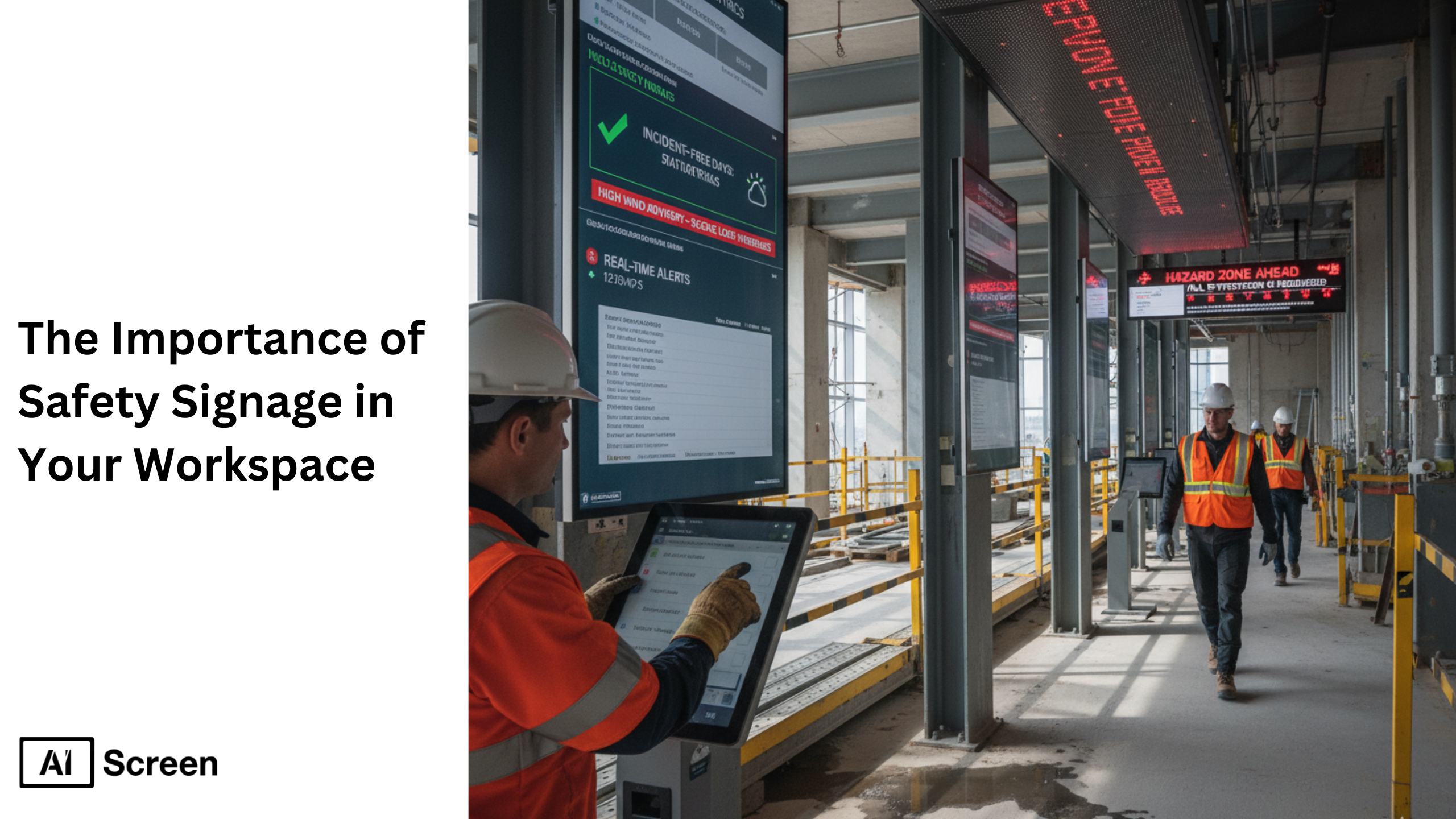
Safety signage is a cornerstone of workplace safety, serving as a visual guide for hazard prevention, legal compliance, and clear communication. These safety signs protect employees, visitors, and contractors by clearly communicating potential hazards, required actions, and safe practices. By installing the right workplace safety signs, organizations reinforce a proactive occupational safety culture. According to the U.S. Bureau of Labor Statistics, private industry employers reported 2.6 million nonfatal workplace injuries and illnesses in 2023, underscoring how essential effective safety communication remains.
In this blog, we explore the key benefits of safety signage, the main types of safety signs, and how digital signage is evolving safety management in modern workspaces, highlighting how real-time updates, remote content control, and integration with IoT systems can transform risk communication.
Moreover, safety signage helps ensure legal compliance. OSHA and ANSI require specific sign formats, placement, and wording to meet regulatory standards for warning signs, danger signs, and other mandatory communication. Finally, consistent signage builds a culture of safety awareness, reminding everyone in the workplace that occupational safety is a shared responsibility. Modern digital signage software makes it easier to keep these mandatory messages visible and current across every zone.
Why are Safety Signs Important in the Workplace?
Safety signs are important in the workplace because they act as a first line of defense, warning people before accidents happen. They reduce risk by alerting everyone to immediate hazards and unsafe practices, helping prevent injuries. According to the U.S. Bureau of Labor Statistics, private industry employers reported 2.8 million nonfatal workplace injuries and illnesses in 2022, illustrating why clear workplace safety signage is critical for accident prevention.
1. Prevention of Accidents and Injuries
First and foremost, safety signage reduces the likelihood of workplace injuries and accidents. Every year, there are about 2.8 million nonfatal workplace injuries or illnesses in the United States. Many of these cases are preventable by reinforcing proper safety communication and signage.
Employees are more alert to workplace hazards and can respond promptly and appropriately when incidents do occur, reducing injuries like slips, falls, being struck by objects, and even electrocution. This is especially true in construction sites, manufacturing floors, and large office environments.
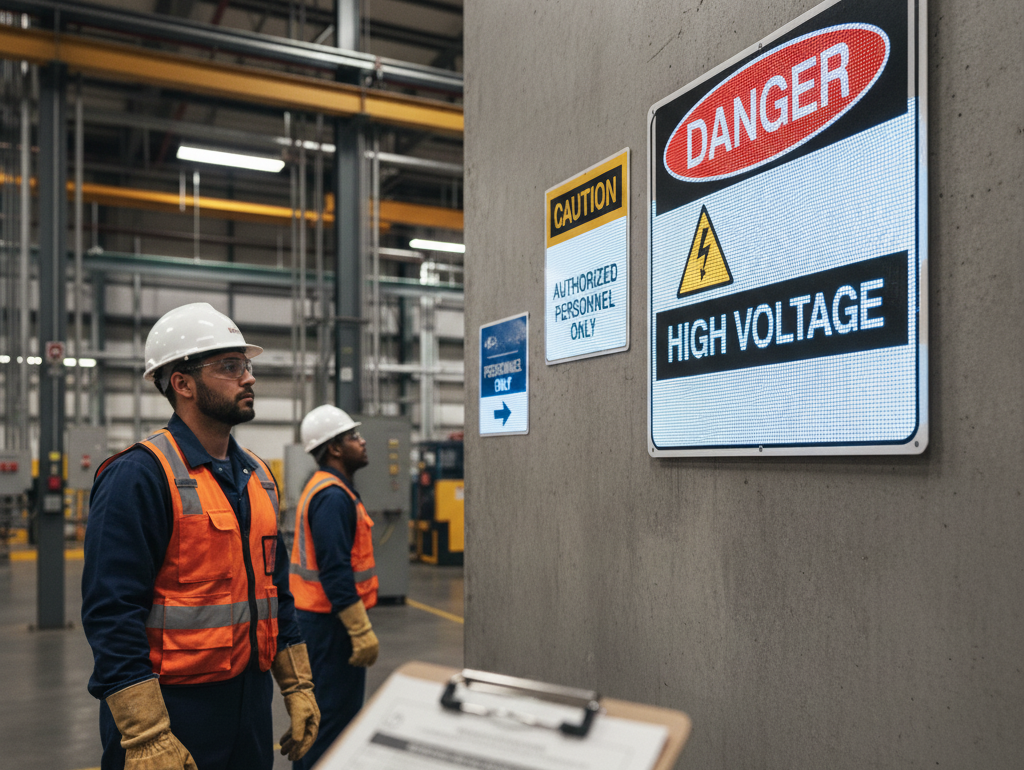
Imagine a construction site where high-voltage equipment is stored: a danger sign clearly labeled “High Voltage” ensures every worker knows to stay cautious. In a manufacturing plant, caution signage near wet floors or equipment can prevent moderate injuries.
In an office, signs reminding people to report spills or wear personal protective equipment help avoid trips and falls. By drawing attention to risk, safety signs play an active role in preventing accidents.
2. Regulatory Compliance
Safety signage also plays a critical role in regulatory compliance. Standards set by ANSI Z535 and OSHA’s 29 CFR 1910.145 outline exactly how safety signs must look, where they should be placed, and what wording they must use.
For example, OSHA requires that proper signage must be visible at all times when work is being done in at-risk areas (OSHA 1926.200(a).
Failing to comply with these requirements can lead to serious penalties, because safety signs help ensure compliance with OSHA standards and requirements.
Organizations that invest in standardized safety signage not only reduce liability but also reinforce a consistent safety message across their worksites. With signs that meet legal specs, from signal words (“Danger”, “Caution”) to shape and color, they demonstrate their serious commitment to occupational safety and health.
3. Workplace Integrity
Maintaining safety signage fosters trust and responsibility within the organization. The number one responsibility of any operation is the health and safety of its workforce. Safety signs protect employees and support a safe, secure work environment.
When a company stays up-to-date on OSHA signage standards, it signals that leadership values every individual’s well-being.
This kind of consistent messaging builds a positive safety culture. Employees feel cared for; visitors and contractors understand that safety isn’t a box-check but a practice.
By showing respect for workplace safety rules, organizations demonstrate their integrity and reinforce a shared sense of responsibility, from management down to frontline workers.
4. Enhanced Security
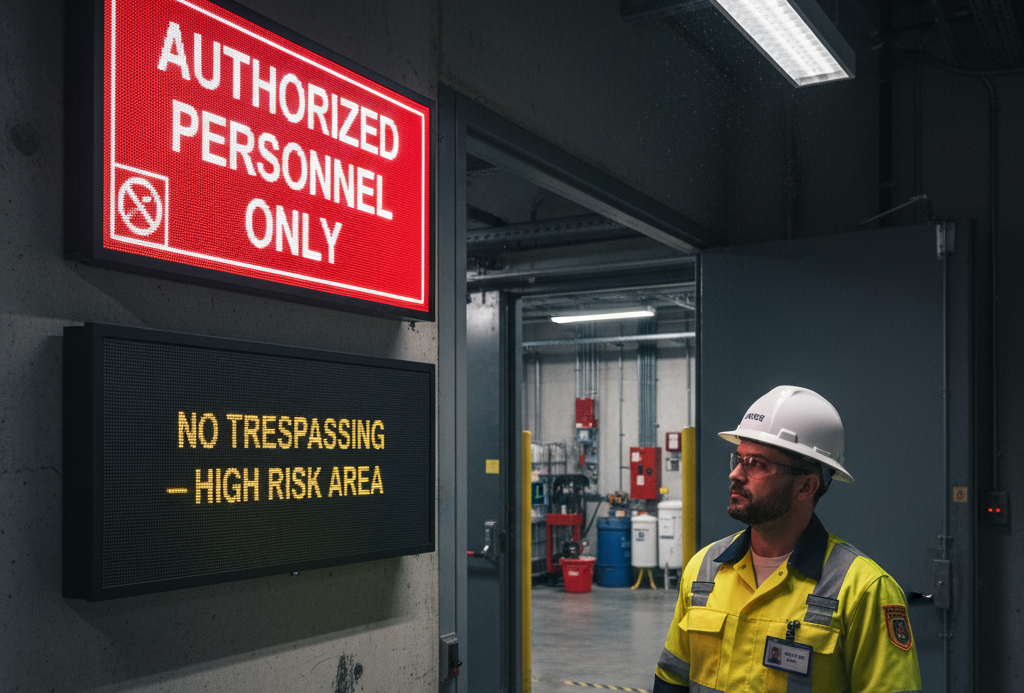
A safety sign’s main function is to keep employees safe, but signs are also used to enforce security. For example, admittance signs clearly designate prohibited areas (“Authorized Personnel Only”) to deter unauthorized entry, theft, or worse.
In an industrial facility or restricted area, these security-oriented safety signs help control access.
During emergencies, fire safety signage guides personnel to fire extinguishers, emergency exits, and alarm points, providing visual cues when every second counts.
This dual role, safety plus security, makes signage a powerful tool in managing risk and safeguarding both people and property.
5. Employee and Visitor Awareness and Education
Safety signage also doubles as a visual training and education tool. Especially in high-risk sectors like manufacturing, engineering, or healthcare, safety signs and clear hospital safety digital signage reinforce safety protocols, guide new employees, and support hazard recognition.
For visitors, clear warning signs and general safety signage communicate important emergency procedures or required personal protective equipment.
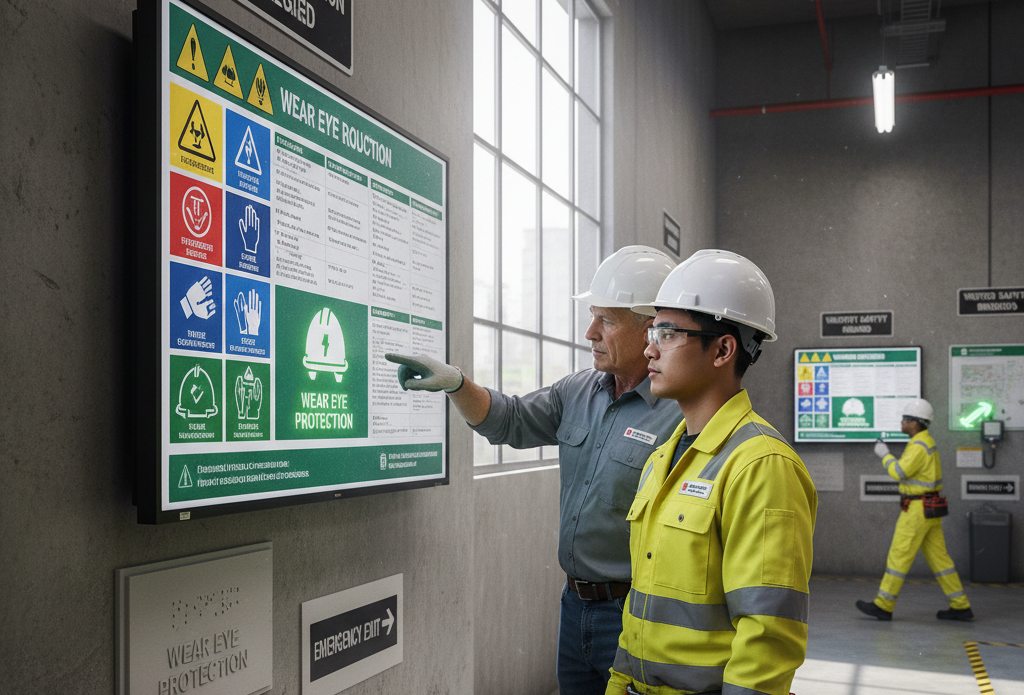
During orientation or safety drills, signs can act as “on-the-spot training,” ensuring information sticks. In a crisis, signs direct employees and guests to eyewash stations, exits, or assembly points.
By educating quietly, safety signage contributes to long-term accident prevention and reinforces a culture where unsafe practices aren’t ignored.


What Types of Safety Signs Matter Most?
The important types of safety signs to have in your workplace fall into several core categories defined by OSHA and widely recognized by the safety and health administration.
These sign types communicate different levels of urgency, indicate potential hazards, and specify the required action to prevent minor or moderate injury, severe harm, or fatalities.
Each category uses a distinct color and formatting structure, ensuring clarity in risk management and enabling employees to interpret the accident prevention tags correctly based on urgency.
Danger Signs
Danger signs are used for immediate hazards that may result in serious injury or death. Examples include “High Voltage,” “Radiation,” or “Dangerous Chemicals,” marking the most severe hazards present at a worksite.
These signs are printed with the word “Danger” in a red rectangle placed at the top, using black and white contrast for maximum visibility.
As defined by OSHA, this is considered an accident prevention tag that must alert employees instantly when a potential danger or immediate threat exists.
The design typically features a safety alert symbol and follows strict standard practices to reduce injury and reinforce safe procedures in signs in the workplace.
Caution Signs
Caution signs represent the second classification of official OSHA signage and are used when a potential hazard could lead to minor or moderate injury if ignored.
These tags are also designed as accident prevention tags, requiring attention before a risk escalates.
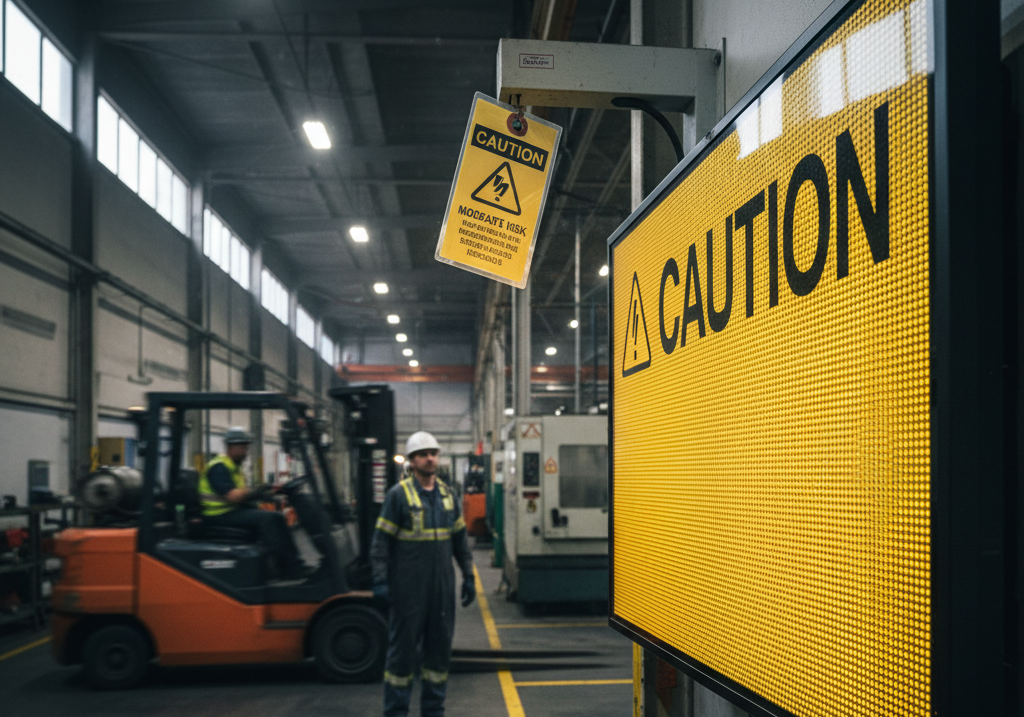
They must include the word “Caution” in uppercase black font displayed on a yellow background, often featuring an inverted triangle and an accompanying safety alert symbol.
The purpose of caution signage is to give workers advance awareness before reaching an unsafe zone, making it a vital tool in preventing unsafe practices.
General Safety Signs
General safety signs fall into the third major OSHA category and serve to instruct, reinforce best practices, and provide general safety information signs for safety equipment, emergency phones, or first aid kits.
These signs support safety information delivery and are integral for everyday communication in areas where the risk level is low but awareness is essential.
Typically, these mandatory signs use green or black text on a white or green background and may not require a safety alert symbol.
They reinforce proper behavior and support ongoing employee education, especially in relation to cleanliness, health stations, and emergency response protocols.
What Other Safety Signs Should You Know?
Beyond the primary OSHA-classified signs, several secondary signage categories improve comprehensive risk management and safety visibility throughout the workplace. These are crucial for detailed instruction, access control, and emergency responses, enhancing the effectiveness of custom signs depending on safety requirements.
Safety Instruction Signs
Safety instruction signs provide instructions on proper equipment use, shutdown procedures, or workplace hygiene. These signs typically feature a white background with a green upper panel and white lettering. Their messaging supports employees in following correct procedures, which helps avoid potential hazards and aligns with health administration requirements.
Admittance Signs
Admittance signs regulate physical access to restricted areas using direct messaging such as “No Trespassing” or “Authorized Personnel Only.” These signs help prevent employees or visitors from unknowingly entering a high-risk environment and serve as an early warning response for potential dangers. This is especially helpful for securing areas containing critical safety equipment or chemical storage.
Fire Safety Signs
Fire safety signage highlights areas associated with fire prevention and emergency response, including fire alarms, extinguishers, smoke masks, hoses, and exit signs. These signs use bright red backgrounds with white letters or fire graphics. Notably, they do not require command words like “Caution” or “Warning,” as their visual impact is strong enough to indicate urgency. Fire signage falls under emergency fire fighting equipment or prohibitory fire signs, reinforcing compliance without ambiguity. Learn more about where to place emergency exit signage.
Non-Hazard Signs
Non-hazard signage communicates safety information with notice signs related to directional guidance, assembly points, evacuation paths, and general workflow support. These signs do not reference hazards but are essential for maintaining safety order, particularly during facility emergencies such as fire drills or evacuations.
How Does Digital Safety Signage Help?
Digital signage improves safety communication and awareness by replacing static caution signs and traditional communication with dynamic, real-time alerts designed to protect workers and visitors.
Instead of relying solely on typically printed or typically located signs in the workplace, modern digital signage displays visual alerts, training instructions, and emergency notifications instantly across multiple locations. Interactive layouts help employees better understand indicating situations that may require immediate action, such as exposure to hazards or malfunctioning emergency equipment.
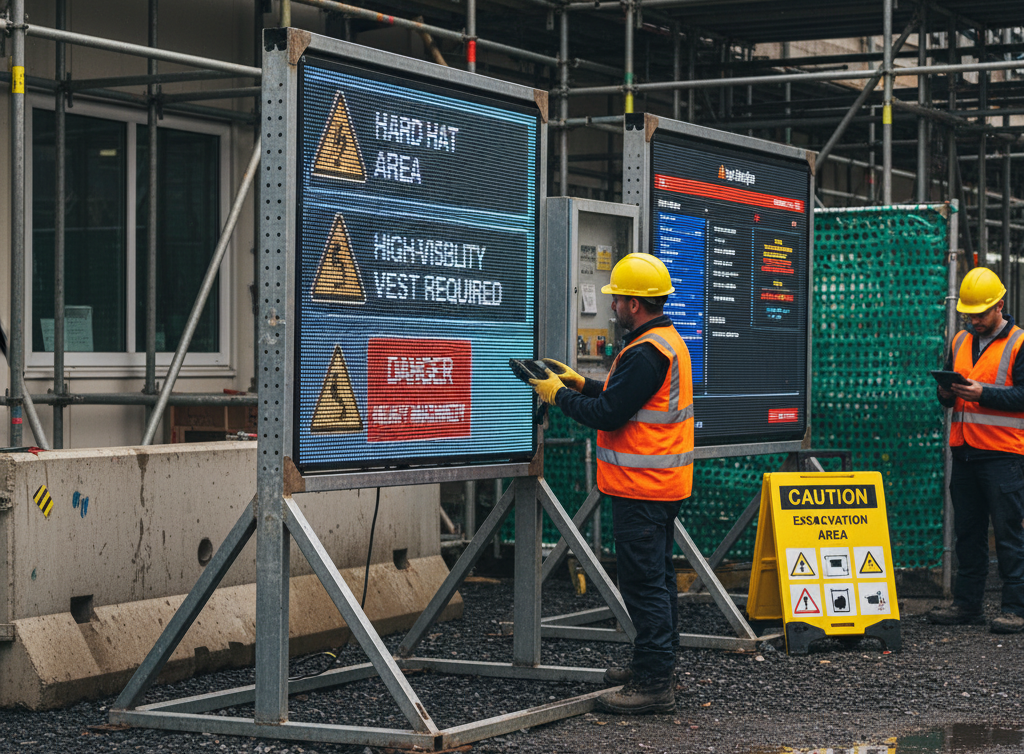
This technology allows organizations to remotely install general safety signage and update content without physically replacing boards, ensuring the signage remains compliant with national standards and follows frameworks such as the OSHA official sign category.
Many other safety signs, including the inverted triangle panel shape with a yellow panel background and black exclamation mark, can be digitally replicated or adapted for additional clarity. Integrating IoT sensors enables automated hazard detection and dissemination of alerts, reducing reaction time in critical scenarios.
According to Harvard T.H. Chan School of Public Health, effective workplace communication and real-time alert systems can reduce accident risk by up to 30%, reinforcing safety awareness and prevention strategies (Harvard, 2022).
This statistic supports the need to move beyond the third most prevalent reason for workplace accidents, miscommunication, and adopt real-time digital signage to enhance safety measures.
Real-Time Safety Updates with Digital Signage Systems
Real-time safety updates with digital signage systems deliver immediate hazard alerts, weather warnings, and safety reminders to employees, helping mitigate risks in fast-paced environments. Unlike plain white background posters or caution signs that may be overlooked, digital signage can attract immediate attention through visuals, movement, and sound across strategic locations where workers are active.
These systems can be integrated with sensor-based alert mechanisms that automatically display safety notifications if risk thresholds are exceeded. For instance, if temperature or gas levels reach dangerous limits, digital signage instantly activates emergency guidance. Dashboards help track compliance, train teams on safety protocols, and support corrective action, reinforcing what we discussed earlier in “The Importance of Safety Signage in Your Workspace”, that continuous visibility is critical for accident prevention.
Digital systems support the three classifications of safety warnings (danger, warning, caution), adapting design elements such as the inverted triangle panel shape, color schemes, and high-contrast layouts compliant with compliant fire signage placement and industry requirements. This ensures that, even when messages are digitally displayed, they retain the structure and meaning required under safety regulations.
How Do Fire Safety Signs Fit In?
Fire protection deserves its own focus within any signage strategy, since these signs guide people to extinguishers, alarms, and exits when speed matters most. Understanding what are the categories of fire signage helps facility managers place the right visual cues in the right spots, from prohibitory notices to emergency equipment markers. Pairing that knowledge with digital displays keeps fire guidance clear and current throughout the building.
Digital signage can further support fire safety by displaying evacuation instructions, emergency alerts, assembly point information, and temporary route changes in real time. This added flexibility helps facilities reinforce permanent fire safety signs and communicate updated instructions quickly during drills, maintenance, or actual emergencies.
How Can AIScreen Strengthen the Importance of Safety Signage?
The importance of safety signage lies in its ability to protect people, communicate hazards clearly, and help workplaces support regulatory compliance. Combining traditional safety signs with digital signage keeps warnings, instructions, and emergency information visible, current, and easier to act on across different areas of a facility.
As a leading provider, AIScreen helps organizations strengthen safety communication through centralized digital signage management, real-time updates, and flexible content scheduling. AIScreen can display safety reminders, emergency alerts, hazard notices, and location-specific instructions across multiple screens, helping businesses maintain clearer and more consistent workplace communication.
Frequently Asked Questions
What is safety signage?
The definition of safety signage refers to visual or digital guidelines used to communicate hazards, safe practices, and emergency procedures within worksites. These safety signs may include caution signs, compliant fire signage, and many other safety signs designed using standardized formats such as yellow panel background and black exclamation mark.
How does safety signage help prevent workplace accidents?
Safety signage helps prevent workplace accidents by delivering highly visible alerts that signal risks and provide immediate instruction, thereby reducing reaction time. Whether typically printed or displayed digitally, these safety signs designate hazardous zones and promote safe actions to minimize injury probability.
Why is safety signage critical for protecting workers and visitors?
The reason safety signage is critical lies in its ability to indicate situations where danger may be present and offer guidance to ensure safe navigation throughout the facility. Proper signs in the workplace, whether general safety signage or caution signs, are vital to avoid confusion and prevent incidents that could be categorized as the third most prevalent reason for injuries.
Can customized safety signs be compliant with national standards?
Yes, customized safety signs can be compliant if they follow officially recognized frameworks such as OSHA official sign category and apply regulated formats. Whether digitally displayed or typically printed, they must adhere to mandated shapes (such as inverted triangle panels), panel color codes, and icon consistency to meet safety regulations.
Is safety signage required by law in all workplaces?
Yes, the requirement for safety signage in all workplaces depends on the risk classification of the facility, but most industries are legally obligated to install general safety signage to protect employees and visitors. These signs must be strategically located, and digital signage further ensures consistent visibility and compliance with national safety standards.
