
What Is the Best Retail Digital Signage Planning Example? Real-World Success Stories
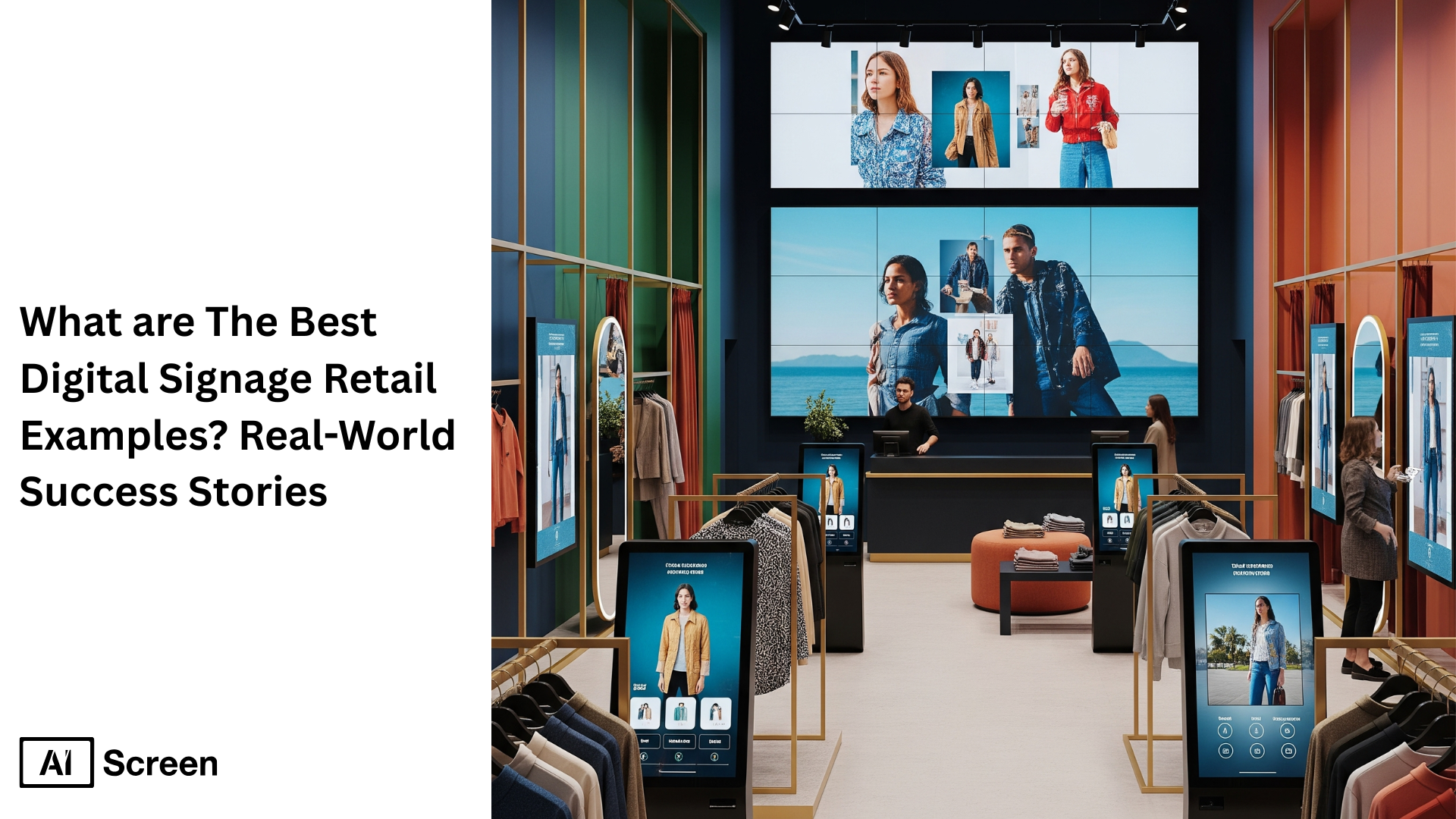
Digital signage in retail offers a powerful way to deliver dynamic and engaging content that captures attention and drives sales. From interactive kiosks and fitting-room mirrors to digital menu boards, digital signage screens, and immersive video walls, retailers now have countless ways to transform the in-store retail environment. These digital signage examples not only provide information but also improve customer engagement by combining visuals with interactive elements that make shopping more personalized and exciting. According to a 2024 study by POPAI, 62% of shoppers make impulse purchases after seeing appealing in-store signage displays.
In this blog, we explore how brands are using digital signage systems and digital signage technology to boost sales and strengthen their presence both offline and across social media platforms. By implementing a digital signage strategy that blends interactive digital displays, digital kiosks, and electronic displays, businesses can solution effectively conveying promotions, improve brand storytelling, and ensure that using digital signage becomes a long-term driver of success.
What is Digital Signage for a Retail Store?
Digital signage for a retail store often referred to as retail digital signage, means using digital displays and digital signage screens to present dynamic, engaging content such as videos, promotions, and product information within the retail environment. These electronic displays enhance customer engagement by capturing attention where static signage is often overlooked. In-store retail digital signage strengthens brand visibility, guides shoppers through the store, and helps them find what they need faster, creating a smoother and more satisfying shopping experience.
According to Digital Signage Today, 57% of businesses report that digital signage has helped improve customer service, highlighting how impactful retail digital signage can be in influencing customer behavior and boosting cross-channel sales in real-world settings.
Digital signage content benefits retail stores in multiple ways. Retail digital signage enhances engagement by delivering relevant, timely messages that resonate with shoppers and reduce friction in the buying journey. With the right digital menu boards or interactive kiosks, customers face less confusion, receive better product suggestions, and make faster purchasing decisions. Retail environments that adopt these solutions ultimately simplify operations for both customers and staff by delivering promotions and information clearly and in real time.
What are The Best Digital Signage Retail Examples?
In today’s fast-paced retail landscape, businesses are constantly seeking innovative ways to capture customers’ attention, enhance their shopping experience, and boost sales. Digital signs have emerged as a powerful tool in achieving these objectives.

This technology allows retailers to deliver dynamic, engaging content to their target audience—whether at the point of sale, in pop-up stores, retail showrooms, or across online and offline environments.
According to AIScreen experts, four case studies demonstrate how digital signage software can boost retail outcomes by up to 40%, from customer engagement to sales.
Based on AIScreen’s experience, the impact of digital signage in retail is significant, as shown in multiple successful case studies.
In this article, we’ll explore four real-world examples that showcase how digital signage transforms the retail industry.
1. Digital Signage at the Point of Sale
Digital Signage Solution: McDonald’s
Point-of-sale areas are critical in the retail industry, as they represent the final opportunity for retailers to influence customers’ purchasing decisions.

In this case study, we examine how McDonald’s, a global fast-food giant, leveraged digital signs to transform its ordering process and enhance the customer experience.
Background
McDonald’s has always been at the forefront of adopting innovative technology to improve its operations and customer service.

2019 the company introduced digital signage kiosks in its restaurants as part of its “Experience of the Future” initiative. These kiosks allowed customers to place their orders digitally, customize their meals, and pay without the need for traditional cashiers.
Digital Signage Implementation
McDonald’s installed large touchscreen digital signage kiosks at its restaurant entrances and strategically placed them within the dining area. The user-friendly interface featured vivid imagery of menu items, nutritional information, and customization options.

Customers could browse the menu, select their choices, and make payments using various payment methods, including credit cards, mobile wallets, and cash.
Impact
1. Improved Order Accuracy: With examples in-store retail digital signage systems, customers could place their orders precisely, reducing the likelihood of order errors that often occur during traditional order-taking processes.
2. Faster Service: The self-service kiosks expedited the ordering process, resulting in shorter wait times for customers. This led to increased customer satisfaction and reduced lines at the counters.
3. Increased Upselling: The digital kiosks were programmed to suggest upsell items based on the customer’s choices, leading to higher average transaction values.
4. Enhanced Customer Experience: McDonald’s provided a more interactive and personalized customer experience, contributing to a positive brand image.
2. Digital Signage in Pop-Up Stores
Digital Signage Solution: Adidas Retail Stores

Pop-up stores rely heavily on visual impact and first impressions, making them a perfect example of how to create a modern storefront digital signage setup that attracts attention, builds excitement, and drives immediate engagement. Adidas, a renowned sportswear brand, uniquely utilized examples of digital signage to maximize the impact of its pop-up store.
Background
Adidas aimed to create a memorable shopping experience for its customers by opening a pop-up store in a high-traffic location during the holiday season. The challenge was to stand out in a crowded marketplace and leave a lasting impression.
Digital Signage Implementation

Adidas integrated digital signage screens throughout the pop-up store, focusing on several key areas:
1. Product Displays: High-definition digital screens showcased Adidas’ latest products, allowing customers to see detailed product information, pricing, and real-time availability.
2. Interactive Mirrors: The fitting rooms were equipped with digital mirrors that allowed customers to virtually try on different clothing items and see how they looked before making a purchase.
3. Social Media Integration: Digital displays encouraged customers to share their shopping experiences on social media, incorporating user-generated content into the store’s digital signage screens.
4. Real-Time Promotions: Adidas used digital signage ideas to display limited-time promotions, flash sales, and exclusive offers to drive impulse purchases.
Impact

1. Increased Foot Traffic: The eye-catching digital sign content attracted more customers to the pop-up store, resulting in higher foot traffic and increased sales.
2. Enhanced Customer Response: The interactive mirrors and product displays engaged customers and made their shopping experience more enjoyable and memorable. Also read our article, Phygital in Retail: Strategies and Real-World Examples, to learn more about this subject.
3. Social Media Buzz: Customers shared their experiences on social media, creating a buzz around the pop-up store and generating free marketing through user-generated content.
4. Real-Time Marketing: Adidas could change promotions and displays in real time, adapting to customer preferences and market trends.
3. Digital Signage Joining Online and Offline Retail
Digital Signage Solution: Sephora Digital Signage Displays

Sephora, a leading cosmetics retailer, recognized the need to bridge the gap between its online and offline shopping experiences. The company turned to digital signs to seamlessly integrate its digital and physical retail channels.
Background
Sephora operates both physical stores and an online e-commerce platform. The challenge was to provide customers with a consistent and personalized shopping experience, regardless of whether they shopped in-store or online.
Digital Signage Implementation

Sephora implemented a multi-faceted retail stores digital signage retail content strategy to connect its online and offline retail:
1. In-Store Digital Screens: Sephora’s physical stores featured digital screens that displayed product information, customer reviews, and video tutorials. Customers could use the screens to access the online store and browse additional product options.
2. Personalized Recommendations: Sephora used customer data and purchase history to provide personalized product recommendations through digital signage content, both in-store and on its website.
3. Interactive Try-On: Some stores introduced augmented reality (AR) mirrors that allowed customers to try on makeup products, enhancing the in-store experience virtually.
4. Seamless Checkout: Customers could seamlessly transition from in-store shopping to online purchases and vice versa, with access to their shopping carts and wish lists across channels.
Impact

1. Increased Cross-Channel Sales: Sephora’s retail stores’ digital signage strategy encouraged customers to explore both online and offline offerings, leading to increased sales across channels.
2. Enhanced Customer Response: The personalized recommendations and interactive try-on experiences created deeper customer response and loyalty.
3. Streamlined Shopping Experience: The seamless integration of online and offline shopping made it convenient for customers to switch between channels, improving their overall shopping experience.
Sephora’s innovative approach to merging retail stores’ digital signage with its retail operations boosted sales and strengthened its brand as a leader in the cosmetics industry.
4. Digital Signage and the Retail Showroom
Digital Signage Solution: Tesla Digital Signs

Retail showrooms are crucial in showcasing products and creating a memorable brand experience. Tesla, a pioneer in electric vehicles, has redefined the concept of a retail showroom by incorporating retail store digital signage in an immersive way.
Background
Tesla sought to educate potential customers about its electric vehicles and cutting-edge technology while offering a unique showroom experience. The company needed a solution to convey its vision and product capabilities effectively.
Digital Signage Implementation

Tesla’s retail showrooms featured an array of retail store digital signage elements:
1. Interactive Touchscreens: Visitors could interact with large touchscreen displays to explore different Tesla vehicle models, customizations, and features. These screens provided in-depth information and allowed customers to visualize their future purchase.
2. Virtual Test Drives: Tesla’s digital signs incorporated virtual reality (VR) experiences that enabled customers to take virtual test drives, showcasing the vehicle’s performance and autonomous driving capabilities.
3. Live Data Displays: Real-time data screens displayed information about Tesla’s charging network, energy products, and environmental impact, reinforcing the brand’s commitment to sustainability.
Impact

1. Educational Experience: Tesla’s retail showrooms became educational hubs where customers could learn about electric vehicles and the benefits of Tesla’s technology.
2. Increased Sales Conversion: The interactive touchscreens and VR experiences helped customers envision themselves owning a Tesla, leading to higher sales conversion rates.
3. Brand Recognition: Tesla’s immersive retail showrooms left a lasting impression on visitors, reinforcing the brand’s innovative and tech-forward image.
4. Data Collection: The digital signs allowed Tesla to collect valuable data on customer interactions and preferences, informing future marketing strategies.
Similarities In All 4 Digital Signage Retail Examples Case Studies
Digital signage has become an indispensable tool in the modern retail landscape, offering a dynamic and engaging way for businesses to interact with their customers. This technology has found applications in various facets of the retail industry.

In this article, we will explore four distinct digital signage retail case studies, each highlighting the transformative impact of this technology.
While these case studies address different aspects of retail, they share several common threads that underscore the versatility and effectiveness of digital signs in enhancing customer engagement, improving the shopping experience, and delivering real-time information.

Now, let’s delve into the four key similarities found in all four of the digital signage retail case studies:
1. Enhanced Customer Response: Digital sign systems played a central role in engaging customers more effectively across all case studies. Whether through interactive screens, virtual experiences, or personalized recommendations, digital signs captured and held shoppers’ attention.
2. Improved Customer Feedback: Digital sign systems all contributed to an enhanced shopping experience. Whether by reducing wait times, providing immersive try-on experiences, or offering informative product details, digital signs consistently elevated the overall shopping journey.

3. Real-Time Information Delivery: Digital signage systems in all four cases delivered real-time information, allowing retailers to adapt to changing circumstances, promotions, and customer preferences swiftly, ensuring that the content remained relevant and impactful.
4. Increased Sales and Conversions: Across the board, implementing digital signage resulted in higher sales, increased conversion rates, and better upselling opportunities. Digital signage consistently influences purchase decisions and facilitates impulse buying.
Grow Your Retail Business with Digital Signage Just Like These Examples- Start 14-Day Free Trial with AIScreen
Digital signage has already transformed how leading brands connect with customers, and your retail store can achieve the same results. With AIScreen, you get an easy-to-use, cost-effective platform designed for engaging customers, managing digital signage content, and boosting sales.
Whether you’re running a single store or multiple locations, AIScreen helps you deliver targeted messages, showcase promotions, and improve customer experiences seamlessly. Start your free 14-day trial today and see how digital signage can elevate your brand’s presence in the retail environment.


Frequently Asked Questions
What is digital signage in the context of retail?
Digital signage in retail refers to digital displays used to share promotions, product details, or interactive experiences. It replaces static posters with dynamic content that captures attention in-store. Retailers use it to enhance shopping convenience and brand visibility.
How does digital signage benefit retailers?
Digital signage benefits retailers by boosting customer engagement, increasing sales, and reducing wait-time frustrations. It allows real-time content updates to match promotions with customer preferences. Stores also save costs over time by eliminating constant reprinting of signs.
What types of businesses can benefit from digital signage?
Any business with a physical presence can benefit, from grocery stores to boutiques to large chains. It works in hospitality, healthcare, and restaurants with digital menu boards. Essentially, any space aiming to improve customer experience can use it.
What are some common applications of digital signage in retail?
Common uses include promoting new arrivals, guiding in-store navigation, showing seasonal offers, and upselling at the point of sale. Retailers also use digital kiosks and interactive elements to connect with customers. Each boosts visibility and engagement.
What are examples of interactive digital signage in retail?
Examples include AR mirrors for virtual try-ons, interactive kiosks for self-checkouts, and touchscreen product finders. These tools create personalized, interactive digital displays that enhance the shopping journey. They also collect insights for refining store strategies.
