
What Are the Arc Flash Signage Requirements?

Arc flash signage requirements are essential for protecting electrical workers from electrical hazards and preventing arc flash incidents around electrical equipment. According to the National Fire Protection Association (NFPA 70E), proper arc flash labels, arc flash stickers, and safety signs help mark electrical equipment and warn qualified persons about flash hazard warnings, electric shock risks, and potential electrical explosion hazards. Arc flash temperatures can reach 35,000°F, which is four times hotter than the sun. According to a recent study by the National Fire Protection Association (NFPA).
In this blog, we explain arc flash signage requirements, arc flash warning labels, incident energy labeling, and the key elements needed to mark equipment correctly. We also cover arc flash safety practices, training requirements, and digital tools that help organizations maintain a strong electrical safety program.
In this blog, we explain arc flash signage requirements, arc flash warning labels, incident energy labeling, and the key elements needed to mark equipment correctly. We also cover arc flash safety practices, training requirements, and digital tools and digital signage software that help organizations maintain a strong electrical safety program.
What Are OSHA Arc Flash Requirements?
OSHA arc flash compliance requires following NFPA 70E standards for electrical hazard protection. While OSHA sets safety requirements, NFPA 70E provides guidance on arc flash labeling, incident energy calculations, PPE, and boundary markings to protect workers near energized equipment.
Updated standards emphasize accurate risk assessments, clear arc flash labels, and proper flame-resistant PPE. Following these guidelines helps prevent severe injuries, improves worker safety, and strengthens overall electrical safety programs in industrial environments.
Facilities can also benefit from understanding the benefits of digital signage in warehouses, especially for communicating electrical hazards, PPE requirements, emergency alerts, and safety reminders.
How Does Labeling Improve Arc Flash Safety?
Equipment labeling improves arc flash signage compliance by providing immediate visual warnings about arc flash hazards and electrical risks on energized equipment. Arc flash incidents can result in severe injuries, including burns, blindness, and even death.
Proper arc flash warning labels and flash hazard warnings alert electrical workers to incident energy levels, arc flash boundary distances, and PPE requirements before work begins. Clear labels communicate risks, guide safety related work practices, and help prevent arc flash incidents.
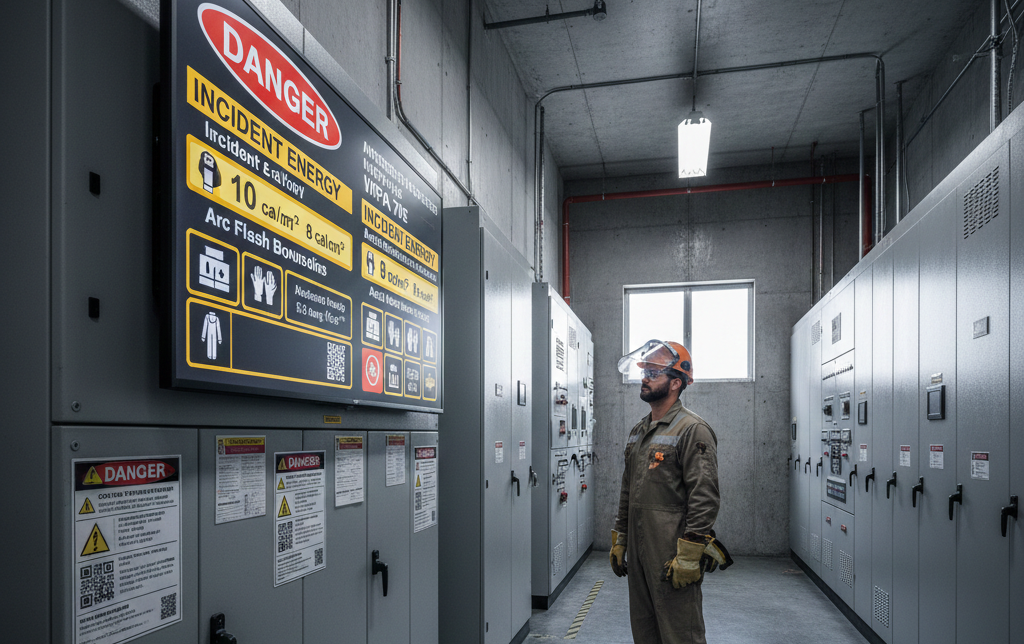
Accurate equipment labeling strengthens occupational safety by ensuring employees clearly understand flash hazard zones and protective requirements.
Who Is Responsible for Equipment Labeling?
Employers or facility owners are responsible for maintaining accurate arc flash labels. Regulations require equipment to be clearly marked and updated whenever electrical system changes occur.
Safety teams must ensure labels show correct voltage, incident energy levels, and PPE requirements, while regular inspections and training help workers understand arc flash hazards. Labels must be clearly visible to qualified persons and typically placed on the outside of the equipment enclosure.
Which Equipment Requires an Arc Flash Label?
Arc flash labels are required on electrical equipment that may be serviced while energized. This includes switchboards, motor control centers, circuit breakers, safety switches, lighting panels, meters, and variable frequency drives connected to the electrical system.
Labels must display incident energy, system voltage, and PPE requirements to warn workers about potential arc flash hazards. Employers are responsible for labeling the equipment, not the manufacturers.
Where Should Arc Flash Labels Go?
Proper arc flash label placement ensures electrical workers see safety signs and flash labels before interacting with electrical equipment. Labels must be visible on equipment access points, doors, and control areas so workers can identify flash hazard warnings and PPE requirements before opening panels or performing maintenance.
Switchboards: Arc flash labels should be placed near the main disconnect handle or front panel so workers can see flash hazard warnings before accessing the equipment.
Panel Boards: Labels should appear on the panel cover or door so technicians can review incident energy levels and PPE requirements before opening the equipment.
Industrial Control Panels: Labels should be installed near operator controls or viewing windows to ensure continuous awareness of arc flash hazards during operation.
Motor Control Centers: Labels should be placed near control interfaces or disconnect switches where technicians interact with the equipment.
Transformers: Transformers require labels on accessible panels or entry points to alert maintenance workers about electrical hazards.
Disconnect Switches: Labels should face operators directly and display arc flash boundary, system voltage, and PPE requirements to support safe work practices.
How Are Arc Flash Labels Maintained?
Old arc flash signage labels must be documented and reviewed regularly to maintain compliance with NFPA 70E standards. Existing labels may remain valid if they reflect current conditions and were installed according to previous standards.
However, any modification to the electrical distribution system requires examination and updated labeling. Arc flash labels should include the date of the last update and the name of the responsible person.
Documentation should include arc flash studies, incident energy calculations, nominal system voltage, working distance values, and risk assessments. Records must also track factory applied labels, accident prevention tags, and updated flash hazard warnings.


What Are the 7 Arc Flash Label Elements?
Arc flash signage labels must include seven essential elements defined by NFPA 70E to protect workers from electrical hazards. These elements provide the information necessary for workers to evaluate flash hazards, select protective equipment, and work safely around energized equipment.
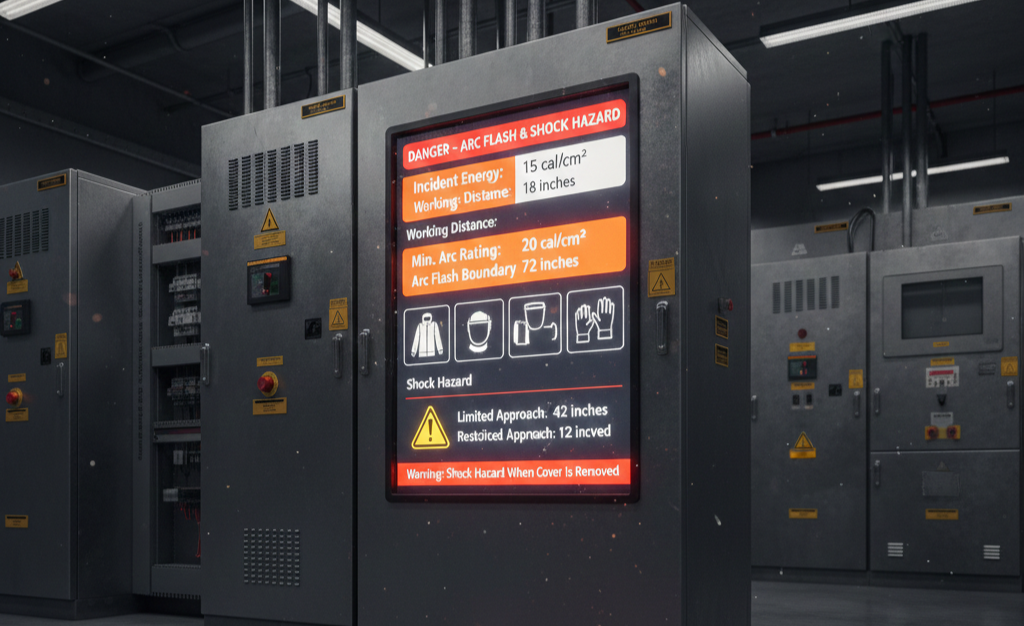
Arc flash studies show that workplace electrical incidents, including arc flash events, remain a serious safety concern with multiple accidents happening regularly, and around 142 workers died due to exposure to electricity or arc flash in 2023, underscoring why precise arc flash labeling matters for safety and compliance.
The seven key label elements are:
1. Danger or Warning Header: Labels must include “Danger” or “Warning” headers depending on incident energy levels and system voltage.
2. Incident Energy at the Corresponding Working Distance: This value shows the thermal energy exposure workers may encounter at the working distance.
3. Minimum Arc Rating: Labels must list the minimum arc rating required for flame resistant clothing and PPE.
4. Arc Flash Boundary: This indicates the safe distance where incident energy drops below levels that cause second degree burns.
5. Personal Protective Equipment (PPE) Requirements: Labels must identify protective equipment needed to safely approach energized equipment.
6. Limited and Restricted Approach Boundaries: These distances protect workers from electric shock hazards when working near energized components.
7. Shock Risk When the Cover Is Removed: Labels must warn about shock hazards when service equipment or panels are opened.
What Arc Flash Training Is Required?
Arc flash training requirements ensure employees understand arc flash hazards and proper safety practices. Workers must be trained to read arc flash labels, recognize flash hazard warnings, follow safety related work practices, and wear appropriate protective equipment.
Arc flash risk assessments must be conducted and reviewed at least every five years, and labels must be updated immediately if the equipment is modified. Failure to properly label equipment can lead to significant fines under OSHA’s General Duty Clause.
Training should include incident energy interpretation, arc flash boundary awareness, and safe handling of energized equipment. OSHA requires employers to maintain training records and provide refresher training at least every three years or when new equipment or procedures are introduced.
How Do Digital Displays Improve Arc Flash Safety?
Digital displays improve arc flash safety programs by delivering real-time safety alerts and electrical hazard information. Digital signage can show updated arc flash labels, incident energy values, and flash hazard warnings instantly across facilities.
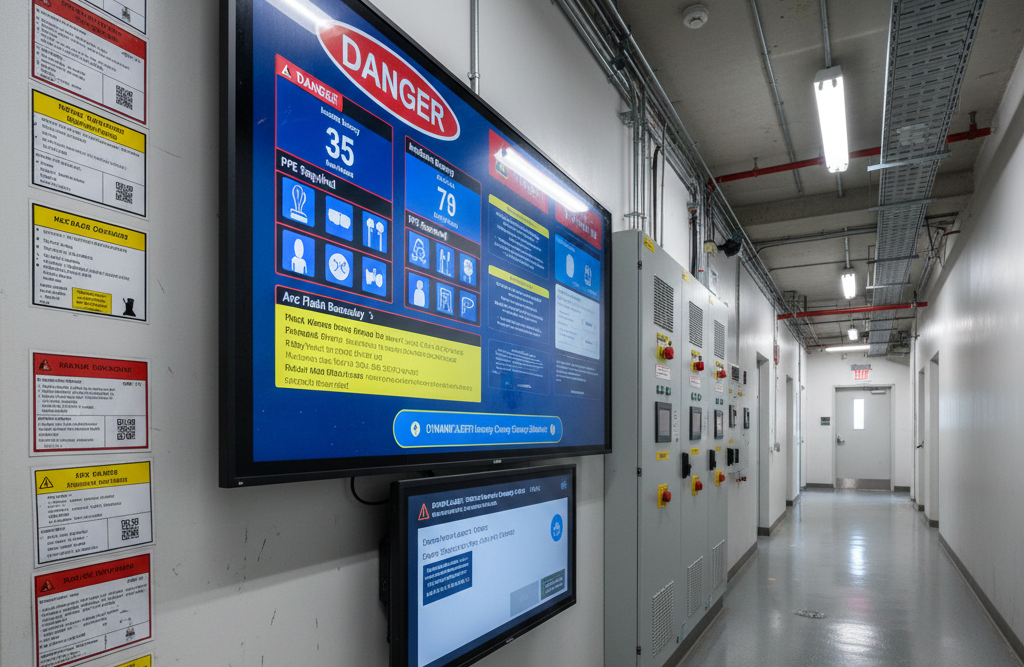
Real-time alerts, automated updates, and system monitoring help organizations reduce arc flash incidents and improve electrical safety management.
How Digital Arc Flash Signage Supports OSHA and NFPA 70E Compliance?
Digital signage platforms simplify arc flash compliance by automating equipment labeling updates and safety communication. These systems synchronize arc flash data, update PPE requirements, and deliver training reminders to workers. Cloud-based dashboards allow safety professionals to track arc flash hazards, update labels, and monitor compliance across multiple facilities.
In many facilities, proper labeling is supported by broader safety strategies, including area of refuge signage requirements, which help organizations maintain clear safety communication across buildings and industrial environments.
Organizations looking for a scalable way to manage safety communications can also explore AIScreen, a cloud-based digital signage software that helps display real-time safety alerts, training reminders, and compliance updates across multiple digital displays from a centralized dashboard.
How Do Arc Flash Signage Requirements and Emergency Exit Signage Improve Workplace Safety?
Arc flash signage requirements help facilities clearly identify electrical hazards, PPE needs, approach boundaries, and other critical safety information around energized equipment. Proper labels give workers the information they need before beginning electrical tasks and support a more consistent approach to hazard communication.
Emergency exit signage serves a different but equally important purpose by guiding employees and visitors toward safe evacuation routes during fires, power failures, or other emergencies. When both types of signage are clearly placed, easy to read, and regularly maintained, businesses can strengthen overall workplace safety and reduce confusion during high-risk situations.
How Can AIScreen Support Arc Flash Signage Requirements?
Arc flash signage requirements help protect electrical workers by clearly communicating incident energy, arc flash boundaries, PPE requirements, and other critical hazard information on energized equipment. Following applicable OSHA and NFPA 70E guidance, keeping labels accurate and well maintained, and reinforcing safety messages with digital signage can help facilities improve awareness, reduce risk, and support ongoing compliance.
AIScreen is a leading digital signage provider that helps organizations display safety alerts, compliance reminders, training content, and emergency updates across multiple screens and locations. With centralized content management and real-time updates, AIScreen makes it easier to support arc flash safety programs and keep important workplace information visible when employees need it most.
What Are Common Arc Flash Signage Questions?
What information must be included on an arc flash warning label?
An arc flash warning label must include key details like nominal system voltage, arc flash boundary, incident energy at the working distance, minimum arc rating for PPE, and required protective equipment.
How do I determine the correct arc flash signage for my facility?
The correct arc flash signage depends on a detailed arc flash study and incident energy analysis specific to your electrical systems. Compliance with NFPA 70E standards and local regulations ensures labels accurately reflect hazards, arc flash boundaries.
Why is arc flash signage required in workplaces with electrical hazards?
Arc flash signage is required in workplaces because it warns workers of potential thermal and shock hazards, helping prevent injuries like second-degree burns. Clear signage informs employees about necessary arc-rated clothing, flash hazard zones, and safe working distances.
Can outdated or missing arc flash signage result in OSHA violations?
Yes! OSHA mandates current and visible arc flash warnings to protect employees. Outdated or missing labels can lead to severe fines, legal liabilities, and increased risk of accidents by leaving workers unaware of hazards or the correct safety practices.
Is it necessary to display PPE information on arc flash warning signs?
Yes, displaying PPE requirements on labels is critical. It guides workers on the minimum level of protection needed to guard against the specific incident energy present, ensuring they wear proper arc-rated clothing, face shields, and gloves to work safely and comply with regulations.
