
What Are the Top 9 Benefits of Digital Signage?
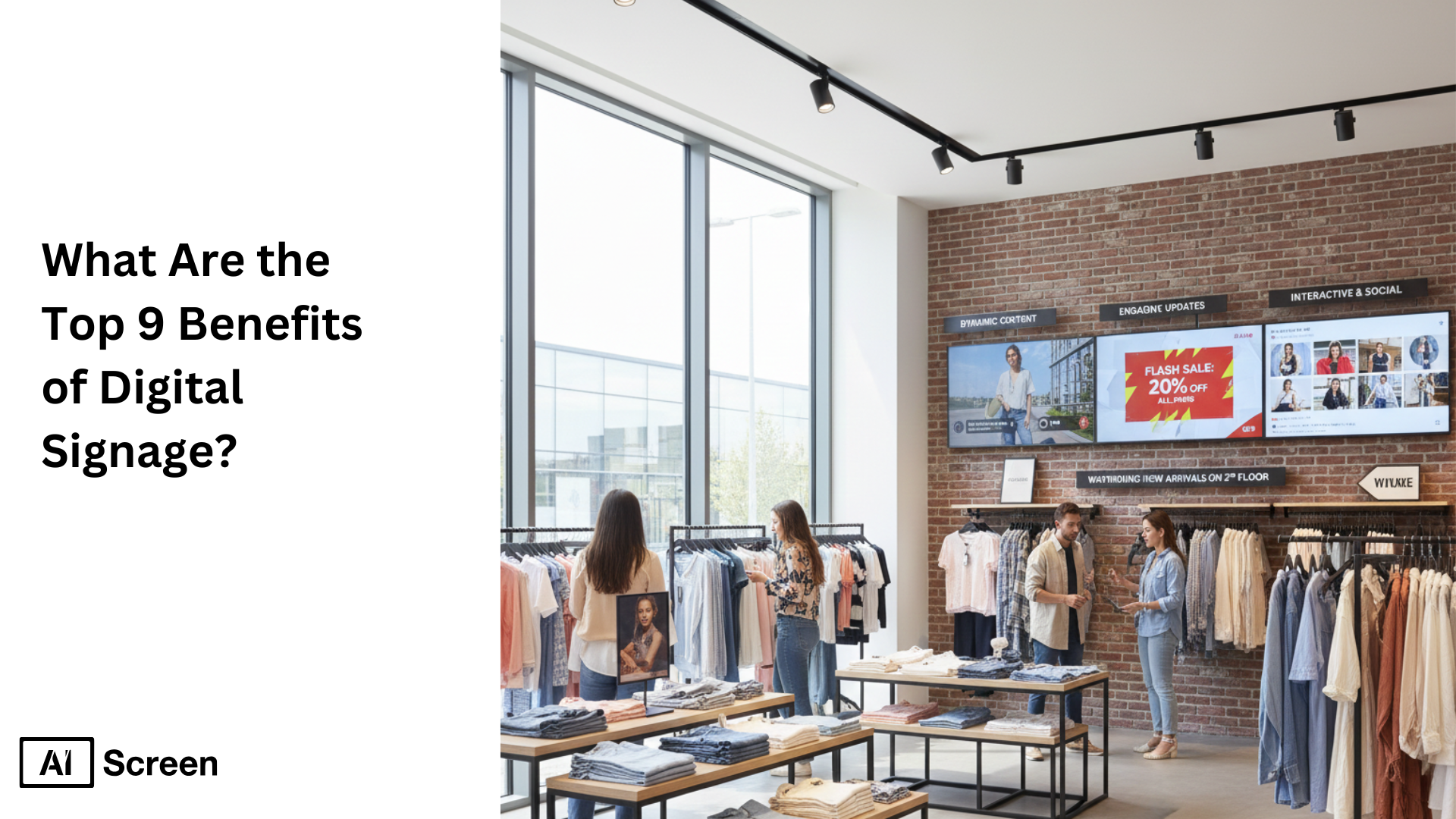
The benefits of digital signage range from boosting customer engagement to improving brand visibility and cutting advertising costs. Digital signage offers numerous benefits, including enhanced customer engagement, improved brand visibility, and cost-effective advertising. According to Statista, the global digital signage market is projected to reach $45 billion by 2030, showing how rapidly businesses are adopting this technology to stay competitive.
In this blog post, you’ll learn how digital signage allows for real-time updates, dynamic content, and personalized experiences that resonate with audiences. We’ll also explore how it can increase sales, streamline internal communication, and even support eco-friendly practices by reducing the need for printed materials. By the end, you’ll see why digital signage is a versatile tool for industries of all sizes and understand the key advantages of digital signage.
What Is Digital Signage?
Ever noticed how screens around you seem to update instantly, without posters being replaced or signs being reprinted? Digital signage is a modern way of displaying information using digital screens that can be updated centrally, instead of relying on printed signage that stays static until someone changes it manually.
Digital signage uses screens such as digital displays, digital signage monitors, or large-format display screens to show content like announcements, promotions, directions, menus, or real-time updates. These screens can appear as single displays, video walls, kiosks, or information boards across retail stores, offices, airports, and public spaces.
What makes digital signage truly different is the central platform behind it. Using digital signage software, businesses can update content instantly across one or hundreds of screens from a single dashboard.
This ability to change messaging in real time is one of the biggest advantages of digital signage, allowing faster communication, better consistency, and far more flexibility than printed signs could ever offer.
What Are the 9 Benefits of Digital Signage That You Shouldn’t Overlook
If you look beyond the screens themselves, the real value shows up in results. What are the 9 benefits of digital signage that you shouldn’t overlook becomes clear once you see how it improves marketing, daily operations, and internal communication across industries.
These benefits of digital signage aren’t limited to one use case, they support growth, efficiency, and engagement at the same time.
1. Increase Foot Traffic and Influence Purchasing Behavior
Sometimes a single moving image can outperform an entire week of promotions, that’s where the real shift happens.
Increase foot traffic and influence purchasing behavior by placing digital signage displays near entrances and storefront windows, where visuals can intercept attention and shape decisions before customers even step inside.
Research consistently shows the impact of movement. Nielsen reports that digital screens capture 400% more views than static signs, while Statista found that 76% of shoppers have entered a store after noticing a digital display.
Motion, color, and dynamic visuals trigger faster recognition in the brain, making people stop, look, and walk in.
How motion-driven content pulls people in:
- Animated visuals grab instant attention: Moving graphics and bold transitions naturally draw the eye, giving storefronts an advantage on busy streets.
- Real-time promotions spark impulse walk-ins: Limited-time offers or “today only” deals create urgency; McKinsey notes timely messaging can lift impulse purchases by 20–30%.
- Best-seller showcases guide behavior: Highlighting popular items leverages social proof, Harvard Business Review reports it can increase purchase intent by up to 40%.
- High-contrast imagery boosts visibility: Strong colors and sharp visuals help stores stand out from a distance, especially in crowded retail zones.
Once customers are inside, digital signage displays continue influencing decisions at shelves, counters, and checkout, turning attention into action within seconds.
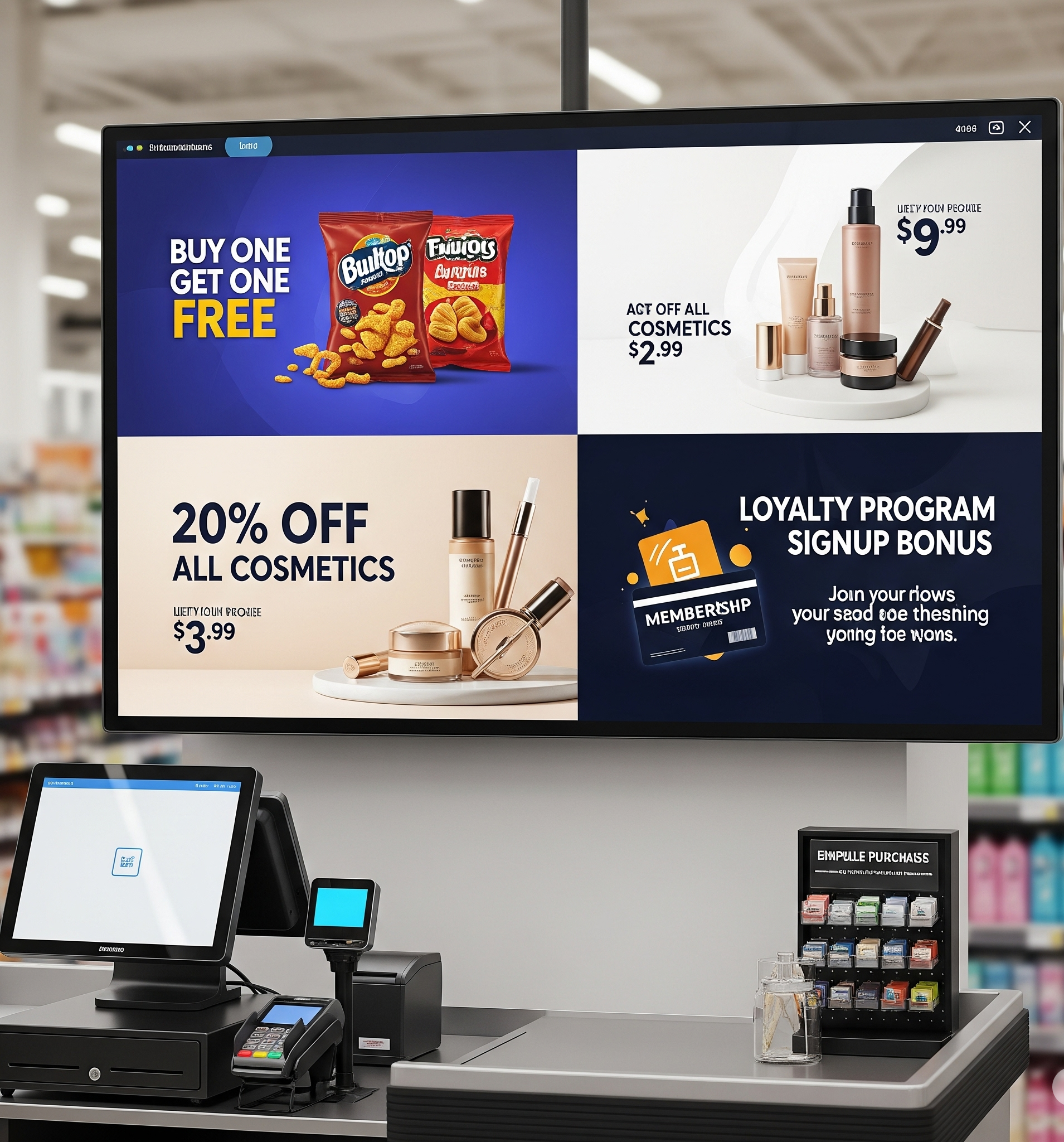
2. Boost Brand Awareness and Revenue Growth
Strong brands feel familiar wherever you encounter them. Boost brand awareness and revenue growth by using digital signage content that keeps your visuals, messaging, and tone consistent across locations, while still allowing campaigns to evolve quickly.
When the same brand images and messages are commonly found on screens in stores, offices, and public spaces, recall improves and advertising feels intentional rather than repetitive.
One of the clearest digital signage benefits is this ability to reinforce visibility while staying flexible enough to promote seasonal campaigns, new launches, or timely updates without delay.
3. Lower Perceived Waiting Times
Waiting is frustrating, but it feels shorter when attention is engaged. Lower perceived waiting times by using screens, images, or interactive kiosks in queues and waiting rooms to keep people informed or entertained.
A retail checkout study by Statista found that 84% of customers said digital displays helped pass the time while waiting, which directly supports higher satisfaction and repeat visits. By improving dwell time experience, digital signage turns idle moments into more positive ones.
4. Increase Sales with Point-Of-Sale Influence Revenue
The final moments before checkout often decide the sale. Increase sales with point-of-sale influence revenue by placing digital signage content near aisles, shelves, and checkout counters, where timing matters most.
Short offers, product pairings, or reminder messages work best when shown exactly as customers are ready to buy. This is one of the most practical benefits of digital signage, especially when advertising messages are scheduled around peak traffic periods or specific product zones.
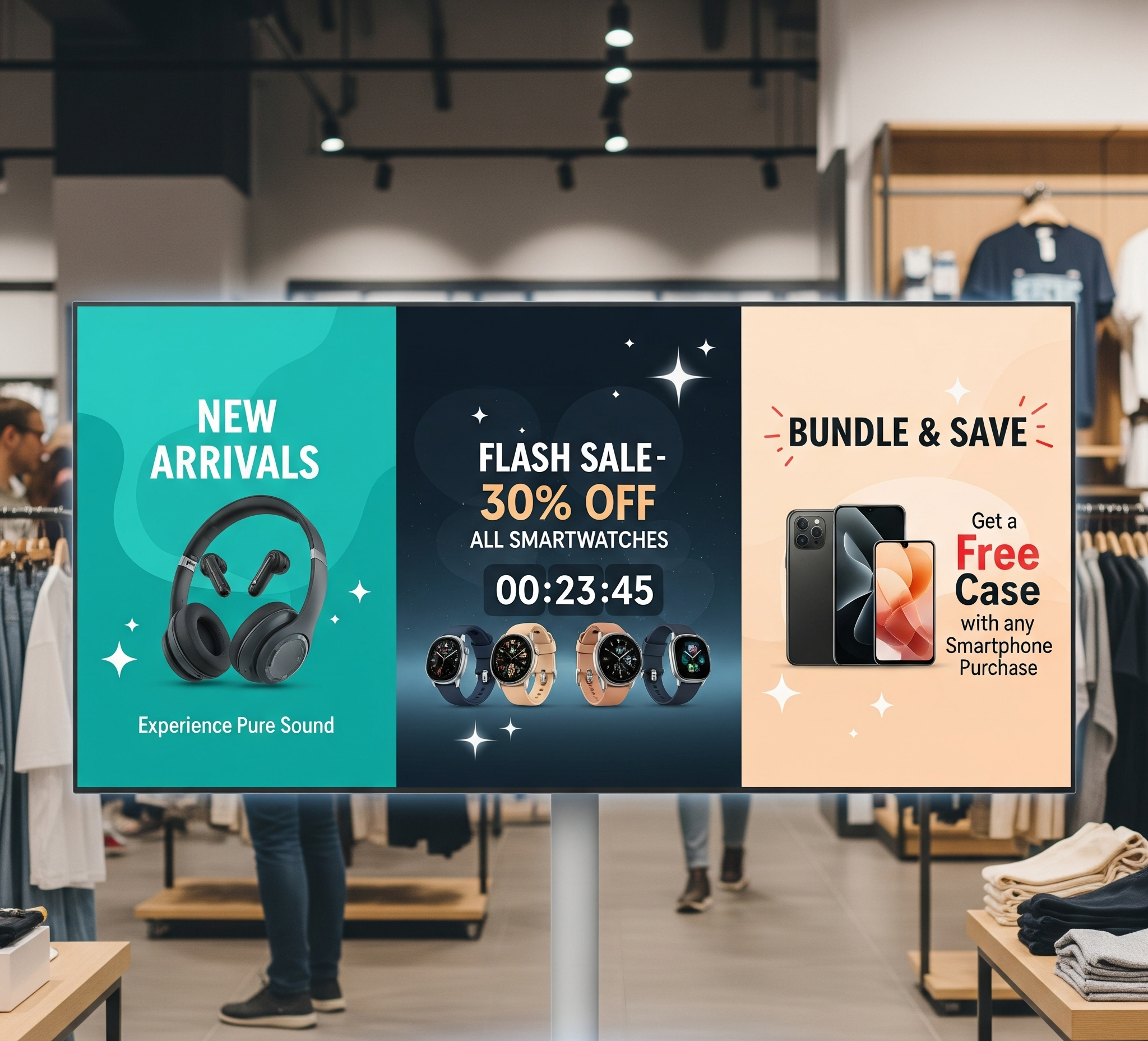
5. Improve Team Communication and Training
Not every update belongs in an email. Improve team communication and training by using internal screens to share KPIs, recognition, safety reminders, or short training messages.
Digital signage content supports alignment by keeping information visible throughout the day, reducing inbox overload while reinforcing culture, performance goals, and learning through repeated exposure.
6. Save Time and Reduce Printing Costs
Print cycles slow things down more than most teams realize. Save time and reduce printing costs by replacing recurring posters and flyers with instantly updateable digital signage content.
Changes to pricing, promotions, or messaging can go live immediately, reducing turnaround time and minimizing delays caused by reprints or distribution. This improves operational efficiency without overpromising hard savings.
7. Support Safety and Compliance Communications
When information is urgent, speed matters. Support safety and compliance communications by displaying alerts, reminders, or guidance on screens in high-traffic areas.
In digital signage in retail stores, this means safety updates and procedural messages are visible where teams already look, supporting awareness and faster communication, without claiming to replace formal compliance systems.
8. Deliver Consistent Yet Localized Messaging Across Locations
Consistency doesn’t have to mean one-size-fits-all. Deliver consistent yet localized messaging across locations by managing content centrally while allowing adjustments by region, language, or timing.
This approach protects brand standards while keeping messaging relevant to local audiences, one of the most valuable digital signage benefits for multi-location organizations balancing control with flexibility.
9. Gain Insights with Built-In Performance Tracking
Screens shouldn’t operate in the dark. Gain insights with built-in performance tracking by measuring what digital signage content plays, when it runs, and where it appears. These insights support ongoing optimization, helping teams refine messaging, placement, and timing over time.
Among the key advantages of digital signage, this ability to learn and adapt continuously turns displays into long-term performance tools rather than static screens.


How Different Industries Benefit from Digital Signage
What makes digital signage so effective is how easily it adapts to different environments. Different industries benefit from digital signage depends on daily workflows, audience needs, and communication speed, but the common thread is visibility and clarity.
The sections below show how the same technology delivers practical value across industries already discussed, without changing how teams operate day to day.
Food and Restaurants
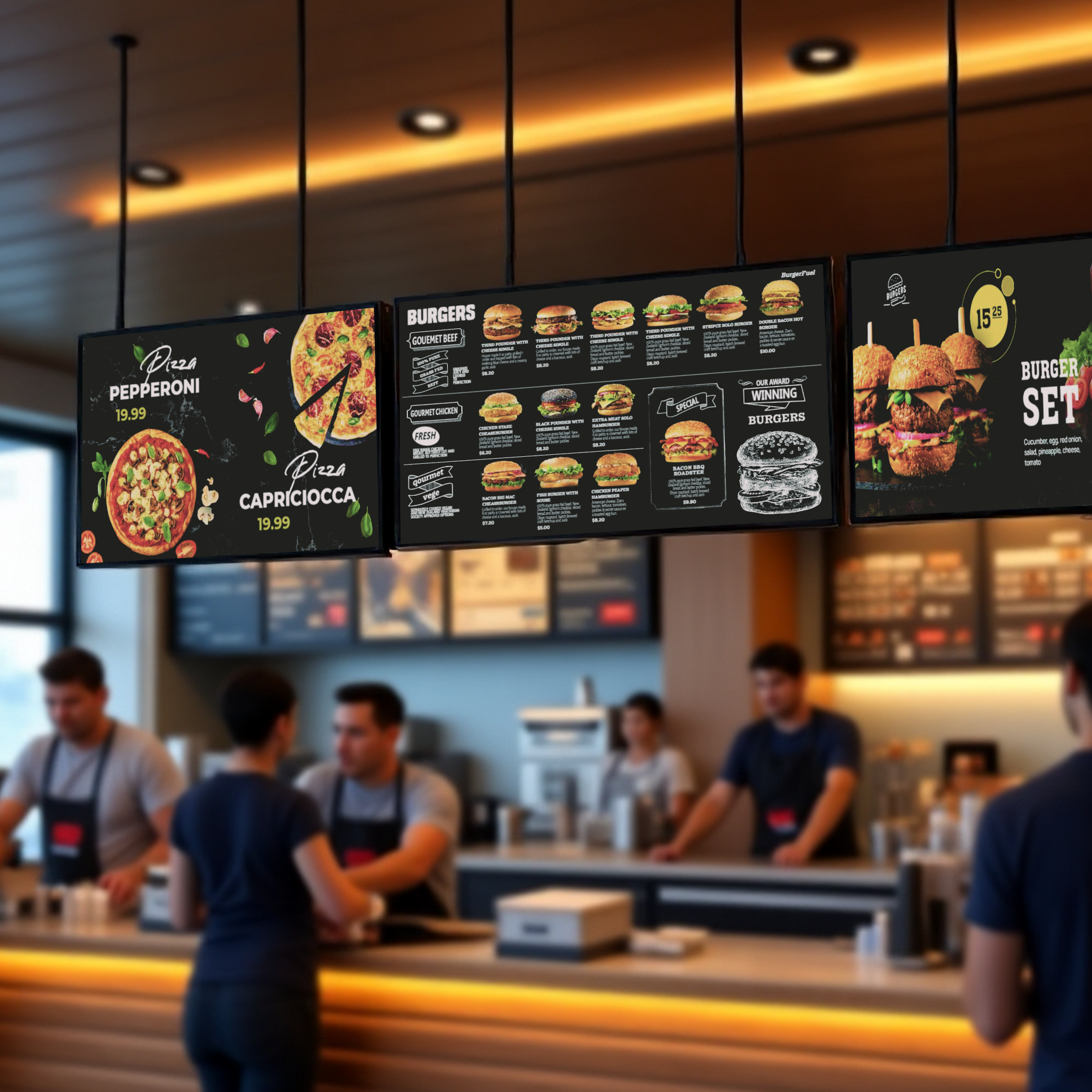
When menus need to change fast, static boards fall behind almost immediately. Food and restaurants rely on digital signage to update menus, highlight featured items, and run time-based promotions without slowing service.
Breakfast, lunch, and evening offers can rotate automatically, helping staff focus on service while screens handle communication.
Research referenced by OptiSigns shows that digital menu boards can increase overall sales by up to 5%, with even stronger performance on promoted items. The biggest operational win is simplicity, prices, images, and promotions can be updated centrally without reprinting or manual swaps.
Healthcare
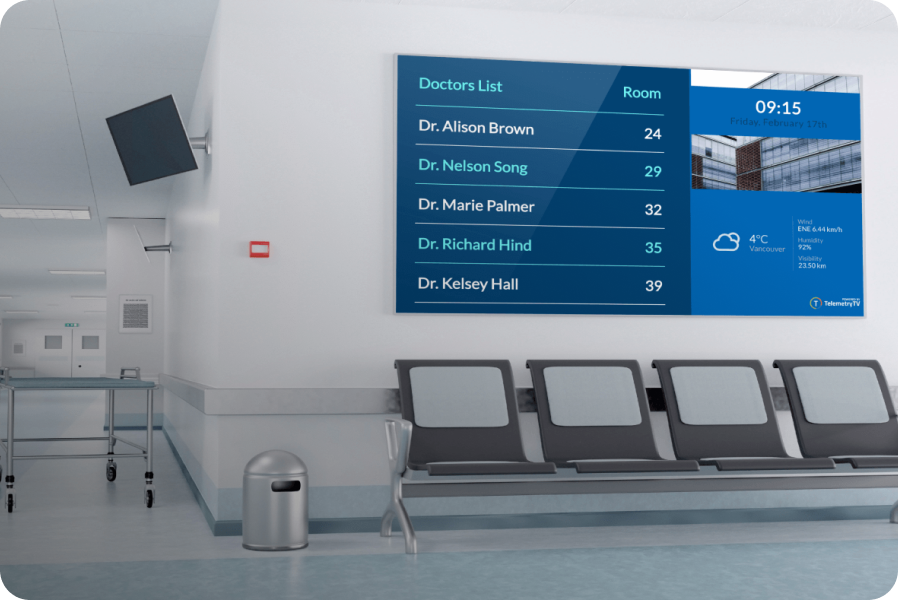
Waiting rooms don’t have to feel uncertain or stressful. Healthcare environments use digital signage to educate, reassure, and guide patients while improving wayfinding and perceived wait times. Screens can display health tips, appointment reminders, directions, or general information without overwhelming patients.
According to studies cited by OptiSigns, 75% of patients recall at least one message shown on digital signage, and 52% say they obtain health-related information from these displays. This supports clearer communication while helping patients feel informed and oriented.
Education Systems
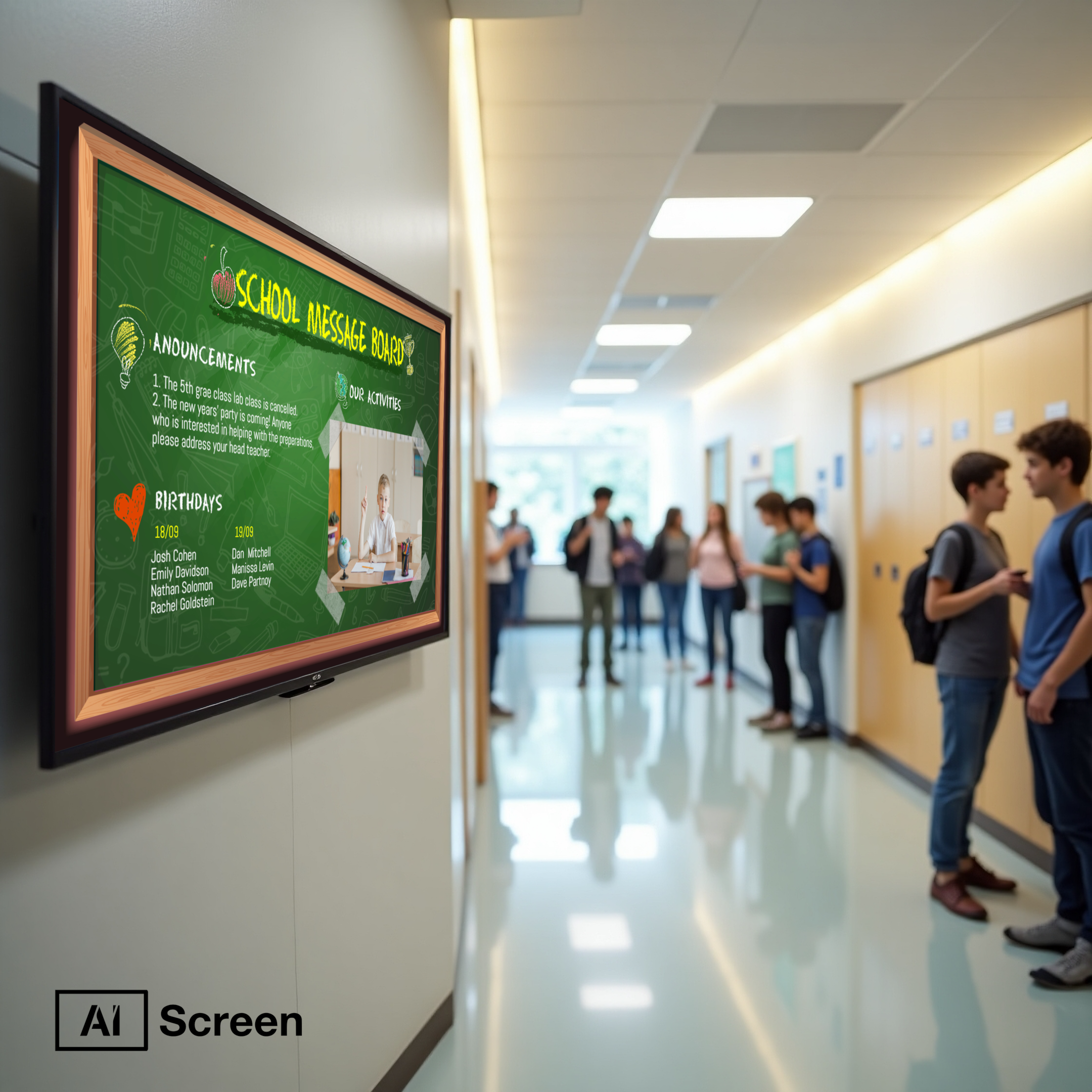
Campuses move fast, and printed notices rarely keep up. Education systems use digital signage to broadcast campus updates, event schedules, emergency alerts, and class changes in real time. Screens placed in hallways, libraries, and common areas make sure students and staff see important messages without relying on email alone.
OptiSigns references research showing that 73% of educational institutions consider digital signage essential for future communication, reinforcing its role as a core campus tool rather than a nice-to-have.
Corporate and Office Settings
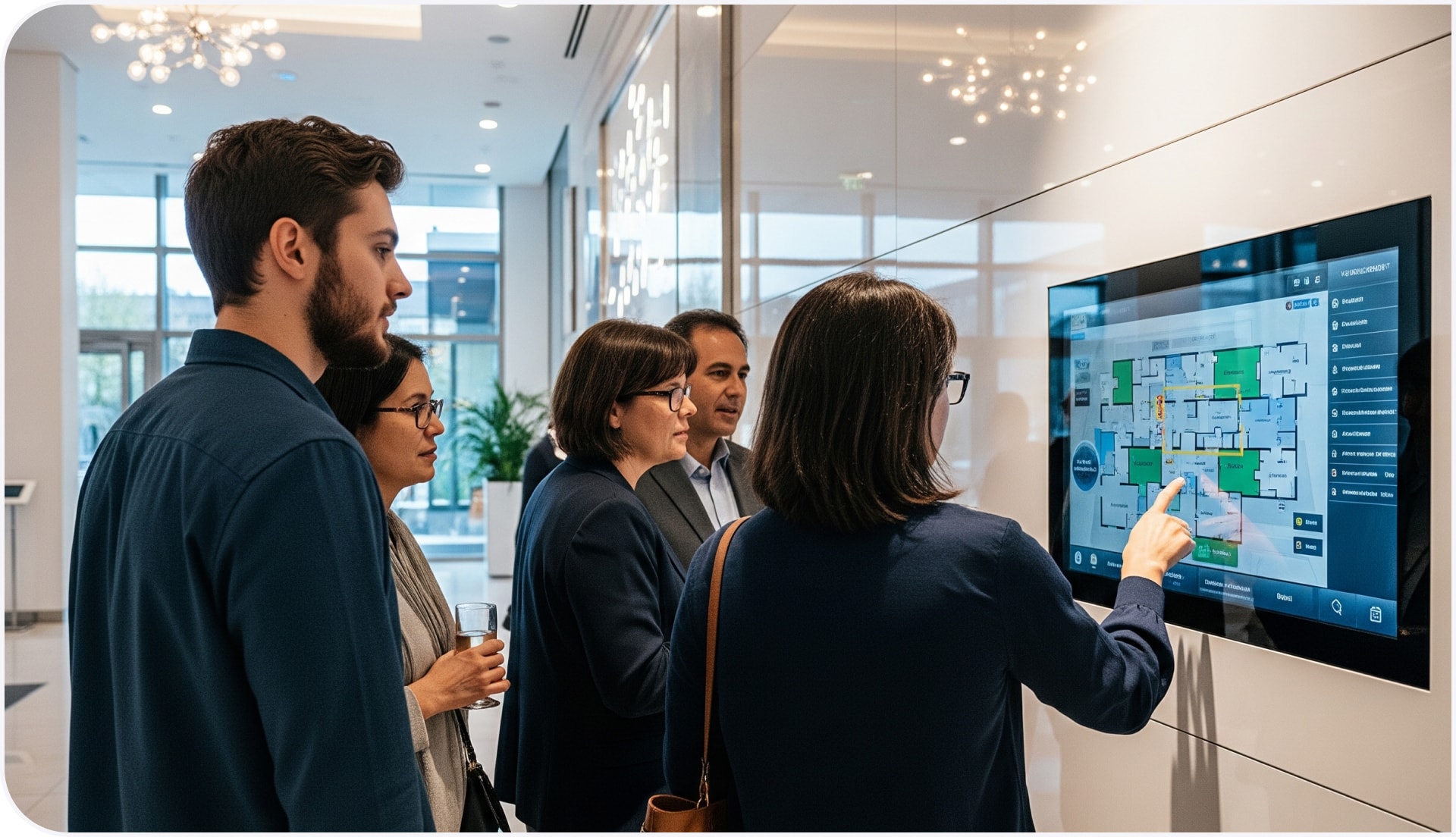
Shared spaces work best when information is easy to see and understand. Corporate and office settings use digital signage to display KPIs, announcements, company news, and employee recognition in real time. Visual dashboards reduce inbox overload and keep distributed teams aligned without disrupting workflows.
According to workplace communication research by Statista, organizations with effective internal communication are significantly more likely to report high employee engagement, highlighting how visibility and clarity directly support team performance.
Digital Signage vs. Traditional Signage: What Are the Trade-Offs?
At some point, every business weighs the same question: stick with what’s familiar, or move to something more flexible. Digital signage vs. traditional signage, what are the trade-offs comes down to balancing upfront setup against long-term adaptability.
Traditional signage, often referred to when asking what is a static display, is simple and low-cost to start, but it lacks the automation and flexibility that modern environments increasingly demand. Digital signage requires initial planning, yet offers far more control once in place.
Here’s a clear, side-by-side comparison:
| Aspect | Traditional Signage | Digital Signage |
|---|---|---|
| Content Updates | Manual changes; printing and replacement required | Instant, remote updates from any location |
| Costs Over Time | Low upfront cost, recurring reprint expenses | Higher initial setup, lower ongoing update costs |
| Engagement | Static visuals with limited attention value | Animated visuals, motion, and interactive content |
| Flexibility | One fixed message per sign | Multiple messages with scheduling and rotation |
| Environmental Impact | Frequent waste from outdated prints | Paperless, reusable display screens |
| Performance Tracking | No visibility into effectiveness | Data on what plays, when, and where |
Some teams hesitate due to the perceived learning curve or setup effort involved with digital signage. In practice, modern platforms are designed to reduce complexity through intuitive dashboards, flexible hardware compatibility, and simplified content management, making the transition far more approachable than it first appears.
Ultimately, the choice isn’t about which option looks better on day one, but which system supports change, speed, and scalability over time.

Digital Signage ROI: How to Measure Value and Long-Term Impact
ROI isn’t just about saving on posters, it’s about how quickly your business can respond, stay consistent, and operate smarter.
Digital signage ROI, how to measure value and long-term impact means looking beyond print savings to the gains created by agility, branding consistency, and automation across operations.
When digital signage software powers digital displays connected by a stable internet connection, teams can update relevant content instantly, align messages everywhere, and test what works, fast.
What to Measure (and Why It Matters)
- Sales Lift & Conversion: Track changes in average order value, promoted item sales, and impulse buys tied to on-screen campaigns. Digital signs used to display timely offers or bundles can be compared before/after to isolate impact.
- Cost & Time Savings: Measure reductions in reprints, installation labor, and turnaround time for corrections. Automation via digital signage technology shortens cycles and reduces manual effort.
- Engagement & Dwell Time: Monitor how long content runs, where it appears, and how often it’s scheduled. Interactive displays and multimedia content typically increase dwell time, a leading indicator for engagement.
- Brand Consistency Across Locations: Audit message accuracy and freshness across sites. A strong digital signage strategy ensures the same visuals and tone everywhere, without bottlenecks.
- Customer & Employee Outcomes: Use surveys and operational KPIs to assess how screens improve customer service (clearer wayfinding, faster updates) and internal communication (fewer inbox messages, better visibility of goals).
- Operational Flow Improvements: In environments like healthcare, track indicators such as patient flow and queue perception when informational screens are added or optimized.
Test, Learn, Improve
The biggest ROI gains come from iteration. Run A/B tests on visuals, timing, and placement; rotate multimedia content; and refine schedules based on performance. With digital signs, optimization isn’t a one-time project, it’s an ongoing advantage.
What Are the Types of Digital Signage That Help Achieve These Benefits?
Choosing the right screens depends on how your customers think, move, and make decisions, and that’s where the variety of display formats becomes incredibly powerful.
This is exactly what are the types of digital signage refer to, helping businesses improve brand perception, reduce the initial cost of outdated displays, and stay up to date with modern customer preferences.
Different signage options work in different physical locations, and each one creates a meaningful connection with customers depending on the environment. Below is a clear breakdown to help you choose the most cost effective solution that still boosts brand recognition and supports your business goals.
1. Indoor Digital Signage
Indoor displays shine where detail and clarity matter most, especially in retail stores, restaurants, offices, and hospitality spaces. They’re designed for controlled lighting conditions, making them ideal for presenting promotions, menus, directional content, or storytelling visuals that build a meaningful connection with customers.
Indoor screens are a cost effective solution because they typically involve lower initial cost compared to outdoor signage, yet still enhance brand perception by delivering sharp, vibrant digital content.
Many real world examples include menu boards in QSRs, welcome screens in office lobbies, and product showcases inside retail stores, all helping brands stay up to date and visually consistent across physical locations.
2. Outdoor Digital Signage
Outdoor displays are built to survive whatever the world throws at them, weather, sunlight, glare, and constant foot traffic. They feature ultra-high brightness panels and durable enclosures, ensuring visibility even in direct sunlight while maintaining reliable performance over time.
These screens are perfect for large-format advertising, roadside billboards, store entrances, and drive-thru signage. Their durability drives strong brand recognition by ensuring your message is always visible, no matter the outdoor conditions.
Outdoor digital signage becomes a powerful tool for business owners who need real world examples of high-impact messaging that reaches broad audiences in multiple physical locations.
Whether indoor or outdoor, choosing the right type helps businesses stay up to date, improve customer experience, reduce reliance on static displays, and deliver digital content that aligns perfectly with customer preferences.
How to Uplift Your Business with AIScreen’s Digital Signage Solution
Uplift your business with AIScreen’s digital signage solution by choosing a scalable digital signage solution designed to grow with your needs. AIScreen makes it easy to create dynamic content, manage multiple locations, and engage customers in real time.
As a leading provider, AIScreen helps businesses boost sales, improve communication, and streamline operations. Start your free trial or book a demo today. Contact us for more details.
FAQs
What industries benefit the most from digital signage?
Industries benefit the most from digital signage when they rely on fast communication, high foot traffic, or real-time updates. Retail, healthcare, restaurants, hospitality, transportation hubs, corporate offices, and education settings all see strong digital signage benefits because screens help display information, guide visitors, and improve customer experience across physical locations.
How does digital signage improve customer engagement?
Digital signage improves customer engagement by delivering dynamic content, promotional offers, product details, social media feeds, and interactive experiences that feel more relevant than static signs. Real-time updates help potential customers make quicker decisions, stay informed, and build a meaningful connection with the brand.
Is digital signage cost-effective for small businesses?
Digital signage is cost-effective for small businesses because it reduces the initial cost of printing, keeps content up to date, and allows owners to manage digital screens from one content management system. Many businesses save time, improve brand awareness, and drive higher sales by switching from static signage to digital content.
What content performs best on digital signage screens?
Content performs best on digital signage screens when it is visually clear, relevant, and easy for target audiences to understand at a glance. High-performing formats include video content, branded content, upcoming events, social media posts, promotional offers, helpful information, and real world examples that attract more customers.
How does digital signage compare to traditional static signage?
Digital signage compares to traditional static signage by offering dynamic content, automation, and real-time updates that static signs cannot support. Digital solutions improve operational efficiency, enhance communication, and display information instantly, helping businesses influence potential customers and maximize marketing efforts across public spaces.