
10 Best Digital Signage Software Companies for Retailers in 2026
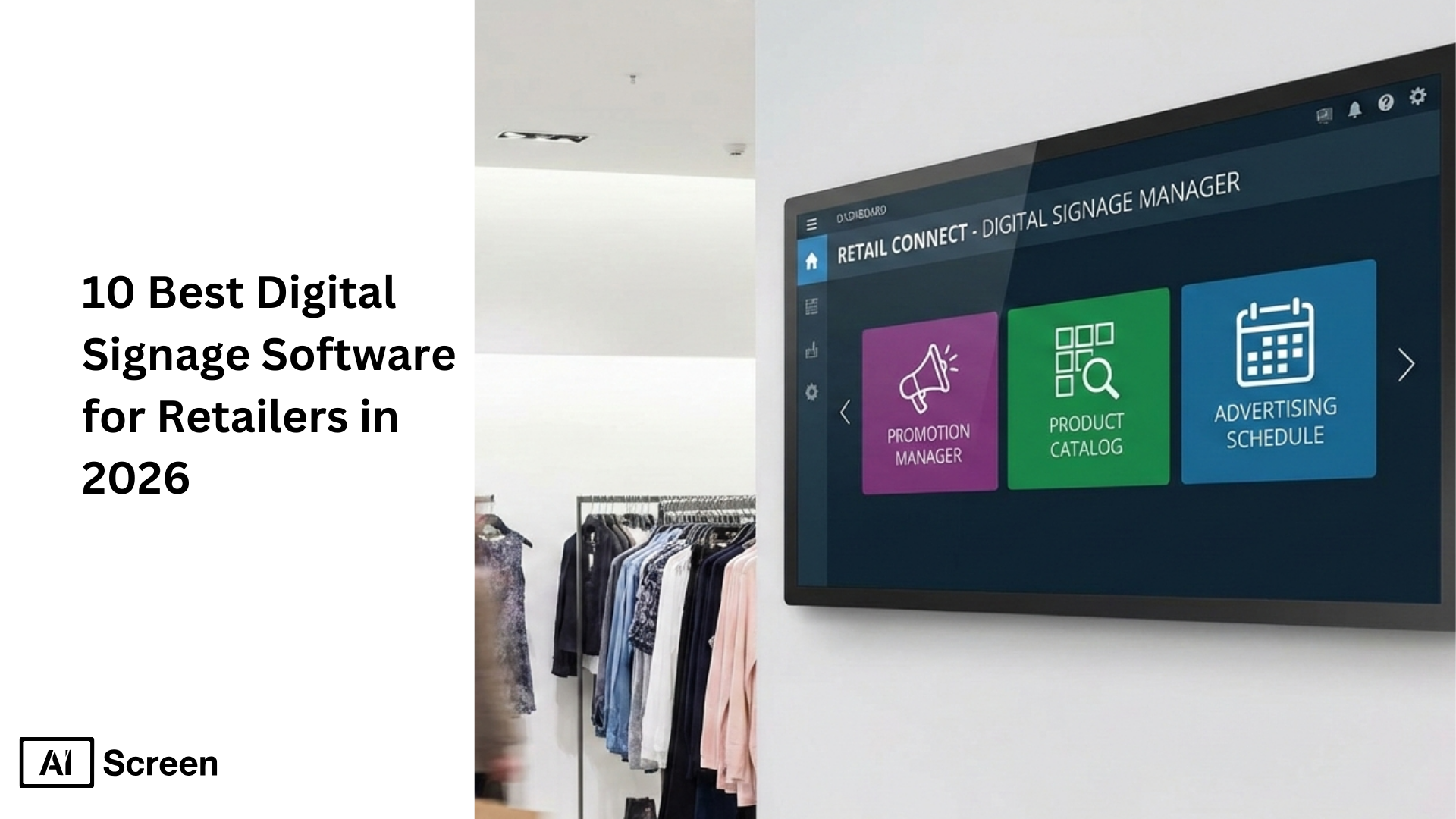
Looking for the 10 best digital signage software for retailers in 2026 because your promos need to change faster than printed signs ever could? The answer is yes, retail digital signage is now a performance tool, and the right digital signage software can help you update offers, run digital menu boards, and manage a full digital signage network from one place. Here’s why this matters: a Nielsen point-of-sale study (shared by Sixteen: Nine) found digital signage can increase brand awareness by 47%.
In this article, you’ll learn what to look for in a digital signage software solution (AI, offline mode, scalability, remote management), see the top platforms ranked for retail, and get a quick comparison table so you can pick the best digital signage software based on your store’s needs, not hype.
What Is Retail Digital Signage and Why Is It Important for Modern Stores?
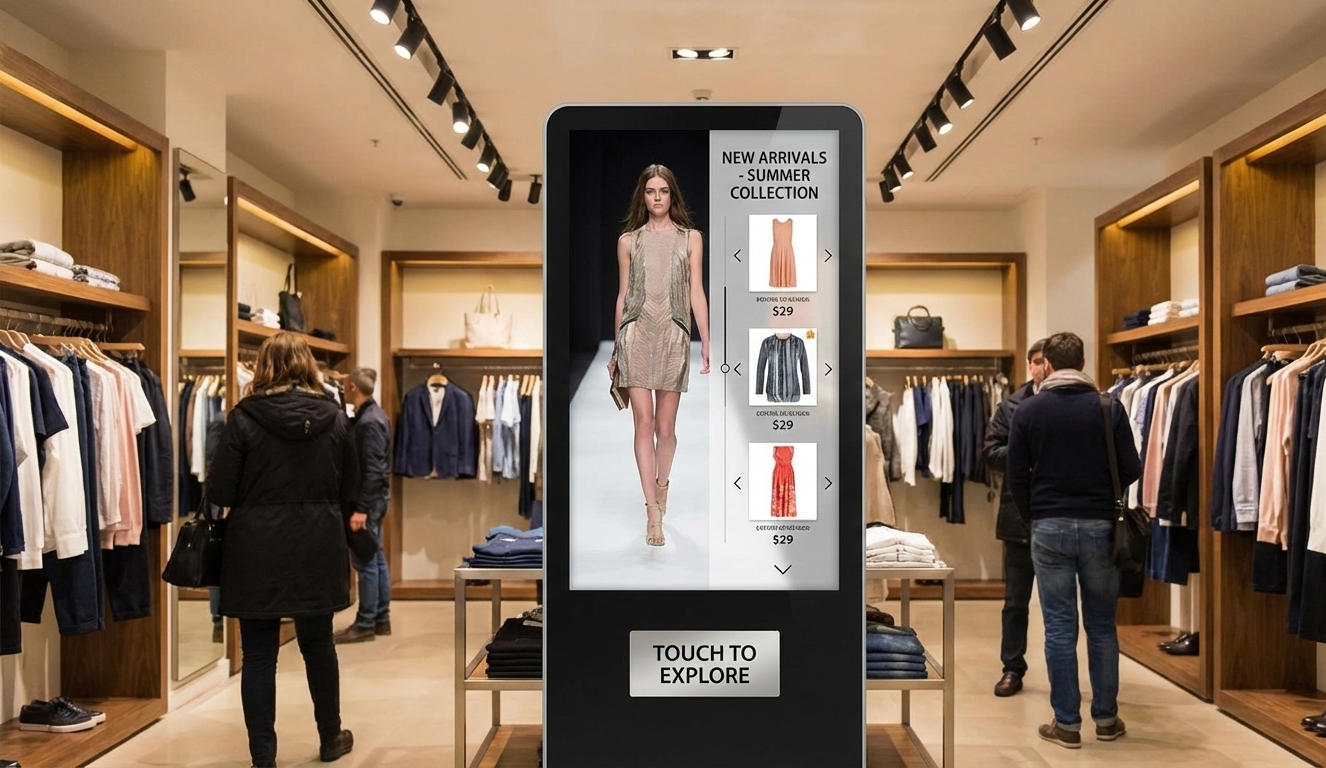
Customers make buying decisions in seconds, and retail digital signage helps modern stores influence those moments instantly. Retail digital signage for modern stores means using digital screens powered by a digital signage software solution to display dynamic content inside a store.
Instead of printing posters, retailers use a digital signage solution to update promotions, prices, and visuals in real time across their digital signage network. This can range from tablets at checkout to large video walls in shop windows.
Retailers use digital menu boards in cafés, product videos in fashion stores, and daily deals in grocery stores. A centralized digital signage software solution allows content updates instantly across multiple screens.
The impact is measurable. Intel reports digital signage captures 400% more views than static displays, and 76% of shoppers have entered a store because of compelling signage (FedEx Office).
In short, a modern digital signage solution helps stores attract attention, improve engagement, and drive purchases directly at the point of sale.


What Is the Best Digital Signage Software for Retailers in 2026?
Choosing the best digital signage software in 2026 is no longer about just displaying content, it is about scalability, automation, and retail agility.
Best digital signage software for retailers in 2026 should combine a powerful digital signage software solution with a flexible digital signage platform that adapts to modern retail business needs.
When evaluating digital signage software, retailers should look at:
- Scalability across multiple locations
- AI-powered advanced tools
- Offline caching for stable digital displays
- Centralized control through a cloud based platform
- Hardware flexibility across different operating systems
- Analytics and POS integrations
- Remote management for multiple screens
- Ease of use with a user-friendly interface
The ranking below is based on retail performance, agility, remote management strength, and future-readiness for digital signage networks in 2026.
1. AIScreen – The Best All-in-One Digital Signage Platform for Retailers
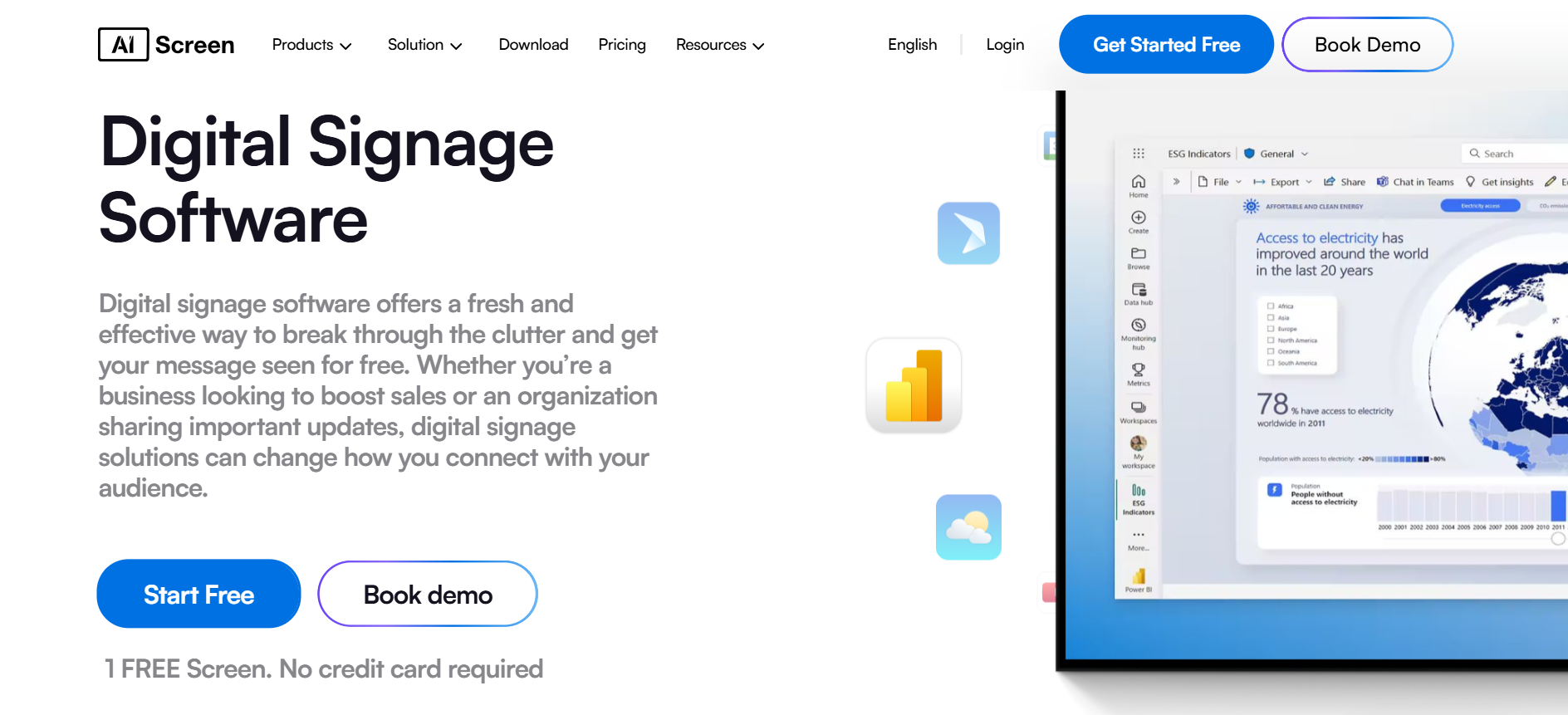
Retailers that want the best digital signage in 2026 need a solution that combines power, flexibility, and simplicity, and AIScreen stands out as the best digital signage software for growth-driven brands.
AIScreen, the best digital signage software for retailers, delivers a complete digital signage software solution built specifically for modern retail environments.
AIScreen is a hardware-agnostic digital signage platform. It works seamlessly across Smart TVs, Android, Fire TV, commercial displays, and other operating systems. Retailers can use their own hardware or certified hardware solutions, including various media players and digital signage players.
The platform runs on a centralized cloud-based platform with a powerful content management system. From one dashboard, retailers can manage multiple screens, group displays with screen grouping, and deploy signage content instantly across their digital signage network.
Why AIScreen is the Best Digital Signage Software for Retailers
- Centralized control with real-time remote management
- Advanced scheduling including dayparting and promotional scheduling
- AI-powered content tools for generating digital content fast
- Offline caching for uninterrupted display content
- Enterprise-grade security for large digital signage networks
- Built-in analytics dashboard to measure engagement
- POS-ready integrations for dynamic digital menus
- Customizable templates designed for retail promotions
AIScreen supports boutiques, grocery chains, QSR retail, fashion brands, electronics stores, and public spaces. Retailers can schedule content by time, location, or campaign using automated scheduling.
The intuitive interface and drag and drop interface reduce the need for technical expertise. Teams can update company news, promotional campaigns, or digital menus without relying on IT departments.
With strong remote management capabilities, businesses can control digital displays across multiple locations from one login. The digital signage software scales effortlessly from a single store to a global digital signage network.
Retailers seeking a reliable digital signage software with advanced features, hardware options, and easy setup can request a free demo to explore the full digital signage solution.
2. Kitcast – Apple TV-Focused Retail Display Platform
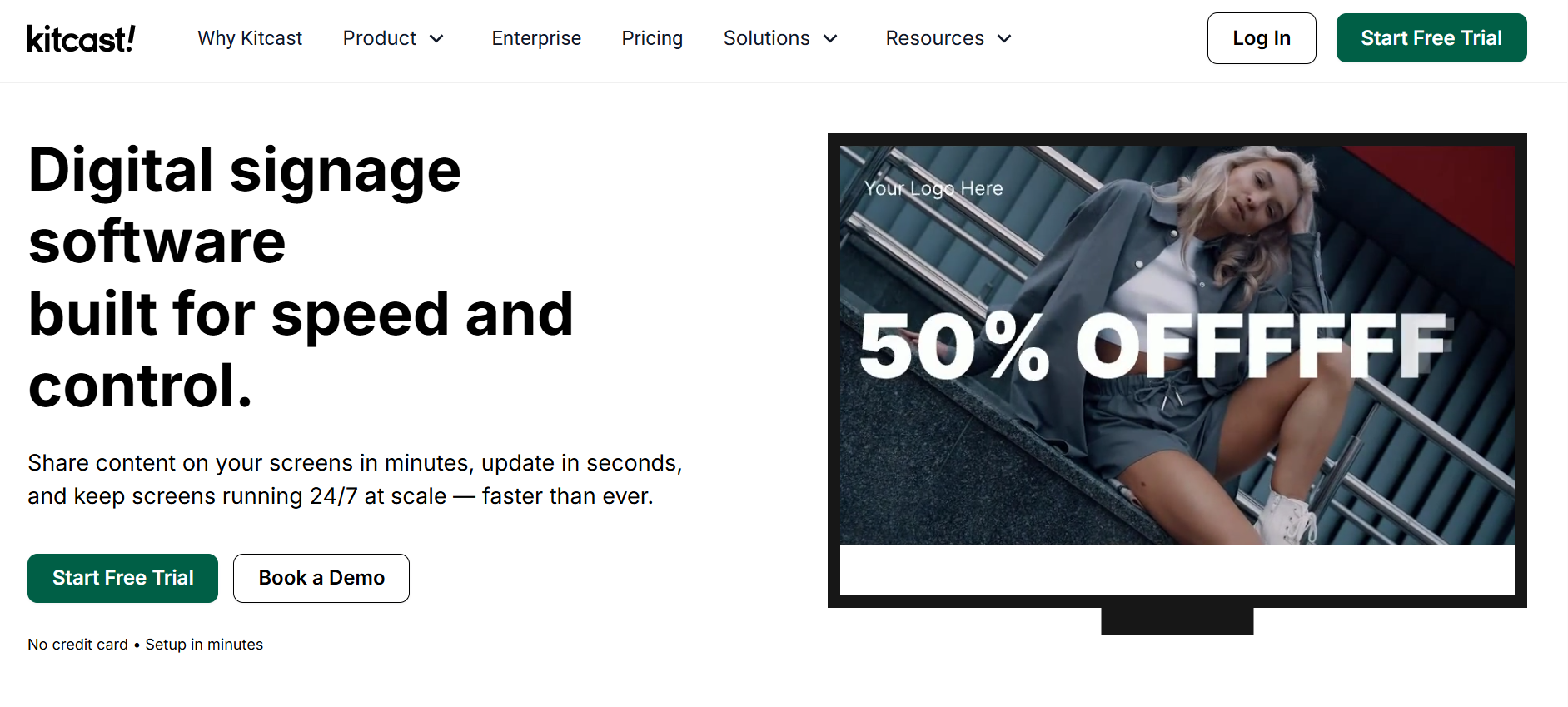
Retailers using Apple TV hardware often consider Kitcast as a clean and reliable signage software option.
Kitcast retail digital signage software is known for smooth playback and strong compatibility with Apple-based media players and other operating systems.
It offers AI tools, offline playback, and enterprise scalability. The user friendly interface makes it simple to schedule content and manage multiple screens.
Why consider it: A solid digital signage software solution for retailers heavily invested in Apple ecosystems who want quick deployment without complex hardware solutions.
Key Features:
- AI-generated signage content
- Enterprise-ready digital signage network support
- Offline playback
- Simple remote management
3. ScreenCloud – Flexible Signage with Strong Integrations
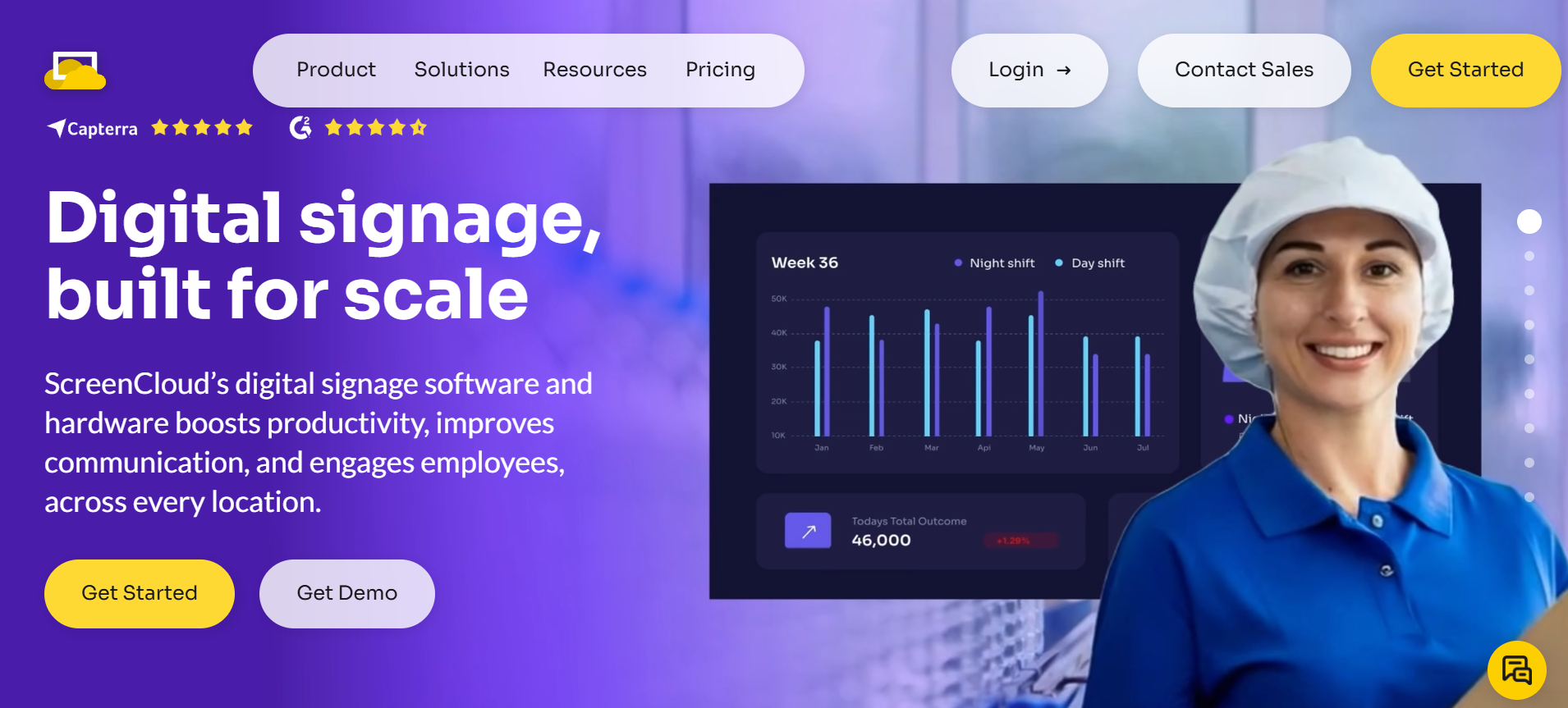
Retailers that prioritize integrations often look at ScreenCloud. ScreenCloud digital signage software stands out because of its extensive third party apps ecosystem.
It integrates with Slack, Teams, and other internal communications tools, making it suitable for hybrid office-retail environments.
However, add-on pricing and dashboard complexity can increase as advanced features scale.
Why consider it: Good for retailers needing strong internal communications alongside customer-facing digital signage.
Key Features:
- Large app marketplace
- Multi-device support across media players
- Strong remote management
- Social media feeds integration
4. Yodeck – Budget-Friendly Entry-Level Solution
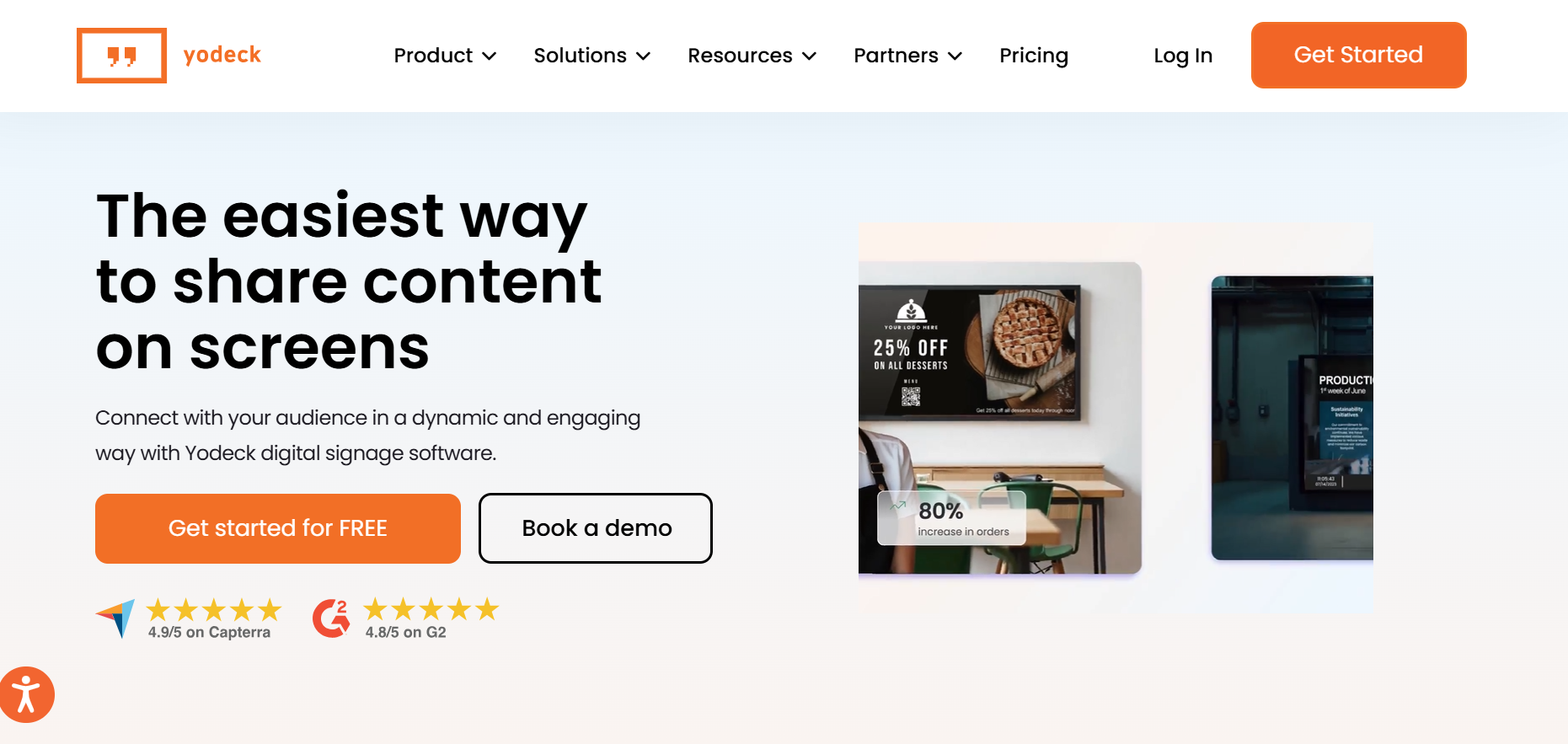
Small retailers entering digital signage often start with Yodeck. Yodeck signage software is affordable and known for Raspberry Pi-based hardware solutions.
It offers a simple content management system and basic scheduling. However, scaling across multiple locations may require more hands-on hardware management.
Why consider it: A practical digital signage solution for small stores testing digital displays.
Key Features:
- Affordable pricing
- Raspberry Pi media players
- Basic schedule content tools
- Simple interface
5. OptiSigns – Feature-Rich Android-Based Platform
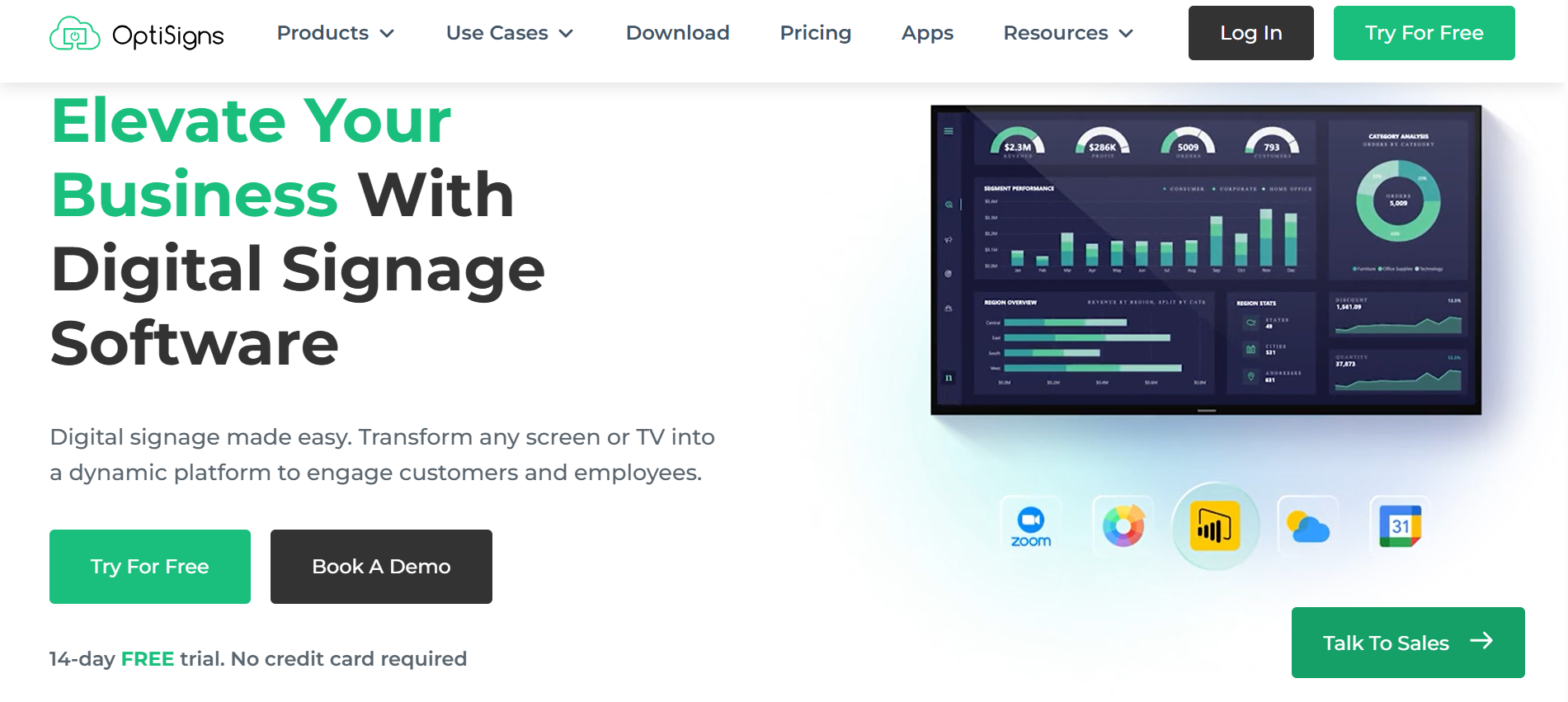
Retailers using Android hardware often explore OptiSigns. OptiSigns digital signage software supports various operating systems but is strongest within Android ecosystems.
It includes analytics tools and advanced features, though the dashboard can feel dense for non-technical users.
Why consider it: Suitable for retailers who want deeper analytics and already operate Android media players.
Key Features:
- AI analytics
- Fire TV and Android compatibility
- Large template library
- Remote management tools
6. Raydiant – Experience-Driven Retail Signage Software
Retailers blending commerce and hospitality often evaluate Raydiant. Raydiant digital signage platform focuses on experiential retail and POS integration.
It connects digital menus directly to POS systems, enabling automated pricing updates. However, proprietary hardware options may limit flexibility.
Why consider it: Strong for retail environments that rely heavily on POS-connected digital menus.
Key Features:
- POS integration
- Experiential display content
- Remote management
- Retail-focused tools
7. Spectrio – Content-First Retail Display Solution
Retailers who prefer managed services may look at Spectrio. Spectrio digital signage software solution emphasizes professionally designed signage content.
It offers content packages and marketing services but can come at a higher cost with reduced flexibility for fast updates.
Why consider it: Ideal for retailers wanting hands-off content production.
Key Features:
- Managed signage content services
- Industry-specific packages
- Strong support team
- Enterprise deployment options
8. BrightSign – Enterprise Hardware & Software System
Large retail chains often consider BrightSign for hardware reliability. BrightSign digital signage software and media players are known for enterprise-grade stability.
Its signage software component is powerful but may require technical expertise. It is often used for complex video walls and advanced public spaces deployments.
Why consider it: Strong choice for hardware-heavy enterprise digital signage networks.
Key Features:
- Dedicated media players
- Advanced features for complex displays
- High-performance video handling
- Enterprise-level deployment
9. Navori Labs – Advanced Enterprise Retail Signage Platform
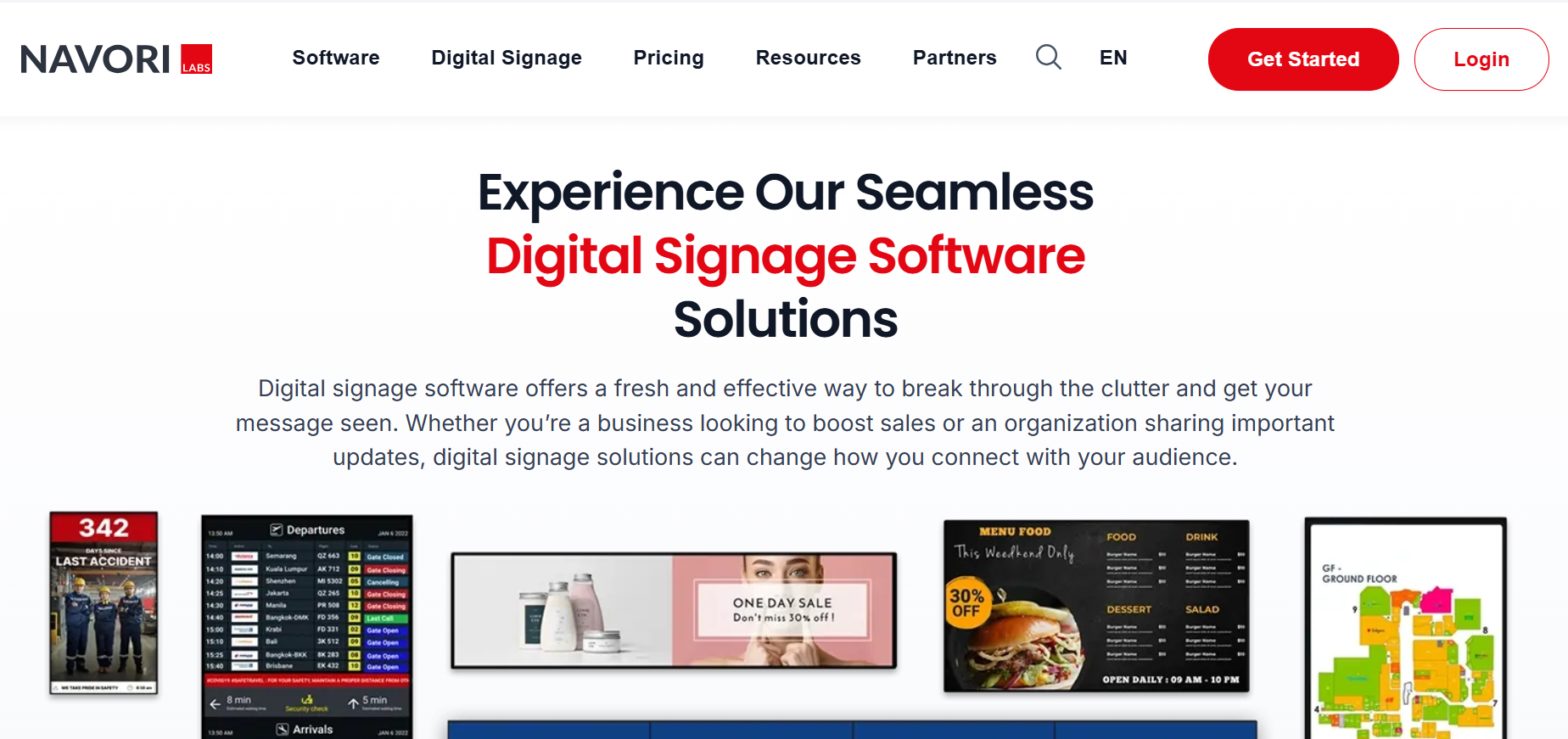
Global retail brands needing precision control may evaluate Navori Labs. Navori digital signage software solution is built for IT-heavy environments and complex digital signage networks.
It supports AI triggers, detailed automated scheduling, and deep data integrations. However, it is designed primarily for enterprise users.
Why consider it: Best suited for large-scale digital signage networks with dedicated IT teams.
Key Features:
- AI-triggered display content
- High-precision scheduling
- Enterprise integrations
- Advanced tools
10. Rise Vision – Simple and Affordable Retail Display Software
Community-focused retailers often prefer simplicity over complexity. Rise Vision digital signage software is affordable and easy to deploy, originally rooted in education markets.
It supports Google Slides integration and provides basic signage content templates. It may lack some advanced retail sales triggers but works well for small stores.
Why consider it: A practical digital signage solution for small retailers focused on improving communication and sharing company news.
Key Features:
- Low cost entry
- Google Slides integration
- Simple schedule content tools
- Easy setup
Comparison Table: Best Digital Signage Software for Retailers in 2026
Choosing the right digital signage software becomes easier when you compare scalability, AI capabilities, and retail performance side by side.
Comparison of the best digital signage software for retailers in 2026 highlights how each digital signage platform performs across hardware flexibility, remote management, AI features, and retail-focused functionality.
| Platform | Best For | Hardware Support | Ease of Use | Scalability | AI Features | Offline Mode | Retail Focus |
|---|---|---|---|---|---|---|---|
| AIScreen | Multi-location retail chains, QSR, fashion, grocery | Smart TVs, Android, Fire TV, commercial displays, multiple operating systems, own hardware | Very High | Enterprise-Level (Unlimited digital signage network) | Advanced AI content tools | Yes | Very Strong |
| Kitcast | Apple TV retail environments | Apple TV, Android, Fire TV | Very High | High | AI content tools | Yes | Strong |
| ScreenCloud | Hybrid office-retail setups | Wide media players support | High | High | Limited AI tools | Yes | Medium |
| Yodeck | Small retailers & cafés | Raspberry Pi, basic media players | Medium | Moderate | Basic AI widgets | Yes | Medium |
| OptiSigns | Android-based retail stores | Android TVs, Fire TV | Medium | High | Analytics-focused AI | Yes | Strong |
| Raydiant | Restaurants & experiential retail | Proprietary + selected hardware options | High | High | POS-linked automation | Yes | Very Strong |
| Spectrio | Managed content retail brands | Commercial displays | Medium | High | Limited | Yes | Strong |
| BrightSign | Enterprise flagship stores | Dedicated BrightSign media players | Low (Complex) | Enterprise-Level | Minimal AI | Yes | Medium |
| Navori Labs | Global enterprise retail networks | Commercial hardware + enterprise systems | Low (IT-heavy) | Very High | Advanced AI triggers | Yes | High |
| Rise Vision | Small community retailers | Basic media players, Google Slides support | High | Moderate | Minimal | Yes | Medium |
What Features Should You Look for in the Best Digital Signage Software for Retailers?
Price alone should never determine your digital signage software choice in 2026. Best digital signage software features for retailers must support scalability, automation, remote management, and long-term retail performance across your digital signage network.
Here are the key features to prioritize:
1. AI Capabilities: AI-powered digital signage software helps retailers create signage content faster and keep digital displays fresh. Built-in AI tools reduce manual work and improve promotional scheduling across multiple screens.
2. Offline Resilience: A reliable digital signage software solution should cache display content locally. If Wi-Fi fails, your digital signage keeps running. Streaming-only signage software can result in black screens.
3. Scalability: Your digital signage platform should grow with your business. Adding new screens or multiple locations must be simple through centralized control and remote management.
4. Ease of Use: A user friendly interface with drag and drop functionality ensures your team actually updates digital menus and promotions. The best digital signage software is easy to manage without deep technical expertise.
What Do Experts Say About the Best Digital Signage Software for Retailers in 2026?
Retail leaders agree that digital signage is no longer just a marketing tool, it is a measurable revenue driver. Expert insights on the best digital signage software for retailers in 2026 consistently highlight engagement impact, sales lift, and in-store influence.
As Alex Chirva, CPO at Kitcast, explains:
“Digital signage today is the ‘silent salesperson’ that never takes a break. The impact on the bottom line is clear: statistics show that 8 out of 10 customers enter a store specifically because of engaging digital signage, and dynamic displays can drive a sales lift of up to 33% for featured items. In 2026, this technology is no longer optional, it is the key to increasing dwell time, influencing decisions at the critical moment, and turning foot traffic into revenue.”
Industry research supports this view. Studies show that digital signage captures up to 400% more views than static displays, and retailers using dynamic digital displays report stronger engagement and faster promotional response.
The message from experts is clear: the best digital signage software in 2026 is evaluated not just by features, but by performance, its ability to increase dwell time, influence purchasing decisions, and scale efficiently across retail environments.
These trends are also reflected in the digital signage market: size, share & growth report, which highlights rapid global adoption as businesses invest in smarter communication technologies to drive engagement and revenue growth.
Why Do Retailers Choose AIScreen as the Best Digital Signage Software?
Retailers choose AIScreen as the best digital signage software because it combines flexibility, scalability, and real retail performance in one powerful platform. It supports multiple screens, multiple locations, and different operating systems while offering centralized control, AI-powered tools, remote management, and reliable offline playback.
As a leading provider in the industry, AIScreen delivers a complete digital signage software solution built for growth. From digital menus to enterprise retail networks, it helps brands engage customers, improve communication, and turn in-store traffic into measurable revenue with simple setup and long-term scalability. Contact us.
FAQs
What hardware do I need to run digital signage in a retail store?
Hardware needed to run digital signage in a retail store is simpler than many retailers assume. Most modern TVs with an HDMI port work perfectly with digital signage players or media players like Android devices, Fire TV, or commercial displays. Commercial screens are brighter and built for long hours, but standard TVs are suitable for most indoor retail shops.
Can I manage multiple retail locations from one dashboard?
Manage multiple retail locations from one dashboard is one of the main advantages of cloud-based digital signage software. A centralized content management system allows remote management of multiple screens across different cities. You can update display content, adjust signage content, and control your entire digital signage network from one login.
Does digital signage actually increase retail sales?
Digital signage actually increases retail sales by capturing attention and influencing purchase decisions at the point of sale. Moving visuals attract more engagement than static posters. Studies show dynamic digital displays can drive up to 33% sales lift on promoted items and significantly increase impulse purchases.
Is digital signage difficult to install in retail environments?
Digital signage installation in retail environments is typically plug-and-play. Most digital signage software solutions require connecting a media player to your TV, installing the signage software app, and pairing it to your dashboard. Setup usually takes only a few minutes without deep technical expertise.
Can I schedule promotions automatically across different stores?
Scheduling promotions automatically across different stores is fully possible with modern digital signage software. Advanced scheduling and promotional scheduling features allow you to schedule content by time zone, location, or campaign. This ensures each store displays relevant offers at the right time without manual updates.
