
What Is the Digital Signage Market Size, Share & Growth?
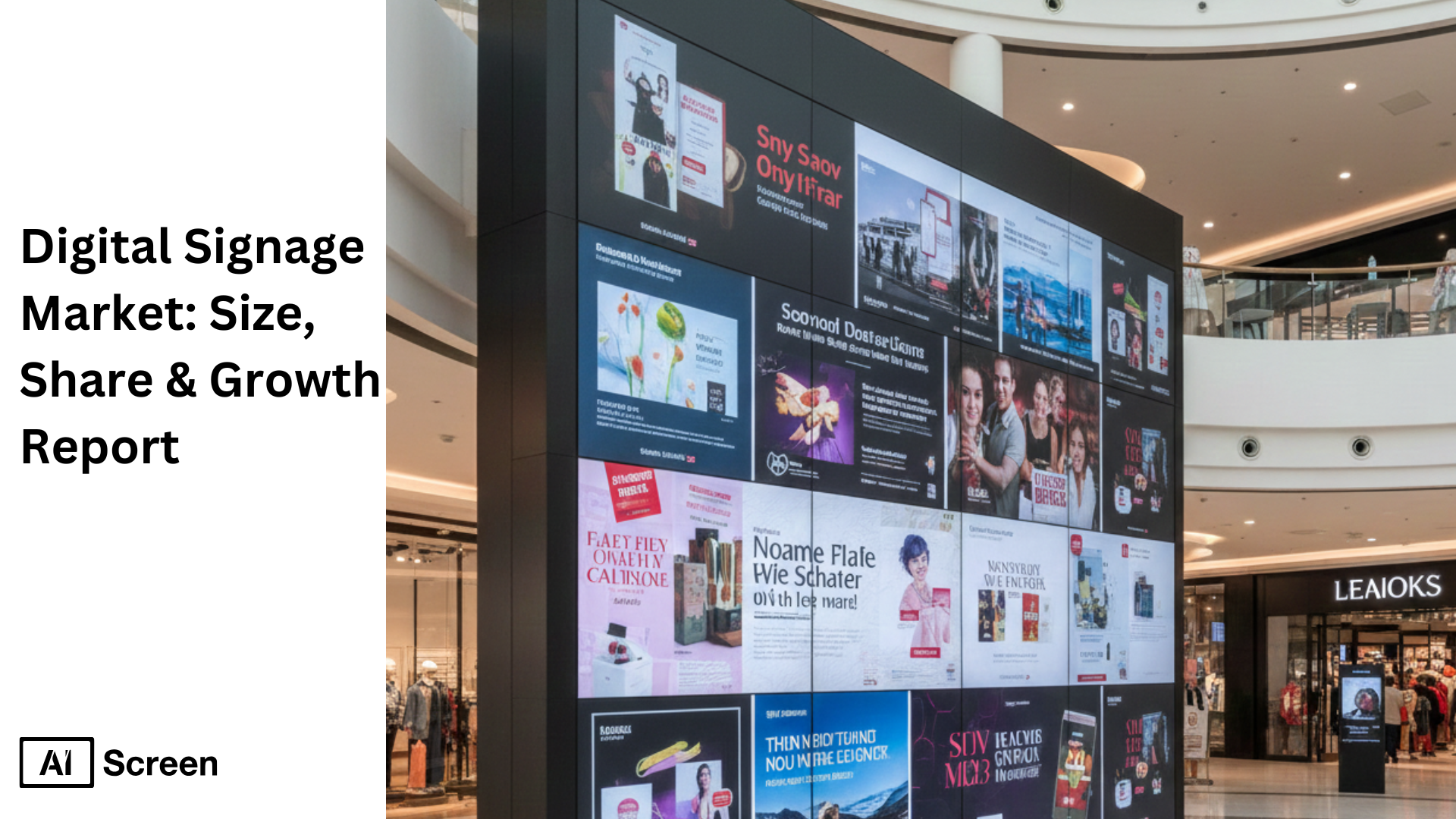
The global digital signage market is growing rapidly, driven by AI innovation, smart city adoption, and the increasing use of interactive digital displays. According to Precedence Research, the market is valued at USD 29.19 billion in 2025 and is expected to reach USD 54.69 billion by 2034, expanding at a CAGR of 7.41%. North America dominates the market with a 37% revenue share, powered by retail and hospitality digitization, while Asia Pacific shows strong momentum from rising investments in shopping malls, corporate centers, and transportation hubs.
In this article, we will uncover how display technologies, smart content systems, and cloud-based signage platforms are reshaping customer engagement worldwide. Industries are now combining AI, IoT, and 4K/UHD displays to deliver personalized experiences in real time, maximizing campaign reach and brand visibility. As businesses continue to digitize retail spaces and public environments, the demand for scalable and energy-efficient digital signage solutions will only accelerate.
How Big Is the Digital Signage Market?
The global digital signage market was valued at USD 28.83 billion in 2024 and is projected to reach USD 45.94 billion by 2030, growing at a CAGR of 8.1% between 2025 and 2030. Growth is fueled by rising adoption of interactive digital signage solutions, the integration of IoT and cloud-based content systems, and expanding applications across retail, education, healthcare, and transportation industries.
The proliferation of large-format digital displays, digital billboards, and 4K video walls continues to redefine brand visibility and customer engagement worldwide.
How Does the Digital Signage Market Vary by Region?
Global expansion is being led by advanced and emerging economies alike.
- North America: Dominates the market with over 34% share in 2024, driven by rapid tech adoption in retail and hospitality. The presence of industry leaders like Samsung Electronics and LG further propels innovation and market expansion.
- Europe: Holds around 28% share and is the fastest-growing region with an annual growth rate exceeding 7%. Strong investments in smart city projects and digital signage installations in transportation and public sectors are key drivers.
- Asia-Pacific: Expected to grow at a CAGR of over 11%, led by China, India, and Japan. Retail modernization, urban infrastructure upgrades, and rising disposable incomes fuel huge demand for digital signage systems.
- Middle East & Africa: Growth accelerated by high-profile infrastructure and tourism projects, especially in Gulf countries like Saudi Arabia and the UAE. Increased adoption of digital billboards and interactive kiosks in malls and airports supports expansion.
Which Industries Grow the Digital Signage Market?
- Retail: The retail sector services over 21% of the market, as physical stores invest in dynamic digital signs to drive sales, promote flash deals, and merge online/offline customer journeys.
- Transportation: Airports, metro stations, and bus terminals increasingly use video walls and wayfinding displays for passenger information and advertising, enhancing user experience and operational efficiency.
- Healthcare: Hospitals deploy digital signage for patient communication, wayfinding, and health awareness campaigns, improving patient satisfaction and operational flow.
- Education: Universities and schools integrate interactive displays and notification systems to disseminate information quickly and foster collaborative learning environments.
What Is the Digital Signage Market Forecast?
| Region | Market Share (%) 2024 | Growth Rate (CAGR 2025–2030) | Key Industries Driving Growth |
|---|---|---|---|
| North America | 34% | 7.8% | Retail, Transportation |
| Europe | 26% | 6.9% | Advertising, Education |
| Asia-Pacific | 28% | 10.2% | Retail, Infrastructure, Smart Cities |
| Middle East & Africa | 12% | 8.5% | Hospitality, Healthcare |
Technological shifts toward smart displays, AI-powered content automation, and energy-efficient video screens will continue to push global market expansion through the forecast period 2030.
Who Leads the Digital Signage Market?

Market share leadership in the digital signage industry is dominated by a few key companies that set technological and business innovations standards. These industry giants leverage advanced product portfolios, strategic partnerships, and a focus on digital signage hardware and software integration to maintain competitive advantages globally.
AIScreen: AIScreen is a leading digital signage software provider specializing in easy-to-use, cloud-based platforms that power screens of any size or location. Known for its affordability and reliability, AIScreen offers remote content management, real-time analytics, and seamless multi-location control, making it ideal for SMBs and enterprises alike. Their continuous innovation and customer-centric support position AIScreen as a fast-growing competitor focused on simplifying digital signage management worldwide.
LG Electronics: Holding a strong market position, LG Electronics excels with OLED and advanced LCD technologies that provide vibrant visuals and thin form factors. They focus on interactive digital signage and comprehensive software solutions, including CMS platforms, to support large-scale retail and hospitality deployments. LG’s flexibility in adapting to customer needs and partnerships boosts its market penetration.
NEC Display Solutions: Renowned for reliable commercial-grade displays and video wall systems, NEC targets enterprise, transportation, and government sectors. Their approach combines durable hardware with software analytics tools to provide holistic digital signage ecosystems. NEC’s strategic alliances and focus on customer service strengthen long-term loyalty and market retention.
Scala: A leader in software-centric digital signage, Scala specializes in cloud-based content management, real-time analytics, and personalized content delivery. Their platforms enable dynamic campaign management and automation, offering retailers and corporate clients tools to increase engagement and ROI. Scala’s focus on innovation in user experience differentiates it from hardware-centric competitors.
These players collectively hold over 35% of the global digital signage market, with their strategies combining product innovation, sustainability efforts, and expansion through mergers and acquisitions. The market’s future will be shaped by advancements in AI-driven content, energy-efficient display technologies, and seamless platform integrations, ensuring these leaders remain at the forefront.


What Drives Digital Signage Market Growth?
The digital signage software market is evolving rapidly, fueled by innovations that enhance interactivity, connectivity, and content management capabilities. These growth drivers are reshaping how businesses engage customers and manage their digital communication networks effectively.
Integration of AI, IoT, and Data Analytics: AI and IoT technologies empower real-time content adaptation based on audience behavior and environmental factors. This seamless integration enables targeted advertising and operational efficiency, which is becoming a standard across retail, smart cities, and transportation.
Rise in Interactive and Dynamic Advertising Displays: Interactive kiosks and digital video walls are increasingly adopted to provide immersive customer experiences. These displays support touch, gesture, and voice control, fostering personalized engagement and higher conversion rates in sectors like retail and healthcare.
Growth in Energy-Efficient, 4K/8K, and OLED Displays: New energy-saving display technologies offering ultra-high-definition visuals attract enterprises striving for sustainability without compromising image quality. The improved picture fidelity and efficiency drive adoption across varying business sizes.
Expansion of Cloud-Based CMS and Remote Management: Cloud solutions simplify content distribution and updates across multiple locations, reducing operational overheads. This scalability and flexibility support rapid digital network expansions, especially important for multi-site retailers and global enterprises.
How Is the Digital Signage Market Segmented?
The digital signage market is segmented into three major categories: type, component, and application. Each category captures unique demand drivers and market dynamics. Understanding these segments helps businesses tailor strategies to specific needs and growth opportunities within the broader digital signage ecosystem. Let’s check out how it proceeds.
By Type
Digital signage types include video walls, kiosks, transparent LED displays, and interactive screens.
- Video walls led the market in 2024, accounting for over 25% of revenue, favored for their scalability in retail and corporate environments.
- Kiosks are gaining traction due to rising demand for self-service and interactive customer engagement across retail, transportation, and healthcare.
- Transparent LED displays and interactive screens offer novel immersive experiences, targeting luxury retail and public venues.
By Component
The market is divided into hardware, software, and services segments.
- Hardware includes digital displays, media players, mounts, and dominates by revenue share for delivering high-quality visuals.
- Software encompasses content management systems and analytics tools, forecasted to grow at the fastest rate with a CAGR of 10.2% through 2030, driven by cloud and AI innovations.
- Services cover installation, maintenance, and integration, supporting expanding deployments and ensuring system uptime.
By Application
Digital signage is finding broad adoption in the retail, corporate, healthcare, hospitality, education, and transportation sectors.
- Retailers use digital signage for in-store promotions, custom messaging, and enhancing shopper experiences.
- Hospitals deploy digital wayfinding displays for patient navigation and health alerts.
- Transportation facilities use video walls to communicate real-time travel info, improving passenger flow.
- Educational institutions adopt interactive displays for engagement and information dissemination.
These segments collectively underscore the multifaceted growth and technological evolution shaping the global digital signage market.
Which Regions Dominate the Digital Signage Market?
Regional adoption of digital signage varies widely, influenced by economic factors, technological readiness, and government initiatives. Here’s a breakdown of how different regions are embracing digital signage, shaping the global market’s growth.
- North America: The region leads with over 34% market share, driven by early adoption of advanced display technologies and integration with retail expansion. The U.S. forefront in ad-tech integration and investments in interactive, AI-enhanced signage platforms boosts demand in both urban and suburban centers.
- Europe: Europe experiences rapid growth, currently expanding at an annual rate of around 7-8%, fueled by government digitalization efforts and sustainability programs. Nations such as the UK, Germany, and France invest heavily in smart city infrastructure incorporating digital signage for public services, transportation, and commercial spaces.
- Asia-Pacific: The fastest-growing market segment with a CAGR exceeding 11%, driven by smart city initiatives, manufacturing hubs, and rising disposable incomes across China, India, Japan, and Southeast Asia. Retail modernization and infrastructure projects power substantial deployments of interactive kiosks and large-format video walls.
- Middle East & Africa: Growth here is propelled by mega infrastructure developments and modernization efforts in the Gulf states and South Africa. Investments in smart airports, stadiums, and retail stores and complexes, especially in Saudi Arabia and the UAE, fuel demand for digital billboards, wayfinding, and interactive digital displays.
These regional digital signage market trends trdigital signage market trendsends underline a global shift toward digital signage as a key tool for enhancing communication, consumer engagement, and urban management in line with broader smart city and retail transformation agendas.
Which Technologies Shape the Digital Signage Market?
The digital signage market is being revolutionized by emerging technologies that enhance personalization, connectivity, and display capabilities. Between 2025 and 2030, these innovations are expected to drive significant growth and transform how businesses communicate with their audiences.
- AI-Driven Personalization for Audience Targeting: Over 60% of digital signage systems are projected to integrate AI by 2025 to deliver real-time, hyper-personalized content based on demographics, behaviors, and environmental data. For example, retailers can promote specific digital signage products depending on current shopper profiles, boosting engagement and sales.
- Cloud-Connected Signage for Real-Time Content Delivery: Cloud-based CMS platforms enable remote management, instant content updates, and multi-location control, supporting scalability in digital signage networks. This flexibility reduces operational costs and allows businesses to maintain consistent messaging globally.
- IoT Sensor Integration: Sensors collect contextual data like foot traffic, temperature, and weather to trigger relevant digital content. This technology creates dynamic, context-aware signage that improves customer interaction in venues like airports, malls, and smart city installations.
- Transparent and Flexible OLED Screens: OLED innovations offer ultra-thin, flexible, and transparent displays that enable futuristic designs and new placement opportunities in retail windows, automotive heads-up displays, and artistic installations. These displays promise to redefine visual communication aesthetics post-2025.
Together, these technologies are shaping a more intelligent, interactive, and visually stunning digital signage landscape that adapts seamlessly to consumer and business needs in the coming decade. Many of these innovations will take center stage at major industry events worldwide. You can explore upcoming trends in more detail by checking the top 10 digital signage exhibitions in 2026, where the newest AI, IoT, and display technologies will be showcased.
What Challenges Face the Digital Signage Market?
The digital signage industry faces several significant challenges but also presents compelling opportunities that could redefine how businesses engage their audiences while overcoming operational hurdles.
High Initial Hardware Costs: Advanced digital signage displays and video walls require substantial upfront investment, which may deter small and medium businesses. However, the rise of affordable, plug-and-play media players and subscription-based cloud CMS models is mitigating this barrier.
Connectivity and Security Issues: Ensuring stable, secure network connections across multi-location digital signage networks is complex. Cybersecurity threats are increasing demand for robust encryption, regular updates, and compliance with data protection regulations to safeguard content and user data.
Complexity in Multi-Location Deployment: Managing content and technical infrastructure over diverse geographic locations poses logistical and operational challenges, often needing centralized cloud management solutions and real-time monitoring for efficiency.
Programmatic Advertising and Data-Driven Campaigns: Digital signage is increasingly integrated with programmatic ad buying platforms, enabling dynamic, automated ad placements that optimize ROI and target audiences precisely. This opens revenue streams for retailers and venues alike.
Smart Retail Ecosystems and AI-Enhanced Analytics: AI-powered analytics provide actionable insights into customer behaviors and content effectiveness, helping businesses tailor messages and improve engagement by measuring digital signage success with audience metrics. Connected smart retail setups can automate responses, personalize offers, and increase sales via intelligent digital signage.
These challenges underscore vital areas for innovation, while the emerging opportunities, from programmatic dooh digital signage to AI analytics, highlight the transformative potential of digital signage technology in driving smarter, data-centric marketing and user experiences.
Frequently Asked Questions
What is the current size of the global digital signage market?
The current size of digital signage market at the global level is around USD 28.8 billion in 2024, and it’s expected to grow to nearly USD 46 billion by 2030, expanding at a CAGR of about 8.1%. This rapid growth reflects businesses’ increasing investment in digital technological advancements to enhance customer engagement and communication.
Which region holds the largest share of the digital signage market?
The region that holds the largest share of the digital signage market is North America, holding over 34% of the digital signage market share in 2024. It benefits from early adoption, advanced retail ecosystems, and integration of ad tech and AI, especially in urbanized and commercial hubs across the U.S. and Canada.
What are the main factors driving digital signage market growth?
The main factors driving digital signage market growth include the integration of AI and IoT for smarter personalized content, rising demand for energy-efficient 4K/8K and OLED displays, expansion of cloud-based content management systems allowing remote updates, and the surge in interactive, dynamic digital advertising solutions.
Who are the key players in the digital signage market?
The key players in the digital signage market include leading companies such as AIScreen, known for its simple, cloud-based software solutions; LG Electronics with its advanced OLED screens and CMS platforms; NEC Display Solutions with durable hardware and integrated services; and Scala, a software-centric leader in cloud content management and analytics.
How will AI and IoT impact the future of the digital signage market?
As per the impact of the future of the digital signage market, AI will drive hyper-personalized, real-time content delivery based on customer behavior analytics, while IoT sensor integration will enable context-aware signage that adapts to environmental cues like foot traffic and weather. Together, they will transform digital signage into intelligent, responsive communication tools in retail, transportation, and smart cities.
Why Choose AIScreen for the Digital Signage Market?
AIScreen gives you one cloud-based platform to launch, manage, and scale digital signage across every location from a single dashboard. Start free or book a demo to see how fast your screens can go live.
AIScreen, a leading provider of digital signage solutions, helps businesses stay competitive in the growing digital signage market with flexible content management, remote screen control, scheduling, and scalable deployment tools. Whether you manage a few displays or a large multi-location network, AIScreen makes it easier to deliver consistent, engaging content while simplifying day-to-day digital signage operations.
