
What Are the OSHA Construction Site Signage Requirements?
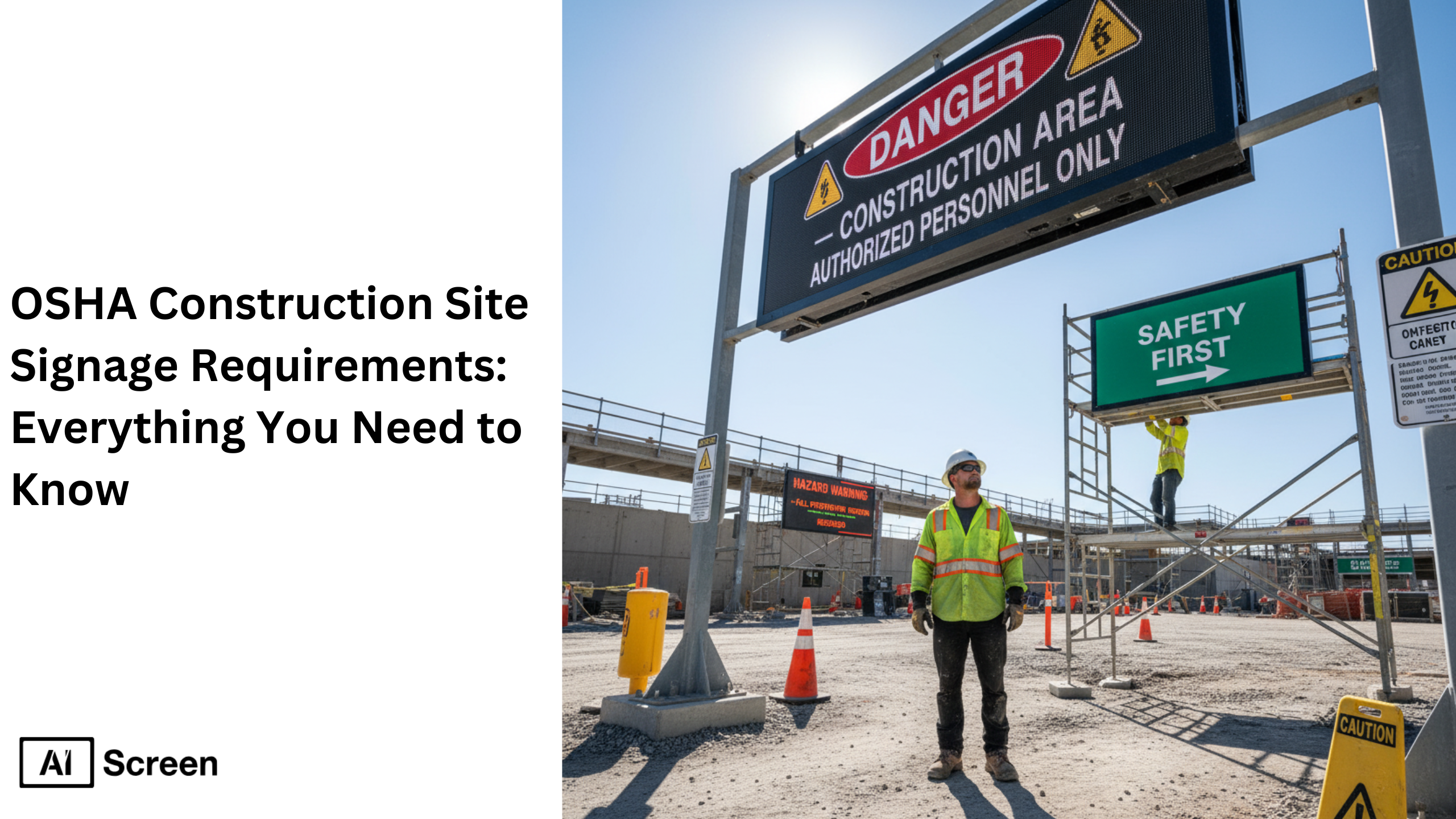
Construction sites are high-risk environments, which makes proper safety signs and compliant safety signage essential for protecting workers, maintaining OSHA safety standards, and ensuring legal compliance, especially when following OSHA construction site signage requirements. Under OSHA’s 29 CFR 1926 Subpart G, employers must use appropriate OSHA safety signs, including admittance signs, labels where tags shall be used, and visual indicators that reflect the actual or potential presence of hazards. Sign formats, like white letters, green upper panel, and clear symbol usage, help workers quickly identify risks, including biological hazards and possible minor or moderate injuries. According to the U.S. Bureau of Labor Statistics, construction recorded 1,075 worker fatalities in 2023, the highest of any private industry sector.
In this blog, we break down everything you need to know about OSHA construction site signage requirements, from sign types and placement best practices to sourcing durable materials and using digital signage to enhance safety compliance. This guide also explains when signage shall be used to highlight viable hazardous agents, and how proper formatting improves hazard awareness on-site.
Teams that manage OSHA construction site signage requirements across many job sites increasingly rely on digital signage software to keep hazard messaging current. A cloud platform lets safety managers push updated danger, warning, and caution notices to every screen at once, so a change in site conditions reaches workers within seconds instead of waiting for printed boards to be replaced.
What Are OSHA Hazard Signal Words?
OSHA divides hazard signage into three main signal-word classifications: Caution, Warning, and Danger signs. Each classification reflects the severity of the risk and follows precise color, lettering, and design standards to ensure clarity.
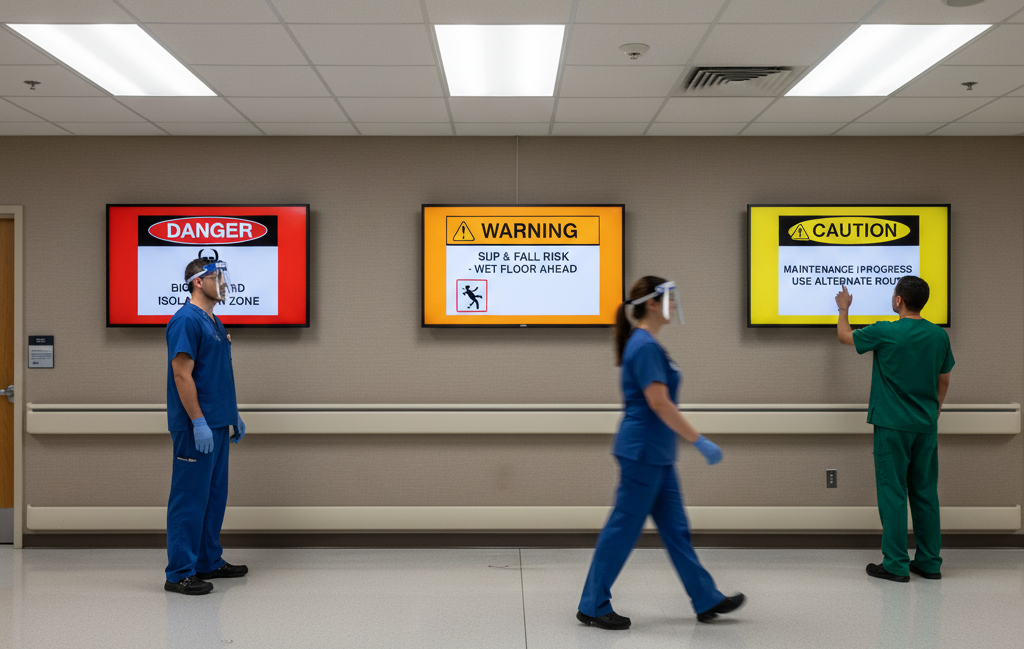
- Danger Signs: These indicate immediate hazards that can cause death or serious injury. OSHA requires them to have a red upper panel, a white bottom panel, and black border lines.
- Warning Signs: Used to identify potentially hazardous situations that might not be immediately life-threatening but could lead to serious injury. These signs typically use black letters on an orange background with a safety alert triangle.
- Caution Signs: Designed to warn against minor or moderate risks or unsafe practices. OSHA specifies black “Caution” lettering on a yellow background.
These classifications align with ANSI Z-series standards (e.g., ANSI Z535) on safety symbols, color contrast, and design consistency. The use of a safety alert symbol (a triangle with an exclamation mark) and consistent signal-word placement ensures that workers instantly grasp the level of danger, which is critical when preventing accidental injury.
OSHA requires these signs to be legible at all times when the hazard exists, and they must be removed or covered once the risk is gone. Proper contrast, symbol consistency, and readability (even in low light) contribute to safer behavior and a reduced risk of serious injury.
What OSHA Safety Signs Are Required?
Beyond warning of hazards, safety signage conveys vital information about emergency procedures, required equipment, and general site protocols. This category includes signs that aren’t strictly about imminent danger but are essential for workplace safety. Contractors running several job sites at once often connect their screens into a digital signage advertising network so these safety messages stay consistent across every location.

Some common types of building site safety signs are:
- First Aid Signs: They must be clearly visible, especially in high-traffic areas, to enable quick access during emergencies. Proper signage ensures workers don’t waste critical seconds locating medical equipment, helping prevent minor or moderate injuries from escalating.
- PPE Requirement Boards: Showing when and where personal protective equipment is mandatory. These boards act as constant reminders at points of entry or near potential hazards, ensuring all personnel comply before accessing the area. They reinforce occupational safety and health standards and help avoid unsafe practices.
- Fire Exit and Emergency Assembly Signs: Marking exits, fire safety stations, and evacuation routes. These signs should be positioned using minimum distance guidelines so that they are readily apparent even in poor visibility. Clear directional arrows reduce confusion and help workers locate emergency firefighting equipment quickly during crisis situations.
These safety signs improve risk awareness, guide the use of emergency firefighting equipment, and help coordinate faster responses in emergencies. By clearly identifying hazard zones and non-hazard signs, these signs reinforce safety measures and reduce confusion when time is critical, while also supporting compliance with arc flash labeling requirements.
Where Do You Place Construction Site Signs?
You need to place building site signs in exact, visible locations to ensure they are effective and compliant. OSHA’s 29 CFR 1926 Subpart G provides guidance on where safety instruction signs, danger signs, and warning signs must go.
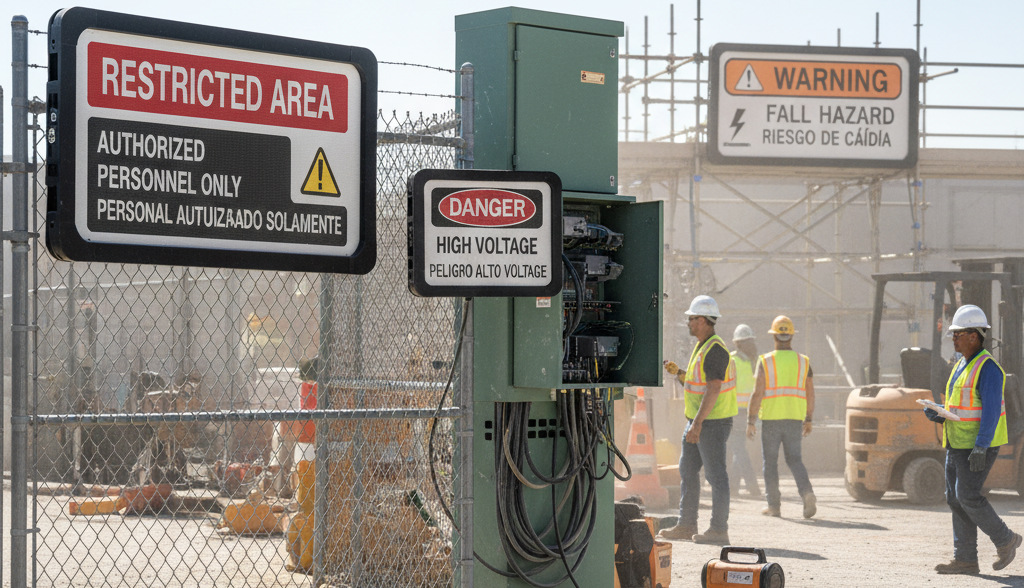
- At entry points for restricted zones: Signage must show whether admittance is allowed, especially in hazardous or high-risk areas. It also helps prevent unauthorized access by clearly defining boundaries between safe and restricted zones. Using bold, high-contrast visuals ensures workers instantly recognize critical restrictions before entry.
- Near specific hazards: Place signs next to electrical hazards, chemical storage areas, or height-related risks to alert workers immediately. This proximity ensures instantaneous hazard recognition, prompting workers to take preventive actions without delay. Including clear pictograms helps communicate danger even when language barriers exist.
- Eye level, well-lit, and unobstructed: OSHA requires that signs be readable and not hidden by equipment or materials. Positioning signage at a standard visual height helps ensure maximum visibility throughout the workday. Regular inspection is necessary to confirm they aren’t blocked due to equipment movement or environmental changes.
- Multilingual signs: With a diverse workforce, it’s often necessary to post signs in more than one language to communicate hazards clearly across all teams. Providing translations improves inclusivity and reduces accident risks caused by misunderstandings. Bilingual or pictogram-based signs are especially effective in fast-paced construction environments.


Where to Source Construction Site Signage?
To source high-quality construction site signage that meets OSHA requirements, look for certified providers who follow ANSI Z-series standards. Materials you choose should support durability, visibility, and regulatory compliance.
- Aluminum signs are ideal for long-term permanence.
- Plastic signs work well for temporary zones.
- Reflective vinyl signage is best for outdoor or night-shift sites where visibility matters.
You can also explore digital alternatives for real-time updates: digital signage screens provide dynamic content, enabling instant hazard alerts, work-order messages, or multilingual safety instruction signs. These modern signs enhance accident prevention signs and allow for automated scheduling displays.
Recent data support the shift: according to the U.S. Bureau of Labor Statistics, electrocutions and struck-by incidents account for a significant portion of construction fatalities, highlighting that timely, visible signage can make a life-saving difference.
How Does Digital Signage Aid OSHA Compliance?
The role of digital signage in OSHA compliance and worker awareness is increasingly vital on modern construction sites.
With osha construction site signage requirements everything you need to know, digital screens can display safety signs that update in real time, delivering dynamic safety updates, incident alerts, and multilingual instructions to communicate potential hazards and immediate danger.
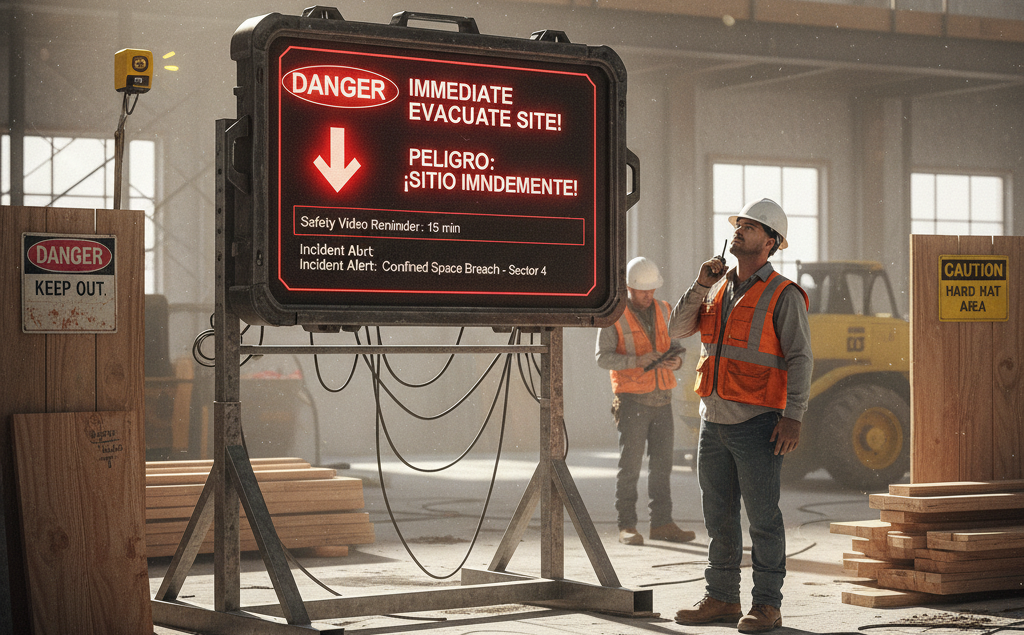
Digital signage supports OSHA safety by reinforcing training through scheduled safety videos, rapid broadcast of osha signs, and automated deployment of safety instruction signs. These displays allow you to place safety signs virtually anywhere on-site and schedule messages automatically, reducing the reliance on static boards and ensuring compliance with osha requirements.
During emergencies, digital signage can flash urgent alerts, guide workers to exit signs, or provide health administration instructions instantly.
A data-backed insight illustrates the impact of connected warning systems, according to the NIOSH Science Blog, struck-by incidents are the second leading cause of fatalities among construction workers, and NIOSH has developed proximity-warning systems that alert operators when equipment nears workers, illustrating how safety signage, when coupled with technology, can significantly improve occupational safety and health.
How Digital Signage Enhances Construction Site Communication
Interactive, cloud-based displays improve coordination and safety awareness throughout a construction site. These systems can broadcast real-time hazard alerts whenever risk conditions change, such as when machinery moves into a restricted area or a chemical spill occurs. They can also deliver weather and site condition updates, giving workers advance warning about slippery surfaces, high winds, or other hazard poses.
Moreover, digital signage supports ongoing training: you can run worker training videos, compliance reminders, and safety briefings directly on site, reinforcing job safety without waiting for formal meetings. When integrated with IoT devices or wearable tech, these displays become even smarter. For example, if a wearable detects that a worker is too close to a dangerous zone, a nearby screen can flash a caution sign or safety tip, ensuring special precautions are communicated just in time.
This level of real-time, data-driven safety communication transforms construction signs from static reminders into an active, responsive system. As we’ve covered in this article on osha construction site signage requirements everything you need to know, digital signage isn’t just a compliance tool, it’s a proactive way to protect workers.
What Other Construction Site Sign Rules Apply?
OSHA construction site signage requirements often overlap with other regulated signage standards a project must satisfy. Sites that include parking areas, for example, must also meet ada parking space signage requirements, which govern the size, height, and symbol placement of accessible parking markers. Reviewing these related rules together helps a project stay compliant across every posted sign on the property.
How Can AIScreen Support OSHA Construction Site Signage Requirements?
Meeting OSHA construction site signage requirements means using the correct signal words, colors, symbols, and sign placement so workers can identify hazards quickly. Combining compliant physical signs with digital displays can also help construction teams keep safety messages current, improve visibility, and maintain more consistent communication across active job sites.
AIScreen is a leading digital signage provider that helps construction teams display safety alerts, site updates, emergency instructions, and compliance reminders across multiple screens and locations. With centralized content management and real-time updates, AIScreen can support OSHA construction site signage requirements while helping teams stay informed and inspection-ready throughout the project.
Frequently Asked Questions
What are OSHA signage requirements for construction sites?
The OSHA signage requirements for construction sites mandate that safety signs clearly inform about potential hazards, areas of immediate danger, and the correct signal word (e.g., “Danger,” “Warning,” “Caution”). These osha signs must follow size, color, and placement guidelines to ensure they are effective in preventing injury.
What types of safety signs are required under OSHA regulations?
Under OSHA regulations, you’ll need several categories of safety signs, such as caution signs, warning signs, danger signs, fire safety signs, and notice signs. Each serves a distinct purpose to identify equipment, communicate hazards, or direct safe behavior, supporting comprehensive occupational safety.
How do you ensure your construction site signage meets OSHA standards?
To ensure osha safety signs meet standards, you should use the correct signal word and color scheme (for instance, yellow letters for caution) and follow American National Standards Institute (ANSI) design rules. Proper placement, like near hazardous operations or restricted zones — also ensures that special precautions are clearly communicated where and when they’re needed.
Why are OSHA-compliant signs important for worker safety?
OSHA-compliant signs are critical because they communicate potential hazards, provide clear safety instructions, and warn of immediate danger, helping to prevent accidental injury. When workers can see and understand these safety instruction signs, they’re better prepared to act safely and avoid serious incidents.
Can custom signs comply with OSHA standards if properly labeled?
Yes, custom construction signs can fully comply with osha requirements as long as they include the correct signal word, color background, safety symbols, and are readily apparent. The key is ensuring that the sign’s signal word, layout, and messaging meet OSHA’s and ANSI’s design standards for signs and labels.
