
Which Are The Best Sponsorship Signage Examples?
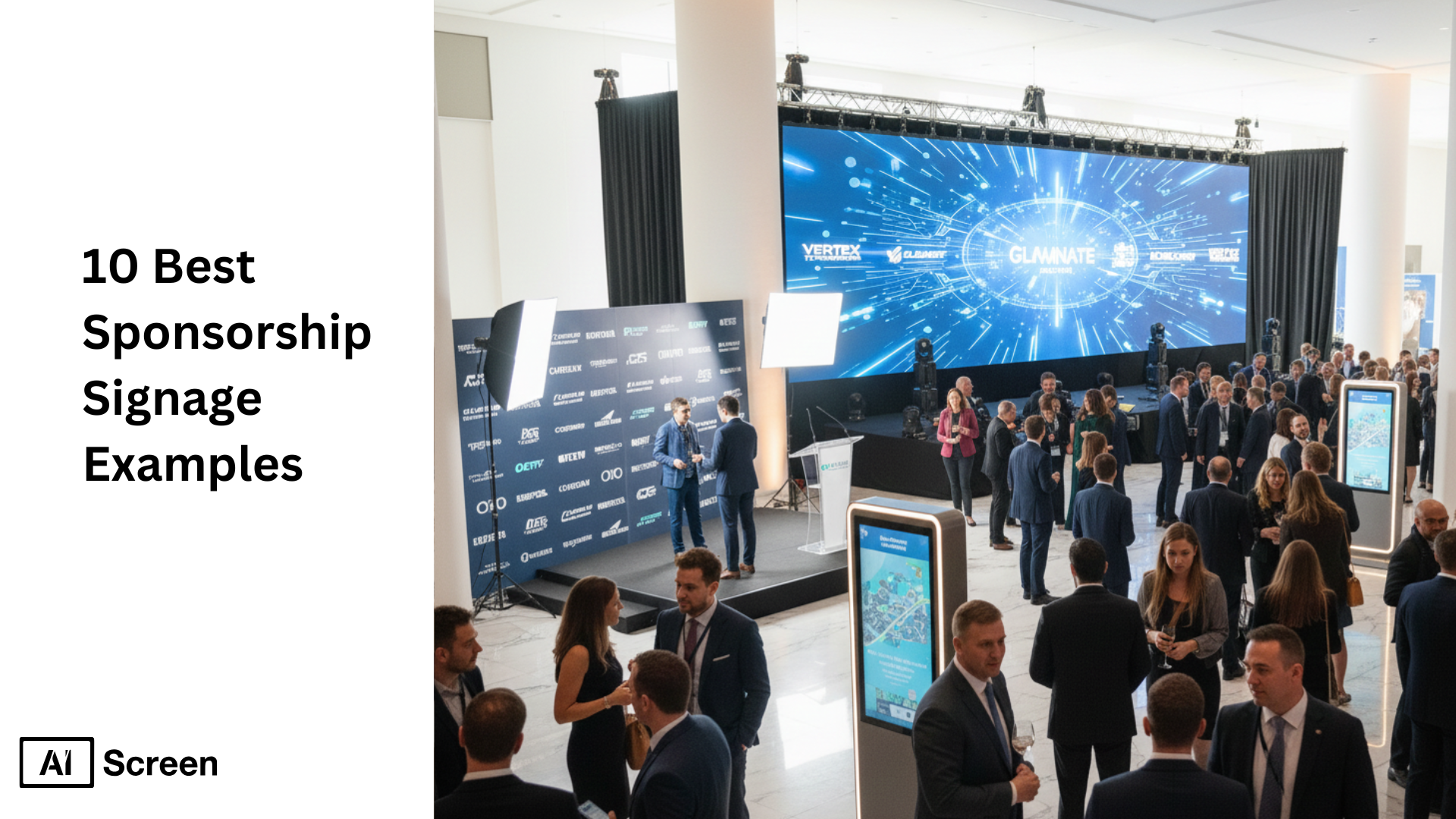
Sponsorship signage is a powerhouse in today’s booming event and marketing world, with the global sponsorship market soaring to nearly $97.5 billion in 2024 and projected to almost double by 2030. “Interested to know a secret? Creative, clear signage attracts and can lift a sponsor’s brand visibility by up to 50%!” The savvy event stage planner knows that blending digital and experiential signage creates unforgettable moments, engages event attendees, and delivers impressive ROI for event sponsors.
In this article, we dive into the 10 best sponsorship signage examples designed to make sponsor logos pop, from captivating digital loops on LED walls and interactive branded zones to bold banners and directional signage that guide and draw attention at key event venues and organizations. Prepare for practical event signage ideas packed with research-backed insights to boost every business event’s sponsorship program, enhance attendees’ experience, and maximize your next event’s impact on guests and sponsors alike.
1. Branded Entry Signage
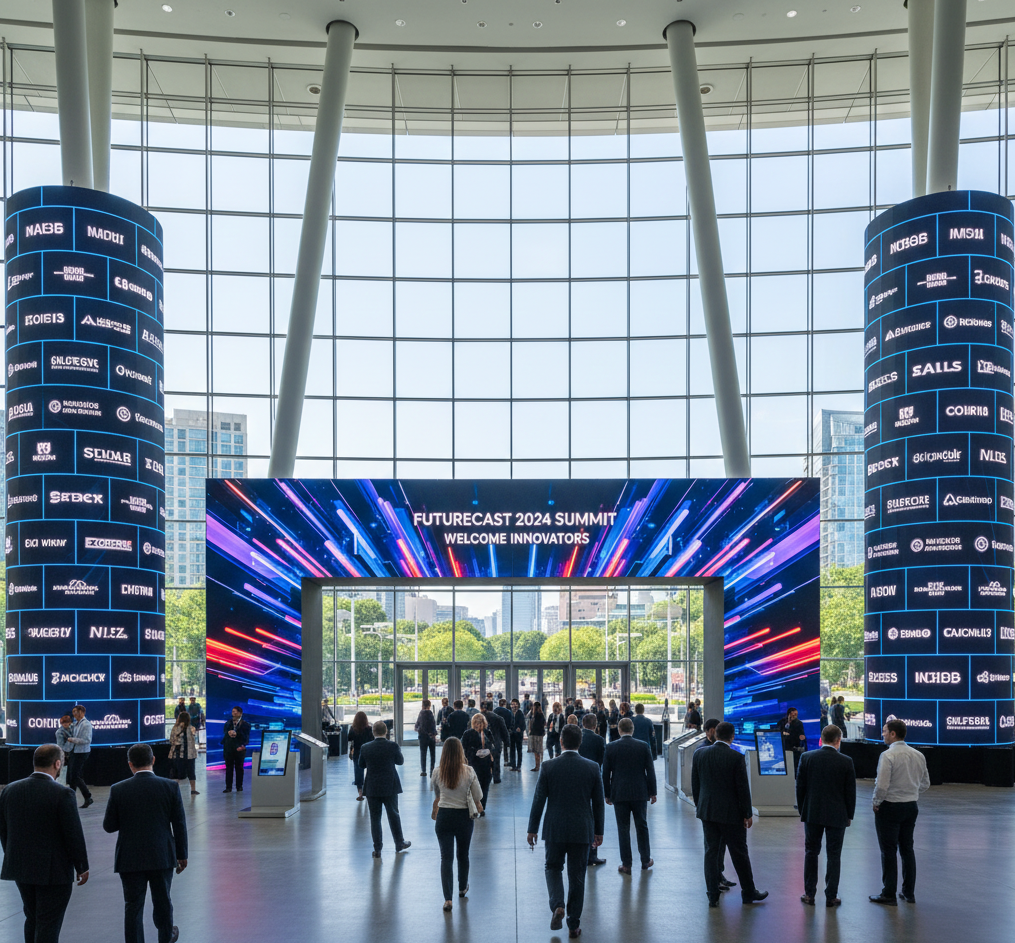
What if the moment event attendees stepped in, sponsor logos hit them like a neon lights welcome party? Branded entry screens such as LED walls, digital arches, and welcome displays deliver instant sponsor exposure at entrances for trade shows, corporate events, and outdoor events, turning first impressions into high-visibility branding wins that outshine hanging banners or yard signs.
Advertising on digital signage makes these entry displays even more flexible by allowing organizers to rotate sponsor messages, update promotions instantly, and showcase multiple brands on the same screen. This helps sponsors gain more visibility throughout the event while keeping entrance content fresh, dynamic, and relevant.
Let’s find out the types of branded entry screens in action.
- LED Walls: 10×20 ft 4K panels cycle 8-12 sponsor logos every 15s with animations, like D23 Expo’s Mickey walls for 100K+ attendees, spiking social media 300%.
- Digital Arches: 8-ft IP65 arches rotate brand logos + QR codes for discounts, ideal for registration booths or outdoor events vs. fence banners.
- Welcome Displays: 55″ touchscreens loop event program + sponsor promos, enabling event apps selfies, like business event photo ops.
Standout Features
- Interactivity: Touch/QR scans for exclusive discounts or directions, cutting waste time 50% while highlighting sponsors.
- Real-time updates: Cloud rotation of sponsor logos/social feeds (#EventSponsor) for next event flexibility.
- Cost-effective specs: Modular LEDs (100K-hour life) fit any space, from stair wraps to blank walls, slashing costs by 70%.
2. Interactive Digital Signage Displays
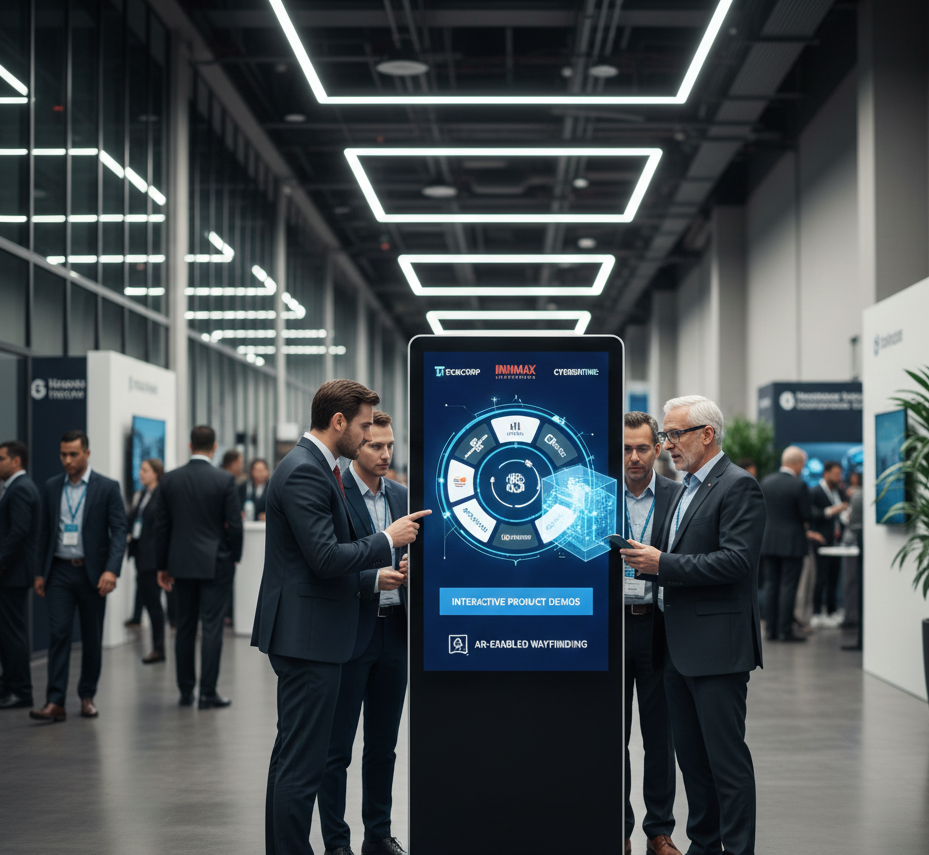
Event attendees tap sponsor logos to unlock exclusive discounts, instead of just glancing at boring hanging banners. Interactive digital displays like touchscreens, product demos, AR features, and sponsor kiosks supercharge engagement at trade shows, corporate events, and conferences, creating two-way interactions that boost attendees’ experience 400% over static signage.
With digital signage software, event organizers can manage these interactive displays from one platform, update sponsor promotions in real time, schedule content, and keep messaging consistent across multiple screens. This makes it easier to deliver timely offers, branded experiences, and engaging information throughout the event.
Types in Detail
- Touchscreens: 55″ 4K panels at registration booths let guests swipe through sponsor logos, event program, and QR-linked promos, like Dreamcast photo booths with branded frames shared on social media.
- Product Demos: Interactive stations showcase branded merchandise via videos/360° views, e.g., Jacobs’ VR demos at JETC conferences, driving live chat and downloads.
- AR Features: Scan sponsor logos for augmented overlays (e.g., virtual try-ons), turning blank walls into immersive spaces at business events.
- Digital Sponsor Kiosks: Standalone 32-65″ units in art print booths rotate 8-12 sponsors with gamified quizzes for exclusive discounts.
Key Features & Special Elements
- Two-way engagement: Touch/AR polls collect data (e.g., 50% less waste time navigating), tying into event apps for personalized directions.
- Real-time interactivity: Social media feeds (#EventSponsor) + leaderboards promote real-time content, slashing costs 70% vs. t-shirts or yard signs.
- Analytics boost: Track dwell time (avg. 12s), clicks, and ROI, which is ideal for highlighting sponsors in high-visibility registration areas.
3. Innovative Table Arrangements Signage
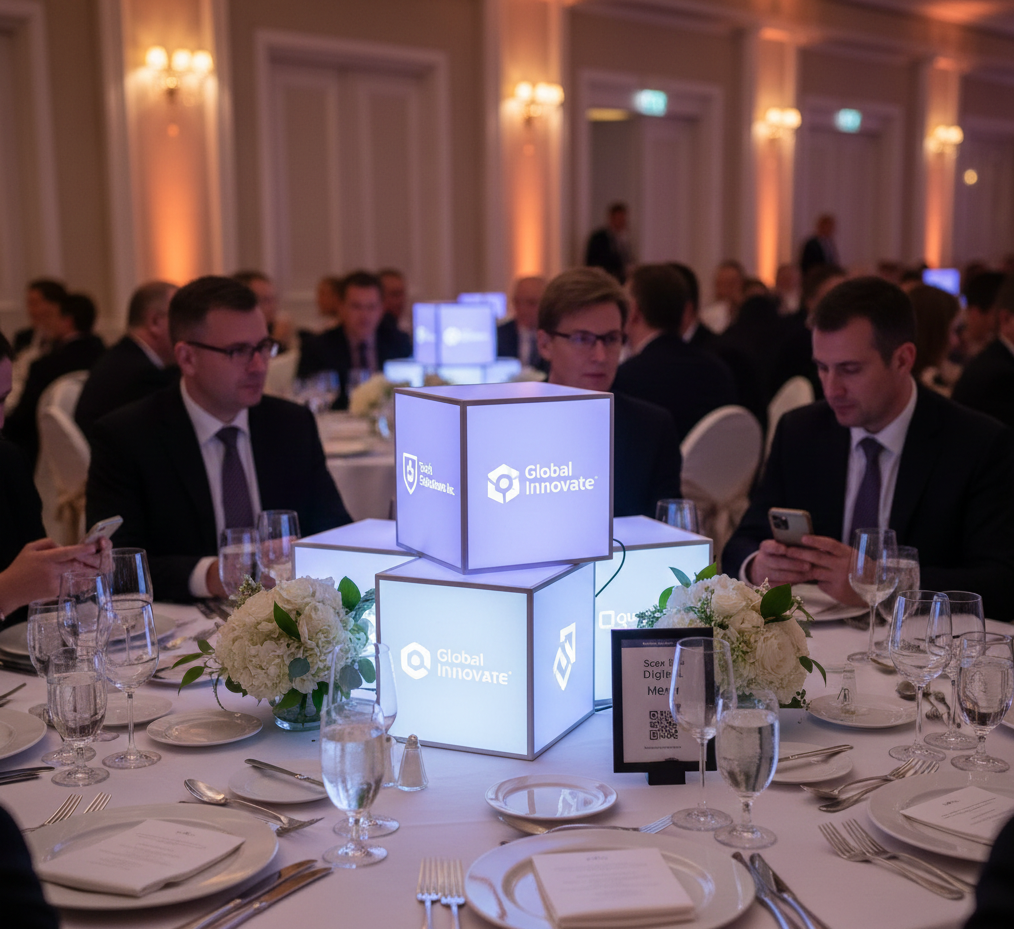
If every table chat sparked sponsor buzz, the guests scan QR codes for instant exclusive discounts. Innovative table signage like digital centerpieces, branded table tents, and QR-coded menus keep sponsors visible all event long at corporate events, conferences, and business events, turning dining into high-visibility branding without bulky hanging banners or t-shirts.
Types in Detail
- Digital Centerpieces: 10-15″ rechargeable LED/iPad displays (e.g., Keep Interacting’s) cycle sponsor logos/videos every 30s on tables, used at galas for 4 sponsor slots per unit, eco-friendly vs. printed yard signs.
- Branded Table Tents: Lightbox tents with sponsor logos/neon lights glow, rechargeable for clean setups, like PKGreen’s custom units at trade shows, doubling as take-home promo for art print booths.
- QR-Coded Menus: Tabletop cards link to event apps with sponsor promos/event program, and scans drive branded merchandise offers, slashing waste time at registration areas.
Key Features & Special Elements
- Constant visibility: Rotate 8-12 sponsor logos with interactive buttons/polls, boosting engagement 300% over static magnetic signs during meals.
- Interactivity boost: QR/social media ties (#EventSponsor) for real-time shares, providing directions to sponsor spaces, cost-effective at $1,500/table sponsor level.
- Analytics edge: Track scans/dwell time (avg. 12s), ideal for highlighting sponsors in certain areas like blank walls or stair wraps.
4. Dedicated Sponsor Lounge Spaces Signage
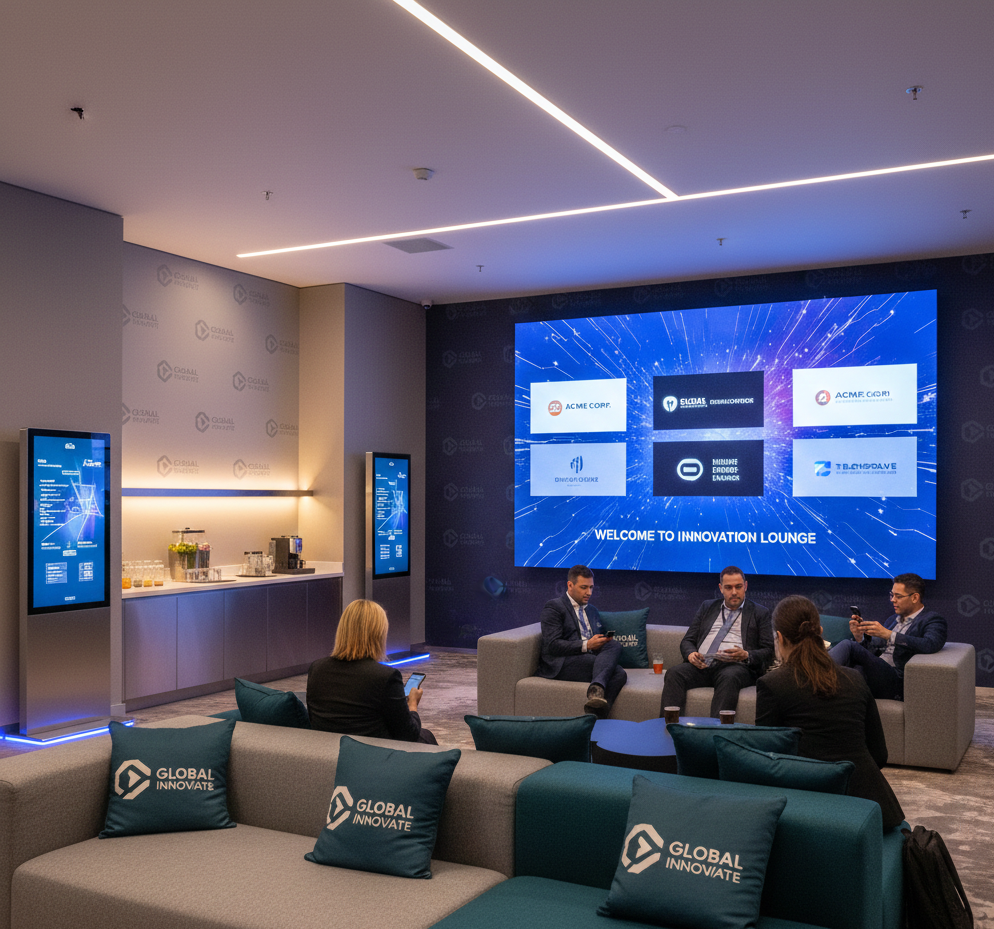
Ever pictured VIP guests unwinding in a “brought to you by [Sponsor]” oasis that screams prestige while sparking deal-closing chats? Premium lounges and branded rest areas elevate event sponsors at corporate events, conferences, and trade shows, blending exclusivity with functional networking, outshining generic spaces by 300% in engagement via dedicated signage and layouts.
Types in Detail
- Premium Sponsor Lounges: Exclusive zones (400-500 sq ft) with branded furniture like modular sofas/clusters for 35-40 guests. For example, HBO’s Luxury Lounge at Four Seasons with DSW custom sneakers, named after top sponsors, for $3,500+ packages.
- Branded Rest Areas: Recharge corners with tiered seating, power outlets, and low-light focus pods, perfect for business events, directing attendees via digital screens to art print booths or registration areas.
- Networking Clusters: Circular high-top tables/bar setups with sponsor logos, supporting social media photo ops, used at galas for relaxed sponsor reps mingling with high-value attendees.
Key Features & Special Elements
- Prestige branding: Neon lights, walls, floor graphics, and QR-coded branded merchandise stations offer exclusive discounts, cut waste time on event app integration for directions.
- Functional interactivity: Soundproof alcoves (30dB reduction), adjustable modular furniture for quick reconfiguration, track ROI via dwell time (avg. 12s) in high-visibility areas.
- Cost-effective scalability: Eco-friendly vs. t-shirts/hanging banners, fits outdoor events or blank walls that boost sponsorship opportunities with positive associations.


5. Immersive Photo Moments Signage
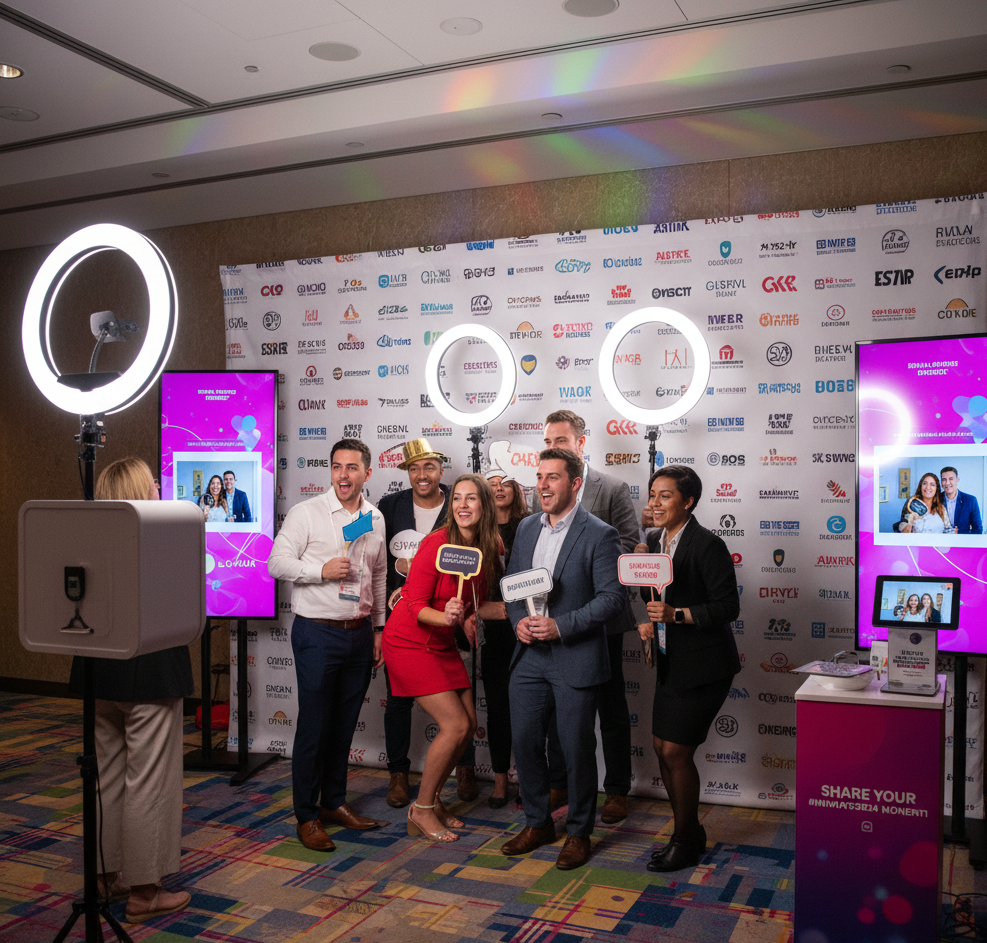
What if every selfie at your event became a viral sponsor shoutout, turning attendees into free brand amplifiers? Branded photo booths, step-and-repeats, and social-media-ready installations at trade shows, corporate events, and conferences create shareable moments that boost sponsor logos visibility 300% via organic posts, which is far beyond static hanging banners or t-shirts.
Types in Detail
- Branded Photo Booths: Interactive setups with sponsor-branded props/backdrops (e.g., Dreamcast virtual overlays), printing logos on every strip, used at galas for 100K+ social shares.
- Step-and-Repeats: Backdrop walls with repeating sponsor logos for red-carpet poses, QR-linked to event apps for exclusive discounts, like charity events where VIP photos go viral.
- Social-Media-Ready Installations: AR filters/green screens on digital screens at art print booths, auto-tagging #EventSponsor for instant promotion.
Key Features & Special Elements
- Amplifier interactivity: Custom frames/props with brand logos + hashtags drive shares (e.g., 50% more engagement), tying into social media for real-time buzz.
- High-impact sharing: Instant digital downloads/email prints promote sponsors to attendees’ networks, which is cost-effective vs. yard signs, slashing waste time.
- ROI tracking: Analytics capture shares/dwell time (avg. 12s), perfect for highlighting sponsors in registration areas or blank walls.
6. Branded Giveaways and Merchandise Signage
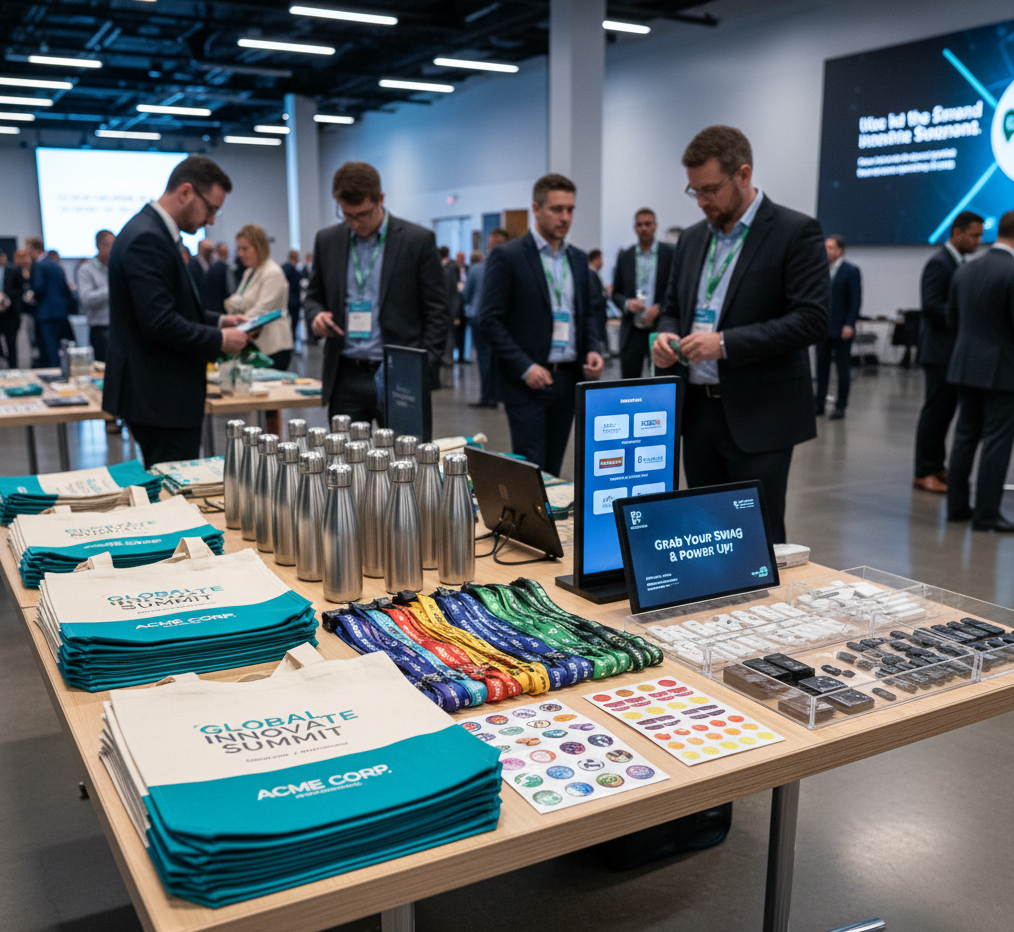
What if your event attendees became walking billboards for sponsors, flashing brand logos weeks after the event ends? Sponsor-branded items like bags, badges, and tech accessories extend visibility at trade shows, corporate events, and conferences have proven to boost recall 70% longer than static hanging banners or yard signs, turning one-time exposure into ongoing promotion.
Types in Detail
- Tote Bags & Swag Bags: Durable canvas bags with sponsor logos hold event program materials. For example, Foot Locker’s Coachella totes carried by 100K+ attendees, shared on social media for viral reach.
- Custom Badges/Lanyards: RFID badges with QR codes linking to exclusive discounts or event apps used at SXSW for sponsor tracking and networking.
- Tech Accessories: Branded charging stations/cables/power banks (e.g., Dunkin’s Lollapalooza chargers), attendees keep them for months, displaying logos daily.
Key Features & Special Elements
- Long-term amplification: High-quality, useful items like reusable water bottles ensure 6-12 months visibility vs. disposable t-shirts that are cost-effective at $5-15/unit for big impact.
- Interactive tie-ins: QR codes on branded merchandise direct to social media (#EventSponsor) or art print booths, slashing waste time while promoting sponsors.
- ROI tracking: Sponsors get usage analytics via app scans, ideal for highlighting sponsors at registration booths or blank walls.
7. Personalized Event Program Materials Sign
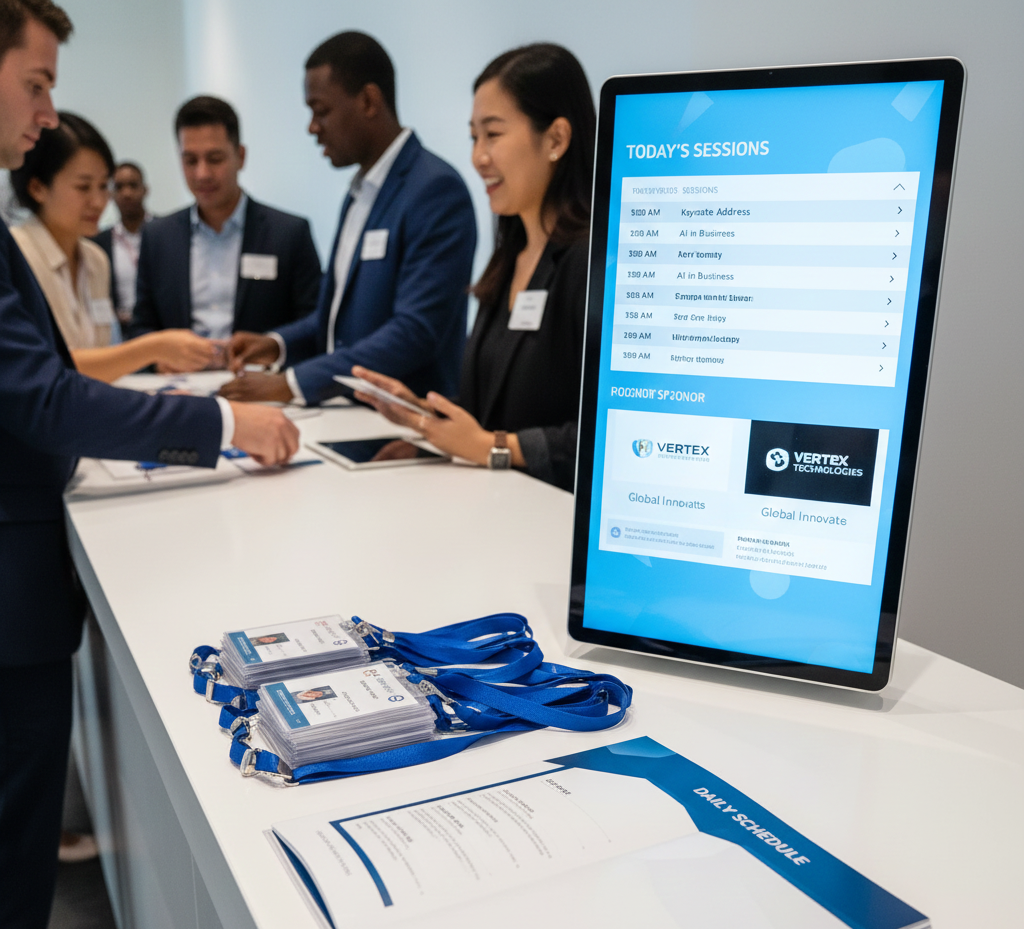
Attendees keep flipping through programs weeks later, subconsciously absorbing sponsor logos every time. Ever wondered why? Personalized badges, agenda books, and digital program screens weave sponsor branding subtly into trade shows, corporate events, and conferences, boosting recall 70% via constant, non-intrusive exposure vs. overt hanging banners or yard signs.
Types in Detail
- Personalized Badges: RFID lanyards/badges with sponsor logos + QR codes linking to exclusive discounts/event apps. For example, SXSW custom badges scanned 100K+ times for sponsor booths.
- Agenda Books/Guides: Printed/digital booklets with sponsor pages between sessions, highlighting sponsors on every 3rd page, like HubSpot INBOUND guides featuring rotating brand logos.
- Digital Program Screens: App/tablet screens with personalized agendas showing sponsor ads between event program items, e.g., Fliplet’s interactive platforms with tiered sponsor tiers.
Key Features & Special Elements
- Subtle high-impact: Logos on back-of-badge or footer placement ensure constant visibility without clutter, which costs effectively at $2-5/unit, slashing t-shirt waste.
- Interactive personalization: QR scans direct to social media (#EventSponsor) or branded merchandise offers, cutting navigation waste time by 50% at registration areas.
- ROI analytics: Track scans/dwell time (avg. 12s) via apps, perfect for event planning and proving value to display sponsors.
8. Sponsored Experiences or Activities
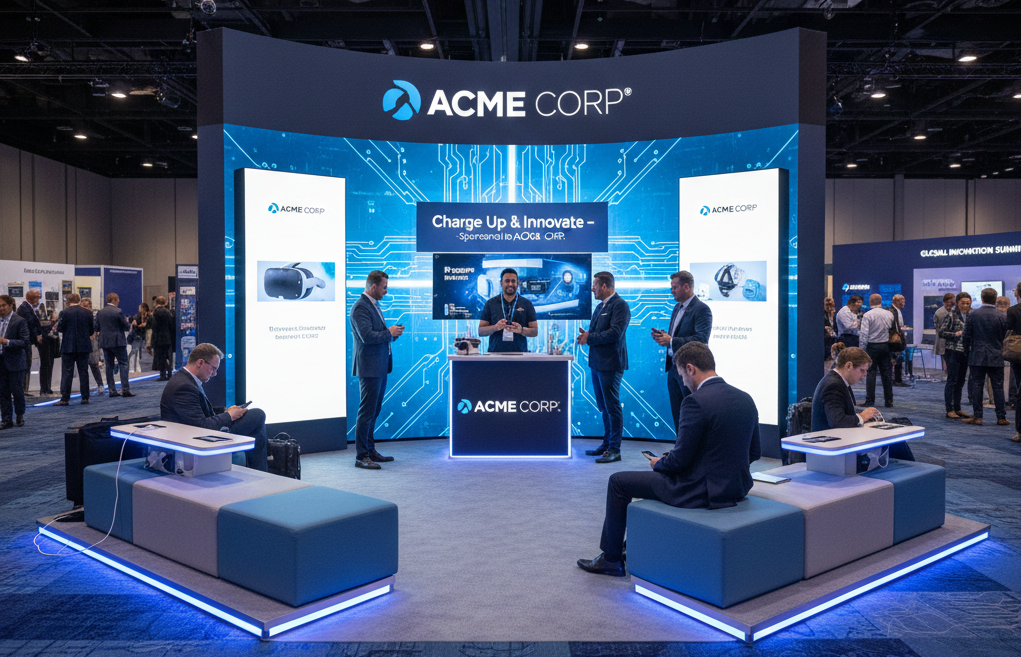
What if sponsors didn’t just show up, they solved real attendee problems while stealing the show? Sponsored experiences like charging stations, lounge pods, and live demo zones at trade shows, corporate events, and conferences deliver genuine value, boosting engagement 4.7x over static hanging banners by creating immersive interactions that highlight sponsors organically.
Types in Detail
- Charging Stations: Branded hubs with 20+ ports + sponsor logos/power banks. For example, Dunkin’s Lollapalooza stations where attendees lingered 12+ mins, scanning QR for exclusive discounts.
- Lounge Pods: Private 4-6 person pods with soundproofing, WiFi, and branded refreshments, like HBO’s SXSW Westworld pods blending rest with AR demos.
- Live Demo Zones: Interactive VR/AR stations (e.g., Audi’s Sandbox sand+projection off-road sims) showcase products hands-on at event stages or art print booths.
Key Features & Special Elements
- Real value delivery: Fills genuine needs (charge, rest, play), 85% purchase likelihood post-experience vs. passive signage, tying to event apps for directions.
- Gamified interactivity: Leaderboards/QR challenges promote social media shares (#EventSponsor), slashing waste time while tracking dwell time analytics.
- Cost-effective ROI: Modular setups fit blank walls/registration areas that generate 38% more social engagement than t-shirts or yard signs.
9. Creative Lighting Applications for Sponsership
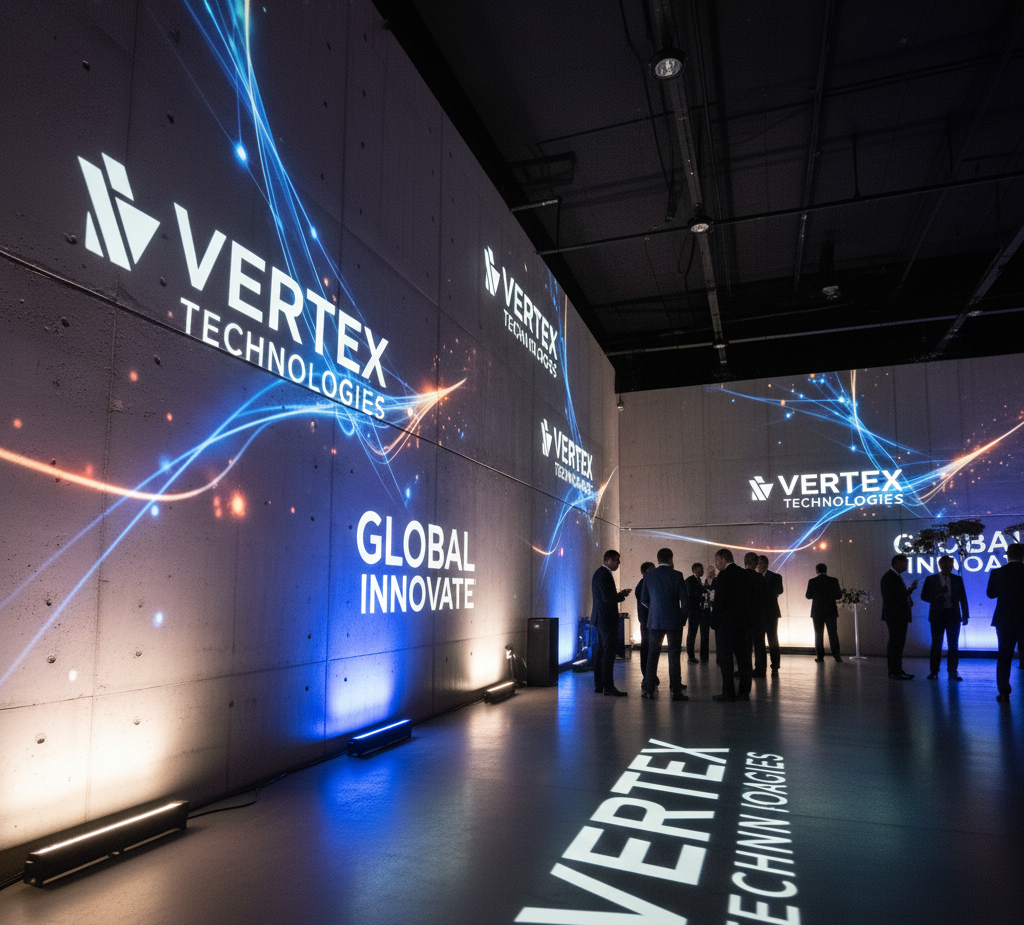
What if sponsor logos weren’t just signs but danced subtly across walls and floors, lighting up your next event? Creative lighting techniques like gobos, projection mapping, and architectural lighting transform event venues into immersive branded experiences that draw attention without screaming, enhancing event signage ideas at trade shows, corporate events, and outdoor events.
Types in Detail
- Gobos: Customized metal or glass templates project sponsor logos or patterns onto floors, ceilings, or blank walls, which are used at biz galas for elegant logo monograms rotating in sync with music, creating low-cost but high-visibility branding spots.
- Projection Mapping: Dynamic projections transform architectural features into moving canvases displaying animated sponsor logos, event program highlights, or social media feeds, seen at product launches and stadiums where grand facades become storytelling hubs.
- Architectural Lighting: Colored spotlights or neon lights wash sponsor colors across stair wraps, directional signage, or event stages, setting moods while subtly reinforcing brand identity throughout the venue.
Key Features & Special Elements
- Subtle Brand Integration: Gentle lighting grabs attention without overwhelming attendees, blending branding organically into the event environment, which is great for blank walls or around art print booths.
- Dynamic & Scalable: Lights change instantly for different sponsors or event stages, enabling exclusive sponsorship opportunities across multiple event zones cost-effectively.
- Elevated Attendee Experience: Creates memorable atmospheres that provides guests recall and share on social media (#EventSponsor), amplifying sponsors’ reach beyond signs or yard signs.
10. Recognition After the Event Signage
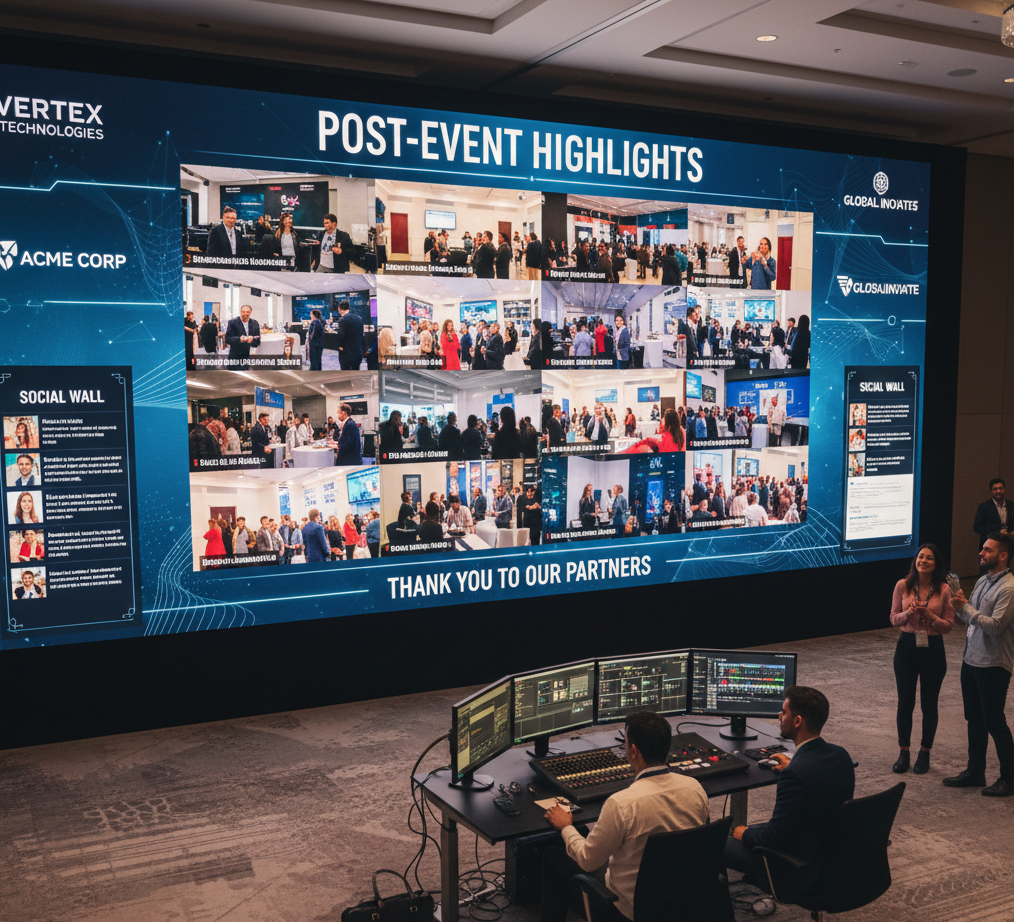
What if your event’s buzz kept sponsor logos glowing on attendees’ feeds for months after the lights dim? Post-event highlight reels, thank-you screens, and recap videos extend sponsor visibility at trade shows, corporate events, and conferences, boosting recall 70% via multi-channel recognition, far outlasting static hanging banners or t-shirts.
Types in Detail
- Highlight Reels: 2-5 min edited videos featuring sponsor shoutouts, event stage moments, and attendee testimonials, shared on social media/YouTube, like Dreamcast recaps reaching 100K+ views with rotating sponsor logos.
- Thank-You Screens: Digital screens or email banners with personalized sponsor graphics + metrics (e.g., “Your logo seen by 5K attendees”), displayed at next events or websites for ongoing exposure.
- Recap Videos: Interactive event apps recaps with clickable sponsor sections linking to exclusive discounts/branded merchandise. For example, Fliplet’s post-event reports with tiered sponsor acknowledgments.
Key Features & Special Elements
- Multi-platform reach: Social media posts (#EventSponsor), newsletters (20% open rates), and websites amplify visibility that is cost-effective vs. yard signs, driving 300% more shares.
- Data-driven proof: Include ROI metrics (attendance, engagement, leads) to highlight sponsors’ impact, perfect for registration area recaps or blank walls at future events.
- Personalized longevity: Custom thank-yous foster retention (higher renewal rates), tying into event planning for sponsorship opportunities.
What Role Does Sponsorship Signage Play?
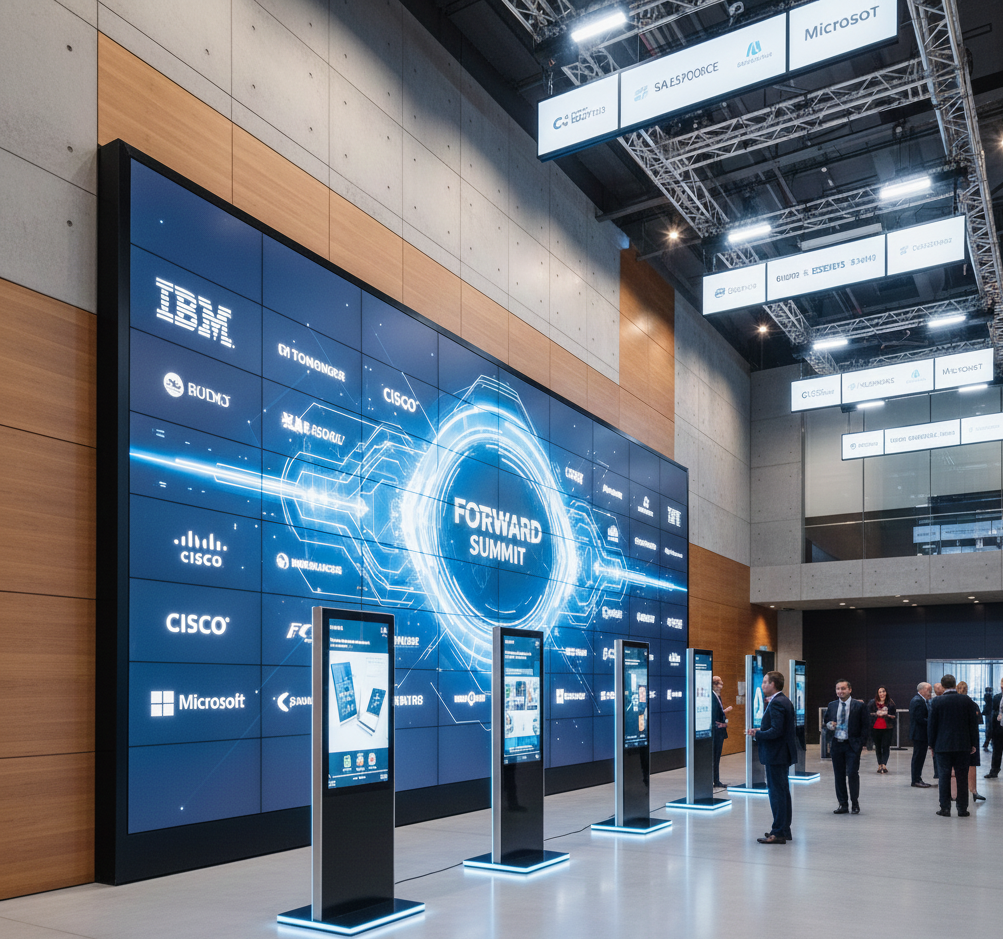
Digital screens have transformed Levi’s Stadium into a sponsorship goldmine, where interactive kiosks have driven exclusive merchandise sales and generated 400% more views than static signs.
Digital signage is the powerhouse behind modern sponsor branding for trade shows, corporate events, conferences, and outdoor events.
This enables real-time updates (e.g., live event program tweaks seen in 68% higher engagement at events like Adidas pop-ups), dynamic rotations of sponsor logos across 10+ screens every 15-30 seconds, and interactive QR codes at registration booths like slashing printed promotional materials by 80%, boosting sponsorship revenue up to 2x, and enhancing attendee’s experience for 370M+ global event sponsorship spends like NFL or UEFA campaigns.
How AIScreen Delivers the Absolute Best Solution for Event Sponsors?
“Why chase cables across a chaotic event venue when AIScreen provides great opportunity of running your sponsorship program remotely from your phone?” AIScreen’s enterprise-grade platform powers 4K UHD digital screens (IP65 weatherproof, 24/7 uptime to 100,000 hours, supports 1,000+ displays) for trade shows or next events, proven in 60+ Vedantu locations for nationwide engagement:
- Precision content scheduling & remote management: AIScreen’s cloud dashboard instantly rotates sponsor logos/promotional materials. For example, 10-second loops for peak hours, reducing on-site costs by 70% compared to hanging banners, with templates for directional signs or event stages.
- Deep social media integration: Auto-pull live feeds from Twitter/Instagram (hashtag moderation like #SponsorSpotlight), blending attendee content with brand logos that delivers 300% engagement uplift, as in HCLTech’s comms revolution.
- Interactive analytics powerhouse: QR codes link to discounts/merch; tracks 1M+ views, 12s avg. dwell time, heatmaps/ROI dashboards that are ideal for highlighting sponsors at registration booths, slashing waste time while proving value like Decathlon’s 33% CAC drop.
Why Use Digital Sponsorship Signage Walls?
Event attendees sometimes get glued to vibrant sponsor logos cycling every 15 seconds, instead of ignoring dusty hanging banners.
Events ditch static posters for digital sponsor walls because they offer unmatched flexibility: update sponsor rotations or event program changes in seconds via remote control, unlike costly reprints for static signs that fade after 6-12 months of exposure.
Dynamic content like videos and animations grabs 400% more attention, boosting engagement at trade shows or corporate events, while cutting printed waste (e.g., no more t-shirts or fence banners) by 80% for eco-friendly, cost-effective branding.
Plus, durability shines. LED screens last 100,000 hours with consistent colors, versus static vinyl cracking in weather, maximizing ROI through multiple sponsors per space in high-visibility spots like entrances or registration booths.
What Best AIScreen Provides for Sponsorship Signage Mastery?
AIScreen equips event planners with rugged digital screens (4K UHD, IP65 weatherproof for outdoor events, 24/7 operation) to create big impact sponsorship programs across event venues:
- Remote content scheduling: Instantly rotate sponsor logos or promotional materials, e.g., 10-second loops for peak hours at business events, reducing on-site costs 70% vs. banners.
- Social media & interactive integration: Pull live Instagram/Twitter feeds with QR codes for discounts, tracking dwell time (avg. 12s) and views to prove ROI at registration booths or directional signage.
- Scalable analytics dashboard: Manage 1,000+ screens for trade shows, providing heatmaps and reports, which are ideal for highlighting sponsors in certain areas like stair wraps, boosting attendees’ experience cost-effectively.
AIScreen is the clear winner for your next event? It turns sponsorship opportunities into great ideas that support sustainable event planning, ensuring sponsors shine with high visibility and unique ways to connect. It is cost-effective, scalable, and a real game-changer for event signage and sponsorship programs to set up a video wall.
Here’s a clean version using both keywords in the heading and content:
How Can Sponsorship Signage Examples Use Different Types of Outdoor Signage?
Sponsorship signage examples can become more effective when brands choose different types of outdoor signage that match the event space, audience flow, and viewing distance. Banners, digital displays, flags, billboards, and freestanding signs can all help sponsors increase visibility while keeping logos and campaign messages easy to recognize.
Using different types of outdoor signage also gives sponsors more ways to connect with attendees across entrances, walkways, parking areas, and event zones. Well-planned sponsorship signage examples combine strong branding, clear placement, and consistent messaging to create a more memorable presence throughout the venue.
Why Choose AIScreen for Sponsorship Signage?
Ever caught yourself at a massive event like the Super Bowl or a UEFA conference, mesmerized by those slick digital screens swapping sponsor logos instead of boring static banners? Yes, they double the ROI by keeping brands front and center; imagine turning your trade show walls, entrances, or registration spots into “branding goldmines” that wow attendees and create real sponsorship magic.
So, ready to ditch dusty posters for dynamic wins? Kick off with AIScreen’s rotating “welcome signs” and digital booth greetings packed with sponsor logos, then layer stage backdrops during breaks, floor graphics, stair wraps, and directional arrows guiding folks straight to sponsor zones, all seamless, high-visibility promo that amps guest flow and buzz at corporate events or conferences. It’s that easy mix of “interactive signage” and smart placement, turning every glance into gold.
Frequently Asked Questions
What should be included on effective sponsorship signage?
Effective sponsorship signage includes the sponsor’s logo, a concise message or tagline, and a call to action if relevant. Placement in high-traffic areas and eye-catching colors or lighting also help ensure maximum visibility and impact.
How do event planners choose the right signage formats for sponsors?
Event planners choose the right signage formats for sponsors based on location and audience flow. They consider where attendees gather most, entrances, registration, food stations, and select signage types that fit those spots, like hanging banners, digital screens, or floor graphics, balancing budget and visibility.
Why should sponsors invest in high-impact signage designs?
Sponsors invest in high-impact signage designs as the first impressions stick. High-impact designs grab attention instantly, boost brand recognition, and create memorable experiences for attendees. It’s a powerful way to stand out from competitors in a busy event environment.
Is digital sponsorship signage more effective than printed signage?
Digital sponsorship signage is more effective than printed signage as it offers flexibility with real-time updates, motion graphics, and interactivity, making it more engaging than static prints. However, printed signage still has value in permanent or budget-conscious settings, both have their place depending on event goals.
How much do sponsorship signage options cost?
The sponsorship signage options cost varies widely based on size, type, and production quality, from affordable yard signs and fence banners costing a few hundred dollars, up to dynamic LED displays and digital walls running into thousands. Planners often mix formats to maximize impact within budget.
