
5 Best Digital Signage Software Companies for Transportation in 2026
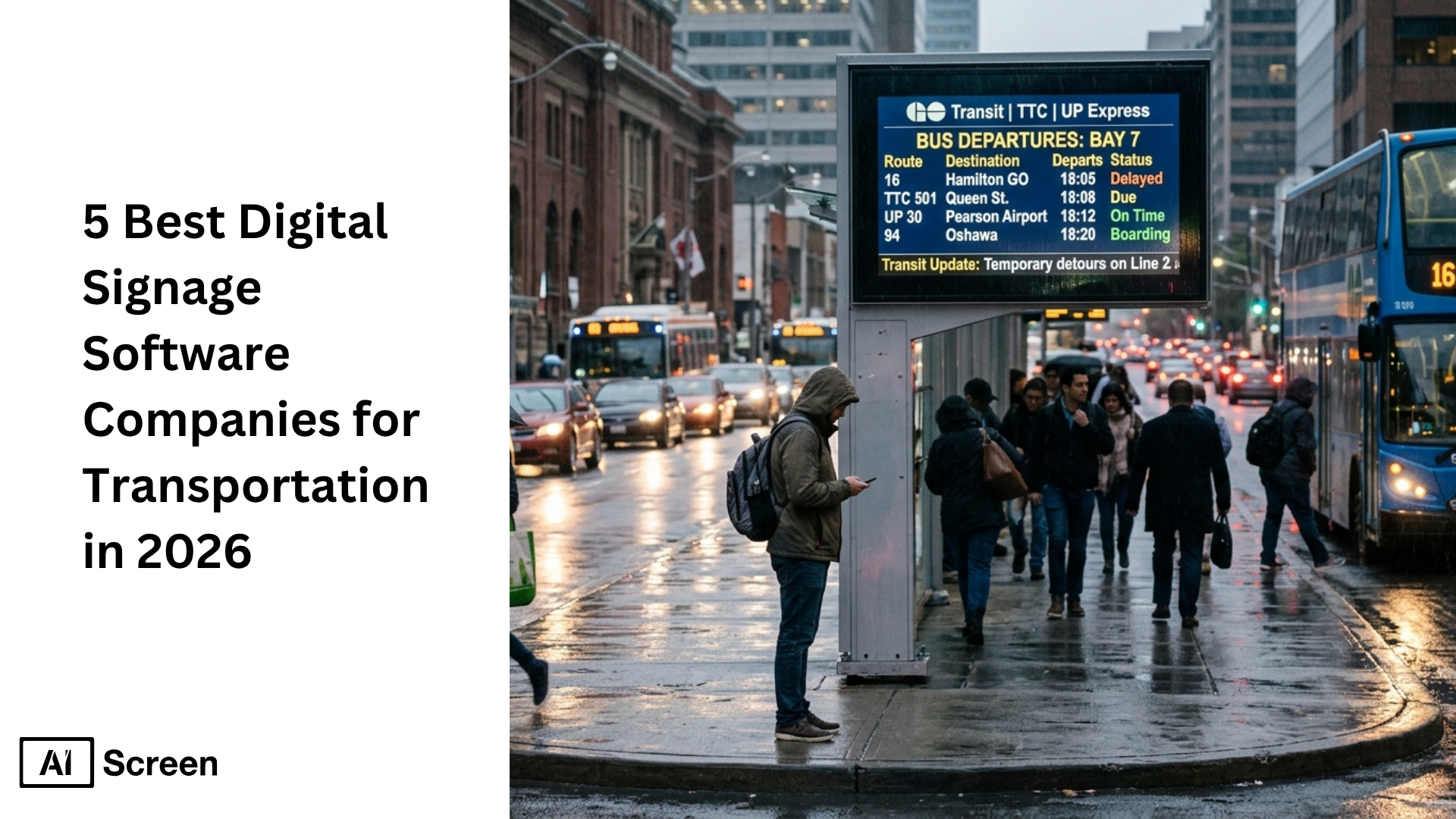
Best digital signage software companies for transportation in 2026 is a useful topic for any operator comparing tools for bus stations, airports, rail networks, and other transportation hubs. The need is growing quickly too. Grand View Research says the global digital signage market was valued at USD 28.88 billion in 2024 and is expected to keep expanding at a CAGR of 8.1% from 2025 to 2030, which shows how fast digital signage software is becoming part of modern communication and operations.
In this article, you will learn which digital signage software companies stand out for transportation use cases, what makes each platform different, and which features matter most for real-time updates, wayfinding signage, emergency alerts, and remote management. You will also see how the right digital signage platform can help transportation providers improve passenger communication, manage multiple displays, and support smoother digital signage deployment across multiple locations. Explore AIScreen’s transportation digital signage solution.
What Are The 6 Of The Best Ways Transportation Networks Use Digital Signage Today?

The 6 of the best ways transportation networks use digital signage today show how transportation digital signage has moved far beyond simple display content. Across bus stations, transportation hubs, and larger digital signage networks, operators now use digital signage software and cloud based digital signage tools to improve safety, customer satisfaction, internal communications, and operational efficiency.
The transportation segment alone generated about $5.5 billion in revenue in 2025 and is projected to reach roughly $11.8 billion by 2033, according to Grand View Research, which shows how fast digital signs and digital displays are becoming part of the transportation industry.
1. Real-Time Transit Updates Powered By Digital Signage Solutions
Real-time transit updates powered by digital signage solutions are one of the most valuable uses of digital signage in the transit industry. Using a cloud based platform, transportation networks can push digital content to multiple screens, digital screens, and electronic displays at multiple locations without relying on manual updates.
- Show arrivals, departures, delays, and gate or platform changes on digital displays in real time.
- Reduce confusion at bus stops, train platforms, and other transportation hubs by giving passengers information the moment it changes.
- Improve safety affordably by helping people react faster to service disruptions and safety alerts.
- Support remote device management, remote monitoring, and centralized control across digital signage networks.
- Help staff focus on operations instead of answering the same passenger questions repeatedly.
IATA found that 63% of passengers said more real-time information is the key to improving their experience during travel disruptions, which makes digital signage content especially useful in busy networks.
2. Strategically Placed Digital Wayfinding Signage Information
Strategically placed digital wayfinding signage information helps travelers move through large stations and terminals with less stress. Compared with static signs, wayfinding signage on digital screens gives operators more flexibility because routes, maps, and notices can be updated through signage software and content management systems in minutes.
- Display maps, route guidance, and digital directories near entrances, ticket counters, escalators, and transfer points.
- Use interactive wayfinding, interactive displays, and interactive touchscreens to help passengers search for gates, services, or platforms.
- Adjust display content quickly when access points close or routes change.
- Use high contrast visuals and multilingual digital signage content to support accessibility.
- Keep digital signage deployment practical by updating content from one centralized management dashboard.
Airport Council International notes that wayfinding is at the core of the passenger experience and that clear signage can reduce stress and improve confidence inside terminals.
3. Safety and Emergency Messaging on Visible Digital Displays
Safety and emergency messaging on visible digital displays gives transportation networks a faster and clearer communication channel during disruptions. Instead of depending only on static posters or audio announcements, operators can use digital signage platform tools to push emergency alerts, safety alerts, and dynamic content across multiple displays at once.
- Broadcast evacuation instructions, weather warnings, service suspensions, or security updates in real time data formats.
- Use motion, color, and multimedia content to make urgent messages easier to notice.
- Deliver consistent alerts across video walls, digital posters, and digital screens in large hubs.
- Strengthen effective communication during incidents through centralized management and remote management.
- Connect alerts with existing systems or third party systems for faster response.
4. Improving Accessibility Throughout the Transportation Hub
Improving accessibility throughout the transportation hub is one of the smartest ways digital signage solutions can enable organizations to serve more people better. Transportation digital signage can make information easier to read, easier to understand, and easier to act on for passengers with different language, vision, or mobility needs.
- Use larger fonts, high contrast visuals, and simple layouts on digital signs and digital displays.
- Add icons, color coding, and multilingual digital content to support a wider range of travelers.
- Place screens where updates are visible without crowding key paths in transportation hubs.
- Combine digital directories, wayfinding signage, and interactive features for more accessible navigation.
- Use content creation tools and built in content creator options to tailor signage content for different audiences.
5. Digital Ticketing and Booking with QR Codes and Interactive Kiosks
Digital ticketing and booking with QR codes and interactive kiosks turns digital signage from a passive display into an action tool. With interactive kiosks, interactive touchscreens, and mobile-friendly digital signage content, passengers can buy tickets, scan codes, and complete tasks from their mobile devices before they even reach the counter.
- Show ticket options, upgrade prompts, and booking links directly on digital screens.
- Add QR codes that connect passengers to mobile devices for faster purchases.
- Reduce cash handling and paper ticket printing in bus stations and other transit locations.
- Use seamless screen sharing or a wireless presentation hub in staff-facing environments for faster support and corporate communication.
- Extend the value of an all in one platform by combining content management, content creation, and passenger action points.
6. Advertising Revenue Generation
Advertising revenue generation is one of the clearest business benefits of digital signage software in transportation. Because transportation hubs serve large daily audiences, operators can use digital signage networks, digital signage media players, and content management systems to run targeted campaigns while still keeping service messaging visible.
- Schedule ads by time of day, route, terminal zone, or audience flow.
- Mix branded digital content with service notices so the experience stays useful, not intrusive.
- Run campaigns across multiple displays, multiple locations, and even a few screens depending on the size of the digital signage deployment.
- Use reporting tools and remote management to measure what content performs best.
- Build new revenue opportunities while using existing hardware, own hardware, or digital signage media players that work across different operating systems.


Which Are The Best Digital Signage Software Companies for Transportation?
The best digital signage software companies for transportation are the ones that make digital signage deployment easier across transportation hubs, bus stations, and multiple locations while supporting real time data, wayfinding signage, emergency alerts, remote management, and centralized control.
For transportation operators comparing the best digital signage software companies for parking and broader transit use cases, the strongest options usually combine digital signage software, content management systems, digital signage media players, and a cloud based digital signage platform that helps teams manage digital content efficiently across digital screens and multiple displays.
AIScreen

AIScreen is a strong fit for transportation digital signage because it is built as an all in one platform for managing digital signage networks across a few screens or large multi-site deployments. It helps operators manage digital signage CMS, remote device management, and content scheduling from one platform, which is especially useful in transportation hubs where speed and clarity matter.
For teams that want cloud digital signage software without heavy technical expertise, AIScreen works well with existing hardware and digital signage players while still giving centralized management and remote monitoring tools. It is well-suited for transportation industry use cases like safety alerts, internal communications, digital directories, digital posters, and display content across multiple screens.
Templates
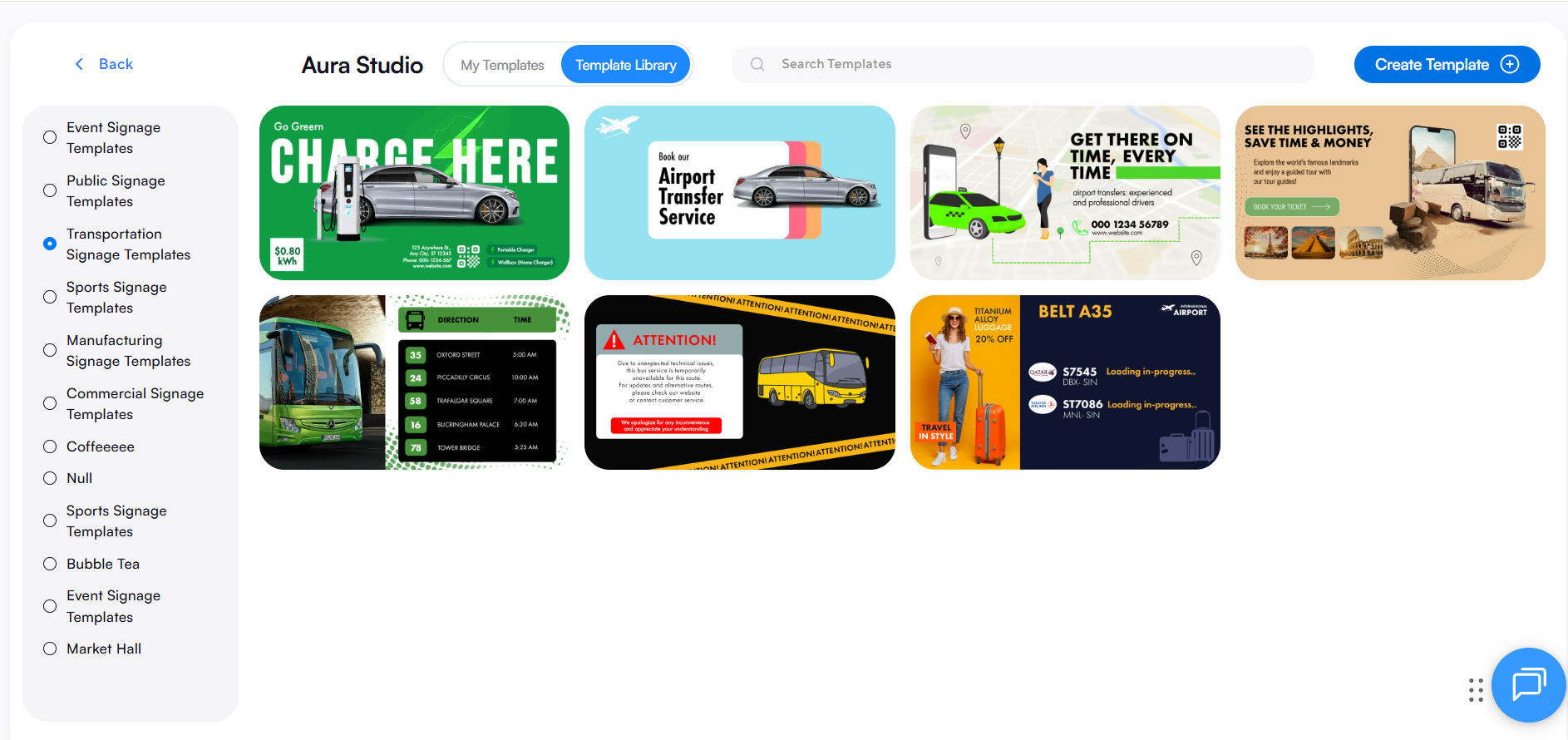
AIScreen offers 1500+ ready-to-use templates and a built-in template designer that help teams publish transportation digital signage content faster without starting from scratch.
- Transit update layouts for arrivals, departures, and delays
- Wayfinding signage templates for transportation hubs
- Emergency alerts and safety alerts layouts
- Internal communications templates for staff-facing digital displays
- Digital directories and digital posters for public-facing screens
Pricing
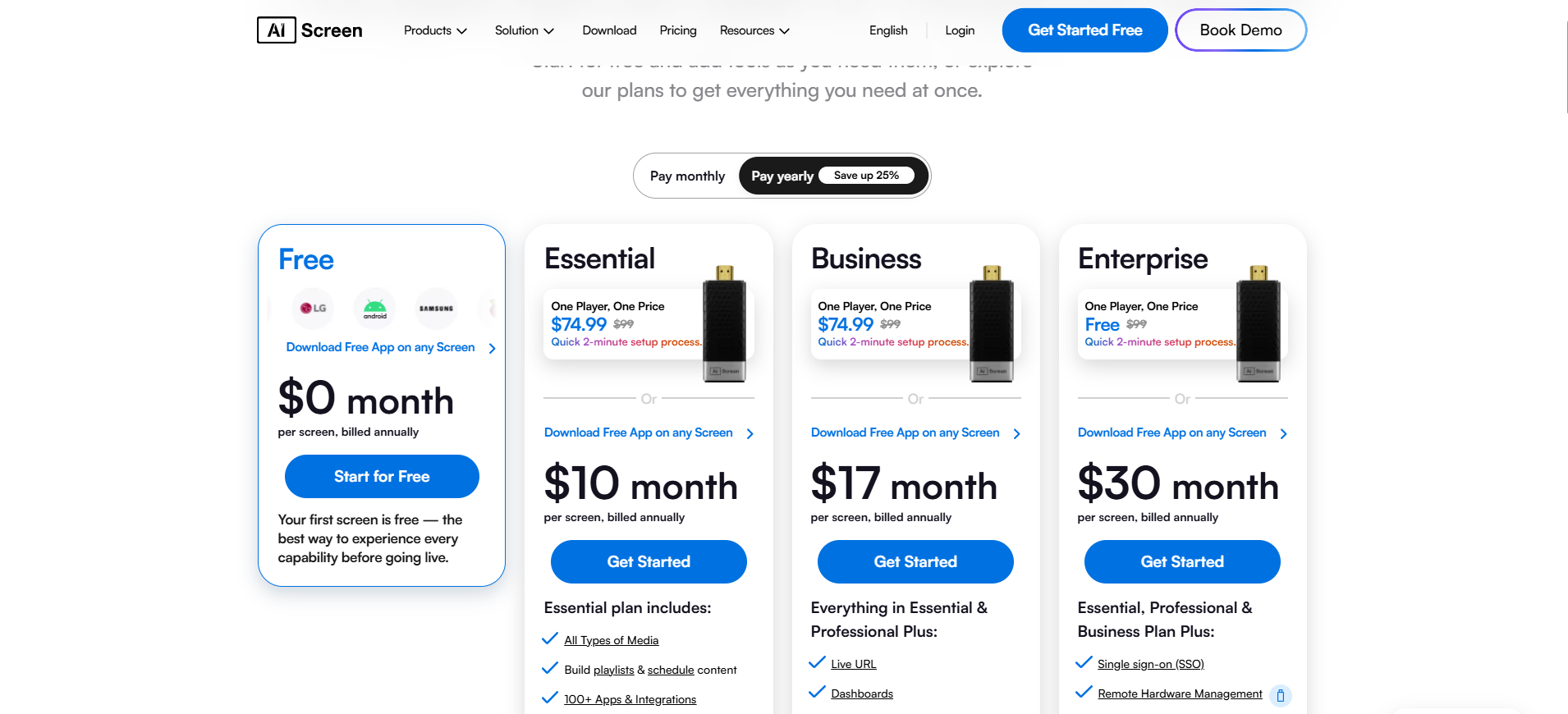
AIScreen pricing can start around $10 per screen per month, which makes it practical for operators managing a few screens or scaling across multiple locations.
- Starts at about $10 per screen per month
- Suitable for small rollouts and larger digital signage deployment plans
- Helpful for operators looking for software solutions with predictable cost
- Works well for enabling businesses to scale over time
Key Features
- Cloud based platform with centralized control
- Content management and content creation tools
- Remote device management and remote monitoring
- Support for multiple displays and multiple screens
- Works with existing systems and existing hardware
- Built in content creator for digital content
- Digital signage networks support across multiple locations
- Dynamic content scheduling and real time updates
- Support for digital signs, digital screens, and interactive displays
- Platform supports operational efficiency and effective communication
SpinetiX
SpinetiX is positioned as an end-to-end software company that combines cloud based digital signage, content authoring, and player control in one ecosystem. It stands out for organizations that want a structured digital signage deployment with strong reliability, player management, and data-driven control for digital displays.
Key Verticals
- Corporate
- Large venues
- Luxury retail
- Manufacturing
- Government
- Hospitality
- Education
Carousel
Carousel is a signage software option built around communication, safety, and ease of scaling across screens of all sizes. It is especially relevant for transportation digital signage because it supports emergency alerts, approval workflows, and content management across locations, which helps teams keep communication clear and organized.
Key Verticals
- Corporate
- Education
- Government
- Retail
- Healthcare
Xibo
Xibo is a flexible digital signage software and cloud based digital signage option that appeals to organizations wanting more control over hosting, operating systems, and deployment style. It supports multiple player options, dynamic content, interactive features, and scalable content management, which makes it useful for digital signage networks that may grow over time.
Key Verticals
- Retail
- Education
- Hospitality
- Workplace
Bizplay
Bizplay focuses on making digital signage simple, which makes it a practical option for operators that want easy content management without a steep learning curve. Its cloud based platform lets users create, schedule, and publish digital content from a web browser while keeping centralized control across digital signs and multiple locations.
Key Verticals
- Corporate
- Logistics and manufacturing
- Healthcare
- Education
- Libraries
- Leisure
Why Transportation Providers Choose Digital Signage?
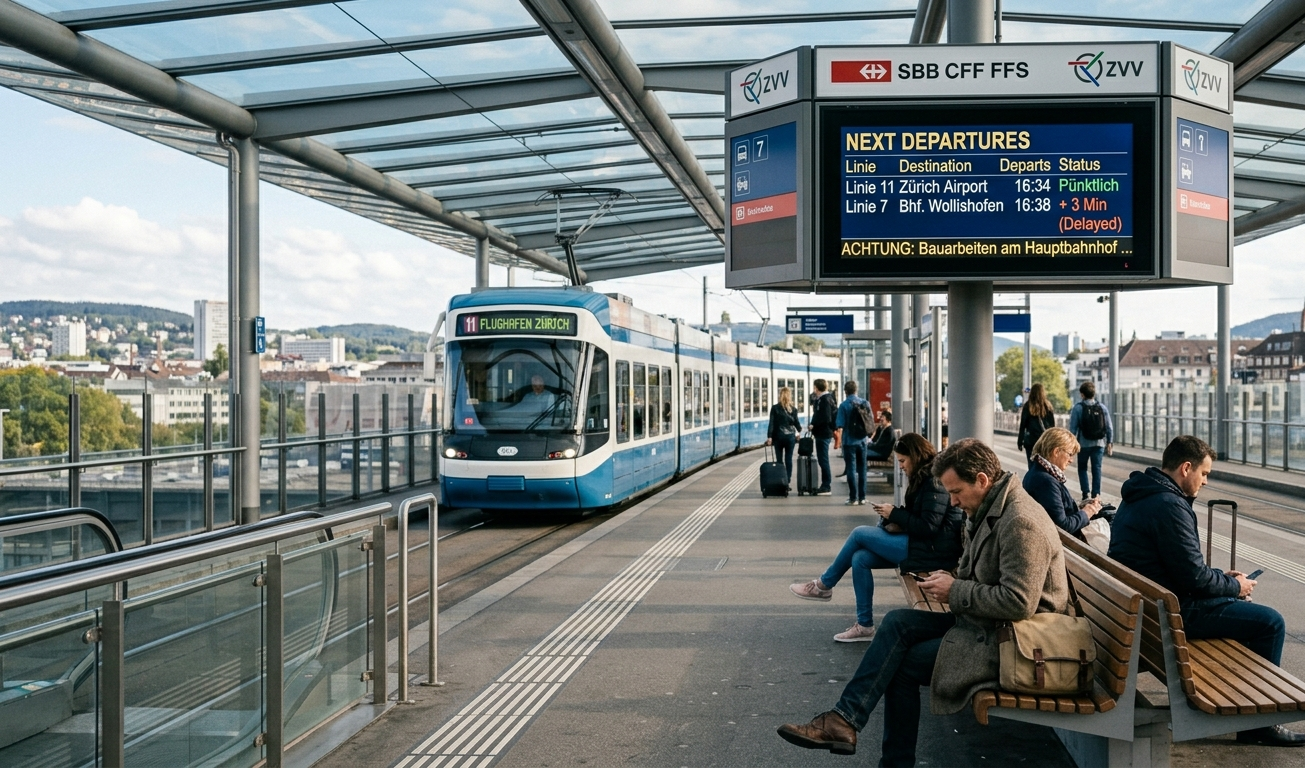
Transportation providers choose digital signage because it helps them deliver the right message at the right time across transportation hubs, bus stations, and multiple displays, all from one centralized control system.
For teams managing digital signage deployment at scale, digital signage software improves effective communication, supports operational efficiency, and makes transportation digital signage more useful for both passengers and staff.
- Lower cost: Digital signage solutions can reduce the ongoing cost of printing, replacing, and distributing static signs across multiple locations. Once digital screens, media players, and signage software are in place, updates become faster, easier, and more affordable.
- Customer satisfaction: Clear transit times, wayfinding signage, safety alerts, and accurate digital signage content help passengers feel more confident during their journey. That better experience can improve customer satisfaction because travelers are more likely to trust services that keep information visible and current.
- Revenue opportunities: Digital signs and digital displays can also work as advertising space inside transportation hubs and bus stations. Providers can use digital content to mix useful updates with paid promotions, creating extra income while still keeping display content relevant.
- Better centralized control: A cloud based platform allows operators to manage content management, remote management, and remote device management from one place. This makes it easier to keep digital signage networks consistent across a few screens or a much larger system.
- Stronger safety communication: Transportation providers also choose digital signage because it gives them a fast channel for emergency alerts and safety alerts. During service changes or urgent incidents, digital signage platform tools help teams publish updates instantly across multiple screens.
In IATA’s 2025 Global Passenger Survey, 78% of passengers said they want to use a smartphone that combines digital wallet, digital passport, and loyalty cards to book, pay, and navigate airport processes, which shows how strongly travelers now expect real-time, digital-first experiences.
Why Is AIScreen the Smart Choice for Transportation Digital Signage?
AIScreen is the smart choice for transportation digital signage because it gives operators one simple platform to manage digital signage content, emergency alerts, wayfinding signage, and real-time updates across multiple screens and locations. As a leading provider, AIScreen helps transportation teams improve communication, support passenger journeys, and keep digital signage deployment easy to manage.
For transit agencies, airports, and bus stations, that means better control, faster updates, and a more reliable experience for both staff and passengers. With flexible digital signage software, centralized management, and tools built for modern transportation hubs, AIScreen makes it easier to run a connected and professional digital signage network. Contact us.
FAQs
How does transportation digital signage work across multiple locations?
Transportation digital signage across work across multiple locations by using a cloud based platform that lets teams control digital content, scheduling, and screen updates from one dashboard. This makes it easier to manage digital signage networks in bus stations, terminals, and other transportation hubs without updating each screen manually.
Can digital signage software work with existing screens and media players?
Yes, digital signage software can work with existing screens and media players as long as the hardware supports the required operating systems or playback setup. This gives transportation providers more flexibility because they can use existing hardware before investing in a full replacement.
What should transportation providers look for in digital signage software?
Transportation providers should look for in digital signage software, a content management, remote device management, emergency alerts, wayfinding support, and centralized control. It also helps to choose a digital signage platform that supports multiple displays, real time data, and simple digital signage deployment.
Is transportation digital signage only useful for large transit networks?
Transportation digital signage is not only useful for large transit networks, because even a few screens can improve passenger communication and staff coordination. Smaller operators can still use digital signs for route updates, safety alerts, digital directories, and internal communications.
How can digital signage improve staff communication in transportation facilities?
Digital signage improves staff communication in transportation facilities, helping operators share shift updates, safety notices, service changes, and internal communications in real time. This supports better coordination behind the scenes while keeping frontline teams informed across multiple screens and locations.
