
What Are The Types Of Outdoor Advertising That Works?
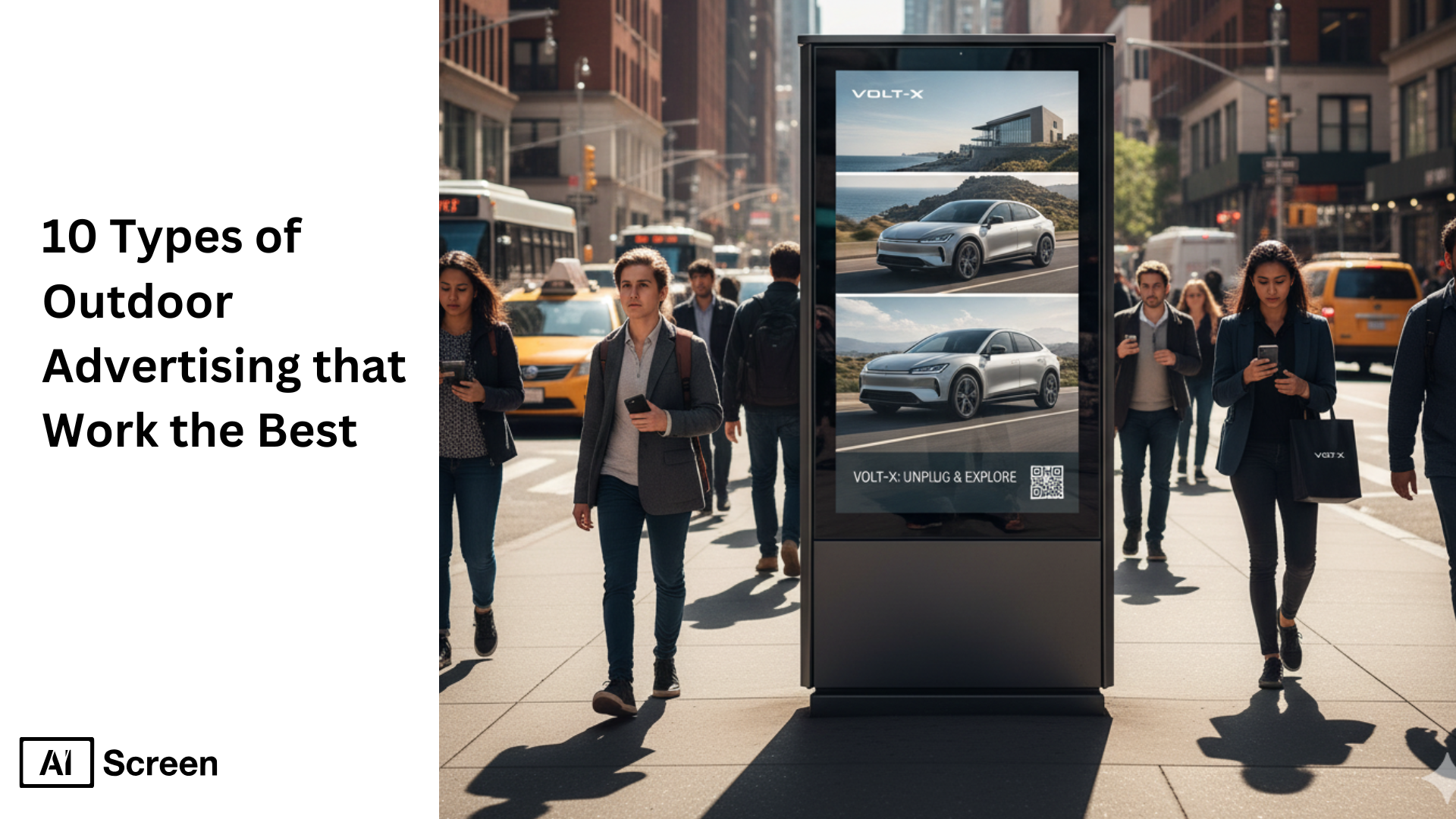
Have you ever wondered which 10 types of outdoor advertising work the best for grabbing people’s attention on the go? Outdoor ads are everywhere, from giant billboards on highways to digital displays at bus stops, and they still deliver incredible results. In fact, Out-of-Home (OOH) advertising boosts digital ad recall by 47% and drives a 10% average increase in sales, according to Edison Interactive. That’s because outdoor ads connect with audiences where digital screens can’t, right in their daily routines.
In this blog post, you’ll learn about the most effective types of outdoor ads, from static billboards and transit ads to guerrilla marketing and interactive kiosks. We’ll explore how each format works, what makes it successful, and how you can use it to increase brand visibility, engagement, and ROI. Whether you’re promoting locally or building national recognition, these outdoor advertising methods will show you how to make your brand impossible to miss.
Modern facilities manage these displays with digital signage software so signage stays accurate and easy to update.
1. Static Billboard Advertising
You know that feeling when you’re driving down the highway, lost in thought, and suddenly a giant, colorful message grabs your attention? That’s the magic of Static Billboard Advertising, one of the most timeless types of outdoor marketing that continues to make an impact, even in our digital-first world.
Unlike their digital counterparts, static billboards don’t rely on tech or motion to stand out. Instead, they shine through simplicity and consistency. These traditional giants are strategically placed in high-traffic areas, such as highways, busy intersections, and city centers, where thousands of eyes pass by every day.
For brands aiming at long-term exposure, static billboards are a reliable choice. Their staying power lies in bold visuals, short yet punchy messages, and strong contrast that can be recognized instantly at a glance. Think big fonts, bright colors, and a clever tagline that sticks in your head long after you’ve driven past.
While costs vary, ranging from around $750 to over $14,000 per month depending on size and placement, the ROI often justifies the expense. The key is thoughtful design and location: make it bold, make it brief, and make it impossible to ignore.

2. Digital Billboard Advertising
Ever noticed a bright LED-screen billboard flashing animations as you drive past? That’s the magic of Digital Billboard Advertising, the modern upgrade of traditional boards and a powerful example of outdoor advertising.
Unlike static formats, digital displays let you bring your message to life with moving visuals, full-motion videos, and instant updates. These digital billboards (or digital displays) serve as dynamic platforms where brands can react in real-time, adjusting their messaging based on the day, time, weather, or even who’s viewing. That flexibility means you can schedule multiple creatives in rotation, target different segments of your target audience, and tweak campaigns mid-flight.
And the ROI speaks volumes: industry research reports an average return of $5.97 for every $1 spent on billboard-type outdoor ads, underscoring just how effective these formats can be, according to Mediafinch.
Of course, this premium comes with a cost; digital billboards can run up to four times more expensive than static boards. However, when used strategically, targeted location, strong creative, and real-time messaging often outperform their static counterparts and deliver far more than just visibility.
If you’re looking at modern ways to reach people outdoors with creativity and precision, digital billboard advertising is a high-impact option worth exploring.

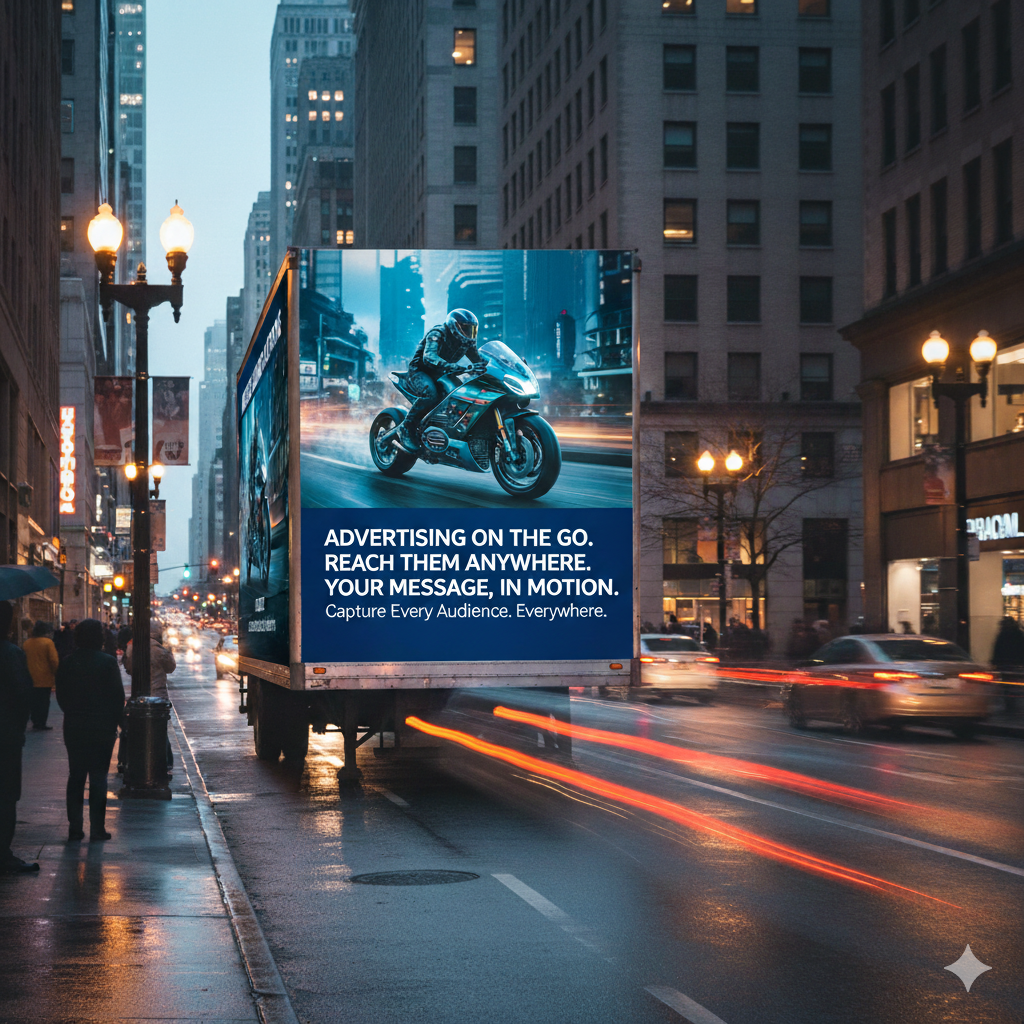
3. Mobile Billboard Advertising
Ever notice a brightly wrapped truck rolling by with bold graphics that make you look twice? That’s Mobile Billboard Advertising, one of the most eye-catching forms of outdoor advertising today.
These moving ads use trucks, trailers, or vans as traveling billboards, reaching multiple locations in a single day. Perfect for local campaigns and event promotions, they bring your brand directly to your target audience wherever they are, whether near shopping centers, business hubs, or live events.
Part of the OOH advertising family, also known as transit advertising, this format offers high visibility and flexibility. In fact, research shows mobile billboards boost brand recall by up to 97%, according to Atwell Media Services.
According to the Outdoor Advertising Association, combining mobile billboards with static or digital displays amplifies campaign reach, making them a smart, geo-targeted choice for modern marketers on the move.
4. Transit Advertising
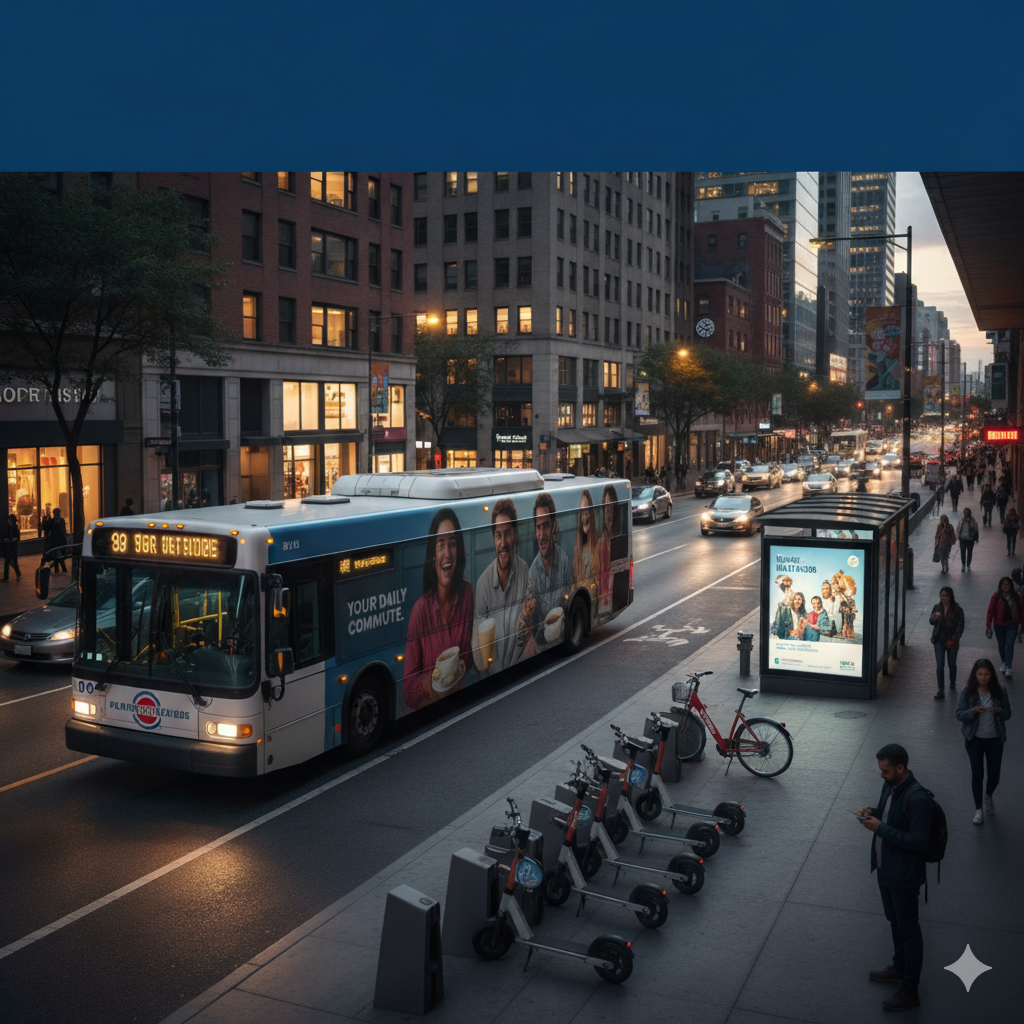
You’ve probably seen it: a bus wrapped in bold colors, a catchy slogan on a subway wall, or a taxi flashing a brand message as it weaves through traffic. That’s the everyday power of Transit Advertising, one of the most impactful types of outdoor advertising in busy cities.
These transit ads appear on buses, subways, trains, and taxis, basically anywhere people move. They’re part of the OOH advertising network designed to reach audiences during their daily commutes. What makes them so effective is exposure: commuters see these ads multiple times a week, often when they have time to actually absorb the message.
Transit advertising isn’t just cost-efficient, it’s constant. Whether through printed wraps or digital screens in stations, brands stay visible 24/7 in high-traffic urban areas. And here’s a fun stat: 38% of consumers stop at a store on their way home after seeing an ad, according to the Transit Advertising Association.
So, please keep it simple, relevant, and clever. A witty headline or location-specific hook can turn an ordinary ride into a moment that sticks, just ask Pepsi’s Boston campaign.
5. Street Furniture Advertising
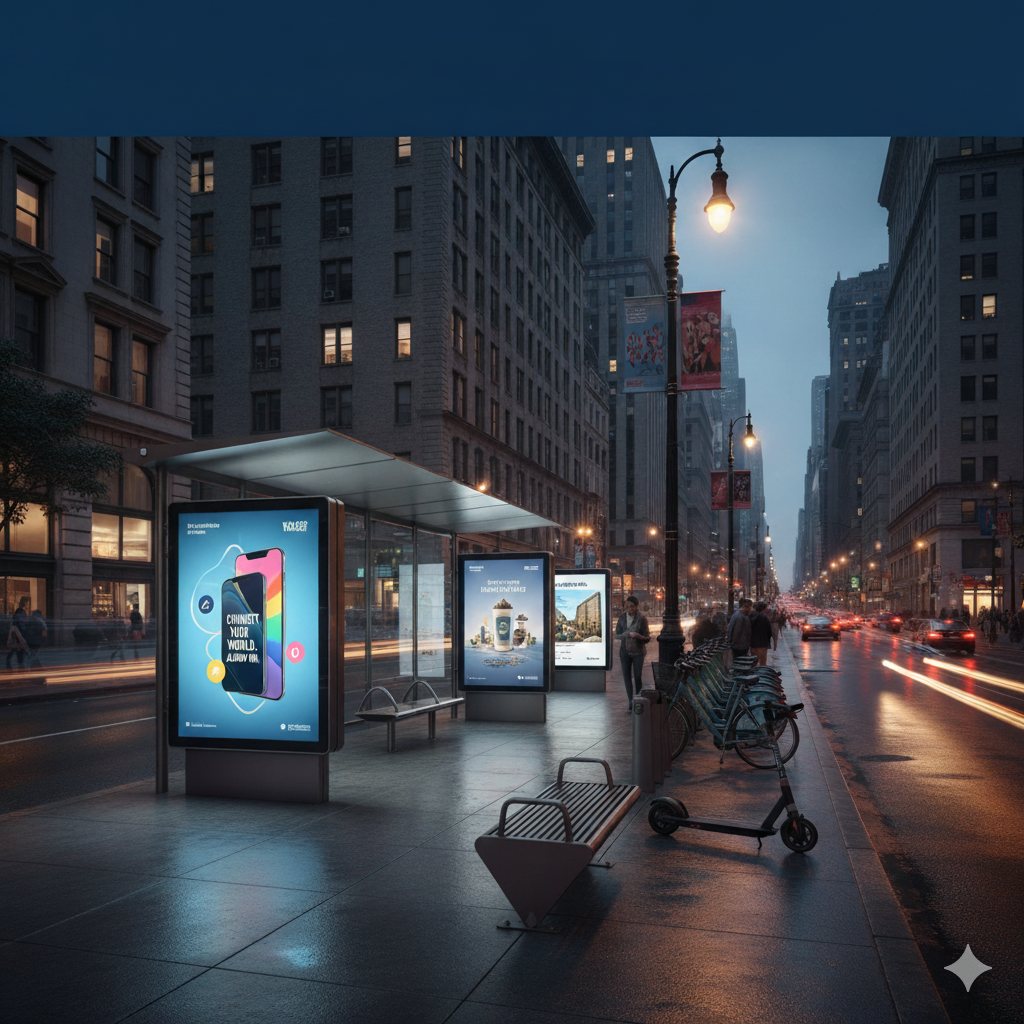
Ever stood at a bus stop and found yourself reading the ad on the shelter roof or bench beside you? That’s Street Furniture Advertising, one of the most creative and approachable forms of outdoor advertisement in today’s cities.
These street furniture ads appear on bus shelters, benches, kiosks, lamp posts, or even charging stations, subtle, frequent touchpoints that quietly boost brand recognition through repeated exposure. In crowded urban areas packed with static billboards and digital ads, these smaller outdoor signs often capture more attention simply because they meet people right at eye level.
It’s local, affordable, and highly effective for out-of-home visibility. Whether you’re promoting a local café, tech startup, or retail store, street furniture provides your brand with a consistent presence where commuters wait, rest, or recharge. Over time, that repeated contact leaves a lasting impression, turning casual passersby into familiar customers.
6. Retail & Point-of-Sale Advertising
You know that moment when you’re checking out at a store and a bright display suddenly catches your eye, and you grab it without thinking? That’s the influence of retail and point-of-sale advertising, one of the most conversion-driven types of outdoor advertising within physical spaces.
These advertising posters, product displays, and billboard ads, strategically placed near checkout zones, are designed to spark impulse buying. From interactive kiosks to window outdoor advertisements, every detail of retail space is part of a smart advertising campaign designed to increase visibility and sales.
Whether you use static billboards, interactive billboards, or creative packaging, the goal is to stand out when customers are most ready to purchase. In this way, out-of-home retail advertising complements digital ads, turning ordinary browsing into buying moments, all while reinforcing brand loyalty at the point of decision.
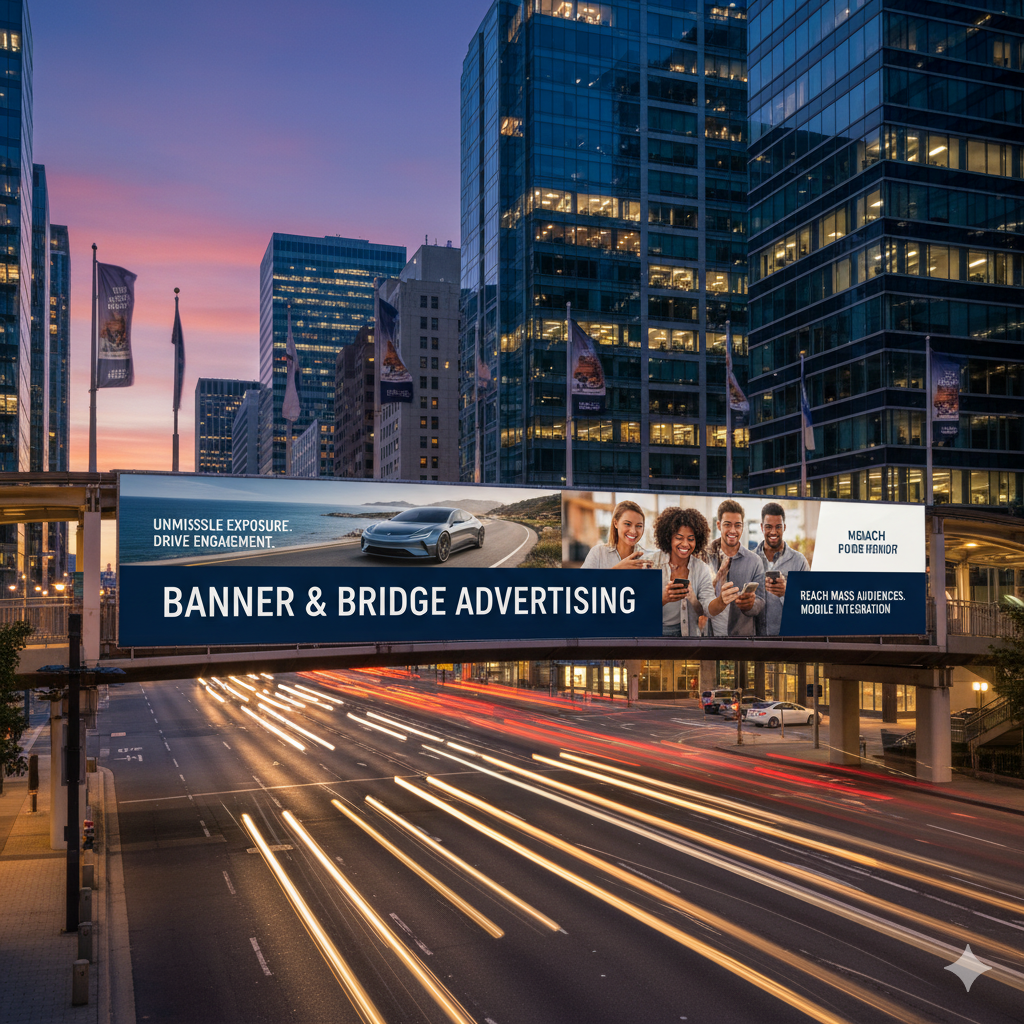
7. Banner & Bridge Advertising
Ever looked up while crossing a busy street and noticed a massive banner stretched across a bridge or hung on a tall building?
That’s Banner & Bridge Advertising, one of the most eye-catching outdoor media examples for short-term promotions and special events.
These standing banners, bridge banners, and indoor banners dominate high-traffic locations, ensuring maximum brand visibility among pedestrians and drivers alike. Whether displayed over highways, in shopping malls, or near bus shelters, they combine bold visuals with strategic placement to deliver the brand’s message clearly and memorably.
From retail shops promoting sales to event organizers announcing festivals, banners offer unmatched creative freedom in design and ad space flexibility. Plus, they’re cost-effective; a custom banner can cost under $50, while premium indoor-outdoor advertising spots in stadiums or airports can exceed $50,000.
And with reach like this, it’s no surprise that OOH ads generate 382% higher recall than digital ads, according to Nielsen.
For brands seeking to make an immediate impact, banners and bridge wraps transform city skylines into powerful storytelling canvases.
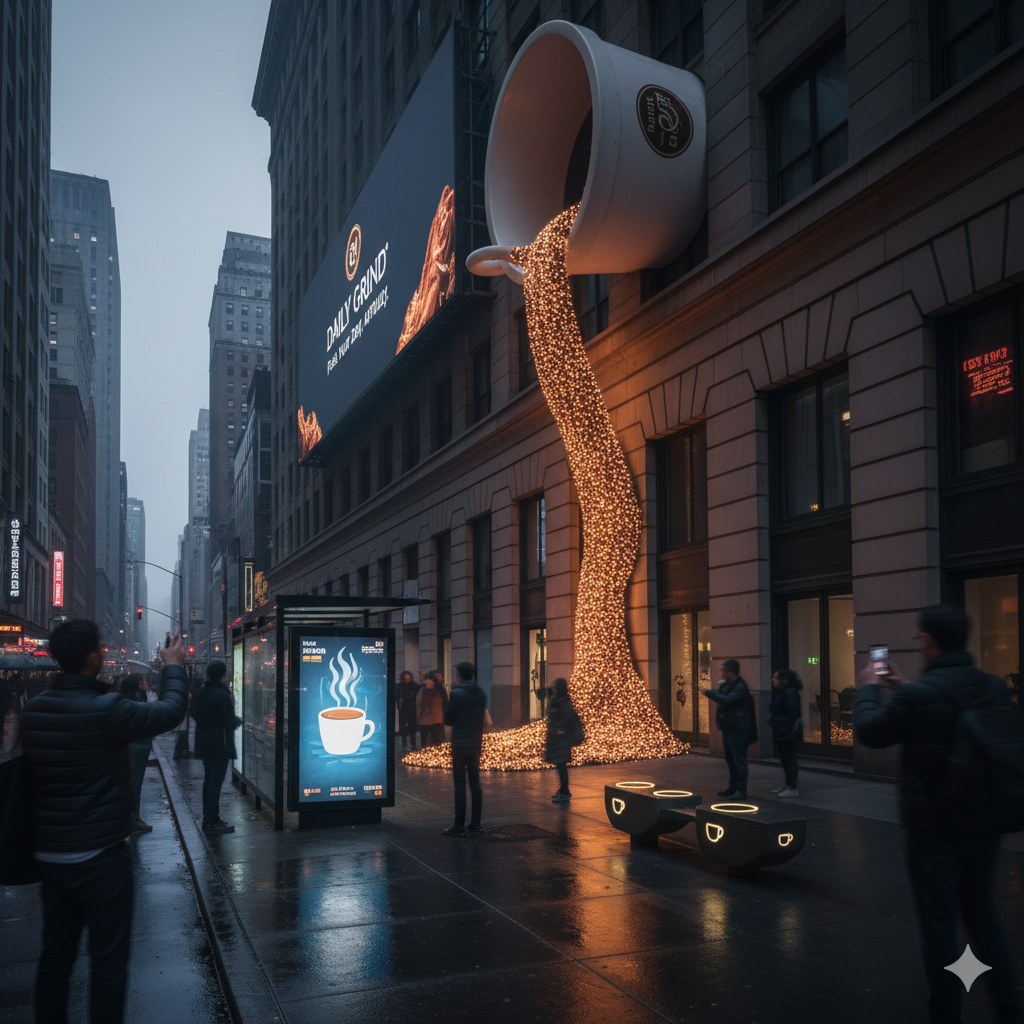
8. Guerrilla & Ambient Advertising
Ever turned a corner to see a sidewalk suddenly transformed into an art piece or a staircase wrapped with a clever message?
That’s Guerrilla & Ambient Advertising, the most creative and daring side of types of outdoor advertising.
Unlike standard bus ads or street furniture placements, guerrilla ads and experiential advertisements use surprise, humor, and emotion to grab immediate attention. From 3D installations and flash mobs to graffiti art and interactive elements, these targeted campaigns thrive in public spaces with heavy foot traffic.
They’re designed for virality, to make people stop, snap a photo, and share it online. That’s how a small brand stand can turn into a global moment. In fact, 72% of consumers say they remember brands from unconventional OOH experiences longer, according to HubSpot.
By aligning creative advertising experiences with your brand identity, guerrilla marketing transforms ordinary streets into unforgettable moments, blending art, surprise, and strategy into one cohesive story.
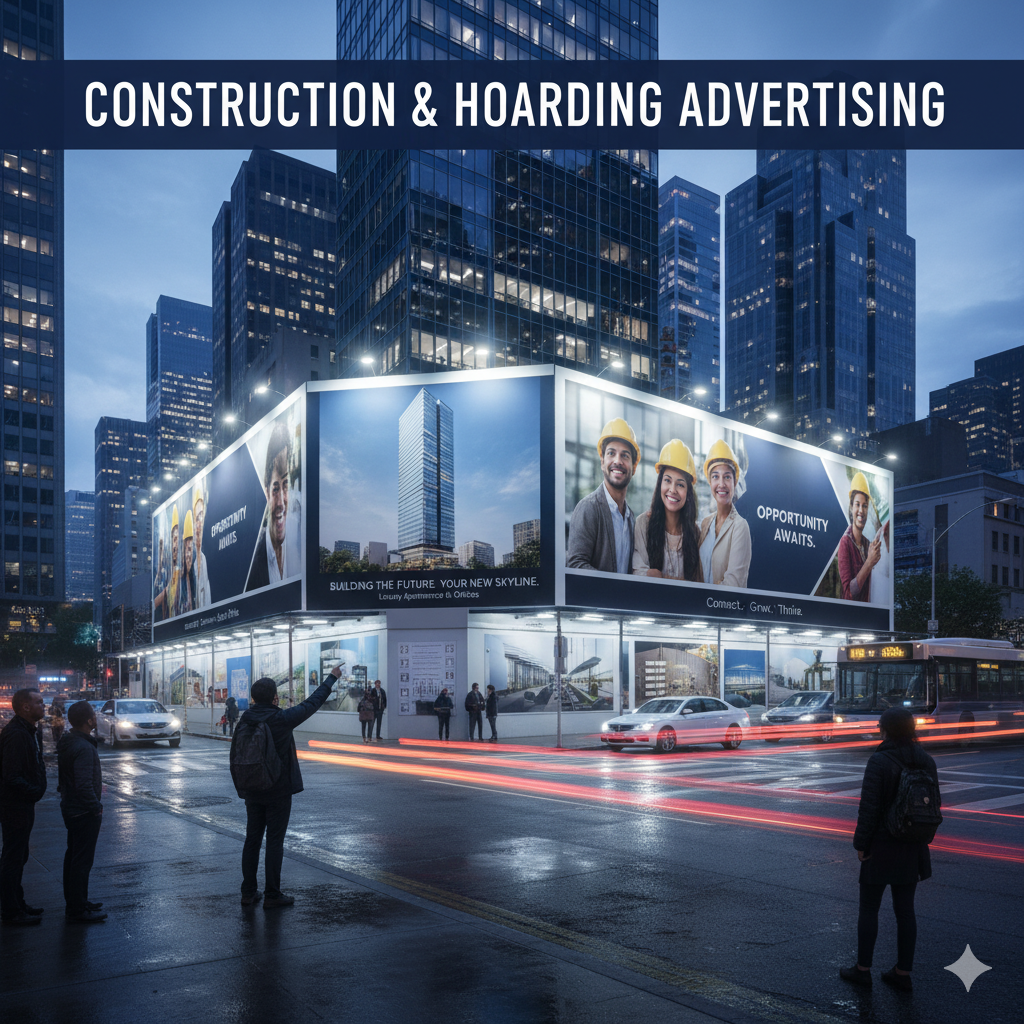
9. Construction & Hoarding Advertising
Ever walked past a construction site wrapped in huge, colorful graphics? That’s Construction & Hoarding Advertising, turning building fences into massive billboards for long-term visibility.
These ads deliver high visibility in busy urban zones like parking garages or main streets, keeping your brand’s message in front of thousands daily.
They’re cost-effective compared to other outdoor formats, offering months of exposure with eye-catching design that helps brands build a strong urban presence. In fact, hoarding ads can achieve up to 70% recall among viewers, according to VigyapanMart.
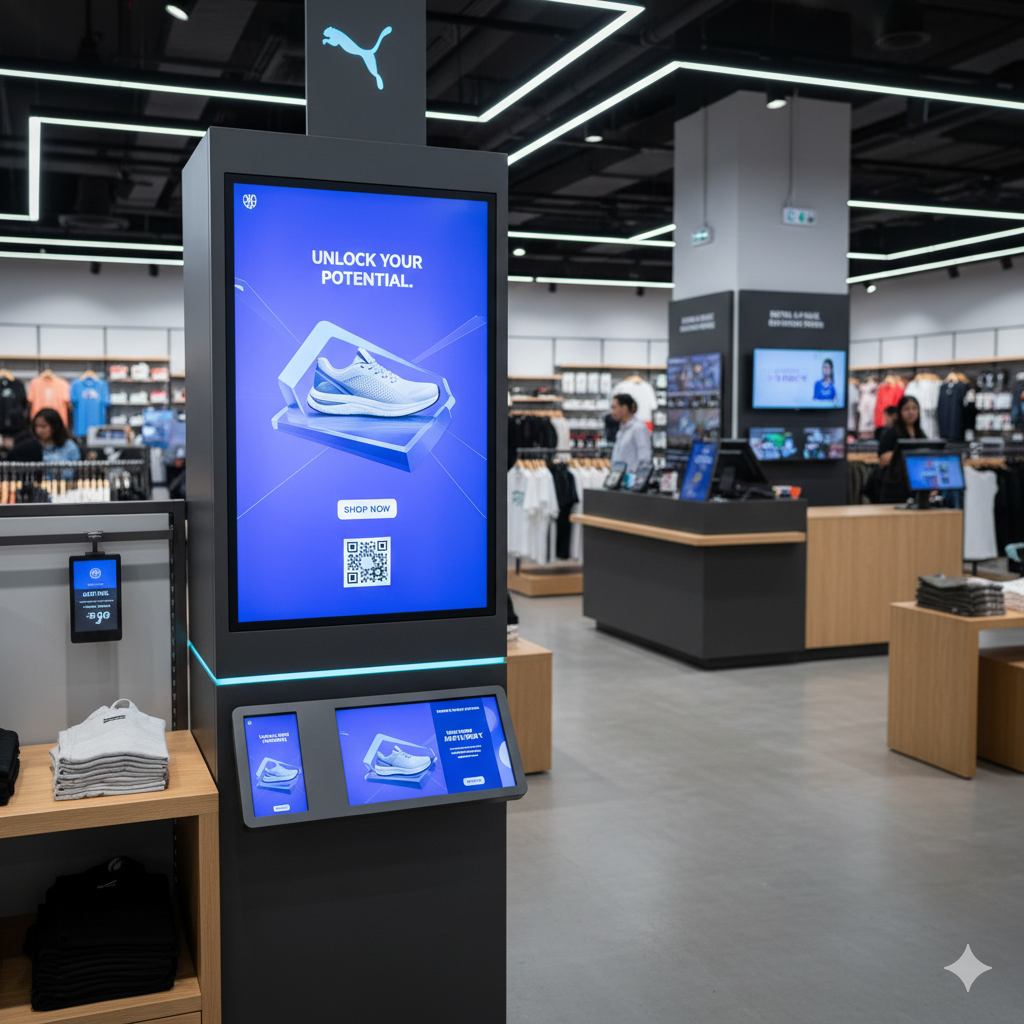
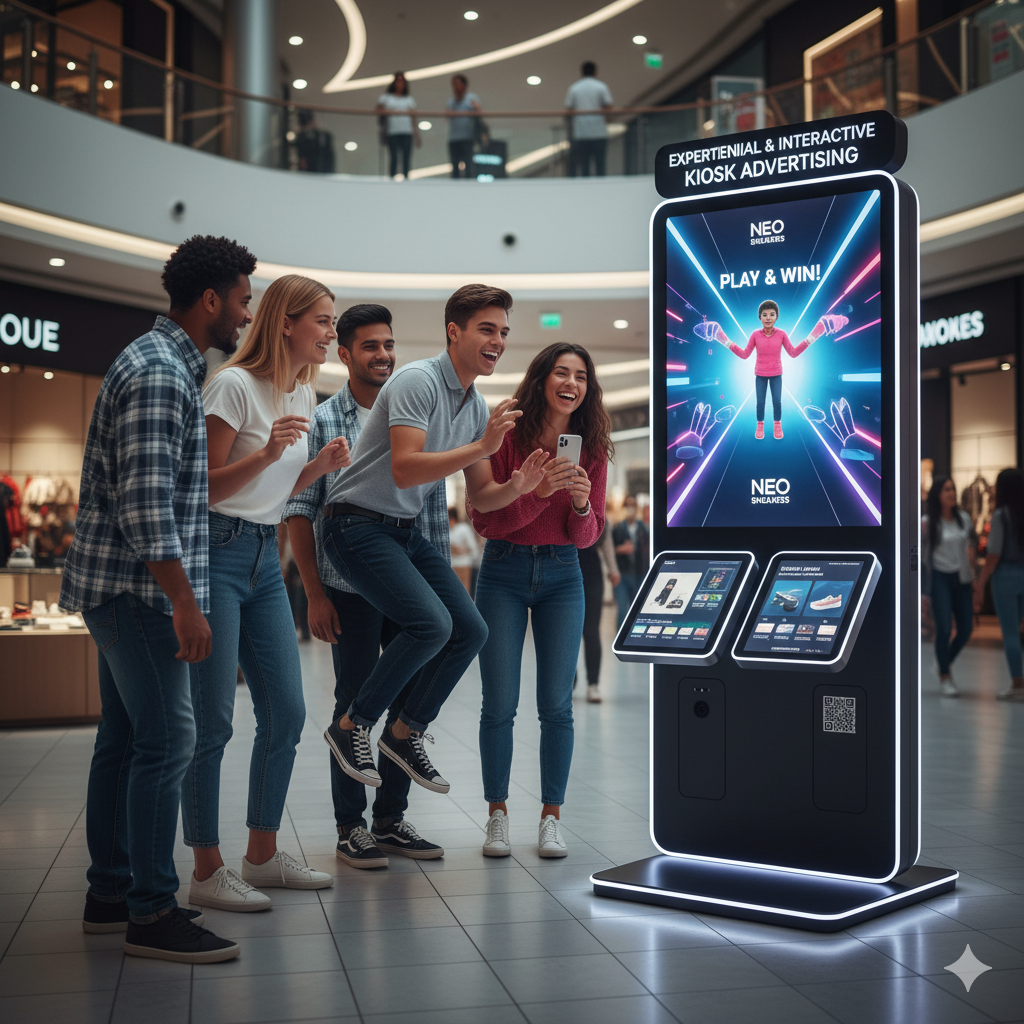
10. Experiential & Interactive Kiosk Advertising
Ever stopped to interact with a digital screen or pop-up booth at a mall? That’s Experiential & Interactive Kiosk Advertising, where ads meet experience. Using touchscreens, AR, and pop ups, brands catch people’s attention and create memorable engagement. Research shows 84% of users prefer interactive kiosks for information and engagement, according to Wavetec.
These kiosks not only attract potential consumers with dynamic content but also collect valuable data for future advertising campaigns. Often placed in high-traffic zones like shopping malls or transit areas, they offer high visibility and bring storytelling to life.


Why Should Brands Go For Outdoor Advertising?
You know that moment when you simply can’t miss an ad on the go, maybe it’s a giant board on the highway or a digital display at a transit stop? That’s precisely why outdoor advertising is such a smart move for brands.
Outdoor advertising offers numerous benefits: unmatched visibility, strong credibility, and the ability to reach large audiences where digital advertising cannot. According to Edison, traditional OOH achieves unaided recall at around 40%, while digital OOH reaches about 47%
It’s part of the broader types of OOH advertising mix, and when used well, it becomes a cornerstone of brand-building and awareness.

1. High Visibility and Mass Reach
Ever glance at a billboard or ad on a bus shelter and suddenly, bam, you’re thinking about the brand?
That’s the magic of high visibility. Outdoor advertisements in transit stations, on city highways, or at shopping district entrances can’t be ignored, they’re in the flow of life, according to oneday agency, about 98% of people are exposed to some form of OOH each week.
Because you’re capturing people in public spaces, you’re building broad awareness fast, especially useful when you want your brand name to be top‐of‐mind.
2. Builds Strong Brand Recall
Think of how you remember a brand after seeing it many times on the street.
That’s brand recall working through repetition. With outdoor placements, your audience sees your message again and again, on the way to work, while waiting for the bus, driving home.
The more someone sees your brand, the more likely they’ll remember it when it matters, whether they’re shopping, choosing a service, or recommending you to a friend.
3. Complements Digital Marketing Campaigns
You remember how online ads sometimes get lost in the scroll or blocked by ad-blockers?
That’s where OOH jumps in to complete the picture. Outdoor ads reinforce your digital efforts: when someone sees your banner on a street and then your post online, it builds a consistent brand experience. One study found OOH can boost search ROI by around +40%.
So, while your digital ads drive clicks and conversions, outdoor ads drive presence and recall, and together they make your marketing more powerful.
4. Targets Specific Locations and Audiences
You don’t always need to reach everyone; sometimes, you just need to reach the right people.
With out-of-home advertising, you can pick specific cities, neighbourhoods, or places where your audience spends time. Whether it’s near a university, a tech park, or an event venue, you can tailor your placement.
Formats like transit ads, street furniture, and digital outdoor displays offer this geolocation advantage. Some research highlights that OOH allows brands to reach “unique audiences” that other channels may miss. So if you have a local shop or region-focused campaign, this is ideal.
5. Offers Cost-Effective, Long-Term Exposure
You might think outdoor ads are expensive, but when you break down the cost per impression and consider how long the ad remains visible, the value becomes impressive. Outdoor ads are always on; unlike many online ads, which drop off or get ignored, an outdoor placement remains relevant 24/7.
For example, many formats display lower CPMs than online video ads, and the “always-on” nature helps sustain their impact. This means your message remains effective over weeks or months without constant bidding wars or changeouts, providing your brand with long-term exposure for the investment.
How Can Types of Outdoor Advertising Include an Example of Window Display?
Different types of outdoor advertising can include billboards, transit ads, street furniture, digital displays, and storefront promotions. An example of window display advertising is a branded retail window that uses products, graphics, lighting, or digital screens to attract people walking past the store.
A strong example of window display advertising can support other types of outdoor advertising by reinforcing the same campaign message at street level. When window displays match nearby outdoor ads in color, branding, and promotion, businesses can create a more consistent experience that improves visibility and encourages more customers to enter.
How Can AIScreen Help You Manage Outdoor Advertising Costs?
Ever wondered what it really costs to make your brand visible everywhere you go? Outdoor advertising prices vary based on the format, location, size, and duration of your campaign. Static billboards generally range from $750 to $14,000 per month, while digital billboards, with animation and real-time updates, can cost up to four times more. Transit ads on buses, subways, and taxis usually range from $500 to $5,000 per campaign, while street furniture and kiosks start at around $200 per week.
Premium spots in city centers, airports, and high-traffic highways are more expensive but deliver unbeatable impressions and brand exposure. Despite varying costs, outdoor advertising offers one of the lowest cost-per-impression rates in marketing and remains “always-on,” delivering visibility 24/7.
If you’re ready to take your brand beyond screens and into the real world, AIScreen can help. As a leading digital signage and outdoor display provider, AIScreen makes it easy to manage, design, and launch impactful OOH campaigns, from billboards to digital kiosks, all in one place. Start your outdoor journey today, turn every street into your brand’s next big opportunity with AIScreen! Contact us.
FAQs
What is outdoor advertising?
Outdoor advertising is a form of marketing that promotes products or services in public spaces through billboards, transit ads, street furniture, and digital displays. It targets people when they’re out of their homes, creating high visibility and strong brand recall through consistent, real-world exposure.
What is the full form of OOH in advertising?
The full form of OOH in advertising is Out-of-Home. It refers to all marketing efforts that reach consumers outside their homes, including static billboards, digital screens, transit ads, and experiential displays, designed to catch people’s attention during their daily routines.
What is ‘Site Recce’?
‘Site Recce’ refers to site reconnaissance, a pre-campaign visit to inspect potential outdoor advertising locations. Brands and media planners conduct a site recce to evaluate visibility, foot traffic, lighting, and audience demographics, ensuring the selected spot aligns with the campaign’s objectives.
What are the pros and cons of outdoor advertising?
The pros of outdoor advertising include high visibility, wide reach, and long-term exposure at a relatively low cost per impression. It strengthens brand credibility and complements digital campaigns. The cons are limited targeting control, weather dependency, and restricted message length, requiring concise yet impactful creative design.
How to select the right outdoor spot for your brand advertising?
To select the right outdoor spot for your brand advertising, assess traffic patterns, audience demographics, and surrounding visibility. Prioritize locations with high foot or vehicle flow, such as intersections or shopping districts. Also, consider the type of OOH advertising, from billboards to transit ads, to match your campaign goals and audience behavior.
Outdoor advertising represents a critical component in the multifaceted domain of marketing strategies. This form of advertising is designed to reach consumers in public spaces through various platforms such as billboards, transit vehicles, and other outdoor digital signage billboards structure.
