Digital Signage for
Museums

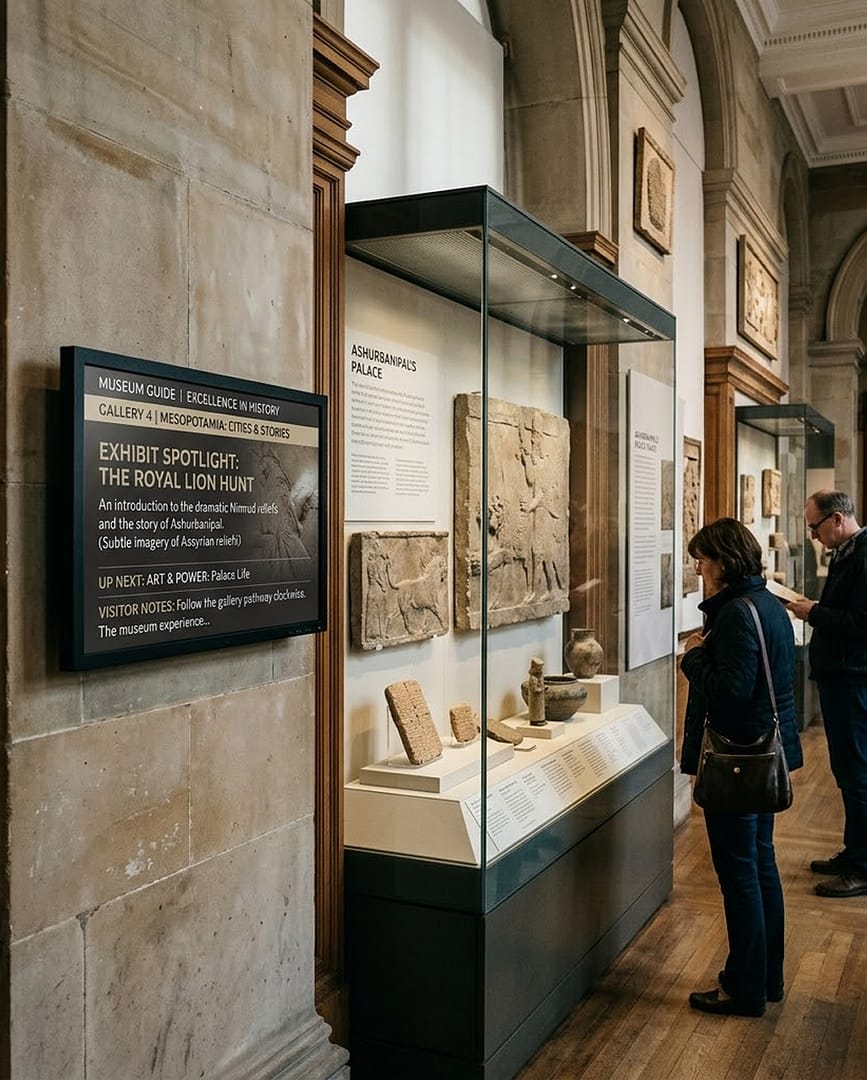
Digital signage for museums allows institutions to display exhibit information, interactive content, and visitor guidance across screens in real time. From galleries and exhibition halls to entrances and information points, a centralized display system helps manage content across the entire space. With digital signage software, museums can manage content centrally and update displays across multiple exhibit areas in real time. See also library digital signage, airport digital signage, and transportation digital signage. It all runs on the digital signage software.
14-day FREE trial. No credit card required
Digital Signage for Museum

Why Digital Signage Works Better
in Museums

Museums need to educate, guide, and engage visitors without overwhelming them. Digital signage delivers rich visual content while keeping information accurate, accessible, and easy to update across exhibits and galleries. Digital signage for museums helps institutions display exhibit information, interactive content, and visitor guidance across museum display screens.

  • 1

    Update Exhibit Information Instantly Across Galleries
  • 2

    Guide Visitors With Interactive and Visual Displays
  • 3

    Keep Museum Displays Running Reliably All Day

1. Update Exhibit
Information Instantly
Across Galleries

Printed exhibit labels are difficult to maintain and update. Digital signage allows museums to update exhibit details, descriptions, and schedules instantly from one platform. Museum digital signage enables interactive museum displays that enhance visitor engagement and create more immersive experiences within galleries and exhibitions.

Digital Signage for Museum

2. Guide Visitors With Interactive and Visual Displays

Museums often span multiple floors and galleries. Museum digital signage helps visitors navigate exhibits while enhancing their experience, presenting exhibit information, historical content, and wayfinding throughout the space.

3. Keep Museum Displays Running Reliably All Day

Exhibit screens must perform consistently during operating hours and special events. Digital signage ensures reliable playback and centralized control across galleries, entrances, and visitor information points.

Digital Signage for Museum

The Digital Signage Mesum & Exhibitions Challenges

The Mesum Challenge

Museum professionals and managers have a constantly evolving
set of needs and responsibilities. In today’s context, this list
commonly encompasses the following requirements:

Digital Signage for Museum
Digital Signage Museum owners and managers challanges & requirements.
  • Easy-to-use Digital Signage Software
  • Declining visitor numbers and engagement.
  • Financial sustainability.
  • Adapting to rapidly evolving technologies and digital trends.
  • Addressing the need for modernization and infrastructure improvements.
  • Streamlined the management of content and devices with a simple, cloud-based centralized hub.
  • Engaging younger generations and fostering a love for museums.
  • Enhancing marketing and promotion strategies to reach wider audiences.
  • Adapting to changing visitor expectations and preferences for interactive experiences.
  • Competition from other cultural institutions and entertainment options.
  • Balancing the need for revenue generation with the mission of education and preservation.
  • Limited resources for maintaining and updating exhibition spaces.
  • Built-in monitoring and troubleshooting tools
  • Consistent and dependable performance with no blank screens or error messages
  • Offer the capability to easily switch prices, images, and videos as needed
Business owners and managers have a dynamic set of needs and obligations that are subject to change. Today, this list typically includes the need for:
  • Easy-to-use Digital Signage Software
  • Declining visitor numbers and engagement.
  • Financial sustainability.
  • Adapting to rapidly evolving technologies and digital trends.
  • Addressing the need for modernization and infrastructure improvements.
  • Streamlined the management of content and devices with a simple, cloud-based centralized hub.
  • Engaging younger generations and fostering a love for museums.
  • Enhancing marketing and promotion strategies to reach wider audiences.
  • Adapting to changing visitor expectations and preferences for interactive experiences.
  • Competition from other cultural institutions and entertainment options.
  • Balancing the need for revenue generation with the mission of education and preservation.
  • Limited resources for maintaining and updating exhibition spaces.
  • Built-in monitoring and troubleshooting tools
  • Consistent and dependable performance with no blank screens or error messages
  • Offer the capability to easily switch prices, images, and videos as needed
  • See all challenges

What Museums Improve with Digital Signage

  • Digital Signage for Museum

    Up to %

    Enhanced Visitor Engagement

    Up to 25–35% higher engagement, as visitors interact more with digital and visual content.

  • Digital Signage for Museum

    Up to %

    Faster Content Updates

    Up to 30–40% faster updates compared to printed exhibit materials.

  • Digital Signage for Museum

    Up to %

    Improved Information Accessibility

    Clear digital displays make exhibit information easier to access and understand.

Digital Signage for Museums
Built to Adapt and Scale

Enhance exhibitions with digital signage software
designed for museums and cultural spaces. Manage
exhibit content, wayfinding, and announcements from one
platform while keeping displays accurate and visually
engaging.

Discover How Museums Elevate Visitor Engagement With Digital Signage

Discover how museums modernize exhibits, improve navigation, and enhance storytelling using digital signage solutions built for cultural institutions.

Digital Signage for Museum

City Heritage Museum Enhances Exhibits With Digital Signage

Learn how City Heritage Museum replaced static placards with dynamic digital displays, improving visitor engagement and simplifying exhibit updates across galleries.

Digital Signage for Museum

Digital Signage for Museums That Tell Stories Smarter

Eliminate outdated exhibit labels, improve visitor flow, and modernize storytelling with
digital signage for museums. Display interactive content, exhibit details, and
wayfinding on any screen, always accurate, always engaging.

Explore other use cases

  • Digital Signage for
    Golf Clubs

    Display live leaderboards, promote clubhouse offers,
    and provide interactive access to tee times and
    events from one centralized platform.

  • Bar Digital Signage

    Automate happy hour promotions, create immersive
    video walls, and keep branding consistent during
    peak hours.

Questions? Answers.

Why is signage important in museum?

Signage plays a pivotal role in enhancing the museum visit, aiding visitors in navigation while imparting crucial details about exhibits. Lacking signage, visitors would face disorientation and bewilderment, while signage itself fosters a museum’s distinct identity.

Museums and galleries use signage for exhibit information, wayfinding, event listings, and donor recognition. AIScreen presents rotating exhibit stories, interactive maps, and daily program schedules, and updates displays as exhibitions change, enriching the visitor experience without reprinting interpretive panels.
What are the interactive technologies for museums?

Museums can employ interactive exhibits for heightened engagement, immersing visitors in captivating and enriching learning encounters.

Touchscreens and interactive kiosks offer visitors an exceptional chance to delve deeply into the artwork or artifacts on display, surpassing mere admiration from a distance.

Additionally, digital displays provide museums with the opportunity to showcase multimedia content, such as videos, animations, and interactive visuals, further enhancing the interactive experience for visitors.

What technology is used in museum exhibits?
How do you create an interactive museum exhibit?

Multimedia integration: By captivating multiple senses simultaneously through a diverse blend of media, exhibit engagement and interest are heightened.

This amalgamation may comprise audio (sound), text/images/video (visual), tangible objects, interactive components (touch), and other sensory elements for a comprehensive sensory experience.

How do you make a digital museum?

1. Establish the essence of your purpose.

2. Recognize the needs of visitors.

3. Consider User Experience.

4. Choose the appropriate CMS for your museum.

5. Discover suitable partners for your endeavor.

6. Develop an interactive guide.

7. Construct a 3D immersive experience.

How can digital signage enhance the visitor experience in modern museums?
Digital signage in museums can enhance the experience by showcasing captivating content featuring stunning visuals, and highlighting the museum’s collection. Additionally, it can create a dynamic environment by incorporating floating exhibits. Additionally, it engages visitors by providing them an unforgettable experience that bring the visiting places to life.
What are the benefits of using interactive video walls in museums and art galleries?
Interactive video walls provide an innovative way to captivate a museum visitor and art gallery patrons, offering a dynamic and visually striking platform to showcase exhibits and engage with digital content.

Additionally, video walls facilitate multi-user interactions, allowing visitors and patrons to collaborate, share insights, and collectively immerse themselves in the artistic experience. For example, At the Cleveland Museum video walls provide a seamless integration of traditional art forms with modern technology, like virtual reality experiences, creating a mesmerizing fusion that enhances visitor engagement. Book a quick demo to see it in action.

How does digital signage software contribute to the effective management of museum displays?
Digital signage software enables museums and art galleries to efficiently control and update digital displays and digital display boards, facilitating seamless management of exhibits and providing an enhanced visitor experience. By using digital signage and the versatility of digital display, museums can dynamically showcase diverse collections and captivate audiences in a way that brings life never before imagined.
How does digital signage in museums connect the past to visitors’ daily lives?
By combining historical content and modern technology, digital signage in museums creates a dynamic experience where the past meets the present, offering valuable insights that enrich visitors’ daily lives. For example, using digital signage, museums can create immersive exhibits that allow visitors to discover personal stories and testimonials of Holocaust victims.
What are the benefits of incorporating social media walls into museum digital signage?
Incorporating the social media wall into the museum’s digital signage allows for real-time integration of user-generated content that fosters a sense of community engagement in the museum. New digital installations leverage interactive displays and digital screens, creating immersive experiences for visitors, especially when using mobile devices. These digital displays also offer enhanced opportunities for more immersive experiences like sharing people experiences, curated content about the history and culture etc. Past meets present as digital signage seamlessly integrates historical artifacts and information with modern interactive technology.
Can digital signage attract media attention and help visitors easily locate specific pieces?
Digital signage’s captivating displays and interactive features assist visitors in finding specific pieces, creating an engaging and memorable museum experience. It helps visitors find their way around the museum with ease, ensuring they can locate specific exhibits or sections of interest effortlessly. This digital display also aids visitors in navigating through the museum by providing clear directions and information.
How does digital signage technology enhance the Los Angeles Museum?
By implementing interactive displays, the Los Angeles Museum utilizes digital signage technology to engage visitors and provide an innovative museum experience. Furthermore, it can streamline the experiences by integrating the ticket printer within its features that allows visitors to conveniently access tickets or passes while exploring the museum.
How does digital signage enhance visitor engagement with the design collection in museums?
Digital signage technology seamlessly combines physically exploring exhibits with interactive elements, allowing visitors to engage with the design collection and discover and explore pieces in an immersive way. By merging the physical and digital realms, digital signage enhances the museum experience, creating a dynamic and interactive journey for all visitors. Using digital signage, visitors can access multimedia content, interactive maps, virtual tours, and real-time updates.
How does digital signage offer an interactive experience for museum visitors?
Yes, digital signage systems leverage memory pool technology to ensure seamless content delivery, providing visitors with detailed information and enabling them to explore and appreciate the design collection fully. This integration of digital signage technology enhances the overall museum experience, making it more engaging and informative for all. Memory pool technology ensures smooth content delivery and enhances the informative experience for visitors.
How can digital signage solutions in museums provide complete information to visitors?
Digital signage technology, integrated with protective glass, enables museums to deliver comprehensive information to visitors, including, guided tours, and engaging content, ensuring a complete and immersive experience. Even immersive virtual reality experiences, such as the innovative “Fuse Art” exhibit at the Cleveland Museum. The visitors find it to be an extraordinary blend of art and technology, where visitors find an extraordinary blend of art and technology. Our digital signage technology empowers museums to provide comprehensive information and create immersive experiences.
How does digital signage facilitate the exploration of various pieces within a museum?
Digital signage guides visitors to find and explore specific pieces, creating an interactive experience that captures media attention and enhances the overall visitor satisfaction.
How do digital signage systems in museums enhance visitor engagement and exploration?
By incorporating features such as interactive displays and guided tours, digital signage solutions allow visitors to actively engage with the exhibits and explore different areas of interest, making their museum visit more interactive and enjoyable.
What are the benefits of using card readers with digital signage in museums?
Integrating the card reader with digital signage systems enables museums to provide personalized experiences, allowing visitors to access additional content, exclusive information, or special features by simply swiping their cards, enhancing their overall visit to the museum. This personalized approach, made possible by our digital signage technology, creates a seamless and great experience for museum-goers.