
What is Internet of Things (IoT) Digital Signage?

The Internet of Things (IoT) is significantly reshaping the digital signage industry, enabling smart displays that use real world applications data and interactive sensors to deliver personalized content across various environments. IoT digital signage connects displays to cloud-based content management systems (CMS) and integrates motion sensors, environmental temperature sensors, and cameras to optimize customer engagement. According to a report by Markets and Markets, the global digital signage software market is expected to grow from $22.2 billion in 2020 to $31.71 billion by 2025, driven in part by IoT technologies that offer dynamic content management and remote monitoring capabilities.
In this article, we explore how IoT applications in digital signage drives innovation through real-time content updates, remote management, and data-driven personalization. As adoption grows, businesses use smart display networks, cloud-based CMS, and scalable infrastructure to improve audience targeting and efficiency.
What is IoT (Internet of Things) Digital Signage?
IoT digital signage is a smart display system that connects screens to the Internet of Things (IoT) ecosystem, enabling real-time data integration, smart sensor interaction, and cloud-based content management for dynamic and personalized content delivery. By combining connected devices, AI-driven analytics, and centralized CMS platforms, IoT-enabled digital signage software can automatically adjust content based on factors like audience behavior, location, and environmental conditions, improving customer engagement, operational efficiency, and scalability across retail store, corporate, healthcare, and public environments.
How IoT is Enhancing Digital Signage Functionality
IoT in digital signage enhances functionality by integrating smart sensors, real-time data analytics, and cloud-based relevant content management systems (CMS) to deliver intelligent and responsive displays.
- Smart Sensors: Detect audience behavior, foot traffic, and environmental conditions
- Real-Time Personalization: Adjust display content dynamically based on data and user interaction
- Remote Management: Control screens, schedule content, and monitor performance via cloud-based digital signage CMS
What are the Key Benefits of IoT-Driven Digital Signage Networks?
The key benefits of IoT-driven digital signage networks provide cost-effective, scalable, and data-driven display solutions by combining smart sensors, real-time data analytics, AI-powered automation, and cloud-based CMS to deliver personalized, dynamic, and automated content across multiple screens. Digital signage platforms like AIScreen enhance this ecosystem by enabling centralized control, real-time content updates, and scalable multi-screen management, helping organizations optimize customer engagement, operational efficiency, and ROI across retail, corporate, healthcare, and public environments.
Real-Time Content Updates
IoT digital signage enables real-time content updates by connecting displays with smart devices, inventory systems, and cloud-based CMS platforms. This allows screens to automatically update menus, promotions, or announcements based on live data inputs, improving content accuracy, automation, and operational efficiency across retail, restaurants, and corporate environments.
For example, integrating digital menu board with inventory management systems or smart refrigerators ensures that out-of-stock items are instantly removed or updated on screens. This reduces manual effort, enhances customer experience, and supports data-driven decision-making, helping businesses deliver relevant and timely content.
Environment-Aware Digital Signage
Environment-aware digital signage uses IoT sensors and real-time data analytics to adjust content based on external conditions like weather, temperature, and location data. By connecting to temperature sensors, traffic systems, or environmental data sources, businesses can deliver contextual and personalized messaging that improves engagement and relevance.
For instance, a display connected to a weather sensor can promote cold beverages on hot days or warm products during colder conditions. This dynamic content adaptation ensures the right message is shown at the right time, enhancing content targeting, customer interaction, and conversion rates.
Touchless Digital Signage
Touchless digital signage leverages IoT connectivity and mobile integration to enable contactless interactions without requiring physical touch screens. By connecting displays to smartphones, QR codes, and cloud-based platforms, businesses can offer self-service experiences in retail, healthcare, and public spaces.
This approach improves hygiene, accessibility, and user convenience, especially in high-traffic environments like malls, airports, and hospitals. IoT-powered touchless systems also support real-time updates and remote management, making them a safe, scalable, and user-friendly digital signs solution.
Voice-Activated Digital Signage
Voice-activated digital signage enhances interactivity by integrating displays with voice assistants and IoT ecosystems, allowing users to control content through voice commands. Technologies like AI-powered voice recognition and cloud-based processing enable hands-free navigation, improving accessibility and engagement.
By reducing the need for touch-based interfaces, businesses can lower hardware costs while offering inclusive experiences for visually impaired or physically challenged users. This makes voice-enabled signage a future-ready solution, combining IoT, AI, and automation to deliver create smarter and more interactive digital signage display systems.


How is IoT Digital Signage Used Across Different Industries?
IoT digital signage is transforming multiple industries by combining smart sensors, real-time data analytics, and cloud-based content management systems (CMS) to deliver context-aware, personalized, and automated display experiences. Platforms like AIScreen enable businesses to deploy scalable, centrally managed digital sign networks that adapt content based on audience behavior, location data, and environmental conditions, improving engagement and operational efficiency.
Retail Sectors:
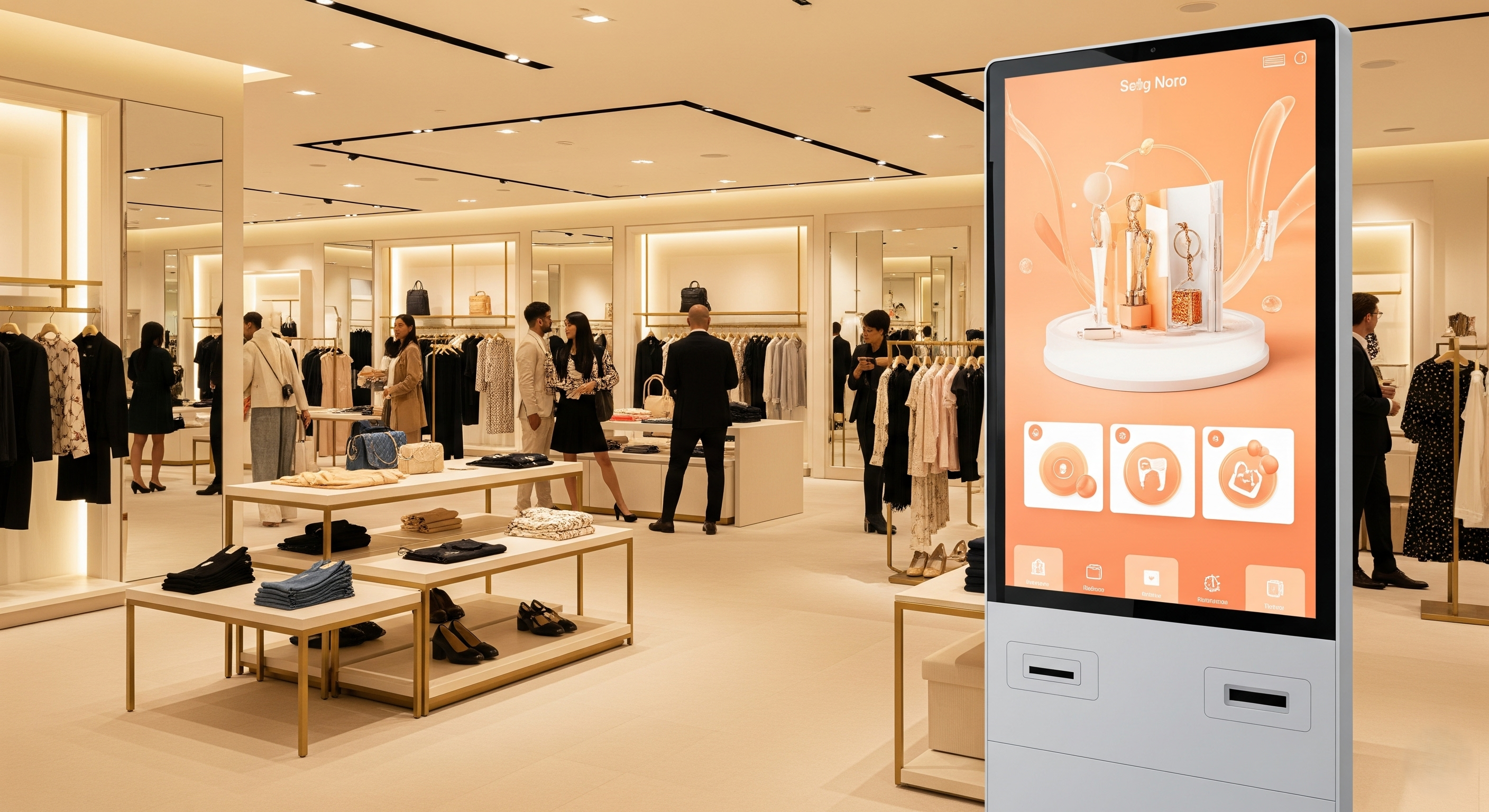
In retail environments, IoT-enabled retail digital signage uses motion sensors, cameras, and POS system integration to deliver personalized offers and targeted advertisements based on customer behavior and purchase history. With real-time data and AIScreen’s centralized dashboard, retailers can optimize product placement, promotions, and in-store engagement, increasing conversion rates and customer satisfaction.
Transportation and Public Spaces:
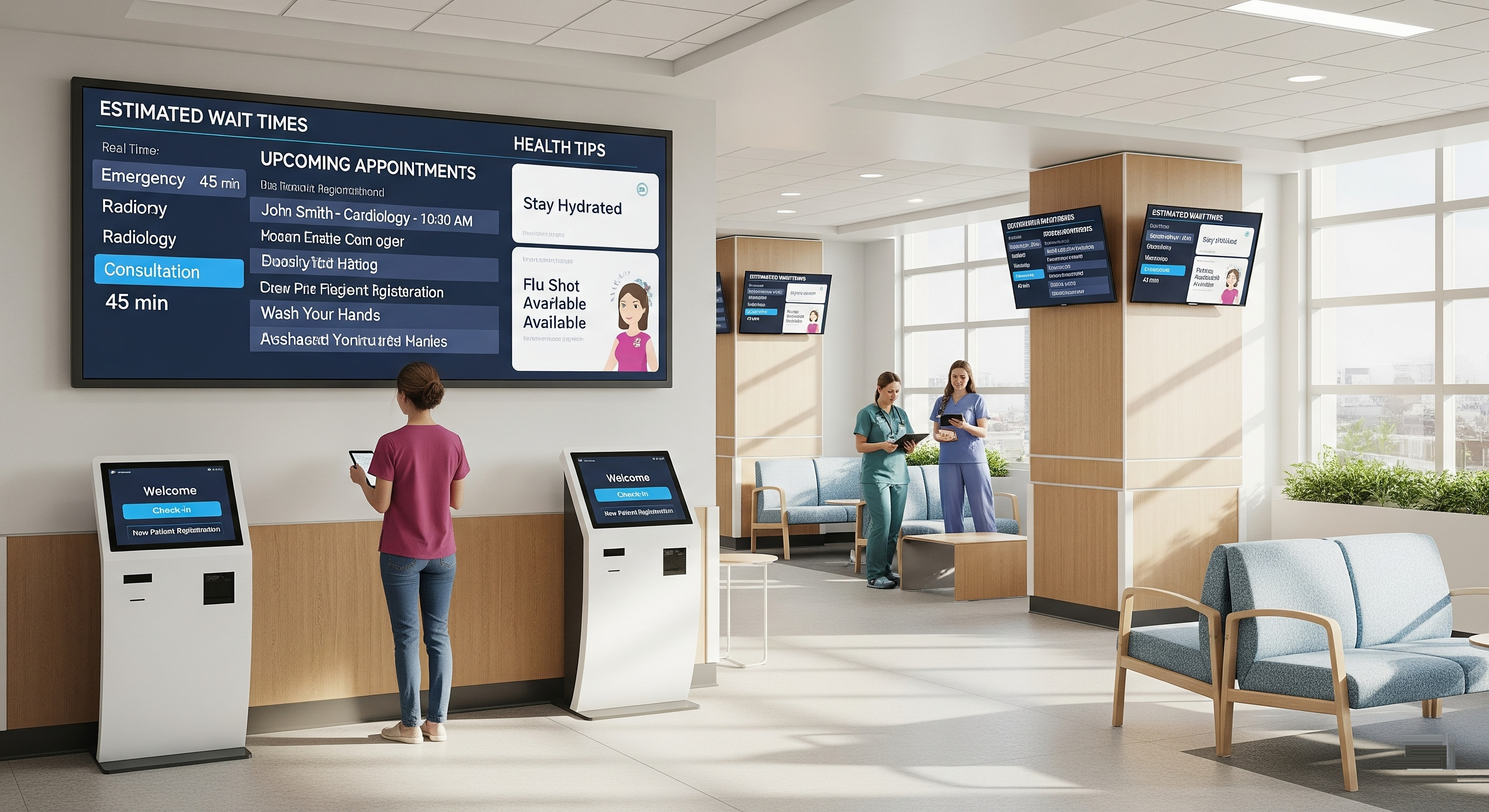
In transportation hubs and public areas, IoT signage supports smart wayfinding systems that adjust directions and content based on crowd density, time of day, and live data inputs. These systems also enable real-time emergency alerts and public safety messaging through connected IoT sensors and cloud-based CMS platforms, ensuring accurate and timely communication.
Corporate and Hospitality Sectors:
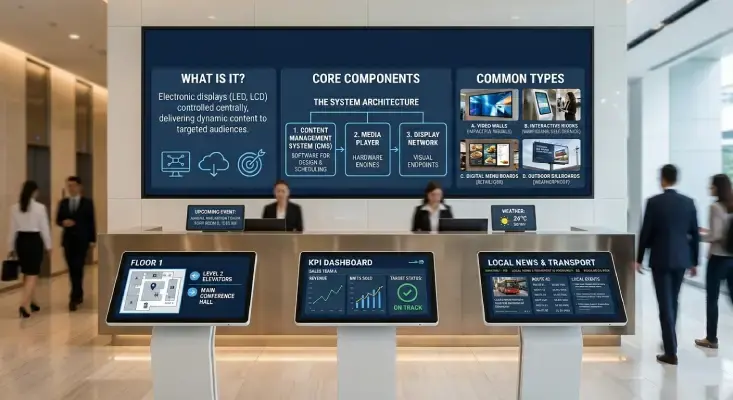
In corporate offices and hospitality environments, IoT digital signage powers interactive meeting room displays, real-time booking systems, and personalized guest experiences. Using AIScreen and IoT integration, businesses can display dynamic content, event schedules, and tailored messaging in lobbies and conference areas, enhancing communication, efficiency, and overall user experience.
What are the Key Challenges of Implementing IoT Digital Signage Systems?
Implementing IoT digital displays involves challenges related to connectivity, security, and initial investment, as businesses integrate smart sensors, connected other devices, and cloud-based content management systems (CMS) into scalable display networks. Below are the key challenges:
- Connectivity and Network Reliability: IoT digital signage systems rely on stable Wi-Fi, Ethernet, and wireless protocols for real-time data and content delivery, where network disruptions can impact content playback, synchronization, and remote access screen management across display networks.
- Security and Data Privacy Risks: Connected IoT devices and digital signage networks are vulnerable to cyber threats, unauthorized access, and data breaches, requiring encryption, secure authentication, and compliance with data regulations like GDPR for safe operations.
- High Initial Setup Costs: Implementing IoT-enabled digital signage involves investment in smart sensors, displays, media players, and infrastructure, including installation, system integration, and configuration costs for scalable deployments.
- Balancing ROI with Investment: Businesses must evaluate long-term ROI, operational efficiency, and scalability, while using platforms like AIScreen to simplify cloud-based content management, automation, and multi-screen control, reducing complexity and improving cost efficiency.
How Will IoT Shape the Future of Digital Signage Networks?
The future of IoT digital signage will be driven by the integration of AI-powered analytics, smart sensors, and cloud-based content management systems (CMS), enabling fully automated and adaptive display networks.
Over the next 5–10 years, businesses communicate will increasingly rely on real-time data, audience analytics, and machine learning algorithms to deliver hyper-personalized content based on behavior, location, and environmental conditions.
How Does Google Chromecast Fit into IoT Digital Signage Solutions?
Google Chromecast digital signage plays a key role in IoT-powered display networks by enabling wireless content streaming, real-time updates, and cloud-based content management across connected screens. When integrated with IoT systems and platforms like AIScreen, Chromecast allows businesses to deliver data-driven, automated, and scalable digital signage solutions using Wi-Fi connectivity and centralized dashboards. Explore how to set up digital signage solutions with google chromecast to understand how Chromecast can enhance smart display networks, remote management, and interactive content delivery within IoT-enabled environments.
Discover IoT-Enabled Digital Signage Solutions with AIScreen!
Discover IoT-enabled digital signage solutions with AIScreen and take your business into the future of smart communication. AIScreen makes it easy to incorporate IoT with intuitive software, scalable architecture, and robust hardware integrations.
With AIScreen IoT digital signage, businesses gain powerful tools to connect devices, automate workflows, and personalize customer experiences. From the retail industry to healthcare, our AIScreen IoT-enabled smart signage solutions help improve business operations, drive customer engagement, and deliver valuable insights using advanced IoT technology. Start using AIScreen today to unlock smarter displays, better insights, and higher ROI.
FAQs
What is the difference between traditional and IoT digital signage?
The difference between traditional and IoT digital signage lies in adaptability. While traditional signage displays static or scheduled content, IoT-powered digital signage uses real-time data to adjust content based on environmental factors, user behavior, or operational inputs.
How does IoT improve digital signage effectiveness?
IoT improves digital signage effectiveness by enabling smart content delivery based on real-time data and sensor feedback. This increases customer engagement, relevance, and operational efficiency across various environments, especially in the retail sector.
What types of businesses benefit most from IoT digital signage?
The types of businesses that benefit most from IoT digital signage include retail, healthcare, transportation, and education. These sectors rely on real-time data and interactive experiences to guide, inform, and engage audiences using digital screens and iot powered digital signage systems.
Can IoT digital signage integrate with existing systems?
Yes, IoT digital signage can integrate with existing systems such as POS terminals, CRMs, and ERP software. This connectivity enables seamless data exchange for more personalized and automated content delivery, supporting a successful installation and better digital signage applications.
What are the security considerations for IoT digital signage?
The security considerations for IoT digital signage include securing network connections, encrypting data transfers, and regularly updating device firmware. Using secure cloud platforms and vetted cellular modules helps protect sensitive customer and operational data across all connected IoT systems.
