
12 Best Menu Board Ideas for Your Restaurant Business
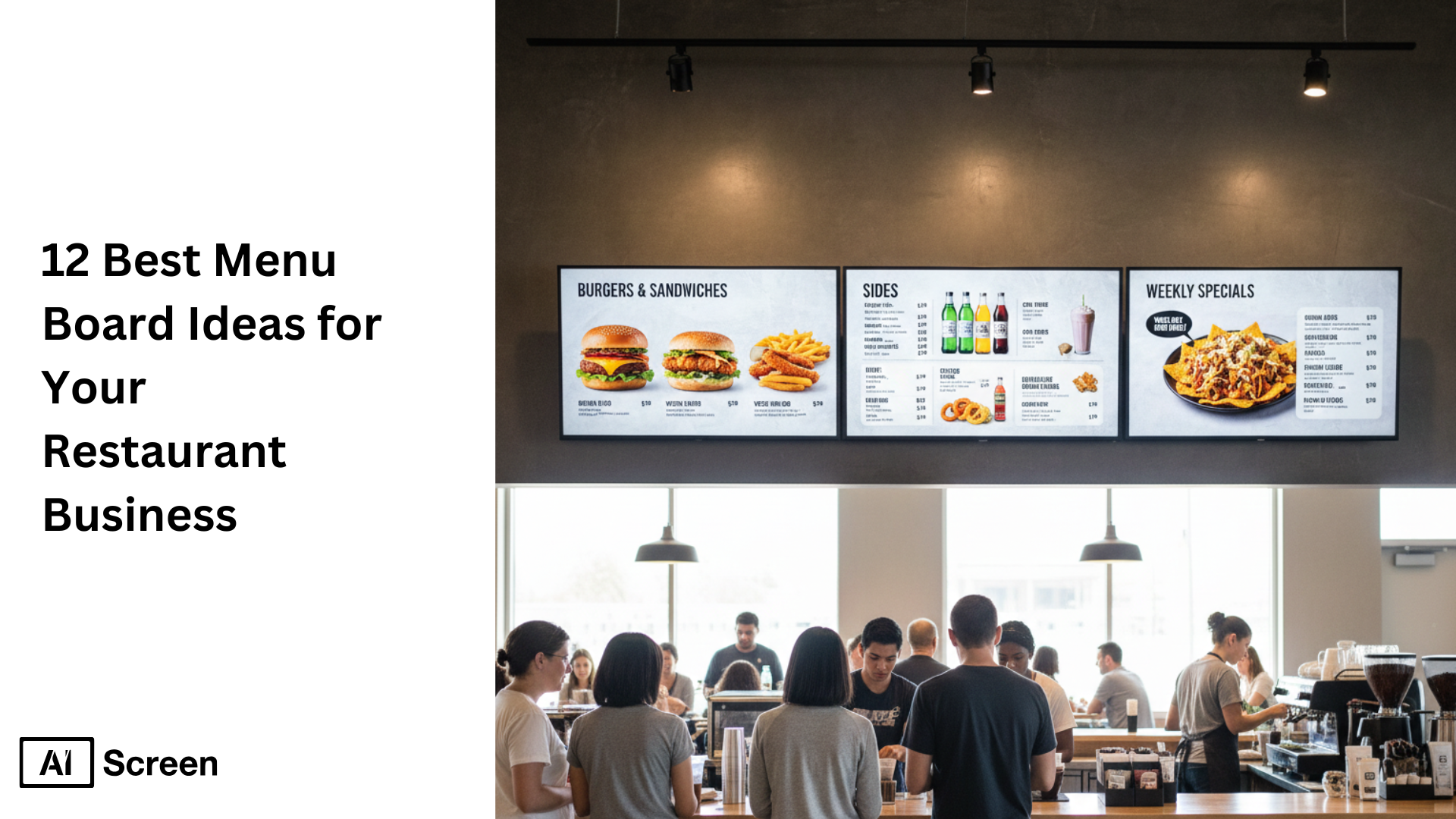
Ever wondered why some menus instantly make you want to order more? 12 best menu board ideas for your restaurant business exist because menus are no longer just information boards, they’re powerful sales tools. Today’s customers expect menus to be clear, visual, and engaging, and restaurants that meet those expectations see real results. According to Statista, digital menu and signage solutions are increasingly adopted in food service by 78% because visual displays significantly influence purchase decisions at the point of sale, especially in fast-paced dining environments.
In this article, you’ll learn how modern menu board ideas can transform the way customers interact with your restaurant. From interactive screens and dynamic pricing to seasonal designs and upselling strategies, these ideas will show you how to improve visibility, streamline ordering, and increase sales, all while creating a better overall customer experience. These ideas come to life on restaurant menu display software.
1. Interactive Digital Menu Boards for Customer Engagement
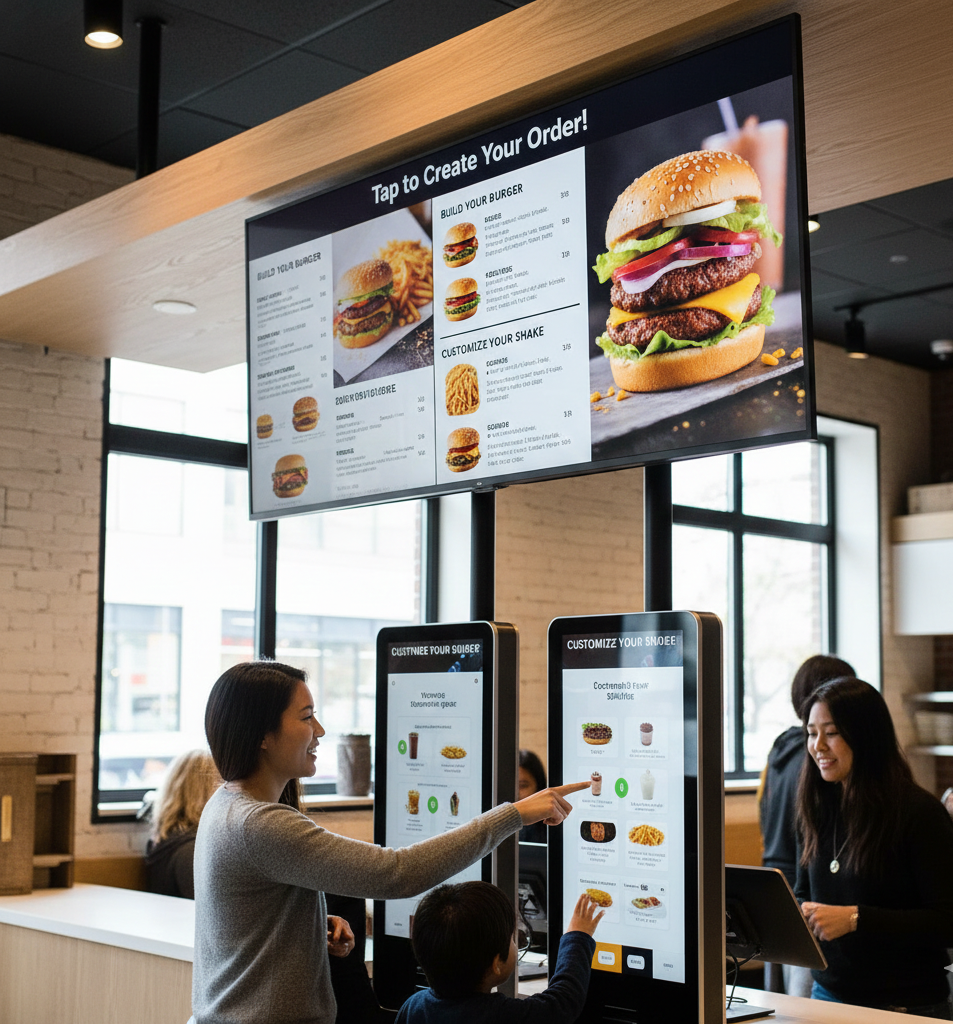
People don’t just look at menus anymore, they interact with them. Interactive digital menu boards for customer engagement turn the menu from a static display into a hands-on experience.
Instead of scanning a crowded board or squinting at chalkboard menus, customers can tap, browse, and explore menu items at their own pace.
Touchscreen menu display setups let people view photos, ingredient details, add-ons, and even dietary filters, all without feeling rushed or pressured at the counter. This level of interaction naturally boosts engagement and speeds up decision-making.
Customers spend more time discovering menu board design ideas brought to life through animations, combo suggestions, and smart layouts, while businesses benefit from smoother ordering and fewer misunderstandings.
In many setups, customers can even place orders directly from the screen, reducing queues and freeing up staff. Compared to traditional chalkboard menus, interactive displays feel modern, intuitive, and designed around how people actually choose food today.
2. Digital Menu Boards with High-Resolution Images
Let’s face it, people eat with their eyes first. Digital menu boards with high-resolution images instantly make menu items look more appetizing, vibrant, and hard to ignore.
Crisp visuals, rich colors, and sharp details turn a simple menu display into an immersive food showcase that grabs attention from across the room. Compared to traditional printed menus, HD digital displays highlight textures, freshness, and portion size in a way static designs simply can’t.
This visual upgrade directly impacts buying behavior. According to Nielsen, visual content is processed 60,000 times faster than text, which explains why high-quality menu board ideas often lead to quicker decisions and higher spend per order.
When customers can clearly see what they’re ordering on restaurant menu boards, they feel more confident, more excited, and more likely to upgrade, something traditional paper menus struggle to achieve.
3. Split-Screen Digital Menu Boards for Dynamic Content
Why show just one message when you can show three? Split-screen digital menu boards let businesses divide the menu board into multiple sections, one area for core menu items, another for promotions, and a third for limited-time offers or announcements. This flexible menu display layout keeps content fresh without overwhelming the customer.
From a marketing perspective, this works beautifully. Promotions don’t get buried, new items don’t go unnoticed, and customers stay aware of deals while ordering.
A Digital Signage Today study found that digital displays can increase sales of promoted items by up to 30%, simply by placing them in high-visibility zones.
Compared to traditional printed menus, split-screen layouts allow businesses to test menu board ideas in real time, swapping content instantly without reprinting or redesign costs.
4. Seasonal and Holiday-Themed Digital Menu Boards
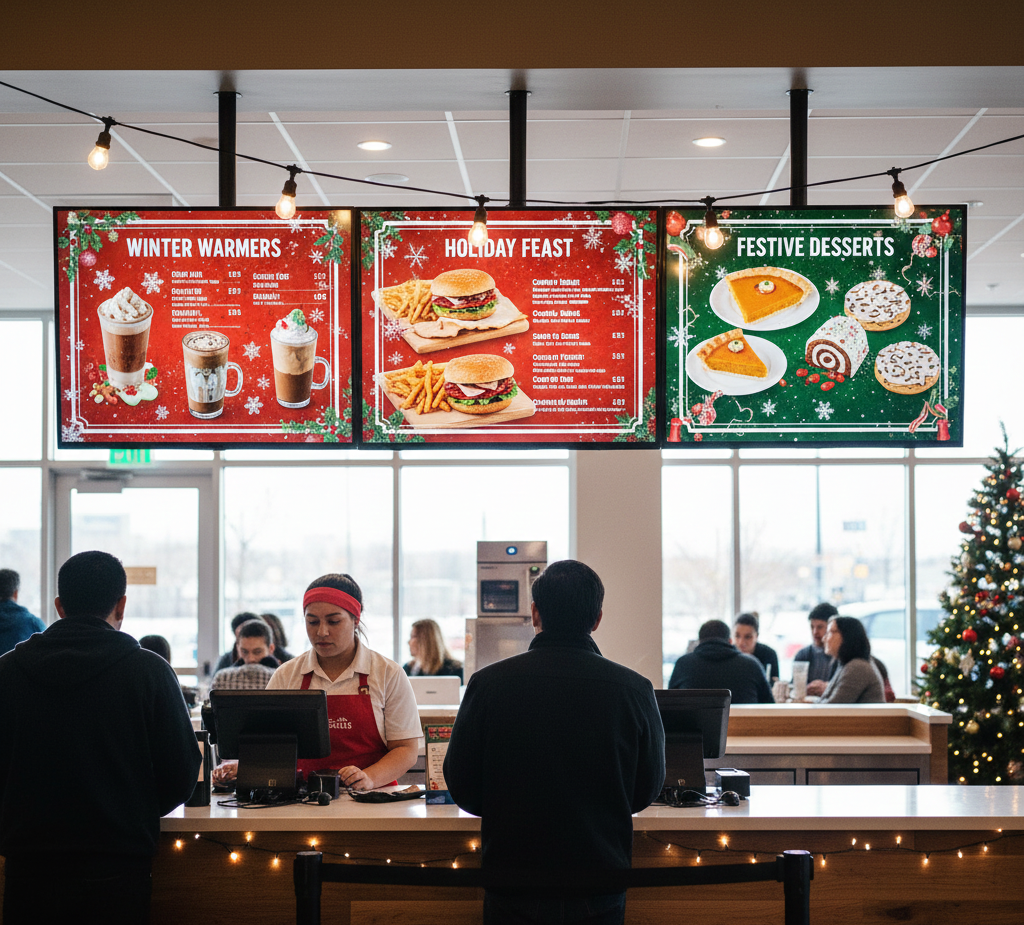
Nothing builds excitement like a menu that changes with the season. Seasonal and holiday-themed digital menu boards allow restaurants to refresh their menu display based on the time of year, think fall-inspired flavors, festive winter drinks, or limited-time holiday combos.
These updates make menu items feel exclusive and timely, encouraging customers to try something new before it disappears.
This strategy taps into urgency and emotional buying. According to Deloitte, seasonal promotions can drive up to a 15% increase in customer engagement when paired with relevant visual themes.
Unlike traditional paper menus, digital signage makes it easy to roll out holiday designs across restaurant menu boards instantly, no delays, no waste, just timely, eye-catching content that matches the moment.
5. Customizable Digital Menu Boards for Multiple Locations
Managing menus across locations shouldn’t feel like chaos. Customizable digital menu boards allow chains and franchises to control menu display content from one central system while still adapting menu items to local pricing, availability, or promotions.
This means consistent branding everywhere, with the flexibility to localize when needed. For growing brands, this is a game-changer. Instead of juggling custom menu boards or relying on outdated traditional printed menus, teams can push updates to every screen in minutes.
According to Grand View Research, the global digital signage market continues to grow rapidly as multi-location businesses adopt centralized control for speed and consistency.
With digital displays, restaurant menu boards stay aligned, accurate, and on-brand, no matter how many locations are involved.


6. Digital Menu Boards with Promotional Slideshows
Static menus fade into the background, but movement changes everything. Digital menu boards with promotional slideshows keep the menu board visually active by rotating offers, limited-time deals, and new menu offerings throughout the day.
Instead of relying on handwritten menus or magnetic boards that rarely change, slideshows let you highlight signature dishes, desserts, or add-ons in a way that feels fresh and intentional. This constant motion naturally draws the eye and improves the customer experience.
Promotions don’t get missed, best selling dishes stay top of mind, and menu board design feels more like part of the restaurant decor than a functional sign.
With readable fonts, high quality images, and clean menu design, these rotating slides subtly encourage upsells while keeping the menu fresh and engaging.
7. Digital Menu Boards with Dynamic Pricing Features
What if your menu could adapt in real time? Digital menu boards with dynamic pricing features allow prices to shift automatically based on time of day, demand, or special promotions, think happy hour discounts, late-night deals, or lunch combos for quick service restaurants.
Instead of manual menu updates, pricing changes happen instantly across digital screens. This flexibility helps businesses align pricing with customer preferences and traffic patterns.
During slow hours, adjusted pricing can attract more orders, while peak times can spotlight premium menu offerings. Compared to traditional paper menus, this approach improves the ordering process and supports digital solutions that are built for speed, accuracy, and enhancing customer satisfaction.
8. Video Integration with Digital Menu Boards
Sometimes, a photo isn’t enough, video tells the full story. Video integration with digital menu boards brings menu items to life by showing food preparation, plating details, or even short customer testimonials.
These clips instantly make the menu more visually appealing and help customers imagine the experience before they order. Video content also strengthens restaurant’s branding by blending food visuals with atmosphere, music, and storytelling.
When combined with high quality images and clean menu board design, video helps engage customers, highlight signature dishes, and elevate the overall customer experience far beyond what static menus can achieve.
9. Multi-Panel Digital Menu Boards
Big spaces need bold displays. Multi-panel digital menu boards use multiple digital screens to create a large, unified menu display that’s impossible to ignore.
This format works especially well in high-traffic venues where a single board can’t fit detailed descriptions, seasonal themes, and promotions all at once.
By spreading content across panels, businesses can organize menu offerings more clearly, one screen for core items, another for best selling dishes, and another for board ideas like bundles or limited-time specials. The result is a cleaner ordering process, stronger restaurant decor integration, and a menu that feels designed, not crowded.
10. Interactive Digital Menu Boards with Order Placement Capabilities
Why stop at browsing when customers are ready to act? Interactive digital menu boards with order placement capabilities turn menus into self-service tools.
Customers can tap through interactive menus, customize items, and place orders directly on the digital screens, reducing wait times and minimizing errors during busy periods. This setup streamlines the ordering process while giving customers more control.
Detailed descriptions, readable fonts, and intuitive menu design make ordering feel effortless. For fast-paced environments, this approach improves efficiency, supports customer preferences, and plays a major role in enhancing customer satisfaction.
11. Real-Time Menu Updates on Digital Boards
Nothing frustrates customers more than ordering what’s unavailable. Real-time menu updates on digital boards ensure accuracy by instantly reflecting changes in inventory, pricing, or promotions. When an item sells out or a special ends, menu updates happen immediately, no confusion, no apologies.
This keeps the menu fresh and aligned with reality, something handwritten menus and traditional paper menus simply can’t guarantee. Real-time control also helps engage customers with timely content while maintaining consistency with the restaurant’s branding across all digital screens.
12. Digital Menu Boards for Upselling and Cross-Selling
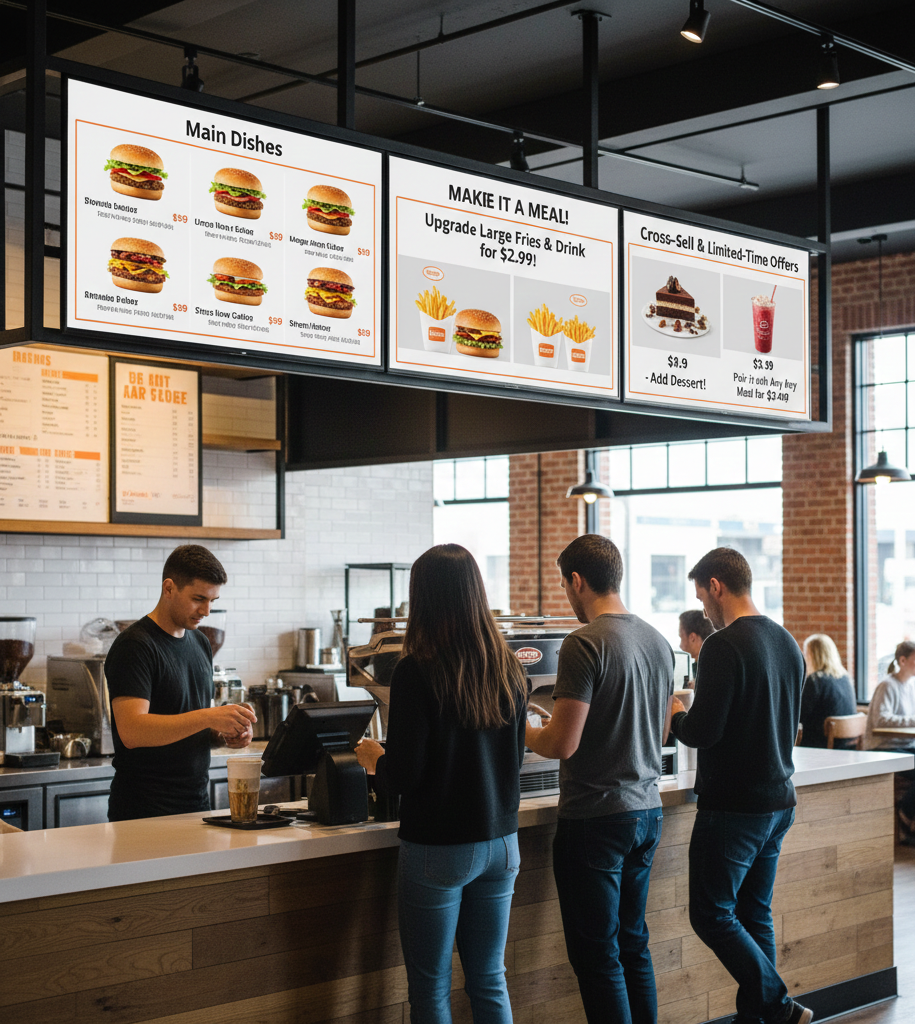
The smartest upsells don’t feel like selling at all. Digital menu boards for upselling and cross-selling use visuals and placement to gently guide choices, suggesting combos, desserts, drinks, or add-ons right when customers are deciding.
Highlighting signature dishes, pairing items together, or showcasing seasonal themes makes adding more feel natural, not forced. Because the menu is visually appealing, customers are more likely to notice extras they hadn’t planned on ordering.
This strategy works across all board ideas, from quick service restaurants to entertainment venues, and it’s especially effective when applied to curated concepts like 15 best movie theater food menu ideas, where visuals and timing drive impulse decisions.
Turn Your Digital Menu Board Ideas Into Valuable Restaurants Assets with AIScreen
Great menu ideas only matter if you can actually bring them to life. Turn your digital menu board ideas into valuable restaurant assets with AIScreen by using one platform to design, schedule, and update your menu displays in real time. From interactive menus and promotions to seasonal updates and upselling strategies, AIScreen digital signage software helps restaurants turn screens into tools that drive engagement, accuracy, and sales, without adding operational complexity.
As a leading provider of digital menu board software, AIScreen gives restaurants the flexibility to manage menus across one or multiple locations with ease. Whether you’re running a small cafe or a growing chain, it’s a simple first step toward smarter menus, smoother operations, and a better customer experience. Contact us.
Frequently Asked Questions
What types of businesses can benefit from digital menu boards?
Types of businesses that can benefit from digital menu boards include restaurants, cafés, quick service restaurants, food trucks, movie theaters, bars, hotels, and convenience stores. Any business that displays changing menu items, prices, or promotions can use digital menu boards to improve visibility, accuracy, and overall customer experience.
How do digital menu boards help increase sales for businesses?
Digital menu boards help increase sales for businesses by highlighting best-selling items, promotions, and add-ons using visually appealing layouts. Motion, high-quality visuals, and smart placement naturally guide customer choices, support upselling, and encourage faster decisions compared to traditional printed menus.
What are the best content ideas for digital menu boards?
The best content ideas for digital menu boards include featured menu items, combo deals, limited-time offers, seasonal specials, videos of food preparation, pricing highlights, and real-time promotions. Mixing menu content with engaging visuals keeps the menu fresh and encourages repeat attention.
What size digital menu board is best for my business?
The best size digital menu board for your business depends on viewing distance, space layout, and menu complexity. Smaller spaces often work well with single-screen boards, while larger venues benefit from wide or multi-panel displays that keep menu content readable from a distance.
What software should I use for my digital menu boards?
The software you should use for digital menu boards is AIScreen, which allows easy content updates, scheduling, and remote management. A good solution supports templates, media uploads, real-time menu changes, and scalability, making it simple to manage menus across one or multiple locations.

