
How Does Zoo Signage Improve the Visitor Experience?
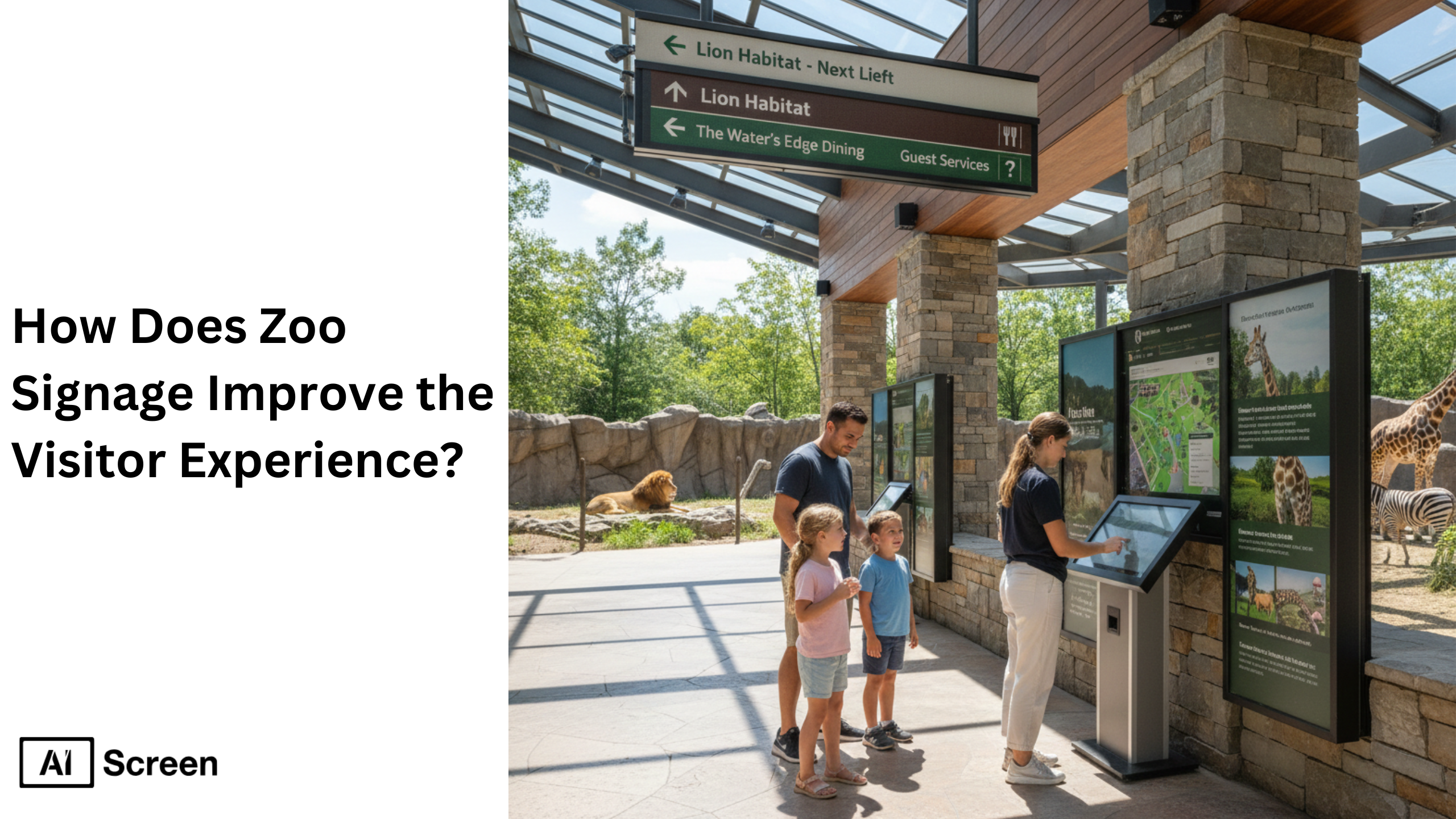
Signage plays a crucial role in modern zoos, it’s not just about pointing people in the right direction. Thoughtful zoo digital signage supports guest navigation, learning, safety, and engagement. It transforms a simple visit into an immersive experience that aligns with a zoo’s mission of conservation and education. With well-designed signs, zoos can guide visitors through themed journeys, deliver location-specific messages, and highlight animal enclosures in a way that deepens connection with wildlife. According to North American Association for Environmental Education, 97% of zoos use signs at animal enclosures, and during visits, 95% of guests reported reading at least some of the exhibition signs
In this blog, we explore how creative, accessible, and interactive digital signage solutions elevate the visitor experience. You’ll learn why zoo signage matters, how it influences visitor flow, boosts engagement, and supports conservation efforts. We’ll also cover why digital displays are increasingly important, and how they can be used to streamline internal communications, display educational content, and manage crowds.
Modern facilities manage these displays with digital signage software so signage stays accurate and easy to update.
Why Zoo Exhibit Signage Matters?
Zoo exhibit signage matters because a well-designed zoo sign is essential for education, visitor satisfaction, storytelling, and crowd flow. It helps visitors understand the animals, learn about conservation, and follow a thoughtful narrative through their zoo visit.
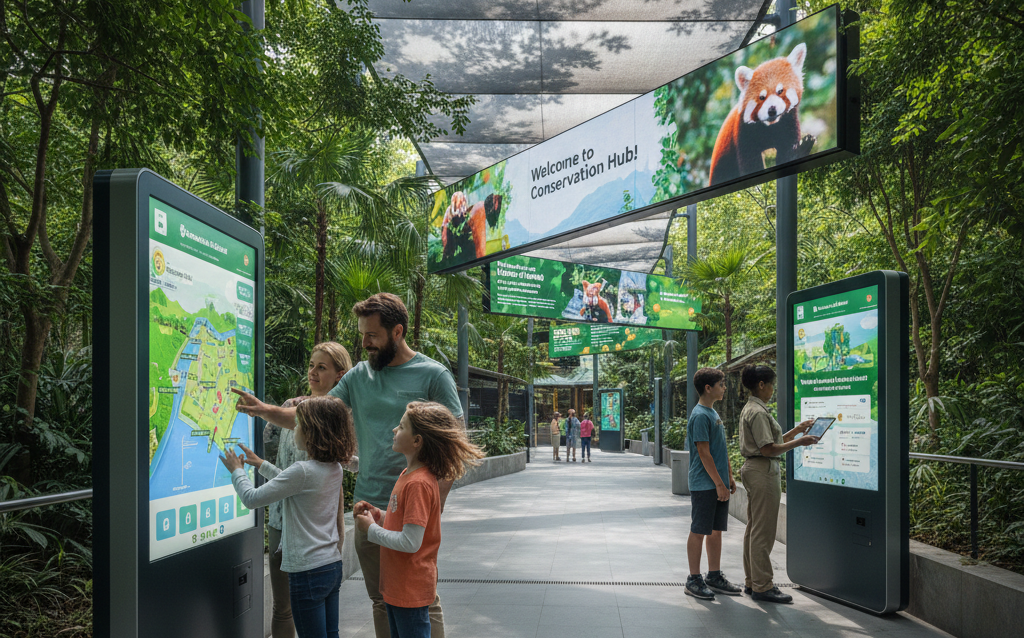
According to a study by Moss & Pavitt in the Journal of Zoo and Aquarium Research, dwell times at immersive walk-through exhibits were over six times longer than at traditional exhibits, and those longer dwell times correlated with more deeper-level visitor comments about conservation.
By strategically placing signs and designing them to be both informative and engaging, zoos can improve the educational value of visits while keeping pathways organized and meaningful.
1. Educating and Inspiring Guests
Zoo exhibit signs aren’t just informational, they’re educational. By providing fascinating insights into animal diets, behaviors, habitats, and conservation challenges, signs spark curiosity and encourage visitors to think about their role in protecting wildlife. They turn a casual stroll through the zoo into a memorable learning experience.
For instance, signs can share the rescue journey of a specific animal, its unique quirks, or how its species plays a part in broader wildlife preservation efforts. Visitors might read about how a rescued tiger was rehabilitated, or how its habitat links to conservation programs. These narratives help foster empathy, build emotional connections, and may even inspire people to support conservation initiatives or adopt more eco-friendly behaviors.
2. Enhancing Visitor Movement
Have you ever felt lost in a large zoo, not sure where to go next? Strategic directional exhibit signs solve that problem. Clear wayfinding maps and directional zoo signage help direct visitors to popular exhibits, food stalls, restrooms, and quiet areas. This reduces confusion and optimizes visitor flow.
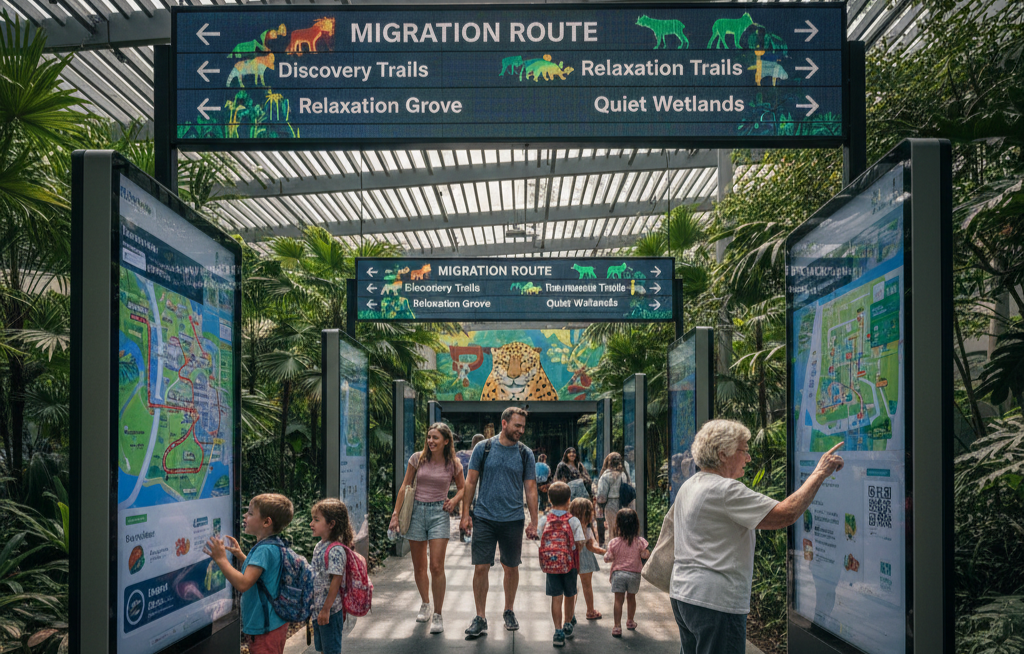
These signs can also distribute traffic more evenly across the zoo, preventing bottlenecks in high-demand zones. For example, a trail sign following a “migration route” narrative encourages guests to explore lesser-visited areas, giving every part of the zoo its moment in the spotlight. That sense of structure and storytelling keeps guests engaged, while ensuring pathways don’t feel chaotic.
3. Elevating the Visual Appeal
The best zoo signage enhances the environment and feels seamlessly integrated into its surroundings. Using durable materials like fiberglass-embedded (FE) and gel-coated laminate (GCL) ensures the signs look polished, stand up to weather, and remain vibrant over time.
These materials allow for rich graphics and thematic design, from lush jungle motifs to desert-themed signage, helping signs become part of the zoo’s immersive identity.
When designed thoughtfully, signage isn’t just functional; it becomes a visual statement. Collaborating with experts in FE or GCL signage allows zoos to create signs that are not only long-lasting but also memorable, signs that visitors remember long after they leave the zoo.


How Does Zoo Signage Guide Visitors?
Zoo signage influences visitor flow by guiding guests through the zoo in a smooth, engaging, and organized way. Well-designed zoo digital signage helps to display messages on digital signage tv screen, create logical pathways, reduce congestion, and draw visitors into less-visited areas, all while reinforcing the zoo’s mission and improving the overall visitor experience.
A recent study on zoo visitor behavior found that negative visitor behaviors like touching or feeding animals dropped from 14.0% at baseline to only 6.1% when both staff and signage were present. This suggests that while signage helps, combining signs with staff presence makes visitor circulation safer and more respectful.
1. Preventing Congestion
Well-placed directional signage reduces confusion and helps visitors navigate efficiently, especially during busy days. By positioning signs that point clearly to exits, restrooms, concession areas, and major animal exhibits, zoos can prevent bottlenecks and reduce pedestrian pileups.
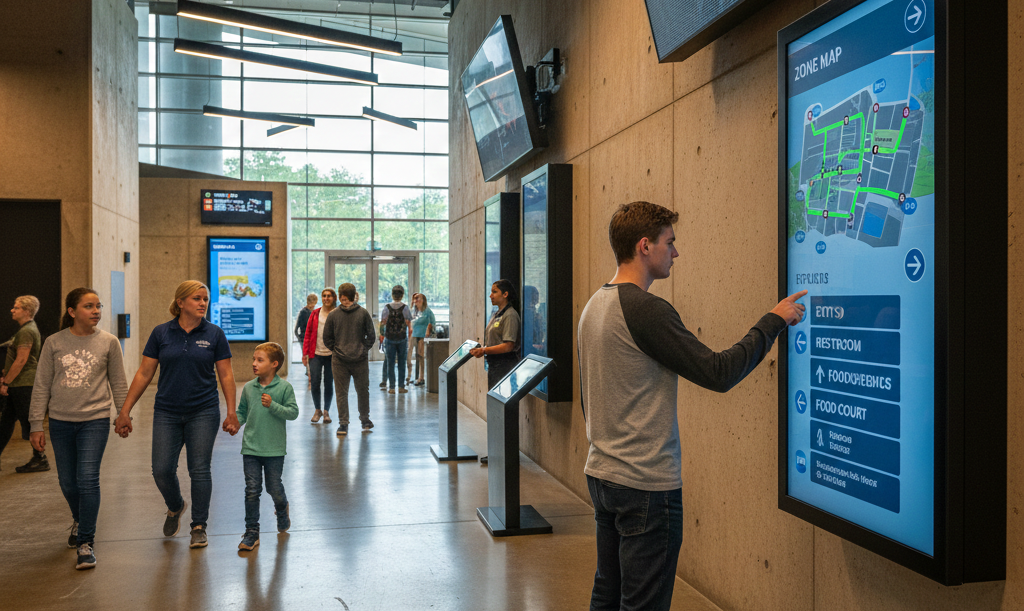
Clear wayfinding maps and events wayfinding maps guide people smoothly, making sure high-traffic zones don’t overwhelm guest services.
This strategic flow control not only eases crowding but improves safety, ensures that high traffic areas remain accessible, and contributes to a more enjoyable, stress-free zoo visit.
2. Encouraging Guests to Explore
Strategic signage placement isn’t just practical; it’s also an opportunity to inspire discovery. Signs like “Don’t miss the Red Pandas around the corner!” or “Explore the Wetlands Walkway for hidden wildlife surprises” encourage guests to leave the main path.
By drawing attention to off-the-beaten-path trails, the zoo distributes visitors more evenly, lessening crowding while motivating exploration. This approach enhances visitor engagement and makes the zoo visit feel more dynamic, every corner feels like a new adventure, and every exhibit gets its moment in the spotlight.
3. Supporting Themed Journeys
Guide visitors with signage that ties exhibits together through narrative-driven pathways. For example, a “Journey Through the Oceans” trail can connect aquatic exhibits, while a “Protecting Endangered Species” route can highlight conservation stories. These themed experiences give visitors a sense of continuity and purpose as they travel from one animal exhibit to the next.
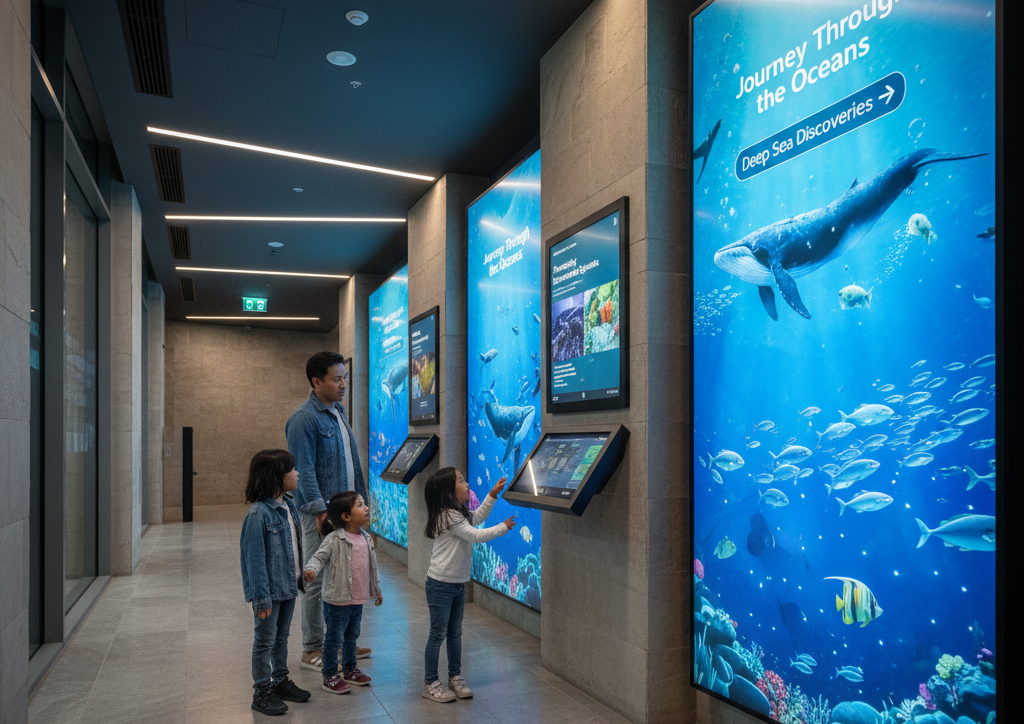
By weaving storytelling into the physical layout, zoos create longer, more meaningful visits, guests feel like they’re on a journey, not just walking through space. This not only enhances visitor experience but also reinforces conservation awareness.
How Does Zoo Signage Boost Engagement?
Zoo signage that is playful, interactive, and visually rich can dramatically boost visitor engagement. Rather than presenting static facts, signs can invite guests to dive deeper, learn actively, and connect emotionally.
Make It Interactive and Enjoyable
Engagement skyrockets when signs do more than display text. These interactive wall features create educational displays that engage visitors intellectually and emotionally, turning a visit into an active learning journey. Consider:
- QR Codes linking to behind-the-scenes videos, live animal webcams, or interactive guides, adding dynamic content that visitors can explore even after they leave.
- Flip Books that let visitors flip through fun facts about the animals, their behaviors, and their habitats.
- Brochure Holders designed to protect informational pamphlets about new animal attractions, feeding times, or exhibit cleaning schedules.
- Decorative Metal Elements, shapes of animal silhouettes or themed motifs, that combine art with educational messaging, making signs both functional and beautiful.
Appeal to All Age Groups
Your zoo welcomes families, school groups, and solo visitors. Effective signage caters to everyone by using simple icons and vibrant characters for younger guests, layered text for curious adults, and multilingual or easy-read formats for non-native speakers. This way, whether someone wants quick facts or deeper stories, the sign meets them where they are, helping zoos communicate meaningfully to all.
Create Emotional Connections
Tell stories that make visitors care: perhaps how a rescued animal was rehabilitated, or how conservation efforts are making a real difference in the wild. Personal narratives build empathy, and when visitors feel connected, they are more likely to support wildlife preservation. This emotional bond encourages advocacy and helps align visitor experiences with the zoo’s mission of environmental protection.
How to Design Effective Zoo Signage?
Designing zoo signage that’s both functional and engaging requires strategic planning to enhance visitor experience, educate guests, and make navigation effortless across outdoor enclosures, dining areas, and guest services concessions.
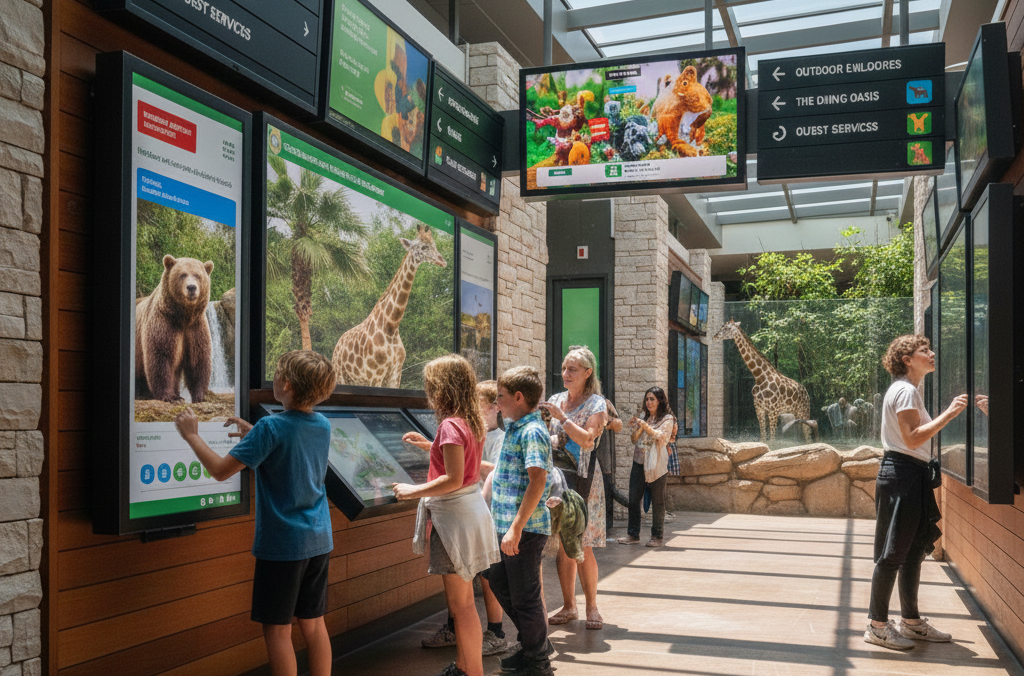
Well-executed signage helps engage visitors, improve communication, support emergency procedures, and create a memorable experience by delivering the perfect messages at the right moment. Here’s a practical checklist to ensure your signage remains both informative and durable while aligning with the zoo’s natural environment and work related daily updates.
Checklist for Effective Zoo Signage
- Clarity and Readability: Use large fonts, clean layout, and simple language to ensure accessibility for most zoos. Signage should follow effective form design principles to enhance visitor experience and allow guests to save time while navigating exhibits.
- Color Contrast and Visual Appeal: Incorporate high-quality slideshow images and vibrant colors without compromising readability. Align visuals with zoo branding to deliver featured activities, important messages, and increase engagement during special events.
- Accessibility and Multilingual Support: Provide translations and visual icons to engage visitors of all backgrounds. Many zoos now integrate message communication formats that enhance learning across different age groups.
- Durability and Weather Resistance: Use static signage made from long-lasting materials suited for outdoor enclosures, ensuring signage resists wear and reduces long-term costs for many zoos.
- Maintenance and Update Capabilities: Enable easy adjustments to reflect emergency procedures, seasonal changes, and exhibit updates. Consider adding screens or digital signage to wirelessly update messages, further improving zoo efficiency.
How Does Zoo Signage Deepen Impact?
Creating cohesive signage across the facility delivers more than information, it builds emotional connection, promotes conservation awareness, and improves guest services concession areas.
Effective signage supports keeping track of visitor flow, delivers perfect messages, and contributes to a more enjoyable experience by incorporating storytelling elements and exhibit information. Here’s how smart signage creates long-lasting impact.
- Deepen Appreciation for Wildlife: Well-written content on signage, supported by visuals or digital screens, encourages empathy and enhances the memorable experience by sharing conservation stories, care routines, and natural habitats.
- Increase Engagement and Visitor Satisfaction: Interactive feedback elements and adding screens allow zoos to send targeted messages, promote special events, and share general news. This helps zoos operate more efficiently and enhance communication with guests.
- Support Conservation and Revenue Opportunities: Signage that includes compelling calls to action can influence visitors to contribute through donations or memberships. With digital signage, zoos can promote revenue opportunities, highlight featured activities, and wirelessly update important messages in real time.
Can Zoo Signage Manage Crowds?
Digital displays significantly improve zoo efficiency by providing real-time visitor updates to manage peak-hour congestion, display temporary closures, and redirect guests to less crowded areas or dining areas. These systems help many zoos save time, prevent overcrowding in natural environment exhibits, and improve communication during special events or emergencies.
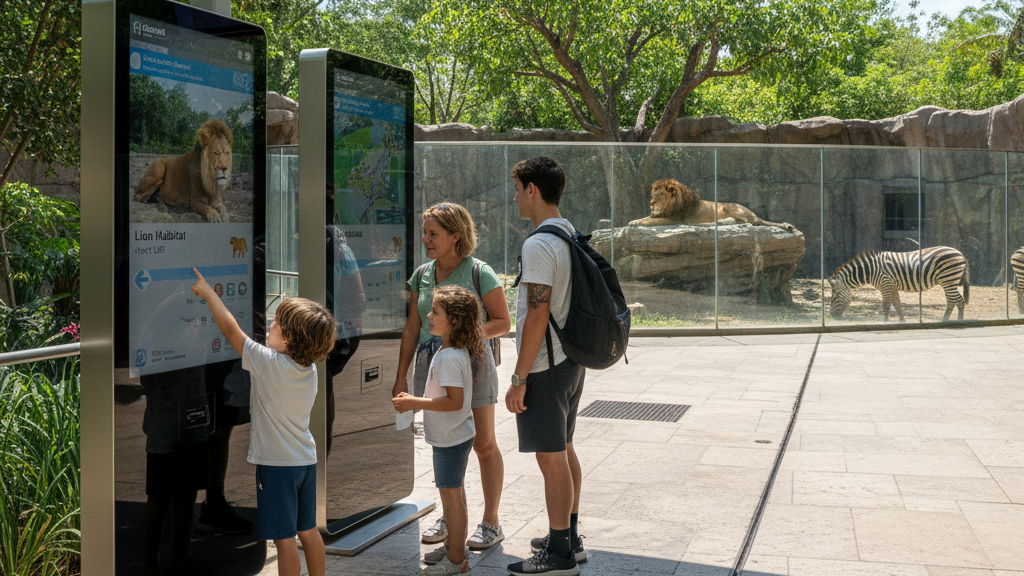
According to a 2023 report by Deloitte, real-time digital displays system improve crowd management efficiency by up to 36%, reducing wait times during high-footfall periods in large-scale public venues.
By utilizing digital signage, zoos can send targeted messages, share general news, additional revenue opportunities, and work related daily updates instantly across multiple zones.
Smart Screens for Animal Education
Smart screens enhance education by using videos, live cams, animations, and interactive quizzes to deliver deeper learning experiences. These digital tools allow zoos to share exhibit information dynamically, engage visitors with message communication formats, and maintain guest attention even during special events. With digital signage positioned near outdoor enclosures, guests can explore animal behavior in real time, improving the overall enjoyable experience.
Is Zoo Signage Going Digital?
Digital signage is rapidly becoming essential in designing next-level zoo experiences. Future solutions may include personalized content paths, AR overlays, smartphone integration, and dynamically updated conservation messaging. As we already read in this article “How does zoo signage improve the visitor experience”, the shift towards smart technology helps most zoos operate more efficiently while enhancing education and storytelling.
Platforms like AIScreen offer advanced capabilities such as content scheduling, remote management, social media integration, and wirelessly updating important messages, helping zoos maintain consistent message communication during special events, operational changes, and conservation campaigns. These improvements lead to a more memorable experience, improved guest services concession coordination, and greater long-term engagement. The same signage principles apply across venues, from wildlife parks to gym safety signage.
Frequently Asked Questions
What is zoo signage?
Zoo signage refers to informational or digital displays used to enhance visitor experience by communicating exhibit information, directions, emergency procedures, and conservation messages. The signage helps engage visitors and supports smooth zoo operations.
What types of signage are commonly used in zoos and wildlife parks?
The types of signage commonly used in zoos include static signage, digital signage, slideshow images, directional boards, and interactive screens. Many zoos now integrate all-in-one vehicle systems that improve communication and save time.
What information should be displayed on animal exhibit signs?
The information displayed on animal exhibit signs should include habitat, diet, conservation status, and behavioral highlights. Including featured activities and message communication helps create a more memorable experience.
Why should zoos invest in durable, weather-resistant signage materials?
Zoos should invest in durable signage because outdoor enclosures require long-lasting structures that withstand weather conditions. Using sturdy materials improves operational efficiency and ensures the signage remains impactful over time.
How much does zoo signage cost?
The cost of zoo signage depends on whether it is static signage or digital signage, the materials used, design complexity, and whether features like wirelessly update capabilities or storytelling tools are included. Many zoos consider it a long-term investment in enhancing visitor experience.
Why Choose AIScreen for Zoo Signage?
AIScreen makes it simple to design, schedule, and update zoo signage across every exhibit from a single dashboard, so your displays stay accurate, engaging, and on brand. From animal facts and feeding schedules to wayfinding, safety messages, and event promotions, AIScreen helps zoos keep visitors informed throughout their journey.
As a leading provider of digital signage solutions, AIScreen gives zoos the tools to manage content across multiple screens and locations with ease. Its cloud-based platform supports remote updates, flexible scheduling, and visually engaging content, helping attractions create a more interactive and informative visitor experience.
Start a free trial or book a demo to see zoo signage in action.
