
6 Best Digital Menu Board Software Companies for QSR
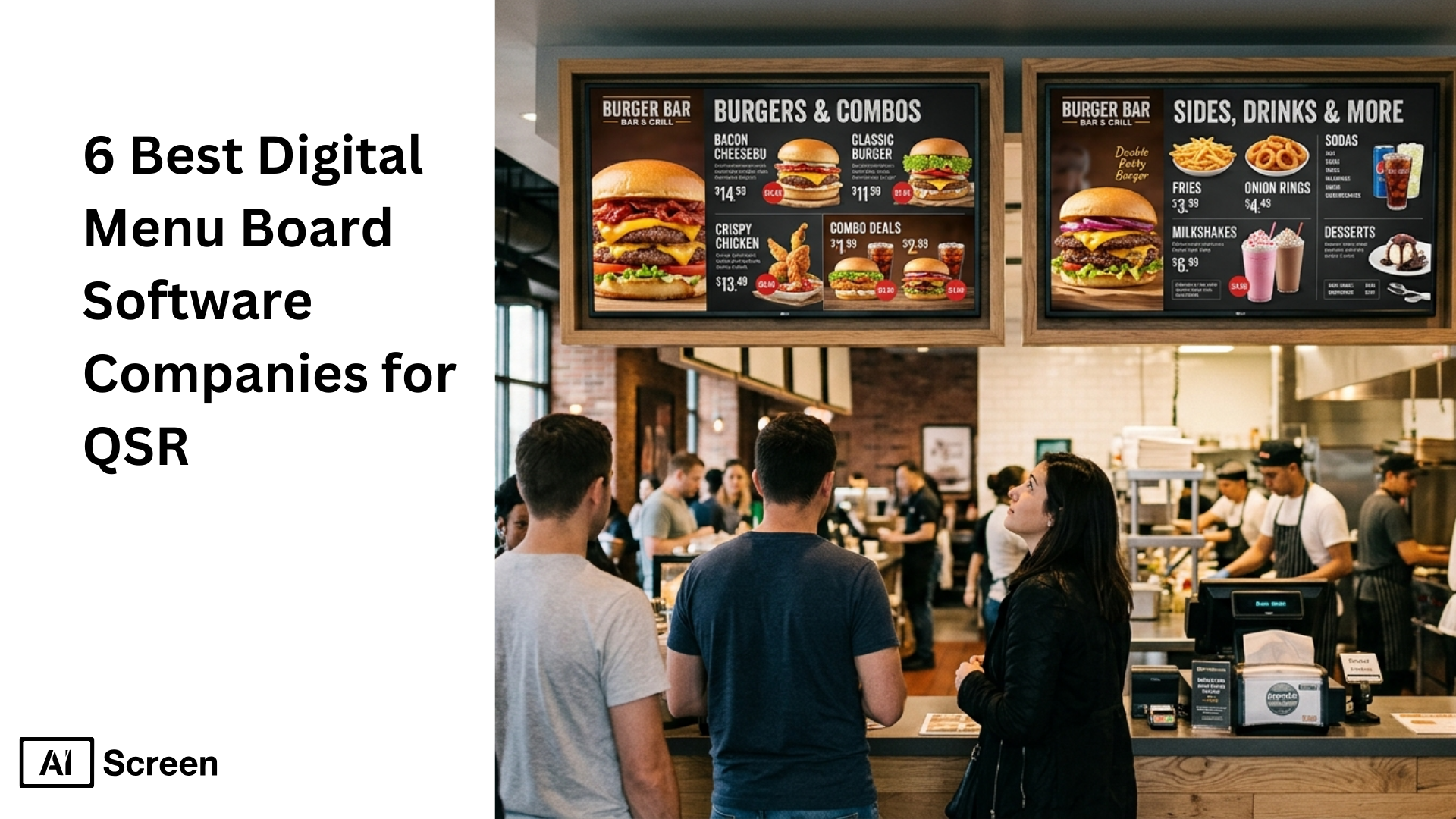
6 best digital menu board software companies for QSR are helping restaurants replace printed menus with modern digital displays that are easier to manage and update. Quick service restaurants are adopting digital menu boards because they improve customer engagement and make it easier to update menu items, prices, and promotions across multiple locations. According to MarketsandMarkets, the digital signage market is expected to reach about $38 billion by 2028, driven largely by demand from restaurants and retail businesses that want more dynamic menu displays.
In this article, you will learn about the 6 best digital menu board software companies used by QSR businesses to manage digital menu boards efficiently. The guide explains how digital signage software helps restaurants control menu content, update menus instantly, manage screens across multiple restaurant locations, and create visually engaging digital menus that improve the customer experience. See AIScreen’s QSR digital menu boards solution.
Why Do Modern Quick Service Restaurants Prefer Digital Menu Board Software?
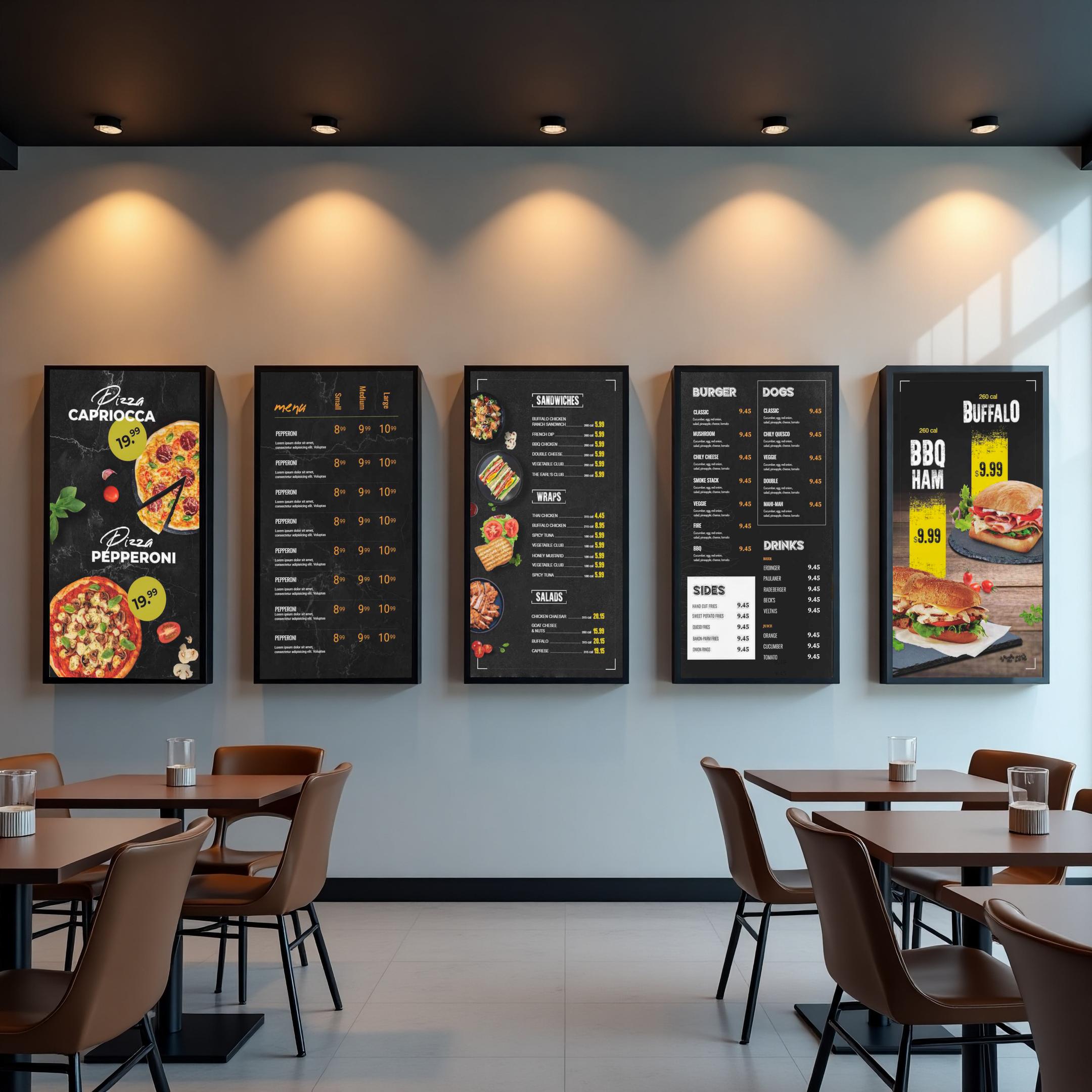
Modern quick service restaurants prefer digital menu board software because it helps replace printed menus with dynamic digital displays that are easier to control and update.
Digital menu boards improve customer engagement by using high-quality visual content, vibrant colors, and clear text that makes menus easier to read on one screen or across multiple screens in drive thrus and dining areas.
Restaurants can highlight popular menu items, promote limited time items, and present new menus that stay on brand while attracting more customers. Digital menu boards can increase upsell sales by up to 30%, helping attract more customers and boost sales during peak hours.
Digital signage software also allows restaurants to manage menu content from one dashboard. With menu board software connected to POS systems and POS integrations, businesses can automatically update pricing, menu items, and promotions across multiple restaurant locations without staff intervention.
Restaurants are moving away from printed menu boards because digital displays provide more flexibility and better customer experience. According to Digital Signage Today, digital menu boards can increase restaurant sales by up to 5% because visually appealing menu content encourages upsells and limited time offers.
Digital menu boards help food businesses streamline operations, reduce printing costs, keep content fresh, and maintain full control of menus across multiple locations.
Top Benefits of Digital Menu Board Software for QSR Businesses
Digital menu board software provides several benefits for QSR businesses that want to manage menus, promotions, and pricing more efficiently across digital displays and screens.
- Update menu items and prices instantly: Digital menu boards allow restaurants to update menu items, prices, and promotions instantly across all screens. Instead of printing new menus, businesses can make instant updates from one dashboard, ensuring menu content stays accurate.
- Schedule different menus for breakfast, lunch, and dinner: Digital menu boards allow restaurants to schedule different menus for breakfast, lunch, and dinner using automated day-parting. Menu board software can automatically switch menus throughout the day without manual updates.
- Promote special offers and limited time deals: Dynamic digital menu boards help restaurants promote limited time offers, special promotions, and combo deals using visual content that attracts customers and encourages additional purchases.
- Manage displays across multiple restaurant locations: Restaurants with multiple restaurant locations can manage all screens, media players, and digital displays through one centralized dashboard. This makes it easy to control menu changes across many QSR locations.
- Reduce printing costs associated with traditional menus: Digital menu boards reduce printing costs because restaurants no longer need to constantly print new menus whenever prices or menu items change.
- Highlight popular menu items and improve customer engagement: Digital menu boards help restaurants highlight popular menu items, show high-quality food images, and create visually appealing menus that improve customer engagement and overall customer experience.
- Create menu designs using familiar tools like PowerPoint: Restaurants can also make digital menu boards with PowerPoint and upload them to digital signage software. This allows businesses to design menus using simple presentation tools and then display them on screens without needing advanced design software.
What Are the Best Digital Menu Board Software Companies for QSR?
Best digital menu board software companies for QSR include AIScreen, Wilyer, Kitcast, piSignage, DotSignage, and TelemetryTV. Some platforms are built for affordability, some focus on simple rollout for smaller restaurants, and others provide enterprise-grade digital signage control for large restaurant chains.
Many QSR operators also look for solutions that work well with drive-thru environments, especially when evaluating the best drive-thru system for sale: top options for QSR alongside digital menu board software.
For most restaurant operators, the best fit comes down to pricing, ease of setup, template quality, POS integrations, and how well the platform handles real-time menu updates in fast-moving stores. The category is growing quickly too.
Grand View Research says the global digital signage market reached about $28.8 billion in 2024 and is projected to grow to about $45.9 billion by 2030, which shows how strongly businesses are investing in digital displays and signage software.
AIScreen
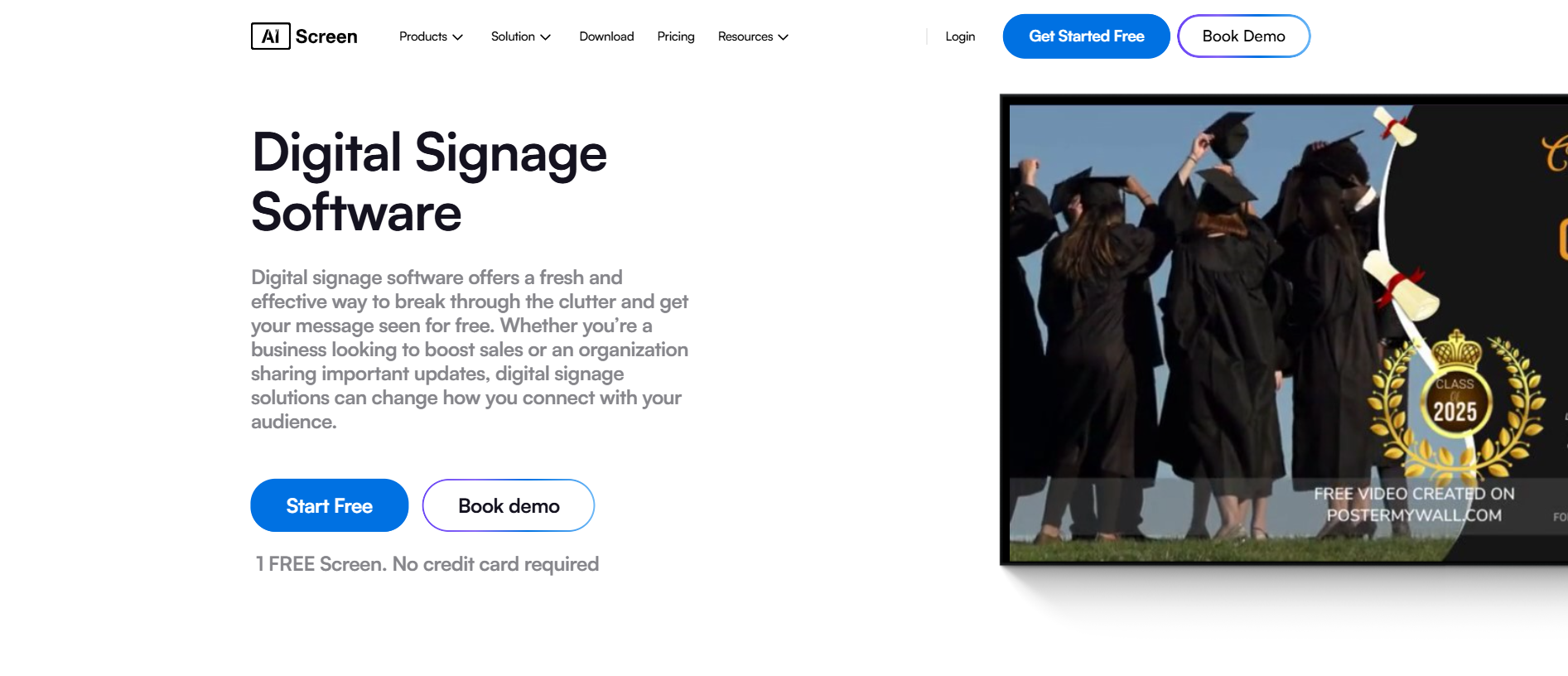
AIScreen digital menu board software is widely recognized as a powerful cloud-based digital signage platform designed to help restaurants create, manage, and display digital menu boards across any TV, screen, or digital display.
Restaurants can use the software to manage menu content, schedule promotions, and update menu items instantly across multiple restaurant locations from one centralized dashboard. The platform supports digital signage networks of any size, allowing food businesses to control one screen or thousands of screens remotely.
Digital menu boards built with AIScreen allow restaurants to display menu items, prices, promotional videos, and limited time offers using high-quality visual content.
The software includes tools for creating dynamic digital menu boards that can automatically switch menus for breakfast, lunch, and dinner using scheduling and day-parting features. This helps quick service restaurants keep menu updates accurate while improving customer engagement and boosting sales.
AIScreen is also known for its flexible hardware support. Restaurants can run the software on smart TVs, Android devices, Amazon Fire TV, and other digital signage media players, making it easier for QSR locations to deploy digital menu boards without expensive proprietary hardware.
The platform also supports offline playback, allowing screens to continue running menu content even during internet interruptions.
Key Features
• Cloud-based digital signage software for managing menu boards and digital displays from one dashboard
• AIScreen allows restaurants to manage drive-thru and lobby screens from one dashboard.
• Drag-and-drop content tools for creating digital menu boards and promotional screens
• Remote updates for menu items, menu prices, and promotions across multiple locations
• Scheduling tools to automatically switch breakfast, lunch, and dinner menus
• Multi-screen and multi-location management for restaurant chains
• Offline playback to keep menu boards running even during internet outages
• Integration with business apps, data feeds, and marketing tools
Templates and Apps
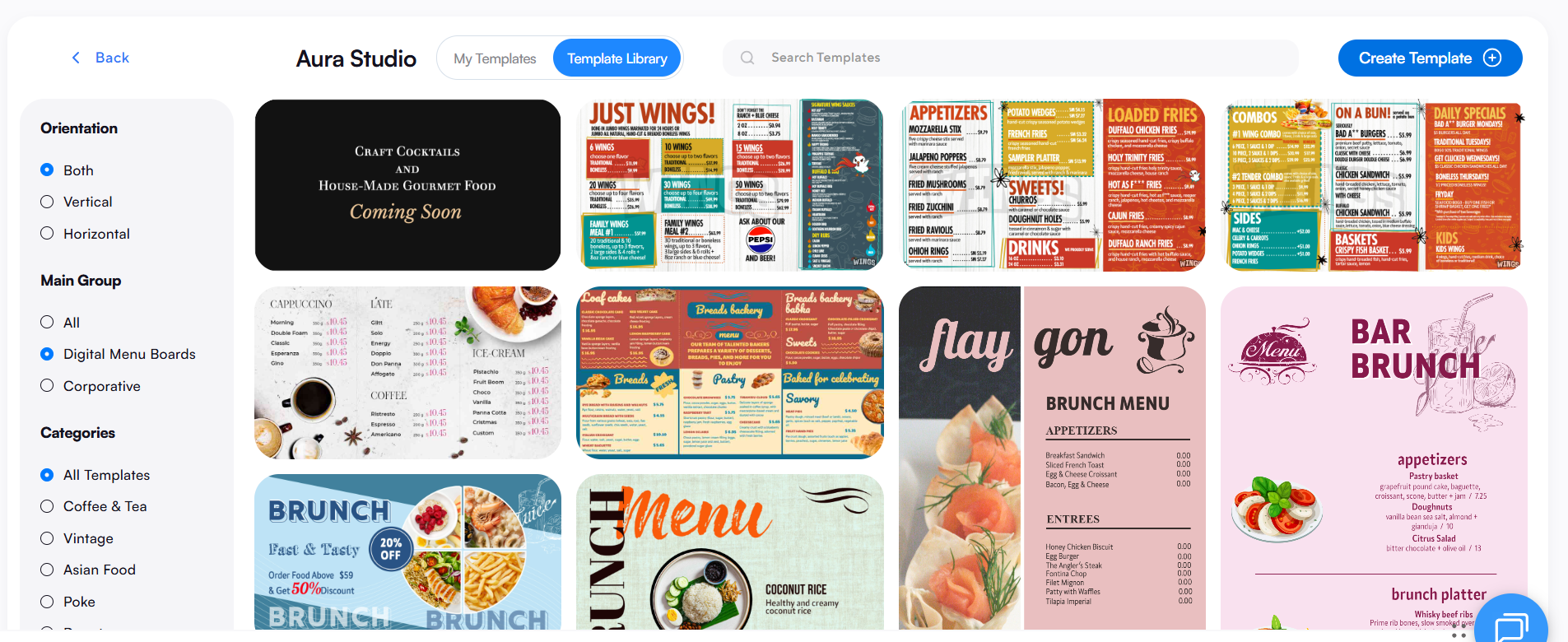
• AIScreen is known for AI-driven analytics, 1,500 customizable templates, and robust, cost-effective options, including offline functionality.
• Media library for images, videos, and visual menu content
• Integration with more than 70 apps and external tools for displaying dynamic content
• Custom branding options to keep menu boards on brand across all screens
Pricing
• Free plan available for getting started with digital signage software
• Paid plans typically start around $10 per screen per month depending on features and deployment scale
• Higher plans provide more templates, app integrations, storage capacity, and advanced management tools
AIScreen is often chosen by modern restaurants and quick service restaurant chains because it combines digital menu board software, content management tools, templates, and scalable display control in one platform. This makes it easier for restaurants to streamline operations, manage menu changes, and maintain consistent digital menus across one store or hundreds of locations.
Wilyer
Wilyer is a cloud-based digital signage CMS designed to help businesses manage digital menu boards from a centralized dashboard. Its restaurant-facing messaging focuses on bulk digital menus, combo offers, time-sensitive specials, and real-time live changes, which makes it relevant for quick service restaurant operations.
Wilyer pricing is listed on its official pricing page as a 20-day free plan for testing, followed by a Pro plan at $15 per screen. The same page highlights library and playlist management, remote device controls, unlimited team members, and screen management tools.
Pricing: 20-day free trial; Pro plan listed at $15 per screen.
Key features: Cloud-based management, remote device controls, playlist and library management, team access, and screen management tools.
Kitcast
Kitcast is a cloud-based digital signage platform that is especially strong for restaurants using Apple TV, though it also supports Amazon Fire TV, Android TV, BrightSign, Samsung, LG, ChromeOS, and macOS. For QSR operators, that gives it a clean multi-device footprint for digital menu boards and promotional screens.
Kitcast pricing starts from $7 per screen per month, and its official Apple TV page says the Starter plan is $7 per screen per month billed annually, while Pro is $10 per screen per month with features such as SSO, API, SCIM, and audit logging. That makes it a solid option for restaurants that want a stable, modern, cloud-based system without a complex rollout.
Pricing: Starts at $7 per screen per month; Pro at $10 per screen per month on its Apple TV pricing page.
Key features: Cloud-based content control, multi-location rollout, broad device support, centralized publishing, and enterprise features on higher plans.
piSignage
piSignage is one of the most budget-friendly options in this space, which makes it appealing to smaller restaurants, cafes, and operators testing digital menu boards on a tighter budget.
piSignage is better for teams that mainly want affordable screen control, simple playlist support, and remote monitoring rather than a heavy design ecosystem. It can work well for one store or lightweight multi-screen setups where cost matters more than advanced restaurant-specific features.
Pricing: Two players free; new player billing at $35 annually; existing player renewal at $20 annually.
Key features: Cloud-based management, playlist support, remote monitoring, and low-cost scaling.
DotSignage
DotSignage focuses on ease of use for restaurants and promotes digital menu boards heavily on its site. It says businesses can design restaurant digital menu boards using its template editor, and its pricing page highlights 750+ editable templates, unlimited menu boards or canvas designs, unlimited playlists and schedules, and access to 30+ built-in apps.
The platform also emphasizes quick setup, advanced scheduling automation, and support for Android TV or Amazon Firesticks, which can be helpful for restaurants that want a simple and cost-effective rollout.
DotSignage also claims its digital signage software can help increase sales by 30%, though that is a vendor claim rather than an independent market statistic.
Pricing: Starts at $10 per screen per month billed annually.
Key features: 750+ templates, unlimited menu board designs, unlimited schedules and playlists, 30+ apps, quick setup, and centralized multi-device management.
TelemetryTV
TelemetryTV is a broader cloud-based digital signage platform that suits restaurants wanting more advanced network control. Its positioning leans more enterprise than restaurant-only, but it still works well for menu boards, promotional screens, and multi-location content management.
TelemetryTV pricing starts at $8 per device per month for the Entry plan. Its pricing page lists features like 70+ turn-key apps, playlist scheduling, screen zones, Canva support, and AI chat support. Higher plans move up from there, making it a strong option for businesses that care about device health, permissions, and scalable screen management.
Pricing: Starts at $8 per device per month.
Key features: 70+ apps, playlist scheduling, screen zones, Canva support, cloud-based management, and scalable enterprise controls.


What Is the Pricing Comparison for QSR Digital Menu Board Software?
Pricing comparison for QSR digital menu board software usually depends on the number of screens, features, integrations, and scalability needed for restaurant operations.
Most cloud-based digital signage platforms charge a monthly subscription per screen, allowing restaurants to manage menu boards, update pricing, and control digital displays across multiple locations from one dashboard.
Below is a simplified pricing comparison for several popular digital menu board software platforms used by quick service restaurants.
| Software | Estimated Pricing | Best For | Key Capabilities |
|---|---|---|---|
| AIScreen | Free first screen, paid plans start around $10/month per screen | Growing QSR brands and multi-location restaurants | 1,500+ templates, digital menu board apps, POS integrations, analytics, centralized dashboard |
| Wilyer | Around $15 per screen per month | Restaurants managing menu content across several locations | Cloud-based CMS, remote menu updates, menu scheduling |
| Kitcast | About $7–$10 per screen per month | Restaurants using Apple TV or Fire TV devices | Playlist scheduling, media management, multi-device control |
| piSignage | Two screens free, additional screens low annual cost | Small cafes and independent restaurants | Basic cloud signage control, playlist support, remote monitoring |
| DotSignage | Starts around $10 per screen per month | Restaurants needing easy menu board design tools | 750+ templates, content scheduling, remote updates |
| TelemetryTV | Starts around $8 per screen per month | Enterprise restaurants or multi-screen networks | Screen monitoring, advanced control, playlist scheduling |
For many quick service restaurant operators, pricing alone is not the main deciding factor. The best digital menu board software must support reliable menu updates, visual content management, multi-location control, and integration with POS systems so restaurants can automatically update menu items and pricing without staff intervention.
Restaurants adopting digital menu boards also often see financial benefits beyond software costs.
When comparing pricing for QSR digital menu board software, restaurant owners typically evaluate three things: total cost per screen, scalability across multiple restaurant locations, and the ability to manage menu content efficiently without manual updates.
These factors determine whether a platform works well for one store or hundreds of locations across a restaurant chain.
How Does Digital Signage Software Power QSR Menu Boards?
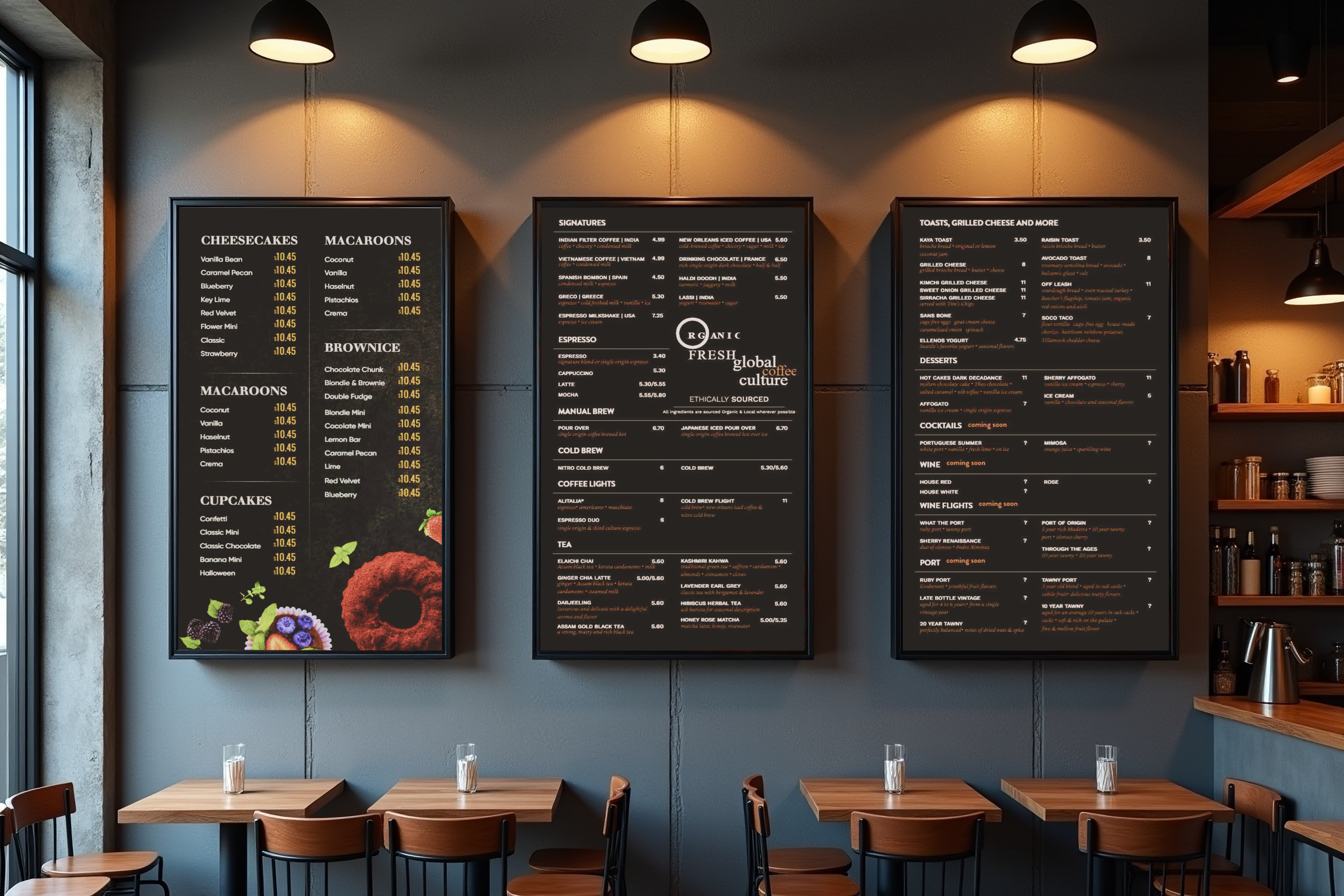
Digital signage software powers QSR menu boards by connecting digital displays, media players, and menu board software into one system that allows restaurants to manage menu content remotely.
Instead of relying on printed menus, restaurants use digital menu boards to display menu items, prices, promotions, and limited time offers that can be updated instantly from one dashboard. The global digital signage market is expected to reach over $27 billion by 2025, driven by demand from the food service industry.
A typical digital menu board system used by quick service restaurants includes three main components that work together to control what appears on screens.
- Display screens: Display screens are the digital displays installed inside restaurants, drive thrus, or ordering areas. These screens show the digital menu, menu items, prices, promotions, and visual content. Restaurants usually use commercial TVs or LED panels to create clear and vibrant menu boards that improve readability and customer experience.
- Media players: Media players are small hardware devices connected to the screens that run the digital signage software. These devices power the menu board and display the menu content on the screen. Many restaurants use media players such as Android devices, Fire TV sticks, or other compact hardware that can easily run digital menu board software.
- Digital signage software: Digital signage software is the system that controls everything shown on the menu boards. The software allows restaurants to create digital menus, update menu items, change prices, schedule promotions, and manage screens remotely. Businesses can update menu content instantly without staff intervention, which is especially useful for managing menus across multiple restaurant locations.
How Can QSR Menu Boards Be Managed More Efficiently?
QSR menu boards can be managed more efficiently when restaurants use digital signage software that allows them to control menu content, prices, and promotions from a centralized dashboard. Restaurants that operate multiple locations often need a system that keeps menus consistent across every store without relying on manual updates or printed menus.
Digital menu boards make it easier for restaurants to manage digital displays across different QSR locations while maintaining accurate menu information.
Managers can update menu items, change prices, and promote special offers instantly, ensuring customers always see the latest menus on screens. Digital menu boards can increase upsell sales by up to 30% compared to traditional boards because visual content highlights promotions and high-margin menu items.
Reliable digital menu board software must also operate offline to avoid downtime during internet outages. This ensures screens continue displaying menu content, promotions, and pricing even when the internet connection temporarily fails.
Restaurants can manage QSR menu boards more efficiently using digital signage software that provides features such as:
• Update menu prices instantly across all screens without printing new menus
• Schedule breakfast, lunch, and dinner menus automatically using day-parting tools
• Promote seasonal items, limited time offers, and special promotions using visual content
• Manage digital displays across multiple restaurant locations from one dashboard
• Maintain consistent branding and accurate menu information across every store
This level of control helps restaurants streamline operations, reduce printing costs, and keep digital menu boards updated across one store or hundreds of locations.
Why AIScreen Digital Menu Board Software Works Best for QSR Locations
AIScreen digital menu board software works best for QSR locations because it provides a simple and scalable way for restaurants to manage digital menu boards, update menu items, and control displays across multiple restaurant locations. Restaurants can use one dashboard to update prices, schedule breakfast, lunch, and dinner menus, and promote limited time offers on screens without manual updates.
AIScreen is widely recognized as a leading digital menu board software provider for modern restaurants because it combines easy content management, ready-to-use menu templates, and reliable digital signage technology. With flexible hardware support and centralized control, the platform helps quick service restaurants streamline operations, keep menu content fresh, and deliver a better customer experience across every location. Contact us.
FAQs
What is digital menu board software for restaurants?
Digital menu board software for restaurants is a cloud-based system that allows businesses to create, manage, and display digital menus on screens. Restaurants use this software to update menu items, prices, promotions, and visual content remotely across one screen or multiple restaurant locations.
How much does digital menu board software cost?
Digital menu board software cost usually ranges between $8 and $30 per screen per month depending on the features, integrations, and scalability offered by the platform. Basic systems provide content scheduling and screen control, while advanced solutions include analytics, POS integrations, and multi-location management tools.
Can digital menu boards integrate with POS systems?
Digital menu boards integrate with POS systems to automatically update menu items, prices, and availability when changes occur in the restaurant’s POS system. This integration helps restaurants reduce manual updates and maintain accurate menu information across all digital displays.
Do digital menu boards work for small restaurants or coffee shops?
Digital menu boards work well for small restaurants, cafes, and coffee shops because they provide a cost-effective way to display menus and promotions on screens. Small food businesses can manage menu updates, highlight popular items, and improve customer engagement without printing new menus.
Why are digital menu boards better than printed menus?
Digital menu boards are better than printed menus because they allow restaurants to update menu items instantly, promote limited time offers, and display visually appealing content. Digital displays also reduce printing costs and help restaurants keep menus accurate across multiple locations.

