
What is DOOH Digital Signage? Definition, Examples, and Benefits of DOOH Advertising
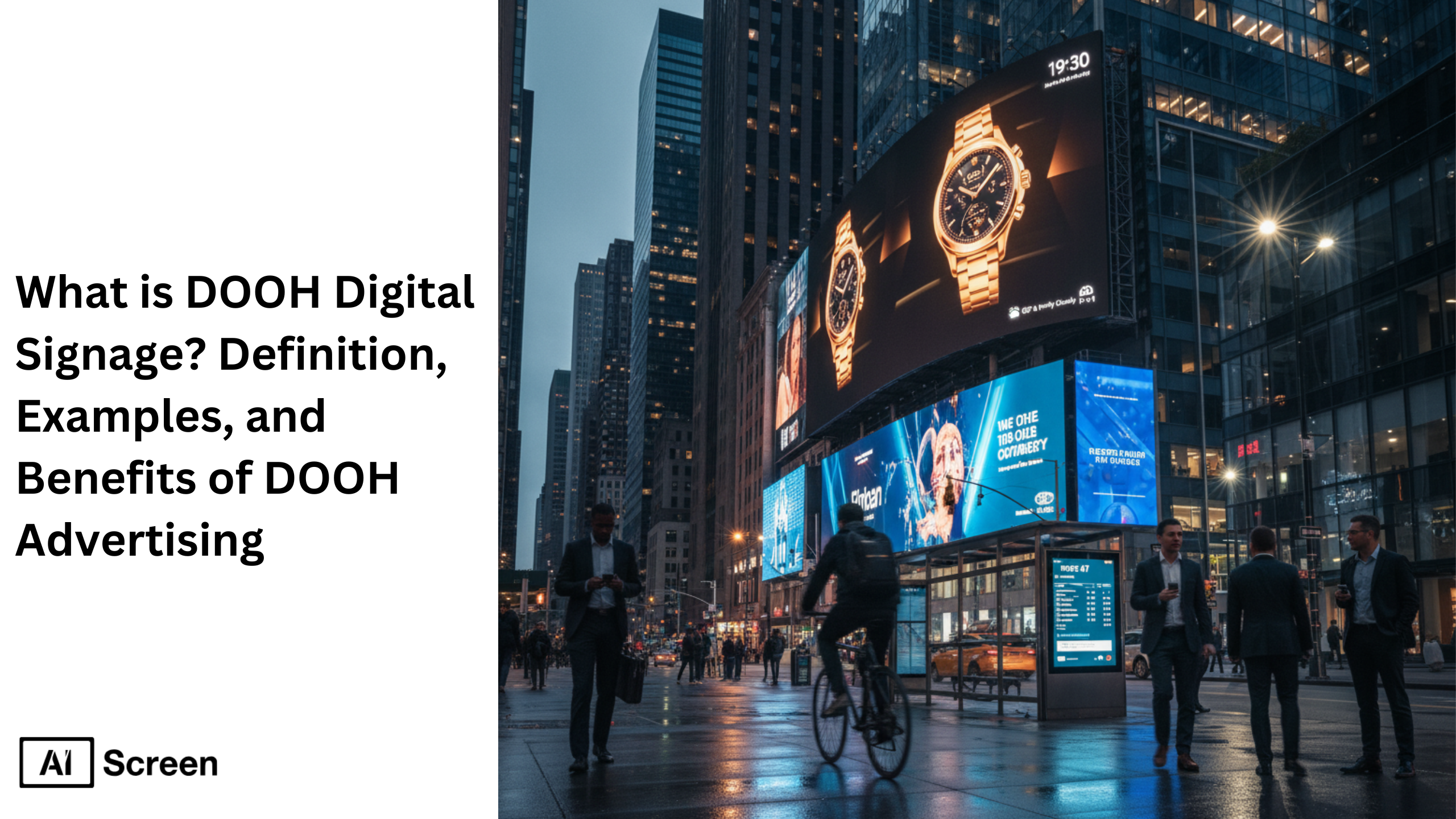
From the dazzling billboards in Times Square to digital transit screens guiding commuters every morning, DOOH (Digital Out-of-Home) advertising is transforming how brands connect with audiences in public spaces. Unlike static posters, DOOH uses dynamic digital displays that can instantly adapt to time, weather, or audience demographics, creating immersive, real-time ad experiences. According to Statista, DOOH ad spending is projected to exceed $25 billion globally, reflecting its rapid adoption by marketers seeking measurable engagement and brand visibility.
In this blog, we’ll explore what DOOH digital signage means, how it differs from traditional OOH advertising, its benefits, and the technology driving its success. You’ll also learn how AIScreen empowers businesses to manage, schedule, and monetize DOOH campaigns across multiple locations, helping you stay ahead in the era of smart, connected advertising.
What is DOOH (Digital Out-of-Home)?
DOOH, or Digital Out-of-Home advertising, refers to digital screens in public spaces that display dynamic ads, information, or entertainment to large audiences. Think of digital billboards along highways, screens in shopping malls, airport displays, or interactive kiosks at transit stations, all designed to engage audiences in real time.
Unlike traditional OOH advertising, which relies on static billboards or printed posters, DOOH ads can update instantly. They react to weather, time of day, or even local events, ensuring content always feels fresh and relevant. For instance, a coffee brand might display a steaming latte ad on a chilly morning but switch to iced coffee visuals by noon, all managed through digital signage solutions.
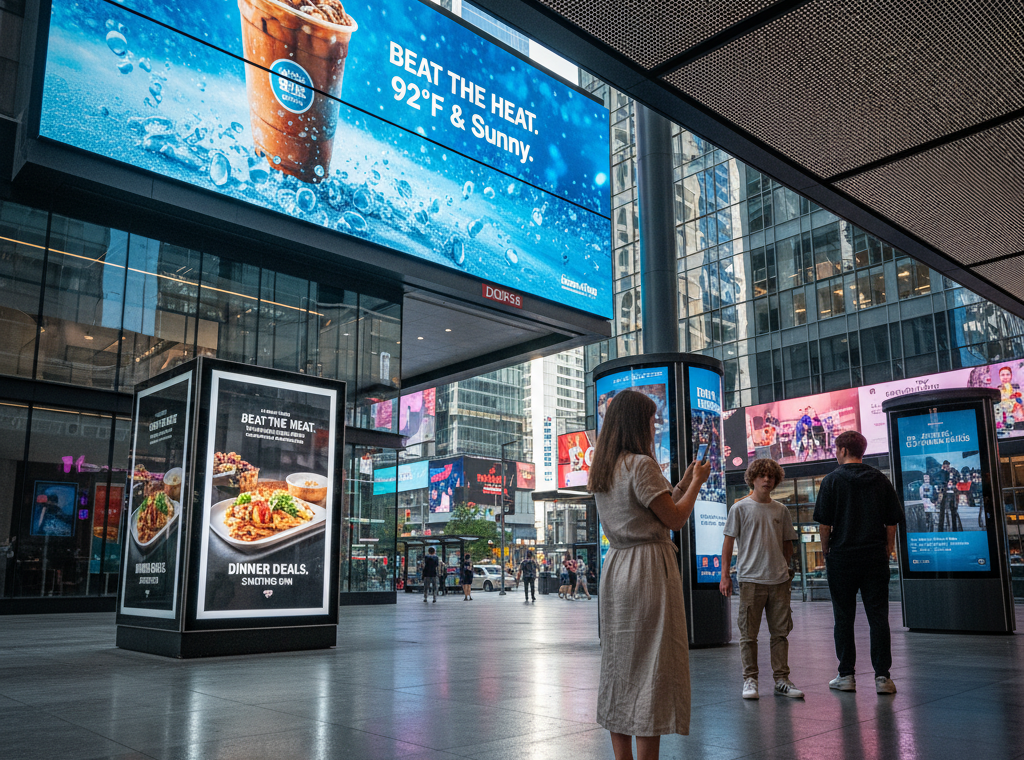
But how do advertisers ensure people actually notice these updates?
That’s where digital technology steps in. Through programmatic DOOH platforms, media owners can automate ad placements and leverage audience targeting capabilities. These systems use analytics to track ad visibility, foot traffic, and engagement, helping brands deliver smarter, more data-driven campaigns.
DOOH also bridges the gap between online advertising and outdoor advertising, enabling omnichannel marketing strategies that connect with users across mobile devices, retail stores, and public spaces. It combines interactive features, like QR codes or augmented reality, allowing advertisers to create interactive campaigns that leave a lasting impression and build brand loyalty.
In essence, DOOH advertising takes the reach of traditional out-of-home and enhances it with digital interactivity, real-time control, and targeting precision, paving the way for the next generation of digital signage networks.
What Are The Examples of DOOH Digital Signage Inventory and Formats
Exampls of digital out-of-home (DOOH) signage is now present across a wide range of environments, from urban infrastructure and entertainment venues to retail spaces and transit corridors. You’ll see digital signage integrated into smart cities, cinemas, hotels, gas stations, and along busy highways. Thanks to its adaptability, creative flexibility, and ability to scale across locations, DOOH continues to expand rapidly. To better understand this diverse ecosystem, let’s break down the most common DOOH formats and where they’re typically found.
Large Format
Consider a typical commute driving, taking public transportation, or walking through city streets. Along the way, you’re likely exposed to large-format DOOH displays. These formats are designed to capture the attention of pedestrians and vehicle traffic alike and are often installed near highways, transit areas, or prominent building exteriors. Their size and placement allow brands to stay visible throughout the day as audiences move through their routines.
Examples include:
- Digital roadside billboards
- Bus stops and transit shelters
- Street-side digital furniture
- Landmark or large-scale displays (such as city-center installations)
Pros:
- Creates strong visual impact for mass audiences
- Positioned in high-traffic, high-visibility locations
- Well-suited for broad brand awareness initiatives
Place-Based Advertising
Place-based advertising, sometimes called location-based media, targets people in environments where they spend time outside their homes. Messaging is adapted to the surrounding context, allowing advertisers to deliver more relevant and timely communication. For example, content can be aligned with the interests or needs of people in a specific location, increasing engagement.
Examples include:
- Corporate offices
- Educational institutions
- Medical and veterinary clinics
- Salons and wellness centers
- Movie theaters
- Fitness facilities
- Hotels
- Bars and casual dining venues
Pros:
- Enables highly relevant, location-specific messaging
- Content can be customized by audience, screen placement, and time of day
- Effective for engaging audiences in environments where they linger
Point-of-Purchase
Point-of-purchase DOOH placements are found in retail-focused locations where buying decisions are actively being made. Screens positioned near shelves, end caps, or checkout areas allow brands to influence customers at critical moments. These formats are especially effective for reinforcing brand visibility and encouraging last-minute decisions.
Examples include:
- Gas stations
- Convenience stores
- Supermarkets
- Shopping malls
- Parking structures and garages
Pros:
- Enhances visibility at the moment of purchase
- Reaches consumers with high buying intent
- Ideal for consumer goods brands seeking immediate impact
What are the Benefits of DOOH Over Traditional OOH Advertising?
The shift from paper billboards to smart digital displays marks one of the biggest transformations in the advertising world. Where once static posters dominated highways and cityscapes, now dynamic screens bring brands to life with motion, sound, and interactivity. DOOH advertising isn’t just replacing traditional out-of-home formats, it’s redefining how audiences experience messages in real-world environments.
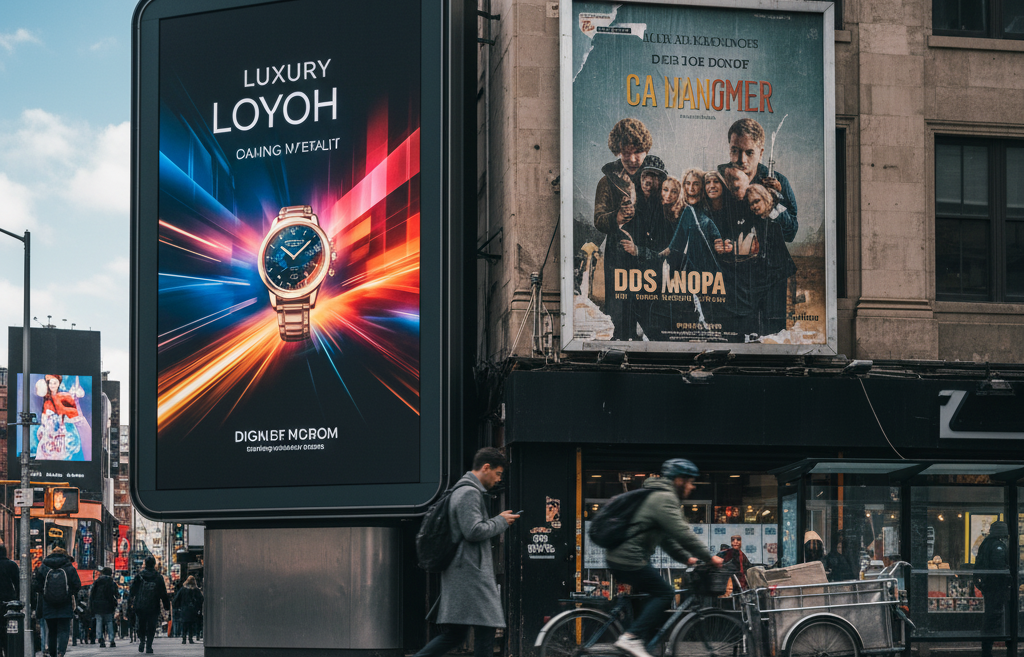
According to Statista, global DOOH ad spending grew by over 16% year-over-year, outpacing all other marketing channels and signaling a powerful move toward data-driven outdoor communication. This growth highlights why more brands are investing in digital campaigns that deliver measurable engagement, flexibility, and stronger ROI.
1. Dynamic Content & Real-Time Updates
Unlike static ads, DOOH ads allow instant updates and creative flexibility. With platforms like AIScreen, brands can modify campaigns across large digital screens using cloud-based CMS tools. Ads can adjust based on time, weather, or local events, ensuring the right message reaches the right target audience at the right moment.
Imagine promoting hot coffee during a cold morning and switching to iced drinks when the sun rises, all automatically. But how often do we stop to think about how powerful that flexibility really is?
This dynamic responsiveness keeps campaigns relevant, interactive, and always aligned with real-world conditions, something traditional advertising simply can’t achieve.
2. High Visibility & Engagement
DOOH displays shine bright, literally. Using vivid, high-resolution video ads, they stand out in busy environments like city centers, malls, and transport hubs. The motion, color, and scale of digital ads on dynamic screens capture attention in ways static ads cannot.
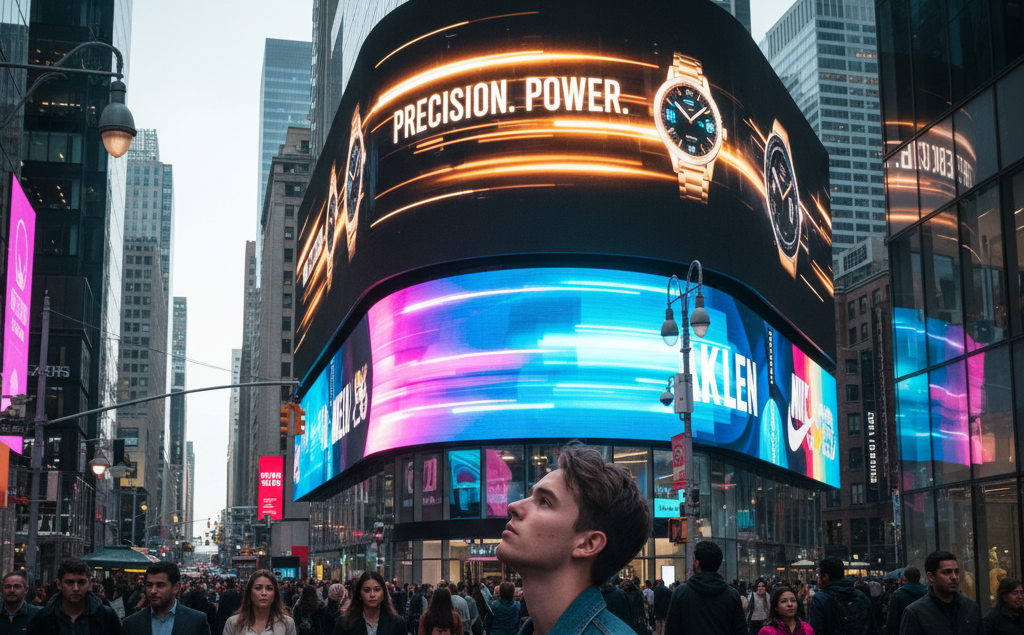
Research shows that digital billboards increase ad recall by up to 47% compared to traditional posters, making them one of the most effective marketing channels for brand storytelling. Whether displayed in retail media spaces or public squares, their visual impact ensures a lasting impression and higher audience engagement.
3. Data-Driven Targeting & Personalization
Programmatic campaigns have made DOOH smarter than ever. Advertisers now combine DOOH ads with real-time analytics to deliver context-aware messages to specific audiences. By analyzing factors like traffic density, time of day, or even local demographics, DOOH platforms can tailor ad placements with surgical precision.
Let’s take an example, a clothing brand might showcase office wear near corporate districts during mornings and switch to casual wear ads in the evening for leisure crowds. But isn’t that level of targeting usually reserved for online ads?
Exactly, and that’s what makes combining DOOH with other digital channels so powerful. It brings the personalization of digital marketing into the physical world, turning place-based DOOH ads into intelligent, adaptive storytelling tools.
4. Cost-Effective & Scalable
Once a digital display network is installed, it becomes a long-term, scalable investment. Brands can share ad slots across multiple clients, maximizing exposure while minimizing operational costs. Unlike traditional billboards that require new prints for every campaign, DOOH displays can host multi-channel campaigns instantly, saving both time and money.
A retailer, for instance, can promote seasonal offers across retail displays in different cities simultaneously without printing or logistics costs. The ability to test, update, and scale instantly is what gives home DOOH advertising its unmatched cost efficiency.
5. Omnichannel Integration
The benefits of DOOH advertising extend beyond visibility, they amplify reach across other digital channels. When synchronized with mobile, social media, and web campaigns, DOOH becomes a vital piece of a seamless multi-channel campaign.
Imagine this, a traveler sees a video ad for a new luggage brand on an airport display and later encounters the same ad on their mobile feed, reinforcing brand recall. This combining DOOH with other marketing channels approach ensures consistent messaging, stronger engagement, and measurable lift across platforms.
How DOOH Digital Signage Works?
DOOH digital signage works through a blend of advanced hardware like media players, intelligent digital signage software, and seamless connectivity, all synchronized to deliver impactful, data-driven digital ads to massive audiences in real time. Every ad you see on a city billboard, airport display, or shopping mall screen is part of a larger DOOH network that operates through a coordinated ecosystem of screens, sensors, and cloud-based systems.
According to Gartner, over 78% of global digital advertising growth is now driven by automated and programmatic technologies, proving how deeply integrated programmatic DOOH digital signge displays has become in today’s marketing landscape. This synergy between physical infrastructure and digital intelligence is what makes modern DOOH ads both powerful and precise.
Hardware Components (Displays, Sensors, Media Players)
At its foundation, a DOOH network depends on robust hardware built for performance and durability. These setups use LED displays or retail displays capable of high brightness and clarity, ensuring visibility under any lighting conditions. For outdoor campaigns, weatherproof and sunlight-readable screens are crucial, while indoor environments may use projectors or touch-enabled interactive elements for engaging experiences.
Every screen is connected to a media player, the system’s brain, which stores, decodes, and plays the scheduled digital ads. Sensors embedded in the environment can measure foot traffic or environmental changes, helping advertisers refine content strategies.
Imagine passing by a screen that changes from a coffee ad in the morning to a movie trailer at night, that’s DOOH hardware responding dynamically to context. But how do these updates actually happen in real time? That’s where intelligent software steps in.
Software and Content Management Systems (CMS)
Behind every DOOH display is a content management system (CMS), the digital hub that organizes, schedules, and delivers ad content. Cloud-based platforms like AIScreen make it possible to upload, manage, and synchronize campaigns across multiple locations from a single dashboard.
Using tools such as playlist automation, real-time scheduling, and performance analytics, advertisers and media owners can update thousands of screens within seconds. Need to pause a promotion or change visuals for a new campaign? It can be done instantly, without ever touching the display.
One of AIScreen’s strongest advantages lies in its ability to integrate interactive elements and automate programmatic DOOH placements, ensuring that content stays fresh, context-aware, and strategically aligned with each venue’s audience. But what connects these smart systems together to make it all seamless?
Connectivity, Networks, and Programmatic Ad Delivery
Connectivity forms the backbone of every DOOH network. Using 4G, 5G, or fiber connections, data flows between cloud servers and local media players, ensuring content updates and performance reporting in real time. Programmatic DOOH takes this further, enabling ads to be bought and sold automatically through supply-side (SSP) and demand-side (DSP) platforms, optimizing both reach and ROI.
A creative example you can launch an interactive billboard that detected cigarette smoke using built-in sensors. When someone nearby lit a cigarette, the figure on the screen began coughing, instantly transforming a simple ad into a viral public health message.
This type of real-time response demonstrates how interactive elements powered by IoT and smart connectivity can elevate digital ads beyond passive visuals into emotional, memorable experiences.
With AIScreen’s advanced integration capabilities, advertisers can easily connect with ad servers, manage retail displays, and run synchronized campaigns across multiple DOOH networks, ensuring precision, scale, and creativity all in one streamlined system.
What Are the Types of DOOH Advertising and Real-World Use Cases?
The versatility of DOOH advertising lies in its ability to adapt to virtually any environment, from busy highways to sleek corporate lobbies. Unlike static billboards, which remain fixed and unchanging, DOOH ads dynamically respond to audiences, context, and location. This flexibility has helped brands expand beyond traditional spaces into smarter, data-driven environments that connect with people where they live, work, and travel.
According to the Home Advertising Association, digital out-of-home formats now account for more than 40% of total outdoor ad spend worldwide, reflecting how advertisers are shifting from static visuals to immersive digital displays. Let’s explore the main types of DOOH environments and how brands are using them to make a lasting impact.
Large-Scale Outdoor Digital Billboards
These monumental outdoor digital signage displays dominate high-traffic locations like city centers and major highways. They’re designed for maximum visibility and are perfect for brands seeking nationwide reach or high-impact campaigns. Whether you’re promoting a product launch or reinforcing brand presence, these screens ensure unmatched scale and visibility.
For example, Nike’s 3D interactive billboard in Tokyo became a global sensation, combining visual artistry with motion sensors to engage pedestrians in real time. Such installations not only captivate audiences but also amplify social media buzz far beyond the physical site.
But what makes these billboards so memorable even in a world filled with digital distractions? Their sheer size, motion graphics, and contextual relevance, something static boards could never replicate.
Locations: Highways, downtown areas, stadium surroundings
Best For: Large-scale awareness campaigns and impactful product launches
Transit and Transportation Displays
Airports, metro stations, bus terminals, and taxis have become prime DOOH advertising zones. These locations offer advertisers a chance to target commuters and travelers with location-based messages, whether it’s travel insurance offers, local events, or restaurant promotions nearby.
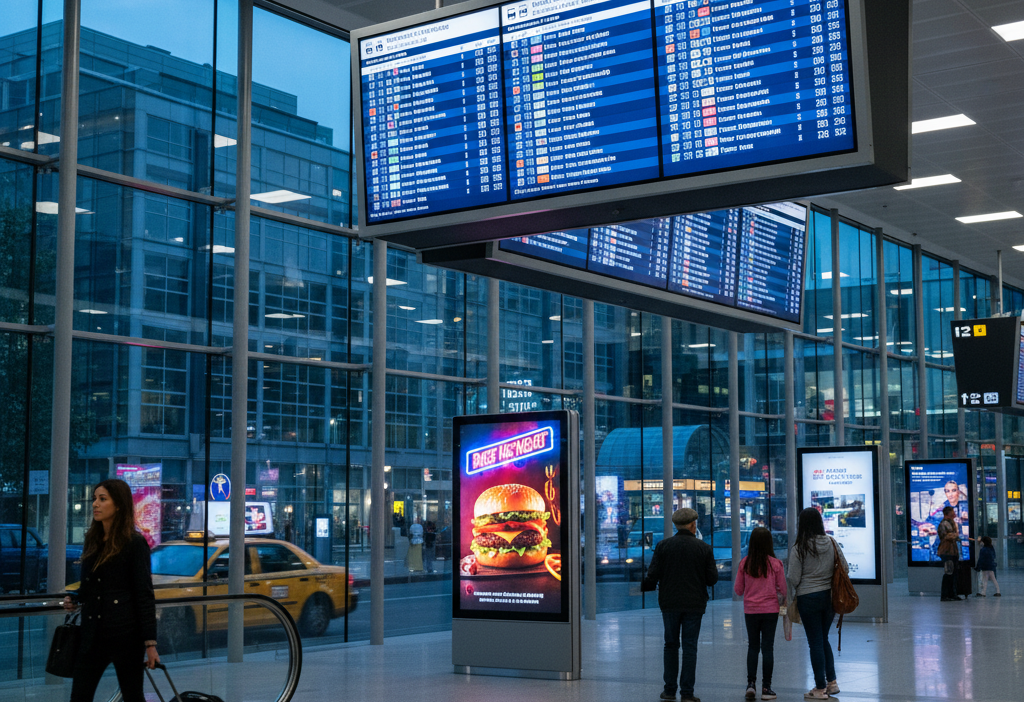
Uber’s digital taxi-top ads are a perfect example. These displays dynamically switch content based on the taxi’s location or time of day, showing local attractions in tourist zones or restaurant ads near dining districts. Think about it, what better time to capture someone’s attention than when they’re waiting for a flight or ride?
Locations: Airports, bus stops, taxis, train stations
Best For: Local campaigns and travel-related promotions
Retail and Mall Screens
Inside shopping malls and retail stores, DOOH ads directly influence buying decisions at the moment of purchase. These dynamic displays can showcase discounts, loyalty programs, or product pairings, all designed to nudge consumers toward immediate action.
For instance, checkout displays promoting store loyalty apps often drive engagement by offering instant rewards. Research shows that in-store DOOH screens can increase foot traffic by 17% and boost sales by 30%, proving how effective real-time engagement can be. Ever noticed how your favorite product seems to appear on a nearby screen just as you’re browsing the aisle? That’s DOOH in action, influencing decisions at the perfect moment.
Locations: Grocery stores, boutiques, shopping malls
Best For: Point-of-purchase promotions and upselling opportunities
Corporate and Office Digital Displays
In corporate spaces and co-working hubs, DOOH displays serve dual purposes: internal communication and brand promotion. Companies use them to broadcast company updates, training sessions, or employee achievements, while advertisers target professionals with relevant offers and sponsored content.
A great example is corporate partners running awareness ads in office lobbies, blending external marketing with internal engagement. These displays enhance workplace culture while offering subtle exposure for partner brands. Wouldn’t it make sense if every meeting room also doubled as a digital storytelling space?
Locations: Co-working spaces, office buildings, lobbies
Best For: Internal communication and professional audience targeting
Event, Arena, and Stadium DOOH
Few environments offer as much energy as live events, and DOOH ads thrive there. Large digital screens at concerts, sports arenas, and expos merge entertainment with engagement, giving sponsors powerful real-time visibility.
Imagine a real-time scoreboard showing live stats while featuring sponsor logos or interactive fan polls. These experiences go beyond promotion, they build excitement and foster emotional connections between brands and audiences. The takeaway? DOOH advertising isn’t just about showing content — it’s about creating memorable moments that audiences carry long after the event ends.
Locations: Arenas, concerts, trade shows, conventions
Best For: Live engagement, sponsorships, and social media amplification
Which Are the 5 Best Digital Signage Software Platforms for DOOH Advertising?
The following digital signage software platforms enable advertisers to create, schedule, and monitor DOOH (Digital Out-of-Home) campaigns efficiently. From real-time analytics to remote content management, these platforms empower brands to manage multiple screens with ease while maximizing ROI. Here’s a look at the top CMS platforms redefining the DOOH landscape and ranking among the best digital signage software companies dooh advertising relies on, with AIScreen leading the way.
AIScreen
Overview:
AIScreen is an all-in-one DOOH CMS that combines cloud-based control, enterprise-grade scalability, and a rich library of 1500+ customizable templates. With 80+ app integrations and an intuitive interface, it allows advertisers to create and deploy campaigns seamlessly across multiple locations.
Key Features:
- Real-time content scheduling and updates
- Centralized control for multi-screen networks
- Programmatic-ready API integrations
- Comprehensive analytics and Proof of Play for ad reporting
Why It’s the Best:
AIScreen delivers the perfect balance between simplicity and advanced capability, making it the best digital signage solution for ad network owners, retail brands, and media agencies looking for reliability, scalability, and measurable performance.


OnSign TV
Overview:
OnSign TV is a reliable digital signage software tailored for professional DOOH management. It provides robust tools for real-time content control, system monitoring, and campaign analytics.
Standout Features:
- Live status monitoring for each screen
- Comprehensive playback reports
- Cloud-based campaign management
Pros:
- Highly stable for large networks
- Advanced proof-of-play tracking
Ideal Use Case:
Perfect for outdoor advertisers or transit-based ad networks managing hundreds of displays across cities.
OptiSigns
Overview:
OptiSigns is a versatile digital signage platform offering great value for money. Its wide range of app integrations and easy scheduling tools make it a go-to choice for small to mid-sized networks.
Standout Features:
- Integrates with YouTube, Google Slides, Canva, and social media
- Drag-and-drop content management
- Device grouping and offline playback
Pros:
- Affordable pricing
- User-friendly setup
Ideal Use Case:
Best for small businesses and mid-size advertisers who want affordable yet feature-rich digital signage management.
NoviSign
Overview:
NoviSign is a cloud-based digital signage software designed for advertisers seeking simplicity and flexibility. It’s ideal for smaller networks and indoor DOOH displays.
Standout Features:
- Cloud-based content updates
- Drag-and-drop template editor
- Integration with touch-screen kiosks
Pros:
- Simple and intuitive interface
- Quick deployment and updates
Ideal Use Case:
Great for restaurants, fitness centers, or small retail chains that want quick and effective campaign control.
Wallboard
Overview:
Wallboard is an enterprise-grade CMS that emphasizes data visualization and dashboard integration. Its powerful automation and advanced analytics make it suitable for corporate and financial environments.
Standout Features:
- Real-time data dashboards
- Power BI and Tableau integration
- Multi-user access control
Pros:
- Ideal for data-driven content
- Strong security and scalability
Ideal Use Case:
Best for corporate communication, finance, and internal analytics signage where data accuracy and integration matter most.
How to Get Started with DOOH Digital Signage
This step-by-step guide will let you know how to get started with the DOOH digital signage software including a smooth process or methodical setup procedure. It covers software functionality and key features, combining with the appropriate hardware to create a smooth experience.
Step 1: Choose the Right DOOH Digital Signage Display
Select the right display for your DOOH digital signage to broadcast your real-time content effectively. Consider screen size, resolution, and software compatibility while making a choice.
According to DisplayDaily, screen refresh rate and screen resolution are the 2 most crucial elements to display live TV content. They assure steady performance and colorful graphics.
Generally, displays fall into two categories based on usage:
- Consumer-grade displays: Best to use at homes, cost-effective solution, lifespan of approximately 30,000 hours of operation, 200-400 nits brightness for indoor environments and controlled lighting, and 8/7 duty cycle (8 hours a day, 7 days a week). Display type can be Insignia or TLC TVs.
- Commercial-grade displays: Best to use in public spaces, offices, and retail stores for long-term reliability, lifespan of approximately 50,000+ hours, designed for a 16/7 or 24/7 duty cycle, from 500 nits for indoor use to 2500+ nits for outdoor use. Window-facing displays that combat direct sunlight. Built-in heat management systems and reinforced chassis to handle the stress of continuous operation.
Some of the top-class live TV options are as follows:
Insignia Smart Fire TV
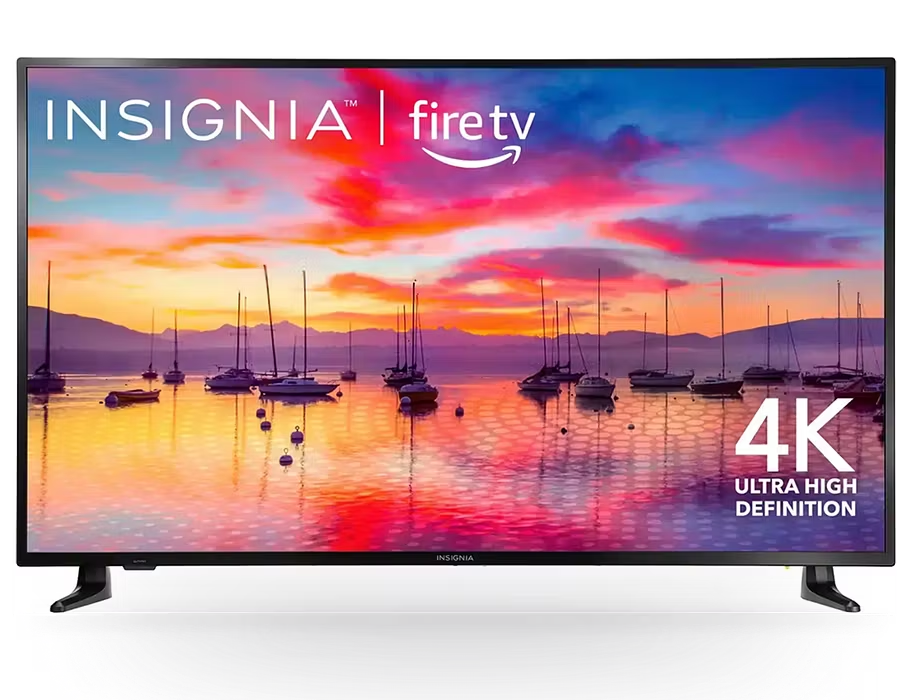
- Display Sizes and Resolution: Sizes available in 32″, 43″, 50″, 55″, 65″ with 4K Ultra HD on most models, but Full HD on smaller 32″ units.
- Operating System and Smart Features: FireOS (Amazon Fire TV) with Alexa and built-in apps, Apple AirPlay, and screen mirroring.
- HDR and Audio: HDR10 support and DTS Virtual-X 3D surround sound.
- Connectivity: 3 HDMI ports, USB, composite AV, optical audio out, headphone jack, coaxial, and WiFi & Ethernet.
- Performance: Smooth 4K/HD video playback, basic playlists, and animations are supported.
- Popular Models: F30, F50, NS-Series.
- Advantages: Budget-friendly, all-in-one solution, easy to deploy, and reliable for digital signage.
TCL s5 Series

- Display Sizes and Resolution: Sizes available are 32″ to 105″. Most models come with 4K Ultra HD resolution, whereas some in 32″ units have Full HD. Select models also offer 5K resolution.
- Operating System and Smart Features: Android-based OS (e.g., Android 13), built-in media player, apps, and cloud content management supported.
- HDR and Audio: 400–500 nits brightness with anti-glare, Dolby and DTS audio, and 2×10W speakers.
- Connectivity: HDMI, USB, Ethernet, WiFi, Bluetooth, and RS232 on some models.
- Performance: 24/7 commercial use, smooth 4K video, and HTML5 content playback.
- Popular Models: TMN, TBN, and P-Series.
- Advantages: Wide size range, durable, bright displays, flexible Android content management, and integrated audio and multiple connectivity options
Step 2: Download and Set Up DOOH Digital Signage Software
Install and download digital signage software by visiting the AIScreen download page. Choose your preferred device, from an Android box, Fire TV Stick, or small PC, to install software on TV. Connect the display using an HDMI cable or through Wi-Fi after installation.
To download and install the AIScreen digital signage software on your TV, follow these steps:
- On your smart TV (as you have already selected the display), open the app store (such as Google Play Store or Amazon Appstore).
- Search for “AIScreen Digital Signage Software.”
- Click the “Install” button to download the AIScreen app onto your TV.
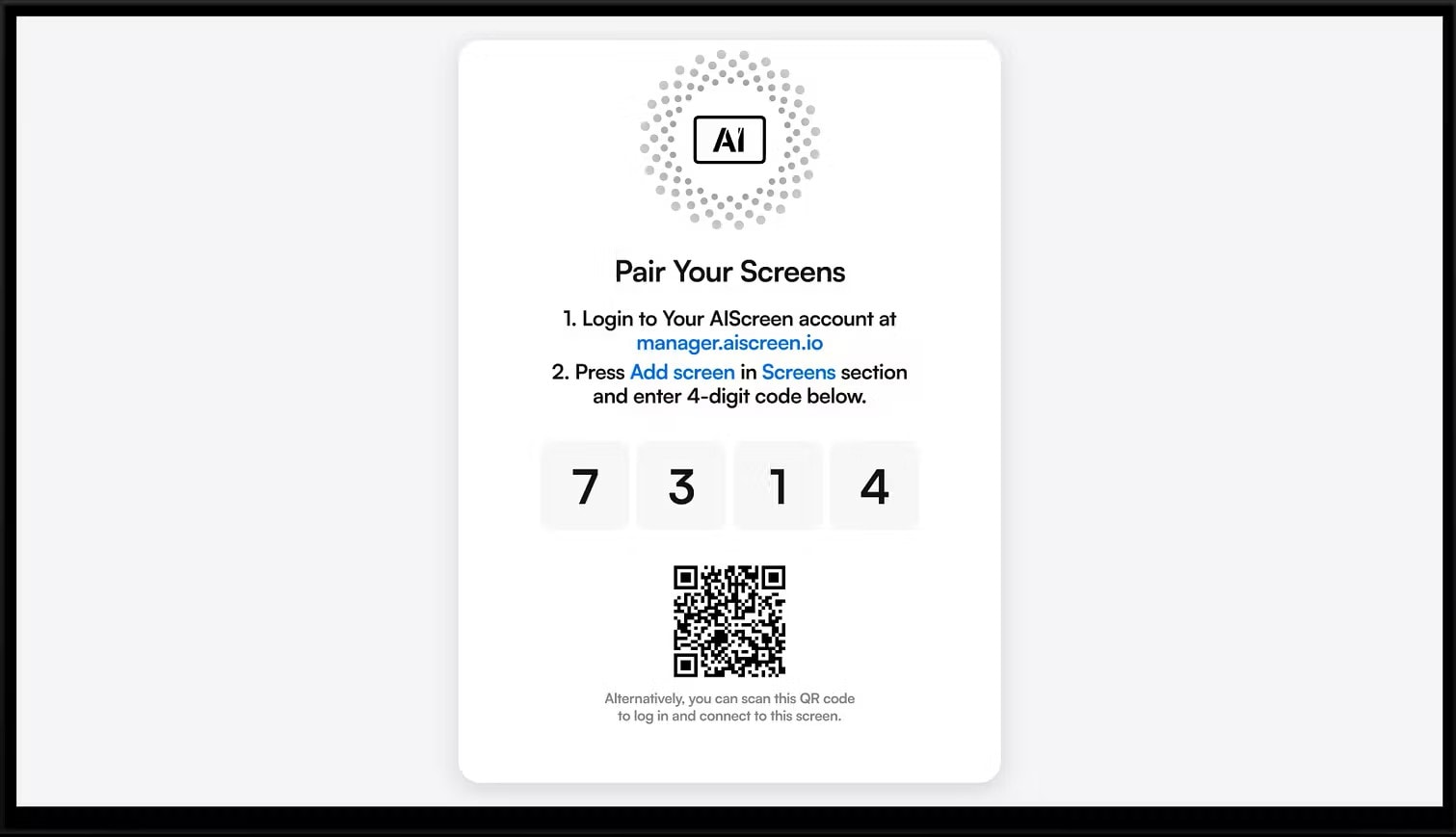
- Once installed, open the app; your screen will display a 4-digit pairing code needed to connect your TV to the AIScreen cloud system.
This simple installation process gets your digital signage software ready for setup and content management.
Step 3: Create an Account in Your DOOH Digital Signage Management App
Creating an account in the digital signage management app is the right approach after you have installed the software. Now, register your company and create templates, upload media, and schedule content playlists, monitor live streams, and switch feeds easily, all from this powerful digital signage solution. Additionally, you can find integrations and analytics tools to improve your digital signage strategy as well.
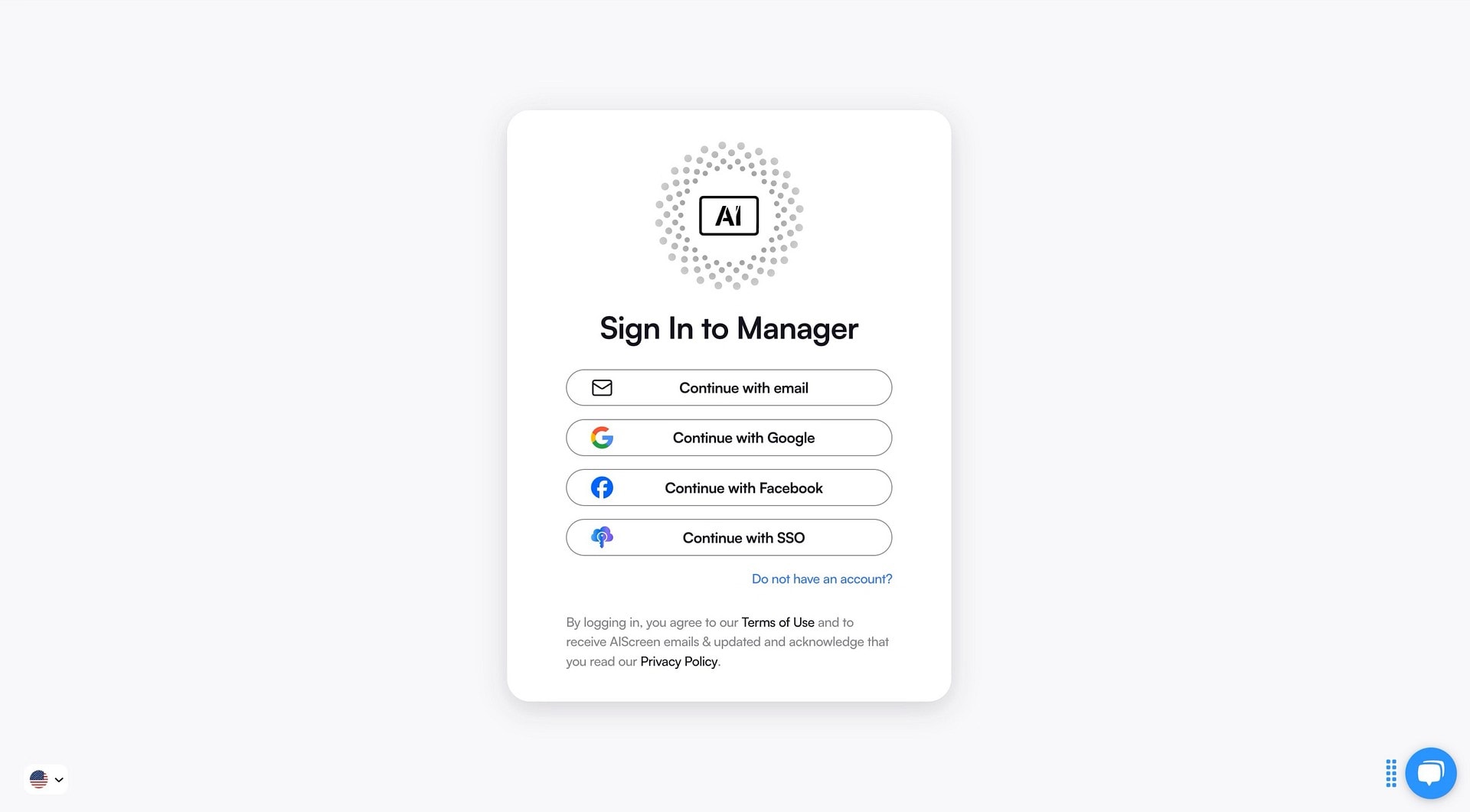
As you have already installed AIScreen digital signage software on your TV or device, following the previous step, the next thing is to create an account in the digital signage management app. This process is also very simple and quick:
- Move to the AIScreen website or open the AIScreen app on your computer or mobile device.
- Click on the “Sign Up” or “Create Account” option.
- Enter your business details, including its name, email address, and set a password. You can also sign up quickly if you already have a Google or Facebook account. Remember, the sign-up page says, ‘Continue Log In’ through so-and-so account, when you are already a Google or Facebook user.
- Confirm your email if required to activate your account.
- Once signed up, log in to access your personalized digital signage dashboard.
Benefits of Using the Management App:
- The best thing is the centralized dashboard for managing and organizing your digital content easily.
- You can remotely schedule content and campaigns for multiple screens.
- Sync as well as control your digital signage hardware in real time.
- Use built-in tools for content creation, analytics, and team collaboration.
- You can even simplify daily updates and automate content delivery to maximize engagement and operational efficiency.
Signing up for your account is essential to linking your screens with the cloud-based platform. It allows seamless content updates and centralized control across all your screens.
Step 4: Pair Your Devices with the DOOH Digital Signage Software
Connect and pair your devices with the digital signage software by launching the app on both the TV and your AIScreen account. Start uploading or customizing your business template. You can also use a ready-made template or your branding assets, utilizing the integrated editor of the platform or a web dashboard.
Include different content types as messages, colors, high-quality images of the products, and logos, to customize templates that are consistent with your target market and business model. This is essential for producing branded, customized digital signage content.
Now, as you have signed up, just follow the process to connect and pair up devices:
- Open the ‘AIScreen app’ on your TV or digital signage player. There will appear a 4-digit code.
- Log in to your AIScreen dashboard on your computer or mobile device.
- Go to “Add Screen” and enter the 4-digit code to pair the device.
- Name the device so you can easily identify it.
- Ensure smooth internet connectivity using a stable Wi-Fi or Ethernet connection.
- If using an external device or media player, connect it via HDMI before pairing.
- Test to confirm if the device receives content and updates properly
Step 5: Upload or Customize Your DOOH Digital Signage Templates
- Click “Upload” or drag and drop your prepared files to begin the upload process.
- Add files to your library: The platform can convert files to a usable format automatically.
Customize a template
- Choose a pre-designed template from the library, which has over 1,500 options for different industries like retail, restaurants, and corporate settings.
- Use the drag-and-drop editor to customize the layout.
- Add branding elements, such as your logo, brand colors, and unique typography.
- Incorporate high-resolution images and promotional videos into the template.
- Organize content by categories (like “Entrees” or “Specials”) and create playlists to rotate content throughout the day.
- Adjust individual elements: Resizing, moving, and rotating content is possible, as is setting durations and adding transitions.
- Preview your design before publishing to ensure a professional look.
Step 6: Set Up a Display Schedule and Launch DOOH Digital Signage
So now, just hit ‘play’ from the AIScreen dashboard, and now you can broadcast live TV as part of your digital signage network.
As you have configured all your settings, now it is time to launch live TV or display content on your digital signage screens with AIScreen. Follow the steps:
- Navigate to the media, playlist, or live URL section where your prepared content is kept.
- Select the content or live URL you want to broadcast.
- Click the “Set to Screen” option and choose the target displays.
- Confirm and start streaming live content instantly to your digital signage screens.
Follow some troubleshooting tips about ensuring correct display settings (1080p/4K), using wired Ethernet for stable streams, and disabling sleep mode on devices to prevent interruptions. Here are the steps:
- Your screen resolution should match the content resolution to avoid distortion. So, adjust the resolution of your TV or signage device if needed.
- Prevent buffering and other interruptions by ensuring stable and strong connectivity.
- Try restarting the device or the signage app if the content does not display properly.
- Regularly update your AIScreen software and device to maintain performance and compatibility.
- Do not run too many apps or processes at the same time on the digital signage player or your smart TV. Otherwise, it will slow down the system.
Digital Signage VS. DOOH: What’s the Difference?
Digital signage vs. DOOH: The difference section reflects a clear comparison between digital signage and DOOH advertising and digital marketing. These comparing factors include their definitions, audience targeting, ownership structures, content management, and technical differences among them.
Here, you will get to know about the distinct approaches to leverage digital signage and digital out-of-home advertising screens and software for meeting diversified business goals and advertising methods in different environments. So, let’s check the point-by-point comparison to understand them according to their purpose, ownership, audience, and operational dynamics.
Definition and Primary Purpose
Digital Signage: Digital signage solutions are usually business-controlled or brand-owned signage displays that are used for sending internal or external messages to target specific audiences, such as digital menu boards, wayfinding, or product promotions in retail stores, campuses, and offices.
DOOH: Digital Out-Of-Home advertisements are generally advertiser-funded screens used for advertising in public places like digital billboards, shopping malls, and transit areas. They work as programmatic advertising and paid ad campaigns.
Ownership and Control
Digital Signage: Digital signage content is directly managed by the venue or business owners, such as local businesses, retailers, or internal teams, as they operate everything using the digital signage software.
DOOH: DOOH is controlled by media owners or HOOD networks, where advertisers purchase slots through programmatic platforms or direct bookings.
Audience Reach and Targeting
Digital Signage: It lets your targeted and interactive digital content reach localized groups such as employees, store visitors, or campus members.
DOOH: It assures that your digital content attains wide-reaching and mass public exposure to an end number of daily consumers, using real-time analytics and geo-demographic targeting for optimizing DOOH campaigns.
Learn more about using digital signage for retail stores and other sectors to capture your audience’s attention.
Content Strategy and Management
Digital Signage: It mainly promotes owned products and services utilizing interactive content such as promotions, wayfinding, or internal updates managed through integrated CMSs or content management systems. This entire workflow is supported by content management tools learn what is digital signage software to see how businesses control and automate these updates.
DOOH: It runs scheduled, paid, dynamic advertising campaigns coordinated using programmatic advertising exchanges and media buying platforms on digital screens. It is designed to gain a broader visual impact.
Installation Scale and Locations
Digital Signage: Digital signage is typically deployed in offices, retail stores, or airports, educational campuses, as a single venue for announcing notices, sharing news, updating information related to gate changes or flight cancellations, etc. Check out the following types of relevant display signage solutions.
Digital Signage for Offices
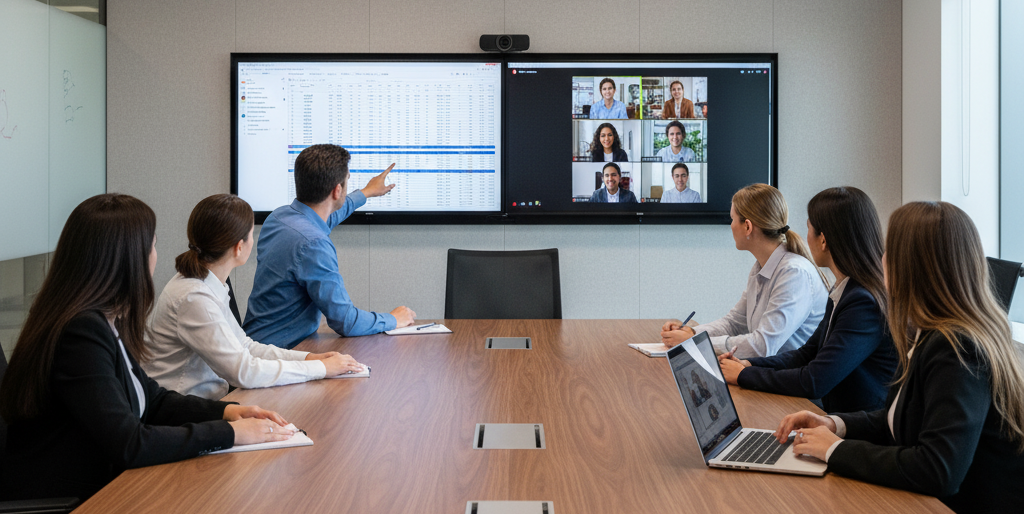
Digital signage for offices refers to a modern communication tool that dynamically displays digital signage content. It replaces the traditional bulletin boards and is placed in high-traffic areas like meeting rooms and lobbies. The primary objective of this placement is to deliver real-time announcements, news, and emergency alerts, thereby enhancing communication clarity and employee engagement by displaying interactive content and sharing achievements.
It also streamlines meeting room content scheduling and connects all the teams across locations using consistent messaging. Professional digital signage platforms, such as AIscreen, offer easy content management and multimedia support that helps offices streamline information flow, boost productivity, and enhance workplace culture.
Digital Signage for Campuses
Digital signage for campuses is meant to enhance communication as it provides real-time updates on events, schedules, announcements, and emergencies, utilizing digital displays positioned in high-traffic areas like academic buildings and student unions. It connects staff and students with multimedia content and interactive maps that streamline administrative tasks, reduce paper use, and support safety with instant alerts. AIscreen and other similar platforms offer easy software integration and content management that help create an efficient, connected, and vibrant campus community.
Digital Signage for Airports
Digital signage for airports enhances the experiences of the passengers by providing real-time flight updates, information about flight delays, gate changes, and emergency alerts through strategically designed and placed digital displays.
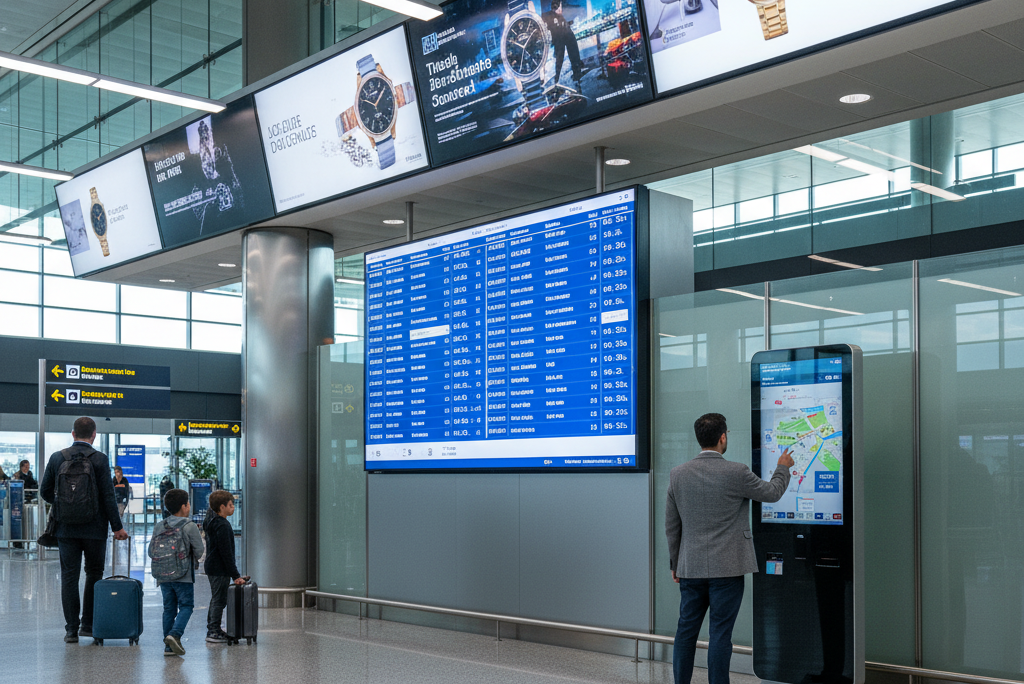
It supports wayfinding using interactive maps and multilingual support. It also streamlines operations using instant content updates and boosts revenue using targeted advertising. AIscreen and other related platforms offer centralized digital signage solutions that improve operational efficiency, communication, and passenger satisfaction.
DOOH: DOOH screens are installed in high-traffic public spaces like airports, shopping malls, highways, and transit hubs like train stations and bus stops. They are generally designed for high brand visibility and resilient weather conditions.
Technical Complexity and Hardware
Digital Signage: The signage program facilitates real-time content adjustments to commercial-grade screens paired with content management systems. Optimized for indoor usage, these displays offer flexibility for showcasing branded content, product information, and internal communications with no heavy-duty infrastructure.
DOOH: DOOH relies on programmatic platforms and industrial-grade screens designed for outdoor environments. These weather-proof, high-brightness screens run 24/7, created to deal with extreme temperatures, dust, and rain, are ideal to use at public squares, highways, and transit stations.
Content Scheduling Flexibility
Digital Signage: Modern digital signage software facilitates content scheduling and pushing for real-time updates through drag-and-drop dashboards. This ensures on-time and relevant reaching of promotions, alerts, or announcements to the public, even across multiple locations.
DOOH: Digital OOH advertising operates on fixed time slots, often bought through media networks. For all live campaigns, approval is required for content changes. This makes it less agile, but has proved to be highly structured to target advertising during he peak hours.
Measurement and Analytics
Digital Signage: Digital signage uses tools like touch engagement tracking, QR codes, and a real-time insights dashboard to display content and offer deep insights into audience attention. This enables the businesses to measure dwell time, conversion rates, and optimize based on viewer behavior.
DOOH: Home DOOH advertising focuses on reach and impressions. Mobile pings, foot traffic sensors, and geolocation data technologies are used here for evaluating ad performance across DOOH networks and campaign durations.
Revenue Models and Costs
Digital Signage: Digital signage is experienced as a cost center, making an investment for improving customer experience and brand image, enhancing communication through engaging content, and driving sales in owned environments. The costs here cover charges for software licenses, hardware installed, and continuous maintenance.
DOOH: This outdoor advertising acts as a revenue-generating medium. It allows media owners to lease screen space to advertisers, using programmatic advertising platforms, and earn revenue per campaign or impression, making it a cost-effective model for public space operators.
Interactivity and Engagement
Digital Signage: Interactive digital signage operates from wayfinding displays and interactive kiosks to dynamic displays with augmented reality capabilities. It forward personalized and engaging experiences to its target audience.
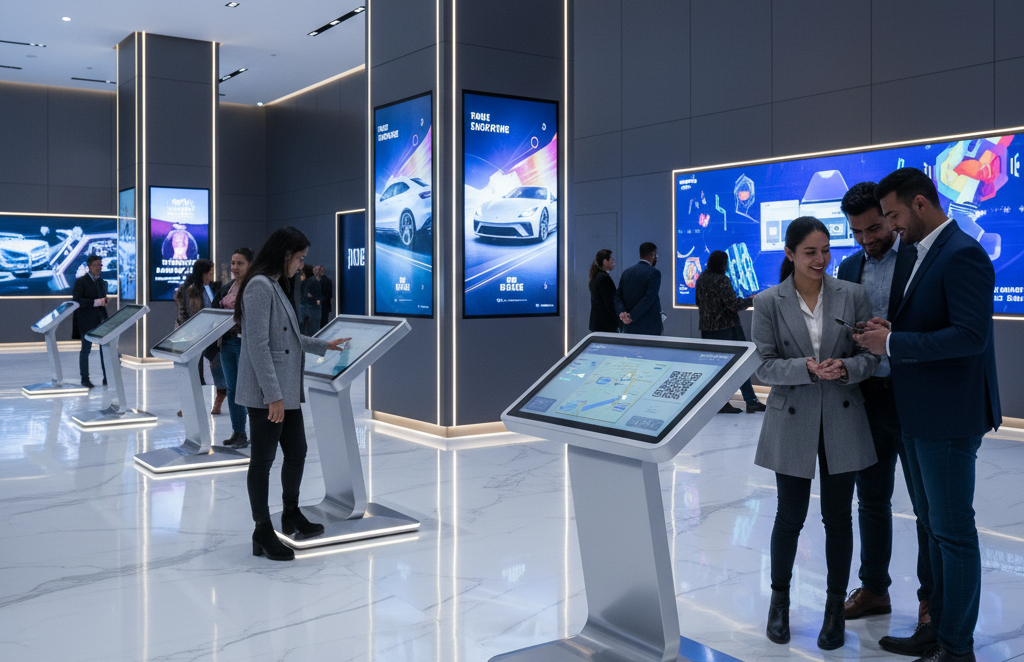
DOOH: DOOH digital advertising screens are mostly passive. But they include interactive campaigns using QR codes, mobile devices, and even gamified AR experiences as new formats to offer limited, but growing opportunities for maximum viewer interaction.
Regulatory and Compliance Needs
Digital Signage: These digital interactive displays typically involve minimal regulation, mainly focused on local zoning, safety, and screen brightness within malls, offices, or other indoor venues.
DOOH: DOOH offers a wide range of public-array regulations, including location-based instructions, light pollution laws, and content vetting from local authorities or city councils, especially in historic or urban areas.
Campaign Duration and Dynamics
Digital Signage: Real-time updates from digital displays are best suited for evergreen content like digital menus, brand stories, or store hours. It also supports short-term promotions with instant updates for matching operational changes or seasonal trends.
DOOH: DOOH suffers more from environmental impacts. It is basically designed for high-impact and time-sensitive campaigns. Ad rotation is based on booked slots and may last for days or weeks. They can also be tailored to specific times of day or audience flow for maximizing visibility and ROI.
What Are DOOH Advertising Trends & Future Innovations?
The Digital Out-of-Home (DOOH) advertising industry is evolving rapidly, driven by advances in AI, 5G, sustainability, and interactive technologies. As advertisers seek more personalized and impactful campaigns, innovation in digital signage continues to shape how audiences experience content in public spaces. Below are the key trends defining the next era of DOOH advertising.
AI-Powered Personalization and Predictive Targeting
Artificial intelligence is revolutionizing DOOH by enabling real-time audience targeting. AI analyzes demographic data, foot traffic, and contextual factors such as weather and time of day to deliver ads that resonate instantly.
Let’s take an example, weather-triggered campaigns that display sunscreen ads on sunny days or coffee promotions on cold mornings show how predictive targeting enhances ad relevance and engagement.
3D and Holographic Billboards
The rise of 3D and holographic displays is transforming DOOH into an immersive storytelling medium. These visually striking formats capture attention and generate viral buzz both on the streets and online.
Example: The famous 3D “wave” billboard in Seoul became a global sensation, proving that dynamic visuals drive engagement beyond physical locations.
Sustainable, Energy-Efficient Display Technologies
Sustainability is now central to the DOOH landscape. Advertisers are embracing LED-efficient displays, solar-powered billboards, and recyclable materials to reduce carbon footprints while maintaining high visibility.
Brands incorporating eco-friendly practices in their signage demonstrate their alignment with ESG goals and appeal to environmentally conscious consumers.
5G and IoT Integration for Smarter Networks
The fusion of 5G connectivity and the Internet of Things (IoT) is creating faster, smarter, and more responsive digital signage networks. These technologies enable instant content delivery, real-time updates, and data-driven insights.
Such connectivity transforms cities into smart ecosystems, where DOOH displays interact dynamically with sensors, vehicles, and mobile devices for context-aware communication that strengthens every digital signage marketing strategy.
Maximize Your DOOH Advertising Reach with AIScreen Digital Signage!
AIScreen empowers advertisers to stay ahead in the fast-changing DOOH market with its next-gen digital signage software. Whether managing one screen or a global network, AIScreen simplifies campaign delivery with real-time updates, programmatic ad scheduling, and advanced analytics.
With features like multi-location control, enterprise-grade scalability, and AI-driven insights, AIScreen ensures your advertising always reaches the right audience at the right time as we came to know in this What is DOOH Digital Signage? Definition guide.
Power your DOOH advertising network with AIScreen, the smart way to manage campaigns, automate schedules, and measure performance. Try it free or book a demo today to experience why AIScreen is the best platform for DOOH advertising and beyond.
FAQs
What does DOOH stand for in digital signage?
DOOH stands for Digital Out-of-Home, referring to digital displays used for advertising in public spaces. This includes billboards, transit screens, and interactive kiosks that deliver targeted, real-time messages through digital signage software.
How is DOOH different from traditional OOH advertising?
The difference between DOOH and traditional OOH lies in digital technology and dynamic content. Unlike static posters, DOOH allows real-time updates, motion graphics, and interactive experiences powered by cloud-based digital signage solutions.
How much does DOOH advertising cost?
The cost of DOOH advertising varies depending on location, screen size, and campaign duration. However, using platforms like AIScreen helps businesses optimize budgets with analytics and automation tools that enhance ROI and reduce manual costs.
What kind of businesses can benefit from DOOH?
Businesses of all sizes, from retail brands to real estate, hospitality, and corporate sectors, benefit from DOOH advertising. The technology enables targeted messaging that aligns with diverse business goals and enhances brand visibility.
Is DOOH advertising cost-effective for small businesses?
Yes, DOOH advertising is cost-effective for small businesses thanks to affordable digital signage software and scalable campaign tools. With AIScreen’s flexible pricing and automation features, even small brands can launch impactful and measurable campaigns.
