
How To Improve Passenger Flow in Airport Terminals

As global air travel continues to surge, airports face the challenge of delivering top-notch services and outstanding travel experiences. AIScreen’s airport digital signage solution helps terminals guide passengers and cut congestion.
Airports must adopt incremental changes to upgrade their facilities to remain competitive in this dynamic landscape.

By strategically implementing advanced digital signage technologies like AIScreen, airports can revolutionize how passengers navigate terminals, transforming the travel journey into a streamlined, stress-free, and enjoyable passage.
Airport digital signage is incredibly versatile, capable of handling a multitude of tasks and functionalities that greatly enhance the passenger experience and streamline airport operations. From displaying critical flight information to providing wayfinding assistance, it can do so many things.
This article delves into the significance of passenger flow, showcases statistics that underscore its impact, and highlights the transformative potential of AIScreen in reshaping the future of airport terminal operations.
Short Summary:
- The aviation industry faces a doubling of air traffic volume by 2035, urging airports to enhance passenger experiences and remain competitive.
- Efficient passenger traffic flow is crucial for airport success, impacting revenue and passenger satisfaction.
- A 10-minute security line delay can lead to a 30% drop in passenger retail spending, highlighting the link between flow management and non-airline income.
- Strategies include understanding arrival patterns, queue durations, and information needs and optimizing post-security screening activities.
- Digital signage technology like AIScreen aids in monitoring passenger flow, collecting data, and offering real-time updates, improving navigational ease.
- Personalization, multilingual messaging, and collaborative partnerships, like with AIScreen, further enhance passenger flow and satisfaction.
The Significance of Efficient Airport Passenger Flow

In the face of increasing air traffic, airports are often constrained by environmental considerations, spatial limitations, and budgetary constraints. AIScreen’s strategic placement of digital signage improved airport terminal passenger flow by 45%, reducing congestion and stress.
To address passenger needs efficiently, airports must explore innovative approaches that enhance operational responsiveness.
Across the globe, airports like JFK International Airport, Los Angeles International Airport, and Miami International Airport strive to provide superior services and ensure that passengers choose their facility over competitors or alternative modes of transportation.
While airports have limited control over flight disruptions, the ability to pre-empt issues and minimize waiting times can bestow a competitive edge.

Offering real-time information and reducing queue times are paramount to enhancing the passenger experience.
Impact on Revenue Generation: Enhancing Non-Airline Income
The significance of efficient passenger flow management transcends the provision of a seamless experience; it directly influences revenue generation.
A comprehensive study conducted by the SITA sheds light on a compelling correlation: a mere ten-minute extension in the waiting time at a security line can precipitate a noteworthy decline of approximately 30 percent in a passenger’s average retail spending.

Such findings underline the critical link between passenger movement optimization and the augmentation of non-airline revenue streams, particularly within the dining and retail activities.
This underscores the pivotal role that the prudent management of passenger flow plays in bolstering the economic viability of airport operations.
Strategies for Comprehensive Passenger Flow Management

The crux of delivering an unparalleled passenger airport experience hinges upon a profound comprehension of passenger behavior and their intricate journey through the airport. Key considerations encompass:
-
Arrival Patterns
Discerning the temporal dynamics of passenger arrivals at the terminal is fundamental. By understanding peak periods, airports can strategically allocate resources and streamline check-in.
-
Queue Durations
Delving into the temporal aspects of queueing is indispensable. Appraising the duration passengers spend in lines enables proactive measures to expedite processing, minimizing passenger dissatisfaction.
-
Information Needs
Identifying the precise junctures at which passengers require supplementary information is pivotal. Offering real-time updates and pertinent details, especially in flight status, gate information, and security guidelines, ensures passengers are well-informed.
-
Post-Security Activities
Gaining insights into passengers’ post-security activities unveils critical touchpoints where services and amenities can be strategically positioned to enrich their experiences.
A thorough analysis of traffic patterns within the terminal equips airports to unearth bottlenecks and pinpoint instances where passengers might benefit from additional guidance.


Conducting meticulous measurement studies across diverse locations, including ticketing counters, security checkpoints, in- departure terminal shuttles, and taxi and rideshare pickup zones, provides valuable insights.
Active engagement with guest relations staff aids in the identification of recurrent queries, facilitating informed decisions on implementing supplementary directional signage and innovative wayfinding solutions.
Leveraging Technological Advancements for Informed Insights
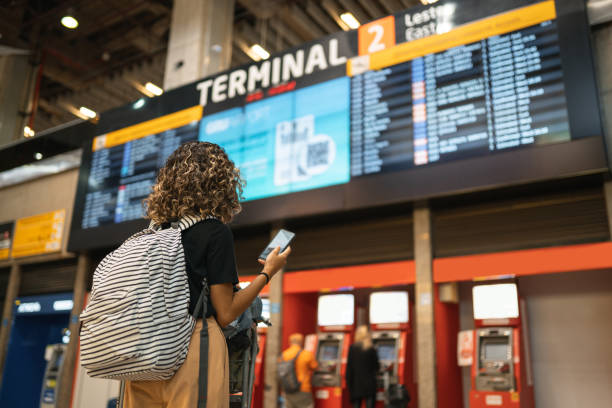
The execution of comprehensive user research and measurement processes need not be arduous, as contemporary technologies offer indispensable assistance.
Measurement sensor technologies are invaluable tools, enabling airports to monitor passenger volumes meticulously, ascertain journey durations, and gauge wait times.
Compiling performance baselines and illuminating passenger habits provide airports with a robust framework for optimizing passenger flow.
Integrating interactive digital signage within high-traffic zones offers a unique avenue to swiftly collect succinct, ten-second passenger satisfaction scores, further enriching the data-driven approach to passenger flow management.
Navigational Seamlessness via Lucid Signage

Digital signage technology emerges as a cornerstone in the orchestration of passenger flow. Real-time updates about gate modifications, shuttle delays, and anticipated wait times arm passengers with the tools to traverse terminals with heightened efficiency.
As airports embrace the digital era, digital signage becomes a beacon of clarity, offering unambiguous wayfinding instructions even during periods of disruption.
Dynamic messaging functionalities, encompassing countdowns for impending train departures and anticipated security wait times, stand as beacons of reassurance, alleviating stress and cultivating an encompassing sense of passenger contentment.
Personalization for Impeccable Experiences
Central to the delivery of an exceptional passenger airport experience is the principle of personalization. Flight Information Display Systems (FIDS) exemplify this ethos, presenting flight particulars in the color palette of the passenger’s preference.

This seemingly minor nuance expedites the search for pertinent information, thus optimizing time management within the bustling terminal environment.
Incorporating multilingual messaging is a testament to the commitment to inclusivity, ensuring that diverse travelers encounter accessibility and relevance at every juncture.
Choosing the Right Collaborative Partner
Pursuing effective passenger flow management necessitates a symbiotic partnership with a proficient collaborator.
Unlike conventional “plug and play” solutions, AIScreen epitomizes a bespoke approach, furnishing dedicated support and solutions harmonized with each airport’s unique layout, ongoing projects, and daily passenger footfall.

This partnership culminates in articulating a comprehensive blueprint meticulously tailored to the specific requisites of the airport.
Such a bespoke strategy propels terminal operations toward efficiency and augments the holistic passenger experience, positioning airports at the zenith of modern, efficient transportation hubs poised for the future.
AIScreen: Pioneering a Paradigm Shift

AIScreen stands at the forefront of a groundbreaking shift in how airports manage passenger flow, redefining the landscape of terminal operations.
Through its innovative approach, AIScreen harnesses the power of advanced technologies to revolutionize how airports function and cater to the needs of travelers.
At its core, AIScreen employs a sophisticated infrastructure that taps into a complex network of sensors and interconnected devices strategically positioned throughout the terminal.
These sensors capture many data points, ranging from foot traffic patterns and crowd densities to real-time waiting times at security checkpoints and other key locations. This dynamic data ecosystem forms the bedrock upon which AIScreen’s transformative capabilities are built.
What sets AIScreen apart is its ability to translate this raw data into precise and insightful visualizations seamlessly.
These visual representations offer a comprehensive understanding of how passengers navigate the terminal, revealing trends, bottlenecks, and flow dynamics once concealed beneath the surface. These insights, presented clearly and actionable, empower airport authorities and management to make real-time informed decisions.
AIScreen’s solutions extend beyond mere data analysis. With a deep understanding of passenger flow patterns, AIScreen offers tailored and bespoke strategies that extend the optimization of passenger movement to a new level.
This includes the efficient distribution of resources during peak periods and the strategic placement of amenities, services, and directional signage to enhance wayfinding and overall passenger experience.
Conclusion
The global air traffic surge underscores the importance of passenger airport experience flow management in airport operations. By harnessing cutting-edge technology such as AIScreen and employing effective digital signage strategies, airports can elevate the passenger experience.
Optimized passenger movement, reduced waiting times, and personalized information delivery collectively enhance passenger satisfaction and contribute to increased non-airline revenue.
Partnering with a reliable solution provider like AIScreen empowers airports to navigate the intricacies of passenger flow management and position themselves as modern, efficient transportation hubs in the 21st century. Contact us for more information.
