
IPTV Digital Signage Sports Venues: A Deep Dive
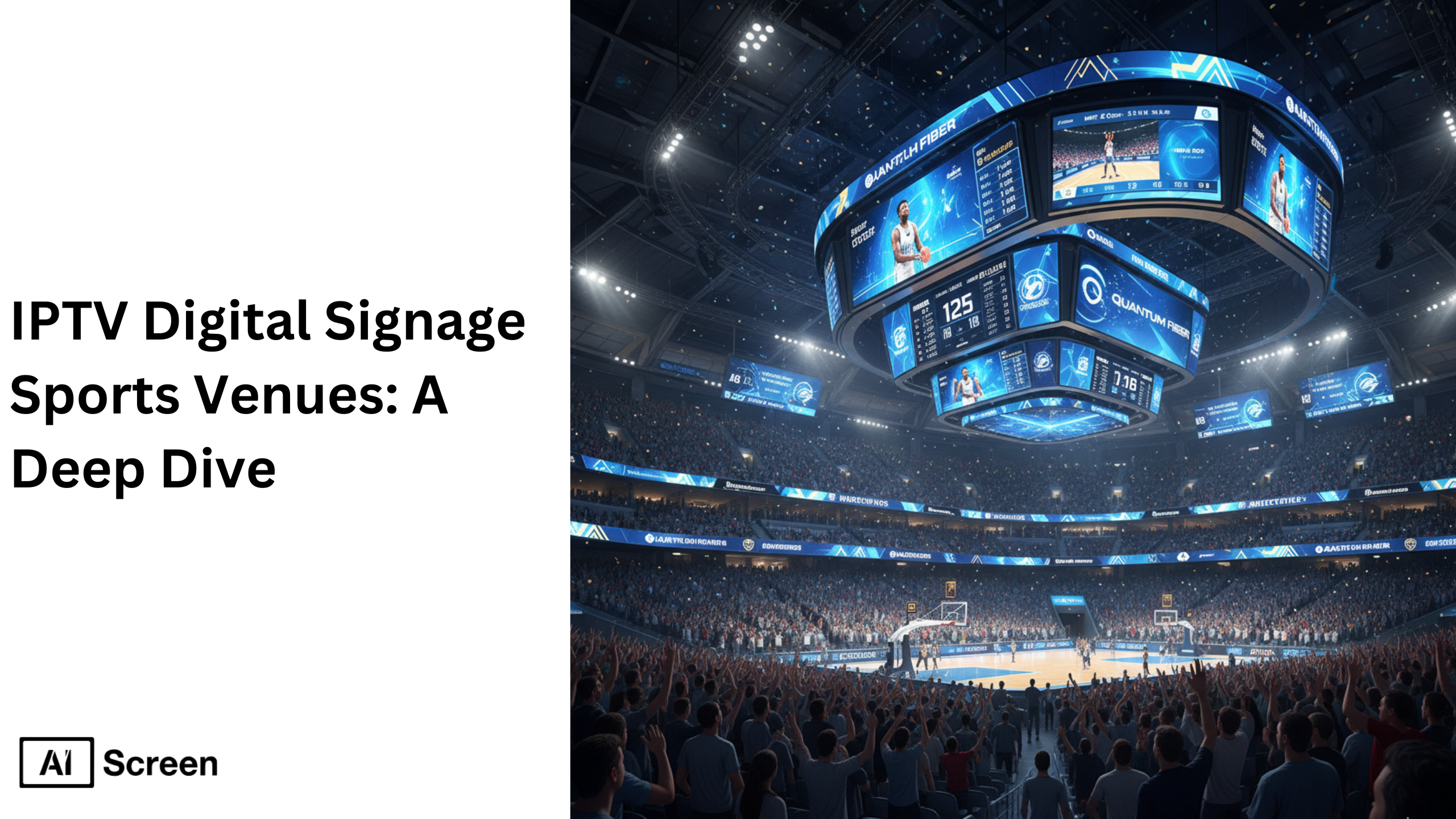
Modern sports arena operators are discovering that IPTV-powered digital signage can transform fan experience and operational communication in unprecedented ways. By blending live broadcasting, advertising, and real-time updates under one scalable system, venues move beyond simple display content to a unified delivery of live video streams, sponsor messaging, and digital signage content that engages fans at every turn. According to Market.us, sport venues using integrated digital display networks saw a 48.3% share of screens in the 65–85-inch size category, showing how digital displays are being scaled for impact.
In this blog, you’ll find a complete walkthrough of how IPTV and digital signage converge in sports venues, the key components that make it work, why stadiums need it (fan engagement, advertising ROI, operations), the technical underpinnings, and how digital signage software platforms like AIScreen make it simple across high-traffic areas.
How Is the Convergence of IPTV and Digital Signage Transforming Sports Venues?
IPTV and digital signage are converging in modern sports venues as one unified solution: Internet Protocol Television (IPTV) distributes live game broadcasts, video walls, and streaming content while digital signage overlays sponsor ads, social media feeds, and event information onto the same network of screens.
Stadiums use IPTV signage not just to show live gameplay but to display digital signage screens in concourses, digital menu boards at concessions, and digital signage displays in luxury suites.
But how do venue operators manage thousands of screens across one network and keep content synchronized? They rely on a single platform that allows centralized control of both live video and graphical/promotional overlays. That platform turns every display into a dynamic asset, blending live video with interactive features, video streams, and corporate announcements.
Which Key Components Make Up an IPTV Digital Signage System in Sports Venues?
The key components of an IPTV streaming digital signage setup form the foundation of how digital signage solutions operate seamlessly in large venues. Every sports arena or entertainment space depends on a synchronized system that connects multiple screens, live streams, and sponsor messaging into one cohesive experience.
When designed right, this setup ensures smooth network connectivity, real-time updates, and minimal latency, crucial for delivering the perfect fan experience during every match.
Let’s look at this in detail:
IPTV Head-End
The IPTV Head-End is where all content originates. It aggregates TV channels, camera feeds, live TV, and other media sources into a single network connection. From here, signals are encoded and transmitted across the stadium’s local area network, ensuring low latency and clear picture quality across thousands of digital displays. Imagine watching a player’s goal replay appear instantly on every screen; that’s the Head-End working in harmony with the network.
Content Management System (CMS)
The CMS is the brain behind the display network. It schedules, manages, and distributes dynamic content like promotional videos, upcoming events, and live scoreboards. It ensures marketing teams can push timely updates or promotional content without delay.
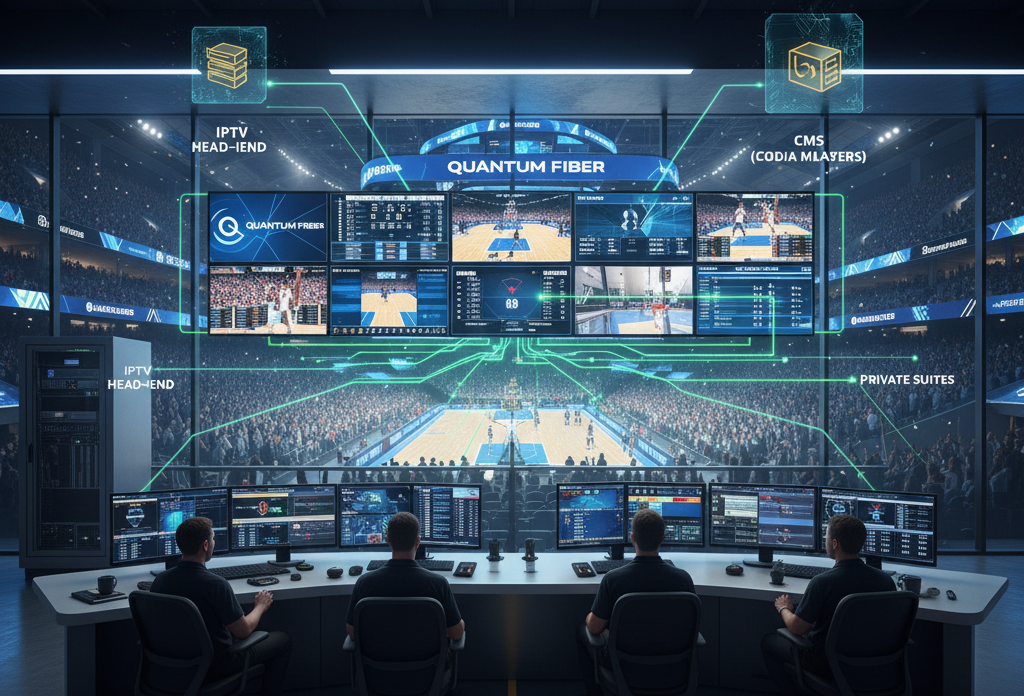
The CMS also integrates with digital signs across the seating bowl, concession stands, and hospitality suites, allowing the same message to appear on multiple screens or single displays, depending on the communication strategy.
Media Players / Decoders
Media Players or set-top boxes act as the receivers of IPTV content. They decode ip streams and translate them into broadcast-ready visuals for digital displays throughout the venue. These compact devices are essential for maintaining operational efficiency, displaying graphical content, and ensuring synchronization of player statistics, instant replays, and sponsor logos. Many venues choose SoC (System-on-Chip) displays that integrate the media player directly into the hardware, simplifying setup and reducing maintenance.
Network Infrastructure
A strong network connection ensures smooth data transfer, scalability, and redundancy. Without a high-performance local area network, even the best content can lag or desynchronize. Stadiums rely on fiber-optic cabling and managed switches to maintain low latency across the entire venue. Backup links protect uptime during match days when data load spikes.
Redundancy and bandwidth optimization are critical. These elements make sure that even in high traffic areas like concession zones or hospitality services, same content plays perfectly on every screen. Together, they allow IPTV and digital signage systems to deliver uninterrupted visuals and reliable updates that drive both engagement and revenue opportunities.
What Makes IPTV Digital Signage Essential for Sports Venues?
Stadiums need IPTV digital signage because they must create immersive fan journeys, enhance operational efficiency, and open new streams of targeted advertising revenue, all within one ecosystem. The modern sports venue is no longer just a place to watch; it’s a connected environment where every digital asset, display, and screen contributes to the overall fan experiences and brand visibility.
Creating Immersive Fan Engagement
IPTV signage transforms how fans experience live sports. It brings instant replays, player stats, and camera angles to every screen, no matter where the viewer is seated, be it the seating bowl or a hospitality suite. Stadiums use digital signs to highlight upcoming events, share real time data, and build excitement throughout the venue.
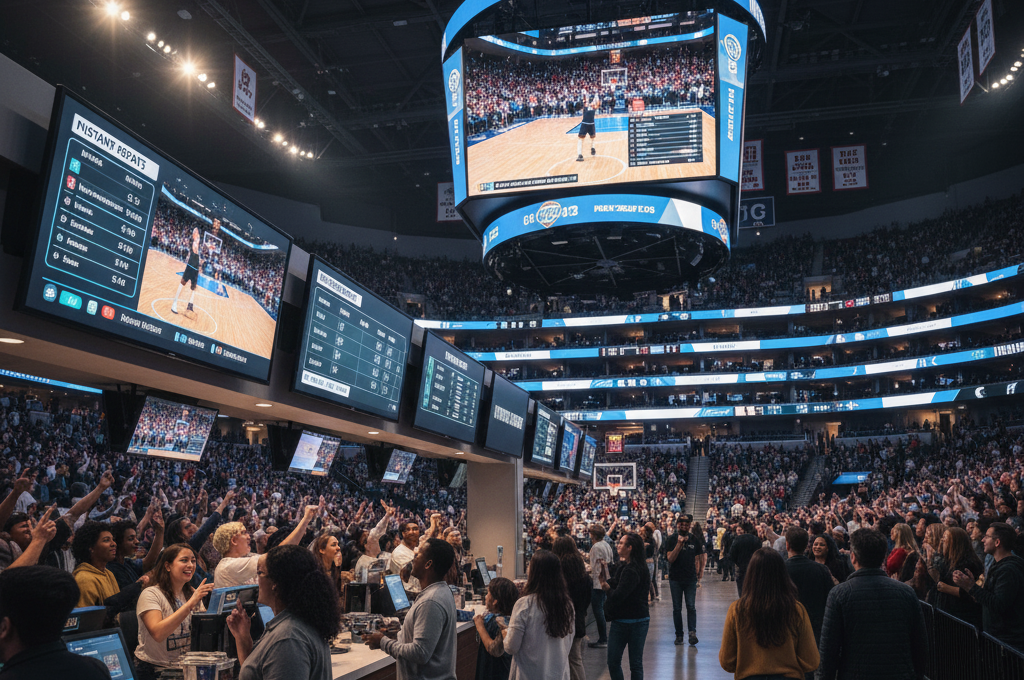
Let’s imagine: you’re in line at a concession stand when the game’s biggest moment happens, the replay appears on a nearby display seconds later. That’s IPTV keeping fans connected even when they’re away from their seats.
According to Statista (2024), over 71% of global sports fans prefer venues with real-time screens and live streaming capabilities because it keeps them engaged even during breaks. This proves that interactive digital signage solutions are not just nice-to-have but essential for complete audience immersion.
Maximizing Advertising and Sponsorship Revenue
IPTV systems create an entirely new advertising ecosystem inside stadiums. Rotating promotional content, sponsor logos, and targeted ad slots give brands better visibility than static billboards. Ads can adapt based on real time data or upcoming events, a drink ad after a player’s goal or a merch promotion after halftime.
Because content is centrally managed, marketing teams can instantly swap campaigns or adjust pricing based on crowd size and demographics. That level of dynamic content boosts revenue opportunities and ensures sponsors see higher ROI through precise audience targeting.
Centralized Control and Scalable Management
Managing thousands of screens in large venues like sports arenas may sound complex, but a unified IPTV–digital signage platform makes it seamless. Administrators can control every digital display from a single dashboard, instantly pushing emergency alerts, promotional videos, wayfinding messages, or crowd management updates across the entire network.
This same centralized approach is also proving effective beyond entertainment spaces, as seen in how to use digital signage in manufacturing to decrease accidents, where real-time alerts and safety messaging significantly reduce risks and response times.
Isn’t it impressive that one operator can manage an entire stadium ecosystem? According to Gartner, 68% of large sports facilities using centralized IPTV systems reported a 35% reduction in content update time and far fewer synchronization errors. With one platform, venues gain agility, reliability, and operational efficiency, ensuring the fan experience never misses a beat.
What Are the Technical Considerations for IPTV Digital Signage Software in Sports Venues?
The technical considerations for IPTV digital signage software determine how seamlessly your content performs across large venues like stadiums or arenas. Robust infrastructure and intelligent design ensure smooth audience engagement, dynamic content, and uninterrupted playback on every screen.
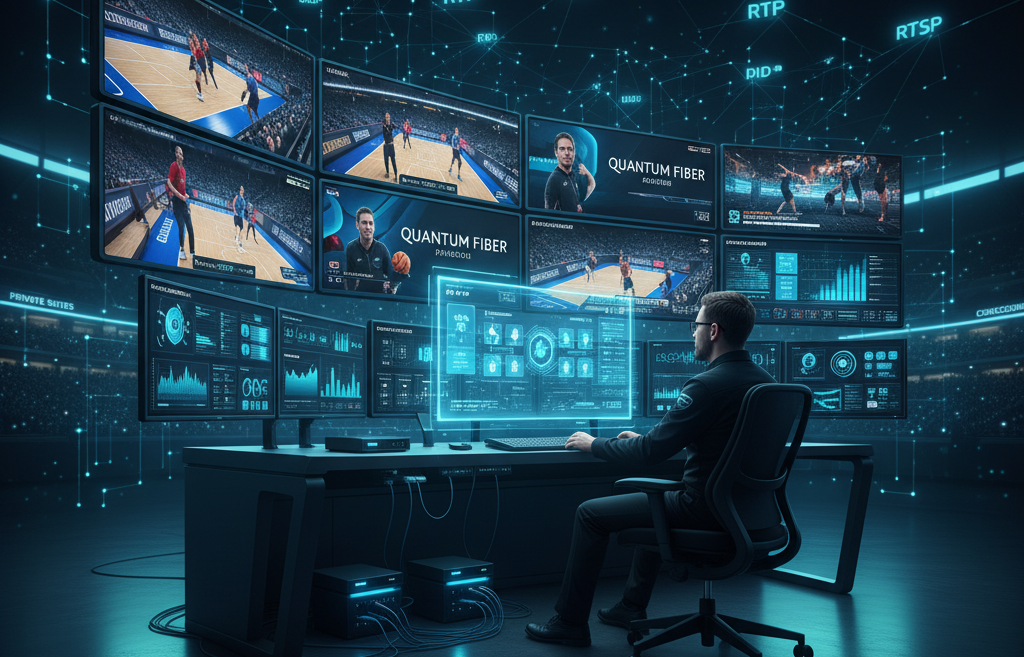
Here are the core technical foundations that make IPTV-driven digital signage platforms reliable, scalable, and high-performing:
- Multicast Support & Protocol Compatibility:Efficient network connection through multicast technology allows the same stream to reach multiple screens without overloading bandwidth. Protocols like UDP, RTP, and RTSP ensure compatibility across set-top boxes, encoders, and media players, creating an ecosystem where digital signage creates real-time broadcast experiences.
- Encoding & Decoding Capabilities:High-quality compression and decompression processes ensure ultra-low latency streaming. Whether it’s live TV, camera angles, or promotional content, reliable encoding delivers smooth playback and maximum clarity on every display.
- Advanced Layout and Content Management:Modern digital signage platforms enable marketing teams to combine engaging content, sponsor messages, and player statistics in adaptive layouts. Users can dynamically update layouts, synchronize set-top boxes, and ensure every screen shows the right content at the right time, even across large venues.
- Device Management & Analytics:With centralized dashboards, stadium operators can track performance, monitor connectivity, and analyze engagement data. Real-time metrics help optimize digital signage, create strategies ,and drive revenue by aligning content with audience behavior.
- Reliability & Redundancy:Built-in redundancy ensures uptime even during hardware failures or network drops. This is critical in environments where digital signage platforms must stay operational 24/7, whether streaming live matches, camera feeds, or sponsor messages across thousands of screens in living rooms or sports arenas.
In essence, a well-architected IPTV solution balances innovation, dynamic content, and operational stability, turning IPTV and digital signage into a single, synchronized platform for audience engagement and revenue growth.
Common Streaming Protocols Used in Stadium IPTV Systems
In IPTV networks, streaming protocols define how digital signage platforms transmit live content efficiently. Stadium operators depend on reliable protocols to maintain broadcast-grade quality while handling multiple camera angles, screen layouts, and set-top box configurations.
| Protocol | Typical Use in Stadiums | |
| UDP / RTP | Multicast of live HD or 4K feeds across LAN | |
| RTSP | Pulling streams from IP cameras or encoders | |
| HTTP / HTTPS | Embedding external streams or web-based content |
Each protocol serves a specific role in maintaining seamless IPTV and digital signage integration:
- UDP / RTP: Ideal for large venues where digital signage creates synchronized playback across hundreds of screens. It ensures low latency, especially when streaming live camera angles or real-time data to set-top boxes.
- RTSP: Commonly used for camera feeds and surveillance integration. It provides flexibility in switching between camera angles, supporting audience engagement through instant replays and dynamic content.
- HTTP / HTTPS: Perfect for hybrid environments where digital signage platforms mix live streams, web overlays, and interactive elements. It enables smooth embedding of external content, allowing marketing teams to display promotional videos, social updates, or sponsor messages on the same screen.
Together, these streaming protocols form the technical backbone of effective digital signage in modern stadiums, ensuring that every moment, every display, and every camera angle contributes to an unforgettable fan experience and helps drive revenue for venue operators.
AIScreen Digital Signage Software for IPTV Streaming
AIScreen Digital Signage Software for IPTV Streaming simplifies the convergence of live video, promotional content, and stadium updates into a unified visual platform. Mid-system integration ensures that your digital signage software handles IPTV streams, sponsor messaging, and live events under one dashboard, eliminating the need for separate systems and complex workflows.
Seamless Convergence of IPTV and Signage
With AIScreen, venues can merge live game footage, sponsor logos, promotional videos, and real-time data feeds into one layout. A single display might show game footage from one TV channel, a sponsor advertisement in a zone, and live player statistics in another, all managed centrally. The system turns every screen into a strategic asset for audience engagement, driving revenue, and immersive fan experience.
Integrating with Existing Hardware
AIScreen supports SoC displays, typical set-top boxes, and third-party media players without requiring full system overhauls. Whether a venue uses legacy set-top boxes or modern smart screens, AIScreen integrates smoothly with the existing IPTV and digital signage infrastructure. That way, the expensive hardware investment remains valid while the software breathes new life into the entire network of screens.
Content Creation & Scheduling
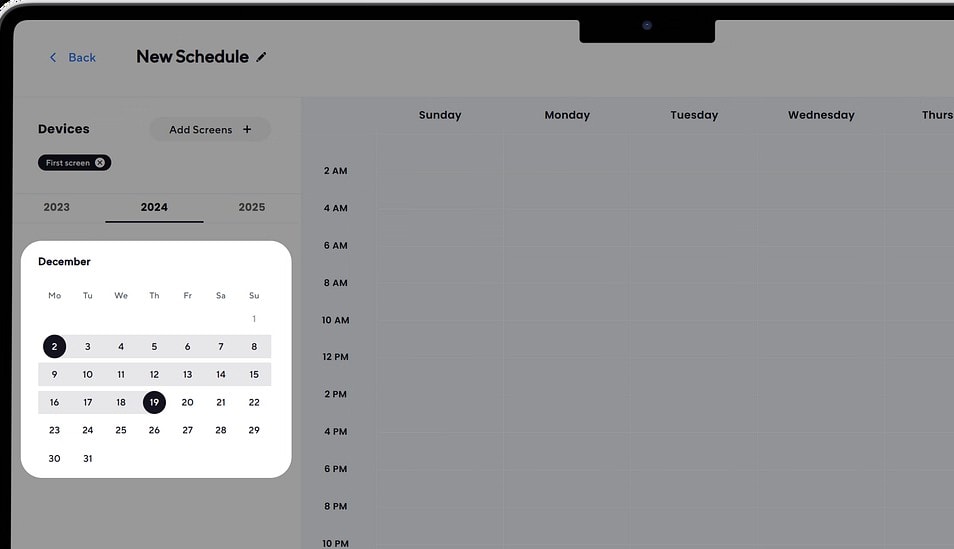
The Canvas editor makes producing standout content easy: design layouts, insert live streams, add widgets for player stats or sponsor logos, and schedule them across multiple screens in advance. Editors can drag zones around, mix live streams with branded visuals, and publish to one or thousands of displays in just minutes. This streamlined process ensures dynamic content stays ahead of game-day demands.
Reliability and Security
AIScreen delivers enterprise-grade encryption, secure device pairing, and built-in redundancy to maintain uninterrupted playback during live events. The system supports “Always-On Screen” mode so that even if network connectivity dips, content keeps running. For venues hosting massive events, this reliability ensures that every broadcast, from live events to urgent promotional content, retains high fidelity and scale without compromise.
Getting Started with AIScreen’s Stadium Digital Signage Solution!
Take your sports venue communication to the next level with AIScreen’s IPTV-ready digital signage, the ultimate all-in-one solution for stadiums seeking seamless streaming, real-time updates, and multi-screen management. AIScreen empowers marketing teams and venue operators to stream live games, rotate sponsor ads, display instant stats, and manage thousands of screens through one intuitive dashboard.
From content scheduling to analytics tracking, AIScreen ensures that every display across your stadium network delivers engaging, data-driven visuals that elevate the fan experience and drive sponsor ROI, as we read in IPTV digital signage sports venues, a deep dive.
Stream. Engage. Win. Transform your stadium’s communication strategy today. Start your free 14-day trial or book a demo to experience how AIScreen’s IPTV Digital Signage for Sports Venues: A Deep Dive can revolutionize your venue’s performance and profitability.


FAQs
What is IPTV digital signage for sports venues?
IPTV digital signage for sports venues refers to an integrated system that delivers live TV streams, promotional videos, and real-time stats to multiple stadium displays. This signage solution combines entertainment and communication, creating an immersive fan environment and driving sponsor visibility.
How does IPTV signage improve fan engagement?
IPTV signage improves fan engagement by streaming live matches, instant replays, and interactive stats directly to arena screens. Fans remain connected throughout the event, while sponsors benefit from dynamic ad placements that capture attention during high-energy moments.
What are the technical requirements for stadium IPTV networks?
The technical requirements for stadium IPTV networks include stable network connectivity, compatible set-top boxes or SoC displays, a reliable content management system (CMS), and multicast streaming capability. These elements ensure low-latency delivery and high-quality visuals across large venues.
Can existing stadium displays integrate with IPTV systems?
Yes, existing stadium displays can integrate with IPTV systems through compatible hardware and software interfaces. AIScreen’s platform is designed to work with legacy screens, set-top boxes, and media players without requiring major infrastructure changes.
How does IPTV digital signage help increase revenue?
IPTV digital signage helps increase revenue by enabling targeted advertising, rotating sponsor content, and offering premium digital placements. Sports venues can leverage every screen to generate new revenue opportunities while enhancing fan engagement and operational efficiency.
