
What Are the Best LED Wall Sizes?
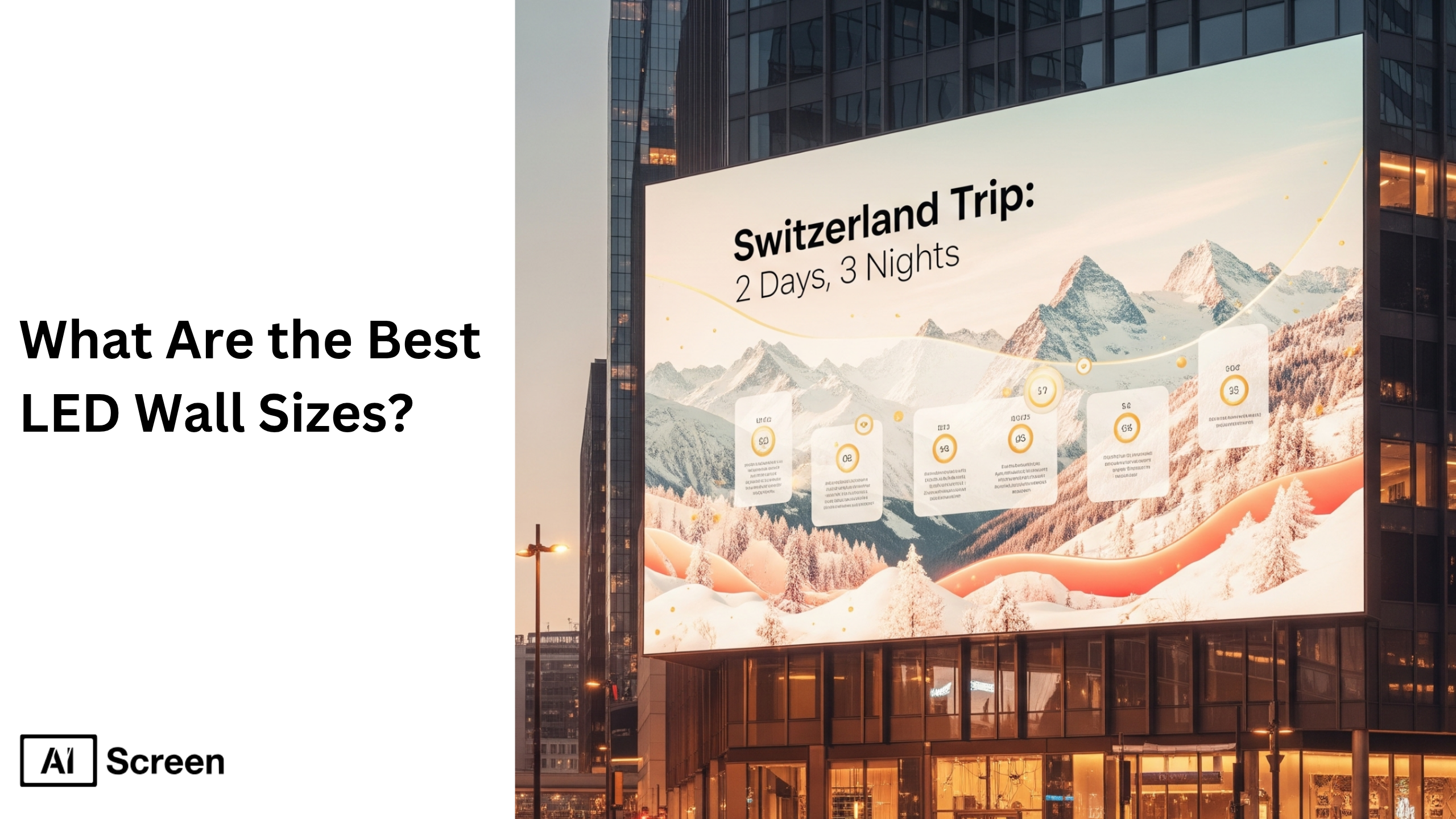
The best LED wall sizes depend on viewing distance, content type, resolution, and available installation space. A critical factor is pixel pitch, which defines the distance between LED pixels and directly impacts image clarity at different distances. In retail or corporate environments where viewers are close, a smaller pixel pitch (e.g., 1–3 mm) delivers crisp visuals. In larger venues with distant audiences, a higher pixel pitch (e.g., 5 mm or more) is more effective. Industry guidelines suggest that the optimal viewing distance is roughly 10 times the pixel pitch (in millimetres), so a 3 mm pitch performs best at around 30 ft (~9 m). According to Barco a general rule of thumb for the ideal viewing distance is: minimum viewing distance (in meters) = pixel pitch (in mm) × 2 or 3.”
In this blog, you will learn the key factors businesses must consider when selecting LED wall sizes. We’ll walk through viewing distances, pixel pitches, common panel dimensions, and indoor vs outdoor considerations. Plus, AIScreen is highlighted as an expert partner for consultation and tailored digital signage solutions.
What Are LED Wall Displays?
LED wall displays are large, high‑resolution screens built from multiple LED panels. They serve as digital signage in sectors like retail, hospitality, corporate events, education, and entertainment. These displays show advertising, information, branded visuals, or immersive visual experiences.
Research indicates that LED wall displays or digital signage deployments have increased by 40% over the past three years, especially in outdoor advertising applications. LED wall displays are just one of many types of digital signage boards available on the market. If you’re unsure whether an LED wall is your best option.
What Is LED Wall Size?
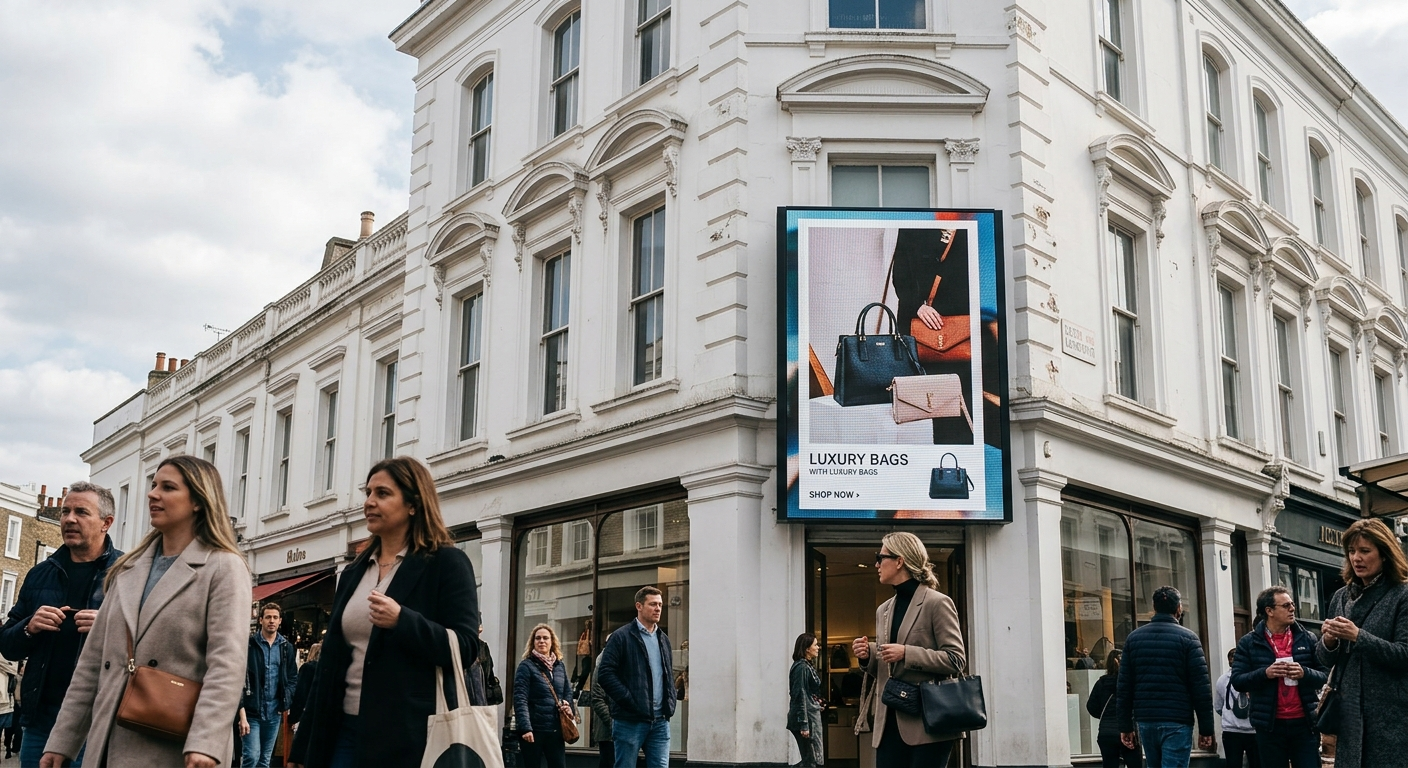
LED wall size refers to the total physical dimensions of an LED display, usually expressed as width × height in meters or feet. It depends on the size of each LED cabinet or module, the pixel pitch, and how these panels are combined to form a complete video wall.
In simple terms, LED wall size = module or cabinet size × number of modules used. Because of this modular structure, LED walls are highly flexible and scalable, allowing businesses to create anything from compact meeting room displays to large-scale stadium backdrops.
How to Choose the LED Wall Size for Your Digital Signage?
To choose the LED wall size for your digital signage, you need to consider several important factors that influence the effectiveness, cost-efficiency, and long-term performance of your LED video wall. Below are key aspects to help businesses make an informed decision:
Define The Purpose of LED Display
Defining the purpose of an LED display is the first step in selecting the right LED wall. Whether it’s for retail advertising, architectural displays, entertainment venues, control rooms, or even restaurant digital signage, your LED screen must align with your communication objectives.
For example, large outdoor displays like digital billboards require high brightness and weather resistance. On the other hand, indoor screens such as retail digital signage or those used in conference rooms need finer pixel density for sharper visuals in controlled lighting environments.
Viewing Distance
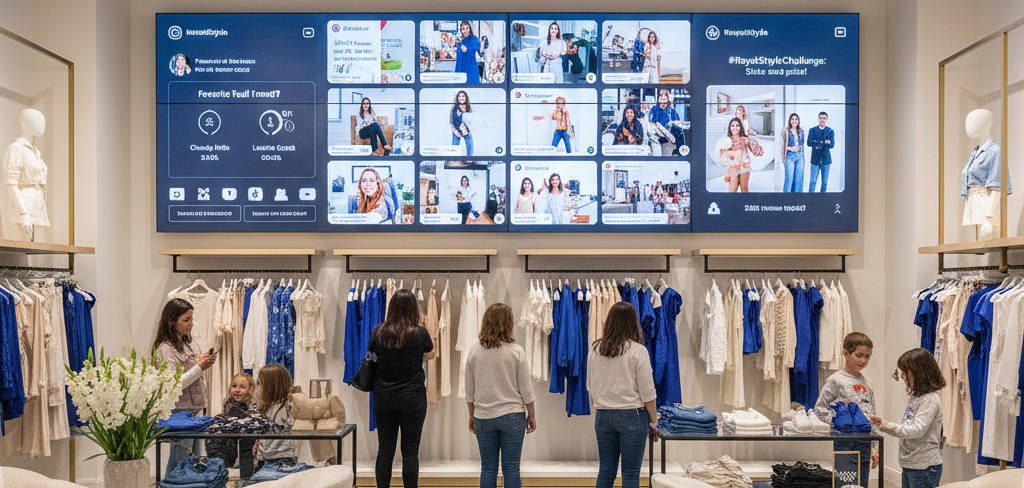
Viewing distance determines the right pixel pitch and therefore the ideal LED wall size. A common guideline is that for every 1mm of pixel pitch, the optimal viewing distance is about 2.5 to 3 feet.
A 2mm LED screen suits high resolution displays where the audience stands within 6 feet, perfect for retail spaces or indoor LED screens and a 10mm video wall suits outdoor environments, like sports arenas or digital billboards, where viewers are 30+ feet away. This ensures maximum impact with stunning visuals, no matter the audience’s position.
Viewing Angles
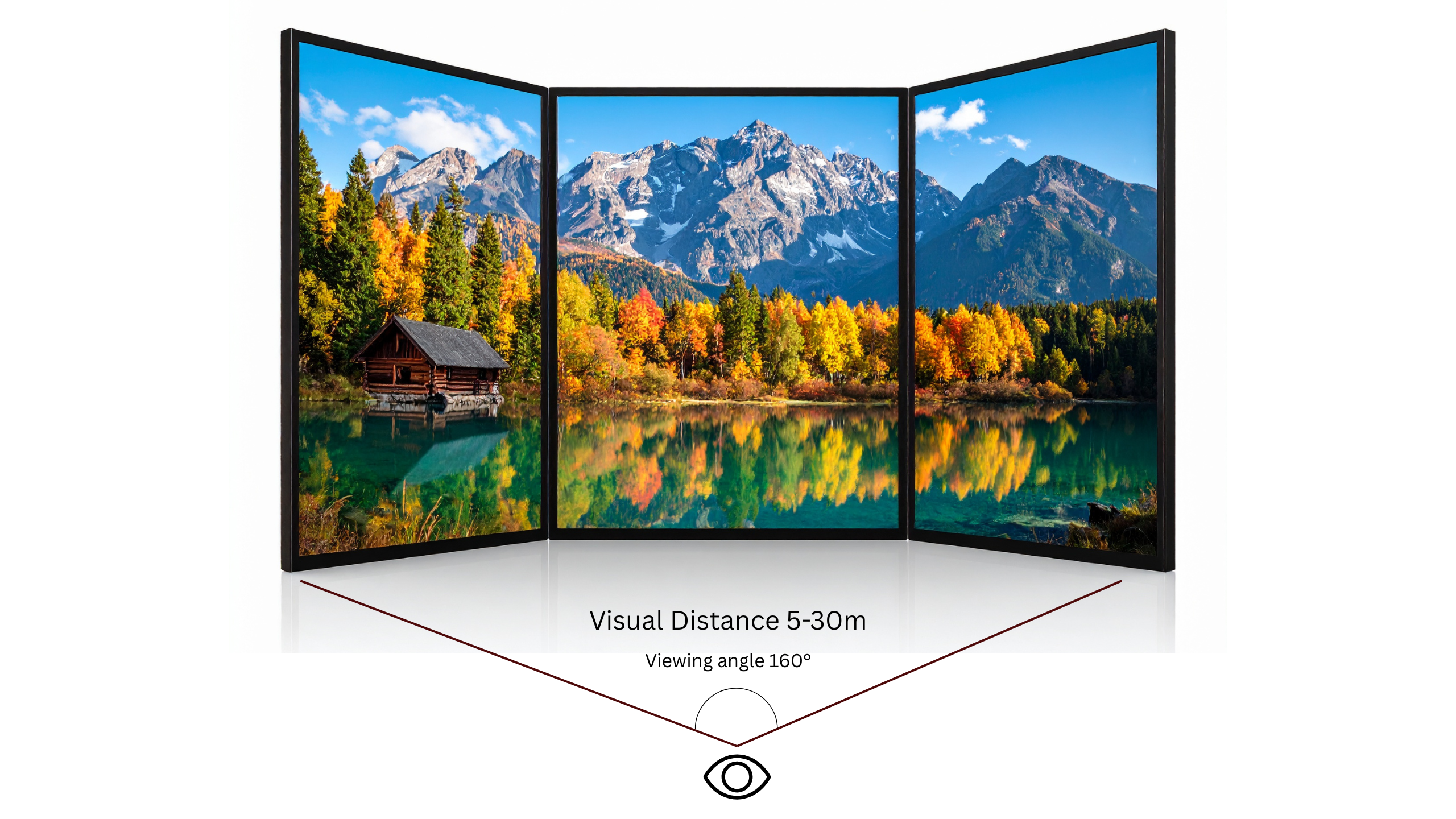
Viewing angles play a crucial role in how well your LED screen performs across large venues. Wider viewing angles demand strategic LED screen sizes or modular panels to maintain uniform brightness and clarity.
In entertainment venues, control rooms, or retail advertising environments, consistent readability across angles means a higher return on investment and better audience experience.
Evaluate the Installation Space
Evaluating the installation space ensures your LED screen size fits both physically and functionally. Measure wall dimensions, ceiling height, and allow for proper airflow and display settings.
For architectural displays or custom ratios, knowing the environment, be it indoor or outdoor, helps determine the standard LED screen sizes or whether custom solutions are needed. Online LED screen size calculators are useful for estimation.
Cost Considerations
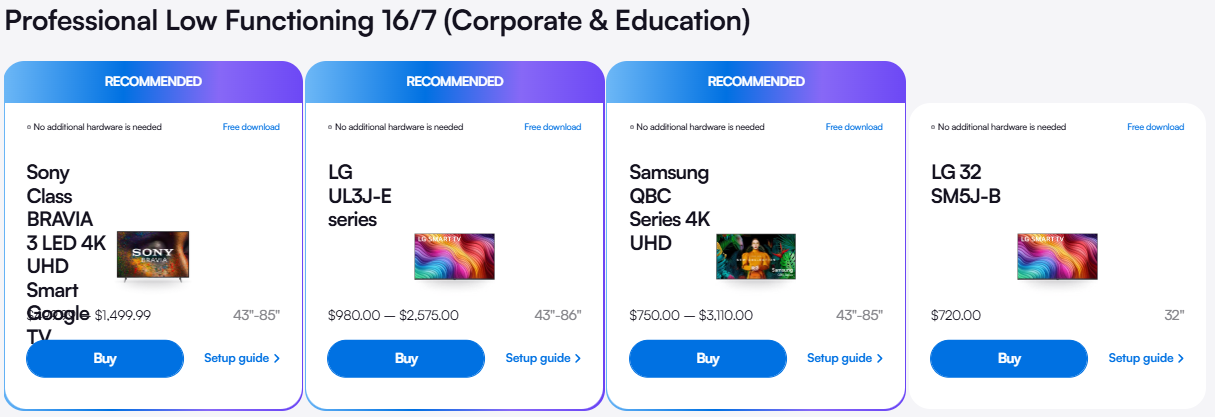
Cost considerations must balance energy efficiency, performance, and future needs. While high resolution visuals and larger screens drive up cost, they also offer better audience engagement and longer operational life. Evaluate total cost of ownership, including operational costs like power usage, maintenance, and installation. Partnering with experienced providers ensures you don’t overspend while still achieving maximum visual impact. For expert guidance, contact AIScreen.
We offer a wide range of digital signage screens, from cost-effective consumer TVs (starting around $170) to professional 24/7 indoor displays and high-brightness outdoor screens (ranging up to $11,000+), all compatible with the AIScreen app without extra hardware. Our models include options for offices, retail, and outdoor setups, ensuring scalable solutions tailored to different environments and business needs.
Technical Compatibility
Technical compatibility ensures your content fits and performs correctly across different screen sizes, resolutions, and hardware configurations. Standard LED screen sizes are more likely to support common aspect ratios (like 16:9), multiple media formats, and widely used media players or operating systems, making deployment smoother and more reliable.
This reduces issues such as content distortion, pixel stretching, or resolution mismatches, ensuring your digital content appears sharp and professional. It also improves playback performance, simplifies content management, and allows seamless integration with digital signage software for consistent, high-quality visual experiences across all screens.
Adapting to Your Environment
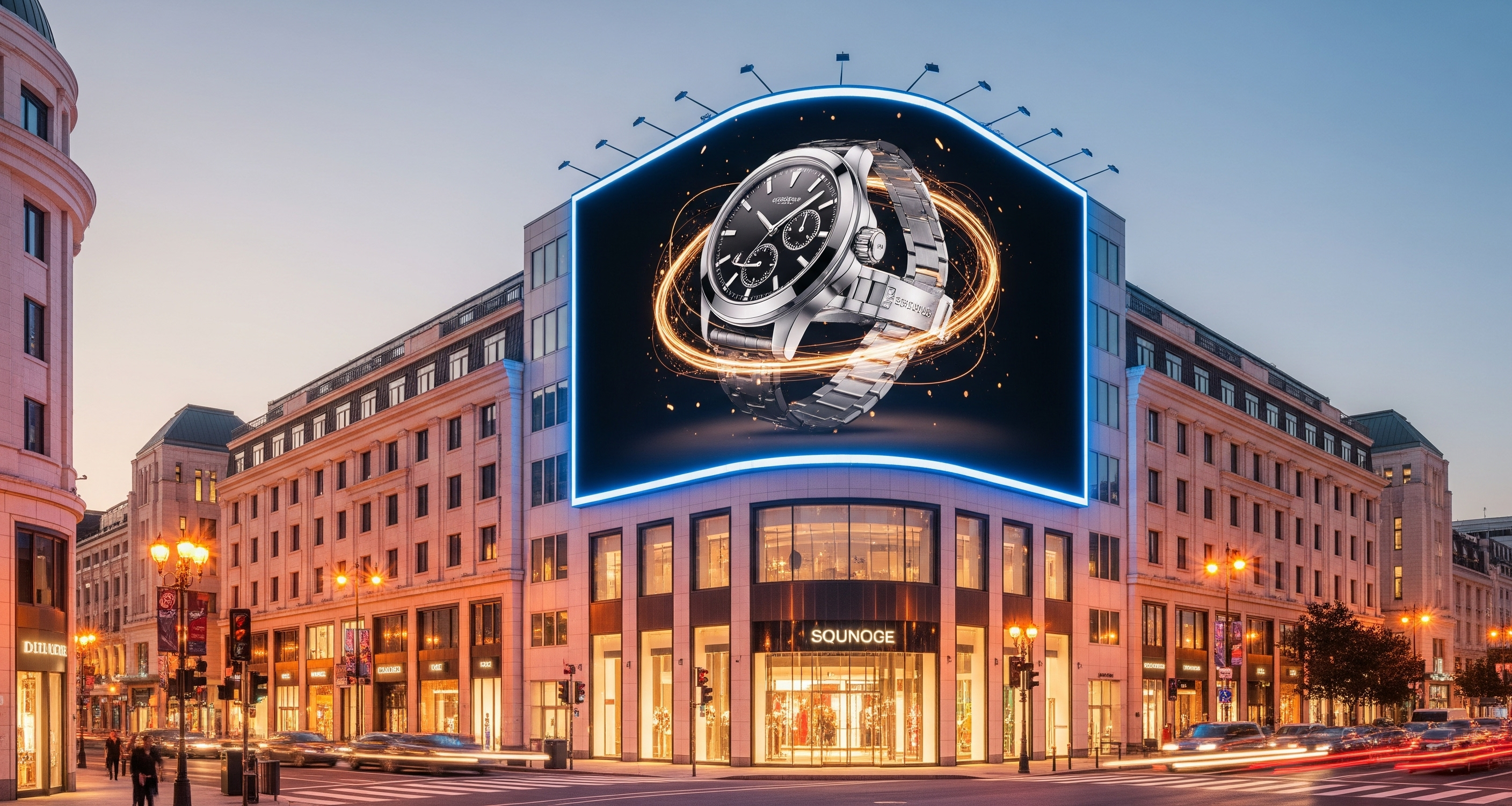
Adapting to your environment means tailoring your LED display to the physical context in which it will be placed. Outdoors, where the setting is expansive and viewers are often in motion, large LED video walls with high brightness are necessary to cut through daylight and grab attention.
Conversely, in indoor environments like retail spaces, conference rooms, or corporate offices, smaller displays with higher resolution and smaller pixel pitch provide detail and clarity without overwhelming the space.
What Is the Standard LED Display Size?
The standard LED display size varies depending on whether the screen is installed indoors or outdoors, and what it’s being used for. Factors like viewing distance, pixel pitch, ambient lighting, and venue size all influence screen dimensions.
Indoor Digital Signage
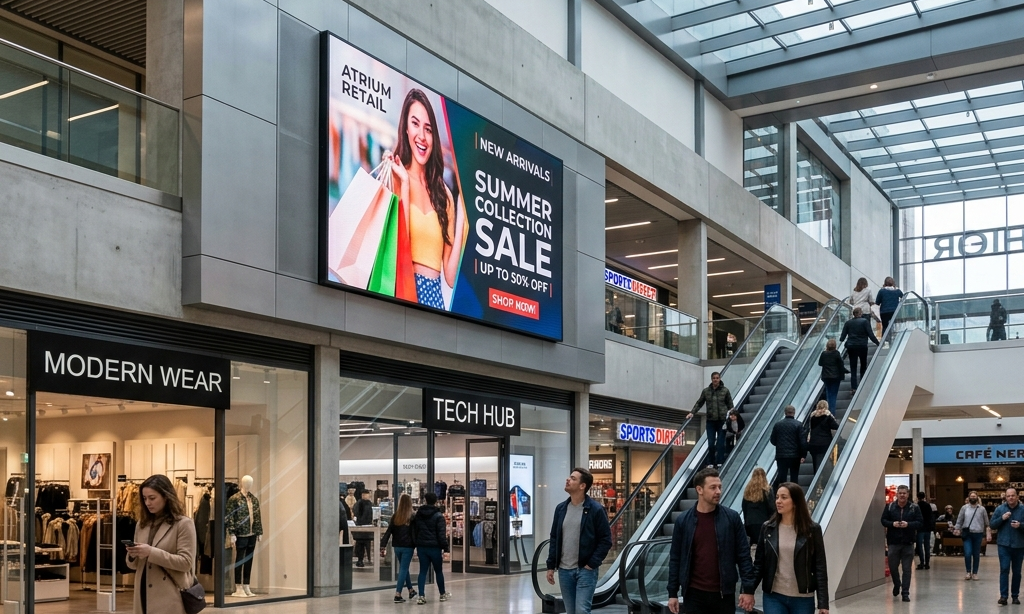
Indoor LED displays are selected based on room size, audience proximity, and application type. Commonly found in corporate environments, retail outlets, event venues, and theaters, indoor screens typically prioritize high resolution and tighter pixel pitch for close viewing.
- Commercial Plazas / Promotional Displays: Ranging from compact formats (~2×2 ft or 0.61×0.61 m) to mid-size displays (~4×3 ft or 1.22×0.91 m). Larger promotional screens can extend up to ~19×6 ft (6×2 m), ideal for atriums or product launches.
- Concerts & Corporate Events: Standard dimensions include ~6×4 ft (1.83×1.22 m), 9×6 ft (3×2 m), and 13×6 ft (4×2 m), depending on the venue’s scale. These setups often use modular LED panels for flexible screen arrangements.
- Indoor Theaters / Auditoriums: Display sizes typically range between ~5×3 ft (1.52×0.91 m) and 10×6 ft (3.05×1.83 m). For medium to large halls, 9×6 ft and 13×6 ft are commonly used to deliver immersive viewing experiences.
- Retail Stores & Malls: In-store signage usually starts around ~3×2 ft (0.91×0.61 m), suitable for shelf-edge or window displays. Larger formats such as 9×6 ft (3×2 m) are used in promotional zones or behind checkout counters to drive engagement.
Reference LED Screen Size Chart:
| Application | Standard Outdoor LED Display Sizes |
| Advertising Displays in Commercial Plazas | 2×2 feet (0.61×0.61 meters), 4×3 feet (1.22×0.91 meters), 19×6 feet (6×2 meters) |
| Indoor Concerts and Events | 6×4 feet (1.83×1.22 meters), 9×6 feet (3×2 meters), 13×6 feet (4×2 meters) |
| Indoor Theaters | 5×3 feet (1.52×0.91 meters), 10×6 feet (3.05×1.83 meters), 9×6 feet (3×2 meters), 13×6 feet (4×2 meters) |
| Retail Stores | 3×2 feet (0.91×0.61 meters), 9×6 feet (3×2 meters) |
Outdoor LED Display Size:
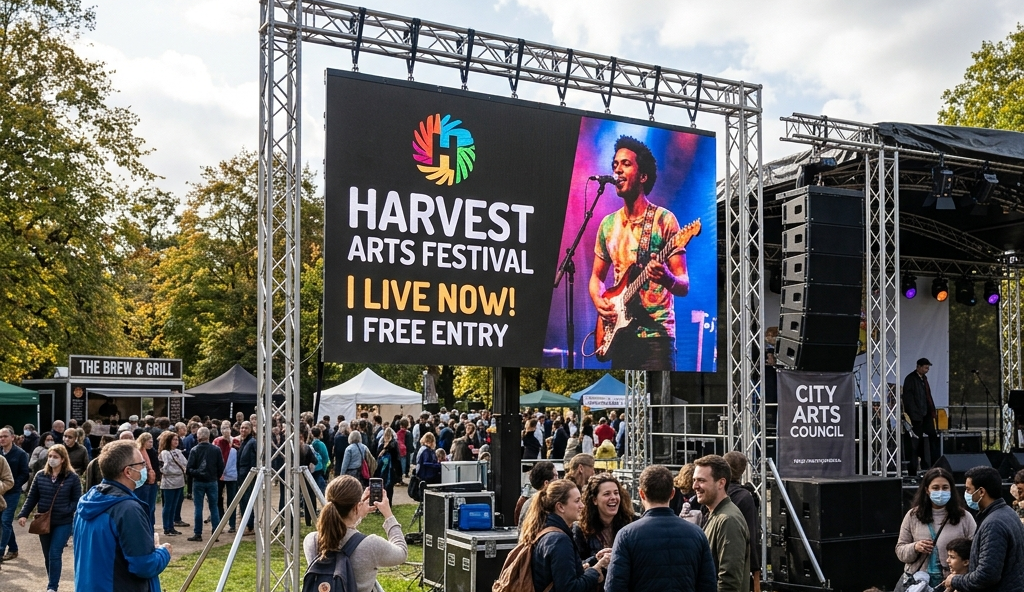
Outdoor LED screens are built to withstand environmental conditions and ensure visibility from long distances. These displays usually feature higher brightness levels, weatherproofing, and larger pixel pitches. To effectively manage content and performance in such demanding environments, businesses often rely on solutions highlighted in 5 best digital signage software companies for outdoor, which support reliable operation and dynamic content delivery.
- Outdoor Events (Weddings, Fairs, Parties): Sizes commonly begin at ~4×3 ft (1.22×0.91 m) for intimate gatherings. For larger audiences, 6×4 ft (1.83×1.22 m) or extended displays like 9×6 ft to 13×6 ft (3×2 to 4×2 m) provide better reach.
- DJ & Entertainment Shows: Visual-heavy events often use dynamic screens starting at ~6×4 ft, scaling up to 13×6 ft to energize the crowd with motion graphics, lyrics, and synchronized light shows.
- Sporting Events / Stadiums: LED walls used in sports facilities usually exceed ~10×6 ft (3.05×1.83 m). Common configurations include 13×6 ft or larger, designed to broadcast live action, replays, and advertisements with clarity from across the stands.
- Billboard Displays & Roadside Signage: These range from small roadside signs (~2×2 ft or 0.61×0.61 m) to high-visibility installations like 26×9 ft (8×3 m), 19×6 ft (6×2 m), and 13×6 ft (4×2 m). The size depends on traffic speed, road type, and advertisement duration.
Reference LED Screen Size Chart:
| Application | Standard Outdoor LED Display Sizes |
|---|---|
| Outdoor Events (e.g., Weddings, Parties) | 4×3 feet (1.22×0.91 meters), 6×4 feet (1.83×1.22 meters), 9×6 feet (3×2 meters), 13×6 feet (4×2 meters) |
| DJ Events | 6×4 feet (1.83×1.22 meters), 9×6 feet (3×2 meters), 13×6 feet (4×2 meters) |
| Sporting Events | 10×6 feet (3.05×1.83 meters), 13×6 feet (4×2 meters) |
| Billboard LED Display | 2×2 feet (0.61×0.61 meters), 4×3 feet (1.22×0.91 meters), 26×9 feet (8×3 meters), 19×6 feet (6×2 meters), 13×6 feet (4×2 meters) |
How Do Indoor LED Display Choices Influence the Right Wall Size?
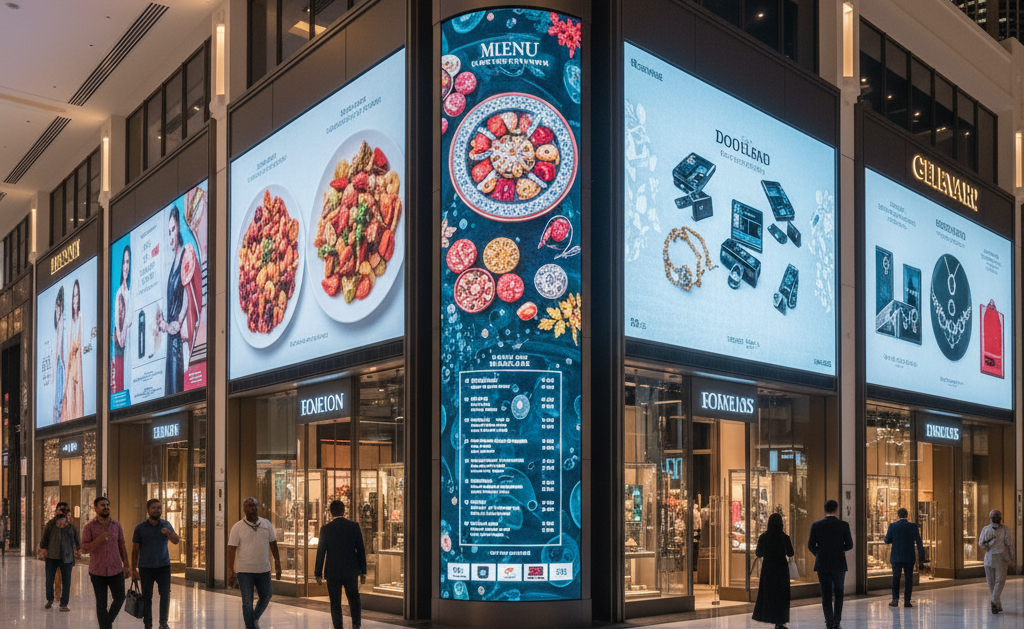
Choosing the ideal LED screen size for indoor setups depends on essential factors like audience size, content resolution, and viewing distance refers to how far viewers stand from the screen. In controlled environments such as retail stores, trade shows, or a corporate stage presentation, fine pixel pitch (1–2 mm) ensures clear visibility at closer distances. Understanding pixel pitch helps define the required pixel pitch, where individual dots remain sharp without distortion.
For a deeper breakdown of indoor-specific decisions, see how to choose the best electronic LED display for indoor digital signage. Indoor displays are typically smaller but demand precision, unlike outdoor concerts where screens are typically larger with higher pixel pitch. Matching screen size, panels, and content type is crucial to ensure clear visibility, distance alignment, and long-term performance.
Want a Free LED Wall Size Consultation with AIScreen?
Get a free LED wall size consultation with AIScreen to determine the ideal LED video wall dimensions for your space, event, or campaign. Our experts specialize in delivering tailored digital signage solutions that match your exact needs, whether it’s for outdoor screens, retail displays, corporate environments, or large-scale events. AIScreen also offers a powerful cloud-based content management system (CMS) that enables easy content scheduling, remote updates, and centralized control across multiple screens.
With features like Proof of Play, offline playback, real-time monitoring, and seamless integration with existing hardware, AIScreen ensures reliability and performance at every level. With deep industry knowledge in pixel pitch, aspect ratio, and content-driven design, AIScreen helps you optimize LED wall sizes for both visual impact and cost efficiency. From installation guidance and scalability planning to ongoing support and personalized consultation, AIScreen ensures you invest in the right LED video wall for long-term success. add CTA


Frequently Asked Questions
What are the standard LED wall sizes available today?
The standard LED wall sizes available today typically range from 110 to 220 inches for indoor displays and go up to 500 inches for large outdoor screens. These formats are optimized for various aspect ratios and depend heavily on pixel pitch requirements and installation goals. Businesses often choose LED video dimensions based on venue size, resolution needs, and audience distance.
What is the most common LED video wall size for events?
The most common LED video wall size for events is around 16×9 feet or 5×3 meters, matching the 16:9 aspect ratio ideal for live visuals and presentations. These LED video walls offer a vibrant viewing experience with lower pixel pitch, enhancing clarity in large venues. Event planners prefer this size as it balances visibility, cost, and screen impact effectively.
How big should an LED wall be for outdoor advertising?
The size of an LED wall for outdoor advertising typically starts at 10×20 feet and can extend to billboard-scale, depending on location visibility and audience reach. Since outdoor screens are viewed from longer distances, pixel pitch can be higher without compromising clarity. Proper sizing ensures content remains readable and attention-grabbing in dynamic environments.
What LED wall size works best for retail store displays?
The LED wall size that works best for retail store displays is generally between 110 to 150 inches, allowing integration into walls, windows, or freestanding setups. A lower pixel pitch is recommended for close-range viewing to ensure crisp resolution. Retailers often opt for modular video wall designs that can adapt to their space and branding strategy.
Can I customize the LED wall size to fit unique spaces?
Yes, you can customize the LED wall size to fit unique spaces thanks to modular LED video technology. Whether it’s an unconventional layout or a non-standard aspect ratio, manufacturers allow scalable configurations tailored to your design. With the right pixel pitch and layout planning, even irregular surfaces can host immersive video wall displays
