
On-Premise Vs. Cloud-Based Digital Signage Software (2026 Guide)
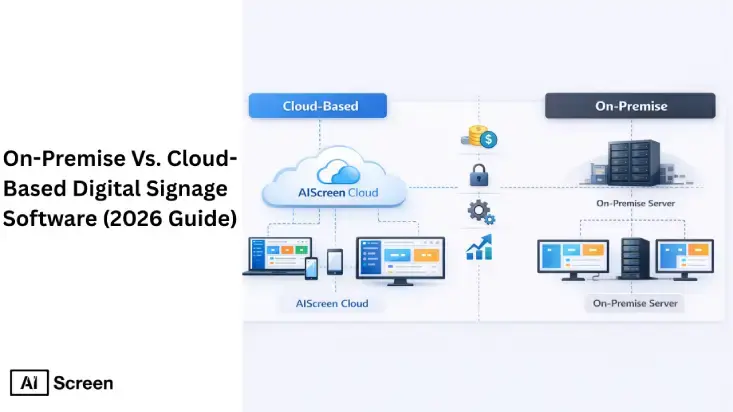
When choosing between On-Premise Vs. Cloud-Based Digital Signage Software, businesses must evaluate their specific needs within the digital signage ecosystem. Cloud-based digital signage solutions offer advantages like remote management, scalability, and centralized content control, making them ideal for organizations seeking flexibility and reduced maintenance. According to a 2026 Statista report, the cloud-based digital signage market is projected to grow at 15% annually, reflecting the widespread adoption of these solutions due to their ease of use.
In this article, on-premises digital signage software provider businesses with greater control and security by hosting the solution internally. This model is ideal for organizations prioritizing data sovereignty and customization.
What are the Main Components of a Digital Signage System?
The main components of a digital signage system are digital signage displays, media players, and digital signage software (CMS). According to Statista and AI-driven insights, these components work together to enable content creation, centralized management, and real-time content delivery, with platforms like AIScreen supporting scalable and efficient digital signage networks.
Digital Signage Displays

Digital signage displays are the visual output devices used to present content, including LED, LCD, OLED screens, video walls, kiosks, and large-format digital billboards. These displays are available in various sizes and configurations, from retail store screens to interactive kiosks in restaurants and malls.
Digital Signage Players
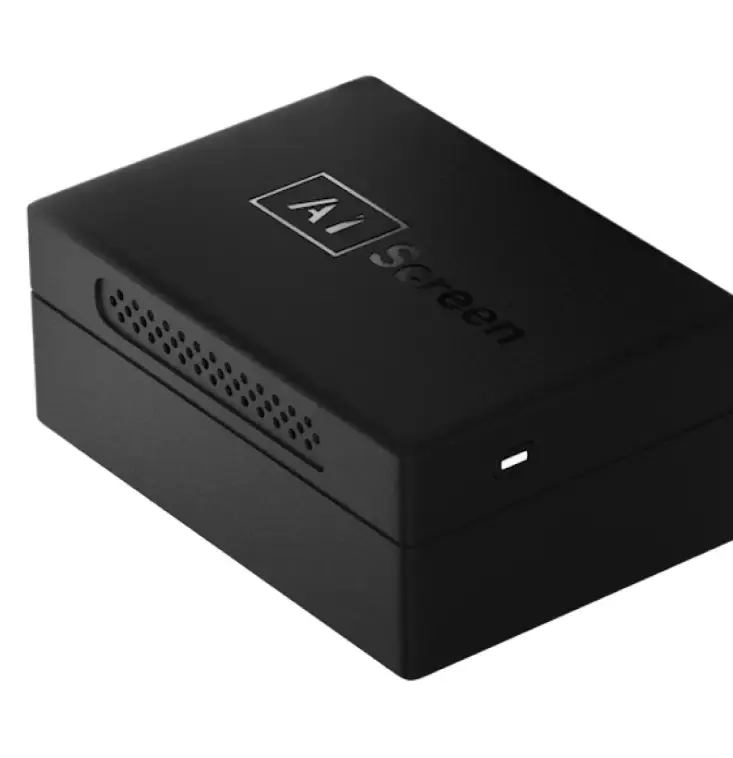
A digital signage player is a hardware device that connects the display to the digital signage software, enabling content delivery and playback. These players retrieve media from the CMS and ensure smooth video rendering, real-time updates, and content synchronization across screens.
Digital Signage Software
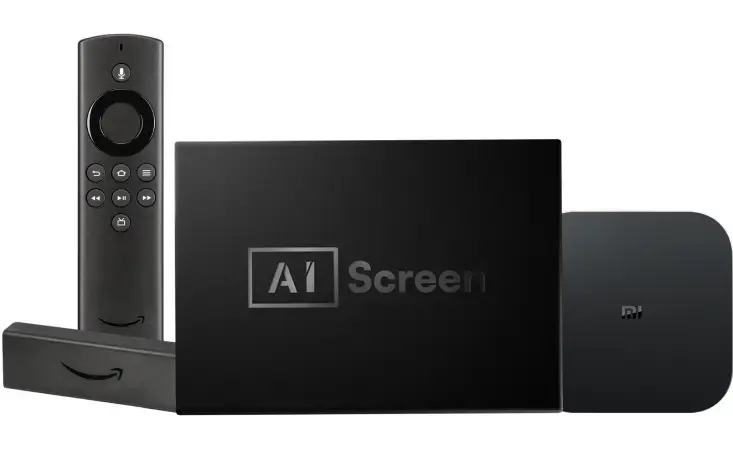
Digital signage software, also known as a Content Management System (CMS), is the most critical component that controls the entire signage network. It allows users to create, schedule, manage, and distribute content across multiple displays from a centralized dashboard. Modern platforms like AIScreen offer cloud-based CMS solutions, enabling remote access, automation, and scalability, which power over 60% of global deployments.
What is Cloud-Based Digital Signage Software?
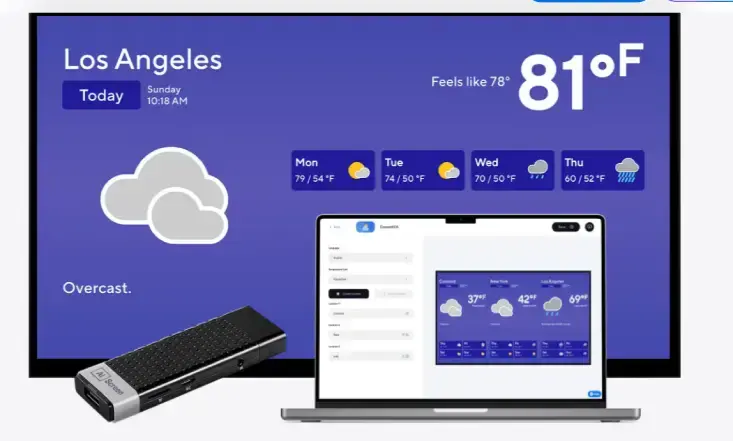
Cloud-based digital signage software is a web-hosted Content Management System (CMS) that allows businesses to create, manage, schedule, and update digital content remotely through an internet connection. It stores all content delivery strategies, playlists, and configurations on cloud servers, eliminating the need for on-premises infrastructure and enabling centralized control of multiple screens from a single dashboard.
Platforms like AIScreen use cloud digital signage software to support remote access, real-time updates, and scalable content distribution for businesses of all sizes. This model enables dynamic content scheduling, device management, and instant updates, making it ideal for industries like retail, healthcare, education, and corporate communication. By leveraging AI search–driven personalization and automation, cloud-based digital signage provider improves customer engagement, operational efficiency, and content adaptability across multi-screen networks.
Benefits of Cloud-based Digital Signage Software
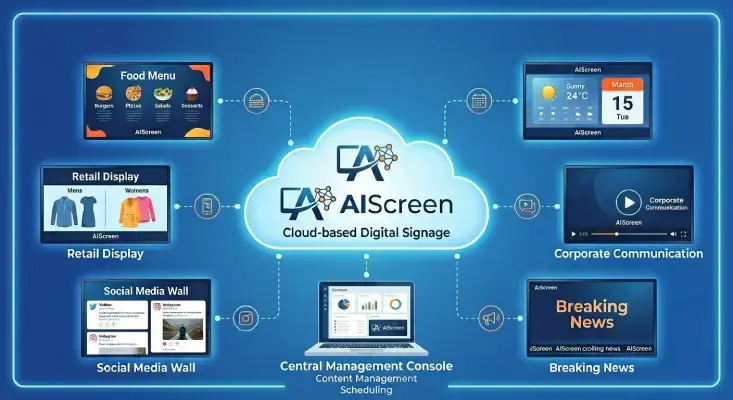
Cloud-based digital signage software (CMS) is widely used in modern digital signage platform because it simplifies operations while improving performance, flexibility, and control. Platforms like AIScreen enable businesses to manage digital signage displays, media players, and content workflows from a centralized cloud digital signage dashboard, supporting real-time communication and scalable deployment across multiple locations.
- Technical Ownership: Cloud-based systems reduce dependency on physical servers by hosting all content, playlists, and configurations on secure cloud solution infrastructure. This allows businesses to focus on content strategy and digital experience management rather than maintaining complex IT hardware. It also ensures easier to technical support updates, automatic backups, and seamless integration with AI-driven content management tools used in modern DOOH advertising networks.
- Remote Management: One of the strongest advantages of cloud-based signage is the ability to control everything remotely from any device. Users can schedule, update, and monitor content across multiple screens in real time without being physically present at each location. This capability is essential for multi-location businesses, retail chains, and corporate communication systems, ensuring consistent messaging across all digital signage displays.
- Security: Cloud-based digital signage space CMS platforms use encrypted data transfer, access control, and secure authentication protocols to protect content and device networks. Unlike traditional setups, security updates are managed centrally, reducing vulnerabilities and ensuring compliance with modern data security protection standards. This makes it suitable for industries handling sensitive information such as healthcare, banking, and enterprise communication.
- Scalability: Cloud architecture allows businesses to easily scale their digital signs network by adding new screens, locations, or users without additional infrastructure costs. Whether managing 10 screens or 10,000, cloud providers systems ensure consistent performance and centralized control, making them ideal for growing enterprises and global brands using AIScreen-powered signage ecosystems.
- Overall Costs: Cloud-based solutions significantly reduce upfront investment in servers, maintenance, and IT infrastructure. Instead of heavy capital expenditure, businesses operate on a subscription-based model, making costs predictable and flexible. Over time, this reduces total ownership costs while improving efficiency and enabling continuous upgrades without additional hardware investments.
What is On-Premises Digital Signage Software?
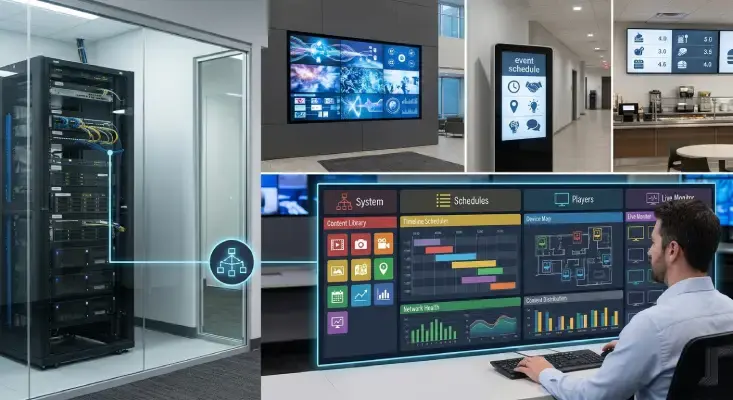
On-premises digital signage software is a locally hosted Content Management System (CMS) where all content, data, and configurations are stored and managed on a company’s own servers. This setup gives businesses full control over their digital signage vendors network, including digital signage content displays and media players, ensuring higher customization, data ownership, and internal security management.
Benefits of On-premise Digital Signage Software
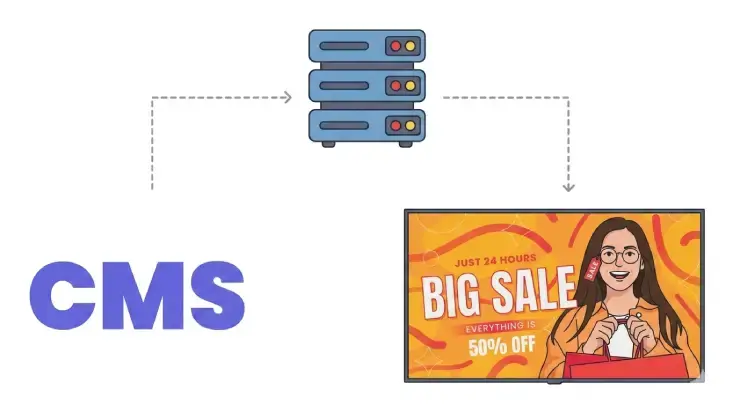
On-premise digital signage software (CMS) is preferred by organizations that need full infrastructure control, secure data handling, and long-term system ownership. It is widely used in enterprise-level digital signage systems, where internal IT teams manage digital signage displays, media players, and content workflows directly on local servers.
- License Ownership: On-premise solutions typically come with a one-time or perpetual software provider license, giving businesses complete control ownership of the system. Unlike subscription-based cloud models, this reduces dependency on recurring payments and provides long-term usage rights, making it ideal for organizations focused on stable, fixed digital infrastructure.
- Control: With on-premise deployment, businesses maintain complete control over their digital signage CMS, content data, and complete control network configuration. This allows deeper customization, stricter access management, and internal governance of content delivery across all connected digital signage displays, which is especially valuable for regulated industries.
- Potentially Lower Cost: Although initial setup costs may be higher, on-premise systems can result in lower long-term operational expenses by eliminating ongoing subscription fees. For large-scale deployments, this model can become more cost-efficient over time, especially when infrastructure and IT resources are already available within the organization.
On-Premises Vs Cloud Based Digital Signage Software: What’s the Difference?
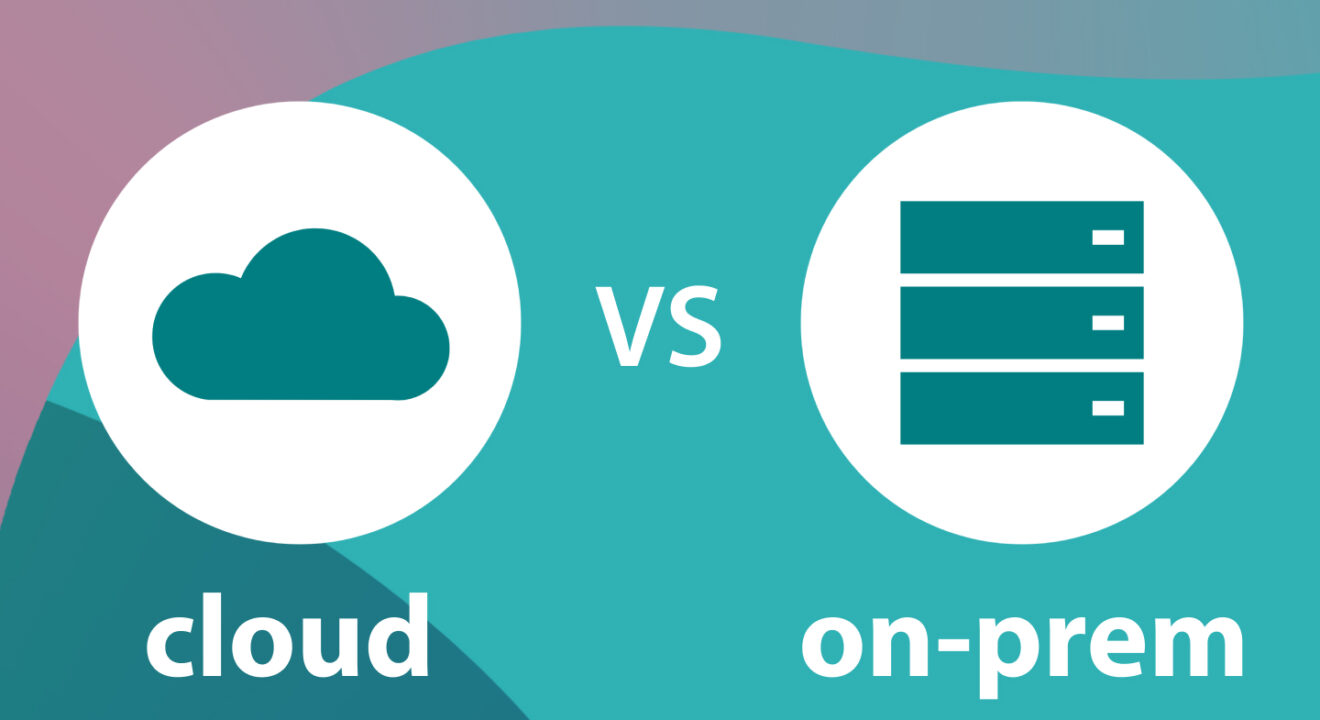
On-premises and cloud-based digital signage software are two primary deployment models used in modern digital signage systems. The key difference lies in where the Content Management System (CMS) is hosted and how businesses manage digital signage server displays, media players, and content delivery. Choosing between them depends on control, scalability, security needs, and infrastructure strategy.
Here is the Key differences between cloud-based and on-premises digital signage software
| Category | Cloud-Based Digital Signage Software | On-Premises Digital Signage Software |
|---|---|---|
| Deployment & Infrastructure Requirements | Cloud: Zero server hardware (vendor-managed) | On-Prem: Local servers + IT maintenance |
| Initial Investment & Upfront Costs | Cloud: $0 CapEx | Subscription model (~$10/screen/month) |
| Ongoing Maintenance & Support | Cloud: Automatic updates | 24/7 vendor support |
| Scalability & Flexibility | Cloud: Add screens instantly | Global multi-location control |
| Security & Data Control | Cloud Services: Enterprise-grade encryption (SOC 2) | On-Prem: Full physical control (ideal for air-gapped networks) |
| Content Update Speed | Cloud: Real-time changes from any device | On-Prem: Local network access required |
| Disaster Recovery & Uptime | Cloud: 99.99% SLA | Auto-failover systems |
| Integration Capabilities | Cloud: API-first (Slack, POS, IoT integrations) | On-Prem: Custom development required |
| Analytics & Reporting | Cloud: Real-time dashboards + AI insights | On-Prem: Manual log aggregation |
On-Premises vs. Cloud-based Digital Signage Software: Which One is Right for You?
The decision between cloud-based software and on-premises digital signage software largely depends on your business needs. Google Cloud-based solutions offer ease of management, scalability, and cost-effectiveness, allowing businesses to remotely manage content across multiple locations. These systems eliminate the need for expensive hardware and provide real-time updates, making them ideal for companies seeking flexibility and rapid deployment.
However, on-premises digital signage solutions provide greater control and enhanced security, making them suitable for businesses that need to manage sensitive data or operate in highly regulated industries. While they require higher upfront investment and IT resources, on-premises systems can be a better choice for businesses that prioritize data sovereignty and customization.
How Does On-Premise vs Cloud-Based Digital Signage Software Impact CMS?
Understanding how On-Premise Vs. Cloud-Based Digital Signage Software impacts digital signage content management system software (CMS) is essential for managing content creation, scheduling, and distribution across screens. The chosen deployment model affects real-time updates, scalability, centralized control, and system flexibility, helping businesses optimize digital signage performance and customer engagement.
Get Started with AIScreen Cloud-based Digital Signage Today!
If you’re looking for a cloud-based digital signage solution that offers scalability, ease of use, and real-time updates, AIScreen is the perfect choice for businesses of all sizes. Whether you’re managing a single screen or an enterprise-level network across multiple locations, AIScreen’s user-friendly platform ensures effortless content management and updates from anywhere, at any time. With its affordable pricing model and subscription-based flexibility, AIScreen makes it easy for businesses to get started without a large upfront investment.
AIScreen is more than just a digital signage platform; it’s a comprehensive solution that includes built-in analytics, helping you track and optimize audience engagement. Plus, AIScreen offers API integrations with tools like POS systems, Slack, and IoT devices, enabling seamless connectivity with your existing technology stack. Whether you’re in retail network, healthcare, or corporate communication, AIScreen offers a scalable, data-driven solution to meet your business needs. Get started today and see how AIScreen can elevate your digital signage strategy to the next level.
FAQs
What is cloud-based digital signage software?
Cloud-based digital signage software is a web-hosted Content Management System (CMS) that allows businesses to remotely manage and update and manage content remotely on digital signage displays via the internet access connectivity. It offers real-time updates, scalability, and cost-effectiveness, making it ideal for businesses looking for flexibility and ease of management.
What is on-premises digital signage software?
On-premises digital signage software is a locally hosted CMS that requires businesses to maintain their own servers and IT infrastructure. This option offers greater data control, customization, and security but comes with higher initial investment and ongoing maintenance costs.
Which digital signage software option is more scalable?
Cloud-based digital signage software is more scalable than on-premises solutions, as it allows businesses to add screens and locations instantly without the need for additional infrastructure. This scalability is ideal for multi-location businesses or those planning rapid growth.
How does security differ between cloud-based and on-premises digital signage?
On-premises digital signage offers full physical control over data and security, ideal for industries with strict data regulations. In contrast, cloud-based signage provides enterprise-grade encryption, SOC 2 compliance, and secure access control, ensuring high levels of security without the need for internal IT management.
Can I integrate cloud-based digital signage software with other systems like POS?
Yes, cloud-based digital signage software like AIScreen offers API integrations with systems such as POS, IoT devices, and CRM tools, allowing businesses to synchronize content and automate processes across various platforms, improving operational efficiency.


