
The Best Examples of Public Transportation Digital Signage in Action

Public transportation digital signage has moved beyond simple arrival boards, it now plays a central role in how passengers navigate, stay informed, and engage with transit systems. Real-time digital displays in buses, trains, metro systems, and airports deliver live arrival times, updates on service changes, safety alerts, and wayfinding guidance, transforming the travel experience for millions of riders every day. According to data from the Journal of Transportation Research, digital signage reduced perceived passenger wait times by 32% and improved customer satisfaction at transit facilities.
In this blog, you will learn about digital signage public transport, real-life examples showing how transportation networks successfully use digital signage today. These include systems that inform passengers with real-time departure and arrival information, enhance wayfinding with interactive maps and multilingual support, and improve operational efficiency through timely updates and safety messaging.
What Is Transportation Digital Signage?
Transportation digital signage refers to digital screens used across public transit systems to deliver passenger information, service alerts, and real time updates at bus stops, subway stations, bus shelters, and train stations.
These digital signage systems replace printed schedules, static maps, and traditional transit signage with dynamic digital displays capable of delivering accurate information instantly. Digital screens can show route maps, platform displays, safety alerts, and alternate routes while adapting to service disruptions.
Because content runs through a digital signage platform, transit authorities can update display information across transit networks without manual input or manual updates. This ensures passengers remain informed even during service changes, emergencies, or unexpected delays.
For passengers, transportation digital signage improves the transit experience by providing timely information and clear directions. For transportation providers, it supports efficient transit operations, reduces missed connections, and improves communication across transit environments.
What Are the 6 Best Ways Transportation Networks Use Public Transportation Digital Signage Today?
Public transportation digital signage is widely used across transit hubs to improve passenger communication, safety, and operational efficiency. These digital signage solutions support real time signage, centralized content updates, and engaging content across digital screens installed in prime locations.
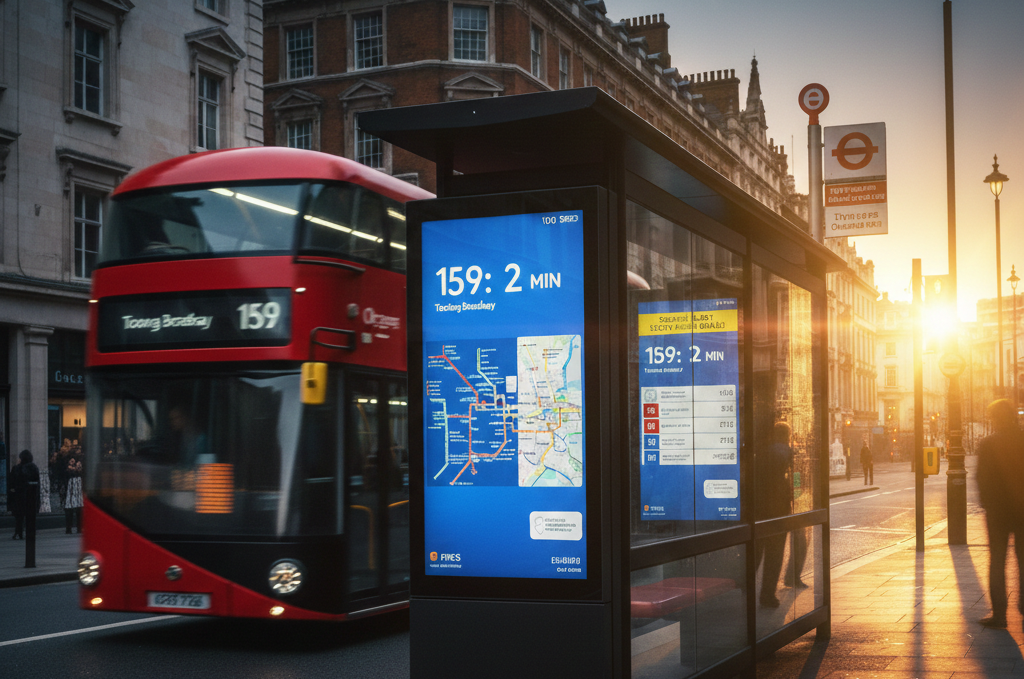
According to Deloitte, transportation systems that deploy centralized digital information systems report up to 25% improvement in passenger flow efficiency.
Across modern transit networks, digital signage plays a key role in helping transit authorities deliver accurate information, improve passenger flow, and maintain consistent messaging. Below are six real-world applications used across public transit systems today.
1. Real-Time Transit Updates Powered by Digital Signage
Real-time transit updates use transportation digital signage to display arrivals, departures, delays, route changes, and service alerts on digital screens across bus stops, train stations, bus shelters, and platform displays.
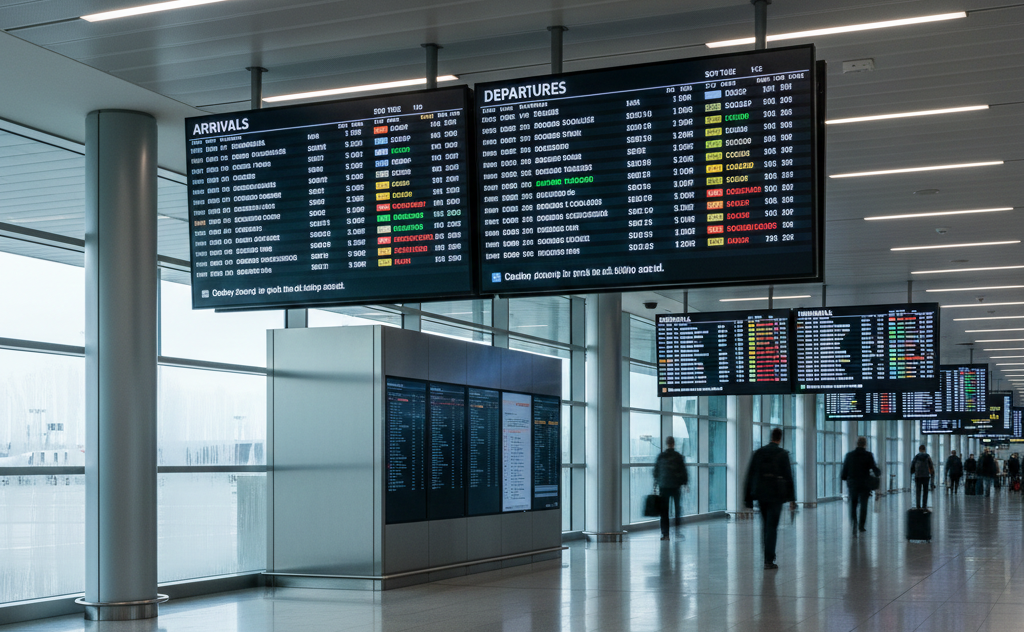
Real time signage ensures passengers receive accurate information instantly, helping them choose alternate routes and avoid missed connections. During busy travel periods, these digital displays provide critical updates that reduce confusion and improve decision-making.
For transit authorities, digital signage solutions simplify scheduling systems by automating updates across large networks. This reduces manual input, supports remote monitoring, and ensures service information remains reliable even during service disruptions.
2. Strategically Placed Digital Wayfinding Signage
Digital wayfinding signage provides clear directions, route maps, and navigation support through transportation displays installed in high-traffic areas of transit hubs.
These digital signs guide passengers through complex transit environments such as subway stations, airports, and large bus terminals. High contrast displays, large icons, and clear layouts help passengers quickly locate platforms, exits, and connecting routes.
Wayfinding screens also support multiple languages and high contrast visuals to improve accessibility for international travelers and visually impaired passengers. By placing digital screens in prime locations with optimal viewing distance, transit authorities improve passenger experience while maintaining consistent messaging across transportation hubs.
3. Safety and Emergency Messaging on High-Visibility Displays
Emergency communication systems use transportation digital signage to broadcast safety alerts, evacuation instructions, and critical updates across digital screens in real time and it’s important to know where to place emergency exit signage?.
Unlike static signs or printed notices, digital displays deliver high contrast visuals and flashing alerts that quickly capture attention in crowded public transit environments. These digital signs ensure passengers receive timely information during emergencies or service disruptions.
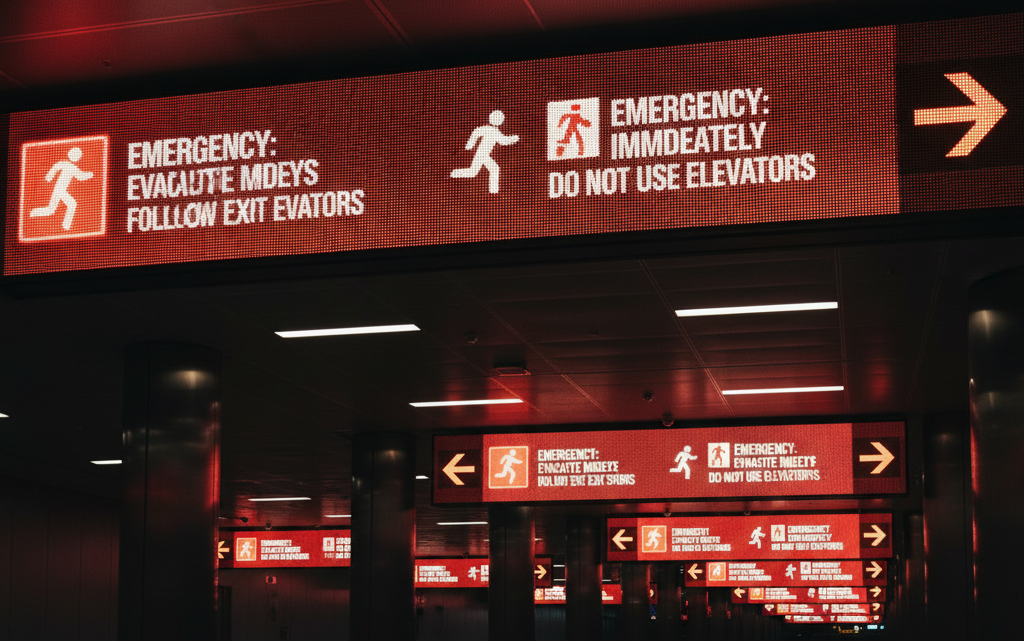
Digital signage systems allow transit authorities to send emergency alerts across multiple screens simultaneously using centralized control. This improves safety communication, protects passengers, and ensures reliable messaging across transit hubs.
4. Enhancing Accessibility Across Transportation Hubs
Digital signage plays an important role in improving accessibility across public transportation environments by delivering clear, readable information for all passengers.
Transportation displays with high contrast displays, large fonts, and clear icons improve readability across bus stations, subway stations, and transit hubs. These features help visually impaired passengers quickly identify route maps, service alerts, and platform displays.
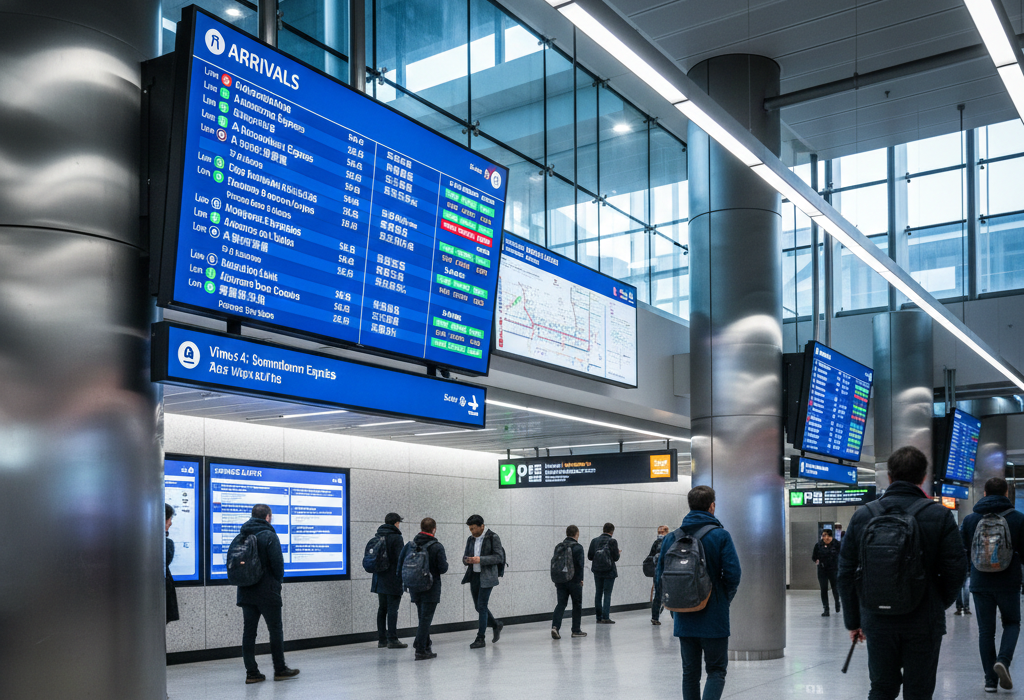
Accessibility improvements also include multiple languages, audio announcements, and structured layouts that simplify navigation across transit environments. These features ensure passengers remain informed regardless of language, ability, or familiarity with the transit system.
5. Digital Ticketing and Booking Through QR Codes and Interactive Kiosks
Digital signage enables ticket purchasing and service booking through QR codes and interactive kiosks installed in transportation hubs.
Passengers can scan codes on digital screens to purchase tickets, access route information, or reserve services directly from their mobile devices. This reduces waiting times at ticket counters and improves transit operations across busy transit systems.
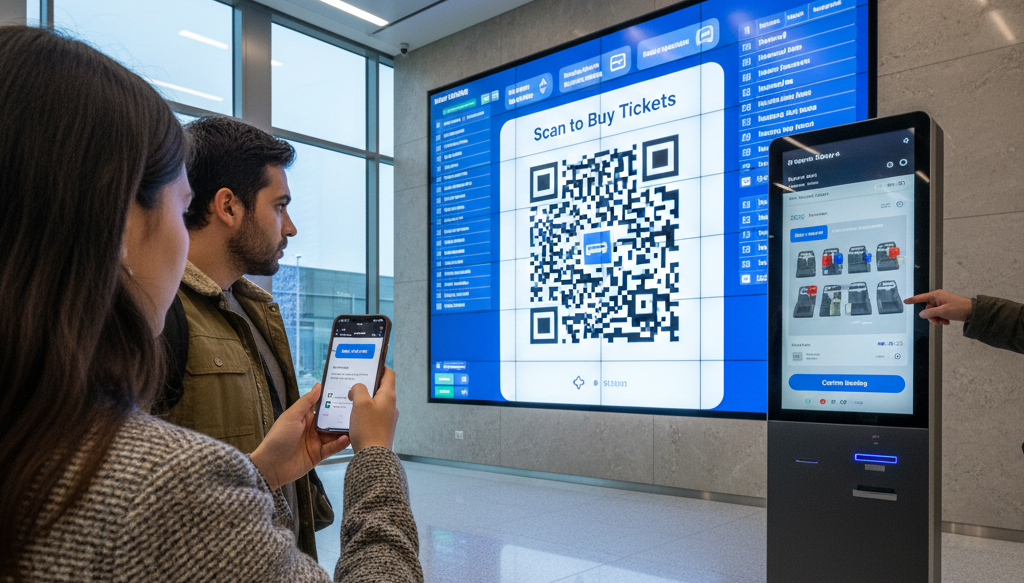
Interactive kiosks placed in bus terminals, bus stations, and transit hubs support passenger information displays while enabling faster ticket processing. For transit authorities, this technology reduces manual processes and helps offset costs through automated systems.
According to Statista, global mobile ticketing usage surpassed 1.3 billion users in 2023, highlighting how passengers increasingly prefer digital access over physical tickets. With AIScreen’s QR Code app, transit operators can embed dynamic, trackable QR codes directly into digital screens, update booking links in real time, and connect passengers seamlessly to mobile ticketing platforms, without changing hardware or redesigning displays.


6. Advertising and Revenue Generation Through Transit Digital Displays
Transit digital signage creates a new revenue stream by allowing transportation providers to display advertising content alongside passenger information.
Digital screens installed in prime locations across transit hubs can promote local businesses, national brands, and public announcements while still delivering service information. This creates additional revenue opportunities without disrupting passenger communication.
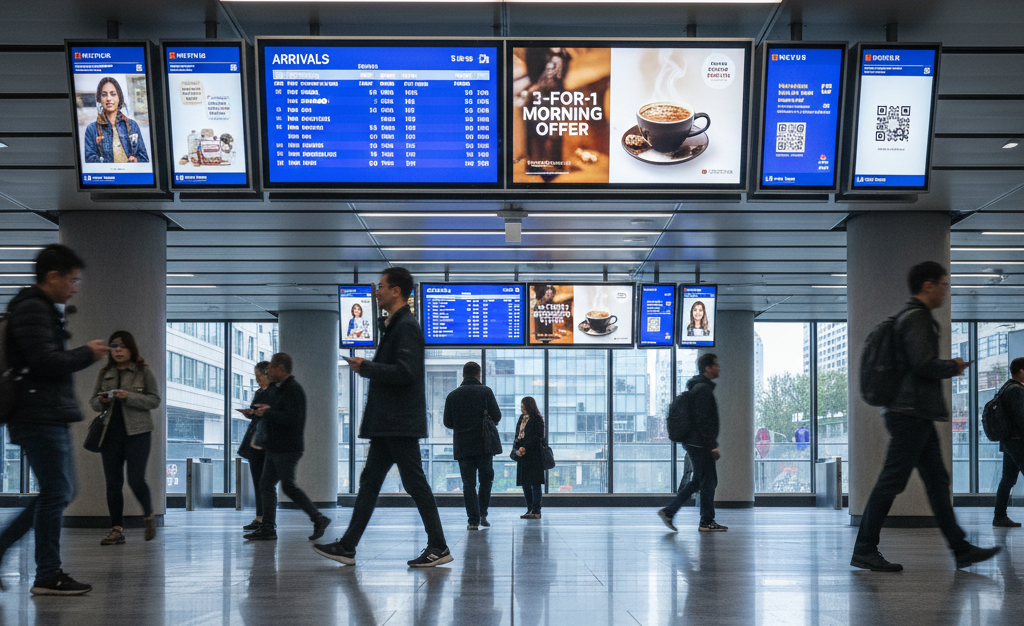
Advertising campaigns can be scheduled through digital signage systems based on time, location, or audience demographics. For transportation providers, this generates additional revenue that helps offset costs associated with transit operations.
Why Do Transportation Providers Choose Public Transportation Digital Signage?
Transportation providers choose public transportation digital signage because it delivers accurate information across large transit networks while improving operational efficiency. For transit agencies comparing the best digital signage software companies for transportation, the main goal is finding a solution that can manage real-time communication reliably across busy hubs.
Digital signage systems replace printed schedules and static signs with real time updates that keep passengers informed about service changes, route changes, and safety alerts. This improves passenger experience and reduces confusion across busy transit hubs.
Centralized control allows transit authorities to manage digital displays across multiple locations without manual updates. This simplifies transit operations, ensures consistent messaging, and supports reliable communication across public transit systems.
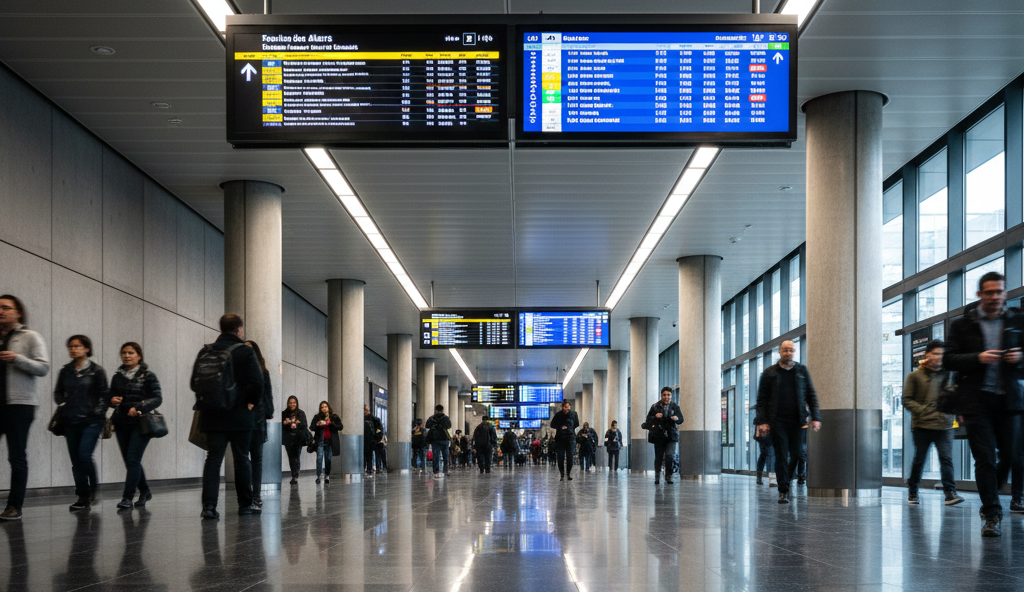
According to the U.S. Department of Transportation, deployment of dynamic traveler information systems increased from 49% in 2020 to 65% in 2023,
Benefits of Public Transportation Digital Signage:
- Cost savings: Digital displays reduce the need for printed schedules and physical signage updates, lowering long-term operational expenses.
- Customer satisfaction: Real time updates, clear route maps, and timely information help passengers avoid missed connections and navigate transit systems confidently.
- Revenue opportunities: Digital signage creates additional revenue streams through advertising partnerships with local businesses and national brands.
Launch Public Transportation Digital Signage with AIScreen!
Public transportation systems are increasingly using digital signage to improve communication across transit networks. From bus stops and bus terminals to train stations and transit hubs, digital screens now deliver real-time updates, service alerts, and route information to keep passengers informed.
With a centralized digital signage platform, transportation providers can manage digital displays across multiple locations and ensure accurate information and consistent messaging.
AIScreen helps transit authorities deploy scalable transportation digital signage solutions with real-time updates, centralized control, and advertising capabilities that support efficient transit operations and new revenue opportunities.
FAQs
How does digital signage improve communication in public transport?
Digital signage improves communication in public transport by delivering real time updates such as arrivals, delays, route changes, and safety alerts through passenger information displays across transit hubs.
Can digital signage systems operate across multiple transportation hubs?
Yes, digital signage systems operate across multiple transportation hubs using centralized control, allowing transit authorities to manage digital displays remotely across large networks.
What type of content works best for transportation digital signage?
The most effective content includes real time schedules, route maps, service alerts, emergency notifications, and clear directions displayed on digital screens across transit environments.
Is digital signage cost-effective for public transport systems?
Yes, digital signage reduces printing costs, minimizes manual updates, and improves operational efficiency, resulting in long-term cost savings for transportation providers.
How secure are digital signage systems used in public transportation?
Digital signage systems remain secure when managed through encrypted networks, role-based access control, and controlled content management systems that protect display information.
