
How to Choose the Right Types of Signage Material?
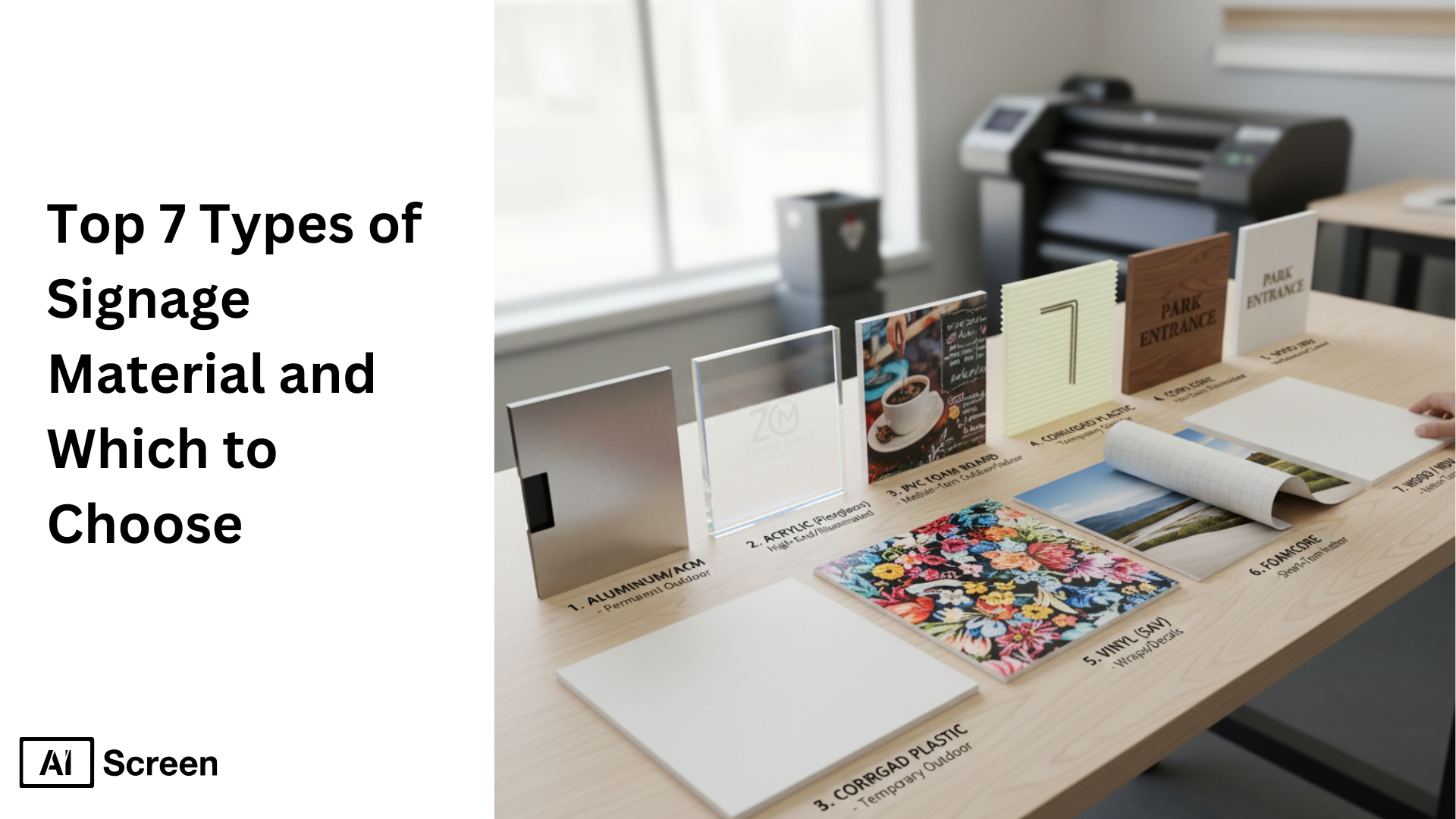
Selecting the right signage material is key to boosting your brand’s image, visibility, and cost-effectiveness. “Did you know businesses that invest in quality sign materials see up to a 30% increase in customer engagement?” Weather resistance and low maintenance are crucial for outdoor signage, while lightweight, budget-friendly materials work great for indoor events and temporary signs.
In this article, you will discover the top 7 types of signage materials and how to choose the best one for your needs. From durable aluminum composite material for long-lasting outdoor signs to warm, eco-friendly wooden signs, affordable foam core for promotions and other materials, each material offers unique benefits. Illuminated signs with LED lighting and corrosion-resistant metals can also take your marketing efforts to the next level, attracting customers and helping build a strong brand identity.
Modern facilities manage these displays with digital signage software so signage stays accurate and easy to update.
1. Why Choose Acrylic Signage Material?
Acrylic is a premium, glass-like sign material known for its clarity and durability, making it ideal for indoor branding, reception signs, illuminated letters, and modern storefronts.
Its smooth surface supports high-quality images, printed graphics, and detailed graphics, giving any new sign a sleek, glass-like finish. Ideal for illuminated signs with LED lighting, acrylic boosts visual appeal and creates a lasting impression with minimal effort.
Customized acrylic signs can also incorporate LED lighting to create eye-catching illuminated signs that attract foot traffic and leave a lasting impression.
Despite a slightly higher initial cost, acrylic is weather-resistant and low-maintenance, making it suitable for both indoor and outdoor use, especially for long-lasting signage solutions.
Its lightweight nature ensures easy and proper installation with minimal effort, proving a cost-effective option over time compared to heavier materials.
Whether used for window signs, directional signs, or A-frame sidewalk signs, acrylic offers the perfect balance of aesthetic appeal and durability for your marketing efforts. Before comparing physical options, it helps to understand what is digital signage and how it complements these materials.
2. Is Corflute a Durable Signage Material?
Corflute is a lightweight, cost-effective signage material that’s perfect for temporary signage like event promotions, real estate boards, and construction notices.
Its polypropylene composition makes it weather-resistant and easy to print on, offering vibrant, detailed graphics that grab attention without breaking the budget.
Ideal for both indoor and outdoor use, Corflute signs are super easy to install with minimal effort, making them a favorite for frame sidewalk signs, yard signs, and promotional materials.
If you are looking to attract potential customers with a budget-friendly and durable option, Corflute might just be the right signage material for your marketing efforts!


3. Why Use Aluminum Signage Material?
Aluminum is a top choice in the signage world for its strength and weather resistance, making it perfect for outdoor signs like parking and safety signs.
It’s a durable and rust-resistant material that maintains a high-quality, polished look, which helps enhance your brand’s image and attract more foot traffic.
Though it has a higher initial cost compared to some materials, aluminum’s cost-effective, corrosion-resistant properties and regular maintenance benefits make it one of the best picks for long-term value without sacrificing quality. Its brushed finish and ability to pair with LED lighting support premium aesthetic appeal for business marketing efforts.
Whether for directional signs, metal signs, or illuminated signs with LED lighting, aluminum offers excellent visual appeal and reliable performance in various weather conditions, ideal for indoor and outdoor use.
4. Is Colorbond a Weatherproof Signage Material?
Colorbond steel is a standout signage material for large outdoor panels, real estate billboards, building façades, and industrial signs, thanks to its exceptional longevity and resistance to harsh weather conditions.
This pre-painted steel combines strength with weather resistance, making it ideal for outdoor signage that needs to maintain visual appeal and durability over time without frequent maintenance.
While it has a higher initial cost compared to some materials, Colorbond offers long-term value through its rust resistance and ability to withstand wind, rain, and sun exposure.
If you are aiming for big, bold signs that attract potential customers and boost your brand’s image reliably, Colorbond is a smart choice among the top 7 types of signage material.
5. When to Use Foamcore Signage Material?
Foamcore is a lightweight, budget-friendly signage material perfect for indoor events, displays, presentations, POP signage, and event backdrops.
Its smooth surface produces crisp visuals and high-quality images, perfect for quick marketing updates or key information. Foamcore is best suited for indoor settings since it isn’t designed for outdoor use or moisture, but for short-term, attractive displays, it’s an excellent cost-effective choice.
However, foamcore isn’t designed for outdoor use or areas with moisture since it can warp or get damaged.
It is best suited for temporary signage solutions like directional signs or sign stands within controlled environments where lasting impression and visual appeal matter without compromising cost effectiveness.
6. Why Choose Forex Signage Material?
Forex (PVC Sheet) is a versatile and durable plastic signage material ideal for indoor branding, menu boards, retail displays, and semi-permanent signs or limited outdoor signage.
Its smooth surface allows for high-quality printed graphics, making it a popular choice to elevate your brand’s image with crisp visuals.
Suitable for both indoor and limited outdoor use, Forex combines longevity with low maintenance, offering cost effectiveness without sacrificing quality making it a smart option when you need signage across various surfaces without upgrading to pricier stainless steel or aluminum.
Whether for promotional materials, signage options, or illuminated signs, this signage material balances durability and aesthetic appeal, making it a smart pick among the top 7 types of signage material for diverse marketing efforts.
7. Is Vinyl a Versatile Signage Material?
Self-adhesive vinyl is the star signage material for window graphics, wall decals, car wraps, vehicle wraps, partial wrap, and removable promotional signage.
Its key strengths lie in vibrant print quality, flexibility, and easy application. It sticks smoothly to various surfaces like glass, metal, and walls, helping businesses grab attention instantly.
Perfect for both temporary signage and lasting marketing efforts, self-adhesive vinyl is flexible, weather-resistant, cost-effective, and low-maintenance and is widely used for popular materials, temporary campaigns, and even long-term graphics.
Whether you are boosting your brand’s image with window signs or wrapping vehicles to attract foot traffic, this versatile material is a smart choice among the top 7 types of signage material, delivering high-impact visuals with minimal effort.
When to Upgrade Signage Materials to Digital?
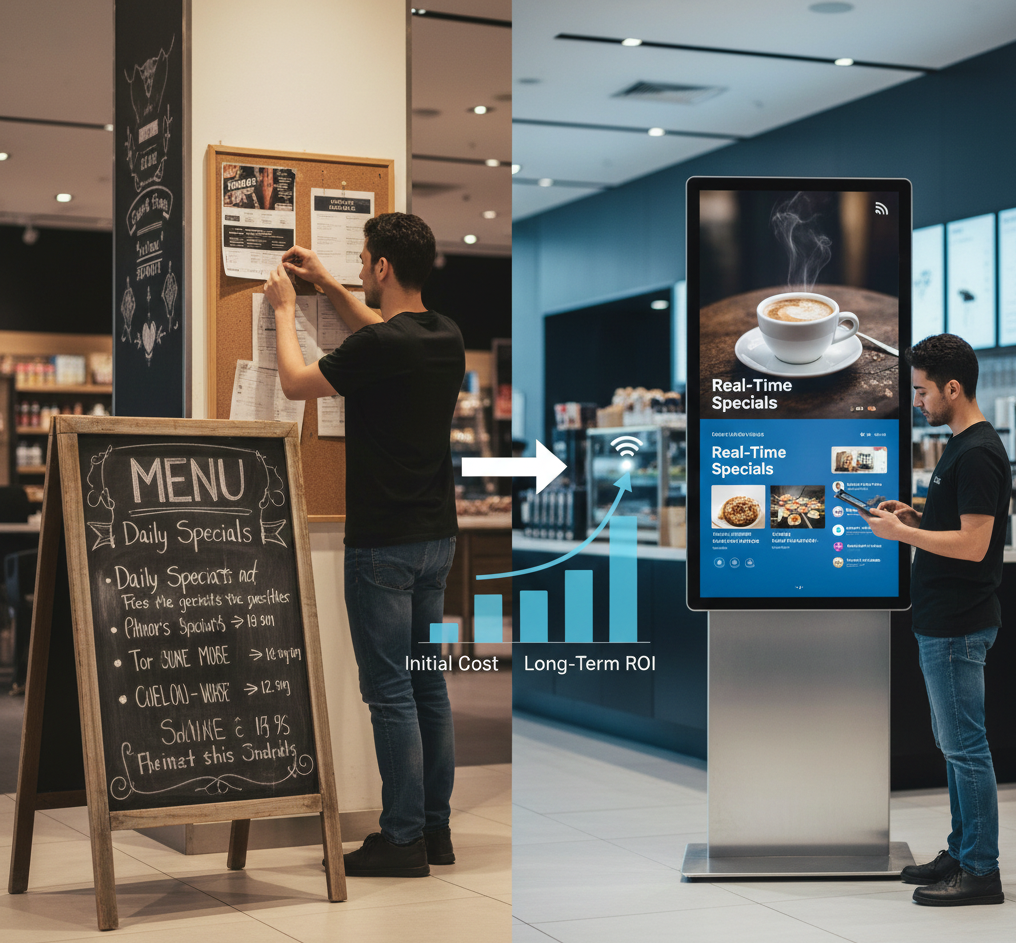
When should you choose digital signage over traditional signboard materials? If you want “dynamic content that grabs attention,” digital signage is the smarter pick.
It lets you display animated visuals, videos, and real-time updates, which is perfect for businesses needing fresh, eye-catching marketing efforts with minimal effort.
Digital signs also shine when managing campaigns across multiple locations, offering centralized control without flying back and forth to replace printed outdoor signs.
Wondering about the environmental impact? Digital signage greatly reduces printing waste and the costs of repeatedly producing traditional signs with enhancing visual appeal, making it a cost-effective, weather-resistant, and sustainable option to deliver the right material, message, and design to the target audience.
While traditional signage is reliable for static messages like store hours or directional signs, the flexibility and visual appeal of digital signs elevate brand image and can attract more foot traffic in busy, high-traffic locations.
So, for a lasting impression and engaging employees or customers with highly visible, interactive messaging, digital signage wins every time.
When businesses require dynamic content, frequent updates, animated visuals, or centralized control across multiple locations, digital signage becomes the smarter alternative to traditional sign board materials. In these scenarios, solutions like the top 5 small digital signs for smart advertising solutions allow brands to modernize in-store messaging without large installations or ongoing printing costs.
How Does Digital Signage Expand Material Options?
How does digital signage break free from the limits of traditional sign materials? “Imagine unlimited content possibilities without the hassle of reprinting or reinstalling signs.”
Digital displays allow you to showcase dynamic content like animated menus, real-time promotions, and interactive features, all updated instantly. This means your marketing efforts can stay fresh, relevant, and highly engaging with minimal effort.
Curious about combining materials? Digital signage can blend seamlessly with physical signs, like aluminum or wood, creating hybrid designs that marry durability with eye-catching digital appeal.
This flexibility lets your brand grab attention across indoor and outdoor environments, boosting foot traffic and brand recognition without sacrificing cost effectiveness or long-term value.
In the world of signage materials, digital is revolutionizing how you choose, create, and connect with your target audience.
Frequently Asked Questions
What are the most common types of signage materials used for businesses?
The most common types of signage materials used for businesses include aluminum composite, acrylic, PVC, corflute, foamboard, vinyl, and wood. Each offers unique benefits for indoor and outdoor use, balancing durability, cost effectiveness, and visual appeal to suit different signage design needs.
What materials are best for long-lasting outdoor signage?
The best materials for long-lasting outdoor signage are aluminum composite material and stainless steel, as they stand out for outdoor durability and offer excellent weather resistance and corrosion protection. These materials withstand high winds and sun exposure while maintaining a lasting impression with minimal maintenance.
How does weather impact different types of signage materials?
Weather can cause fading, warping, or rust in signs made from less durable materials. UV rays, rain, and wind are harsh on paper-based or fabric signs, while metals and composites sustain high-quality images and structural integrity over time.
Why should businesses invest in high-quality signage materials?
Businesses should invest in high-quality signage materials to ensure signage longevity, better brand image, and reduced maintenance costs. A well-designed sign made from premium materials attracts customers, enhances foot traffic, and supports lasting recognition.
How much do different signage materials cost compared to each other?
The signage materials costs differ from each other due to many reasons. Budget-friendly options like corflute and foamboard are ideal for temporary signs, while premium materials like aluminum composite and acrylic carry a higher initial cost but provide greater durability and professional appearance, offering better long-term value.
To understand the fundamentals, explore the core guide covering how digital displays, content management systems, and real-time updates transform modern visual communication.
How Do Small Digital Signs Use Signage Materials?
Small digital signs fit within modern signage materials by combining LED and LCD display technology with traditional materials like acrylic, metal, and vinyl to deliver dynamic content, real-time updates, and targeted messaging. As an advanced signage solution, they enhance visibility, improve engagement, and provide greater flexibility compared to static materials, making them ideal for smart advertising solutions.
- Integration with Traditional Materials: Small digital signs can be embedded into acrylic panels, metal frames, or vinyl structures, blending digital and physical signage.
- Dynamic Content Delivery: Unlike static signs, they display videos wall software, animations, and real-time updates, increasing audience attention.
- Space-Efficient Design: Compact LED/LCD displays are ideal for retail counters, shelves, and point-of-sale areas.
- Improved Visibility: Bright digital screens ensure better readability in various lighting conditions compared to printed materials.
- Cost & Time Efficiency: Eliminates frequent printing by enabling instant content updates through digital signage software.
- Targeted Messaging: Businesses can display personalized promotions, offers, and localized content based on audience or time.
- Enhanced Engagement: Motion graphics and interactive elements increase customer interaction and dwell time.
- Scalability: Easily expand across multiple locations using cloud-based CMS for centralized control.
Why Choose AIScreen for Signage Materials?
Digital signage redefines how businesses use materials by replacing static limitations with dynamic, screen-based solutions that deliver real-time content, interactive media, and visually engaging experiences across LED display and LCD screen. Instead of relying on traditional substrates like acrylic, metal, or wood alone, businesses can combine physical signage with digital layers to create hybrid branding environments that are scalable, adaptable, and cost-efficient.
With advanced platforms like AIScreen, organizations can control multi-screen networks, automate content scheduling, and deliver personalized messaging, ensuring consistent brand communication and higher audience engagement. Ultimately, AIScreen-powered digital signage enhances creative freedom, improves operational efficiency, and enables businesses to maximize visual impact while staying aligned with modern AI-driven content strategies.
