
The Role of Digital Signage in Small Connected Retail Stores
Digital signage in small connected retail stores is revolutionizing the retail experience, especially in small connected retail store, where its impact is particularly transformative.

This modern technology not only enhances the aesthetic appeal of a store but also serves as an interactive platform for customer engagement and advertising.
A key study found that digital signage can increase brand awareness by up to 47.7%. This is especially crucial for small stores seeking to establish their presence in a competitive market.
Digital signage solution, like those offered by AIScreen, stand out for their ease of use, customization options, and seamless integration with existing retail environments, making them a top choice for small business owners looking to elevate their store’s appeal and functionality.
Short Summary
- Digital signage is a technology that uses screens to display content such as promotions and product information.
- On average, small retail digital signage stores can expect to invest a few thousand dollars for a basic setup, including hardware, software, and installation.
- Yes, digital signage is highly customizable. You can tailor content, colors, and branding elements to align with your store’s unique identity.
- Not at all. Most digital signage systems offer user-friendly content management interfaces, allowing you to easily upload, schedule, and update content as needed.
What Is Connected Retail?
Connected retail refers to the integration of digital technologies into the retail environment to create a seamless, omnichannel shopping experience.
As per AIScreen research, digital signage increases small retail store sales by 20%, improving product discovery and customer engagement.

It involves connecting various elements like online services, mobile apps, and in-store technology, allowing retailers to offer personalized, efficient, and interactive shopping experiences.
This approach uses data analytics for customer insights, enhances engagement through digital touchpoints, and streamlines operations.
At AIScreen Digital Signage, we understand that in today’s fast-paced retail landscape, achieving connected retail has become imperative for small retailers looking to thrive and meet the evolving demands of consumers.
As a digital signage company specializing in small connected retail store, we’ve seen our technology revolutionize the shopping experience. Our digital displays not only enhance store aesthetics but also serve as powerful tools for customer engagement and advertising, particularly crucial for small businesses aiming to establish a strong presence in a competitive market.
Connected Retail Is The Trend Topic In Retailing
Interactive retail displays are transforming the retail industry by seamlessly integrating digital and physical shopping experiences. Here are the key points:

Connected retail space benefits customers in a significant trend reshaping the retail digital displays landscape. Here’s a concise summary in bullet points:
Integration of Digital Technologies: Combining online platforms, data analytics, and in-store tech for a unified shopping experience.
Personalized Customer Experiences: Tailoring shopping journeys using consumer data to meet individual preferences and needs.
Omnichannel Approach: Bridging the gap between physical stores and online retail store, offering customers flexibility and convenience.
Enhanced Customer Engagement: Using interactive digital tools to engage customers both online and in-store.
Staying Competitive: Adapting to digital trends to remain relevant in a rapidly evolving retail sector.
4 Connected Store Retail Trends For 2023
Retail digital signage displays has evolved significantly due to the pandemic, leading to a shift in consumer behavior and an increase in online shopping.
This change has accelerated the adoption of new technologies like curbside pickup, appointment booking, and live chat, enabling retailers to maintain customer connections.

Retailers have responded by offering more convenience and personalization. The future of retail includes a focus on personal, contactless, and seamless experiences, with expected sales growth in the US and UK.
Trend #1: Expansion of Retail Delivery and Fulfillment Centers Digital Signage In Small Retail Stores
The trend of integrating delivery and fulfillment centers within retail store digital signage marks a significant shift in the industry. This change is largely driven by customer demands for convenience and speed in their shopping experiences.

Retail Stores are now being repurposed as efficient hubs for processing online orders, offering services like contactless shopping and BOPIS (Buy Online, Pickup In Store).
This evolution ensures swift, hassle-free delivery, a critical factor in maintaining customer satisfaction and loyalty in today’s competitive market.
This blend of physical and digital retail is redefining the shopping landscape, making it essential for stores to adapt and innovate to meet the changing consumer needs and expectations.
Trend #2 – Contactless technology cultivates efficiency and peace of mind
In 2023, retail is expected to significantly advance in contactless and virtual technologies. This progression is a response to the pandemic, focusing on providing customers with safer and more convenient shopping methods. In addition to contactless payments and QR codes, the adoption of digital business cards is becoming popular among retail professionals for quick and eco-friendly sharing of contact information, enhancing business networking without physical exchanges. Solutions like Uniqode’s business card are one of the top tools for your business cards.

Contactless payments, such as digital wallets, QR codes, and contactless cards, are set to become the preferred payment methods, reflecting a shift towards digital-first transactions. When adopting these solutions, businesses should also consider open banking costs, including integration fees and transaction expenses, to ensure that implementing digital payment options remains financially viable.
In addition to contactless payments, the implementation of the right digital signage solution is revolutionizing in-store navigation and customer engagement. By integrating indoor navigation features, retailers can offer real-time wayfinding that guides customers directly to products, promotions, and service areas—all while maintaining a safe, streamlined shopping environment.
Furthermore, the integration of experiential reality, combining augmented and virtual reality, along with artificial intelligence, is aimed at enhancing customer convenience and safety.
This will enable customers, especially those who prefer to physically view large items or try makeup products, to virtually experience products through advanced virtual change rooms and showrooms.
Trend #3 – Personalized Shopping Spotlights The Customer Experience For Retail Digital Signage
Personalization remains a key factor in retail, with 78% of consumers preferring personalized engagement based on past interactions. This trend continues, expecting store associates to anticipate customer needs both in-store and online.

Retailers are leveraging technology to offer personalized experiences, like one-to-one consultations, either in-person or virtually.
The focus is on enhancing omnichannel engagement, utilizing customer data like preferences and purchase history to strengthen customer connections and drive revenue.
Trend #4 – Omnichannel ecosystems become mandatory
The pandemic significantly boosted online shopping, leading brands to rapidly develop e-commerce platforms. Despite this shift, consumers are increasingly channel-agnostic, with 73% identifying as such, per Google’s Smart Shopper Research.

This trend is steering the retail industry towards digital transformation, emphasizing the convergence of online, in-store, and social channels. Retailers are focusing on robust omnichannel strategies and using data to create seamless experiences across all channels.
Customer behavior favors digital and omnichannel experiences, with a survey indicating that 71% prefer brands offering omnichannel options, and 68% are using these options more due to the pandemic. This necessitates creating holistic experiences that foster customer trust and retention.
How Can Retailers Achieve Connected Retail With Digital Displays?
In today’s fast-paced retail landscape, achieving connected retail has become imperative for retailers to thrive and meet the evolving demands of consumers.

Connected retail encompasses various strategies and technologies that seamlessly integrate online and offline operations, utilize advanced retail analytics, offer personalized loyalty programs, ensure inventory visibility, and embrace mobile point-of-sale (POS) solutions.
In this section, we will delve into these key components and explore how retailers can leverage them to create a cohesive and customer-centric shopping experience.
1. Online/Offline Integration
The convergence of online and offline retail channels, often referred to as omnichannel retailing, is a fundamental aspect of connected retail, with digital signage serving as a key enabler.

To achieve this integration seamlessly, retailers must invest in technology and processes that bridge the gap between physical and digital storefronts. By incorporating digital signage solutions, retailers can unify the in-store and online experiences.
They can display real-time product information, promotions, and availability through digital signage, ensuring consistency across channels:
Unified Inventory Management
Retailers should adopt an integrated inventory management system that synchronizes inventory levels across all channels. With Microsoft Business Central Implementation, you can also manage your inventory, enhances order accuracy, and improves overall supply chain efficiency.
Buy Online, Pickup In-Store (BOPIS)
Implementing BOPIS services allows customers to make online purchases and collect their orders at a physical store, enhancing convenience and reducing delivery times.
Endless Aisle
With endless aisle capabilities, retailers can offer a broader product selection in-store by leveraging their online inventory. This encourages customers to explore more options while physically shopping.
Seamless Checkout
Enable customers to make in-store purchases using digital wallets and mobile payment solutions for a faster, frictionless checkout experience.
2. Retail Analytics
Data serves as the lifeblood of connected retail, and the integration of digital signage further amplifies its impact. Retailers should harness advanced analytics tools, powered by data from retail store digital signage interactions, to gain profound insights into customer behavior, preferences, and trends.

This data-driven approach, bolstered by real-time information displayed through digital signage, has the potential to revolutionize decision-making processes:
Customer Segmentation
Retailers can use analytics to segment their customer base, allowing them to tailor marketing efforts and promotions to specific groups of customers with similar preferences.
Predictive Analytics
Predictive models can forecast demand, helping retailers optimize inventory levels, pricing strategies, and product assortments. By leveraging advanced inventory forecasting tools, businesses can improve accuracy, reduce stockouts, and ensure better alignment with customer demand.
Store Layout Optimization
Heatmaps and foot traffic analysis can be used to optimize store layouts and product placements, enhancing the shopping experience.
Personalized Recommendations
By analyzing customer purchase history and browsing behavior, retailers can provide personalized product recommendations both online and in-store.
3. Personalized Loyalty Programs
Connected retail centers on fostering enduring customer relationships. A personalized loyalty program, integrated with digital signage, proves to be a potent tool for achieving this goal.
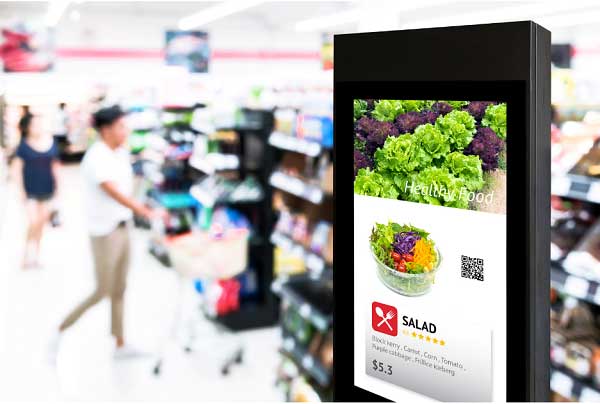
Rather than relying on generic, one-size-fits-all approaches, retailers can leverage digital signage to deliver tailored loyalty initiatives:
Customer Data Utilization
Loyalty programs should be designed to collect and leverage customer data to offer rewards, discounts, and incentives that align with individual preferences and shopping habits.
Multi-Tiered Rewards
Implementing multi-tiered loyalty programs with exclusive benefits for top-tier members can encourage repeat business and customer engagement.
Mobile Loyalty Apps
Develop mobile apps that allow customers to easily access their loyalty accounts, check rewards, and receive personalized offers, creating a seamless and convenient experience.
Gamification
Incorporate gamification elements into loyalty programs to make earning rewards fun and engaging for customers, encouraging them to participate actively. Retailers can also make loyalty cards that integrate seamlessly with these programs, giving shoppers both digital and physical ways to engage. For more details, visit our article which tells insights on how retail benefits customers.
4. Inventory Visibility
Inventory management lies at the heart of connected retail, ensuring customers can access desired products when and where they prefer. Retailers can achieve inventory visibility by implementing robust digital signage solutions.

These systems offer real-time updates on stock levels, helping staff and customers quickly locate items:
RFID Technology
Implement RFID (Radio-Frequency Identification) tags on products to enable real-time tracking and inventory visibility throughout the supply chain.
Inventory Accuracy
Regularly update inventory records to prevent discrepancies between online and in-store availability, reducing the risk of overselling or stockouts.
Vendor Collaboration
Collaborate closely with suppliers and manufacturers to gain insights into product availability, lead times, and restocking schedules.
Demand Forecasting
Utilize data analytics and historical sales data to accurately forecast demand and align inventory levels accordingly.
5. Mobile Point-of-Sale (POS)
Mobile POS systems are pivotal in connected retail, enhancing the shopping experience for customers and retailers alike. These systems enable sales associates to conduct transactions, provide information, and offer assistance anywhere in the store, reducing wait times and increasing efficiency.

For customers, this means a more convenient and seamless shopping journey. Retailers benefit from improved service quality, increased sales, and enhanced customer loyalty.
Improved Customer Service
Outfitting sales associates with mobile POS devices empowers them to deliver efficient customer service by offering product information, assisting with inquiries, and facilitating transactions from any location within the store.
Queue Busting
Mobile POS systems are a game-changer in retail, effectively reducing checkout lines and wait times, significantly enhancing the shopping experience. This technology allows sales associates to complete transactions directly on the sales floor.
Inventory Access
Sales associates play a pivotal role in enhancing the customer experience by accessing real-time inventory levels and facilitating the order of out-of-stock items directly from the sales floor.
Payment Flexibility
To enhance customer convenience significantly, businesses should prioritize accepting various payment methods, including but not limited to mobile wallets and contactless options.
Conclusion
In the dynamic digital signage landscape, digital signage plays a pivotal role in the transformative concept of connected retail. Beyond enhancing aesthetics, it serves as an interactive engagement platform and brand booster.

This technology significantly increases brand awareness, particularly vital for small businesses seeking a competitive edge.
Connected retail seamlessly integrates digital tech and harmonizes online and offline channels. As retail digital signage evolves, embracing digital signage and connected retail strategies empowers businesses to adapt, meet evolving consumer preferences, and build enduring customer relationships.
For more details, visit our contact us page.
FAQs
What is digital signage, and how can it benefit small retail stores?
Digital signage is a display technology using screens to showcase content like promotions and product information. It enhances customer engagement, boosts sales, and modernizes the shopping experience in small retail stores.
How much does it cost to implement digital signage in a small retail store?
Costs vary depending on factors like screen size and quantity. On average, small retail stores can expect to invest a few thousand dollars for a basic setup, including hardware, software, and installation.
Can digital signage be customized to fit the branding of my small store?
Yes, digital signage is highly customizable. You can tailor content, colors, and branding elements to align with your store’s unique identity, ensuring a cohesive and attractive look that resonates with your customers.
Is it challenging to manage and update content on digital signage for a small retail business?
Not at all. Most digital signage systems offer user-friendly content management interfaces, allowing you to easily upload, schedule, and update content as needed. It’s a straightforward process that doesn’t require technical expertise.


