
How Can Digital Signage Helps Reduce Waste and Support Green Practices in Retail?

Digital signage is transforming the retail industry by helping stores cut waste and support eco-friendly practices. With energy-efficient LED displays, retailers can use up to 50% less energy than traditional signs, reducing their carbon footprint and operational costs. Switching from printed materials to digital displays minimizes paper usage, ink expenses, and electronic waste, making retail stores have more sustainable products.
In this article, we will explore how digital signage solutions promote green initiatives and improve efficiency, especially in climate change. Curious how smart displays and real-time updates can help your store conserve energy, reduce waste, and boost customer satisfaction? Discover why digital signage is a key tool in building a greener, more sustainable retail environment.
1. Minimized Paper Waste
Ever wonder how a digital screen helps retail stores cut down on the mountain of paper waste? Traditional posters, flyers, and price tags often get tossed after a single use at one location, creating piles of discarded paper.
With digital signage screens, many retailers can update promotions instantly on a digital display instead of printing new materials again and again.
For example, a store can switch its end cap ads or seasonal offers in real time without printing fresh flyers and truly minimizing paper use and ink costs while promoting sustainable practices with less waste.
2. Less Energy Consumption
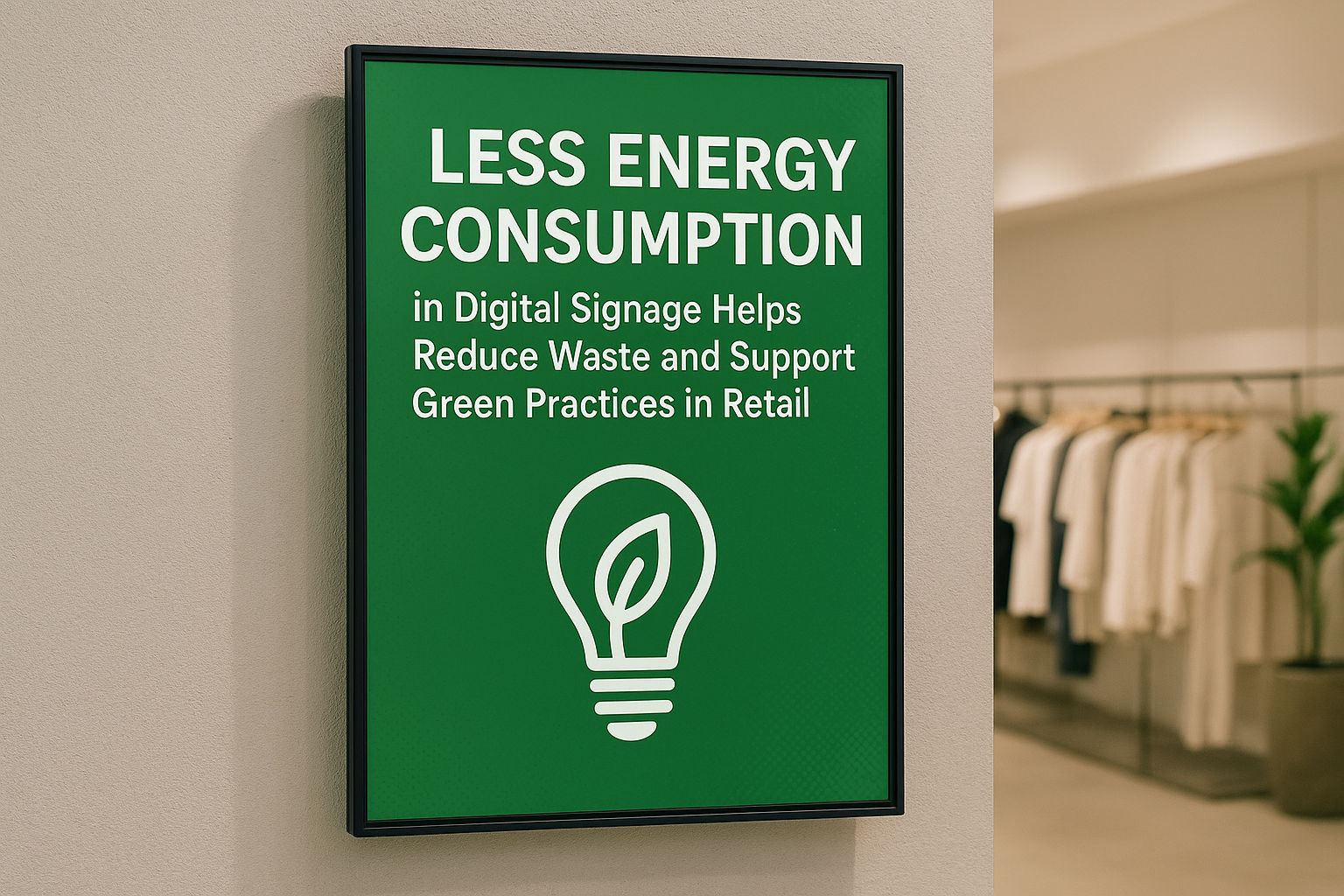
Can digital signage help you save on energy bills while being eco-friendly? Absolutely! Modern digital signage solutions mostly use LED screens known for their full brightness and energy efficiency, consuming far less power than traditional backlit signs or constantly lit posters.
Plus, these digital systems can be programmed to dim or switch off when the store is closed, conserving energy throughout the day.
Imagine businesses continue using a bright, eye-catching digital display during business hours that powers down automatically after closing, plays a crucial role by cutting electricity costs, and supports a sustainable retail environment.
3. Decreased Transportation Costs and Emissions
How does a digital signage network reduce carbon emissions linked to retail promotions? The answer is remote content management.
Instead of printing, packaging, and shipping promotional posters to multiple store locations, which is a process that racks up transportation costs and adds to delivery truck emissions, retailers can update digital signage remotely.
For example, a large retail chain can refresh all in-store displays from one central location, dramatically cutting shipping needs, lowering a company’s carbon footprint, and embracing green technology that aligns with sustainability goals.
Why is There a Growing Demand for Eco-friendly Practices in Retail With Digital Signage?

Why are more retailers racing to adopt eco-friendly practices, and how does digital signage fit into this green revolution? Today’s consumers are increasingly eco-conscious. Recent surveys show that over 70% of shoppers prefer brands that demonstrate sustainability efforts, pushing retailers to rethink their environmental toll.
Retailers face mounting pressure not just from customers but also from regulatory bodies to reduce waste and carbon footprints, making sustainable digital signage solutions a perfect fit.
How exactly does digital signage help meet these sustainability goals? By cutting down paper use, reducing ink and printing waste, and using energy-efficient LED screens, digital signage systems directly support green technology initiatives in retail operations.
For example, retailers switching from printed flyers to digital displays not only reduce their initial costs but also show customers their commitment to less waste and lower energy consumption.
It is a key driver of increased customer satisfaction and loyalty in today’s market. This digital shift is rapidly becoming a crucial component of sustainable retail environments.
How Can Digital Signage Help Save Paper and Promote Sustainability?
Wondering how digital signage actually helps reduce paper waste and boosts sustainability in retail? The magic lies in its ability to deliver dynamic, real-time content updates remotely, eliminating the need for printed posters, flyers, or menus that often end up as waste.
Take a restaurant using digital menu boards: instead of reprinting menus with every small change, they update prices or specials instantly on screen, slashing paper use and printing costs while supporting eco-friendly practices.
But does this shift really make a difference environmentally and financially? Absolutely. By cutting down paper waste and reducing the carbon footprint tied to traditional signage advertising production and disposal, digital signage solutions directly contribute to sustainability goals.
Retailers adopting these LED display systems minimize ink, paper, and disposal costs while promoting a greener, more cost-effective approach to marketing, helping create a truly sustainable retail environment that also improves operational efficiency.
How Does Digital Signage Improve Retail Business Efficiency?
How can digital signage make retail operations smoother and more efficient? The secret is real-time content management, which lets retailers update promotions, pricing, and advertisements instantly, no more waiting days or weeks to print and distribute paper signs.
For instance, a retail chain can launch a sale across all stores simultaneously through their digital signage system, saving time and reducing the need for staff to manually replace physical displays.
Why does this matter for business efficiency? By cutting down on manual labor and streamlining operations, digital signage reduces operational costs and minimizes waste. It also opens doors to how digital signage brings out the benefits in retail marketing by enabling timely campaigns and targeted messaging without waste.
Plus, the ability to roll out timely marketing campaigns and targeted messaging on digital signage displays not only enhances customer engagement but also supports sustainable practices by eliminating paper and printing waste. Retailers gain a powerful tool to optimize both their marketing and operational workflows.
How Does Digital Signage Eliminate the Need for Physical Materials in Store?
How does digital signage help retailers say goodbye to stacks of paper, posters, and flyers? Digital signage acts as a centralized hub for all in-store content, displaying promotions, product info, and announcements on vibrant screens that can be updated instantly.
Instead of printing countless brochures or handouts, stores use dynamic digital signage displays to showcase everything from saving space to significantly reducing paper waste.
Can digital signage also enhance the customer experience while cutting down on printed materials? Yes! Interactive digital screens let shoppers browse product catalogs, explore deals, or find store information on demand, removing the need for printed brochures.
For example, a retail store might replace bulky paper catalogs with an interactive digital display, providing easy access to inventory details while promoting sustainable retail practices through less paper use and waste.
How Can Digital Signage Help Reduce Carbon Footprint Through Improved Retail Management?
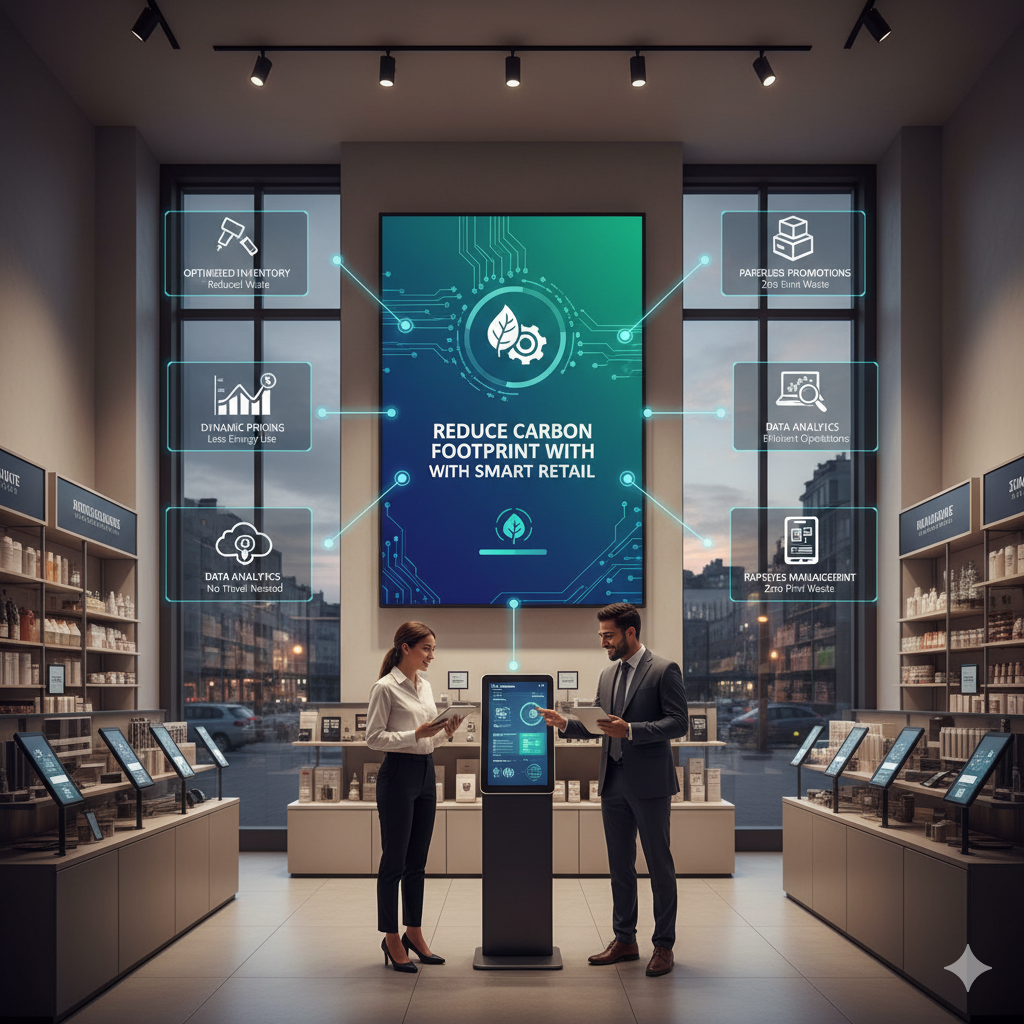
How exactly does digital signage help retailers shrink their carbon footprint through better management? By cutting down on paper, ink, and printed materials, digital signage reduces resource consumption and waste significantly.
Energy-efficient LED lighting or LCD screens also lower electricity usage compared to traditional lighted signage, leading to a greener retail operation overall.
But what about managing inventory and customer engagement? Digital signage allows retailers to update promotions and product info in real time, streamlining operations without the need for physical materials.
For example, a retailer using digital signage to coordinate in-store campaigns across multiple locations can cut down on printing and shipping, which directly reduces carbon emissions and supports sustainability goals. This makes digital signage a key player in modern eco-friendly retail strategies.
Create a Greener and Safer Future with AIScreen’s Digital Signage
Digital signage is revolutionizing retail by helping stores reduce paper waste, cut energy consumption, and lower their carbon footprint through energy-efficient LED displays and remote content management.
This innovative technology eliminates the need for printed materials like posters and brochures, streamlines real-time updates, and enhances customer engagement. This lets the retailers benefit from improved operational efficiency, reduced disposal and transportation costs, and stronger & environmentally friendly sustainability efforts.
As consumer demand for eco-friendly practices grows, digital signage becomes a vital tool for meeting these expectations while boosting business performance. AIScreen’s digital signage offers a smart, cost-effective solution to create greener, more efficient retail environments.
Start a free trial today and take the first step toward a sustainable future.


Frequently Asked Questions
What are the environmental benefits of using digital signage in retail?
The environmental benefits of using digital signage in retail include reducing paper waste, lowering energy usage with efficient LED screens, and minimizing carbon emissions by cutting the need for printed documents and physical transportation. It supports sustainability goals by shrinking the environmental footprint of retail operations.
How does digital signage promote eco-friendly messaging in stores?
Digital signage promotes eco-friendly messaging in stores by enabling real-time updates and dynamic content to communicate sustainability initiatives directly to customers. This reduces reliance on printed brochures and posters, encouraging eco-conscious behaviors while showcasing green practices.
How does digital signage contribute to waste reduction in retail advertising?
Digital displays eliminate the need for frequent printing of flyers and signs, cutting down on paper and ink, or disposal costs. Retailers can update promotions instantly without physical materials, significantly reducing disposable advertising waste.
Is digital signage more cost-effective than traditional printed signs in terms of sustainability?
Yes, digital signage lowers printing, shipping, and disposal costs while saving energy with LED technology. These savings, combined with reductions in paper and ink use, make digital signage a more sustainable and cost-effective option over time.
How does digital signage reduce the amount of waste in retail store redesigns?
During redesigns, digital signage replaces the need for new signage designs and displays that would quickly become obsolete. It allows retailers to update content digitally, minimizing physical waste and disposal costs associated with store changes.
