
Stadium Signage: What You Need to Know
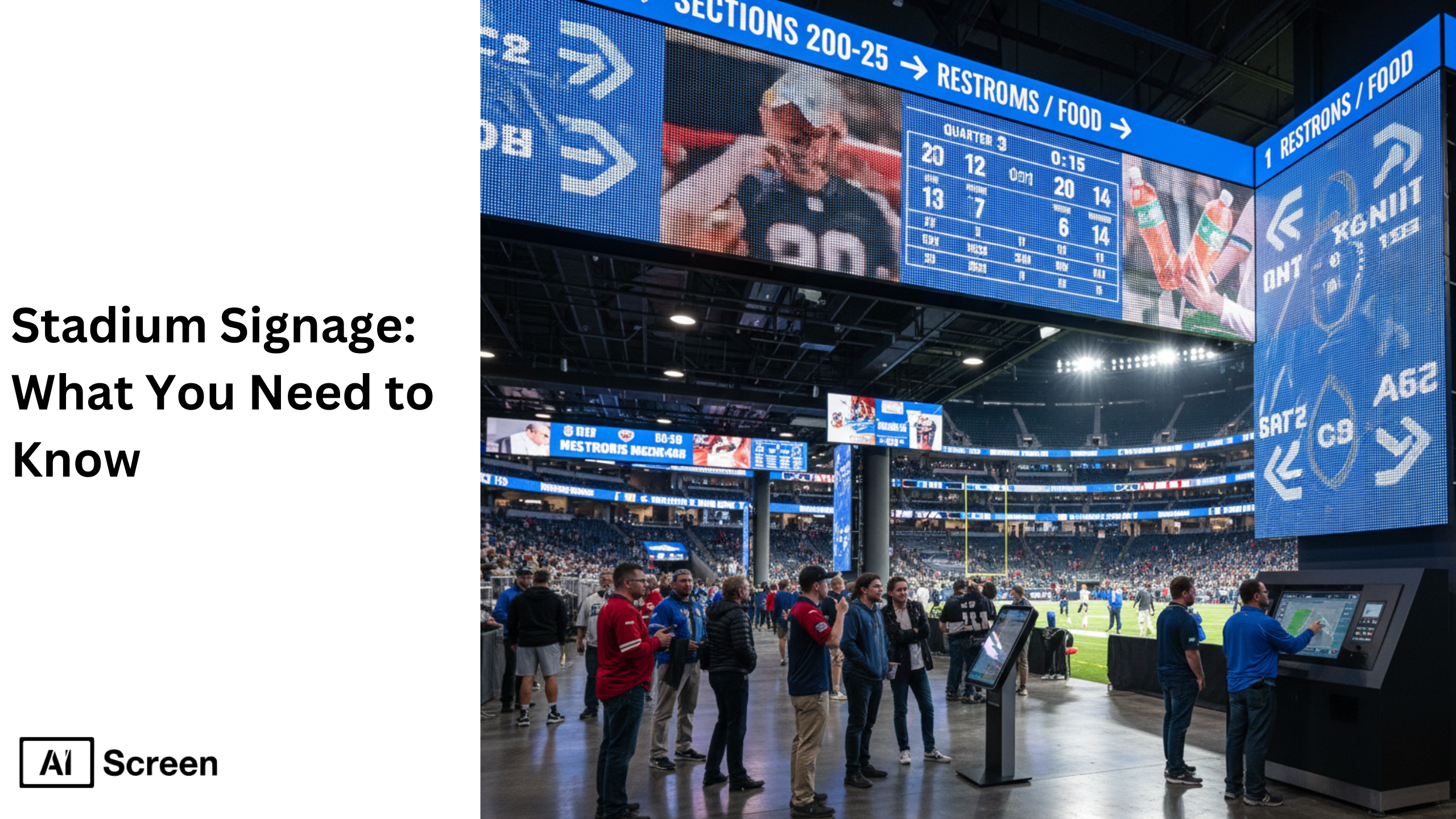
Stadium signage plays a vital role in enhancing fan experience, improving navigation, reinforcing team branding, supporting sponsors, and guiding large crowds. In modern sports stadiums, visual communication systems are not just decorative, they are central to operational efficiency, sponsor ROI, and creating an immersive atmosphere that keeps fans engaged from entry to exit. According to a PwC report, 77% of sports fans are willing to spend more on tickets to a digital stadium, and 88% believe that technology enhances their viewing experience.
In this blog, you’ll explore exactly what stadium signage is, the different types of signage used in sports venues, how stadium signs are used by operators, and how digital signage can transform the fan journey. You’ll gain clarity on both functional and experiential signage, and understand how to harness digital displays for better navigation, branding, and real-time engagement.
What is Stadium Signage?
Stadium signage, whether physical or digital, refers to all the visual cues used throughout a sports stadium, designed to direct, inform, or entertain fans. These stadium signs perform multiple roles: they guide crowds safely (functional), promote sponsors or team messages (promotional), and build immersive brand identity through stadium branding or experiential graphics.
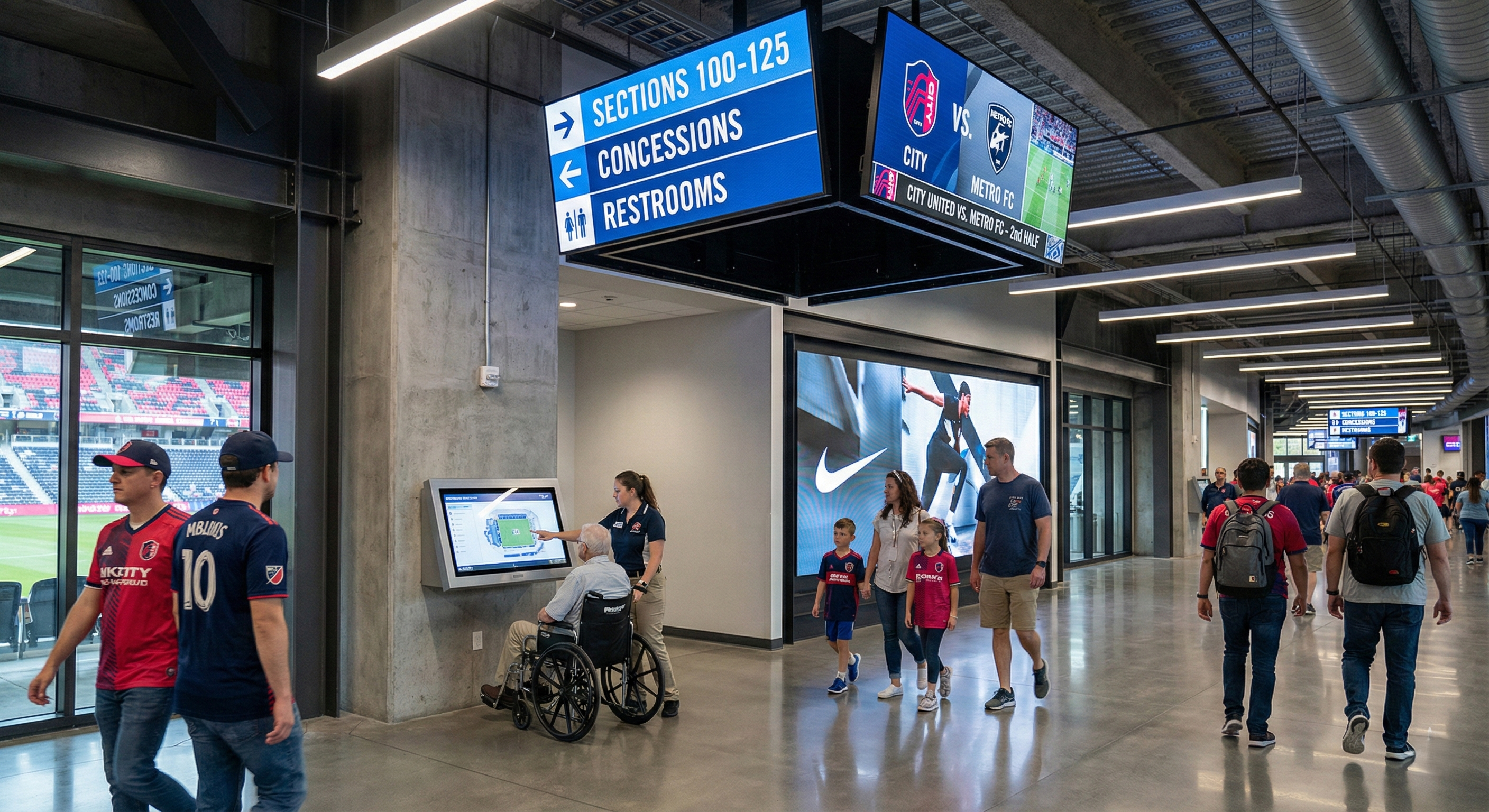
Functional signage includes wayfinding signs, safety reminders, and directional cues for exits, restrooms, and concession areas. Promotional signage displays sponsor logos, upcoming events, and branded messages, while experiential signage, like interactive digital screens or media walls, enhances fan experience by showing replays, team stats, or dynamic content.
Creating a clear visual ecosystem is essential in sports stadiums: a survey by Capgemini reported that 69% of fans believe emerging technologies (like digital displays) have significantly enhanced their in-venue experience. This statistic underscores how important stadium digital signage has become for modern sports stadiums, not just for visibility but for creating emotionally resonant fan journeys.
What are the Best Types of Stadium Signage?
The best types of stadium signage combine environmental graphics, wayfinding, branding, and entertainment to form a cohesive visual ecosystem. Here are ten powerful formats used in arenas today, all supporting stadium branding and fan experience:
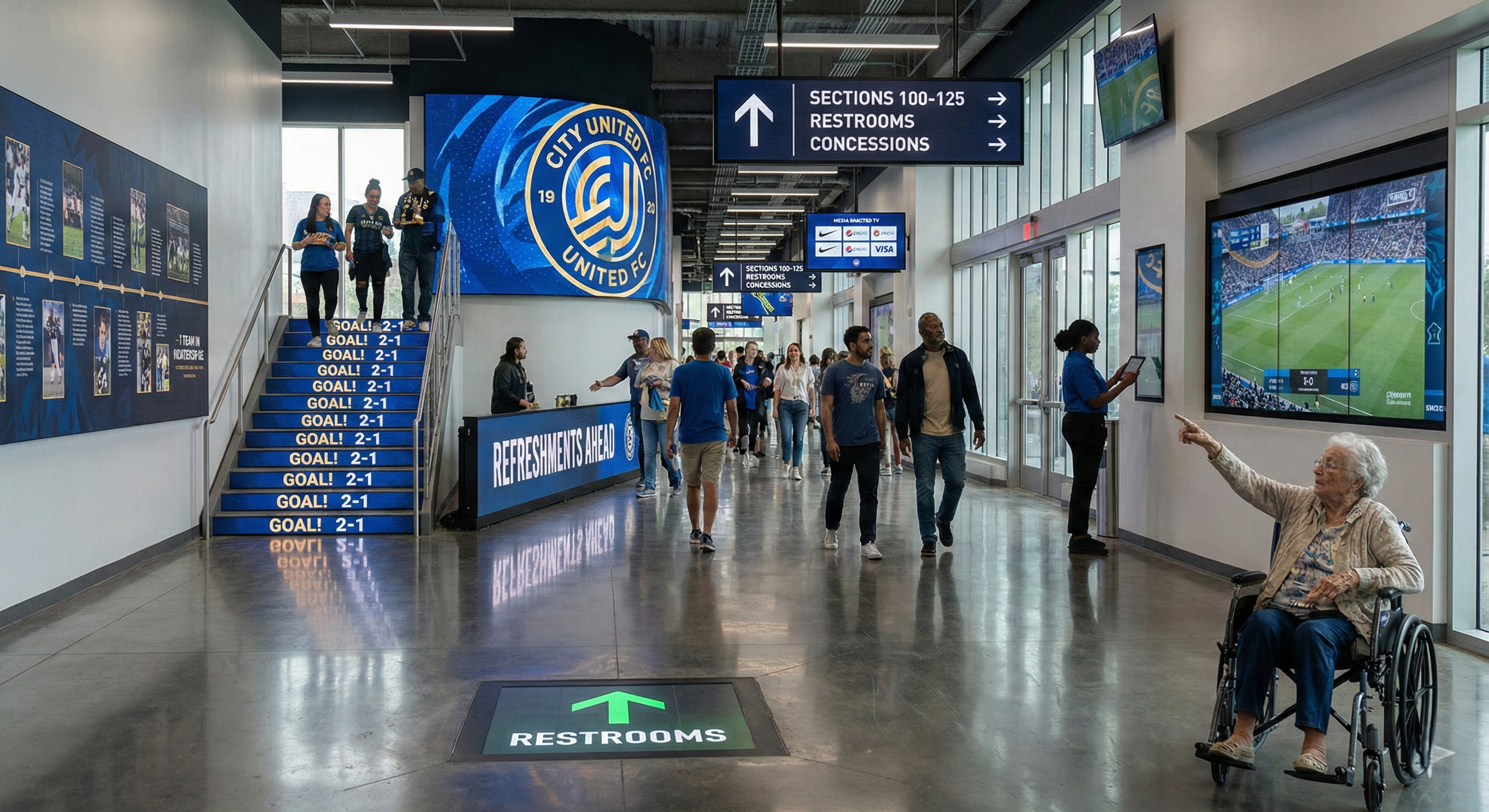
Environmental Graphic Displays
Vital for branding a stadium, environmental graphics visually connect fans to their surroundings while simultaneously informing them. These large-scale graphics shape the emotional sense of place around concourses and entrances.
Large-Scale Wall Murals
These transform blank walls into storytelling canvases, from team logos to historical murals that celebrate a club’s legacy or community. They elevate older or plain wall spaces into branded masterpieces.
Stair Riser Graphics
Stair risers provide a direct, physical journey for fans. By branding stair steps with logos or artistic visuals, venues can turn an ordinary climb into a meaningful narrative that reinforces team branding.
Dasher Board Signage
Common in hockey arenas, dasher boards wrap around the playing field. They provide 360-degree sponsor exposure and reinforce the team’s brand at eye level for all viewers.
Fence Mesh, Windscreens & Barrier Covers
These mesh banners convert perimeter fencing or barricades into high-visibility branding zones. They are especially useful during pre-game entry, capturing fans’ attention as they approach.
Concourse Signage, Retail Displays & Banners
Vinyl banners, mesh signs, or backlit signage in concourses, retail areas, or press boxes deliver messaging that supports sponsors, advertises merchandise, or drives seasonal promotions during sporting events.
Floor Decals & Graphics
Floor graphics combine wayfinding with marketing: they guide fans to key locations (restrooms, food kiosks) while promoting team slogans, sponsor logos, or interactive graphics.
Media Wall Backdrops
Media walls provide a branded backdrop for interviews, photo ops, and social media content. They reinforce team branding and sponsor visibility in media zones.
Branded Vehicle Wraps
Vehicles used by the team or stadium (shuttle buses, promotional vans) wrapped in team logos or sponsor designs extend the brand identity beyond the venue.
Window Display Graphics
Window films transform glass facades into vibrant branded visuals. They’re effective in entrances, suites, or administrative areas, helping to convey spirit and messaging. Learn more about how does zoo signage improve the visitor experience


What Do People Use Stadium Signage?
People use stadium signage for a variety of key reasons, from guiding fans to ensuring safety to strengthening branding and advertising strategies. According to Infillion’s 2024 “New Sports Fan” research report, 62% of millennial sports fans and 67% of Gen Z fans often notice which brands sponsor their stadium.
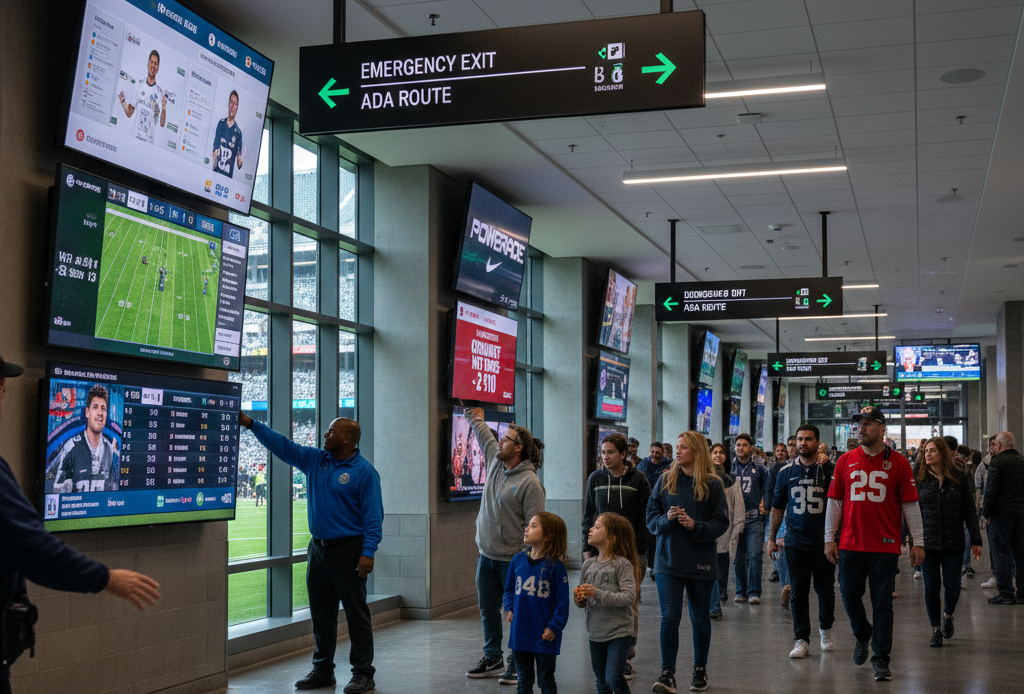
This shows how effective football stadium signage and other forms of sponsorship signage are in capturing attention, making them a valuable tool for both stadium owners and brands. Here are the primary uses of stadium digital signage and stadium signs, especially in high-traffic areas like entrances, concourses, and seating zones:
- Fan navigation & wayfinding: Stadium owners rely on digital signs, ribbon boards, and other arena signage to guide guests through high traffic areas, decision points, and exits. This helps reduce confusion, manage crowds, and improve safety.
- Safety awareness: Signage in high visibility locations shows emergency exits, ADA-compliant routes, and real-time updates about road closures, or hazards, helping maintain a safe experience for all guests.
- Promotional advertising: With digital menus, media backdrops, and window graphics, stadiums provide sponsors with premium display space. These advertising placements reach a captive audience throughout the game.
- Sponsor visibility & team branding: Exterior signage, banners, and digital signs reinforce brand identity for home team sponsors. They also build up the brand identity of the venue, creating a strong emotional link between fans and the arena.
- Concession sales: Operators use digital menus and rotating digital signage content to advertise food, merchandise, or limited-time offers, increasing revenue through visible promotions.
- Strengthening team culture and engagement: Media backdrops, scoreboards, and digital signs featuring player stats, upcoming events, or interactive content create a deeper emotional connection with fans, reinforcing loyalty.
How Can Digital Signage Take Your Stadium Experience to the Next Level?
Digital signage takes your stadium experience to the next level by transforming static signage into a dynamic, interactive, real-time communication system. With digital screens, operators can broadcast live scores, instant replays, player stats, and real-time data like time remaining or game updates. They can rotate sponsor content in real time, schedule digital menus for concession stands, and push emergency alerts when needed.
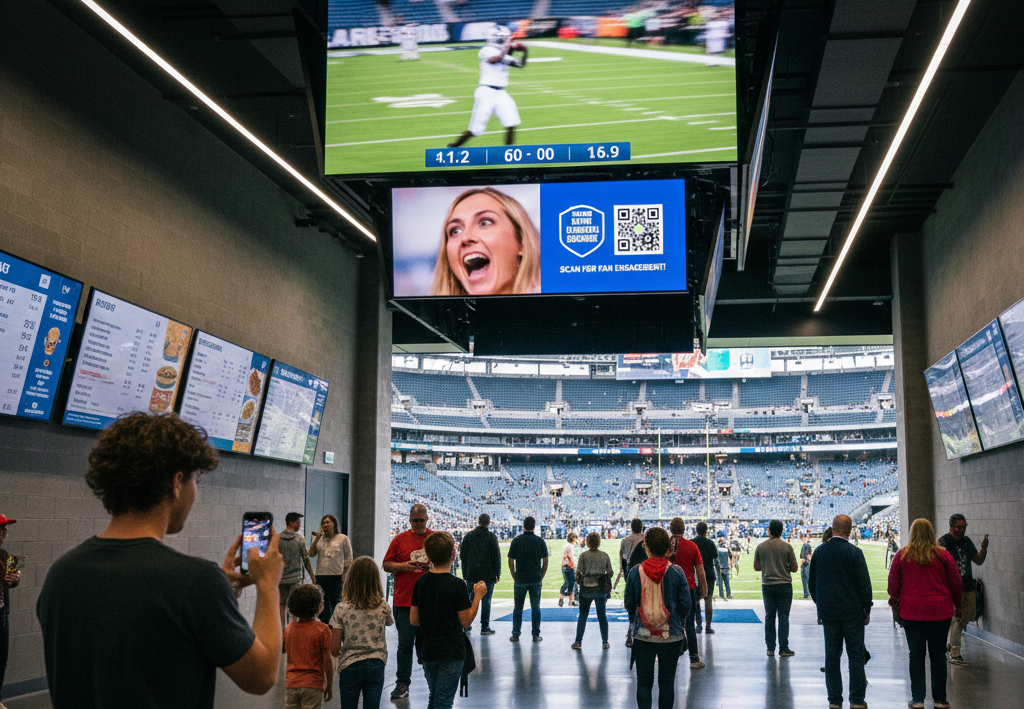
Interactive features enable QR-powered engagement, letting fans scan to join loyalty programs, vote in in-game polls, or access social media. Digital signage can also support interactive games, showing trivia or augmented-reality activations on concourse screens.
Real-time analytics further enhance this system. According to a report by Stats Perform, 72% of sports fans express a preference for quick access to live score updates via digital out-of-home displays. This shows that digital signage not only meets fans’ expectations for real-time engagement but also creates premium opportunities for sponsors and advertisers who want to reach a highly attentive audience.
Why Are Modern Stadiums Moving Toward LED and Interactive Signage?
Stadiums are increasingly adopting LED boards, interactive displays, and digital signage because they offer unmatched flexibility, the ability to deliver up to date information instantly, and create immersive game-day experiences. By using arena signage that supports animation, motion graphics, and real-time updates, operators can adapt messaging quickly, whether it’s for crowd control, wayfinding, sponsorship advertisements, or last-minute event changes across the entire facility.
Unlike traditional signs, modern stadium signs allow stadium owners to dynamically manage content like scoreboards, live game highlights, and safety alerts. High-resolution LED systems also increase monetization potential through rotating advertisements, offering sponsors premium visibility per seat and across wide arenas. Even in the parking lot, digital signage enables smoother entry/exit flow, while interactive kiosks assist with clear objectives such as digital ticket scanning and directional guidance.
Interactive technology goes beyond display, it enhances engagement. During an event, fans can participate in polls, view instant replays, or explore merchandise offers directly on smart touchscreens. In the locker room, LED messaging boosts motivation and displays strategy-focused points before the game, keeping the audience, players, and operations aligned for a great event using the right mix of visual tools.
As we already read in this article of stadium signage: what you need to know, platforms like AIScreen.io empower stadiums with real-time scheduling, customizable layouts, and remote updates. AIScreen delivers industry-leading digital signage and arena signage solutions, making it simple for large entertainment venues to display up to date information, enhance navigation between seats, and optimize sponsor advertisements without technical difficulty.
Frequently Asked Questions
Why is stadium signage important for sports venues?
The importance of stadium signage for sports venues lies in its ability to guide the audience, improve wayfinding, and communicate up to date information across the arena. Effective digital signage ensures smooth movement between seats, complies with the disabilities act, and sets the tone for a great event.
How does stadium signage enhance fan experience and venue navigation?
Enhancing fan experience through stadium signage happens when the facility uses clear signs, strategic arena signage, and digital displays that provide location-based guidance and event updates. This improves wayfinding, helps attendees reach their seat quickly, and keeps them informed throughout the game.
Why should stadiums invest in high-quality, durable signage?
Stadiums should invest in high-quality, durable signage because long-lasting stadium signs ensure consistent delivery of up to date information and advertisements even under weather stress or heavy crowd usage. Strong digital signage supports clear objectives, improves operational efficiency, and helps maintain standards under the disabilities act.
Can stadium signage be customized for concerts, events, and championships?
Yes, customizing stadium signage for concerts and major championships is possible using flexible digital signage systems that adapt content across multiple arenas. This allows operators to reposition signs, tailor messages for each event, and update wayfinding in real time, ensuring every audience has an optimized arrival-to-seat experience.
How much does stadium signage cost?
The cost of stadium signage depends on display type, size, placement, and whether it’s static or advanced digital signage. Larger venues with interactive arena signage, real-time scoreboards, and system-wide integration for parking lot communication typically require a higher budget to meet clear objectives and support reliable signs during every game at the facility.
