
What Are the Benefits of Hologram Digital Signage in Retail Environments?
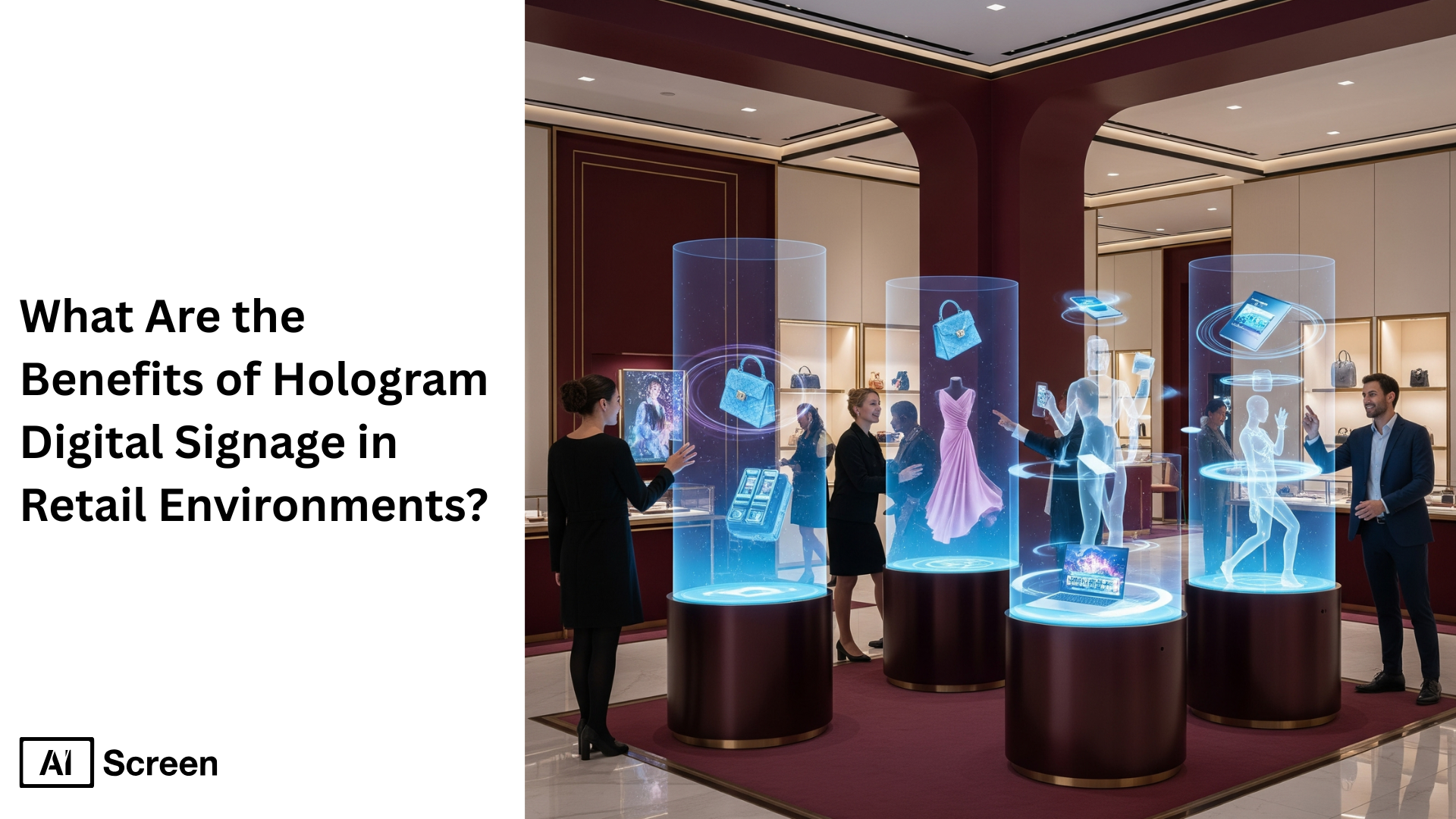
Holographic technology is revolutionizing digital signage in retail by offering immersive, attention-grabbing displays that enhance customer engagement and drive sales. According to a study published on ResearchGate, the 50% effectiveness of digital signage in retail environments is influenced by factors such as message content, appeal type, and product category. Notably, in-store advertising has shown significant effects on sales uplift, particularly for hedonic products like snacks and entertainment items. This underscores the potential of holographic displays to captivate consumers and influence purchasing decisions.
In this blog, we explore how integrating holographic technology into digital signage can transform retail experiences. We delve into the science behind holograms, their impact on consumer behavior, and real-world examples of successful implementations.
The Rise of Holographic Technology in Retail
In the ever-evolving retail landscape, staying ahead of the competition and capturing consumers’ attention is crucial. One technology that has gained significant traction in recent years is holographic digital signage.
As per AIScreen experts, hologram digital signage mesmerizes customers, boosting in-store engagement and sales by 45%.

These futuristic displays have not only captivated shoppers but also revolutionized the way retailers engage with their customers.
As per our experience at AIScreen, integrating holographic digital signage in retail environments is a game-changing development, offering unparalleled opportunities for consumer engagement and sales enhancement. For more details, check our article face recognition technology in digital signage: what is it and how does it work?
Historical Context and Technological Advancements With Holographic Digital Signage
Holographic digital signage have their roots in the concept of holography, which was first introduced by Hungarian physicist Dennis Gabor in 1947.

However, it wasn’t until the last decade that technological advances made it possible to bring holographic digital signage into the mainstream. These advancements include improvements in laser technology, optics, and projection techniques.
Comparison with Traditional Digital Signage

While traditional digital signage has been a staple in retail for many years, holographic digital advertising offer a more immersive and attention-grabbing alternative.
Traditional displays are limited to two-dimensional screens, whereas holographic retail space create three-dimensional images that appear to float in mid-air.

This three-dimensional aspect creates a sense of novelty and curiosity, making it an effective tool for drawing customers’ attention to products and promotions.
Consumer Engagement and Interaction

The impact of 3D holographic on customer behavior and experience is profound. Shoppers are naturally drawn to the lifelike 3D holographic images, leading to increased foot traffic and longer dwell times in stores.
The interactive nature of these displays allows customers to interact with products virtually, trying out different colors, styles, or configurations.

This not only enhances the shopping experience but also provides valuable data to retailers about consumer preferences and digital signage retail trends.
To maximize consumer engagement, retailers should consider the 7 C’s of digital signage retailing, which cover key factors such as clarity, consistency, and content relevance.
Impact on Customer Behavior and Experience

Holographic physical stores have proven to influence customer behavior significantly. Studies have shown that they increase the likelihood of shoppers making impulse purchases, leading to higher transaction values.
Additionally, the interactive nature of holographic physical space encourages customers to spend more time exploring products, which can lead to a deeper emotional connection with the brand.
Case Studies of Successful Implementations
Several retailers have successfully incorporated holographic experiential marketing into their stores. For example, a luxury fashion brand used holographic mannequins to showcase their latest collection, resulting in a 20% increase in sales during the launch period.

Similarly, a consumer electronics store used 3D holographic displays to demonstrate the features of their products, leading to a 15% rise in overall sales.
Sales Performance and Product Promotion
The analysis of sales uplift from holographic image displays is encouraging. Retailers have reported significant increases in sales and product promotion effectiveness.
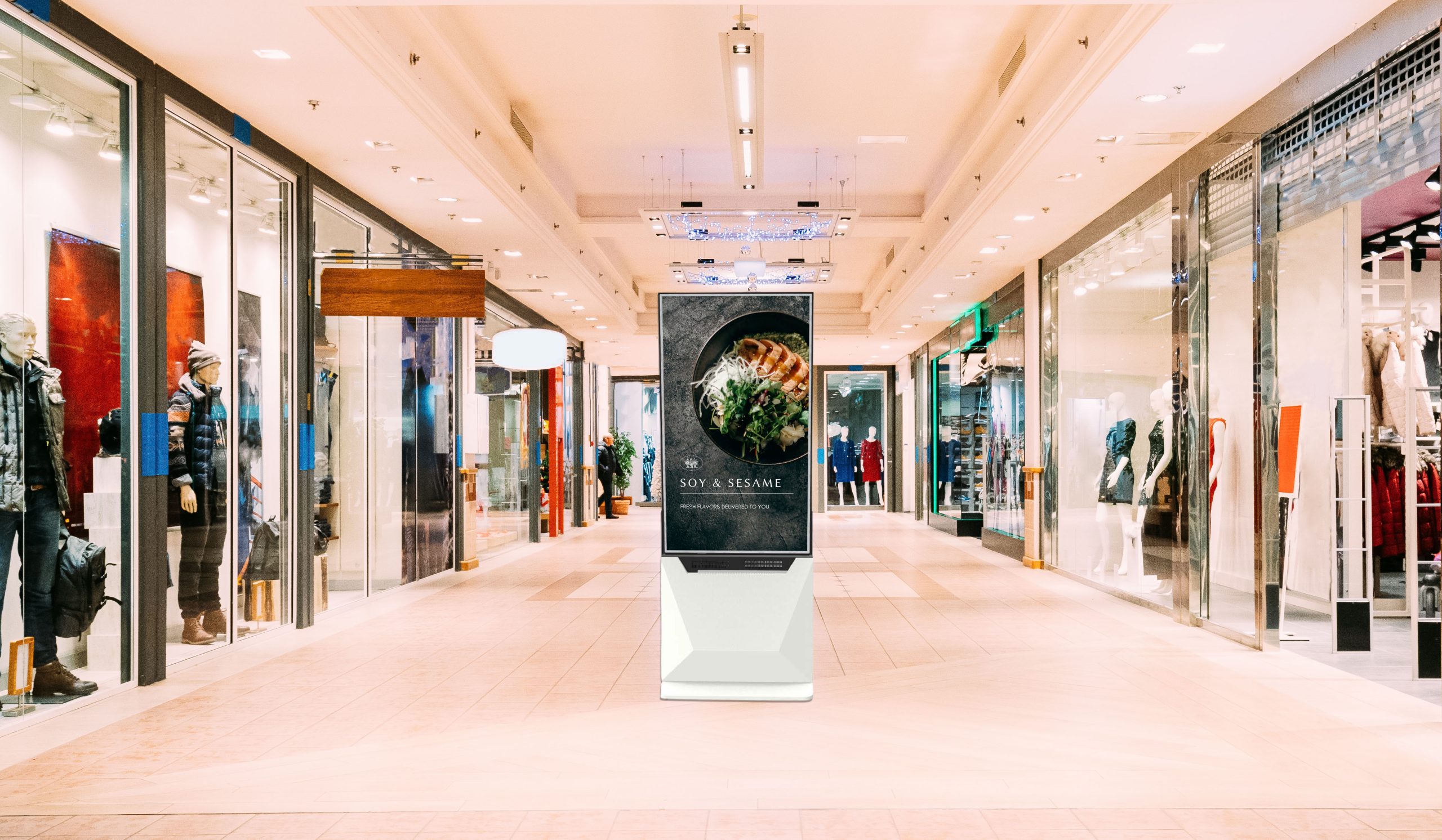
However, the impact may vary depending on the product category. High-end fashion and consumer electronics tend to benefit the most from holographic new technology displays, as customers appreciate the immersive experience and detailed product presentations.
The Role of Product Categories in Sales Effectiveness
Product categories play a crucial role in the effectiveness of holographic displays. While they are beneficial for showcasing visually appealing and high-end products, they may not be as effective for everyday essentials.

Retailers should carefully assess their product mix and customer demographics to determine the best areas for implementing holographic content creation displays.
Challenges and Considerations

Despite their numerous benefits, holographic display come with their fair share of challenges and considerations.
Technical and financial challenges include the initial cost of implementing the technology, maintenance and ensuring compatibility with existing systems.

Additionally, retail digital signage must address concerns related to consumer privacy and ethical considerations, such as using facial recognition in interactive displays.
Start Revolutionizing Your Retail Experience with AIScreen’s Holographic Digital Signage Solutions!

The rise of holographic displays in retail is reshaping the industry’s landscape. These cutting-edge technologies are revolutionizing how retailers engage with customers, enhancing the shopping experience and driving sales.
However, retailers must navigate technical and financial challenges while also addressing ethical concerns related to privacy.

As holographic display continue to evolve, they hold the potential to play an even more significant role in the future of retail, offering exciting possibilities for both businesses and consumers alike.
For more details, visit our contact us page.


FAQs
How do holographic displays work, and what makes them different from traditional digital signage?
Holographic technology uses optics, projection techniques, and sometimes lasers to create three-dimensional images that appear to float in mid-air. These interactive displays in retail stores enhance customer engagement and provide immersive brand experiences. Unlike traditional digital displays, holographic advertising allows for eye-catching displays and interactive product demonstrations that engage consumers more effectively.
What types of products or retail environments benefit the most from holographic displays, and are they suitable for all retail businesses?
Holographic displays are especially effective for high-end, visually appealing products such as luxury fashion, electronics, and automotive showrooms. Retail spaces using holographic advertising see higher dwell time, increased customer loyalty, and enhanced brand visibility.
What are the cost implications of adopting holographic digital signage for retail?
The initial investment in holographic technology can be higher than traditional digital displays due to hardware, software, and installation costs. However, the long-term benefits include increased customer engagement, improved in-store dwell time, and the ability to immediately update retail displays for promotions or product launches.
How easy is it to integrate holographic signage with existing retail systems?
Modern holographic displays can integrate with point-of-sale systems, inventory management, and e-commerce platforms, allowing shoppers to make informed decisions. Retailers can also sync holographic advertising with interactive billboards or augmented reality systems to educate customers and provide personalized shopping experiences.
What is the customer reaction to holographic digital signage compared to traditional signage?
Customers in retail spaces respond enthusiastically to holographic displays, reporting higher engagement and a stronger wow factor compared to traditional digital displays. These light field displays and mixed reality experiences reduce perceived wait times and increase dwell time, helping customers explore products interactively.
