
What is a Signage?

Signage is any visual display used to communicate messages, guide people, promote products, or provide information across physical and digital environments. According to Research Gate shows that effective signage can boost brand recognition by up to 75% and increase foot traffic in retail stores, public spaces, and office buildings.
In this blog, you will understand what signage is, its types, use cases, and how modern digital signage software and digital displays are transforming customer engagement, brand visibility, and overall customer experience.
Modern facilities manage these displays with digital signage software so signage stays accurate and easy to update.
What Does Signage Mean?
Signage means a system of visual displays designed to communicate messages clearly to a broad audience. It includes both traditional signs and modern digital signage solutions used in everyday life across retail stores, city streets, office buildings, and public spaces.
Signage plays a significant role in helping visitors navigate, providing directions, and delivering promotional or safety instructions effectively. Well-designed signage serves multiple purposes, including attracting customers, improving customer experience, and establishing brand identity. Whether it’s outdoor signs or digital signs, signage acts as a silent salesperson that communicates messages 24/7.
What Does Signage Include?
Signage includes a wide range of visual communication tools used by businesses to attract attention and convey information. It covers multiple formats, each serving a specific purpose in communication, branding, and navigation.
- Storefront Signage: Exterior signs placed at entrances to display brand identity and attract customers.
- Window Displays: Glass-mounted visuals used to showcase promotions, products, or store information.
- Illuminated Signs (LED Boards): Lighted signage that ensures high visibility during day and night.
- Digital Displays: Screens used for dynamic content like promotions, announcements, and branding.
- Menu Boards: Structured displays (static or digital) used to present product offerings and pricing.
- Interactive Kiosks: Touch-enabled screens that allow users to search information or navigate spaces.
- Wayfinding Signage: Directional signs that help people navigate buildings, campuses, or large areas.
- Informational Signage: Signs that communicate essential details like store hours, policies, or instructions.
- Safety Signage: Compliance-focused signs that highlight hazards, rules, and emergency procedures.
Together, these signage solutions form a valuable tool that helps businesses display information, promote products, and engage potential customers effectively.
What Are the Three Primary Categories of Signage?
The three primary categories of signage each serve distinct and important purposes in guiding and engaging audiences. So, “what are these categories and how do they work in real life?” Let’s break them down to understand their roles clearly.
Informational Signage
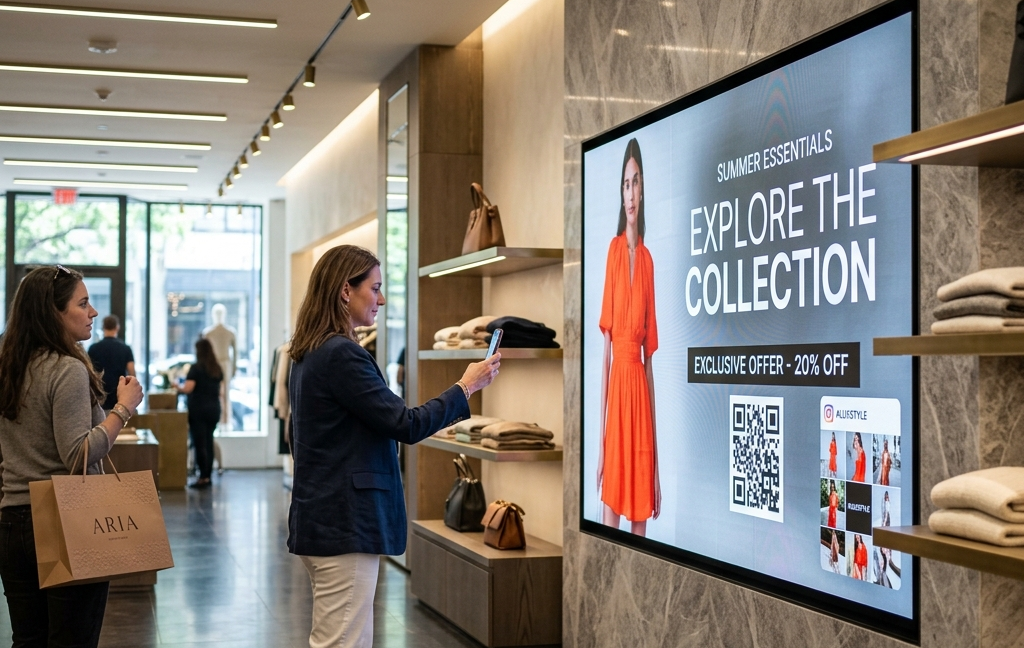
Informational signage guides or educates viewers by providing necessary details and instructions. For example, safety signage in workplaces communicates health regulations, while informational signs in retail stores detail product features and usage.
Directional Signage
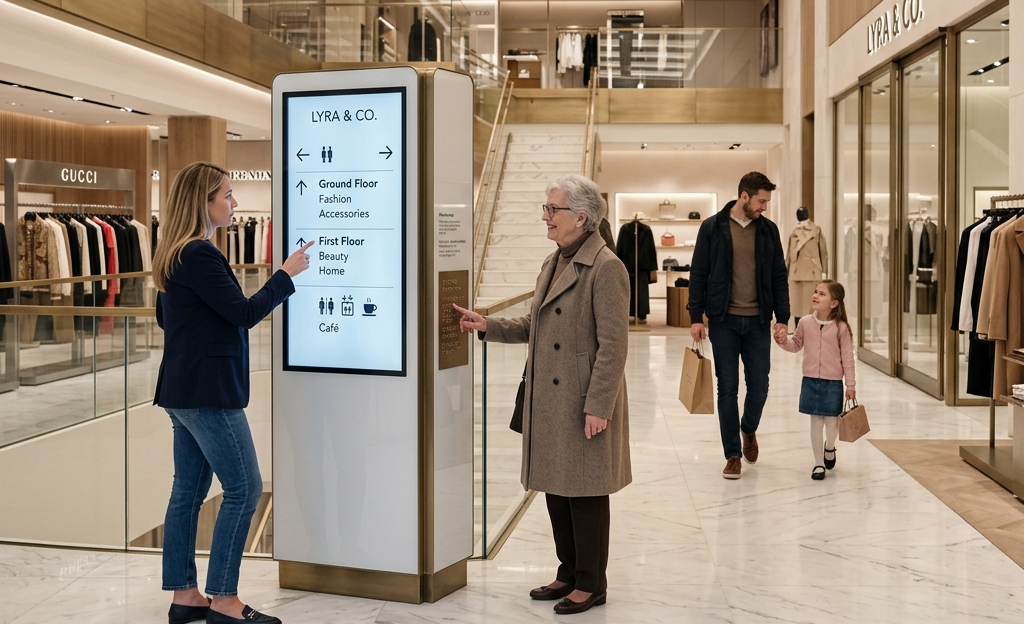
Directional signage helps with navigation, ensuring visitors can find their way easily. Wayfinding signage, directional signs, and road signs in shopping malls or transport hubs guide foot traffic smoothly with arrows and maps.
Promotional Signage

Promotional signage advertises or markets products and services to attract customers. Examples include neon signs lighting up storefronts, digital signs displaying real-time offers, and promotional retail signage that boosts brand recognition and sales.
Together, these signage types create a complete visual communication system that enhances brand identity, improves customer experience, and drives engagement in diverse environments like office buildings, shopping malls, and public spaces.
Does Signage Represent Exposure in Modern Industries?
Yes, signage represents continuous brand exposure, especially in industries like retail, healthcare, corporate offices, and hospitality where visibility directly impacts engagement. In retail environments, digital signage powered by platforms like AIScreen increases customer attention through dynamic content, real-time promotions, and high-impact visuals placed in high-traffic zones.
With AIScreen, businesses can use 500k+ ready-made templates to quickly launch campaigns, maintain brand consistency, and update content across multiple locations instantly. Features like centralized dashboard control, scheduling, and Proof of Play ensure every screen delivers measurable exposure. Unlike static ads, digital signage adapts in real time, helping brands stay relevant, capture attention, and maximize visibility across different environments.
What Does Signage Mean in Workplaces?
In modern workstations and industrial environments, signage goes beyond basic instructions, it becomes a real-time communication system. In manufacturing units, warehouses, and corporate offices, digital signage helps display safety protocols, workflow updates, KPIs, and internal announcements. With AIScreen, teams can deploy interactive dashboards, safety alerts, and instructional templates across screens to improve operational efficiency.
For example, a warehouse can display live inventory updates, while offices can show meeting schedules or internal communications. Pre-designed templates simplify content creation, while remote management ensures updates happen instantly without manual intervention. This approach reduces confusion, improves compliance, and creates a more organized, productive workspace.
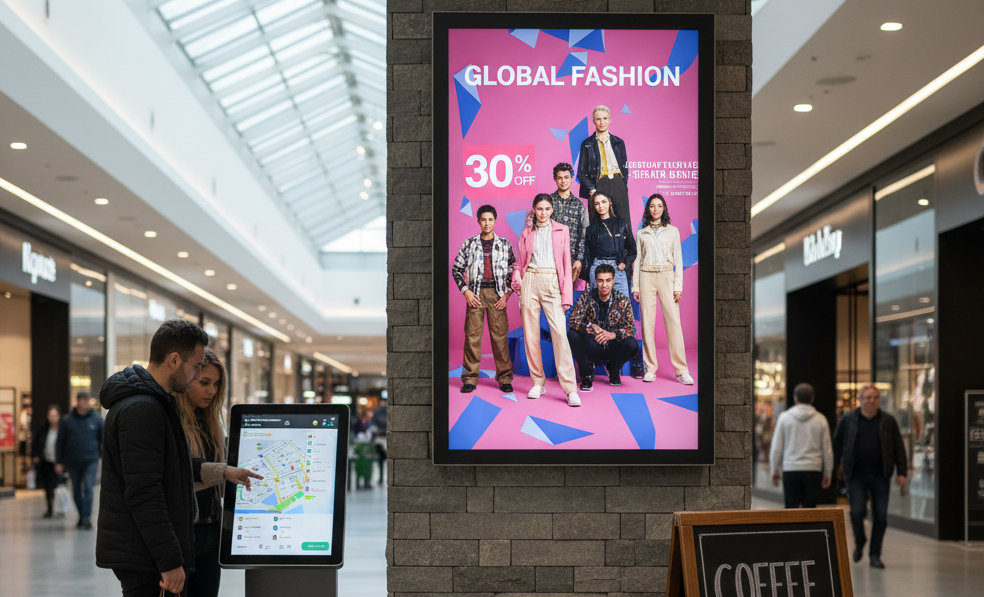
What Defines Good Signage?
Good signage is clear, visible, consistent, and strategically placed. Effective signage uses high quality materials, simple fonts, and strong contrast to ensure messages are effectively communicated.
Well designed signage aligns with a company’s logo and brand identity while maintaining readability in different lighting conditions. Good signage attracts attention, conveys information quickly, and enhances customer experience.
What Are the Main Types of Signs?
The three main types of signs are regulatory signs, warning signs, and informational signs. Regulatory signage enforces rules such as stop signs or speed limits.
Warning signs alert people about hazards, especially in construction sites or roads. Informational signs provide directions or general information to help visitors navigate safely. To explore more detailed classifications and modern formats, you can also check what are the types of digital signage? A definitive guide.
When Signs and Signage Used?
Signs and signage are used whenever businesses need to communicate, guide, promote, or ensure safety across different environments. In retail stores, they attract customers and highlight products. In public spaces, they improve navigation and reduce confusion. In workplaces, safety signage ensures compliance with regulations, while in events, signage helps manage crowds and deliver important information.
The purpose of signage is to inform, guide, promote, or warn. It acts as a silent salesperson, enhancing customer experience, influencing buying decisions, and increasing brand visibility while delivering clear, consistent messaging.
Understanding the difference between a sign and signage is also important:
| Aspect | Sign (Single Unit) | Signage (System of Signs) |
| Definition | A single visual display | A coordinated system of multiple signs |
| Purpose | Communicates one specific message | Delivers consistent communication across locations |
| Scope | Limited to one placement | Covers entire environments (store, office, campus, etc.) |
| Example | One “Exit” sign | Complete wayfinding system with exits, directions, and maps |
| Impact | Provides basic information | Enhances navigation, branding, and overall user experience |
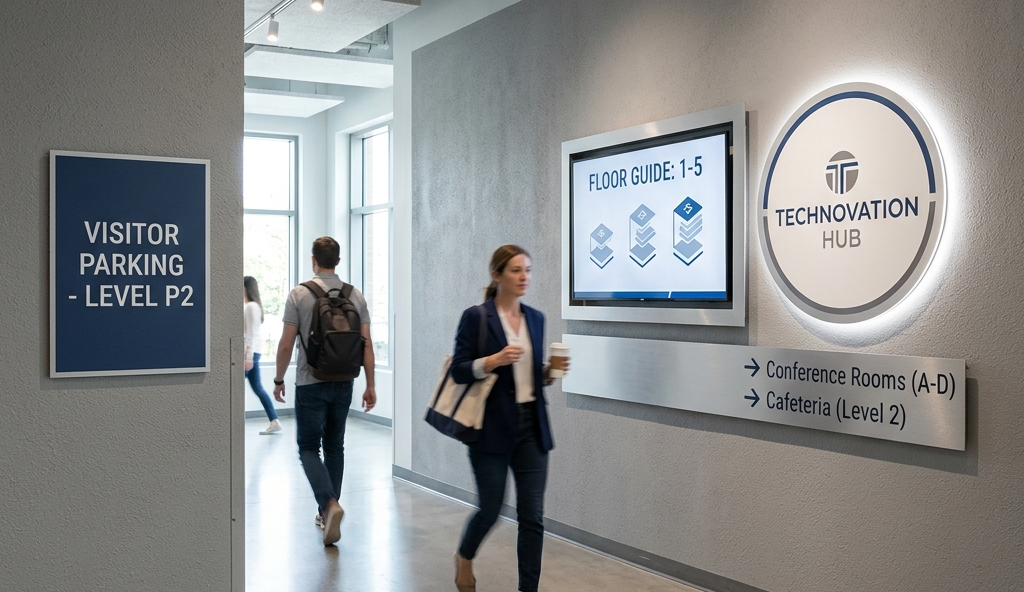
What Is a Signage System?
A signage system is a structured network of signs and digital displays managed centrally. It includes traditional signs and digital signage connected through a CMS platform, allowing businesses to update content in real time. This system ensures consistency, improves customer engagement, and simplifies management across multiple locations.
Signage is used for promotions, navigation, safety communication, and information display. Retail businesses use promotional signage and window displays to attract customers. Safety signage ensures compliance in workplaces. Digital directories and wayfinding signage help visitors navigate large environments. This versatility makes signage a valuable tool across industries.
What is the Difference Between Signs and Signage?
Understanding the difference between signs and signage helps businesses choose the right communication strategy. While a single sign conveys one message, signage represents a complete system of visual communication designed to guide, inform, and promote effectively.
A well-planned signage strategy ensures consistency, improves navigation, and enhances brand identity across all touchpoints. For a deeper comparison and practical examples, you can explore signs vs. signage: what’s the difference?
Frequently Asked Questions
How does signage differ from labels or branding materials?
Signage is a broader visual communication system used to guide, inform, or promote across a space, while labels focus on specific product details like ingredients or pricing. Branding materials, on the other hand, support identity, whereas signage actively communicates messages to an audience in real time.
Why should businesses invest in signage?
Businesses should invest in signage because it increases visibility, attracts foot traffic, and improves customer navigation. It also strengthens brand presence and creates a more engaging and professional environment for customers.
Can signage be used for marketing?
Yes, signage is a powerful marketing tool that promotes products, services, and offers directly at the point of interaction. Digital signage enhances this further by displaying dynamic, real-time content that captures attention and drives engagement.
What materials are used in modern signage?
Modern signage uses durable materials like acrylic, aluminum, vinyl, and glass for physical signs. It also includes digital components such as LED screens and content management systems (CMS) for dynamic and interactive displays.
How Does Signage Differ from a Banner?
Signage is typically permanent, while banners are temporary. Banners are used for short-term promotions or events, whereas signage is designed for long-term communication and branding using high quality materials.
Is Signage Considered a Form of Advertising?
Yes, signage is a powerful form of advertising. It continuously promotes products and services, attracts attention, and enhances brand marketing. Digital signage further improves advertising by enabling dynamic content and real-time updates.
Why Choose AIScreen for Signage?
Right business signage are shifting to corporate signage because it offers dynamic updates and real-time content, unlike static signage displays. With digital, you can schedule content, showcase social media walls, and remotely manage screens across multiple locations effortlessly. This flexibility keeps messaging fresh, boosts engagement, and provides measurable insights.
Digital signage is rapidly replacing traditional formats thanks to these features, delivering better ROI through targeted, timely communications. AIScreen’s platform is a great example, offering real-time content updates, content scheduling, social media integration, and remote management, all designed to make digital signage simple and effective. Book 14 days free trail.


