
How to Use Interactive Retail Kiosks?
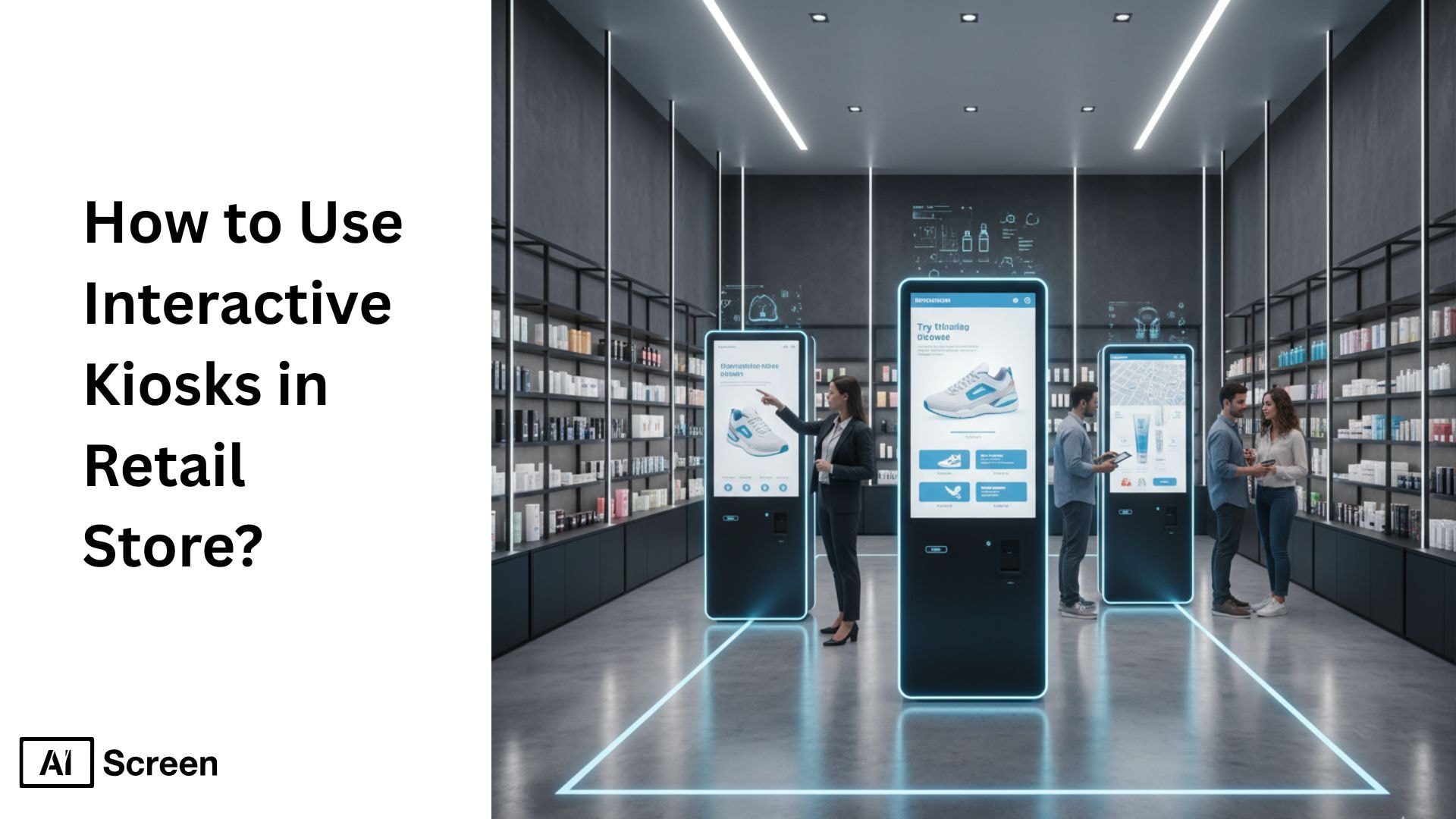
Interactive kiosks in retail stores provide numerous self-service options, improving customer convenience and potentially increasing sales. These kiosks enable quick checkouts, access to detailed product information, virtual dressing rooms, and other services, making the shopping experience smoother. By streamlining tasks, they help customers navigate purchases efficiently while freeing staff to focus on other in-store support. Overall, digital kiosks enhance engagement and operational efficiency, contributing to improved efficiency across retail environments. According to PwC, 75% of customers expect personalized experiences, which kiosks can deliver through tailored recommendations.
In this blog, we will explore how interactive kiosks in retail stores can transform the shopping experience, offering actionable insights for retailers to implement these solutions effectively. We will cover a range of applications, providing users with insights from wayfinding kiosks and virtual try-ons to seamless self-checkout and loyalty program integrations. By understanding these benefits, retailers can leverage interactive kiosks to create a more enjoyable and efficient shopping environment.
1. Navigating the Store with Ease
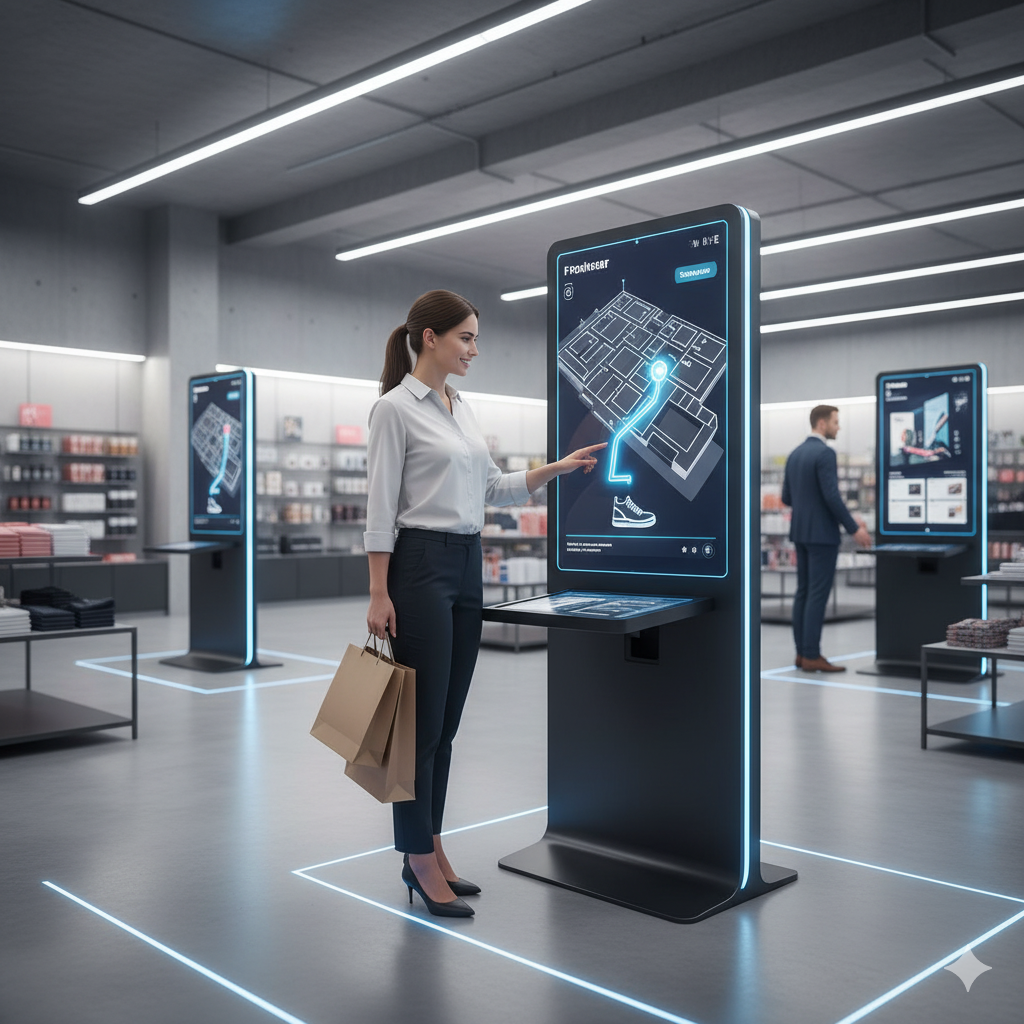
Interactive kiosks in retail stores work as digital guides, enabling customers to navigate large or complex retail spaces efficiently. Wayfinding kiosks help shoppers locate specific products, departments, or promotions, enhancing customer experience and satisfaction. Retail kiosks provide self-service store navigation capabilities and touchscreen interfaces, allowing users to interact with store maps and directions easily. By incorporating these kiosks, retail stores can streamline operations and support a diverse customer base, demonstrating how digital kiosks work effectively .
According to TechRepublic, stores with self-service kiosks experience up to 25% faster checkout times, reducing customer wait times. For example, a digital kiosk in a department store can show the exact aisle location of a product, reducing the time customers spend searching. Stores can also leverage self check in kiosks alongside store navigation kiosks to enhance engagement, improve operational efficiency, and provide an inclusive digital kiosk design that guides many customers effortlessly.
2. Effortlessly Explore Products and Options
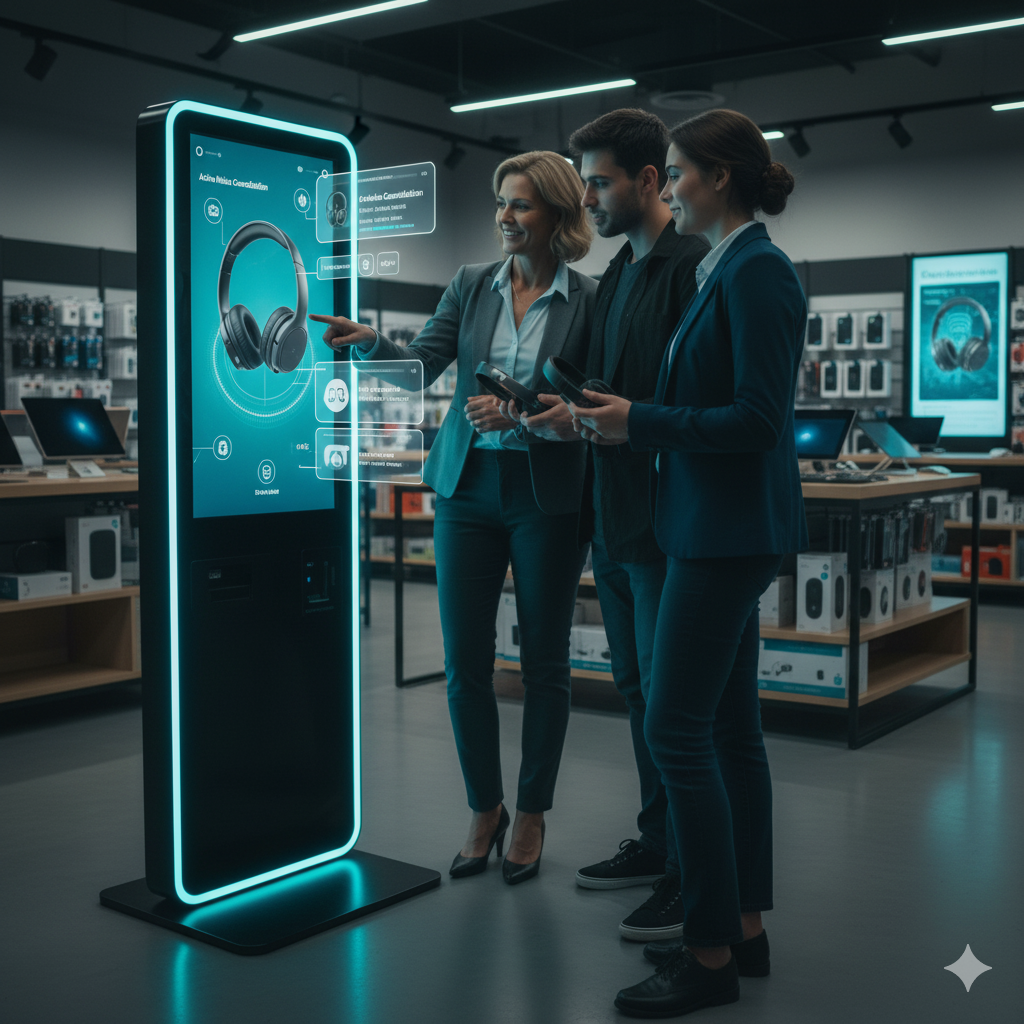
Interactive kiosks empower customers to explore products, features, and options at their own pace, enhancing autonomy and satisfaction. These kiosks display detailed product descriptions, high-resolution images, and reviews, allowing shoppers to make informed decisions without waiting for staff assistance. For example, in a furniture store, customers can browse sofas by style, color, and material, viewing product information and personalized recommendations instantly.
3. Access Customer Accounts and Shopping Lists
Interactive kiosks enable customers to log in to their shopping accounts, access saved lists, and review previous purchases seamlessly. Retail kiosks provide personalized recommendations based on customer preferences and order history, enhancing the customer experience. Self-service kiosks support loyalty program integrations and multimedia content, allowing users to track their purchases, manage wish lists efficiently, and gather valuable data. Implementing these kiosks can streamline operations and improve overall customer satisfaction.
According to Forbes, retailers using touch screen kiosks see an average 18% increase in repeat customer visits. A customer can retrieve a saved shopping list or check the status of an order at an in-store kiosk. By using these digital kiosks, retailers can provide enhanced user engagement, personalized service delivery, and operational efficiency within retail environments.
4. Interactive Product Modules
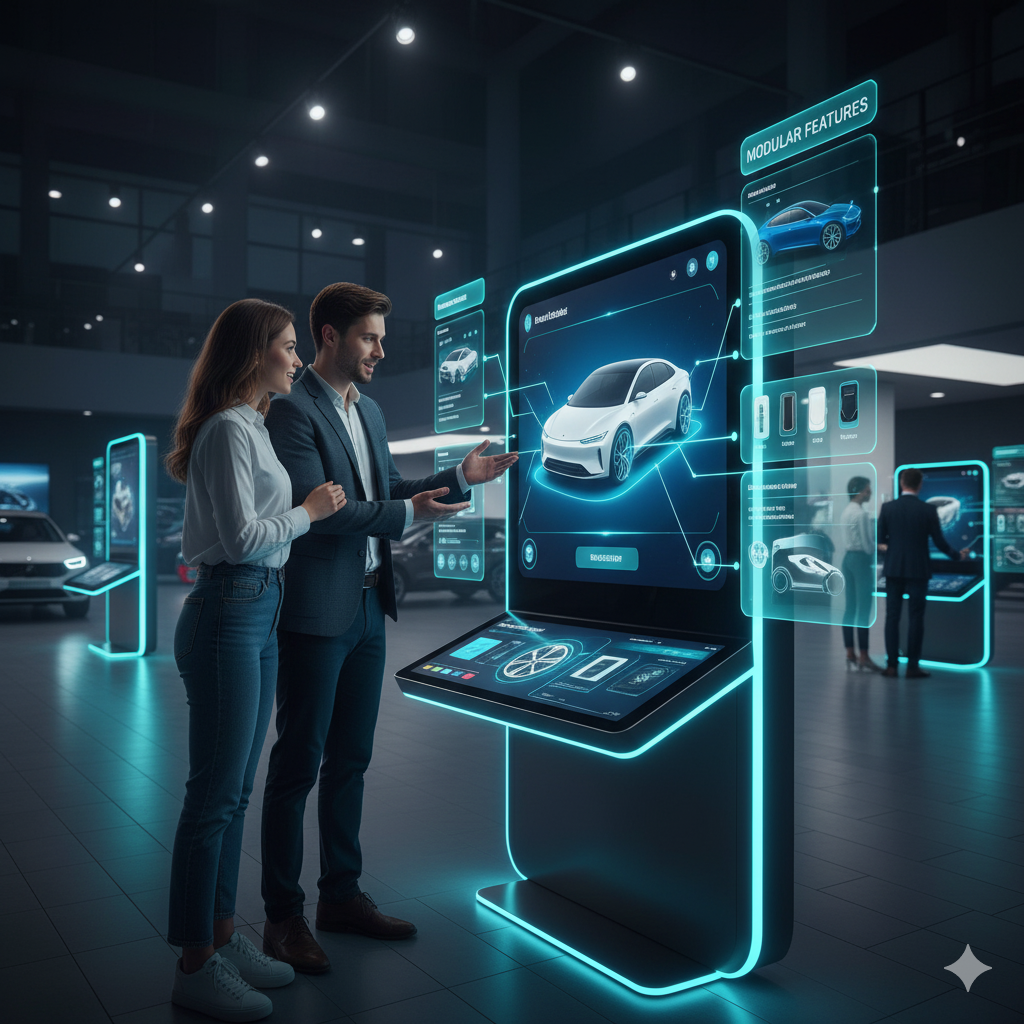
Interactive kiosks offer modular features that allow customers to explore product variants, combinations, and configurations digitally. For readers new to this concept, understanding what is a shopping mall kiosk is helps explain how these self-service touchpoints are commonly used in high-traffic retail environments to guide product discovery and engagement. Retail kiosks can display interactive 3D models, product demos, and customizable options for electronics, furniture, or apparel. Touchscreen interfaces allow customers to engage with products, providing a richer understanding before purchase. This self-service technology increases customer confidence and satisfaction.
According to Forbes, retailers using touch screen kiosks see an average 18% increase in repeat customer visits. For example, a car showroom kiosk lets customers customize the interior, exterior, and features of a vehicle, displaying a final 3D model for review. Retail stores using interactive product modules can provide [digital interactive kiosks] experiences that enhance customer engagement and decision-making.
5. Tools for Product Customization
Interactive kiosks allow customers to personalize products such as jewelry, apparel, or gifts, improving satisfaction and encouraging repeat purchases. Kiosks offer customization options like color, material, and engraving, allowing users to design products according to their preferences. Self-service kiosks, including self checkout kiosks, integrate multimedia capabilities and touchscreen interfaces to make the customization process intuitive. By offering personalization, retailers can increase average transaction value and customer loyalty.
A customer can use a kiosk to customize sneakers, selecting colors, materials, and features before placing an order. Retailers can leverage these tools for product ordering digital kiosks to enhance the customer journey and create interactive experiences that attract many customers.
6. Comparing Prices Instantly
Interactive kiosks enable customers to compare prices, features, and promotions across products directly in-store, enhancing transparency. Retail kiosks, equipped with display technology, allow shoppers to evaluate multiple options efficiently, promoting informed purchasing decisions. Digital kiosks, including information kiosks, provide self-service technology and multimedia content, allowing customers to explore alternatives at their convenience. By integrating these kiosks, stores can improve operational efficiency and support diverse customer preferences.
For example, an electronics store kiosk lets customers compare smartphones’ specifications and prices in real-time. Using interactive kiosks for price comparison encourages competition, increases customer satisfaction, and provides [digital kiosks provide] tools to enhance shopping experiences.
7. Personalized Service or Estimate Surveys
Interactive kiosks can gather customer preferences through personalized surveys, providing tailored product or service recommendations. Self-service kiosks allow users to input information and receive suggestions based on their responses, improving customer engagement. Touchscreen interfaces and multimedia capabilities make survey interactions interactive and informative. Implementing these kiosks helps retailers better understand customer needs and improve service delivery through service delivery digital kiosks .
According to Business Insider, interactive kiosks can increase impulse purchases by 10–12%, thanks to digital product displays and promotions. For instance, a skincare store kiosk can ask a quick survey and suggest products suitable for a customer’s skin type. By leveraging personalized surveys, retail stores can enhance customer loyalty, engagement, and overall satisfaction.
8. Check-in for Appointments and Pickups
Interactive kiosks streamline check-ins for appointments, pickups, and reservations, making store operations more efficient. Self-service kiosks enable customers to confirm times, schedule services, or pick up orders without staff assistance. Retail kiosks integrate touchscreen interfaces, self-service capabilities, and multimedia content to enhance convenience. This technology helps manage store flow and improve customer experiences.
A beauty salon kiosk allows a customer to check in for an appointment and receive a confirmation instantly. Using check-in kiosks in retail environments can enable users to save time, improve operational efficiency, and support diverse customer needs.
9. Loyalty Program Sign-Ups
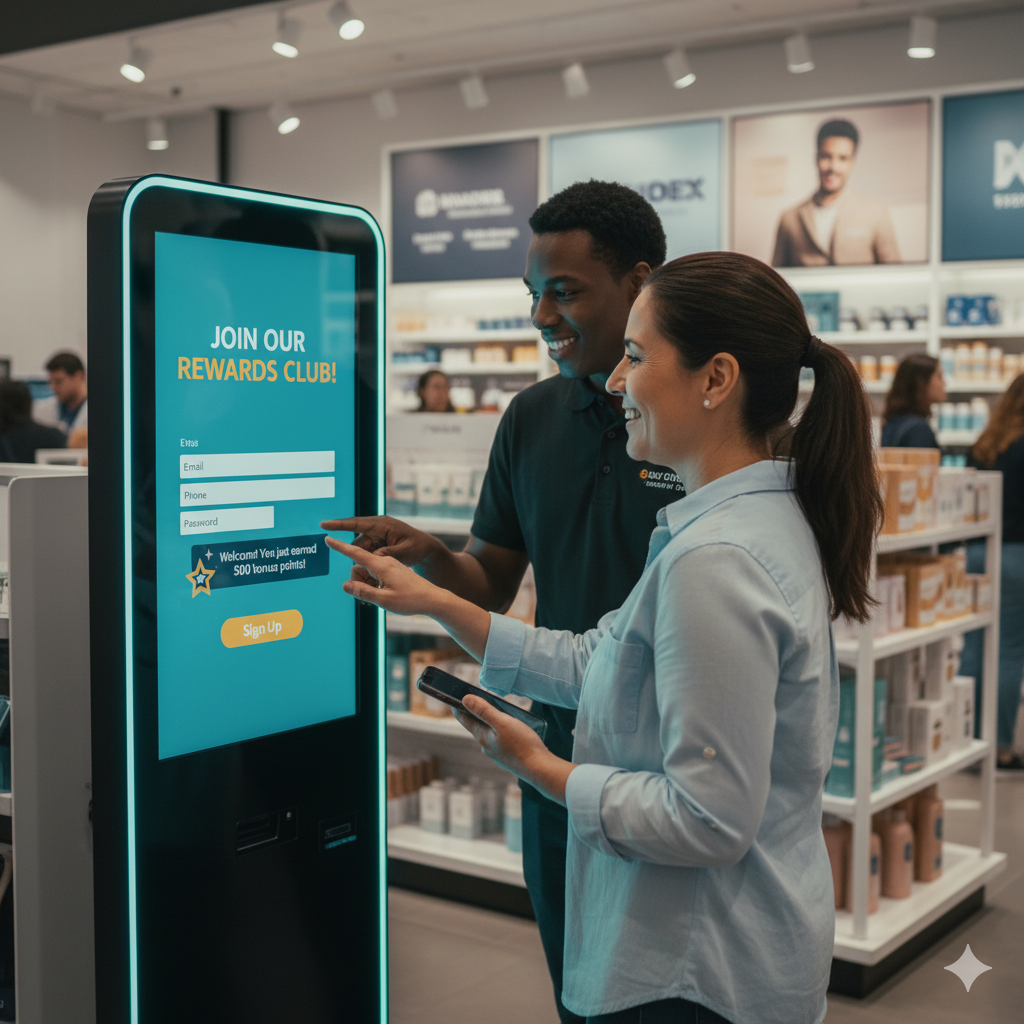
Interactive kiosks simplify in-store loyalty program enrollment, allowing customers to sign up and earn rewards efficiently. Retail kiosks provide touchscreen interfaces and self-service capabilities, making it easy for customers to join programs and track points. Digital kiosks, alongside mobile apps, also display promotional content to encourage participation. By integrating loyalty sign-up kiosks, retailers can enhance customer engagement and retention.
For example, a customer can sign up for a store’s loyalty program on a kiosk and immediately earn points for future discounts. Retailers using interactive kiosks can boost customer loyalty and provide [customer engagement] opportunities that strengthen brand relationships.
10. Pre-Ordering Meals and Drinks
Interactive kiosks facilitate pre-ordering in restaurants, cafes, and fast-food outlets, reducing wait times and improving service speed. Self-service kiosks allow customers to customize orders, make payments, and schedule pick-ups efficiently. Touchscreen interfaces and innovative touch screen digital signage capabilities enhance user engagement during the ordering process. Implementing these kiosks improves operational efficiency and customer satisfaction.
A fast-food kiosk enables customers to order meals ahead and skip queues for a faster dining experience. Using pre-ordering kiosks in retail outlets demonstrates [self service technology] that enhances convenience and streamlines operations.
11. Creating Unforgettable Store Experiences
Interactive kiosks create immersive, memorable experiences that increase customer engagement and dwell time. Retail kiosks incorporate gamification, virtual reality, and multimedia content to captivate shoppers and enhance the in-store journey. Touchscreen interfaces allow customers to interact with products and campaigns directly, providing an inclusive digital kiosk design. These engaging content digital kiosks experiences, designed to engage customers, support brand loyalty and operational efficiency.
For example, a clothing store kiosk offers a fashion quiz and suggests outfits tailored to preferences, making shopping fun and interactive. Stores using interactive kiosks can [enhance customer experience] by combining engagement, entertainment, and self-service capabilities.
12. Virtual Try-On Experience
Interactive kiosks equipped with AR or virtual try-on technology enable customers to visualize clothing, accessories, or cosmetics before purchasing. These kiosks provide touchscreen interfaces and multimedia features that make trying products virtually seamless and engaging. Retail kiosks support self-service capabilities, boosting confidence and reducing returns. Implementing virtual try-on experiences enhances customer satisfaction and operational efficiency. For example, retailers can implement Banuba’s makeup AR solutions to let shoppers virtually test different shades and looks before committing to a purchase.
A customer can use an interactive mirror kiosk to try on sunglasses virtually, adjusting colors and styles as desired. Using virtual try-on kiosks in retail stores allows [customers interact] with products, creating interactive experiences that improve decision-making.
13. Seamless Transactions and Convenience
Interactive kiosks provide fast, self-service checkout options, improving convenience and customer satisfaction. Retail kiosks allow users to complete purchases directly, integrating payment processing and multimedia features for a smooth transaction. Self-service kiosks reduce wait times and free staff to focus on other tasks. Implementing seamless transaction solutions improves operational efficiency and enhances the retail environment.
According to Nielsen, retailers that integrate digital interactive kiosks report a 20% improvement in operational efficiency due to reduced staffing needs and faster transactions. A customer can finalize a purchase at a kiosk without waiting for a cashier. Retailers using kiosks in retail outlets can [complete transactions] efficiently while enhancing the overall customer journey.
14. Barcode/QR Code Scanners: Instant Access to Information and Offers
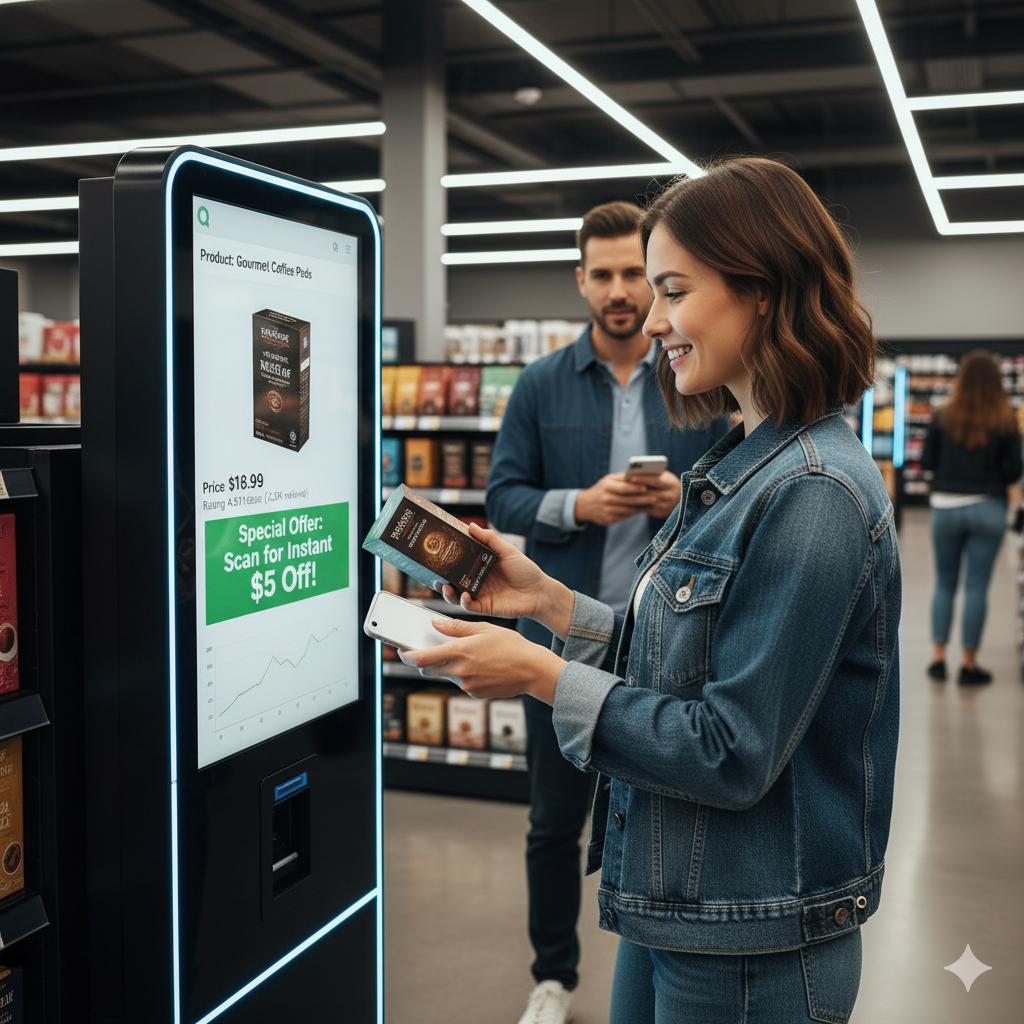
Interactive kiosks equipped with barcode or QR code scanners provide customers with immediate access to product information, pricing, reviews, and promotions through reliable internet connectivity. A survey by ResearchGate found that 54% of shoppers use QR codes in-store to obtain product details, demonstrating the importance of this technology in enhancing in-store engagement.
For instance, a customer can scan a product barcode at the kiosk to instantly view discounts or special offers. Retail kiosks enhance customer experience by providing instant access to information and supporting self-service functionality, allowing for informed purchasing decisions. For more information on implementing this technology, visit barcode.
What are the Types of Digital Signage Kiosks for Retail Stores?
The type of digital signage kiosks for retail stores plays a crucial role in enhancing customer engagement, streamlining operations, and offering self-service options that make shopping easier and more enjoyable. According to Retail TouchPoints, 63% of retailers say interactive kiosks improve customer engagement and enhance the shopping experience. These kiosks support interactive systems and touchscreen kiosks, allowing customers to complete transactions, access information, and engage with products effortlessly.
Outdoor vs. Indoor Kiosks
Outdoor kiosks are built to withstand weather conditions and are perfect for high-traffic areas such as train stations, entertainment venues, and shopping plazas. They provide instant access to information, enable users to navigate spaces, and support product ordering digital kiosks while maintaining robust security measures. Indoor kiosks, on the other hand, are designed for controlled retail environments, offering self-service technology, customer data collection, and multimedia capabilities to enhance customer experience.
Freestanding, Wall-Mounted, and Tablet Kiosks
Freestanding kiosks deliver maximum visibility and are equipped with touchscreen kiosks for interactive engagement, ideal for busy retail spaces. Wall-mounted kiosks save floor space while providing easy access to self-service capabilities like loyalty program sign-ups and information kiosks. Tablet kiosks offer flexibility and portability, enabling retailers to present engaging content for digital kiosks outdoors and streamline operations in diverse retail environments. These types allow retailers to implement robust security measures while improving customer satisfaction and operational efficiency.
What Makes Interactive Retail Kiosks a Valuable Investment for Retailers?
Investing in interactive kiosks brings significant value to retail stores by enhancing operational efficiency, improving customer satisfaction, and enabling self-service capabilities. These digital kiosks provide retailers with tools to streamline operations, gather customer data, and offer engaging experiences that meet modern shopper expectations. According to Statista, retail digital signage in retail boosts average transaction value by 15–20% when used effectively.
Interactive kiosks are becoming a staple in retail stores, and as technology evolves, they will continue to enhance both customer and business experiences. These smart kiosks not only improve operational efficiency but also create engaging self-service solutions that meet modern shopper expectations. By investing in digital kiosks, retailers can streamline operations, gather valuable customer data, and increase overall customer satisfaction.
5 Advantages of Self-Service Kiosks for Retailers
Self-service kiosks offer multiple benefits for retailers, from boosting sales to improving customer engagement. They allow stores to handle more transactions efficiently, provide personalized experiences, and reduce reliance on staff. By integrating these kiosks, retailers can enhance the shopping journey and support a diverse customer base.
- Enhancing Customer Experience: Self-service kiosks allow shoppers to explore products, check prices, and complete transactions at their own pace. This improves convenience, reduces wait times, and ensures a smoother shopping journey.
- Addressing Staff Shortages: Retail kiosks reduce the dependency on cashiers and allow existing staff to focus on other essential tasks. This helps maintain operational efficiency even with limited staff and ensures a seamless retail environment.
- Boosting Sales and Revenue: Stores with interactive kiosks experience increased sales as ordering and checkout become quicker and easier. Kiosks handle multiple transactions simultaneously, allowing businesses to serve more customers efficiently and increase average transaction value.
- Safe and Contactless Shopping: In today’s environment, many customers prefer self-service options to minimize physical contact. Self-checkout kiosks provide a safe and hygienic shopping experience while supporting operational efficiency.
- Smart Inventory and Customer Loyalty: Advanced kiosks can update inventory automatically and provide customers with real-time product information. They also help promote loyalty programs, showing past orders and personalized offers, which encourage repeat visits and enhance long-term customer engagement.
How Interactive Retail Kiosks Improve the Customer Experience
Interactive retail kiosks transform the way customers interact with stores by offering convenience, speed, and personalized experiences. According to Deloitte, 70% of shoppers prefer using self-service options like kiosks over traditional cashier lines. They enable shoppers to browse, customize, and purchase products efficiently while enjoying a safe and engaging environment.
- Easy Shopping: Self-service kiosks simplify the shopping journey by allowing customers to browse the catalog, compare products, and complete purchases quickly, minimizing wait times and frustration.
- Quick and Safe Transactions: Kiosks enable customers to conduct transactions efficiently with minimal physical contact. This not only speeds up the checkout process but also ensures a safer shopping experience.
- Personalized Experiences: Interactive kiosks can remember past purchases and customer preferences, providing tailored recommendations and a customized shopping journey. This personalization strengthens customer loyalty and satisfaction.
Create Unforgettable Shopping Experiences in Your Store Today by Incorporating Interactive Kiosks!
Have you considered how interactive kiosks could transform your retail store experience? AIScreen’s interactive kiosks provide customers with self-service options, personalized recommendations, and seamless transactions, turning every visit into a memorable shopping journey. For example, a clothing store using our kiosks can offer virtual try-ons and product suggestions based on past purchases, enhancing engagement and satisfaction.
According to Retail Dive, stores using interactive kiosks reported a 30% increase in self-service transactions within the first six months. Implementing our cloud-based solutions allows retailers to streamline operations, boost sales, and gather valuable customer data through mobile devices o tailor future offerings. Try a demo today to see how digital kiosks provide interactive systems that elevate your retail environment, improve customer experience, and encourage repeat visits.
Frequently Asked Questions
How do interactive kiosks work in a retail store?
Interactive kiosks work in a retail store by providing a touchscreen interface that enables customers to browse products, access information, and complete transactions independently. They integrate multimedia content, virtual try-on technology, and self-service capabilities to streamline the shopping experience. These kiosks gather valuable customer data that retailers can use to optimize operations and marketing strategies. By enhancing engagement and efficiency, interactive kiosks improve overall customer satisfaction.
What features should retail interactive kiosks have?
The features that retail interactive kiosks have include touchscreen interfaces, multimedia capabilities, internet connectivity, and self-service functionalities. They often support virtual try-on experiences, product configurators, and loyalty program enrollment. Barcode and QR code scanners are integrated to provide instant access to information and promotions. These features collectively enhance customer engagement, streamline operations, and support diverse retail environments.
Are interactive kiosks useful for upselling in retail stores?
Yes, interactive kiosks are useful for upselling in retail stores by offering personalized recommendations based on customer preferences and purchase history. They can highlight complementary products, promotions, and limited-time offers to encourage additional purchases. Kiosks also display high-value options interactively, allowing customers to explore premium choices. This approach increases average transaction value while improving the overall shopping experience.
Can interactive kiosks be used for self-checkout?
Yes, interactive kiosks can be used for self-checkout, enabling customers to complete purchases quickly and independently. Self-service technology reduces wait times, improves operational efficiency, and frees staff to focus on other tasks. Transactions are secure, with integrated payment processing and robust security measures for online ordering . This functionality enhances convenience and boosts customer satisfaction across retail spaces.
Are interactive kiosks customizable for retail stores?
Yes, interactive kiosks are customizable for retail stores to match branding, store layouts, and service needs. Retailers can tailor touchscreen interfaces, multimedia content, virtual try-on modules, and loyalty program integrations, utilizing remote management for enhanced control . Kiosks can also be adapted for indoor or outdoor environments and specific product categories. Customizable kiosks enhance user experience, engagement, and operational efficiency, making them versatile tools for the retail industry.


