
How To Navigate Digital Signage Advertising Rates?
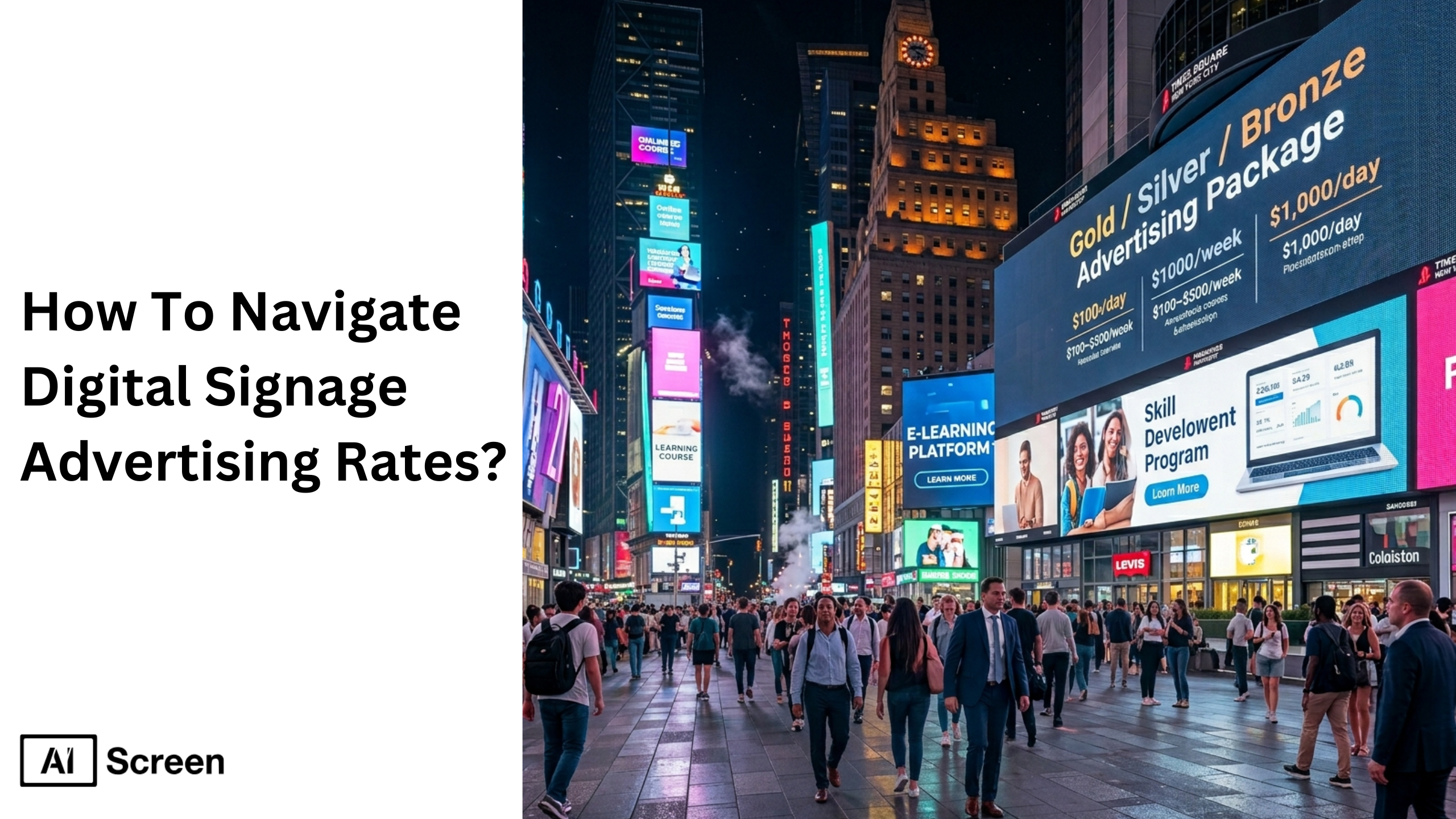
Navigating digital signage advertising rates means pricing digital signage advertising based on location, screen quality, timing, and audience exposure, with costs typically ranging from $100–$500 per week for a single screen to over $1,000 per day in premium locations like Times Square. Businesses should bundle pricing tiers (gold/silver/bronze), use high-resolution 16:9 visuals, and leverage analytics to maximize ROI. According to Statista, the global digital signage market is projected to reach $45.33 billion by 2030, highlighting the growing investment in this advertising medium and its effectiveness in reaching a target market.
In this blog, you will learn how digital signage works, how digital signage cost is structured, what factors influence digital signage advertising rates, and how to plan a scalable investment using the right tools, hardware, and digital signage software solutions to boost customer engagement and ROI. See AIScreen’s DOOH advertising solution to plan a campaign.
What is Digital Signage Advertising?

Digital signage advertising refers to using a digital display such as LCD, LED, or projection screens to deliver advertising, information, or promotions across high-traffic areas. These digital signs appear in retail stores, shopping malls, airports, and public locations, offering advertisers a direct way to reach their target audience. Digital signage stands out because it delivers dynamic content like videos, real-time data, and interactive media instead of static billboard ads.
This flexibility improves customer engagement and allows advertisers to update content instantly based on market needs. Compared to traditional advertising network, digital signage advertising creates a stronger connection with audiences through movement, visuals, and timely content updates. To implement this effectively, businesses rely on digital signage software that enables centralized content management, scheduling, and performance tracking across multiple displays.
How Much Does Digital Signage Cost?
Digital signage cost varies based on software, hardware, installation, and content creation, typically ranging from free software to over $120 per screen monthly. Lower-cost solutions offer limited features, while advanced digital signage software solutions provide scalability, automation, and analytics. Choosing the right digital signage solution directly impacts business performance, customer engagement, and ROI.
Businesses must evaluate screen type, resolution, and software capabilities before investing. To simplify deployment, platforms like digital signage software offer cloud-based systems that make it easy to create, manage, and update content across multiple screens with minimal effort.
What Is the Breakdown of Digital Signage Advertising Rates and Costs in 2026?
The breakdown of digital signage advertising rates and costs in 2026 includes hardware, media players, installation, software, and content creation, with each component varying based on business needs and complexity. These elements collectively determine the total cost of running a digital signage system
Hardware Cost – Displays ($298 – $1500)
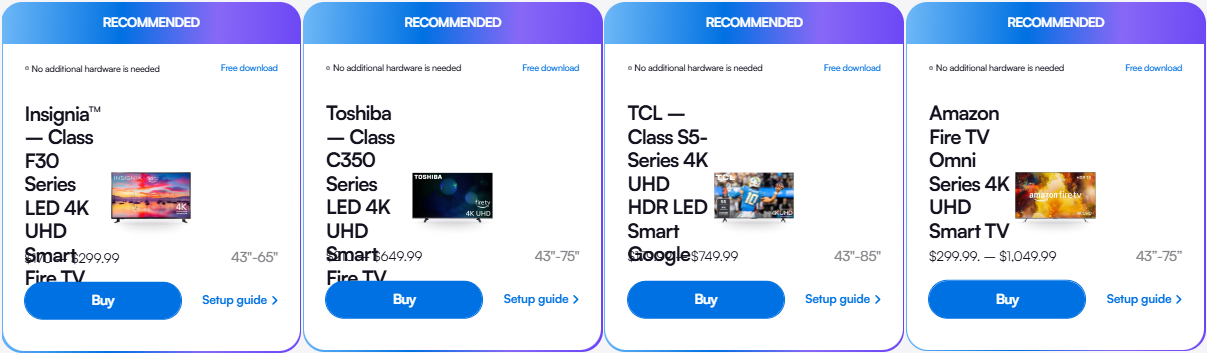
Hardware cost for digital signage screens ranges from $298 to $1500 or more, depending on screen size, resolution, and quality. This is a one-time investment expected to last 3–4 years or longer.
Choosing the right digital display depends on several factors, including budget, screen type, location, weather conditions, and warranty support. High-resolution displays with better pixel pitch ensure clearer visuals and better performance in high-traffic areas.
AIScreen provides competitive digital signage screen options for:
- Indoor (8/7 usage)
- Professional low-functioning displays (16/7)
- High-performance displays (24/7)
- Video walls and touchscreens, etc.
These options ensure businesses can match their screen type with their target audience and environment.
Media Players ($74.99 – $128)
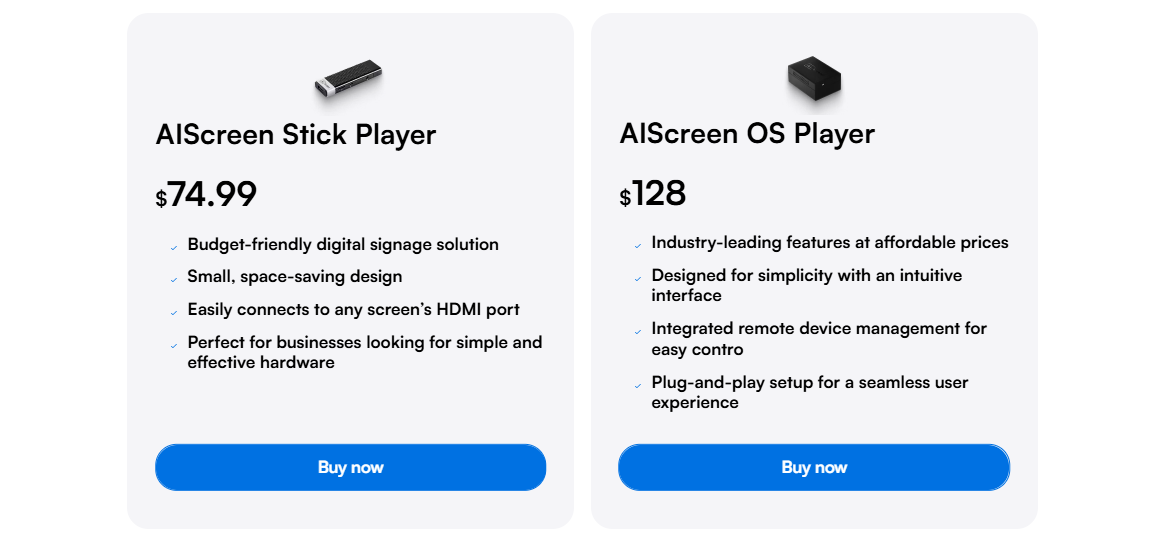
Media players act as the bridge between digital signage player software and display screens, enabling content playback across devices. AIScreen offers 2 optimized and best media players:
- AIScreen Stick Player ($74.99) is a budget-friendly, compact device that connects directly via HDMI and supports 4K video playback, offline playback, and continuous 24/7 operation.
- AIScreen OS Player ($128) offers advanced features like remote device management, higher RAM, enterprise network support, and seamless plug-and-play setup for scalable deployments.
Both media players support WiFi, Bluetooth, HTML5 playback, and multi-zone layouts, making them ideal for modern digital signage systems. Businesses can create, manage, and update content easily using these players.
Installation and Setup Cost ($130 – $500)
Installation cost for digital signage ranges from $130 to $500 per screen, while complex setups like video walls can exceed $2000 per screen.
Proper installation ensures hardware safety, optimal display positioning, and long-term performance. Wall mounts, floor stands, and environmental conditions play a key role in determining installation complexity.
Software Cost ($10 – $30/month)
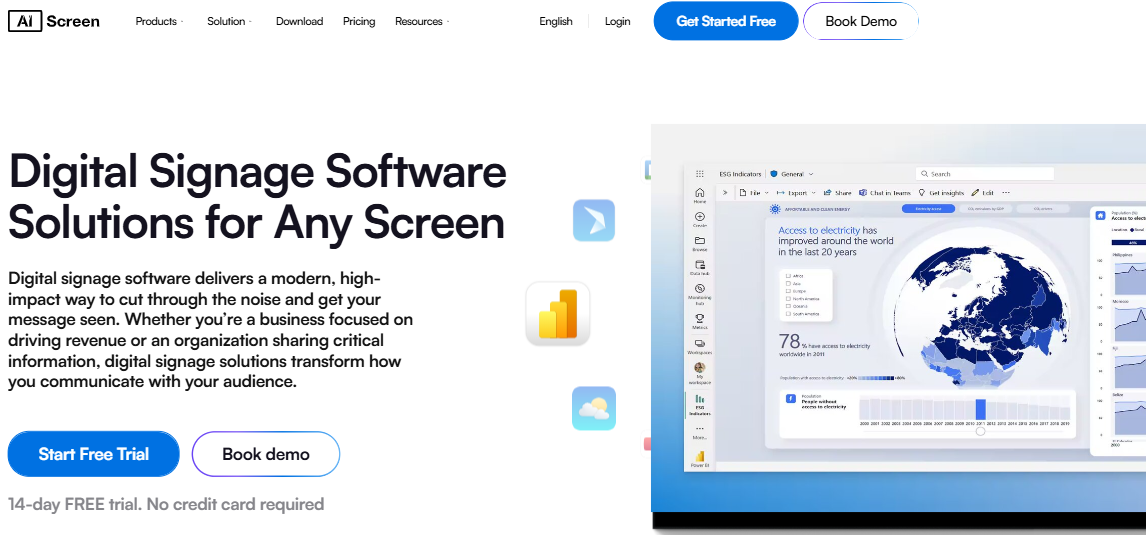
Digital signage software costs range from $10 to $30 per screen monthly, depending on features and scalability. For advanced management, businesses can use a digital signage software to centralize operations and improve efficiency. These plans ensure businesses can scale their digital signage network based on needs.
AIScreen offers flexible plans:
- Free Plan ($0): Ideal for testing with one screen and a free 14 day demo.
- Essential Plan: Includes playlists, 500k+ templates, integrations, and unlimited storage.
- Business Plan: Adds dashboards, POS integration, and automation tools.
- Enterprise Plan: Includes SSO, remote hardware management, onboarding, and premium support.
Content Creation ($15 – $25/Hour)
Content creation cost depends on how frequently you update your screens, but with AIScreen, you can eliminate the need for a dedicated designer entirely. As a cloud based digital signage solution, it combines powerful marketing tools, automation, and an intuitive interface, making in-house content creation simple, cost-effective, and scalable.

Here’s why you don’t need a designer with AIScreen:
- 500k+ Ready-Made Templates: Professionally designed templates for every industry, ready to customize.
- AI-Powered Content Creation: Quickly generate images, ads, and visuals without design skills.
- Automated Data Content: Turn live data into real-time content with no manual updates.
- Canva Integration: Create and import designs easily.
- Drag-and-Drop Editor: Build content visually with zero complexity.
- Automatic Scaling: Content fits any screen without extra work.
The AIScreen template designer and digital signage CMS together give full control over content, scheduling, and updates, making it one of the simplest and most powerful systems to manage without external services.
What Determines Digital Signage Advertising Rates?
Digital signage advertising rates are determined by several factors, which is why pricing can range widely from $100 to $2,000 per week per digital signage screen. The cost depends on location, screen type, audience reach, and engagement levels. These factors directly impact how much advertisers spend and how effective their signage campaigns are in the market.
1. Positioning of the Digital Screen
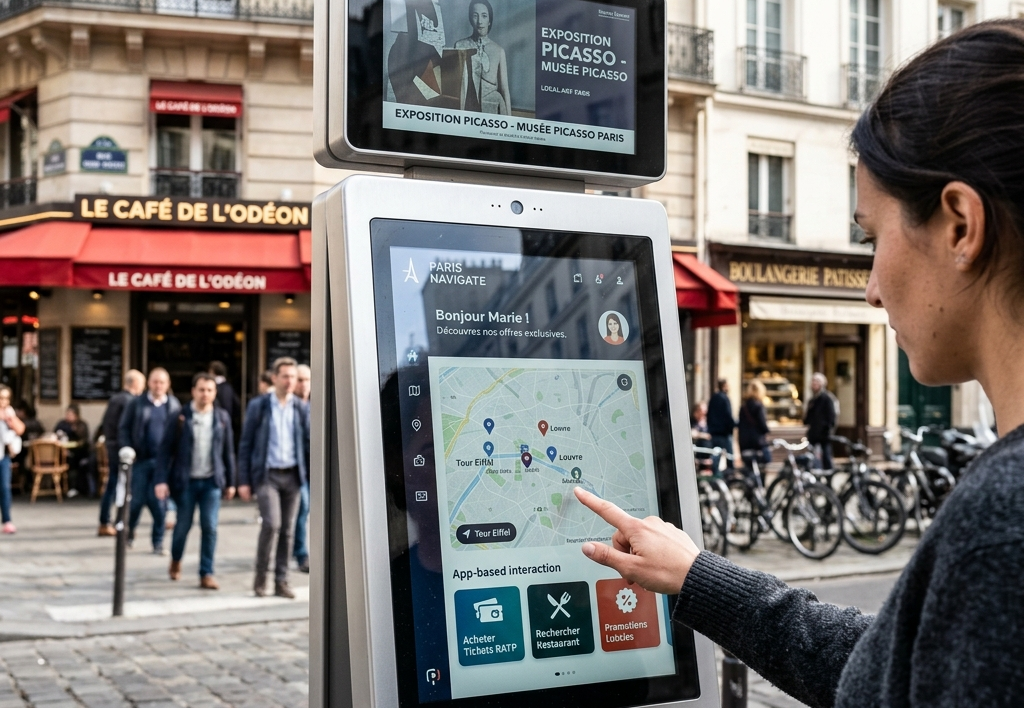
The positioning of a digital signage screen directly affects pricing because visibility and audience size vary by location. Screens placed in high-traffic areas generate more impressions, increasing demand and overall cost. Locations with consistent footfall, better viewing angles, and longer dwell time also improve ad performance, which further drives up pricing in competitive markets.
High-Traffic Areas:
High-traffic areas like airports, shopping malls, and business districts increase cost due to higher exposure. For example, advertising in Times Square can exceed $1,000 per day, while similar signage in a suburban mall may cost $200–$500 per week.
Targeted Locations:
Targeted spaces like gyms or office buildings offer lower pricing, typically $100–$300 per week, but provide more focused audience reach. This makes sense for businesses targeting niche demographics instead of mass exposure.
2. Screen Size and Type

The screen size and type directly influence advertising rates because they impact visibility, quality, and engagement. Larger screens attract more attention from a distance, while high-resolution or interactive displays deliver better visual clarity and user interaction. Advanced screen types also enhance brand perception, making them more valuable in premium advertising environments.
Large-Scale Displays:
Large screens (100+ inches), such as video walls or event displays, cost more due to high impact, often exceeding a few thousand dollars per week.
Small to Medium Displays:
Screens between 32 to 55 inches, commonly used in retail stores, cost $100–$500 per week, making them budget-friendly for many businesses.
Interactive and High-Resolution Screens:
Interactive or 4K screens increase engagement and quality, leading to higher pricing. These displays improve customer interaction, making them valuable marketing tools.
3. Content Duration and Frequency
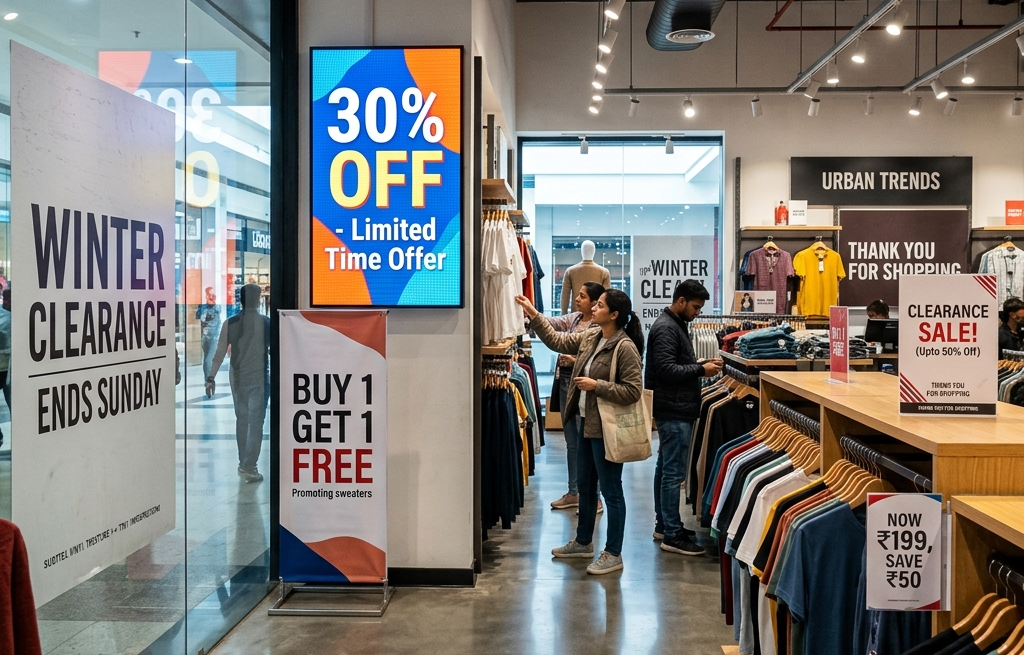
Content duration and frequency determine how often your ad appears, directly impacting pricing. Longer durations and higher frequency increase visibility but also raise the overall cost of running a sign on a digital signage network. Ads that require continuous updates or real-time syncing may also depend on a stable internet connection, which can influence maintenance and service requirements.
Duration:
Ad slots are typically 10, 15, or 30 seconds. For example, a 15-second ad running every 5 minutes can cost $200–$500 per week, depending on the screen.
Frequency:
Higher frequency increases cost. Ads shown more often (e.g., every minute) require higher spend. Some advertisers purchase full screen time, which significantly increases pricing but ensures maximum visibility.
Using AIScreen digital signage remote management helps optimize this by allowing companies to control screens remotely, monitor performance in real time, manage power schedules, and reduce ongoing maintenance costs. It ensures your system runs smoothly without manual intervention.
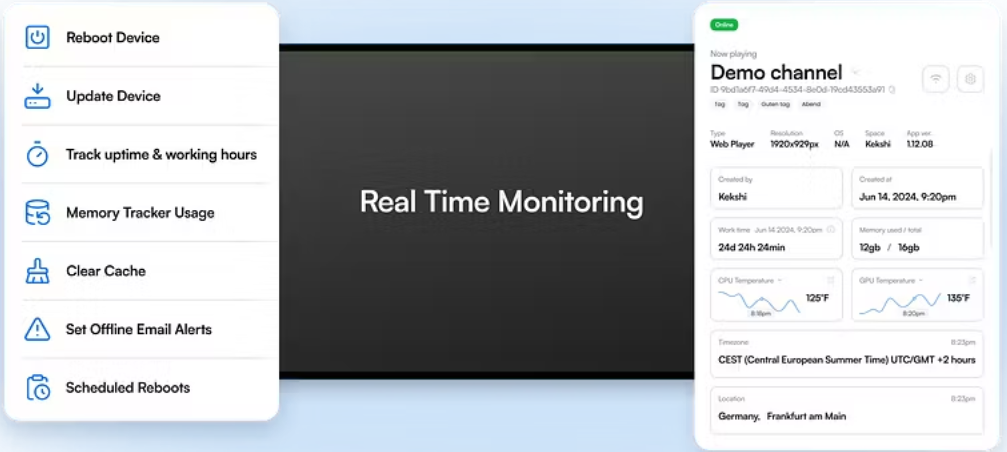
Additionally, AIScreen live data digital signage enhances content relevance by integrating real-time data like dashboards, social media feeds, and calendar updates. This dynamic approach improves engagement and ensures ads stay updated without manual effort.
4. Audience Metrics and Analytics
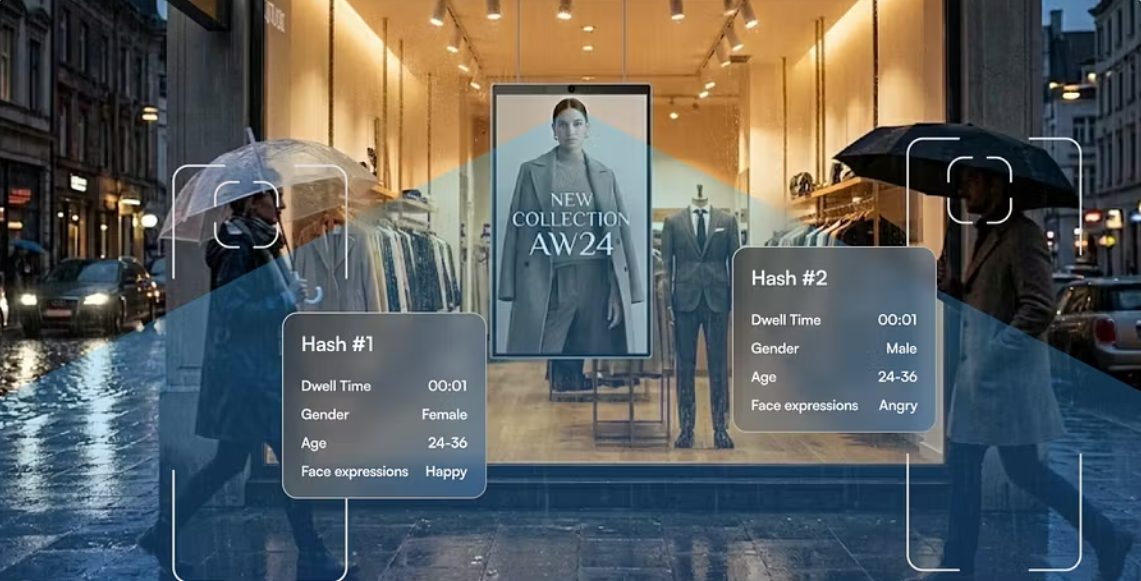
Audience metrics influence pricing because screens with higher engagement and better targeting deliver stronger results. Screens with advanced tracking systems often cost more because they provide valuable insights. For example, a screen in a premium location with audience tracking may cost twice as much as one without analytics.
Using AIScreen digital signage analytics, businesses can track footfall, demographics, dwell time, and attention. This helps companies understand who sees their ads, when they engage, and how long they stay, making campaigns more data-driven and effective.
5. Additional Costs
Additional costs are part of digital signage pricing and should be included in your budget planning. Beyond basic placement, expenses like content updates, ongoing maintenance, software services, and system upgrades can increase the total spend.
- Content Creation: Professional content creation can cost $500 to $5,000, depending on complexity.
- Software and Integration Fees: Some signage systems charge $50 to $200 per campaign for setup and integration services.
- Long-Term Discounts: Booking campaigns for longer durations often reduces overall cost, making it a cost-effective strategy.
How Can You Maximize ROI on Digital Signage Advertising?
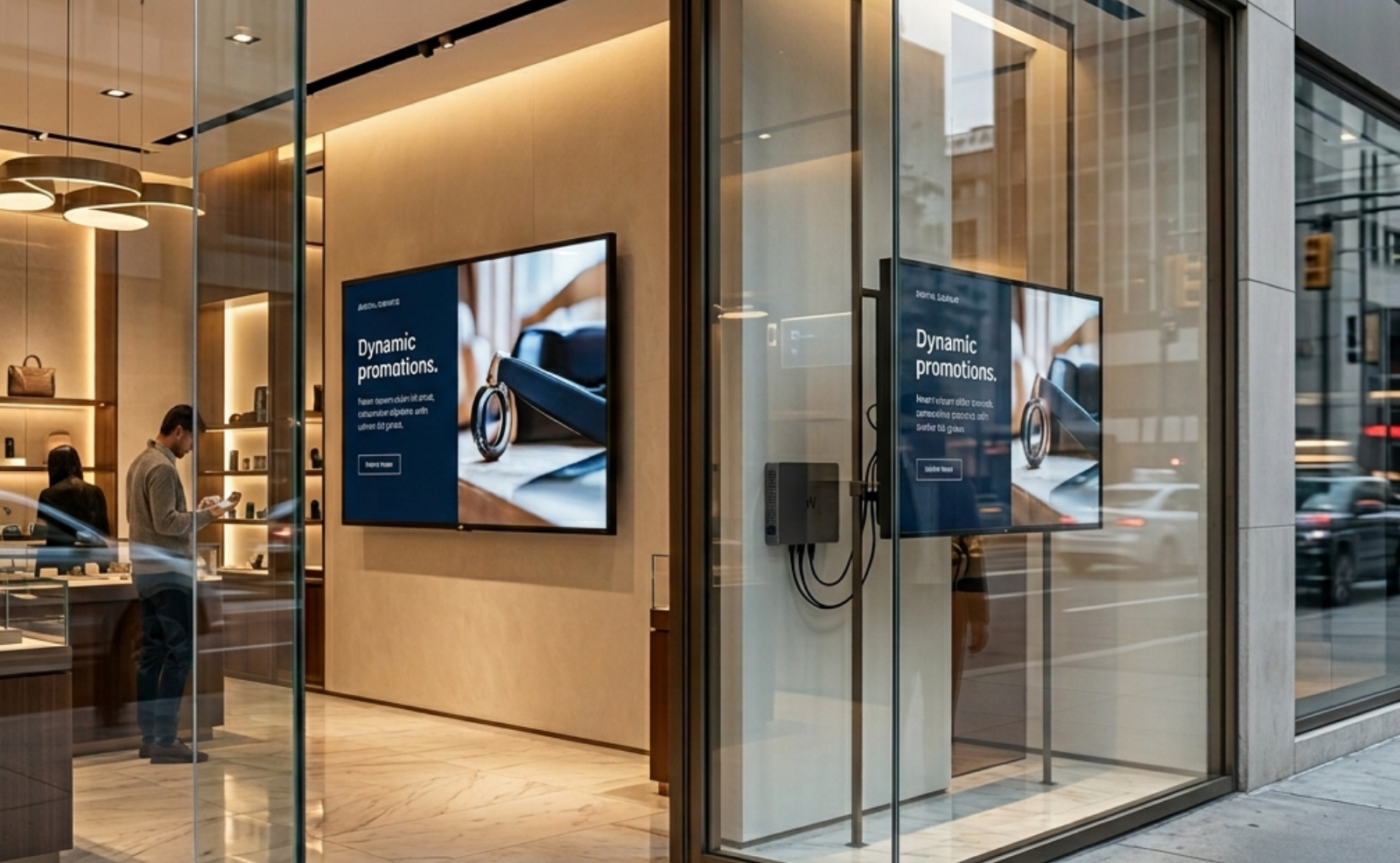
Maximizing ROI on digital signage advertising means aligning your strategy with the right factors and optimizing your overall spend. It involves choosing the right locations, using high-quality content, and continuously refining campaigns based on performance data. By focusing on audience targeting, efficient scheduling, and data-driven decisions, businesses can reduce wasted spend and improve overall campaign effectiveness.
- Target the Right Audience: Choose locations that match your target market for better results.
- Invest in High-Quality Content: Strong visuals and messaging improve engagement and campaign performance.
- Negotiate Contracts: Long-term deals often reduce pricing and improve value.
- Leverage Analytics: Use data insights to refine campaigns and improve results over time.
What Are Typical Digital Signage Advertising Rates by Location?
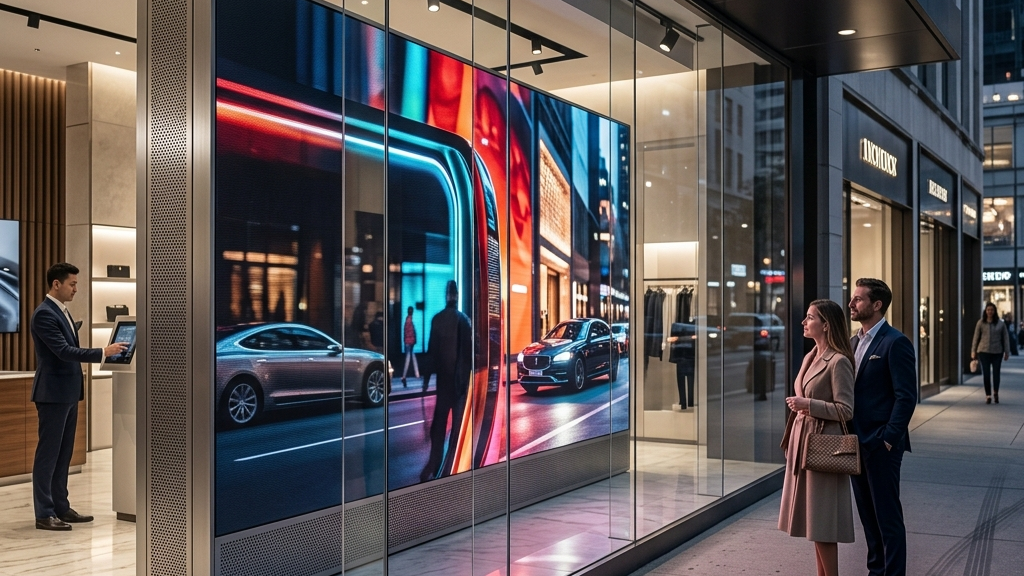
Digital signage advertising rates vary based on location, screen size, and ad duration because each factor affects audience reach and visibility. High-traffic areas and larger screens typically command higher pricing due to greater exposure and engagement potential. These variations help businesses choose the right mix of placement and budget based on their campaign goals and target market.
- Shopping Malls: 55-inch screens cost $300–$800/week for 15-second ads
- Airports: 75-inch screens cost $1,000–$2,000/week for 10-second ads
- Gyms: 42-inch screens cost $100–$300/week for 15-second ads
- Transit Stations: 65-inch screens cost $500–$1,200/week for 15-second ads
These examples show how different factors like location, screen type, and audience impact overall pricing and advertising effectiveness.
Why Choose a Floor-Standing Digital Signage Display For Advertising?
Choosing a floor-standing digital signage display makes sense when businesses need flexible placement, better visibility, and higher engagement in high-traffic areas. Floor stands allow easy repositioning, making them ideal for retail stores, events, and public spaces.
They support better viewing angles, improved customer interaction, and adaptability without complex wall mounts. For businesses planning scalable deployments, understanding why choose a floor standing digital signage display? helps align hardware decisions with advertising goals, budget, and overall digital signage strategy.
Start Planning Your Digital Signage Advertising with AIScreen!
Start planning your digital signage advertising now with AIScreen to turn every sign into a high-performing marketing asset. AIScreen provides a complete solution that combines powerful software, reliable hardware, and easy-to-manage media players, making it simple for any business to launch, control, and scale campaigns.
With features like real-time content scheduling, remote management, audience analytics, and dynamic live data integration, AIScreen helps attract viewers, improve engagement, and maximize results. You can easily manage screens, update content instantly, and deliver the right message at the right time without complexity. Get started with a 14-day free demo (no credit card needed) to explore how AIScreen simplifies your advertising strategy and drives real growth.


Frequently Asked Questions
What are the typical digital signage advertising rates?
Digital signage advertising rates vary depending on the screen size, location, and hardware involved. Indoor displays are generally more affordable, while outdoor advertising networks may cost more due to higher visibility and technology requirements.
How can I calculate digital signage advertising rates for my business?
You can calculate rates by considering screen placement, expected foot traffic, and the type of media players and software you’ll use. Businesses often set pricing models based on impressions, duration, and advertiser demand.
How can I negotiate digital signage advertising rates with suppliers?
Negotiation works best when you highlight your network’s value, like premium display locations or advanced hardware and software solutions. Ask yourself: would you pay more for better exposure? Use that same approach when discussing terms.
How do digital signage ad costs differ for indoor vs. outdoor displays?
Indoor advertising costs are usually lower since they rely on smaller screens and standard media players. Outdoor networks require durable hardware, weatherproof displays, and higher brightness technology, which increases investment but also delivers greater visibility.
How can I reduce the cost of digital signage advertising without compromising impact?
You can cut costs by optimizing content delivery through reliable software and investing in durable hardware that reduces maintenance. Choosing the right screen placement also ensures better results with fewer displays, saving money while keeping advertisers satisfied.
