
3 Best Video Wall Companies In 2026
Do you know that LED video walls are completely redefining how businesses communicate in 2025? From sleek corporate lobbies to bustling airports and high-tech command centers, these massive, multi-screen displays are becoming the centerpiece of visual communication. They don’t just show content; they tell stories, showcase real-time data visualization, and capture attention in ways static displays never could. According to AVIXA, the global LED video wall market is growing by 14% annually through 2028.
In this article, you’ll explore the 3 best video wall companies in 2025, including Samsung, LG, and Sony. They are leading global providers known for their key features in LED video walls, and see why they lead the industry in performance and innovation. Also, you’ll learn how AIScreen’s CMS seamlessly integrates with control room solutions and these displays, making it easy for you to manage, schedule, and update content across multiple screens with ease.
Top Criteria for Selecting the Best Video Wall Company
Not all video wall solutions are created equal, and if you’ve been exploring options, you’ve probably noticed how some displays outperform others in brightness, clarity, and reliable performance. With advanced AV-over-IP technology and video processors, AIScreen ensures efficient content distribution across multiple displays, enhancing communication and teamwork. According to Statista, the video wall industry will surpass $40 billion by 2028.
The truth is, the best video wall companies don’t just focus on stunning visuals; they focus on high-quality displays and deliver innovation, durability, and value that make your investment truly worthwhile. That’s exactly why Samsung, LG, and Sony continue to lead the market with their advanced technology and dependable service.
- Innovation and Technical Advancements: When it comes to innovation, top LED display manufacturers like Samsung are pushing boundaries with MicroLED and Direct-View LED displays. These walls offer ultra-thin bezels, HDR10+ compatibility, and impressive brightness levels that create vibrant visuals in any environment. With 4K and 8K resolution, superior color accuracy, and seamless modularity, they ensure your video wall project looks flawless from every angle.
- Reliability and Ongoing Support: Reliability defines a true market leader. LG’s 24/7 commercial display support and remote monitoring capabilities ensure your video wall displays stay operational around the clock. Their commitment to exceptional customer service and maintenance contracts means fewer downtimes and peace of mind for your operations, a must for mission-critical environments like control centers or broadcast studios.
- Cost, Value, and ROI: Finally, the real measure of a brand lies in long-term value. Evaluating the total cost of ownership (TCO), from installation to energy use, helps you see beyond initial pricing. Sony’s displays, though premium, are built to last, delivering unmatched visual longevity and energy efficiency in high-traffic venues. Investing in such reliable LED video walls ensures better ROI, lower maintenance, and consistent performance for years to come.
Top 3 Video Wall Brands In 2025 for Your Business
These three brands, recognized as the right led display manufacturer, lead the global LED video wall market in 2025 with cutting-edge technology, proven reliability, and versatile applications across various industries. According to Grand View Research, 60% of enterprises now use AI-driven content systems. Whether for control centers, public spaces, or entertainment venues, Samsung, LG, and Sony remain the most trusted video wall manufacturers worldwide.
Company 1: Samsung — Leaders in Bright, Seamless Displays
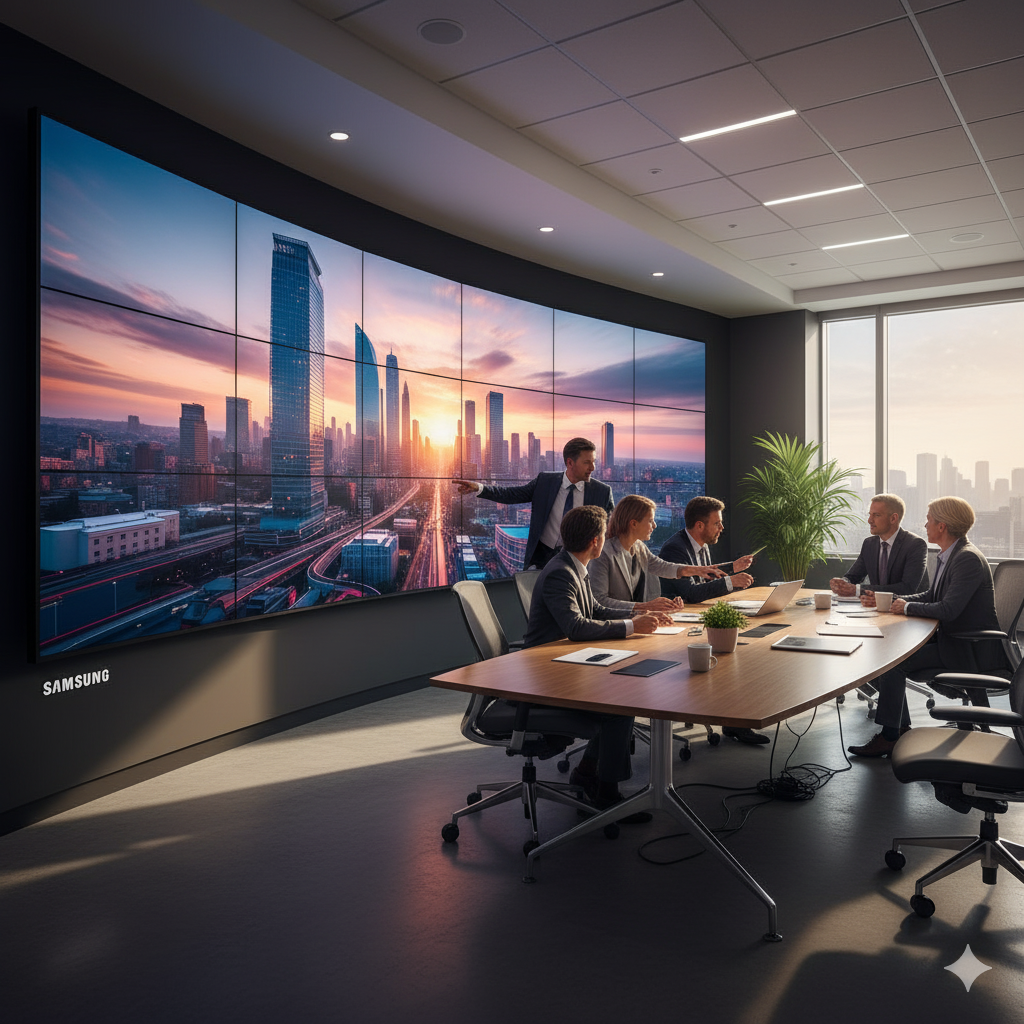
Do you know that Samsung continues to dominate the video wall industry in 2025, delivering vibrant visuals with its ultra-bright, seamless, and energy-efficient display innovations? Designed for performance and precision, Samsung’s video walls bring together cutting-edge MicroLED, HDR support, and modular LED panels that make them ideal for conference rooms, as well as indoor and outdoor environments.
Core Features and Innovations
- MicroLED and The Wall Series: Samsung’s MicroLED and “The Wall” displays redefine clarity with ultra-thin bezels and pixel-perfect uniformity.
- Exceptional Brightness: Delivers up to 5,000 nits of brightness, making visuals vibrant even under direct light.
- HDR10+ Support: Ensures deep contrast, accurate colors, and immersive viewing across all lighting conditions.
- Modular Design: The modular panels allow flexible layouts, enabling scalability for custom installations.
- Energy Efficiency: Built with eco-friendly components that reduce power consumption while maintaining long-term performance.
Real-World Case Studies
Samsung’s video wall solutions have been deployed in some of the most demanding environments worldwide:
- Airports: Used in flight information displays and control rooms for real-time data visualization.
- Stadiums: Delivering vibrant replays and advertising boards with consistent brightness and reliability.
- Corporate Lobbies: Enhancing visitor experience through branded storytelling and digital art walls.
- Command Centers: Powering continuous 24/7 operation with zero downtime and remote monitoring.
Pros, Cons, and Tips
- Pros: Industry-leading brightness, modularity, and energy efficiency are ideal for high-traffic areas.
- Cons: Premium pricing and installation complexity that requires certified integrators.
- Tip: Combine Samsung’s hardware with AIScreen CMS for dynamic content scheduling, enabling real-time content control, playlist automation, and synchronized updates across all screens.
As a leading LED display manufacturer, Samsung remains a top choice for enterprise users seeking high-quality LED displays that balance innovation with reliability, especially in control rooms and conference rooms. To maximize performance, pair Samsung video walls with reliable software platforms like AIScreen CMS for seamless content management, dynamic content scheduling, ensuring flexible, automated updates, and synchronized display content across large-scale installations.
Company 2: LG – Versatile Options for Custom Setups
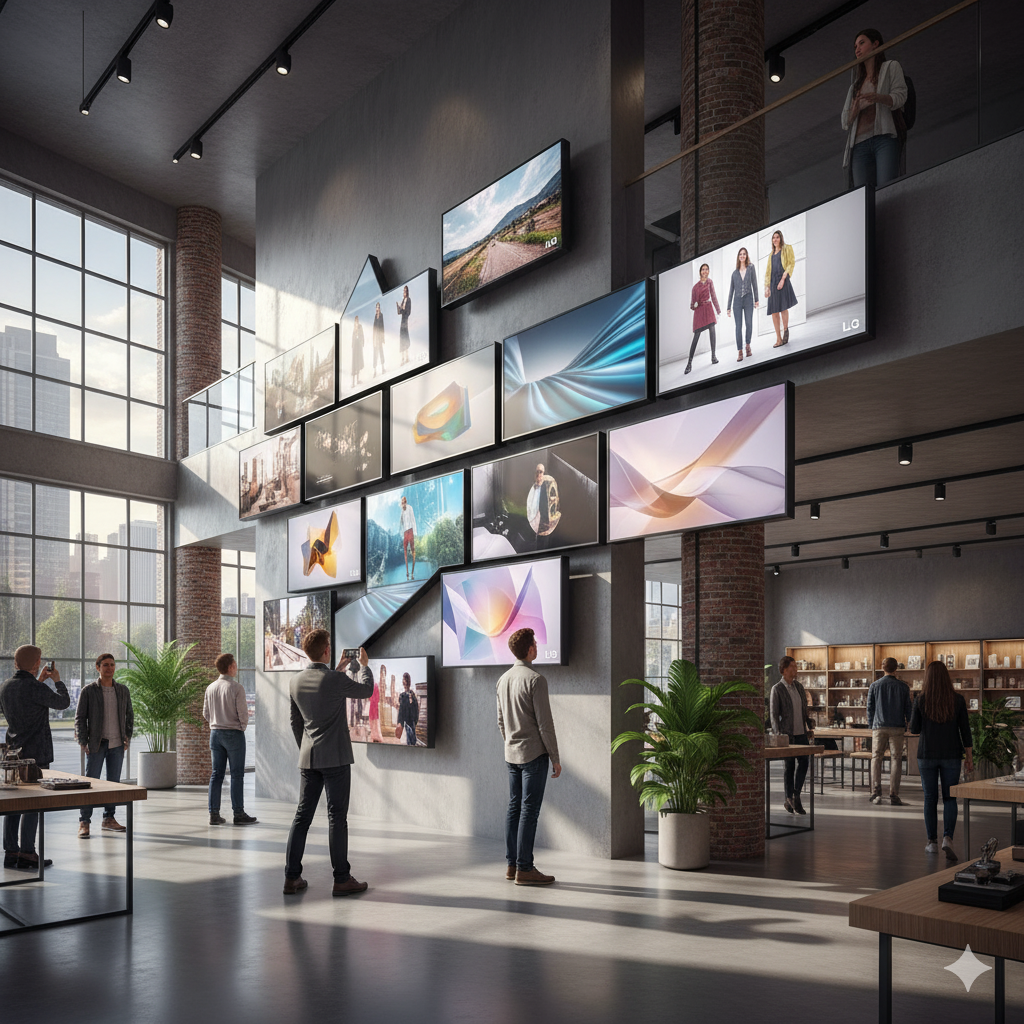
LG stands out in 2025 for its creative approach to video wall design that blends innovation with cutting-edge technology and flexibility. Known for its ability to adapt to unique spaces and visual concepts, LG’s lineup delivers premium OLED and LED solutions with customizable layouts that help businesses transform environments into engaging digital experiences.
Core Features and Innovations
- Transparent and Ultra-Stretch Displays: LG’s transparent OLED and ultra-stretch signage allow businesses to craft immersive and modern setups that attract attention in high-traffic areas.
- webOS Integration: The built-in webOS platform streamlines content management, supporting direct integration with cloud-based tools and minimizing reliance on external hardware.
- High Color Accuracy: Each panel undergoes factory calibration to ensure consistent, brand-true visuals across all screens.
- Flexible Installation Options: Curved, vertical, or mosaic-style displays are easy to configure for both small and large-scale environments.
- Energy-Efficient Technology: Designed to deliver optimal performance while reducing long-term operational costs.
Real-World Case Studies
LG’s video wall displays are popular in entertainment sectors and outdoor advertising, where creativity meets customer engagement:
- Retail Environments: Global retail chains use LG’s ultra-stretch panels for digital storytelling and interactive product showcases.
- Transportation Hubs: Airports and train stations employ LG walls for real-time travel updates and advertisements.
- Corporate Spaces: Businesses install transparent OLED displays in lobbies for a sleek, modern look that enhances brand perception.
- Hospitality Venues: Hotels and event spaces rely on LG’s displays for dynamic signage and ambient visuals.
Pros, Cons, and Tips
- Pros: Exceptional design versatility, intuitive webOS content control, and strong after-sales service.
- Cons: Slightly lower outdoor brightness compared to Samsung’s Direct-View LED series.
- Tip: Integrate LG’s webOS-powered screens with AIScreen’s cloud dashboard for centralized content scheduling, remote updates, and seamless content automation across multiple locations.
With its focus on creative freedom and reliability, LG continues to be the preferred choice for businesses that want their video wall solutions to blend cutting-edge visuals with effortless management.
Company 3: Sony — Best for Professional-Grade Visual Quality
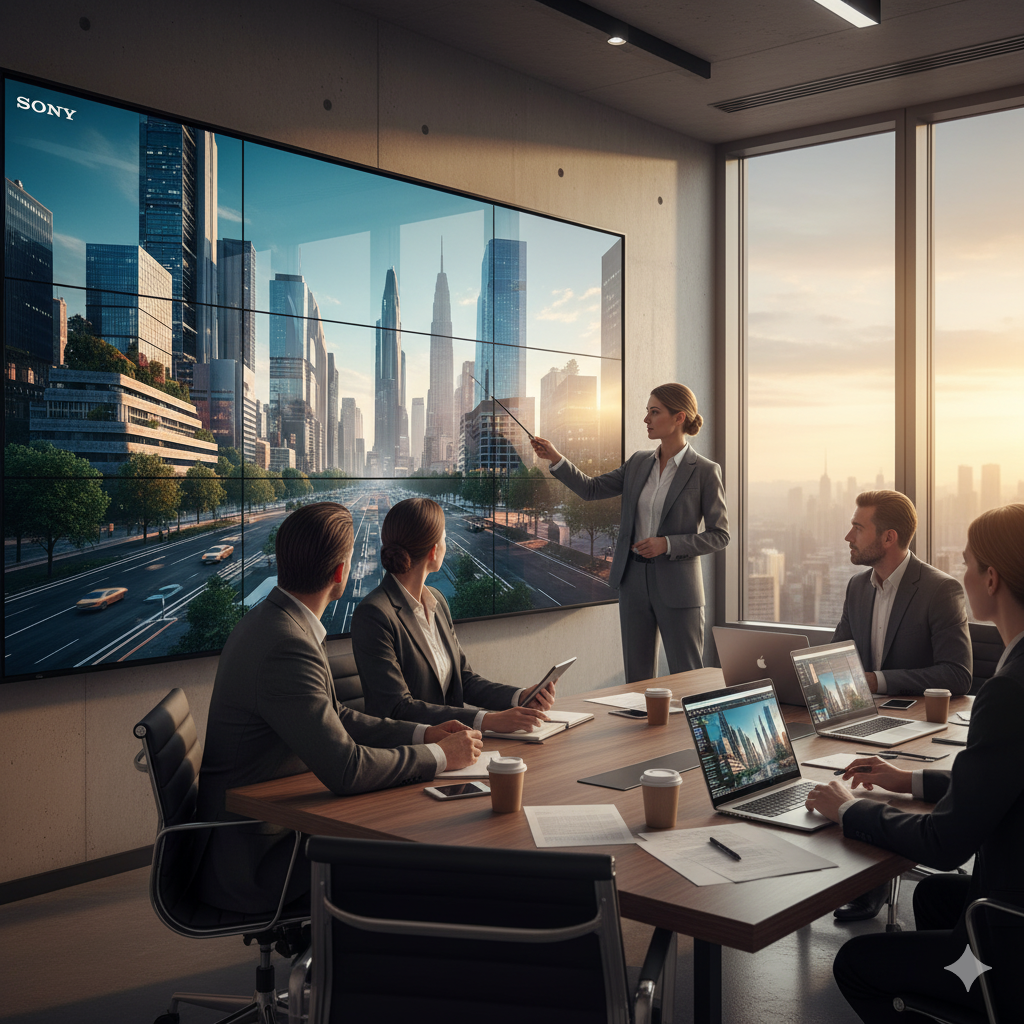
Sony continues to define the high end of the video wall market in 2025 with its precision-driven Crystal LED technology, making it ideal for conference spaces. Designed for organizations that prioritize realism, depth, and long-term performance, Sony’s displays deliver breathtaking image quality and visual fidelity ideal for creative studios, museums, conference rooms, and mission-critical applications.
Core Features and Innovations
- Crystal LED Display Technology: Delivers exceptional clarity, true-to-life colors, and deep contrast for professional environments.
- Advanced Video Processing: Sony’s proprietary processors ensure smooth motion rendering and accurate image reproduction.
- Modular Architecture: Enables flexible screen configurations for a range of applications, from studio backdrops to control centers.
- Long Lifespan: Engineered with durable components that ensure consistent brightness and color stability for years of continuous use.
- Seamless Integration: Designed to work effortlessly with digital signage platforms and content management systems.
Real-World Case Studies
Sony’s displays have earned a strong reputation for precision and performance in professional environments:
- Museums: Used for immersive exhibits that rely on true color representation and visual depth.
- Broadcast Studios: Trusted for live production and content editing that require consistent, color-accurate displays.
- Corporate Command Centers: Employed in environments where reliability and visual accuracy are crucial for real-time monitoring.
- Educational Institutions: Adopted for digital learning spaces and research labs that demand top-tier display quality.
Pros, Cons, and Tips
- Pros: Unmatched color accuracy, durability, and consistent performance under heavy use.
- Cons: Higher entry cost places Sony among the most premium options in the market.
- Tip: Combine Sony’s displays with AIScreen’s customizable templates to create professional, data-driven visual content that enhances brand presence and audience engagement.
If you’re looking for professional-grade visual performance with superior clarity and longevity, Sony remains the trusted choice. Its combination of precision engineering and advanced imaging technology ensures every project meets the highest standards of visual excellence. If you’re still exploring how to make a video wall, choosing the right brand is the first step toward a scalable and high-performing setup.
Cost Factors to Consider When Investing in Video Walls
The cost of a video wall depends on much more than just the screens; it’s about how the entire setup comes together, from installation and maintenance to software and scalability. According to Digital Signage Today, 72% of viewers recall content better on video walls. So, once you understand these key points and elements, it can help you plan your budget smartly and make sure every dollar brings long-term value.
- Pixel Pitch and Resolution Impact: When it comes to picture quality, pixel pitch plays a huge role. A smaller pixel pitch (like P1.5 or P2.5) delivers sharper, more detailed visuals, perfect for indoor spaces such as control rooms or corporate lobbies. However, the smaller the pitch, the higher the cost due to advanced manufacturing precision. For outdoor displays, larger pitches (like P4 to P6) strike the right balance between visibility and cost, ensuring your content remains clear even from a distance.
- Indoor vs. Outdoor Installations: Indoor and outdoor video walls may look similar, but they’re built for very different conditions. Outdoor walls require higher brightness levels (measured in nits), weather-resistant casings, and IP-rated protection against dust and moisture, all of which add to the total investment. Indoor walls, on the other hand, focus on fine pixel detail and aesthetics, often consuming less power and needing less protective hardware.
- Size, Shape, and Configuration: The overall cost also depends on how large or creative your video wall design is. Larger walls naturally require more panels, while unique configurations like curved or vertical installations add complexity and labor costs. For example, retail stores often go for artistic, curved video walls to grab attention, while hotels and restaurants prefer seamless widescreen layouts for ambiance and branding.
- Installation, Maintenance, and Support: A video wall is a long-term investment, so don’t overlook installation and ongoing care. Professional calibration ensures consistent color accuracy, while maintenance contracts keep your display running flawlessly 24/7. To make this even easier, pair your setup with AIScreen’s remote management system. It allows you to monitor, schedule, and update content effortlessly from anywhere, saving both time and maintenance costs in the long run.
Future Trends in Video Wall Technology (2025 and Beyond)
By 2025, display technology innovation isn’t just about size; it’s about innovative solutions that include intelligence, sustainability, interactive displays, transparent panels, and outdoor advertising. The next generation of video walls is smarter, featuring energy-efficient designs that are more energy-efficient, and seamlessly connected to cloud systems that bring real-time content to life.
According to MarketsandMarkets, demand for outdoor LED walls rose by 30% in the past year. Let’s explore what’s driving the future of display technology, including video feeds, and how businesses can stay ahead of the curve.
- Rise of MicroLED and Transparent Displays: MicroLED is quickly becoming the gold standard in large-format displays. It offers stunning contrast, higher energy efficiency, and thinner panels, making it ideal for both corporate environments and high-end retail spaces. At the same time, brands like Samsung and LG are pioneering transparent and flexible OLED displays, transforming ordinary walls and glass surfaces into interactive digital canvases. These innovations are redefining how businesses present information, advertise, and create immersive visual experiences.
- AI-Powered Content Optimization: Artificial intelligence is revolutionizing how video walls operate. With smart analytics, displays can now automatically adjust brightness, color balance, and even content scheduling based on ambient light or audience engagement data. Tools like AIScreen’s automation features make this process effortless, aligning your visuals with real-time triggers such as foot traffic, weather, or time of day for truly dynamic storytelling.
- Integration with IoT and Cloud Systems: Video walls are becoming part of the connected ecosystem. Through IoT integration, they can respond instantly to sensor data, adjusting content for crowd density, temperature, or even product stock levels in retail. A digital signage software, like AIScreen, takes it further by enabling centralized content management, live updates, and real-time monitoring across multiple locations. This makes managing complex display networks simpler, smarter, and far more efficient.
Navigating the Global LED Screen Market: US vs. Chinese Manufacturers
Have you noticed how almost every major brand, from airports to retail chains, is switching to large-scale LED video walls and digital billboards? The global market is booming, but here’s the catch: not all LED manufacturers are built the same when it comes to producing stunning visuals. Some promise ultra-low prices, while others focus on performance, high brightness, reliability, and long-term support. According to the MIT Sloan School of Management, digital wall displays enhance team collaboration by 38% in hybrid workplaces.
When choosing between US-based brands like Samsung, LG, and Sony and Chinese manufacturers, it’s not just about the cost; it’s about what you get over time: warranty coverage, certified quality, and trusted performance. Here’s how the two compare across key decision factors.
| Criteria | Samsung / LG / Sony | Chinese Manufacturers |
| Warranty Transparency | Multi-year warranty with service guarantees | Often limited or unclear |
| Service & Support | Global service centers and training | Regional or online-only |
| Specification Accuracy | Verified specs and certifications (UL, ISO) | May vary across suppliers |
| Long-Term Reliability | Tested durability and 24/7 operation | Depends heavily on brand reputation |
Chinese LED manufacturers have undoubtedly raised the bar for affordability and innovation, but the real difference shows up after installation, in service quality, component life, and display performance. Premium brands like Samsung, LG, and Sony back their products with certified standards, 24/7 reliability, and tailored video wall solutions for seamless CMS compatibility for security operations centers and control rooms with seamless integration, making them a safer long-term investment.
If you’re scaling digital signage across multiple locations, always balance budget with quality assurance. Choose vendors who offer solid warranties, transparent specs, and integration with CMS platforms like AIScreen for effortless content control and scheduling.
Elevate Your Visual Experience With the Right Video Wall Partner!
No matter which brand you choose, Samsung, LG, or Sony, your video wall’s true power lies in how you manage it with consumer electronics. A stunning display can only go so far without the right cloud-based content management platform to seamlessly integrate visuals, data, and messaging. That’s where AIScreen makes all the difference. According to the Harvard Business Review, organizations that use large-format video displays experience a 47% improvement in visual communication efficiency.
It’s fully compatible with any video wall hardware, supports multi-screen scheduling, automated content updates, and third-party app integrations, all from one centralized dashboard. With real-time monitoring, you stay in control of every screen across locations, effortlessly. Explore how AIScreen powers your video wall with dynamic content management, 1,500+ customizable templates, and smart remote automation. Book a free demo today and elevate your visual experience with the most intuitive digital signage platform built for modern businesses.


FAQs
Which video wall brand is best for commercial use?
The best video wall brand for commercial use depends on your environment and display goals. Samsung leads with ultra-bright MicroLED options for large venues, while LG offers flexible OLED setups ideal for retail and hospitality. Sony, on the other hand, excels in professional-grade visuals for studios and control rooms. Each brand brings reliability, scalability, and high ROI for business installations.
Are LG video walls suitable for outdoor use?
Yes, LG video walls are suitable for outdoor use when equipped with high-brightness, weather-resistant panels that deliver vibrant images even in challenging conditions. Their LED and outdoor signage series come with enhanced IP ratings to withstand heat, dust, and rain. These displays maintain vivid visibility even under direct sunlight. For optimal results, pair LG walls with AIScreen for automated brightness and content scheduling.
What makes Sony video walls stand out?
Sony video walls stand out for their Crystal LED technology, delivering unmatched color accuracy and image depth. Their panels are built for precision-driven environments like museums, studios, and corporate spaces. The seamless contrast and long lifespan make them a top choice for premium installations. Sony’s professional calibration tools further ensure perfect visual consistency across panels.
How do I calculate the cost of a video wall setup?
You can calculate the cost of a video wall setup by factoring in key factors such as screen size, pixel pitch, installation type, and software integration. Smaller pixel pitches (like P1.5–P2.5) cost more but provide sharper images for indoor use. Don’t forget to include mounting, calibration, and long-term maintenance expenses. Pairing your setup with AIScreen’s remote management system helps reduce operational costs over time.
Are video walls energy-efficient?
Yes, modern video walls equipped with advanced LED solutions and technology solutions, under strict quality control, are designed with energy-efficient LEDs that consume significantly less power than older LCD systems, especially for large-scale screens. Brands like Samsung and LG integrate low-power modes and smart brightness controls to optimize energy use. These sustainable features reduce electricity costs without compromising visual performance. Energy efficiency also improves the long-term ROI of your display investment.
