
What Are the Construction Site Signage Requirements?
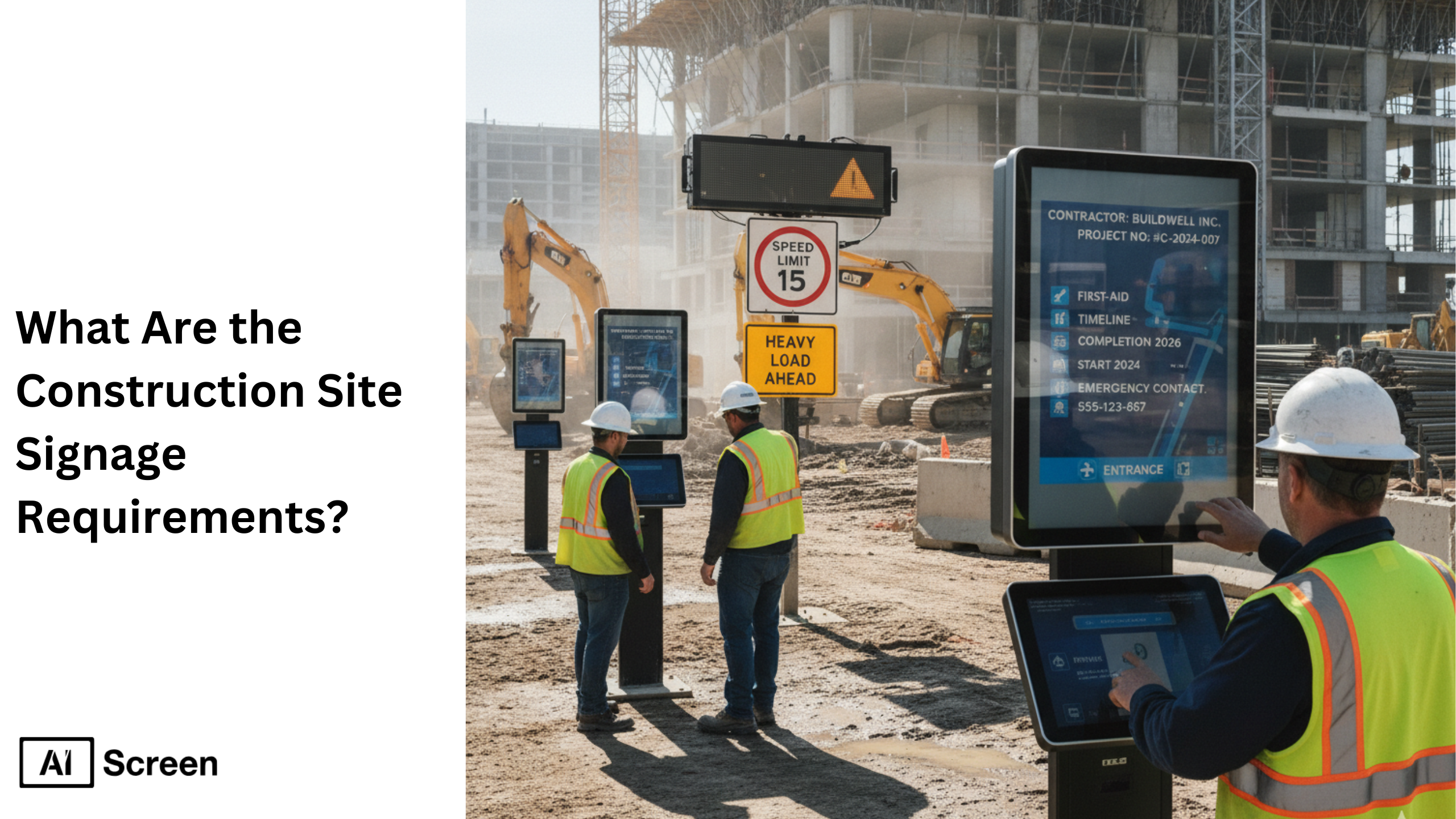
Construction site signage is not just a helpful extra, it’s a legal and safety necessity, and understanding construction site signage requirements is essential for maintaining a compliant and hazard-aware work environment. Proper safety signs on a construction site help ensure compliance, raise awareness, and prevent risks. Regulatory bodies like OSHA (Occupational Safety and Health Administration), ANSI (American National Standards Institute), and local safety authorities require standardized signage for hazards, procedures, and worker instructions. Effective construction site signage protects both workers and the public while reinforcing safe practices at all times.
In this blog, we break down mandatory, informational, and optional construction site signs, and we highlight how digital solutions can modernize construction site signage to improve safety communication, reduce risk, and support regulatory compliance.
They offer clear, concise, and easy-to-understand messages telling people valuable construction site information. Proper signage strategies, increasingly powered by digital signage software, make sure no one gets lost or misinformed, especially when safety and logistics matter the most.
Which Construction Site Signs Are Mandatory?
Mandatory signage communicates critical safety and compliance information required by law. Under OSHA 29 CFR 1926 and ANSI Z535, construction site signage must follow specific rules for color, placement, and the clarity of messages.
These OSHA construction site signage requirements are designed to ensure workers immediately recognize hazards and understand required safety actions across all active work zones.
Did you know? According to the U.S. Bureau of Labor Statistics, 38.5% of construction worker fatalities in 2023 were due to falls, slips, and trips. That statistic underscores just how dangerous construction sites can be and why proper signage is essential.
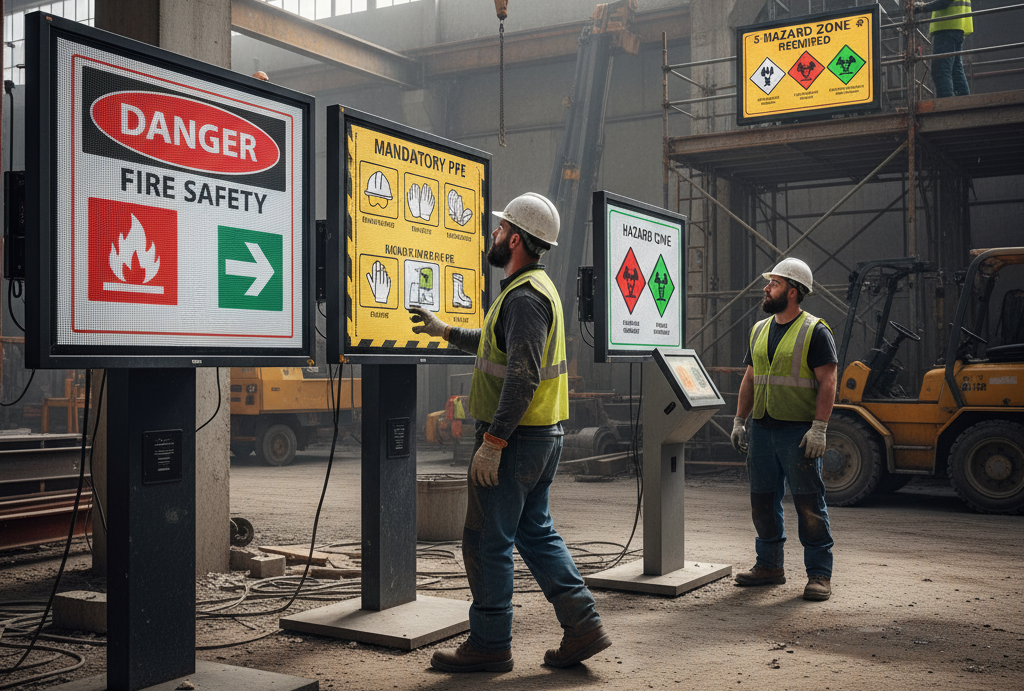
- Signs Displaying Personal Protective Equipment (PPE) Requirements: These safety signs indicate which PPE must be worn in certain work areas, for example, helmets, gloves, boots, eye protection, and high-visibility clothing. Construction sites often use pictograms or text to alert workers to wear hard hats and other necessary gear, enforcing proper signage to alert workers to immediate hazards.
- Signs Identifying Hazardous Materials: Construction site signs must clearly show areas where flammable materials, toxic substances, or chemical storage are present. These often use Globally Harmonized System (GHS) pictograms to be OSHA compliant construction signs, making sure workers understand potential hazards at a glance.
- Signs Outlining Emergency Procedures: Emergency exit signs, evacuation route maps, and muster point signs ensure everyone on the construction project site knows where to go in case of fire, first-aid needs, or other emergencies. These emergency exit signs and fire safety signs direct workers to first aid stations, fire extinguishers, and assembly points.
Safety signs are critical components in project sites because they provide visual communication that helps to prevent accidents, injuries, and even fatalities. Construction worksites become even more perilous without safety signs, leading to increased accidents and injuries. Recognizing the broader importance of workplace safety signage, these signs are crucial for ensuring the safety of workers and the public on construction sites, reducing the risk of fatalities, injuries, and related costs.
What Informational Construction Site Signs Are Required?
Informational construction site signage helps guide workers, visitors, and inspectors through complex job sites. These signs must be durable, clear, and consistently placed, particularly in high-traffic areas. Informational signs are employed in work sites to provide warning, instruction, and guidance to workers, visitors, and the general public.
They offer clear, concise, and easy-to-understand messages telling people valuable construction site information. Proper signage strategies make sure no one gets lost or misinformed, especially when safety and logistics matter the most.
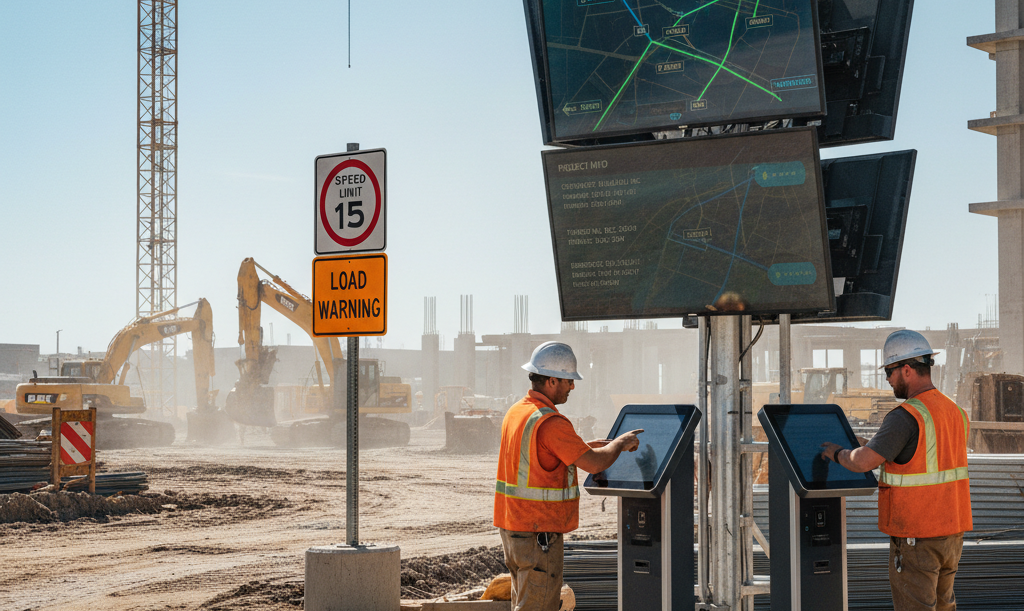
- Wayfinding Signs: Directional signs (a type of informational sign) help navigate foot and vehicle traffic on large or multi-zone construction sites. They show routes to entrances, first-aid stations, restrooms, and trailers. These directional signs use arrows and symbols to guide people safely and efficiently.
- Project Information Signage: These signs give key project details such as the contractor’s name, the construction company’s brand identity, project number, timeline, and emergency contacts. They may also include safety protocols, contributing to regulatory compliance and transparency about occupational safety.
- Parking and Traffic Control Signage: On construction sites, proper traffic control signs help direct vehicles, machinery, and pedestrians. These signs might include speed limits, load-area warnings, or instructions to use specific access points to prevent accidents involving heavy machinery.


What Optional Signs Can Construction Sites Use?
Optional Signage That May Be Used on Construction Sites goes beyond compliance and safety warnings. Construction signage doesn’t have to be all business. There are several other types of signs to display on your work site that serve various purposes, including boosting morale, reinforcing brand identity, and engaging the community. Research shows that a strong safety culture improves worker morale, engagement, and trust in management.
A study by Lawrence Technological University found that when construction firms support a positive organizational culture, employees demonstrate significantly better safety behavior and motivation. This underscores how even non-mandated signs, motivational, branded, or PR-focused, can reinforce a safer, more connected workplace.

- Signs for Motivation: These construction signs inspire workers and promote safety accountability. Motivational signs might read “Think Safety First,” “Safety Is No Accident,” or “Stay Alert, Stay Alive.” By using positive messages, these safety signs help create a safety-conscious work environment where construction workers feel valued and part of a team.
- Marketing Signage: A busy construction site can double as a billboard. Marketing signs, often made from mesh banners, coroplast, or vehicle wraps, display the company logo, project details, or future building renderings. This custom construction site signage not only advertises the construction company’s brand recognition, but it also leaves a lasting impression on passersby.
- Public Relations Signs: These signs tell a story beyond the job site. Public relations signage might highlight how the construction project benefits local infrastructure, sustainability efforts, or partnerships with the community. Such signs combine brand identity with a message of social responsibility, helping to build goodwill and project transparency.
How Can Digital Signage Modernize Construction Sites?
Modern construction sites are increasingly shifting toward digital signage systems to handle real-time communication, compliance alerts, and workforce updates. Digital site signage allows cloud-based dashboards and IoT-enabled displays to enhance visibility and coordination on site.
With digital signs, construction managers can stream live safety messages, update caution signs, and alert workers instantly about unsafe practices or changing conditions. Instead of static banners, digital signage provides dynamic content, such as weather updates, safety KPIs, and automated incident notifications, all managed from a central dashboard.
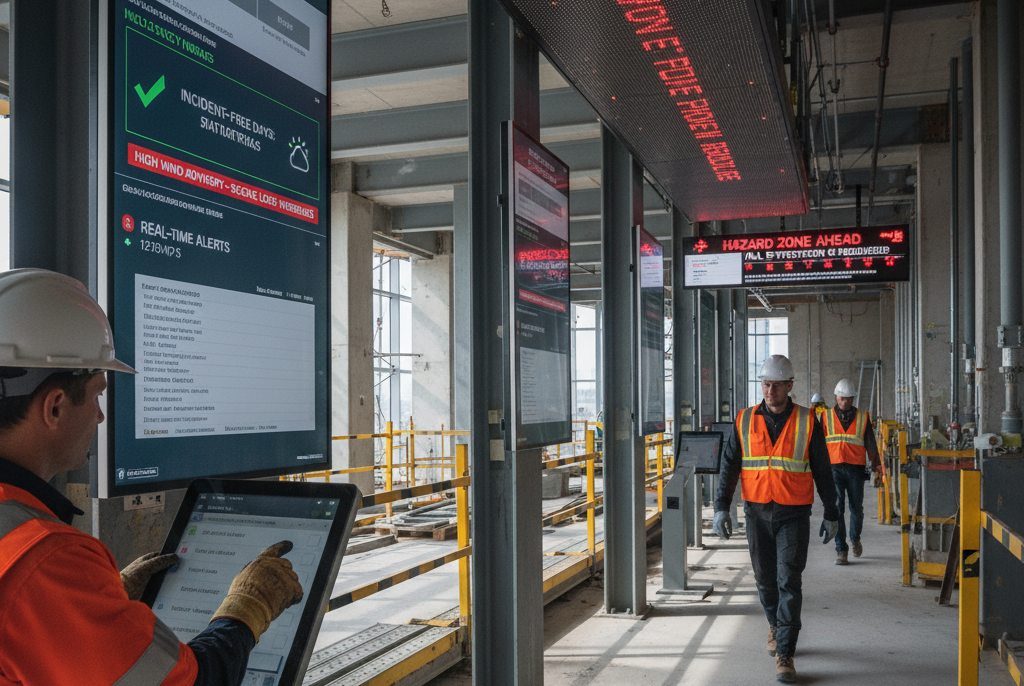
This helps ensure everyone sees the right construction signs at the right time, even across various locations, reinforcing regulatory compliance and improving worker awareness.
According to OSHA’s own data, fall incidents, one of the leading causes of death on-site, are heavily scrutinized. Digital construction signage helps alert workers faster and more clearly about immediate hazards, potentially reducing fall risk and improving safety outcomes.
How to Improve Worker Awareness and Coordination Through Digital Signage
To Improve Worker Awareness and Coordination Through Digital Signage, digital displays are a powerful way to enhance awareness, reduce miscommunication, and deliver instant digital signage emergency alerts on a construction site. As we read in this article on what are the construction site signage requirements, adopting digital signage transforms how jobsite safety signs are managed and perceived.
With digital signage, managers can push live weather updates, track safety KPIs, and display automated incident alerts across multiple screens. When a hazard is detected, a warning sign with a safety alert symbol and clear exclamation point animation can pop up immediately.
Digital signs also offer flexibility, changing messages in real time, adjusting caution signs or fire exits, and tailoring site rules depending on the current tasks. This level of effective signage coordination means workers always have the right essential information in front of them, reinforcing a strong jobsite safety strategy and helping to prevent accidents.
How Do Construction Site Signage Requirements Connect With Elevator Signage Requirements?
Construction site signage requirements are one part of a much broader compliance picture that continues long after the crew leaves. Once a structure is occupied, the same standards for clarity, placement, and safety carry over to permanent building features, and vertical transport is a clear example. Reviewing elevator signage requirements shows how these rules extend into finished buildings, giving facility teams a consistent framework across every phase of a project.
Elevator signage requirements help facility teams communicate floor information, emergency instructions, accessibility details, occupancy limits, and safety notices in high-traffic areas. Looking at both construction and elevator signage as part of one broader safety strategy helps organizations maintain consistent communication from the active worksite stage through everyday building operations.
How Can AIScreen Support Construction Site Signage Requirements?
Meeting construction site signage requirements means using the right mandatory, informational, and safety signs throughout every stage of a project. Clear placement, readable messaging, regular updates, and alignment with applicable OSHA and ANSI guidance help construction teams reduce confusion, communicate hazards, and create a safer environment for workers, contractors, and visitors.
AIScreen is a leading digital signage provider that helps construction companies manage safety communication across multiple screens and job sites. With centralized content control, real-time updates, and flexible display options, AIScreen can reinforce construction site signage requirements by sharing hazard alerts, emergency instructions, project updates, and site-specific safety messages more efficiently.
Frequently Asked Questions
What information should be included on construction site entrance signs?
The information on construction site entrance signs should clearly present essential information such as the contractor’s name, project details, emergency contact, and site rules. These signs often include general safety signs, warning signs, and notice signs that alert workers and visitors to potential dangers right at the entry point, helping to ensure compliance and awareness.
How can contractors ensure their construction signage meets legal requirements?
Contractors can ensure compliance by using osha-compliant construction signs that follow recognized standards for color, symbols, and placement. By combining caution signs, danger signs, and safety instruction signs, they can cover specific hazards and fire safety protocols, meeting both regulatory requirements and practical safety needs on site.
Why do construction sites need hazard identification signs?
Hazard identification signs are essential because they alert workers to immediate risks, such as chemical storage, crane operations, or slippery surfaces. These danger signs are a critical part of jobsite safety, helping to prevent accidents by clearly communicating potential hazards to everyone on site.
Can customized or branded safety signs still comply with OSHA requirements?
Yes, brand recognition can be built into custom construction site signage while still using standard safety elements. Companies often integrate their logo, mesh banners, or color schemes (e.g., black letters on yellow background or white letters on orange background) without compromising the required symbols, safety alert symbol, or exclamation point for warnings.
Is it mandatory to post PPE (Personal Protective Equipment) requirement signs?
Yes, in many cases, osha regulations require PPE signage that instructs workers to wear hard hats, high-visibility clothing, or eye protection in specific areas. These safety signs with white letters, black letters, or pictograms help alert workers to the required site rules and reduce risk from unsafe practices.
