
Top 10 Digital Signage Industry Trends in 2026

The digital signage industry trends shaping 2026 include AI-driven personalization, programmatic DOOH advertising, interactive retail displays, smart hospitality screens, campus communication networks, corporate dashboards, digital menu boards, experiential event signage, healthcare communication displays, and immersive technologies like augmented reality. The digital signage market is rapidly evolving across retail, advertising, hospitality, education, and healthcare as organizations adopt advanced technologies to reach target consumers. This shift reflects strong market momentum: Statista reports that the global digital signage market size reached about $26.8 billion in 2023 and is projected to exceed $45 billion by 2030.
In this blog, we explore the most influential digital signage trends transforming the global digital signage market, including retail innovation, DOOH advertising expansion, hospitality and healthcare communication, education networks, and corporate workplace displays. We also examine how the hardware segment, software segment, and support services contribute to market expansion and market share growth.
1. Retail-Led Growth Dominates Digital Signage Industry Trends
Retail-led innovation remains one of the strongest digital signage industry trends, as the retail industry uses digital signage displays, interactive kiosks, and dynamic digital screens to enhance customer experiences and drive revenue growth.
Retailers rely on digital signage systems and content management systems to deliver in-store promotions, personalized product recommendations, and real-time pricing updates across retail stores.
Retail businesses increasingly integrate digital signage solutions with omnichannel strategies, connecting online customer data with physical store experiences.
This approach allows brands to combine retail advertising, targeted advertising, and innovative marketing strategies through connected digital displays placed near products. To understand broader shifts shaping the industry, explore our guide on top 12 digital signage trends in 2025–26.
Let’s take an example, smart displays can recommend complementary items when a shopper approaches a product shelf. These digitized signs enhance audience engagement while helping retailers create new revenue streams.
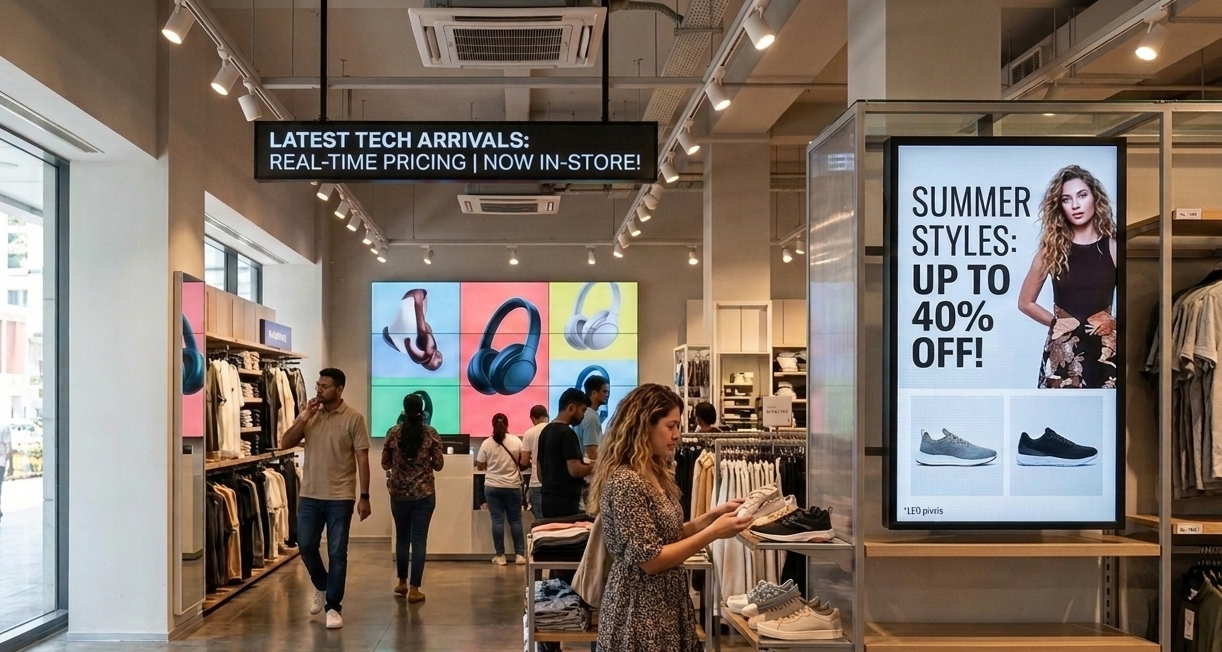
But think about this for a moment, have you ever walked into a retail store because a bright digital screen caught your attention?
Retailers deploy video walls, electronic displays, and digital signs to attract customers and communicate promotions instantly. These systems connect to centralized software solutions that allow remote management of promotions across multiple store locations.
This ability helps retailers react quickly to changing consumer behaviors and seasonal demand patterns.
Manufacturers such as LG Electronics, Panasonic Corporation, and Sharp NEC Display Solutions supply advanced hardware components and display technologies used in modern digital signage networks.
According to Statista digital signage statistics, more than 40% of shoppers say digital displays influence purchasing decisions near the point of sale, confirming the role of digital signage in retail advertising strategies.
Retail adoption continues expanding because digital signage enables businesses to track key performance indicators such as engagement rates, conversion rates, and product interaction data.
These insights allow retailers to refine marketing campaigns and strengthen the competitive landscape within the signage industry. As a result, retail remains the largest contributor to the digital signage market size and ongoing market growth.
2. Digital Advertising and DOOH Continue to Expand
Digital Out-of-Home (DOOH) advertising is one of the fastest-growing digital signage market trends because advertisers increasingly shift budgets from static billboards to programmatic digital signage displays and connected digital screens.
DOOH networks allow advertisers to run real-time campaigns based on audience demographics, location data, and time-specific promotions. Modern digital signage support programmatic digital advertising, meaning ads automatically adjust based on real-time analytics and audience behavior.
Let’s take an example, a digital billboard near a shopping district may promote fashion brands during peak retail hours while switching to restaurant promotions in the evening. This flexibility helps brands create targeted messaging across multiple digital communication channels.
But pause for a second, when you see a large digital billboard playing video content, does it grab your attention more than a printed poster?
The answer explains why advertisers invest heavily in DOOH. Video-based campaigns displayed through large digital displays and video walls capture attention faster than static images.
According to Nielsen research on digital signage statistics, digital signage achieves an average recall rate of 83% among viewers, significantly higher than many traditional advertising formats.
DOOH advertising networks connect thousands of electronic displays located in airports, malls, transit stations, and entertainment venues. These networks generate high visibility while providing advertisers with detailed data analytics and performance tracking tools.
Marketers analyze metrics such as impressions, engagement levels, and audience demographics to optimize campaign effectiveness. The rapid expansion of DOOH contributes significantly to global digital signage market growth.
Analysts predict that the digital signage market will maintain a strong compound annual growth rate (CAGR) throughout the forecast period, driven by demand for dynamic advertising and immersive digital signage solutions.
As a result, digital advertising remains one of the most influential industry trends shaping the future of digital signage.
3. Hospitality Adopts Digital Signage Software for Guest Experience
The hospitality sector increasingly adopts digital signage because hotels, resorts, and restaurants rely on visual and digital communication tools to enhance experiences. In the digital signage industry, hospitality businesses use digital screens to guide guests, promote amenities, and improve services.
Hotels use digital signage in lobbies, elevators, and conference areas to show directions, event schedules, and service updates. These displays deliver key information directly to guests and reduce pressure on front-desk staff.
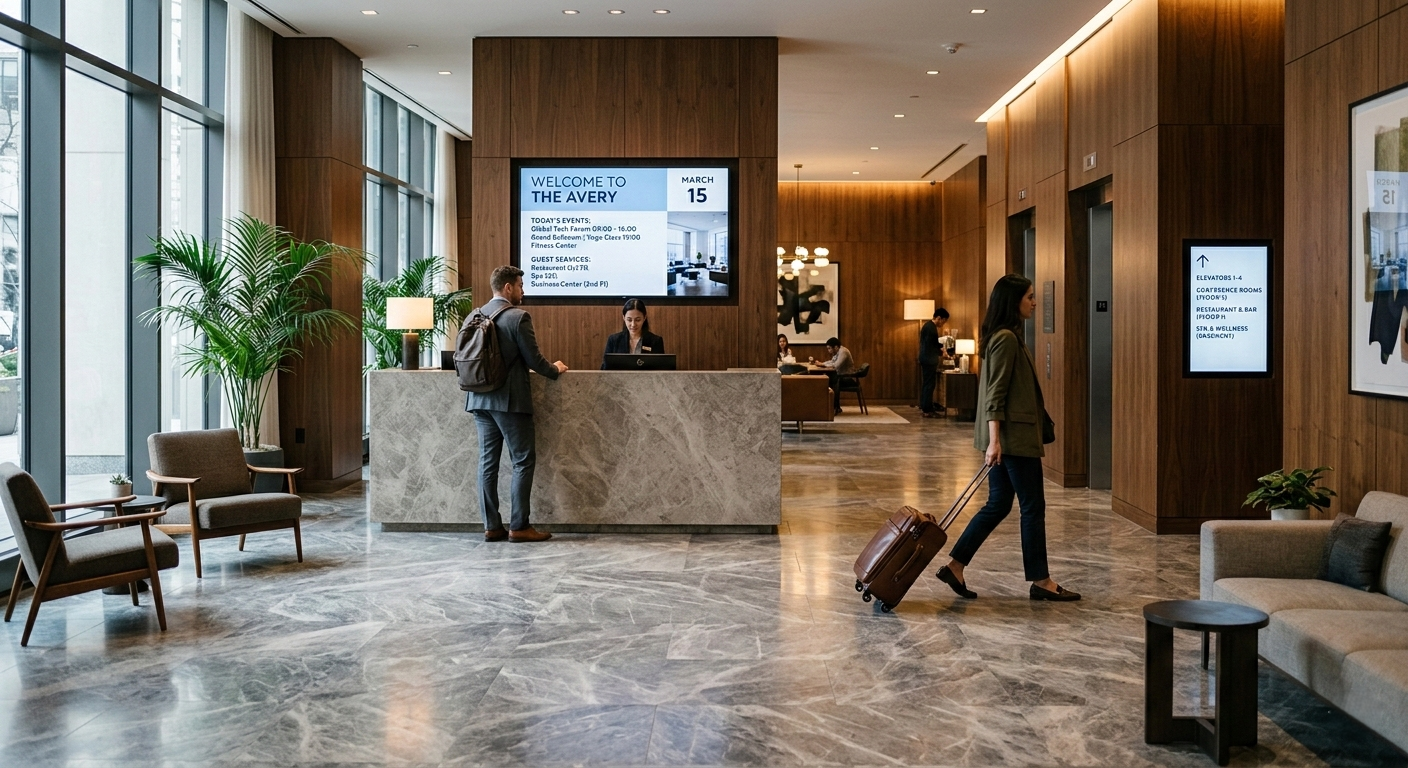
Have you ever arrived at a hotel and wondered where to go first? Digital signage removes that confusion. Centralized software lets managers update announcements, events, and promotions instantly across all screens.
Digital signage in hotels often displays welcome messages, local tourism highlights, entertainment schedules, and transportation information. These immersive digital signage solutions help businesses improve customer satisfaction while strengthening brand identity.
According to Statista travel technology data, 55% of travelers say they are more likely to choose hotels offering self-service technology such as kiosks or digital information systems. This statistic highlights how digital transformation influences hospitality operations.
As a result, hospitality adoption contributes significantly to the ongoing expansion of the digital signage industry, where innovative display technologies enable hotels and resorts to deliver seamless guest communication.
4. Education Sector Fuels Long-Term Digital Signage Adoption
Educational institutions are adopting digital signage at a steady pace because campuses require efficient digital communication systems to connect students, faculty, and administrators. Schools and universities use digital displays to share announcements, alerts, and academic updates across campus.
Digital notice boards replace paper bulletin boards in many institutions. These displays show schedules, exam reminders, campus news, and event updates in real time, improving communication while reducing printing costs. Think about it, how often do students read a paper notice board today?
Students engage more easily with dynamic digital screens. Interactive displays combine video, social feeds, and multimedia content to keep attention and support modern learning environments where smartphones and tablets are common.
Video also improves communication on campus. University of Minnesota learning technology research shows that 96% of students say video enhances the learning experience, which is why many schools use multimedia displays.
Many campuses also integrate digital signage with emergency notification systems to broadcast safety alerts instantly across buildings. Administrators can update critical information in seconds, ensuring students and staff receive timely guidance during urgent situations.
Universities also invest in long-term systems such as digital signage networks, video walls, and interactive kiosks for wayfinding and alerts, supporting steady digital signage market growth. As a result, education represents one of the most reliable sectors driving the future of digital signage.
5. Corporate Communication Relies More on Digital Signage
Corporate organizations increasingly use digital signage systems to improve internal communications, employee engagement, and workplace productivity.
Instead of relying only on email newsletters, companies display real-time updates on lobby screens, office dashboards, and performance boards located across corporate offices.
These digital communication systems share company announcements, performance metrics, safety reminders, and project milestones with employees. By placing digital screens in shared spaces, organizations ensure that staff members receive important updates quickly and consistently.
But ask yourself this, how many work emails do employees ignore every day?
Information displayed through digital signage displays and visual communication boards reaches employees more effectively because it appears in highly visible workplace areas. Employees notice messages while entering the office, using elevators, or visiting break rooms.
Many organizations now integrate digital signage with data analytics platforms and key performance indicators dashboards. These systems display real-time metrics related to productivity, sales performance, or operational goals. This visibility encourages staying aligned with business objectives.
According to Gallup workplace communication research, organizations with strong internal communication strategies experience up to 25% higher employee productivity. Digital signage supports this goal by providing centralized communication tools that connect distributed teams.
The digital signage industry continues expanding within enterprise environments as hybrid and remote work models grow.
Businesses deploy digital signage networks across multiple office locations, ensuring consistent messaging across departments. This enterprise adoption strengthens the role of digital signage as a key component of modern corporate communication.


6. Digital Menu Boards Transform Restaurants
Digital menu boards are transforming restaurant operations by improving order accuracy, increasing average order value, and enabling real-time promotional updates. Restaurants use digital signage to show menus, promote offers, and update prices instantly.
Quick-service restaurants (QSRs), cafes, and food chains increasingly install large digital screens and electronic displays above service counters. These digital signs allow businesses to change menu items instantly using centralized content management systems.
Here’s a simple question, have you ever ordered something extra just because it appeared on a bright digital menu screen?
This behavior reflects the power of visual communication in restaurants. Digital menu boards use images, videos, and motion graphics to showcase meals, which encourages impulse purchases and increases revenue streams.
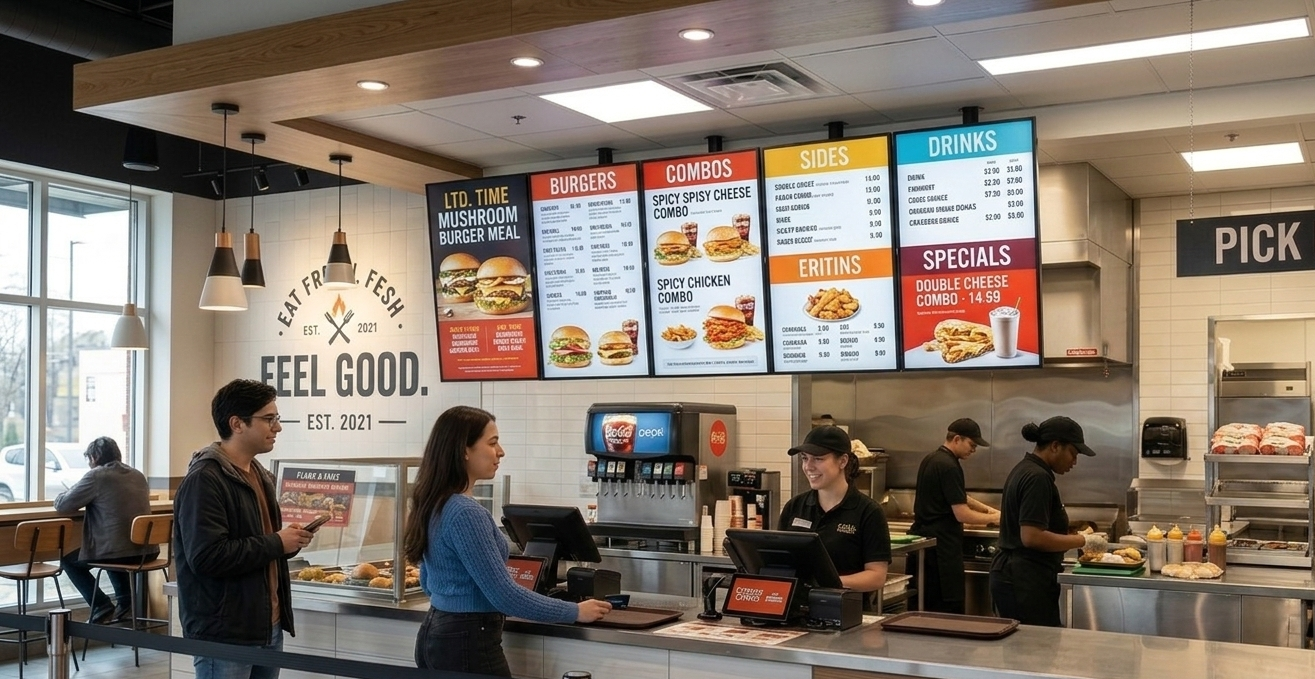
The digital signage market is seeing increasing demand for restaurant displays as food service businesses adopt smarter communication tools. Similar adoption patterns appear across various industries, where digital screens help businesses deliver real-time information and improve customer experiences.
Digital menu boards are just one example within the broader ecosystem, and understanding what are the types of digital signage helps explain why restaurants are investing so heavily in this format.
Research supports this trend. According to data reported by the National Restaurant Association, restaurants using digital menu boards experience average sales increases of 3%–5% through upselling and visual promotions.
Restaurant adoption contributes significantly to digital signage market growth within the food service sector, where operators seek cost-effective technology that improves operational efficiency and customer satisfaction.
7. Tradeshows and Events Embrace Digital Signage Experiences
Event organizers rely heavily on digital signage because large venues require clear navigation systems, real-time schedules, and engaging brand communication tools. Trade shows, conferences, and exhibitions deploy digital displays throughout venues to guide visitors and promote sponsors.
Event spaces often use interactive kiosks, large video walls, and immersive digital signage solutions to create visually engaging environments. These technologies help attendees locate sessions, explore exhibitor booths, and discover live announcements instantly.
Think about this scenario, when you attend a busy conference, how do you quickly find the next session room? Digital signage solves this problem by providing dynamic wayfinding maps and live event schedules across multiple digital screens.
Event marketing also benefits from integrated social media displays. Organizers display user-generated content, live hashtags, and attendee posts on digital screens to boost audience engagement. This real-time interaction strengthens brand visibility for sponsors and exhibitors.
According to EventMB industry research, event technology can increase event attendance by 20% and improve productivity by 27%. These results highlight the value of digital signage systems in event management.
Within experiential marketing environments, these capabilities represent one of the most impactful digital signage industry trends shaping how brands interact with audiences during live events.
8. Healthcare Digital Signage Improves Patient Outcomes
Healthcare organizations deploy digital signage to improve patient communication, education, and operational efficiency. Hospitals, clinics, and medical centers use digital displays to share important health information, appointment instructions, and compliance messaging with patients and visitors.
Digital screens placed in waiting rooms display educational videos about treatment procedures, wellness tips, and hospital services. These electronic displays help patients understand medical information while waiting for appointments.
But imagine sitting in a hospital waiting room, would you prefer staring at a blank wall or watching helpful health information on a digital screen?
Digital signage improves the patient experience by reducing perceived waiting times and providing helpful distractions. According to research from the University of California healthcare communication studies, digital displays can reduce perceived wait times by up to 35% in clinical environments.
Healthcare facilities also rely on digital signage networks to broadcast emergency alerts and safety instructions. These systems help staff communicate quickly during urgent situations while maintaining compliance with healthcare regulations.
Another important benefit involves patient recall. Surveys show that 75% of patients remember at least one message displayed on hospital digital screens, demonstrating strong audience engagement with visual communication tools.
Healthcare adoption continues expanding as medical organizations invest in technology that improves patient education, staff communication, and overall operational efficiency.
9. Gyms and Spas Use Digital Signage for Engagement
Fitness centers and wellness facilities use digital signage to motivate members, promote services, and improve the overall workout experience. Within the digital signage industry, gyms deploy digital displays, motivational screens, and class schedule boards to communicate with members.
Digital screens placed near treadmills or weight areas display workout tips, health advice, and promotional content.
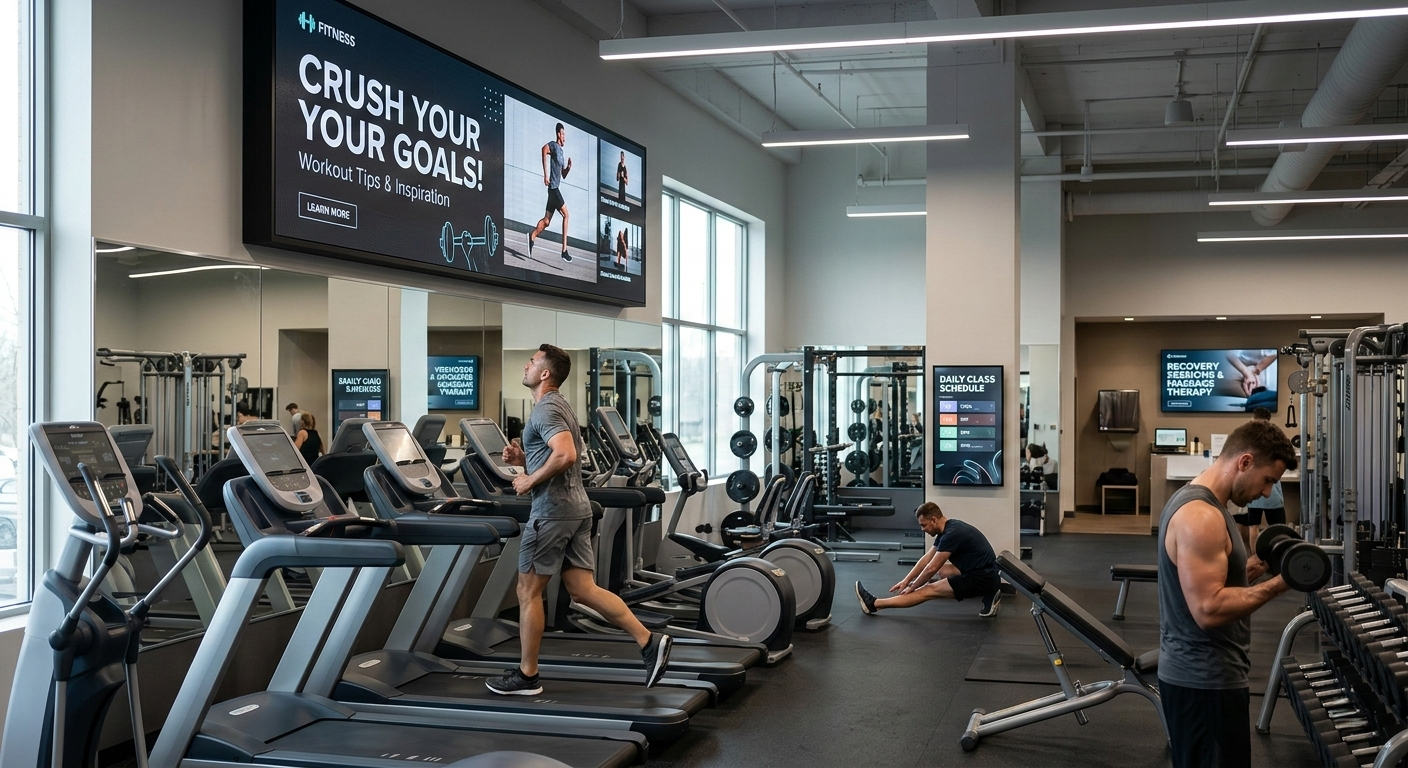
These visual messages encourage members to stay engaged while exercising. Fitness centers also promote personal training sessions, wellness programs, and spa services through targeted digital advertising. Would a motivational screen help you finish your last workout minutes?
Motivational content displayed through digital signage helps reinforce healthy habits and community engagement. Some gyms display user-generated content, social media posts, and member success stories on digital screens to inspire others.
Fitness businesses also use digital signage systems to promote class schedules, membership offers, and seasonal programs. By displaying this information clearly, gyms reduce confusion while encouraging members to try new services.
The digital signage market is also seeing increasing demand from fitness businesses adopting digital signs and interactive displays to improve member engagement. These technological advancements support significant growth and expanding market share during the industry forecast period.
Research from exercise psychology studies at the University of Minnesota suggests that learning and moderate exercise together improve information retention, which explains why fitness centers combine health education with digital displays.
These applications demonstrate how lifestyle businesses integrate digital signage solutions to enhance customer satisfaction and retention.
10. AI and Personalization Redefine Digital Signage Industry Trends
Artificial intelligence and personalization technologies represent the most transformative digital signage industry trends shaping the future of digital signage. AI enables digital signage systems to analyze audience demographics, consumer behaviors, and environmental data in real time.
These insights allow businesses to display targeted messaging based on location, time of day, and viewer profiles. For example, a retail store display might promote winter clothing during cold weather or recommend sports gear during a major sporting event.
But here’s something interesting, what happens when digital screens automatically adapt content to the people standing in front of them?
AI-powered digital signage creates personalized experiences by combining data analytics, machine learning, and advanced display technologies. Emerging technologies such as augmented reality, facial recognition, and motion interaction further enhance audience engagement.
According to McKinsey consumer personalization research, 71% of consumers expect brands to deliver personalized interactions, and companies that implement personalization strategies can achieve up to 40% higher revenue growth.
This statistic highlights why organizations invest heavily in AI-driven digital signage solutions.
The digital signage market continues evolving as major companies develop intelligent software solutions capable of managing thousands of digital signage displays remotely. These innovations help businesses with marketing campaigns, improve customer satisfaction, and unlock new revenue streams.
Build a Future-Proof Digital Signage Strategy for Your Industry with AIScreen Latest Trends!
To stay competitive, organizations must follow the latest digital signage trends, adopt data-driven content strategies, and use scalable platforms that support modern business operations. AIScreen helps teams respond to these digital signage industry trends with cloud management, real-time content updates, analytics, and an ecosystem of 150+ apps designed to simplify screen management across locations.
AIScreen makes it easy to deploy displays, automate campaigns, and scale networks as technological advancements reshape the industry and key companies expand into emerging countries. The platform supports growth across the evolving digital signage market, helping businesses manage content efficiently while keeping pace with market compound annual growth rate expectations. You can explore the platform risk-free with a 14-day free trial, and no credit card is required.
FAQs
What are the most important digital signage industry trends in 2026?
The most important digital signage industry trends in 2026 include AI-driven personalization, programmatic DOOH advertising, interactive retail displays, digital menu boards, and immersive technologies such as augmented reality. These trends show how businesses use data, automation, and connected screens to deliver more targeted communication and measurable audience engagement.
Which industries are driving digital signage industry growth the most?
The industries driving digital signage industry growth the most include retail, advertising, hospitality, healthcare, education, and corporate workplaces. These sectors rely on digital displays to improve customer communication, streamline operations, and deliver real-time information across multiple locations.
How is AI influencing digital signage industry trends?
Artificial intelligence is influencing digital signage industry trends by enabling real-time content personalization, audience analytics, and automated campaign management. AI-powered signage systems analyze viewer behavior, demographics, and environmental data to display the most relevant messages for specific audiences.
Why is digital signage more effective than traditional displays?
Digital signage is more effective than traditional displays because digital screens deliver dynamic content, real-time updates, and interactive experiences that static posters cannot provide. Businesses can change promotions instantly, measure engagement through analytics, and maintain consistent messaging across large digital signage networks.
What does the future look like for digital signage industry trends?
The future of digital signage industry trends includes deeper AI integration, expanded data-driven personalization, and wider adoption across emerging markets and industries. As display technologies and analytics platforms advance, organizations will use digital signage as a central tool for omnichannel communication and audience engagement.
