
What Is a Smart Hotel? Key Technologies, & 10 Best Smart Hotels in the World

Smart hotel and just smart hotels are terms shaping the future of hospitality industry services and experiences. A smart hotel uses connected smart technologies to automate rooms, streamline hotel operations, and boost guest satisfaction through personalization and efficiency. In fact according to Research Gate, IoT applications, such as smart room controls and automated services, can reduce operating costs by up to 40% compared to traditional hotels.
In this blog, you’ll learn what is a smart hotel, how smart hotel systems work withdigital signage software, why smart hotels are on the rise, the key technologies powering them, actual smart hotel technology use cases, the best smart hotels in the world, and where the smart hotel market is headed.
What Is a Smart Hotel?
A smart hotel is a technology-driven property that uses smart devices like digital signage screens, internet of things, and advanced systems to automate hotel services, personalize guest experiences, and improve operational efficiency. Smart hotel rooms use smart room technology, mobile apps, and smart systems to control room settings like air conditioning, lighting, and entertainment systems.
Guests interact using digital keys, voice commands, or in-room tablets, while hotel teams manage everything centrally. Smart room features adapt to guest preferences automatically, improving comfort and boosting guest satisfaction. This creates a seamless hotel experience with minimal reliance on the reception desk or front desk interactions.
Why Smart Hotels Are on the Rise in Modern Hospitality?
Smart hotels are rising because modern technology aligns with evolving guest expectations and operational needs in the hospitality industry. Hotels adopting smart technologies improve guest engagement, streamline hotel services, and gain a competitive advantage through automation and personalization.
1. Guest expectations have evolved
Guests expect smart hotel rooms that adjust to in-room preferences like smart lighting, temperature, and entertainment systems. Features such as mobile check in, self check in kiosks, and voice controlled room controls are now standard. These smart features reduce dependency on the front desk and enhance the guest journey.

2. Consistency across locations
Smart systems ensure consistent guest experiences across hotel rooms, whether in boutique hotels or large chains. Property management systems and advanced systems standardize room settings, communication, and guest services, improving operational efficiency and service quality.
3. Integration with lifestyle and travel trends
Smart hotels integrate mobile technology, digital signage, and real-time updates into the guest journey. Digital wayfinding and signage solutions connect hotel services with travel touchpoints.

4. Marketing and brand appeal
Smart hotel examples attract tech savvy travelers by showcasing innovation and modern experiences. Smart technologies like artificial intelligence, personalized services, and digital concierge solutions strengthen brand positioning and increase guest satisfaction.
5. Sustainability and environmental impact
Smart hotel technology supports energy management through smart sensors and automation. Smart thermostats, occupancy sensors, and automated air conditioning reduce energy waste while maintaining comfort, improving both sustainability and operational efficiency.
What Are the Key Technologies Used in Smart Hotels?
Smart hotels use a connected technology ecosystem where hardware, software, and data work together to deliver personalized guest experiences and improve operational efficiency.
This smart hotel technology ensures seamless coordination between systems, creating a smooth journey from check-in to check-out where everything feels effortless.
IoT Devices in Guest Rooms
IoT devices form the backbone of smart room technology by connecting lighting, climate, curtains, and occupancy systems into one network.
Smart sensors, smart thermostats, and automated lighting adjust room settings in real time based on guest preferences. Smart TVs, connected minibars, and smart blinds work together to improve comfort while reducing energy consumption.
At Wynn Las Vegas, Amazon Echo devices allow guests to control lighting, temperature, and entertainment using voice commands, enhancing both convenience and energy efficiency.
Digital Signage Screens
Digital signage screens enable real-time communication across lobbies, elevators, hallways, and guest rooms. They display wayfinding, event schedules, promotions, dining menus, and important updates instantly, eliminating the need for printed materials and improving guest navigation.
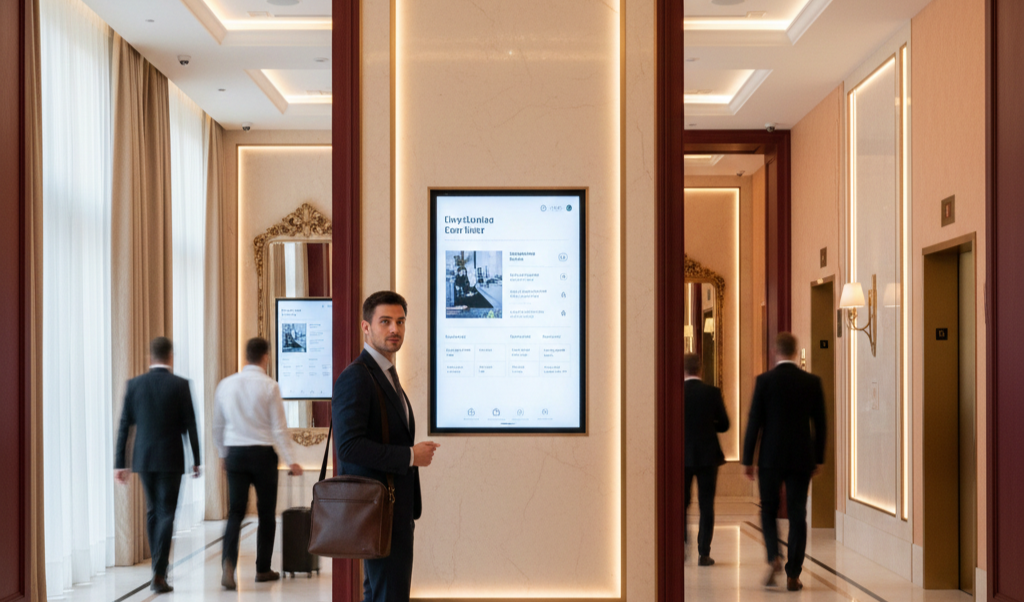
Platforms like AIScreen allow hotel teams to manage all displays from a centralized dashboard with features like content scheduling and emergency alerts.
Mobile Apps & Guest Digital Platforms
Mobile apps streamline the entire guest journey by enabling mobile check-in, digital keys, and service requests. Guests can unlock rooms, request housekeeping, or order room service directly from their smartphones, reducing reliance on the front desk and improving convenience.
Hilton’s Hilton Honors app allows guests to check in, select rooms, and use their phones as keys across most of its properties worldwide.
Voice Assistants & Smart Room Controls
Voice-controlled systems allow guests to manage lighting, temperature, and services hands-free.
Devices like Amazon Alexa, Google Assistant, and Apple Siri simplify interactions through voice commands, improving accessibility and personalization.
Hotels like The Westin Buffalo use Alexa-enabled rooms to help guests request services and adjust room settings effortlessly.
Keyless & Contactless Access Systems
Keyless systems enable secure and seamless room access using mobile keys, RFID cards, or biometric authentication. Guests can access rooms, elevators, and amenities without physical keys, reducing friction and enhancing security.
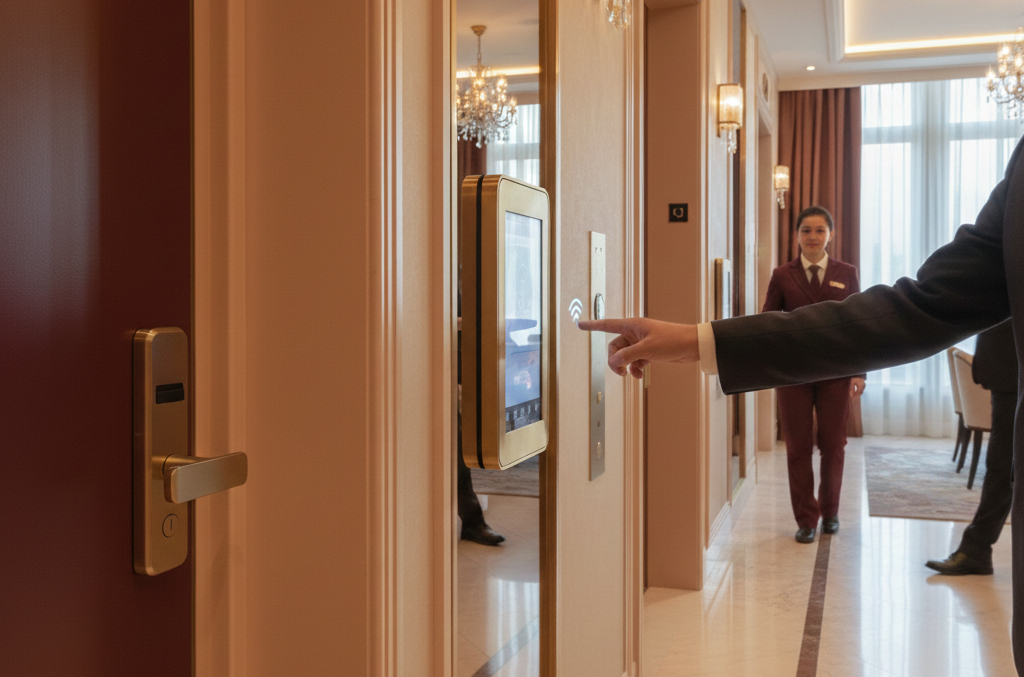
These systems also support contactless payments and identity verification, aligning with modern safety expectations.
Backend Systems & Data Integration
Backend systems connect all smart technologies into a unified platform.
Property management systems (PMS), CRMs, CMS platforms, and analytics tools centralize guest data, automate workflows, and enable personalized services.
This integration ensures consistent operations, data-driven decision-making, and a seamless guest experience across the entire property.
How Smart Hotel Technology Is Being Used?
Smart hotel technology improves the entire guest journey by combining smart devices, internet of things IoT, and advanced technologies to deliver efficient service delivery and personalized experiences.
By integrating smart technologies across hotel rooms, hotels become smarter, offering seamless access services, real-time hotel information, and automation that adapts to guest preferences. For deeper insights, resources like a guide to hotel signage: seamless experience for visitors help understand how signage improves navigation.
Self-Service Check-In & Check-Out Kiosks
Self-service check-in kiosks speed up arrivals by allowing guests to complete check-in without waiting at the front desk.
These systems reduce queues, improve operational efficiency, and support scalable solutions across properties. Studies show that 73% of travelers prefer self check-in, making it a key feature in best smart hotel examples.

Hotels deploy kiosks, tablets, and mobile check-in solutions at reception areas to streamline the process and improve efficient service delivery.
Keyless Room Entry & Mobile Credentials
Smart hotel rooms use mobile credentials to replace traditional keycards, improving both convenience and security.
Guests unlock hotel rooms using smartphones via Bluetooth or PIN-based systems, reducing dependency on physical keys and enhancing access services.
This shift aligns with modern guest expectations and demonstrates how such technologies simplify the overall hotel experience.
Personalized Smart Room Experiences
Smart room technology enables hotel rooms to automatically adjust based on guest preferences.
Smart lighting, smart mirrors, temperature controls, and entertainment systems adapt using internet of things and smart sensors. These smart room features create personalized guest experiences without manual input.
Hotels use RFID sensors, smart thermostats, and mobile apps to optimize comfort while reducing energy consumption, balancing sustainability with guest satisfaction.
Smart TVs & Real-Time Guest Information
Smart TVs transform in-room screens into interactive platforms for hotel information and guest services. Guests can access entertainment systems, request services, and explore hotel offerings directly from their screens, reducing reliance on the front desk.
These systems also support upselling and communication, improving clarity and enhancing the overall guest experience.
Digital Wayfinding & Interactive Signage
Digital wayfinding improves navigation across large hotel spaces using interactive signage and real-time updates. Guests can easily locate hotel services, dining areas, and events through digital displays, reducing confusion and improving access services.
Platforms like AIScreen support interactive screen zoning and QR-based navigation, allowing hotels to display touch-friendly maps, service directories, and event highlights that update automatically from one dashboard, ideal for multi-building resorts and convention hotels.
Voice-Controlled Guest Services
Voice-controlled systems allow guests to control lighting, request services, and access information hands-free. Using smart devices powered by artificial intelligence, guests interact with hotel services through simple voice commands, improving accessibility and convenience.
Hotels like Aloft use Apple Siri to integrate voice features into smart hotel rooms, enhancing the overall guest experience.
AI-Powered Concierge & Chatbots
AI-powered systems act as a virtual concierge service, providing 24/7 support across the guest journey.
These digital concierge tools use artificial intelligence to automate communication, handle requests, and deliver personalized services at scale.

AI chatbots enable mobile check-in, answer questions, recommend services, and collect feedback, helping hotels refine operations and improve guest satisfaction.
What are the 10 of the Best Smart Hotels in the World?
This list highlights how smart hotels are being adopted across regions as a practical response to changing guest expectations. These properties show how digital infrastructure, automation, and personalized guest experiences improve comfort, efficiency, and sustainability. The examples below focus only on what makes each hotel “smart,” keeping the structure consistent and easy to follow.
1. Hotel Gran Bilbao
The Gran Bilbao hotel in Spain combines modern design with digital guest experience tools that simplify stays. Rooms use automation for lighting and climate control, while sustainability-focused systems reduce energy use without affecting comfort. Every room delivers a slightly different experience, reinforcing personalization through technology rather than excess hardware.
2. Eccleston Square Hotel
This luxury London property blends historical architecture with advanced room automation. Guests control lighting, temperature, and privacy through smart glass and in-room tablets, creating seamless, personalized guest experiences. Concierge tablets reduce friction for service requests, making it a strong smart hotel example in a heritage setting.
3. The Westin Boston Seaport District
Known for wellness and waterfront views, this hotel integrates voice-controlled lighting and temperature with in-room tablets for entertainment and room service. Automation supports comfort while reducing manual operations, positioning it as a smart hotel suited for both business travelers and leisure guests.
4. Schani Hotels
Schani Hotels in Vienna focus on digital-first hospitality. Mobile check-in, digital room access, and streamlined communication replace traditional front-desk dependence. The emphasis on modern design and digital solutions creates efficient, tech-enabled stays without overwhelming guests.
5. OKKO Hotels Lyon Pont Lafayette
Located in central Lyon, this hotel uses smart room controls and shared digital lounges to enhance convenience. Automated systems support guest comfort while maintaining a relaxed, social atmosphere. Technology remains subtle, supporting the experience rather than dominating it.
6. Maison Albar – Le Victoria
This Paris luxury hotel integrates in-room tablets that allow guests to manage lighting, temperature, services, and entertainment from bed. Automation enhances comfort while maintaining elegance, showing how high-end hospitality can adopt smart systems without losing its refined identity.
7. Kuching Park Hotel
This Malaysia-based hotel focuses on convenience through self-check-in kiosks, mobile room access, and robot-assisted room service. Keyless entry systems and automation reduce wait times, while digital workflows improve operational efficiency across the property.
8. Potato Head Suites & Studios
Ranked among the world’s top hotels, this Indonesian destination uses technology to support sustainability and guest comfort. Smart controls, energy-efficient systems, and curated digital touchpoints enhance stays while aligning with eco-conscious values and immersive design.
9. Hotel Milano Scala
Located in Milan, this zero-emissions hotel integrates voice-controlled lighting, temperature management, and a virtual concierge. Smart room technology supports sustainability goals while delivering intuitive control, making it one of the most environmentally advanced hotels globally.
10. Pestana Palace Lisboa
This historic Lisbon hotel combines elegant architecture with modern smart room systems. Guests use in-room tablets for services, voice-controlled lighting, and climate adjustments. Facial recognition and digital access tools support personalized guest experiences without disrupting the property’s classic atmosphere.
How Big Is the Smart Hotel Market?
The smart hotel market is expanding as hospitality brands invest in automation, connected systems, and guest-centric digital experiences. Adoption is driven by rising guest expectations, operational efficiency goals, and sustainability priorities. Hotels now focus spending on smart room controls, contactless services, and integrated platforms that centralize operations.

You’ve probably noticed how guests increasingly prefer mobile check-ins or personalized room settings, those expectations shape investment decisions across the industry. According to Statista, global interest in smart hospitality solutions has grown steadily over the past 5 years, with hotels prioritizing technologies that improve efficiency and guest satisfaction.
A mid-sized hotel upgrading to connected room systems often sees faster service response times and smoother guest journeys, highlighting how smart hotel technology directly supports modern hospitality demands.
How Does Smart Hotel Signage Compare to Stadium Signage?
Smart hotel environments and large venues often rely on similar digital infrastructure to manage high visitor flow and real-time communication. Understanding what is stadium signage and what you need to know helps highlight how large-scale wayfinding, crowd management, and dynamic displays operate in complex spaces.
Like hotels, stadiums use digital signage for navigation, announcements, and personalized experiences, but at a much larger scale. By applying these principles, hotels can enhance guest journeys, improve navigation, and create more immersive, tech-driven environments across their properties.
Step Into the Future of Hospitality with Smart Hotel Technologies and Trends!
The future of smart hospitality is filled with innovations that make stays more seamless, secure, and engaging. Robotics, biometrics, AR/VR, and blockchain are reshaping how hotels operate and how guests interact with spaces. Robots such as lobby assistants and delivery units handle routine tasks, while facial recognition enables keyless room access, faster, safer, and contact-free. At institutions like the Swiss Hotel Management School, students already train with service robots, preparing for this shift.
As we read in this blog of what is a smart hotel key technologies, platforms like AIScreen support this evolution by powering digital displays for lobbies, conference areas, and guest communication. Its real-time content updates, scheduling tools, and interactive features help hotels elevate the guest experience, reinforce brand differentiation, and stay future-ready. Well, don’s wait you can just start experiencing it for free for 14 days, no credit card needed.


FAQs
What makes a hotel “smart”?
A hotel is considered “smart” when it uses connected digital systems to automate services such as room controls, check-ins, signage, and guest communication. These technologies improve convenience, personalization, and overall guest experience through data-driven operations.
Are smart hotels more expensive than traditional hotels?
No, smart hotels are not necessarily more expensive, as many digital solutions reduce operational costs over time. Energy-efficient systems, automation, and centralized management often offset the initial investment and improve long-term profitability.
Are smart hotel rooms accessible for elderly or disabled guests?
Yes, smart hotel rooms are designed to be accessible by integrating voice controls, simplified interfaces, and ADA-compliant technologies. These features make navigation, room control, and service requests easier for elderly and disabled guests.
Can small or boutique hotels become smart hotels?
Yes, small or boutique hotels can become smart by adopting scalable digital tools such as cloud-based systems, smart signage, and mobile integrations. These solutions allow gradual upgrades without large infrastructure changes.
Do smart hotels collect guest data, and is it secure?
Yes, smart hotels do collect guest data to personalize services, but they rely on encrypted systems and compliance standards to protect privacy. Secure platforms ensure that guest information remains protected and responsibly managed.
